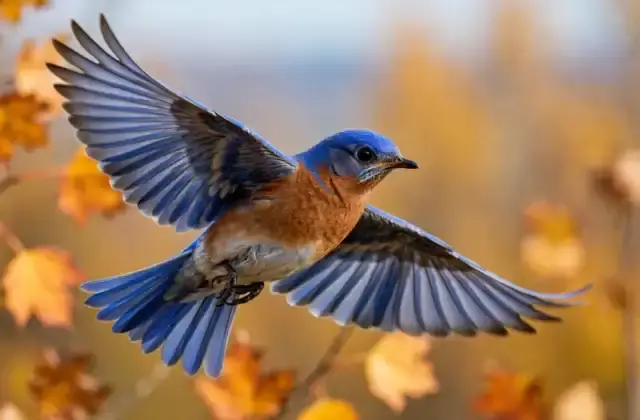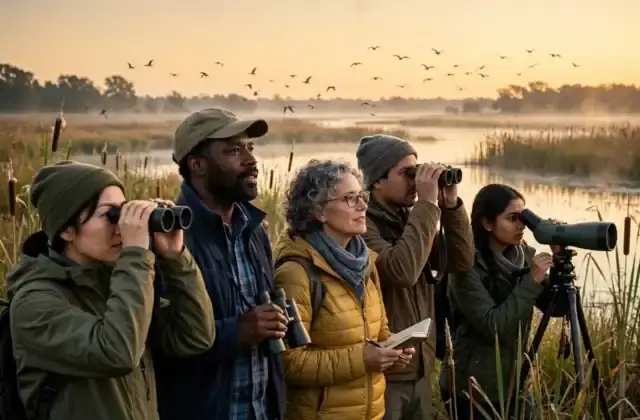

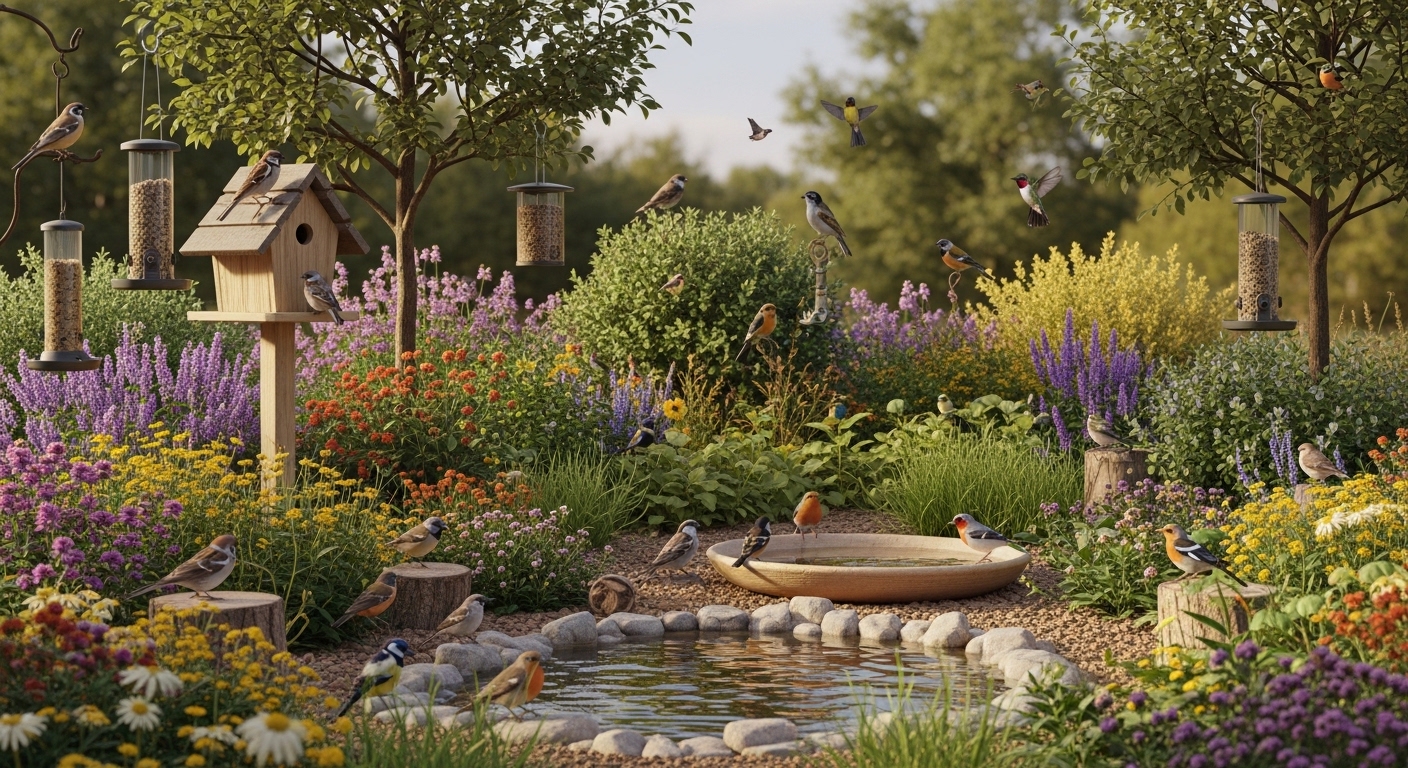
Imagine stepping into your garden every morning to the sound of birdsong, the flash of wings between flowering shrubs, and the sight of a robin splashing in a stone birdbath beneath a canopy of native trees. This is not a scene reserved for nature reserves or sprawling country estates.
With a few thoughtful design choices and a shift in how you approach your outdoor space, any garden, from a modest suburban backyard to a compact city terrace, can become a thriving bird-friendly garden that supports local wildlife throughout every season of the year.
Creating a bird garden is one of the most rewarding things a homeowner can do for both the natural world and their own well-being. Research consistently shows that spending time watching and listening to birds in a natural garden setting reduces stress, improves focus, and deepens a person’s connection to the living world outside their door.
And the birds themselves benefit enormously: with natural habitats declining worldwide, a thoughtfully planted and maintained backyard bird sanctuary becomes a genuine refuge for species that are increasingly losing the food, shelter, and nesting sites they depend on.
This guide walks you through every step of creating a truly bird-friendly garden, from choosing the right native plants and designing a layered habitat, to providing water, preventing window strikes, and letting a little wilderness back into your outdoor space.
Why Your Garden Matters More Than You Think?
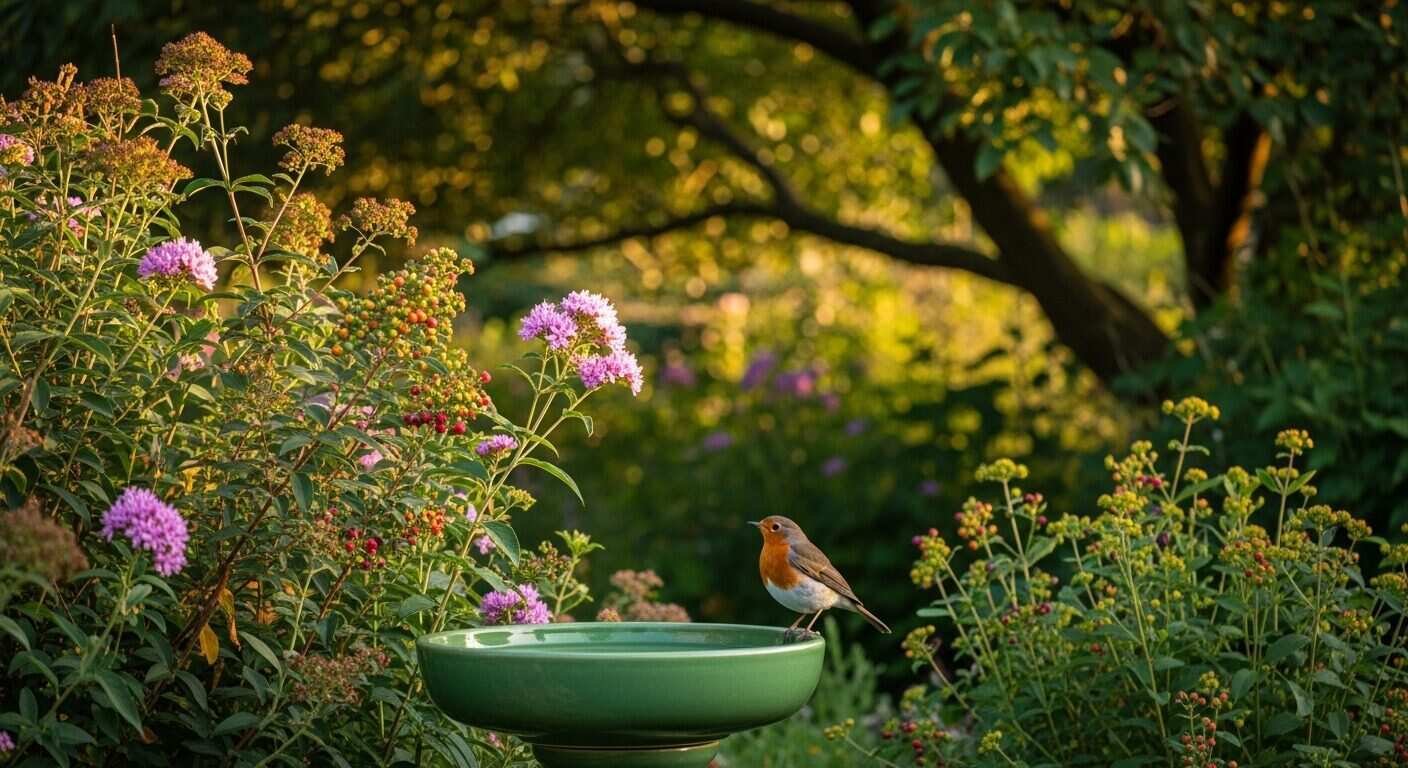
Many people underestimate the role a single residential garden can play in supporting bird populations. The truth is that, collectively, individual gardens make up an enormous area of potential urban and suburban habitat. When those gardens are designed with birds in mind, the cumulative impact across a neighborhood, a city, and a region is genuinely significant.
Gardening for birds is also one of the most accessible forms of conservation available to any homeowner. You do not need a large property, a specialist knowledge of ecology, or a significant budget to make a real difference. The changes that matter most are often the simplest: replacing a section of lawn with native planting, adding a birdbath, removing pesticides from your routine, or leaving a corner of the garden a little wilder than before.
Step 1: Start with a Plan That Puts Native Plants First
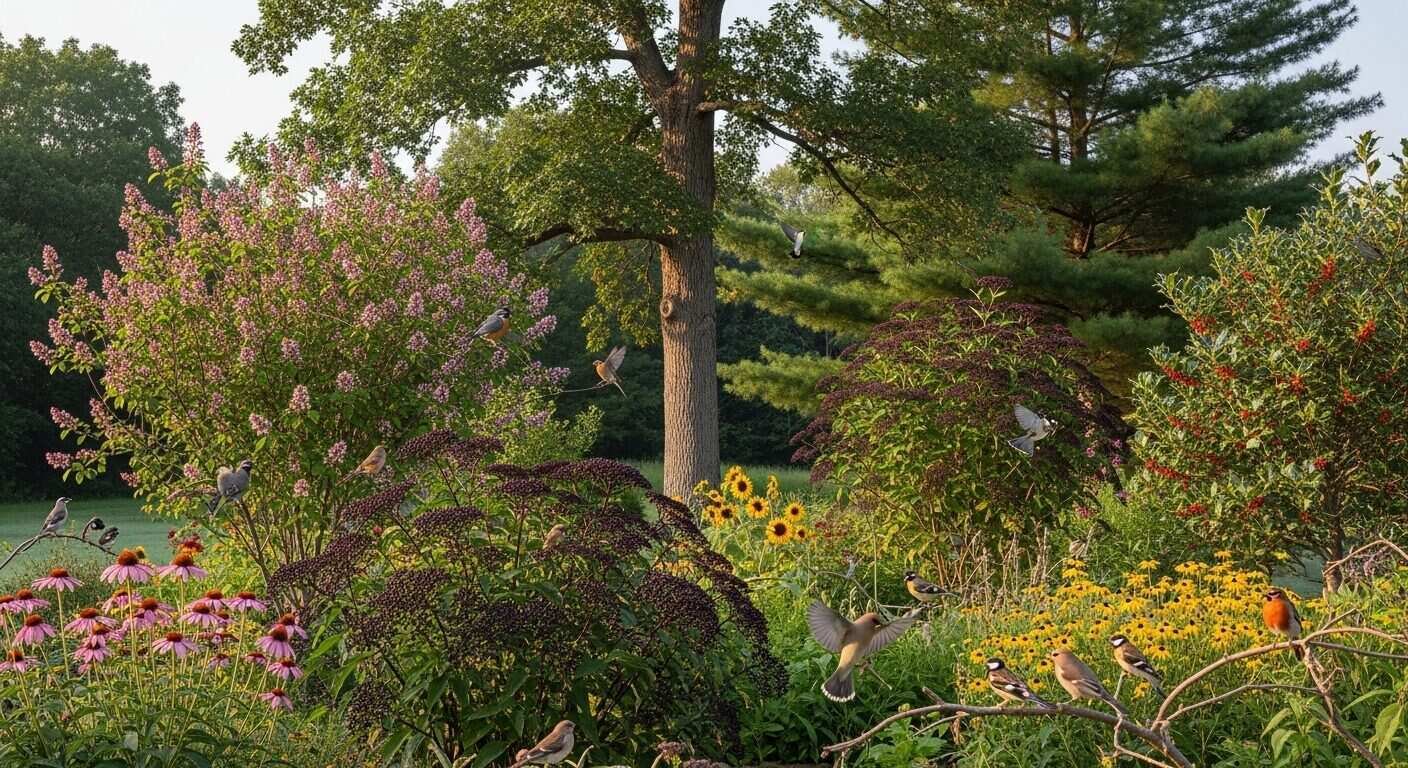
The foundation of any successful bird garden is native plants. Native species are those that evolved in your local region over thousands of years alongside the birds, insects, and other wildlife that also call that region home. As a result, they are perfectly matched to the food needs of local bird species in a way that imported ornamental plants simply cannot be.
Native plantsattract birds in multiple ways simultaneously. They produce berries, seeds, and nectar that birds can eat directly. They also support the insect populations that most bird species depend on for protein, particularly during nesting season when chicks require enormous quantities of caterpillars, beetles, and other invertebrates to grow and develop.
Best Native Plants to Attract Birds:
- Serviceberry (Amelanchier): Produces early summer berries that are irresistible to thrushes, waxwings, and robins. Its white spring blossom also supports pollinators that birds feed on.
- Elderberry (Sambucus): A fast-growing shrub that produces large clusters of deep purple berries in late summer, a favorite of many migratory species.
- Oak trees (Quercus): A single mature oak supports over 500 species of caterpillar alone, making it one of the most wildlife-rich trees available for any large garden.
- Coneflower (Echinacea): A beautiful flowering perennial whose seed heads feed goldfinches, sparrows, and chickadees through autumn and winter.
- Sunflowers (Helianthus): Leave the spent seed heads standing through winter and they become a natural bird feeder for finches and nuthatches.
- Holly (Ilex): Produces berries that persist through winter when food is scarcest, supporting thrushes, robins, and waxwings during the coldest months.
- Conifers (Pine, Spruce, Fir): Provide essential dense cover for roosting and nesting as well as seeds that many birds feed on through the colder months.
When landscaping for birds, choose plants that provide food and habitat year-round rather than focusing on a single flowering period. A garden for birds that provides food from spring through winter is far more valuable than one that offers an abundance in summer only.
Step 2: Design Layered Habitat Like Nature Does
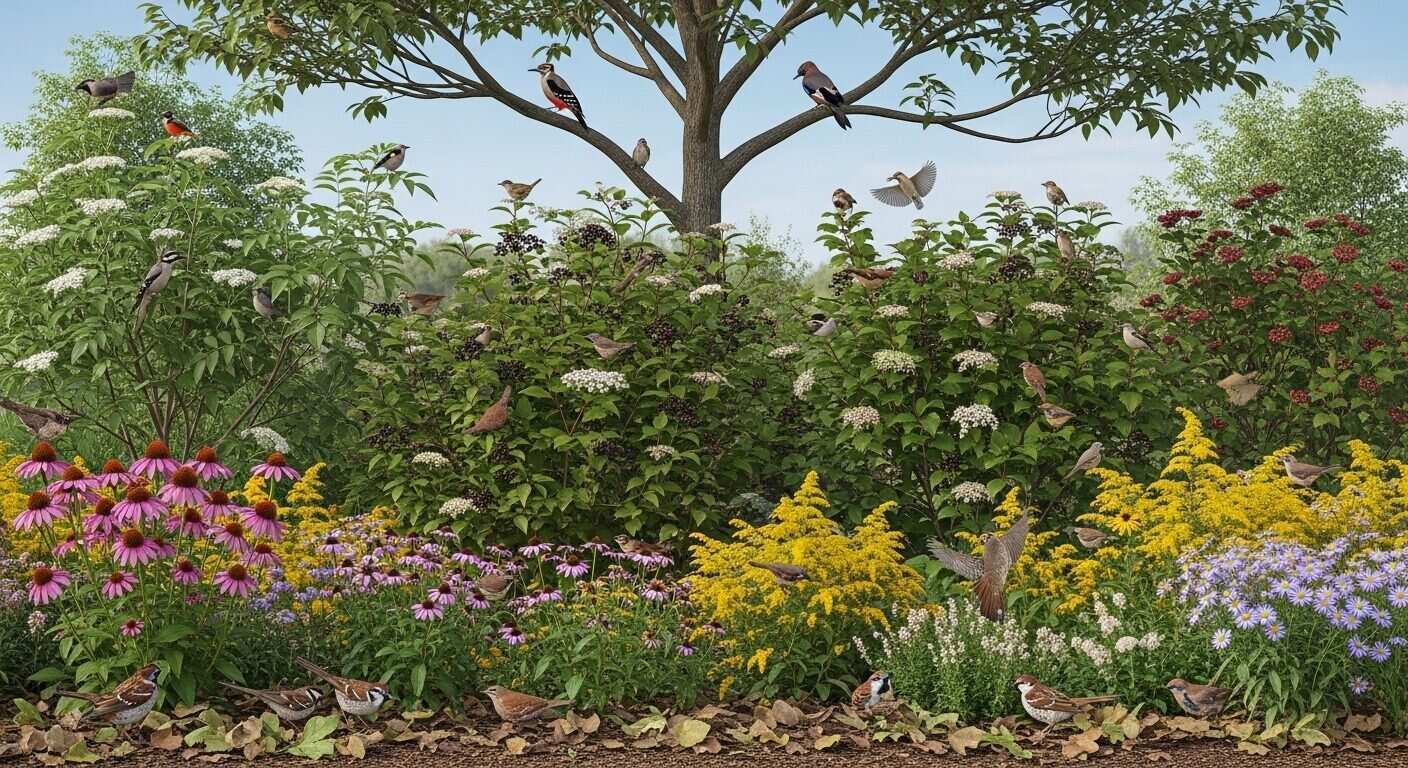
One of the most important principles in bird gardening is layered vegetation. In any natural woodland or hedgerow ecosystem, plant life exists at multiple heights simultaneously: tall trees forming the upper canopy, mid-height shrubs filling the understory, smaller flowering plants at ground level, and groundcover plants spreading beneath everything else.
This vertical layering is not just visually appealing in a bird landscape. It is ecologically essential. Different bird species use different layers of vegetation for different purposes. Canopy birds like woodpeckers and jays hunt insects in the upper tree levels.
Understory birds like wrens and warblers forage among shrubs. Ground-feeding birds like sparrows and towhees search the leaf litter beneath. A garden that provides all of these layers simultaneously supports a far broader range of species than a single-layer planting scheme.
How to Create Effective Layers in a Bird Garden:
- Canopy layer: Plant one or two taller native trees appropriate to your space. Even a single well-chosen tree dramatically increases the bird habitat value of a garden.
- Mid-story layer: Fill the middle zone with native shrubs like elderberry, viburnum, and serviceberry that provide berries, insects, and nesting cover.
- Herbaceous layer: Plant native perennials like coneflowers, goldenrod, and asters that produce seeds and attract insects throughout the growing season.
- Groundcover layer: Allow leaf litter to accumulate naturally beneath shrubs and trees. This layer is one of the richest invertebrate habitats in any bird garden and provides essential foraging ground for robins, thrushes, and ground-feeding sparrows.
Step 3: Provide Food Sources Across Every Season
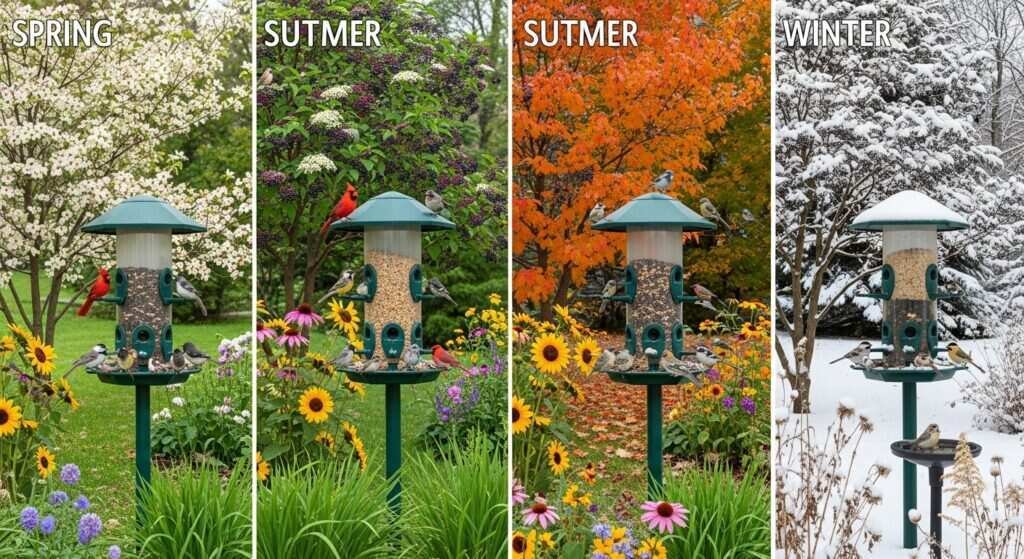
A genuinely effective backyard bird sanctuary does not shut down its food supply in winter. It provides something for birds to eat in every month of the year, whether through carefully selected plants, supplementary feeders, or both.
Year-Round Feeding Strategy:
- Spring: Fresh insect activity begins as temperatures rise. Ensure your garden has plenty of native plants to support the caterpillar and insect populations that nesting birds rely on to feed their chicks.
- Summer: Berries from early-fruiting shrubs like serviceberry and elderberry provide high-energy food during the busiest nesting period.
- Autumn: Seed heads from coneflowers, sunflowers, and grasses provide critical calories as birds prepare for winter or migration. Oaks produce acorns that jays and woodpeckers cache for winter use.
- Winter: Supplementary feeders filled with high-fat seeds, suet blocks, and black oil sunflower seeds keep resident birds nourished during the months when natural food is scarcest.
When choosing supplementary feeders for your bird sanctuary backyard, place them at different heights and in different areas of the garden to serve the widest range of species. Ground-level feeding trays attract sparrows and doves. Hanging feeders suit tits and finches. Platform feeders at mid-height serve thrushes and robins.
Step 4: Install Water Features Birds Actually Love
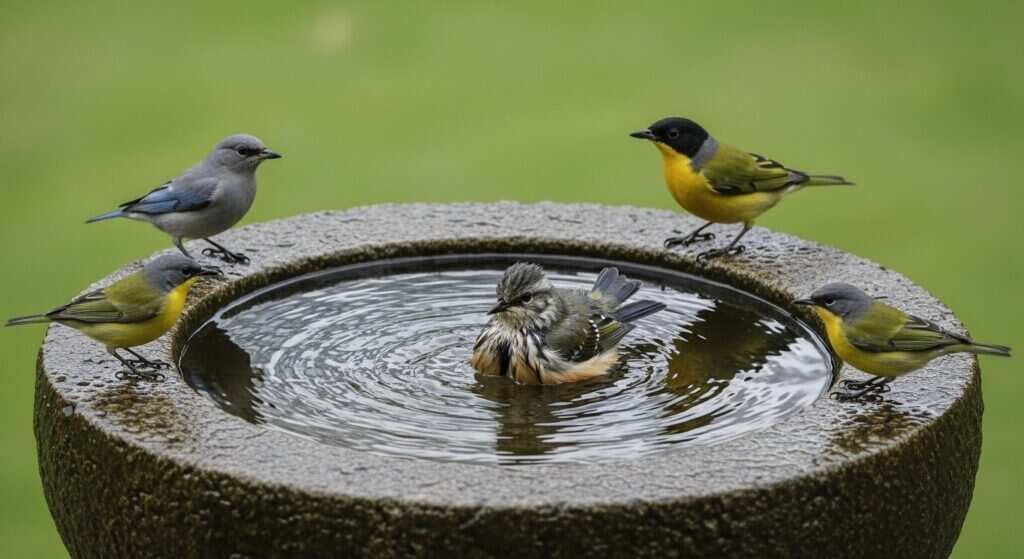
Water is arguably the single most attractive element you can add to a bird friendly garden, and its importance is often underestimated. Birds need water for drinking and bathing year-round, not just in summer, and a reliable, clean water source in a garden with limited natural alternatives can attract a remarkable diversity of species.
The most effective water features for gardening birds include:
- Birdbaths with a shallow, textured basin: Birds prefer water no deeper than 5 to 7 centimeters, with a textured bottom for secure footing. Smooth, deep basins are used far less frequently.
- Dripping or misting features: Moving water is significantly more attractive to birds than still water. The sound of dripping draws birds from a considerable distance, and the movement keeps the water oxygenated and fresher longer.
- Ground-level ponds with shallow margins: A small wildlife pond with gently sloping, shallow edges provides bathing and drinking access for ground-feeding birds and habitat for insects they feed on.
- Heated birdbath elements: In cold climates, a small submersible heater in a birdbath prevents it from freezing in winter, when natural water sources disappear, and birds face their greatest hydration challenge.
Clean the birdbath thoroughly every 2 to 3 days to prevent the buildup of algae, bacteria, and debris that can make birds sick. Position it close to shrub cover so birds can retreat quickly if a predator approaches, but not so close that cats or other predators can use the vegetation as cover themselves.
Step 5: Create Shelter and Nesting Opportunities
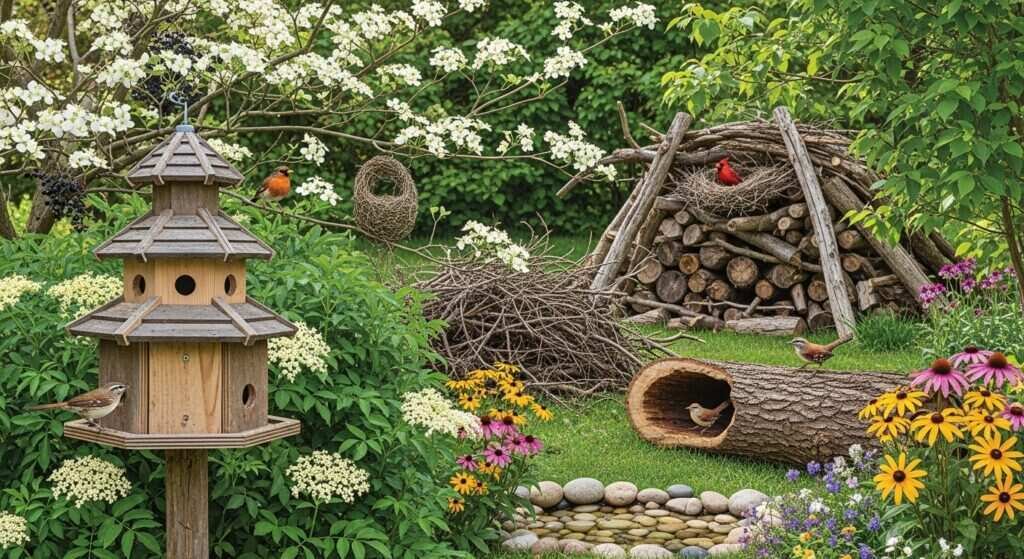
A backyard bird sanctuary is not just a place for birds to eat and drink. It is a place they feel safe enough to raise a family. Providing genuine shelter and nesting opportunities is what elevates a simple bird garden into a true habitat.
Shelter and Nesting Strategies:
- Dense shrubs and conifers: Evergreen shrubs and conifers provide year-round protection from weather and predators. Birds use them for roosting overnight, for sheltering during storms, and for nesting in spring.
- Nest boxes: Different species require nest boxes with different entrance hole sizes and mounting heights. Research the specific species present in your area and provide appropriately sized boxes to suit them.
- Dead wood and snags: A standing dead tree or a large fallen log left in place is one of the richest habitat features possible in any bird landscape. Woodpeckers excavate nesting cavities in dead wood, and those cavities are subsequently used by a succession of other species including owls, nuthatches, and chickadees.
- Leaf litter zones: Leave a deep layer of fallen leaves under shrubs and trees. This provides nesting material for birds building ground nests and foraging habitat for the invertebrates they feed on.
Step 6: Go Organic and Remove Pesticides Completely
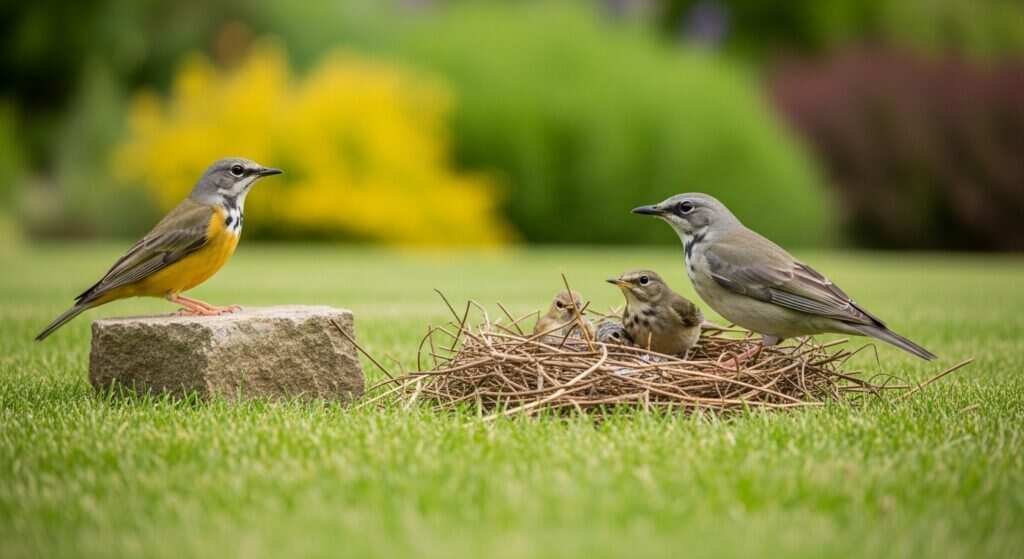
This step is non-negotiable for anyone serious about landscaping for birds. Pesticides, herbicides, and synthetic fertilizers undermine every other effort you make in the garden for birds, in two critical ways.
First, insecticides kill the insects that birds need to eat. A garden treated with pesticides is a garden stripped of the caterpillars, beetles, aphids, and flies that nesting birds require to feed their young. Second, pesticide residues can accumulate in birds’ bodies through the food chain, causing neurological damage, reproductive failure, and death.
Going fully organic in a bird garden means:
- Accepting a certain level of insect activity on plants as a feature, not a problem
- Using companion planting and beneficial insects to manage genuine pest issues naturally
- Fertilizing with compost rather than synthetic chemicals
- Allowing some areas of the garden to naturalize rather than maintaining perfect horticultural control
The reward for making this shift is a garden that genuinely teems with life, a birds landscape full of the insect activity that brings birds in to feed and the natural abundance that makes them want to stay.
Step 7: Leave a Little Wild on Purpose
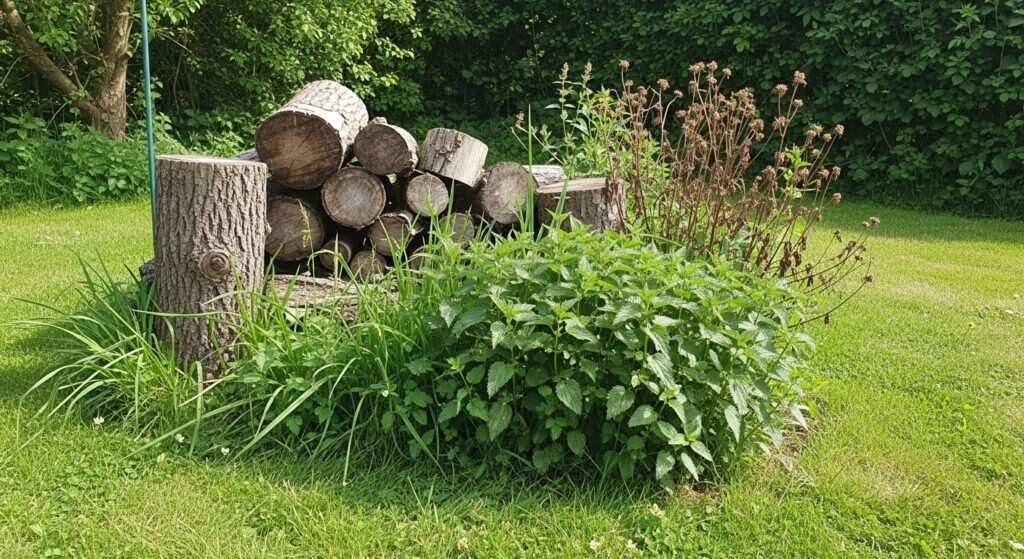
Some of the most valuable habitat in any backyard bird sanctuary looks, to the uninitiated, like neglect. A pile of logs in a corner. A section of unmown grass allowed to set seed. A clump of nettles left standing through winter. Dead flower stems are left uncut until spring.
These deliberate acts of rewilding are among the most impactful bird garden ideas available to any homeowner. They create microhabitats for insects, spiders, and other invertebrates that form the base of the food chain birds depend on. They provide nesting material, overwintering habitat for beneficial insects, and shelter for the small mammals and reptiles that healthy garden ecosystems include.
Letting a section of the garden go wild is also conveniently one of the least labor-intensive gardening decisions you can make. Nature does the work. You simply give it permission.
Step 8: Prevent Window Strikes with Simple Solutions
An estimated 100 million birds die from collisions with windows in North America alone each year. Glass that reflects the sky and vegetation is essentially invisible to birds in flight, and collisions with windows or glass doors at speed are frequently fatal.
For any homeowner creating a bird-friendly garden, addressing window strikes is an ethical responsibility alongside the pleasure of attracting more birds to the garden.
Effective Window Strike Prevention Methods:
- Apply adhesive bird deterrent strips or dots to the outside surface of windows in a pattern with gaps no larger than 5 centimeters wide by 10 centimeters tall
- Use external window screens or netting that physically interrupts the glass surface
- Move bird feeders to within one meter of windows so birds cannot build up enough speed for a fatal collision, or more than 10 meters away so they have time to see the glass and redirect
- Apply window film that is opaque to birds but transparent to humans
- Plant dense shrubs and hedging that breaks up the reflective view of windows from outside
Short Takeaways
Creating a genuine bird garden that functions as a thriving backyard bird sanctuary comes down to eight consistent principles:
- Choose native plants that provide food and habitat across all four seasons
- Design with vertical layers to serve the widest possible range of bird species
- Provide clean, moving water every day of the year
- Add nest boxes and preserve dead wood for nesting opportunities
- Remove all pesticides and synthetic chemicals from your gardening routine
- Leave areas of deliberate wildness to support the insects birds depend on
- Prevent window strikes with adhesive deterrents or visual barriers
- Supplement with feeders in winter when natural food sources are at their lowest
Conclusion
A bird-friendly garden is one of the most meaningful and enjoyable outdoor projects any homeowner can undertake. It is a living, evolving space that rewards you differently in every season. In spring, the birdsong intensifies as nesting begins and the first broods of chicks emerge.
In summer, the garden buzzes with the insect life that draws so many species to feed. In autumn, the seed heads and berries that you deliberately chose for your planting scheme become a larder that sustains migrating and resident birds through the lean months ahead. In winter, your birdbath steams gently in the cold air while a queue of robins and thrushes waits to drink and bathe.
Frequently Asked Questions
Q: What are the most important plants to attract birds to a garden?
Native fruiting shrubs like serviceberry, elderberry, and holly are among the most valuable plants for gardening birds. Native trees like oaks support enormous insect populations that birds feed on, while seed-producing perennials like coneflowers and sunflowers provide food through autumn and winter.
Q: How do I create a backyard bird sanctuary on a small budget?
The most impactful and most affordable steps are going pesticide-free, leaving leaf litter under shrubs, adding a simple birdbath, and allowing a section of lawn to naturalize. None of these bird garden ideas require significant spending and all deliver genuine habitat improvement immediately.
Q: How often should I clean a birdbath?
Every two to three days in warm weather and every three to four days in cooler conditions. Regular cleaning prevents algae and bacteria build-up that can make birds sick and deters them from using the bath.
Q: Can I create a bird-friendly garden in a small urban backyard?
Absolutely. Even a small courtyard or terrace can support birds with a birdbath, a few container-grown native plants, a hanging feeder, and a nest box on a nearby wall or fence. Urban backyard bird sanctuaries are often particularly valuable because natural habitat in cities is so fragmented.
Q: What is the single most effective change I can make for birds in my garden today?
Remove pesticides and insecticides from your garden entirely. This single change immediately restores the insect populations that birds depend on for food, making every other habitat improvement in your garden significantly more effective.