


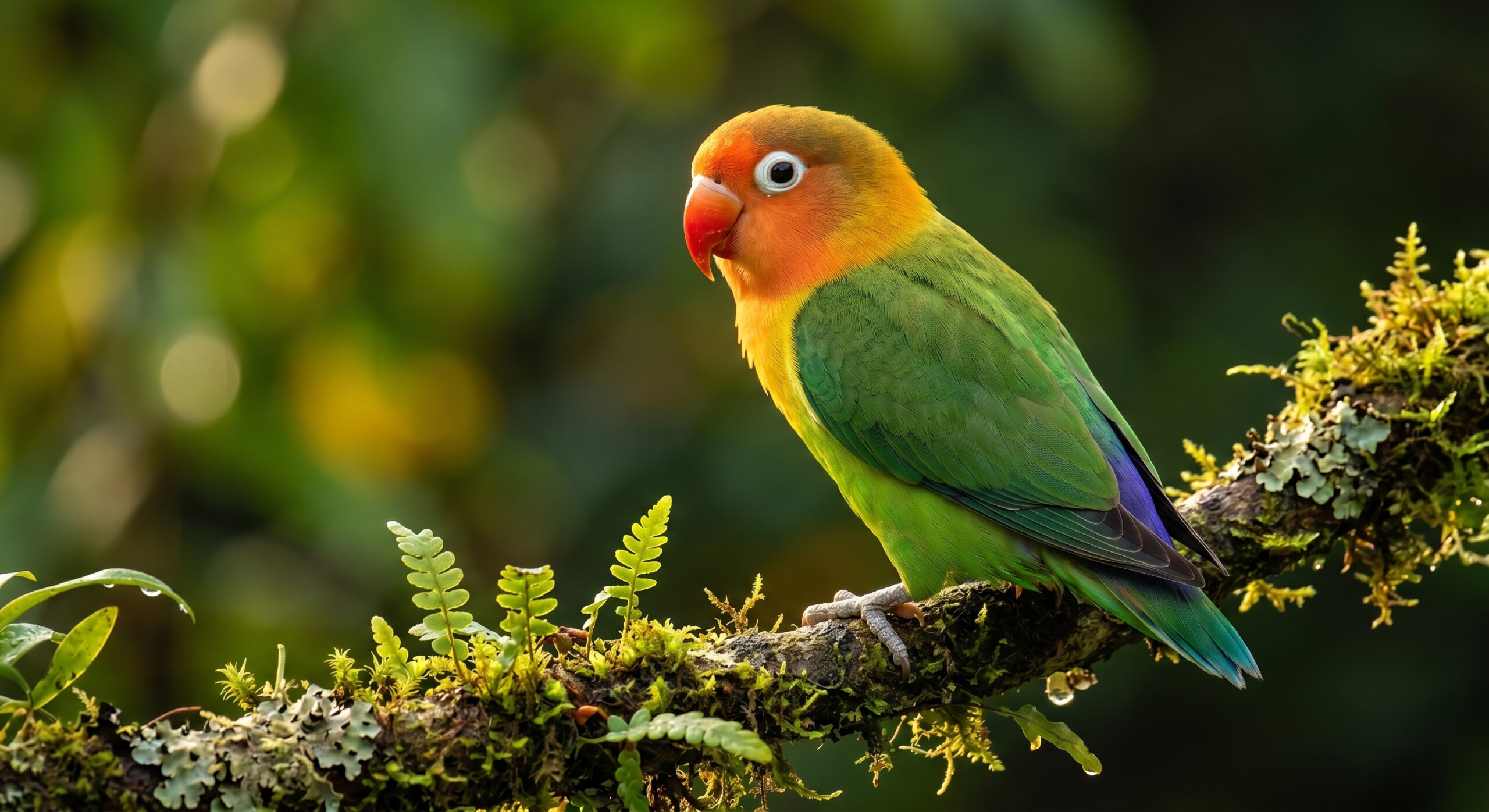
Most people picture a rosy-cheeked green bird the moment someone says “lovebird.” That’s the Peach-faced lovebird, charming, widely available, and undeniably popular.
But it represents just one of nine remarkable species within the Agapornis genus, and limiting your knowledge to a single variety means missing a world of fascinating differences in color, temperament, and care requirements. The truth is, lovebird varieties range from the boldly masked Fischer’s lovebird to the rarely kept Black-collared species.
Each has distinct habitat needs, social behaviors, and health considerations that generic care guides simply don’t address. Choosing the wrong setup for your specific species isn’t just suboptimal. It can actively shorten a bird’s lifespan.
According to A-Z Animals, all nine species share core traits yet differ significantly in their requirements. Understanding those differences is what separates a thriving lovebird from a struggling one.
This guide covers every species in practical detail, starting with what actually defines a lovebird at the taxonomic level.
Table of Contents
What Defines a Lovebird? Taxonomy and the ‘Agapornis’ Identity

Before diving into the full roster of lovebird species, it helps to understand what actually makes a lovebird a lovebird — beyond the obvious charm and the pair-bonding reputation that gave them their name.
All lovebirds belong to the genus Agapornis, a name derived from the Greek words agape (love) and ornis (bird). This genus sits within the broader Psittacidae family, the true parrots, making lovebirds legitimate members of one of the most intelligent bird groups on the planet. According to Scribd’s lovebird species overview, all nine recognized species originate from the African continent, with one species native to Madagascar.
Physically, lovebirds are compact and unmistakable:
- Size: Typically 5–7 inches in length
- Beak: Short, hooked, and powerful — built for cracking seeds and climbing
- Tail: Short and blunt, unlike the tapered tails of parakeets
- Build: Stocky and rounded, with a large head relative to body size
Taxonomically, the nine species are split into two distinct groups, as noted by the Lafeber Company. Those with a prominent white eye-ring and those without. This single physical detail carries real significance. It separates species by behavior, origin, and even care requirements.
A lovebird’s species classification isn’t just academic. It directly shapes what that bird needs to thrive in a home environment. Recognizing these differences, including habitat health as a foundational requirement, is where responsible ownership begins. That eye-ring distinction, in particular, is worth a much closer look, which is exactly where we’re headed next.
The Eye-Ring Group: Fischer’s, Masked, and Their Kin

Now that you understand the taxonomy behind Agapornis, it’s time to meet one of the most visually striking clusters within that genus. According to Lafeber Company, the eye-ring group consists of four species.
The Masked, Fischer’s, Black-cheeked, and Lilian’s lovebirds are all united by that signature bold white orbital ring framing the eye. Among all types of lovebirds, these four consistently turn heads at bird shows and pet fairs alike.
Fischer’s Lovebird (Agapornis fischeri)
Fischer’s is arguably the most recognizable member of the eye-ring club. Its vivid orange face, green body, and purple-blue rump create an almost tropical palette that feels almost too bright to be real.
- Color: Orange face, green body, purple-blue rump
- Origin: Northern Tanzania
- Rarity: Common in aviculture; widely available
Fischer’s lovebirds are famously outgoing and curious. In practice, they tend to bond enthusiastically not just with a single partner but also with their human caregivers when properly socialized.
Masked Lovebird (Agapornis personatus)
The Masked Lovebird earns its name honestly. A deep black head stands in sharp contrast to a bright yellow chest and green body, making identification effortless, even for beginners.
- Color: Black head, yellow breast, green body
- Origin: Northeast Tanzania
- Rarity: Common; popular in the pet trade
Black-Cheeked Lovebird (Agapornis nigrigenis)
This species is genuinely rare, both in the wild and in captivity. Listed as vulnerable, the Black-cheeked lovebird has a limited range in Zambia.
- Color: Dark brown-black cheeks, orange-red upper chest
- Origin: Zambia
- Rarity: Rare; conservation concern
Lilian’s (Nyasa) Lovebird (Agapornis lilianae)
Often confused with Fischer’s, Lilian’s lovebird is smaller and displays a softer, more salmon-toned face without the vivid orange intensity.
- Color: Salmon-pink face, green body
- Origin: Malawi, Mozambique, Tanzania, Zimbabwe
- Rarity: Uncommon in aviculture
The eye-ring species consistently rank among the most visually striking parrots available to hobbyists. But their temperament nuances deserve equal attention.
Many keepers note that eye-ring lovebirds can tend slightly more assertive than other varieties, which matters when planning mixed-species aviaries. With that behavioral backdrop in mind, it’s worth turning to the non-eye-ring group and the single species almost everyone encounters first.
The Non-Eye-Ring Group: From the Common Peach-Faced to the Rare Swindern’s
While the eye-ring species tend to steal the spotlight with their bold facial markings. The non-eye-ring group tells an equally compelling story. According to Lafeber Company.
This cluster covers five distinct species: the Peach-faced, Black-winged (Abyssinian), Red-headed, Madagascar (Grey-headed), and Black-collared (Swindern’s) lovebirds. Together, they round out all lovebird species across the Agapornis genus.
| Species | Key Visual Marker | Pet Suitability |
|---|---|---|
| Peach-faced | Rosy-pink face, green body | Excellent |
| Black-winged (Abyssinian) | Black flight feathers, red forehead (males) | Rare; specialist keepers |
| Madagascar (Grey-headed) | Grey head, green body, red bill | Rarely kept; import restrictions |
| Red-headed | Bright red head, green body | Uncommon in captivity |
| Black-collared (Swindern’s) | Black neck collar, green plumage | Virtually impossible |
The Peach-Faced Lovebird: The Defining Standard
The Peach-faced lovebird is, without question, the benchmark against which every other variety is measured. Its vibrant rosy face, vivid green body, and outgoing temperament made it the first species most hobbyists encounter and for good reason.
Breeders have also developed dozens of color mutations from this single variety, from lutino yellows to pieds and violets, giving it extraordinary visual range that no other Agapornis species can match.
The Abyssinian, Madagascar, and Red-headed Varieties
The Black-winged (Abyssinian) lovebird is one of the larger species and notable for sexual dimorphism males display a striking red forehead that females lack entirely.
The Madagascar lovebird is compact and quiet, rarely bred outside specialist aviaries due to import restrictions on wild-caught African birds. The Red-headed lovebird stands apart behaviorally: it’s one of the few species known to use its beak to carry nesting materials rather than tucking them into its feathers.
The Black-Collared Lovebird: Nature’s Rarest Captive
The Black-collared (Swindern’s) lovebird is arguably the most fascinating bird you’ll ever own. As World Atlas notes, this species’ survival depends on a highly specialized diet of native figs found in its Central African forest habitat, a nutritional requirement that’s proven virtually impossible to replicate in captivity. That dietary wall means it almost never appears in the pet trade.
Understanding these five species sets the stage for a deeper question: beyond how they look, how do lovebirds behave, and what drives the intense social bonds that gave them their name?
Lovebird Personality: The Science of the Social Bond
The name “lovebird” isn’t just charming marketing. It reflects something biologically real: these birds form intense, monogamous pair bonds that shape virtually every aspect of their behavior.
In the wild, lovebirds rarely leave their partner’s side, preening together, roosting together, and foraging as a unit. That hardwired need for companionship doesn’t disappear in captivity it redirects, either toward a mate, a flock, or you.
“Lovebirds are true to their name and make great pets. They bond closely with their human companions… When separated from their loves, they can experience depression.” — Dr. Eric Steinberg, DVM, MS (via Kaytee)
That word “depression” carries real clinical weight. A lovebird kept in isolation without adequate social interaction can develop stress behaviors like feather plucking, repetitive pacing, and loss of appetite. These aren’t quirks they’re distress signals from a species whose nervous system wasn’t built for solitude.
Becoming your bird’s “flock” requires consistent, daily interaction. Talk to them. Let them perch near you. Respond when they vocalize. In practice, the more predictable your presence, the more secure your bird becomes.
Temperament varies across the list of lovebird species. Peach-faced lovebirds tend to be bold and assertive — sometimes nippy with strangers. Fischer’s lovebirds are often described as slightly gentler but equally demanding of attention. Neither species tolerates neglect well.
Understanding this emotional complexity is just the beginning. Once you’ve built that bond, the next priority is building an environment worthy of it.
Habitat Health: Creating a Long-Term Sanctuary
The social bonds and species-specific personalities covered earlier mean nothing if the living environment doesn’t support them. Habitat health is the foundation every lovebird keeper needs to get right and the details matter more than most beginners expect.
Cage dimensions are the first priority. Lovebirds need horizontal flying space far more than vertical height. A minimum width of 24 inches is a practical starting point for a single bird, but wider is always better. These birds fly side-to-side in the wild, not up and down like parrots that climb.
Environmental Enrichment
A bare cage is a stressful cage. Varied textures natural wood perches, rope swings, cork bark surfaces keep feet healthy and minds stimulated. Foraging toys that hide food or require problem-solving are especially valuable, since mental under-stimulation is a leading driver of feather-destructive behavior. Rotate enrichment items weekly to maintain novelty.
Safety First
Toxic metals are a serious, underappreciated hazard. Avoid cages or accessories containing zinc or lead, which cause fatal heavy metal poisoning. Household dangers extend to non-stick cookware fumes (PTFE/Teflon), scented candles, and aerosol sprays.
A properly maintained environment is arguably the single most controllable variable in a lovebird’s lifespan.
That point is worth emphasizing: while lovebirds in the wild typically live 5 to 15 years, captive birds with proper care frequently reach 10 to 20 years, according to BirdFact. The environment you build directly shapes that outcome.
Of course, the cage is only one piece of the wellness puzzle — what goes into your bird’s food bowl is equally transformative.
The Food Care Guide: Beyond the Seed Mix
A well-designed habitat means little if the bowl inside it is filled with the wrong food. Seed-only diets are among the most common and damaging mistakes lovebird owners make. Seeds are high in fat and critically low in essential vitamins, leading to nutritional deficiencies that shorten lifespans and dull lovebird personality over time.
The 70/20/10 Rule
Nutritional balance for lovebirds follows a straightforward framework:
| Food Category | Recommended % of Diet | Examples |
|---|---|---|
| Pellets | 70% | High-quality formulated pellets |
| Fresh vegetables | 20% | Leafy greens, carrots, bell peppers |
| Seeds & fruit | 10% | Limited treats, seasonal fruit |
This ratio keeps energy stable, plumage vibrant, and immune function strong.
Toxic Foods to Avoid Immediately
Never offer these foods to your lovebird:
- Avocado — contains persin, which is fatal to birds
- Chocolate — theobromine causes rapid toxicity
- Caffeine — disrupts heart rhythm
- Onions and garlic — damage red blood cells
- Apple seeds — contain trace cyanide compounds
Species-Specific and Foraging Needs
A nutritionally diverse diet isn’t a luxury, it’s the foundation every lovebird variety needs to thrive long-term.
Certain varieties demand closer attention. According to A-Z Animals, the Abyssinian lovebird relies on native figs in the wild, signaling that mimicking natural nutrient diversity matters. In practice, offering species-appropriate foods, such as native grasses, edible flowers, and a variety of greens, more closely replicates wild intake.
Foraging strategies also support mental wellness. Hiding food in puzzle feeders or wrapping treats in paper engages natural instincts, reducing stress behaviors. Everything covered here, environment, socialization, and now nutrition, works as one interconnected system, which the conclusion will bring together.
Your Lovebird Journey Starts with Knowledge
Every lovebird from the widely kept Peach-Faced to the rarely seen Black-Collared brings something irreplaceable to the world of aviculture. What this guide has made clear is that knowing your specific variety matters enormously.
Habitat dimensions, social structures, dietary needs, and personality quirks aren’t one-size-fits-all. They’re species-specific, and treating them as such is the difference between a bird that merely survives and one that genuinely thrives.
A bird’s quality of life is directly shaped by how well its keeper understands its biology, behavior, and history. That principle runs through every section covered here.
Here’s a quick recap of the essentials:
- Species identity drives care decisions — research yours specifically
- Habitat health requires more than cage size; enrichment and safety matter equally
- Nutrition beyond seed mixes is non-negotiable for long-term wellness
- Social bonds vary by variety — some need companions, others bond deeply to one person
As a starting point, the Types and Species of Lovebirds resource on Scribd provides solid, detailed information on all nine varieties.
The best next step? Audit your current setup against what your specific lovebird variety actually needs — and adjust accordingly.
