 Skip to content

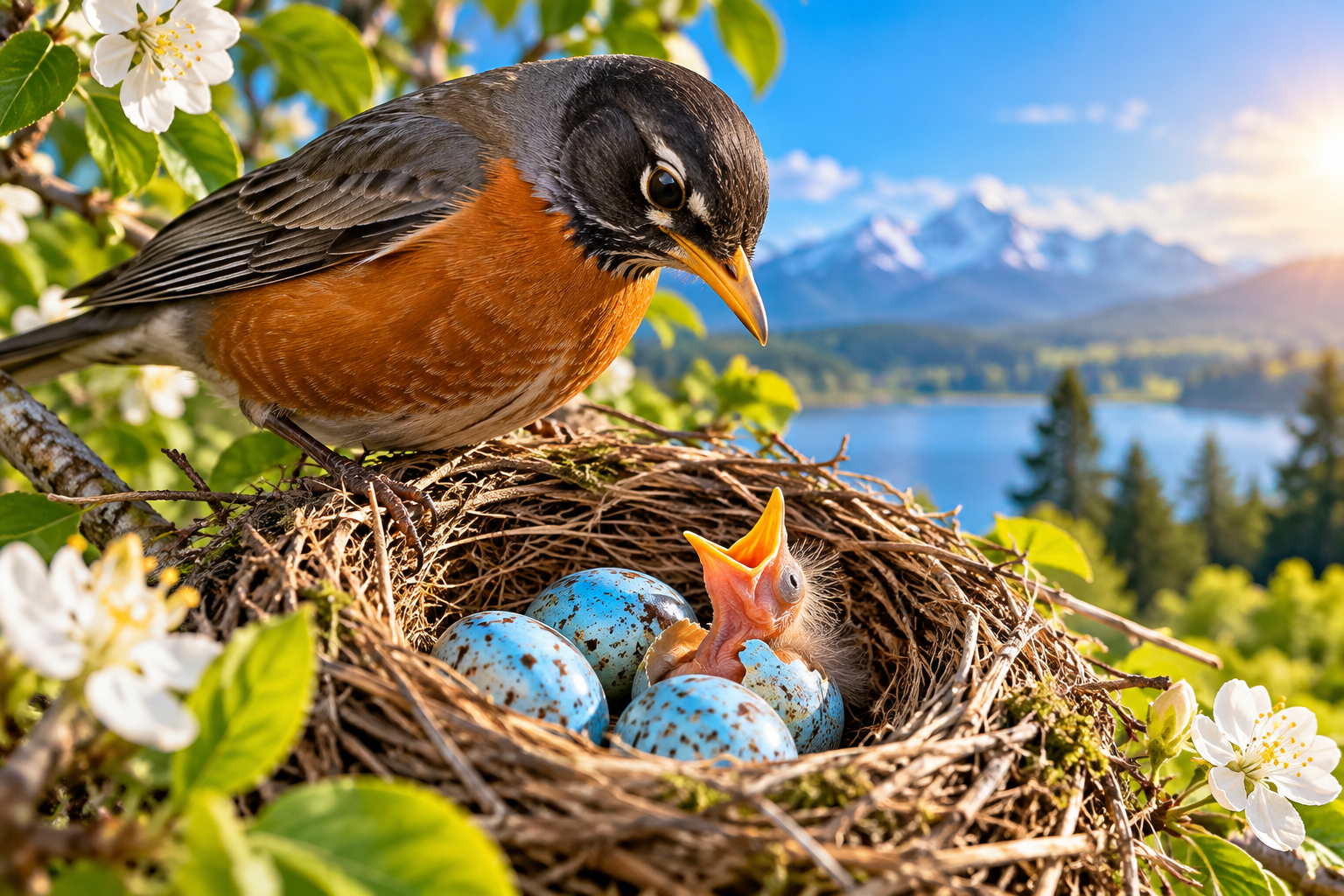
Bird eggs hatch anywhere from 10 days to more than 80 days after incubation begins a span wide enough to cover a house finch and a wandering albatross under the same biological rule.
Incubation is the period during which a parent bird maintains an egg at a stable temperature, usually by pressing a bare patch of belly skin against the shell, so the embryo inside can develop on schedule.
The answer to how long bird eggs take to hatch depends almost entirely on which species laid them, followed by when the parent actually started sitting and how steady conditions have stayed since.
This bird egg hatching guide lays out timelines by species, explains the variables that stretch or shorten them, and shows how to watch a nest without becoming the reason it fails.
How to Estimate a Hatch Date for a Nest You Found
Use this sequence to estimate a hatch date for a nest you have found and to track it safely from discovery to fledging.
- Identify the bird species before anything else. Watch which adult returns to the nest, note its size and markings, and match the egg color and clutch size. The species determines the timeline, so an incorrect ID makes every later estimate wrong.
- Record the date you first saw an adult sitting on the eggs continuously, not the date you first saw eggs. Steady sitting marks day one of incubation; eggs left cold in a growing clutch are not yet developing.
- Look up the incubation range for that species and add the low and high figures to your start date. You now have a hatch window rather than a single day, which is how these clocks actually behave.
- Choose one fixed observation point at least 20 to 30 feet away, or a window, and use binoculars. If the adult flushes when you approach, you are too close and the eggs are cooling.
- Check once daily at most, briefly, at the same time. Note whether an adult is present and whether behavior changes — increased food deliveries usually mean the chicks have arrived.
- Stop approaching entirely once hatching begins. Confirm success from a distance by listening for begging calls.
How Long Do Bird Eggs Take to Hatch? (Quick Answer)

Most familiar backyard and farm birds hatch between 10 and 35 days. Beyond that group, the range widens sharply: large raptors and seabirds can sit for a month, two months, or longer, because a bigger, more developed hatchling requires more time inside the shell.
The count does not start when the first egg appears. Many birds lay one egg per day and delay steady incubation until the clutch is nearly complete, which is why a nest can sit apparently idle for several days. Incubation — and the developmental clock — begins when the parent starts applying body heat consistently.
| Bird group | Typical hatch window |
|---|---|
| Small songbirds | 10–14 days |
| Quail | 16–18 days |
| Chickens | 21 days |
| Ducks | 26–35 days |
| Turkeys and geese | 28–35 days |
| Owls, eagles, large raptors | 30–40 days |
| Albatrosses, large seabirds | 80+ days |
Treat these as windows. A clutch that hatches a day or two outside the range is normal.
Bird Egg Incubation Times by Species and Bird Type

Bird egg incubation time by species follows body size and developmental strategy more than climate or geography. Smaller birds produce helpless, naked young that finish developing in the nest; larger birds invest more time in the shell.
- Small songbirds. The incubation time for small songbirds — robins, sparrows, finches, wrens, chickadees, cardinals — runs 10 to 14 days. These are the nests most often found in porch wreaths, hanging planters, and garage rafters, and they are also the fastest to clear. Chicks then spend roughly another two weeks in the nest before fledging.
- Quail. Quail egg hatching time falls between 16 and 18 days. Quail chicks emerge covered in down and mobile within hours, a precocial strategy that trades nest time for early independence.
- Chickens. Chicken egg incubation days are the most standardized figure in aviculture: 21 days, whether under a broody hen or in a cabinet incubator. Deviations of a day in either direction usually point to temperature drift.
- Ducks. The duck egg incubation period spans 26 to 35 days depending on breed. Mallard-derived domestic ducks sit toward the shorter end; Muscovy ducks occupy the longest stretch of that range.
- Turkeys and geese. Both cluster at 28 to 35 days. Geese are aggressive nest defenders, and the sitting goose rarely leaves for more than brief feeding breaks.
- Owls, eagles, and larger birds. The owl egg incubation period typically runs 30 to 40 days, similar to eagles and large hawks. These species often begin incubating with the first egg laid, which has consequences for the whole brood.
- Albatrosses and large seabirds. More than 80 days, with parents trading shifts that can last days while the other forages far offshore.
| Bird | Days |
|---|---|
| Robin, sparrow, finch | 10–14 |
| Quail | 16–18 |
| Chicken | 21 |
| Duck | 26–35 |
| Turkey, goose | 28–35 |
| Owl, eagle | 30–40 |
| Albatross | 80+ |
What Factors Affect How Long Bird Eggs Take to Hatch?
Species and developmental strategy. This is the dominant variable and the only one that is fixed. Altricial birds — those hatching blind and featherless — develop faster inside the shell and finish growing in the nest. Precocial birds hatch ready to walk, swim, and feed, which requires longer incubation.
When incubation actually begins. A clutch laid over five days does not start a five-day-old clock. Delayed incubation is the reason estimates made from the first egg sighting routinely run several days early.
Temperature and its consistency. Embryos develop within a narrow thermal band. Sustained cooling slows development and pushes the hatch date later; prolonged chilling kills the embryo outright. Consistency matters more than any single warm spell, which is why repeated human approach — each one flushing the parent off the nest — is genuinely damaging rather than merely rude.
Humidity and moisture. Eggs lose water vapor through the shell across incubation. Too little humidity and the embryo dehydrates; too much and the chick cannot form the air cell it needs to breathe before pipping. Wild parents manage this by carrying moisture in on breast feathers and by nest site selection.
Parental behavior and nest conditions. Bird nesting and incubation behavior includes regular egg turning, which prevents the embryo from adhering to the shell membrane, and brood patch contact that transfers heat directly. Nest position, insulation, shade, and predator pressure all shape how reliably a parent can maintain that routine. A stressed or repeatedly disturbed adult sits less, and the hatch slips.
Do All Eggs in a Nest Hatch at the Same Time?
Not always, and the difference is deliberate.
Synchronous hatching occurs when the parent withholds incubation until the final egg is laid. All embryos start developing together and hatch within hours of each other. Ducks, quail, and most precocial ground nesters use this strategy because the whole brood must leave the nest together shortly after hatching.
Asynchronous hatching occurs when incubation begins with the first or second egg. Chicks then emerge in the order they were laid, sometimes days apart. Owls, eagles, hawks, and herons commonly hatch this way. The result is a size hierarchy within the brood: the oldest chick is larger, competes harder for food, and survives lean years when the youngest does not. Harsh, but it guarantees at least one fledgling when prey is scarce.
Songbirds fall between the two, often starting incubation near the end of laying and hatching over a day or so. Finding one unhatched egg beside newly hatched siblings is common and rarely signals a problem.
What Happens During Bird Egg Incubation?
The bird egg development timeline compresses an entire body plan into days.
Early development. Within the first 24 to 48 hours of sustained warmth, the embryonic disc begins dividing and the earliest structures of the nervous system and circulatory system appear. A network of blood vessels spreads across the yolk to draw nutrients.
Growth inside the egg. Through the middle stretch, the heart beats, limbs and beak take shape, and feather follicles or down begin forming. The embryo absorbs calcium from the shell itself, which thins measurably by the end. Waste collects in a membrane sac, and the yolk shrinks as it is consumed.
Pipping and hatching. In the final days, the chick draws the remaining yolk into its abdomen and pushes its beak into the air cell at the blunt end, taking its first breath. Using an egg tooth — a hard temporary point on the upper beak — it chips a small hole, then cuts a ring around the shell. Full emergence can take many hours of rest and effort.
How Can You Tell When a Bird Egg Is About to Hatch?
The clearest signals are audible. Chicks vocalize inside the shell in the final day or two, producing faint peeping and a rhythmic tapping as they work at the shell. A visible star-shaped crack or a small hole at the wide end means pipping has started and hatching is underway.
An egg’s outward appearance cannot tell you a date. Color, size, and shape stay essentially unchanged throughout incubation, so estimates must come from species identification and the observed start of sitting — never from looking at the egg.
Do not pick up, candle, warm, or move wild bird eggs. Handling disrupts temperature, risks cracking a shell that has already thinned, and in the United States most native species and their nests are protected by law.
What Should You Do If You Find a Bird Nest with Eggs?
Leave it alone. That single instruction covers the overwhelming majority of cases.
Observe from a distance that does not make the parent leave the nest, and keep visits short and infrequent. Do not trim branches around the nest, do not clear the area for a better view, and do not add food or nesting material. Keep cats indoors and leash dogs nearby until the chicks fledge.
If the nest sits somewhere genuinely hazardous — a grill in use, a machine, a doorway that must open constantly — do not relocate it yourself. Moving a nest typically causes abandonment and is illegal for protected species. Contact a licensed wildlife rehabilitator or your state wildlife agency and follow their direction. For most songbirds, the entire disruption ends within a few weeks.
Frequently Asked Questions
Can bird eggs hatch in 10 days?
Yes. Small songbirds sit at the fast end of the range, with some clutches hatching around day 10 once steady incubation has begun.
Do bird eggs hatch after 21 days?
Chicken eggs hatch at 21 days. Plenty of species take longer — ducks, turkeys, geese, owls, and eagles all exceed that mark — so 21 days is a benchmark, not a universal deadline.
Can bird eggs take 2 months to hatch?
Yes. Albatrosses and other large seabirds incubate for more than 80 days, with parents alternating long shifts on the nest.
Does every egg in a nest hatch?
No. Infertility, chilling, predation, and developmental failure all take a share of any clutch. An unhatched egg among hatched siblings is normal.
Should I help a chick hatch?
No. The struggle drives yolk absorption and blood vessel withdrawal. Intervening early usually causes fatal bleeding.
Conclusion
Hatching times track the species, not the calendar 10 days for a finch, 21 for a chicken, 80 or more for an albatross. Identify the bird, mark the day sitting began, then let the clock run undisturbed. Watch from a distance, keep pets away, and call a licensed rehabilitator if the nest is truly at risk.




