 Skip to content

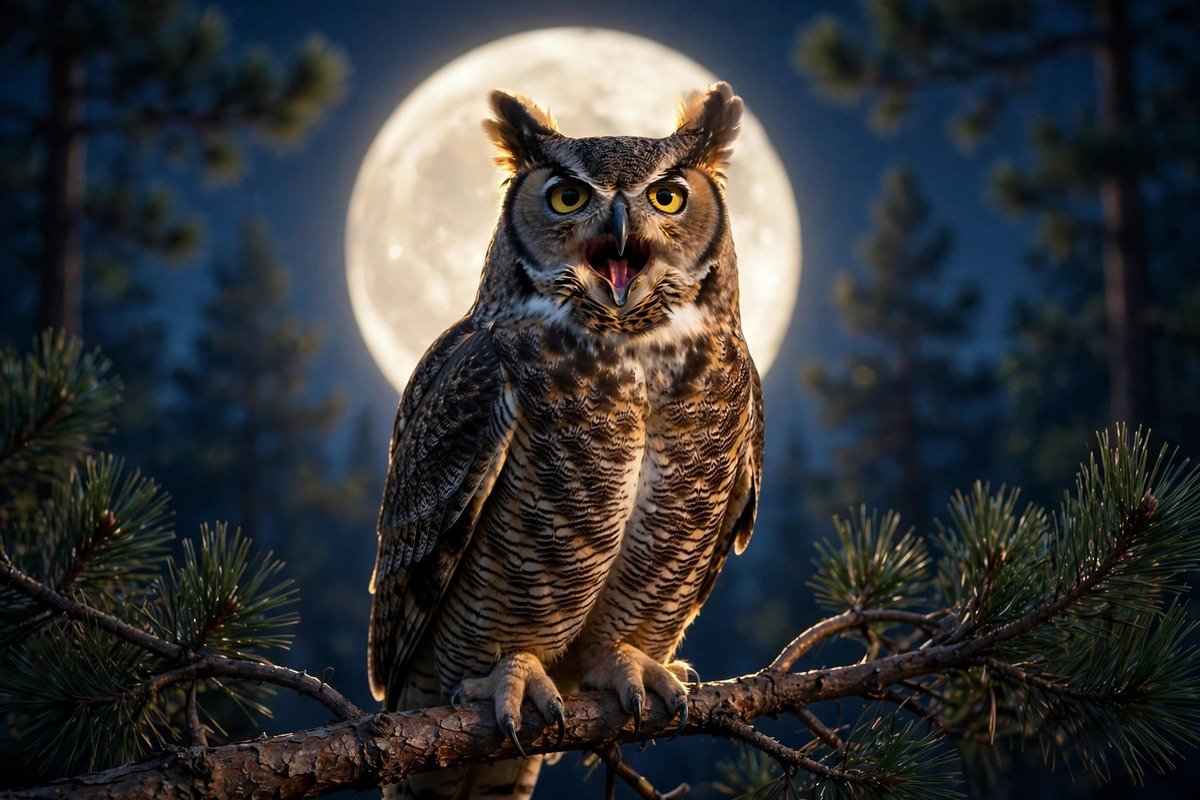
If you have ever stepped outside on a quiet night and heard a deep hoo-hoo hoooo rolling through the dark, you were eavesdropping on an owl doing business. Owls hoot at night for the same broad reason most birds sing during the day: they are communicating. The hoot you hear is usually a territorial claim, a call to a mate, or a contact note between family members.
Most owls are nocturnal, so their voices take over the night shift. With darkness hiding visual signals, sound becomes their main language. Researchers at the Cornell Lab of Ornithology note that owls use their voices to proclaim and defend territories, attract and bond with mates, beg for food, and express alarm. Each of those jobs sounds a little different once you know what to listen for. Below are the 7 most common reasons behind why do owls hoot at night, plus a guide to identifying the voices you are most likely to hear.

The Short Answer
Owls hoot at night because the night is when they live their lives. Darkness makes vision unreliable for long-distance signaling, so owls lean on sound the way songbirds lean on daylight color and movement. A single evening of hooting can carry several messages: a boundary marker for rival owls, a courtship invitation, a check-in with a mate, or an alert that something feels off.
Not every call is a hoot, either. Depending on the species, the night air may carry trills, whinnies, screeches, hisses, or the famous who cooks for you phrase of the barred owl. The meaning changes with the sound, the season, and the hour. Here is how to read the most common messages.
7 Reasons Owls Hoot at Night
1. Claiming Territory
Territory comes first. An owl’s survival depends on a reliable patch of hunting ground, so resident owls broadcast their address loudly. A deep, repetitive hoot works like an audio fence line: this stretch of woods is taken, so keep moving. The message is aimed mostly at other owls of the same species, which compete for the same prey and nest sites.
These territorial calls are built to travel. They are slow, low-pitched, and repeated, which lets sound waves push through branches and across fields on still nights. If a neighboring owl answers back, the two may trade hoots in a kind of slow-motion staring contest. Researchers who study owl communication describe these hoot-offs as a way to size up a rival without fighting: if the songs are evenly matched and neither bird backs down, an actual clash of talons is possible, but sound usually settles the dispute. In most cases the resident simply keeps calling until the intruder gives up and leaves.
2. Attracting a Mate
During courtship season, a male owl’s hoot changes from a warning into an invitation. He calls from prominent perches, often a bare branch near a good nest cavity or ledge, and advertises his fitness. A strong, steady, deep voice suggests a healthy bird holding quality territory, which is exactly what a female owl is listening for.
She does not just listen once. Females typically evaluate calling males over days or weeks before committing. The great horned owl is the classic example: in the coldest months, a male puffs out his white throat bib, bows, and delivers his booming series of hoots to any female within earshot. Audubon’s look at great horned owl courtship describes how a male’s persistent calling can lead to a partnership that lasts for years, even for life. Once the female answers and accepts, the courtship hoots gradually give way to the quieter calls of an established pair.
3. Dueting to Strengthen the Pair Bond
Some of the most touching owl sounds are duets. A mated pair calls back and forth in a coordinated rhythm, and the exchange reaffirms their bond and their shared territory. In great horned owls, the male’s hoots run noticeably deeper than the female’s higher-pitched answers, so a trained ear can tell the partners apart. A Washington State University ornithology researcher describes it as a nightly check-in: she is asking whether they are still together and still holding the territory, and he is confirming, loud enough for rival males to hear.
Duets peak when pairs are settling in for the breeding season and again when territory boundaries need restating. Barred owl pairs duet too, often blending their who cooks for you phrases into a wild overlapping chorus. Hearing a duet is a reliable sign that a mated pair has claimed the ground you are standing on.
4. Staying in Contact
Not every call carries weight. Paired owls and family groups use short, soft contact calls to keep track of each other in the dark. An adult may give a brief hoot or bark when moving to a new hunting perch, and its mate answers from across the territory. These quiet exchanges work like a text message that says: I am here, everything is fine.
Contact calls matter because owls hunt alone in large home ranges. A pair can spend the night hundreds of yards apart and still coordinate. The calls also help adults monitor fledglings that have left the nest but cannot yet fly well. Listen for these sounds on calm nights when the big territorial hoots are silent: small back-and-forth calls, repeated every minute or so, usually mean an owl family is going about its routine nearby.
5. Warning of Danger
When an owl feels threatened, the tone changes fast. Alarm calls are sharper, louder, and more urgent than territorial hoots. A roosting owl disturbed by a mobbing crow, a curious raccoon, or a passing human may snap into harsh barks, screeches, or a rising series of agitated hoots. These calls warn family members and can startle the intruder into backing off.
Barn owls are especially dramatic here. Instead of hooting, a cornered barn owl hisses with its wings spread wide, an aggressive display meant to make a predator think twice. Daytime hooting from any owl often belongs in this category: a bird flushed from its daytime roost will hoot from its new hiding spot as a stress or relocation call. If you hear frantic, rapid calls after dark, an owl is probably reacting to something in real time.
6. Begging Calls of the Young
Some night calls come from chicks, not adults. Hungry young owls make raspy, insistent begging sounds to pull adults toward them with food. These calls peak twice in the annual cycle: right after chicks hatch in spring, and again in summer when newly independent fledglings disperse and still rely on their parents.
Fledgling calls can sound nothing like the adult voice, which confuses many listeners. Great horned owl chicks rasp; screech-owl chicks peep; barn owl chicks produce drawn-out screeches that people sometimes mistake for a mammal in distress. The begging is relentless and usually answers within seconds when a parent arrives with prey. If the racket stops suddenly, watch: an adult just made a delivery.
7. Simply Because It Is Breeding Season
All the reasons above stack on top of each other during one period: breeding season. For many North American owls, that means late winter and early spring, when most other birds are silent. Great horned owls begin courting while snow is still on the ground, and several species start nesting as early as midwinter, which is why owls can seem suddenly loud in January and February.
Fall brings a second vocal peak in many regions, when owls are settling into winter territories and getting an early start on courtship. Bird communication researchers call autumn “the hooting season” for exactly this reason. So if owls seem to be calling more than usual, check the calendar first: the calendar usually explains the volume.
Learn the Voices: Common Backyard Owls
Identifying who is hooting makes the experience far richer, and only a few species account for most backyard encounters in the United States. Each has a signature sound, and learning the differences lets you translate the night air. For a broader look at the family, see our guide to owl types, habitats, and behavior.
Great Horned Owl: The Classic Hoot
This is the voice people picture when they think of an owl. Males deliver a deep, booming series, often written as hoo-hoo hooooo hoo-hoo, that can carry for miles on a still night. Females answer with a higher-pitched version of the same pattern. Beyond hoots, great horned owls squawk, bark, growl, and clack their bills. They also hoot in duet, with the pair trading phrases back and forth in a way that strengthens their bond and advertises their partnership to rivals.
Barred Owl: Who Cooks for You?
The barred owl’s signature call is one of the most recognizable sounds in North American woodlands: a rhythmic phrase rendered as who cooks for you, who cooks for you-all. Cornell Lab’s Barred Owl overview calls it a classic sound of old forests and treed swamps. Look for this round-headed, ear-tuft-free owl with dark brown eyes if you want to put a face to the voice. Barred owls also produce eerie cackles, gurgles, and caterwauling duets that some listeners describe as laughter or monkey-like chatter, sounds that vary by region and season.
Eastern Screech-Owl: The Whinny
Despite the name, the eastern screech-owl rarely screeches. Its trademark is a descending whinny: a horse-like trill that slides downward in pitch and lasts a couple of seconds. It also sings an even, monotone trill used for territorial claims and contact. Audubon’s guide to identifying owls by call is a helpful reference for sorting these small-owl voices from the larger hooters. Because screech-owls take readily to nest boxes, their whinnies are often the first owl sound suburban listeners learn.
Barn Owl: The Hiss, Not the Hoot
Barn owls break the hooting rule entirely. They communicate with harsh, drawn-out screeches and startling hisses rather than musical hoots. A flying barn owl may let out a rasping k-r-r-r-rick to advertise itself; a cornered one hisses with wings spread like a furious cat. Their pale heart-shaped faces make them easy to identify if you ever spot one gliding low over a field at dusk. The sound is unnerving the first time you hear it, but it is unmistakable once learned.

When Owls Hoot Most
Owl voices follow the calendar. The two big vocal peaks are autumn, when birds are setting up winter territories and previewing courtship, and late winter into early spring, when breeding is actually underway. A great horned owl pair courting in February is simply ahead of the curve: nesting that early means their chicks hatch just as spring prey becomes abundant.
Within a single night, owls call most often in the hours right after dusk and again before dawn. Those windows match their hunting rhythm: they settle in, announce their presence, and then hunt through the middle of the night more quietly. Moon phase and weather shift the details. Calm, still nights carry sound farther, so owls can afford to call less often; windy nights scatter the sound, which sometimes prompts more frequent calling. If you want to hear one, step outside about an hour after sunset on a clear, calm evening and simply listen.
Should You Worry About an Owl Near Your Home?
For most people, a hooting owl is a sign of a healthy neighborhood, not a problem. Owls eat enormous numbers of mice, voles, and rats, so a resident owl is effectively free pest control. Small pets are rarely at risk from the common backyard species, though it is sensible to supervise tiny pets outdoors at night, particularly where great horned owls live.
The hooting itself is never a threat signal aimed at you. Territorial calls target other owls; alarm calls mean something disturbed the owl, not that it is planning to attack. An owl hooting from the same tree night after night has simply decided your block is good habitat, which usually means mature trees and plenty of rodents. If you enjoy the visits, leaving large trees standing and avoiding rodenticides are the two most helpful things you can do. For more on encouraging them, see how to attract owls to your yard.

Frequently Asked Questions
Is it good luck to hear an owl hoot?
In many cultures, the owl is a symbol of wisdom rather than doom. Some traditions treat an owl’s call as a good omen or a sign to pay attention; others associate it with change or mystery. The biological reality is simpler and arguably better news: a hooting owl means a working predator is hunting pests in your neighborhood. Take it as a compliment to your yard’s habitat.
Why is an owl hooting outside my window?
An owl calling near your house is usually doing one of three things: defending its territory, calling to a mate, or hunting. Porch lights and streetlights attract insects and rodents, and owls follow the food. The bird may also be perched where your roofline or trees give it a clear listening post. The calls are aimed at other owls, not at you, and the owl will move on once its business is done.
Do owls hoot during the day?
Usually not, but it happens. Barred owls are among the most likely to call in daylight, and any owl flushed from its roost may hoot from its new hiding spot. Daytime calls often signal disturbance or alarm rather than relaxed territorial advertising. Owls are not the only night callers, either: learn about other birds that call after dark to sort owl sounds from the rest of the nighttime chorus.
What owl makes a monkey-like sound?
The sound people describe as monkey-like chatter is usually a barred owl. Beyond their famous who cooks for you phrase, barred owls produce bouts of cackling, gurgling, and caterwauling duets that can sound startlingly primate-like, especially during courtship. These wild calls vary by region and individual, which is why they surprise listeners who only know the classic hoot. Young barred owls and great horned owls can also make odd begging noises that get filed under “mystery animal.”
Do female owls hoot?
Yes, and often just as much as males. In owls, both sexes are vocal, which surprises people used to songbirds where males do most of the singing. Female hoots are usually higher-pitched than the male’s, which is how pairs can duet without talking over each other. Research on owl communication confirms that females hoot back just as readily during territorial exchanges and pair-bonding calls.
Conclusion
So why do owls hoot at night? Because the night is their workplace, and their voices are their tools. A single evening of hooting can stake a territorial claim, woo a mate, seal a pair bond, check in with family, sound an alarm, feed the young, or simply ride the energy of breeding season. Learning the cast of voices, from the great horned owl’s deep boom to the barred owl’s who cooks for you to the screech-owl’s whinny, turns a mysterious sound into a story you can follow.
Next time the hoots start up after dark, step outside and listen for a few minutes. Notice the rhythm, the pitch, and whether a second voice answers. You are hearing wild neighbors negotiate the same things any community negotiates: space, family, and belonging. And if you have never seen the caller, remember that where birds sleep at night is its own fascinating subject, because by dawn your owl will have tucked itself into a daytime hiding place and gone silent.




