 Skip to content

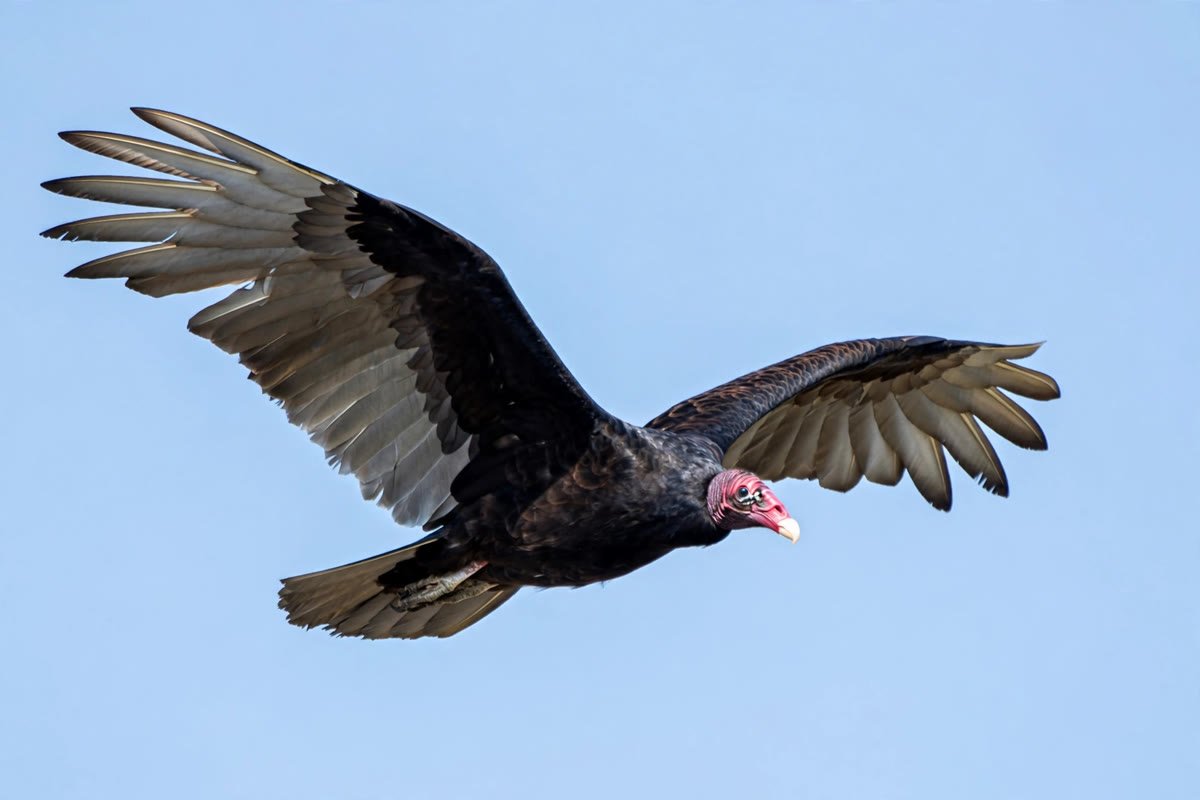
Can birds smell? Yes, and in some species the sense is remarkably sharp. For most of the twentieth century, textbooks told a different story: birds were creatures of eyesight and hearing, with no useful sense of smell at all. That idea came from a famous but flawed experiment, plus the undeniably small olfactory bulbs found in many bird brains. Modern research has overturned it. Turkey vultures track rotting meat by scent alone, petrels follow invisible odor trails across thousands of miles of open ocean, and songbirds choose mates partly by smell. The truth about avian olfaction is more interesting than the old myth. Some birds smell as well as many mammals, most smell far better than scientists once assumed, and all of them carry the genes for a working nose. This article explains the evidence, introduces the champion sniffers, and describes what it all means for the birds in your backyard.

Can Birds Smell? The Short Answer
Yes. Birds can smell, and the ability varies enormously from species to species. Scavengers and ocean wanderers use scent as a primary hunting tool. Songbirds use it more subtly, for mate choice, kin recognition, and nest hygiene. Even ordinary backyard birds carry functional olfactory receptor genes, which means their noses work better than their small brain bulbs suggest.
The confusion comes from an old assumption: that a small olfactory bulb means a useless nose. Brain anatomy does matter, but it is only one piece of the puzzle. Genetic studies have found that birds possess hundreds of olfactory receptor genes, and most of them are functional. In other words, the wiring for smell is present and switched on. What differs is how much each species relies on it.
Why Scientists Dismissed Bird Smell for a Century
The blame belongs partly to one of the most famous naturalists in history. In the 1820s, John James Audubon set out to settle whether vultures find carrion by sight or smell. He showed them paintings of dead sheep, which they pecked at eagerly, and then concealed putrid meat under plant material, which they ignored. Audubon concluded that vultures could not smell and must hunt by sight alone.
Later researchers found serious flaws in his experiment. Turkey vultures prefer fresher meat, so rotting, foul-smelling carcasses held little interest for them in the first place. They also tend to approach hidden food cautiously. Audubon tested what the birds wanted with their eyes while misunderstanding what they could do with their noses, and his verdict stuck for generations.
Anatomy seemed to back him up. Compared with dogs or rodents, most birds have small olfactory bulbs, the brain regions that process scent. Textbooks turned a correlation into a rule: small bulb, no smell. It was not until the 1960s that careful field experiments with controlled odors, and much later genetic studies of olfactory receptor genes, showed how wrong the assumption was. One 2008 genetic study found that the brown kiwi carries about six times more olfactory receptor genes than a blue tit or a canary, and that the vast majority of these genes are functional across the bird species studied.
Champion Sniffers: The Turkey Vulture
The turkey vulture is the bird world’s champion nose, and it settled the debate by accident more than once. In the early 1960s, researcher Kenneth Stager set out to test once and for all whether these scavengers locate carrion by sight or smell. He built a machine that released ethyl mercaptan, a sulfurous chemical produced by decaying meat, and took it into the field. Vultures came to the odor alone, with no visible carcass in sight. The experiment proved definitively that turkey vultures hunt by smell.
Ethyl mercaptan is also added to odorless natural gas so humans can detect leaks, which produced one of ornithology’s best anecdotes. According to BirdNote’s account of the story, Union Oil workers in California noticed vultures gathering wherever a 42-mile natural gas pipeline leaked, because the additive smelled like dinner. Engineers eventually pumped large doses of ethyl mercaptan through the line and simply watched where the vultures circled to find the leaks. Treat this as the colorful tale it is rather than a documented engineering protocol, but the underlying biology is real: turkey vultures can detect carrion odors in the air at concentrations of just a few parts per trillion, and they can locate a carcass completely hidden under forest foliage purely by scent.
Curiously, their close cousins cannot do the same. Black vultures have a much weaker sense of smell and find food mainly by watching turkey vultures, following them to carcasses the turkey vultures discovered first. If you see a mixed flock circling, the turkey vultures likely did the smelling while the black vultures did the watching. To learn more about these species side by side, see our complete guide to vulture species, behavior, and identification.
How a vulture nose works
The turkey vulture’s nasal passages are unusually large and perforated, which you can see in the close-up image above: the nostril passes right through the beak, giving odors maximum access to scent receptors. Paired with the largest olfactory system of any bird, this plumbing lets vultures sample the air while soaring hundreds of feet up and follow an odor gradient down to its source. They fly low over the forest canopy, zigzagging across scent trails that are invisible to us.
Seabirds That Follow Their Noses
If vultures are the champion sniffers of the land, the tubenoses own the ocean. This group, which includes petrels, shearwaters, and albatrosses, gets its name from the raised tube-like nostrils on their bills. They use these to detect dimethyl sulfide, or DMS, a chemical released into the air when tiny zooplankton graze on phytoplankton. Because grazing plankton marks waters rich in krill and small fish, DMS is essentially a dinner bell drifting on the wind.
UC Davis researcher Gabrielle Nevitt proved this with elegant at-sea experiments. Her team deployed slicks of DMS-scented vegetable oil alongside unscented control slicks from an icebreaker in the Southern Ocean. Wilson’s storm petrels flew into the scented slicks twice as often as the controls, and white-chinned petrels and prions tracked aerosol plumes of DMS “like bloodhounds,” as the UC Davis summary of Nevitt’s research puts it. Remarkably, even fledglings appear to recognize DMS before their first foraging flight, suggesting the scent map is partly innate.
Not every seabird cares equally. Albatrosses and cape petrels showed no preference for the scented slicks, and anatomical studies suggest these larger, more visual hunters spot feeding frenzies from afar rather than sniffing them out. The night-flying, cryptically colored species rely on smell the most, which makes sense: when you hunt in the dark over a featureless ocean, a nose beats eyes. You can read the broader science in this research overview of the brilliant and bizarre ways birds use smell.
Songbirds: A Subtle Sense of Smell
Songbirds were supposed to be the group with the weakest noses, and that turns out to be wrong too. Their sense of smell is quieter than a vulture’s, woven into social life rather than hunting. A study from Bielefeld University found that blue tit nestlings can distinguish the scent of their own siblings from the scent of unrelated nestlings, and they beg more intensely when they smell strangers. In a nest where chicks compete for every feeding, recognizing kin by smell is a genuine survival skill. Read the details in this report on the blue tit nestling study.
Mate choice runs on scent as well. Michigan State researcher Danielle Whittaker showed that dark-eyed juncos produce individually distinctive odors from bacteria living in their preen glands, and that these odors predict reproductive success better than plumage or size. When she altered the birds’ preen-gland bacteria with antibiotics, their scent profiles changed, which could make them less attractive to mates. As Smithsonian Magazine’s report on the research explains, birds are effectively sniffing each other’s microbiomes to judge a partner.
Smell also keeps nests healthy. Starlings and blue tits weave aromatic plants such as yarrow, hogweed, and elder into their nests, and the strong-smelling compounds in these plants repel parasites in much the way citronella repels mosquitoes. Hoopoe chicks take a more direct approach: they produce a foul-smelling preen oil, loaded with beneficial bacteria, that keeps germs and predators at bay. Even courtship has a perfume counter. Crested auklets, small black seabirds of the North Pacific, smell distinctly of tangerines, and both sexes rub their bills into a potential mate’s neck feathers to take in the scent before choosing.
Kiwis: The Bloodhound of the Bird World

The kiwi is the only bird with nostrils at the very tip of its bill, and it uses them the way a bloodhound uses its nose. This flightless New Zealander is nocturnal, with poor eyesight and an underground diet of worms, grubs, and insects. Vision is nearly useless for that lifestyle, so the kiwi probes the forest floor and sniffs out prey hidden in soil and leaf litter. Genetic work shows the kiwi carries roughly six times as many olfactory receptor genes as a blue tit or canary, backing up what its anatomy already suggests.
Kiwis evolved these traits because New Zealand had no land mammals for millions of years, leaving the night-foraging niche wide open. The bird that filled it converged on a mammal-like solution: a sensitive nose at the end of a long bill, whisker-like bristles around the face, and hair-like feathers. It is the closest thing the bird world has to a dedicated scent hound.
Pigeons and the Olfactory Map
Smell may also guide one of nature’s most famous navigators. Homing pigeons released in unfamiliar territory build mental maps of their surroundings, and experiments going back to the 1970s show that smell is part of the compass. Pigeons with their olfactory nerves impaired struggle to navigate home from unfamiliar release sites, while pigeons released in places they know can manage. Researchers believe pigeons learn the characteristic odors carried on winds from different directions and use this “olfactory map” to work out which way home lies.
This is an active area of research rather than settled fact, and the details of how the map works are still debated. But it fits the pattern: birds use scent in more ways than the old textbooks allowed. The same sensory toolkit that helps a petrel find krill or a vulture find carrion may help a pigeon find its loft. For more on the journeys birds undertake, see our guide to spring and fall migration seasons.
Birds and Their Noses: A Quick Comparison
| Species | What smell does for them | How we know |
|---|---|---|
| Turkey vulture | Locates hidden carrion from the air | Detected ethyl mercaptan at parts per trillion in field tests |
| Antarctic prion | Finds krill-rich waters; navigates by odor landscapes | Tracked DMS-scented slicks at sea; fledglings respond to DMS |
| Blue tit | Recognizes kin and selects parasite-fighting nest plants | Nestlings beg differently by scent; nests contain aromatic plants |
| Dark-eyed junco | Signals mate quality through preen-gland odor | Scent predicted reproductive success better than plumage |
| Kiwi | Finds underground prey at night | Nostrils at bill tip; six times the olfactory receptor genes of a blue tit |
| Homing pigeon | Builds an odor map for navigation | Pigeons with impaired smell struggle to home from unfamiliar sites |
| Black vulture | Relies mostly on vision and on turkey vultures | Follows other vultures to food rather than scenting it out |
| Wandering albatross | Hunts mainly by sight | Showed no preference for DMS-scented slicks in experiments |
What Bird Smell Means for Your Backyard
So what does all this mean for the birds at your feeder? Mostly, it means you can relax. There is no good evidence that backyard songbirds can smell birdseed from any distance, and scented or flavored seed products are marketing more than science. Birds find feeders the way they always have: by sight, by memory, and by watching other birds. If you want to understand the real discovery process, read how birds actually find bird feeders.
One myth deserves a careful burial. You have probably heard that touching a baby bird or its nest will leave human scent on it and cause the parents to abandon their young. This is largely false. Most songbirds have a modest sense of smell, and none of them have a nose tuned to human scent. As Scientific American’s fact check explains, parent birds abandon nests in response to disturbance, not odor, because they judge the risk to their young. If you find a fallen nestling, putting it back is the right move, and your scent is not the problem. Leave the nest alone afterward, though, because repeated visits are.
Birds also recognize individual humans, but they do it with their eyes, not their noses. Research on facial recognition shows that species like crows and mockingbirds can remember specific people and hold grudges against them. If a bird in your yard seems to know you, it is because it has seen you, as our article on whether birds recognize human faces explains in detail.
Practically speaking, scent matters to your backyard birds in a few small ways. Keep feeders clean, since sour or moldy seed produces odors that signal spoilage and can harbor harmful microbes. Avoid strong chemical smells near feeding areas, such as fresh paint or heavy pesticides, because an unusual odor landscape can make cautious birds wary even if they cannot identify the source. And skip the “aromatic” seed blends: a clean, well-placed feeder beats a perfumed one every time.

Frequently Asked Questions
Can birds smell bird seed?
There is no evidence that birds locate seed by smell. Birdseed has only a faint odor, and experiments consistently show that birds find food visually or through memory and social cues. Your feeders get discovered because birds see them, remember good locations, and follow other birds, not because they catch a whiff of sunflower seeds on the wind.
Will birds abandon their nest if humans touch it?
No. The idea that human scent causes nest abandonment is a myth, debunked in detail by Scientific American’s fact check. Parent birds may abandon a nest that is repeatedly disturbed, because they perceive a predator risk, but your smell is not the trigger. A fallen nestling can be safely returned to its nest.
Which bird has the best sense of smell?
The turkey vulture is most often cited as the champion, with the largest olfactory system of any bird and the ability to detect carrion odors at a few parts per trillion. The kiwi is a strong contender among land birds thanks to its bill-tip nostrils and large olfactory gene repertoire, while tubenose seabirds like prions dominate at sea. Ranking noses precisely is difficult, so treat “best” as a rough title rather than a measured record.
Can birds taste?
Yes, birds can taste, though with far fewer taste buds than mammals. They detect sweet, sour, salty, and bitter much as we do, which is why bitter additives can deter some species. Famously, though, birds are insensitive to capsaicin, the compound that makes chili peppers hot. That is why hot-pepper suet deters squirrels but birds eat it happily. Taste and smell work together in birds just as they do in us, only more quietly.
Conclusion
Can birds smell? The evidence says yes, across far more species and situations than science once believed. Turkey vultures proved it by finding carrion hidden under dense forest canopy, tubenose seabirds proved it by tracking plankton odors across thousands of miles of open ocean, and songbirds proved it by choosing mates and recognizing kin through scent. The century-old claim that birds lack a sense of smell was built on Audubon’s flawed experiment and an oversimplified reading of brain anatomy, and modern genetic research has dismantled both supports.
The practical takeaway is simple. Smell is a major hunting tool for some birds, a social sense for others, and a quiet background sense for most feeder visitors. You do not need scented seed, and you do not need to fear leaving your scent on a nest box. Just appreciate a hidden dimension of bird life. The next time a vulture drops toward something you cannot see, or a petrel banks into the wind over empty water, you will know the bird is reading a landscape of odors we will never perceive.





