 Skip to content

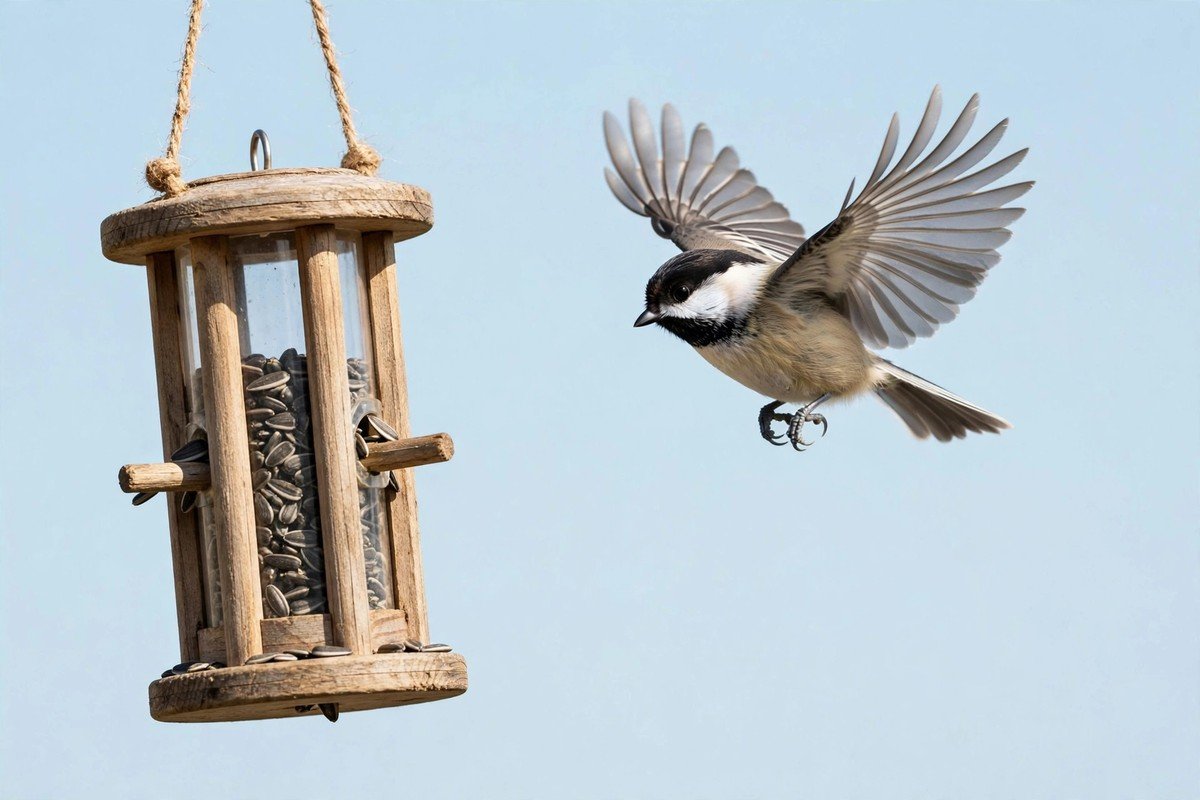
When you hang a brand-new bird feeder, one question follows within days: how do birds find bird feeders in the first place? The short answer is that they use a team of sharp senses and a better memory than most people give them credit for. A passing chickadee can spot the feeder’s shape from the air, hear other birds already feeding there, and then remember the exact spot for months or even years afterward.
Birds do not smell their way to the seed the way a dog follows a scent. Most songbirds rely almost entirely on sight and sound, and their vision is spectacular. Many can see ultraviolet light, and they catch motion far more easily than we do. Once a single bird discovers your feeder, its feeding calls and its simple presence spread the news across the neighborhood.
This article walks through the real science behind those first visits. You will learn which senses matter most, why memory keeps birds coming back, and what you can do to help your new feeder get noticed faster.

How Do Birds Find Bird Feeders? It Starts With Vision
Most feeder discoveries begin from above. Birds spend huge amounts of time scanning the ground and landscape as they fly, and a feeder full of seed stands out as a promising shape. Their vision is the primary tool for finding food, and it is tuned to exactly the cues that make a feeder noticeable.
Birds carry four types of color-sensing cones in their retinas, while humans have only three. That extra receptor lets them see ultraviolet light, so a seed, a berry, or a brightly colored feeder part can look strikingly different to a bird than it does to us. Feeder models with bright seed ports or glossy metal parts can catch a bird’s eye from a surprising distance.
Researchers at Princeton demonstrated just how fine this color sense is. Working with wild broad-tailed hummingbirds over three springs, they trained the birds to visit feeders marked with specific colors, including blends of ultraviolet and visible light that look identical to human eyes. Across more than 6,000 recorded feeder visits, the hummingbirds learned the rewarding colors reliably, and control experiments confirmed they were not using smell. Read about the Princeton hummingbird color-vision experiments.
Birds are also built to notice movement. A feeder swaying gently in the wind, or the motion of another bird landing on a perch, registers quickly in their visual system. This is one reason placing a feeder where it can be seen from open flight paths helps it get discovered sooner.
Hearing: The Dinner Bell of the Bird World
Sound travels farther than fine detail in a busy yard, and birds listen for food the way we listen for a ringing phone. The calls of birds already feeding act as a broadcast signal: food is here, and it is safe. Passing birds eavesdrop constantly, and a feeding chorus can pull in birds that never saw the feeder at all.
Chickadees, nuthatches, and titmice are famous for this. Their contact and feeding calls tell flockmates that a food source has been found, and the familiar “chick-a-dee” call itself shifts with the situation. When one chickadee finds your feeder, its calls can recruit the rest of its winter foraging flock within minutes.
Even the feeder itself makes noise that helps. Seeds shifting in a tube, hulls cracking under beaks, and birds landing on metal or wooden perches all create small sounds that a quiet yard carries well. A feeder with a few regulars becomes an advertisement for itself.
Memory: How Birds Remember Feeder Locations
Once a bird has found your feeder, it rarely needs to find it again by accident. Birds build detailed mental maps of their surroundings, storing the locations of reliable food sources and updating them as things change. This spatial memory explains why a feeder can sit quiet for months and then draw regular visits the moment the birds return.
No bird shows off this talent better than the black-capped chickadee. A single bird hides thousands of seeds and berries in scattered spots each fall and recovers many of them through the winter. Researchers at Columbia University discovered that each cache gets its own unique pattern of hippocampus activity, almost like a barcode: roughly 7 percent of the brain’s memory-center neurons fire in a specific pattern when a seed is hidden, and the same pattern fires again when the bird returns to retrieve it. See how chickadees tag memories with neural barcodes.
Memory capacity even shapes the bird brain itself. A classic study found that food-storing chickadee species have a relatively larger hippocampus, the brain’s memory center, than closely related species that store little food. In the Sierra Nevada, where winters are brutal, mountain chickadees at high elevations show stronger spatial memory and larger hippocampi, and long-term field research has found direct evidence that natural selection favors the best rememberers. Read about the high-elevation chickadee memory research.
A feeder is far easier to remember than a single hidden seed. It is big, it sits in the same place, and it refills itself. Do birds remember feeder locations? Absolutely. Resident birds can return to the same feeder year after year, and migrating birds may fold a reliable feeding station into their seasonal route.

Social Learning: One Bird’s Discovery Becomes a Flock’s Habit
Most feeders are not discovered by a lone genius. They are discovered by a scout, and then the discovery spreads. Many feeder birds travel in mixed-species winter flocks, and the different species watch each other constantly. When a bold chickadee or titmouse lands on an unfamiliar feeder and starts eating safely, shyer birds like goldfinches take the hint.
This is why the first visitor matters so much. Discovery often works like a network: one bird folds a feeder into its daily route, and others copy the behavior. The empty week while you wait is often just the network not having reached you yet. Long-running citizen science from Project FeederWatch, which has counted feeder birds every winter since 1987, captures exactly this pattern of discovery and spread across thousands of backyards.
You can use this to your advantage. A feeder that is already attracting two or three regulars will pull in far more newcomers than an empty one ever could. Patience during the quiet start is not wasted; it is the period when the first scout is deciding your yard is worth trusting.
Smell: The Sense Birds Barely Use
It is tempting to imagine birds sniffing out your sunflower seed from blocks away, but for most feeder birds smell plays almost no role. The olfactory bulbs in a songbird’s brain are relatively tiny, which limits how much scent information they process. Birds simply evolved to invest in eyes and ears instead of noses.
There are famous exceptions. Turkey vultures have an unusually strong sense of smell for locating carrion, and seabirds like albatrosses and petrels navigate an “olfactory landscape” over open ocean. Olfactory neuroscientist Gabrielle Nevitt at the University of California, Davis, has shown how seabirds use scent cues to find food, while noting that songbirds work with far less smell hardware. Learn why the idea that birds cannot smell is a myth.
A few feeder-bird experiments hint that smell is not quite zero. In one reported experiment, a yellow-backed chattering lory distinguished a feeder with artificial nectar from one with plain water using smell alone. Still, for your backyard chickadees, finches, and cardinals, scent is a minor player at best. Seed quality matters for nutrition and freshness, not for an aroma drifting across the neighborhood.
How Long Does It Take Birds to Find a New Feeder?
For most people, the honest answer is anywhere from a day or two to several weeks. Some yards get their first visitor within hours, especially where birds already pass through regularly. Others take a month or more, and that is completely normal.
Several factors decide the pace:
- Feeder placement: a feeder visible from open sky or regular flight paths gets spotted sooner than one tucked deep under a porch.
- The right seed: black oil sunflower seed appeals to the widest range of backyard birds, so it shortens the discovery time.
- Cover close by: birds feed more boldly when shrubs or trees offer an escape route within a few yards of the feeder.
- Timing: new feeders get found fastest in fall and winter, when natural food is thinner and birds are actively scouting.
- Reliable refills: once discovered, a feeder that stays full teaches birds to add it to their daily route.
If nothing has shown up after three or four weeks, change one variable at a time: move the feeder into a more visible spot, switch to black oil sunflower seed, or add a nearby water source. Something in the setup is usually working against discovery, not the birds themselves.
How Do Birds Know When the Feeder Is Full?
Birds do not have a notification system, but they hardly need one. Most feeder birds run a daily patrol route, checking their known food spots in a regular circuit. When a refill happens, the next visit reveals it instantly, and within a day the news spreads through calls and activity.
Routine matters here. Birds remember which feeders refill reliably, and many observers notice that their regulars appear within hours of a refill. The visible seed itself is the signal: a full tube of black oil sunflower seed looks different from an empty one, even from a passing bird’s height.
Consistency builds the habit. A feeder that sits empty for days teaches birds to skip it, while one that is reliably full earns a permanent place on the daily route. The birds are not watching you fill it; they are watching the results of the last visit.

What Attracts Birds to Feeders the Fastest?
If you want to cut the discovery time, work with the senses and habits described above. These steps give birds the strongest possible signals:
- Start with black oil sunflower seed. It attracts the widest variety of backyard birds, from chickadees to cardinals. See our guide to the best bird seeds for different birds to match seed to your local species.
- Hang the feeder where it can be seen. Open visibility from flight paths gets the first scout’s attention. Keep shrubs or small trees within 5 to 10 feet so new visitors have an escape route and feel safe landing.
- Add water nearby. Birds notice the sparkle and movement of a birdbath or a simple dripper even sooner than they notice a feeder, and a water stop often becomes a feeding stop.
- Keep the feeder clean. Dirty feeders smell musty and can harbor mold that harms birds. Clean your bird feeders every couple of weeks so the food stays fresh and inviting.
- Stop the squirrels. A feeder stripped bare by squirrels cannot build a bird routine. These 10 easy ways to stop squirrels from stealing bird food keep the seed where it belongs.
- Stay consistent. Refill on a schedule and keep the same location season to season. Birds reward reliability by making your feeder a daily habit.
Frequently Asked Questions
How long does it take birds to find a new feeder?
Usually anywhere from a day or two to several weeks. Yards on regular bird flight paths can see a first visitor within hours, while quieter yards may need a month or more. Fall and winter bring the fastest discoveries because natural food is thinner and birds are actively scouting.
What attracts birds to feeders the fastest?
Black oil sunflower seed, a feeder visible from open sky, cover within a few yards for safety, and fresh water nearby. Consistency matters as much as any single trick: a feeder that is always full gets added to birds’ daily routes much sooner.
Do birds remember feeder locations?
Yes. Birds build spatial maps of reliable food sources, and research on chickadees shows they remember thousands of individual cache locations using hippocampus activity. A feeder is a much bigger and more consistent target, so resident birds can remember the same feeder year after year.
Can birds smell bird seed?
Most feeder birds have a very limited sense of smell. Songbirds have relatively small olfactory bulbs and find food almost entirely by sight and sound. Exceptions like turkey vultures and some seabirds do use smell well, but your backyard finches are not following a scent trail to the seed.
Do birds tell other birds about feeders?
In effect, yes. Feeding calls and contact calls alert nearby birds that food has been found, and flockmates watch and copy each other. Once one or two regulars are visiting, their presence and calls do most of the recruiting for you.
Why are there no birds coming to my new feeder?
The most common reasons are poor visibility, an unappealing seed mix, no nearby cover, a dirty feeder, or simply not enough time. Check each factor, change one thing at a time, and give the feeder at least three to four weeks before judging. Predators in the yard, like a hunting hawk, can also keep birds away temporarily.
How do birds know when a feeder has been refilled?
They check. Feeder birds run daily patrol routes through their known food spots, so a refill is discovered on the next pass. Birds also remember which feeders refill reliably, and regulars often show up within hours of a fresh fill.
Conclusion
So how do birds find bird feeders? The same way they survive in the wild: with extraordinary vision, sharp hearing, remarkable memory, and a habit of copying each other. A feeder that is visible from the air, filled with the right seed, and kept full on a schedule gives every one of those senses something to work with. The first discovery is always the hardest part; after that, memory and social learning do the heavy lifting.
If your feeder is still quiet, do not take it personally. Give it a few weeks, move it into a more open spot if needed, and keep the seed fresh. Somewhere overhead, a chickadee is scanning your yard, and once it writes your feeder into its daily route, you will wonder how you ever had a quiet morning. For more ways to make your yard irresistible, see our guide to how to attract birds to your backyard fast, or build a bird feeder at home for a weekend project.





