
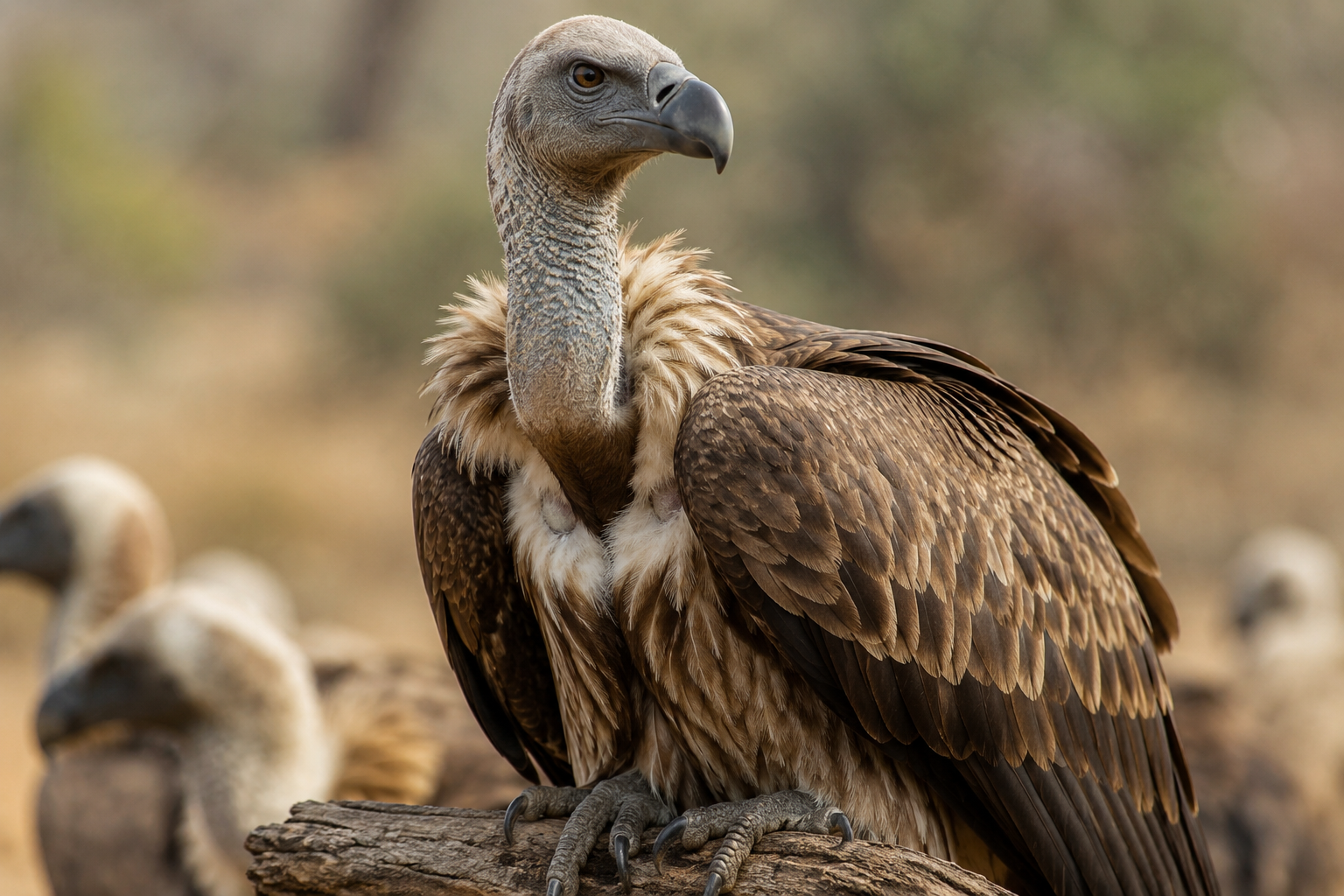
Vulture birds are among nature’s most important scavengers, playing a vital role in keeping ecosystems clean by feeding on carrion and reducing the spread of disease. Despite their reputation for being associated with death, these remarkable birds possess fascinating adaptations, complex behaviors, and impressive survival skills.
From the soaring turkey vulture and black vulture to species such as the king vulture, bearded vulture, and Griffon vulture, each has distinctive features that make identification easier. Understanding vulture species, habitat preferences, feeding habits, flight patterns, and physical characteristics can help birdwatchers and nature enthusiasts recognize these often-misunderstood birds in the wild.
In this complete guide to vulture birds, you’ll discover how vultures live, what they eat, where they are found, how to identify different species, and why these essential scavengers are so important to healthy ecosystems and natural environments.
New World vs. Old World: A Global Comparison
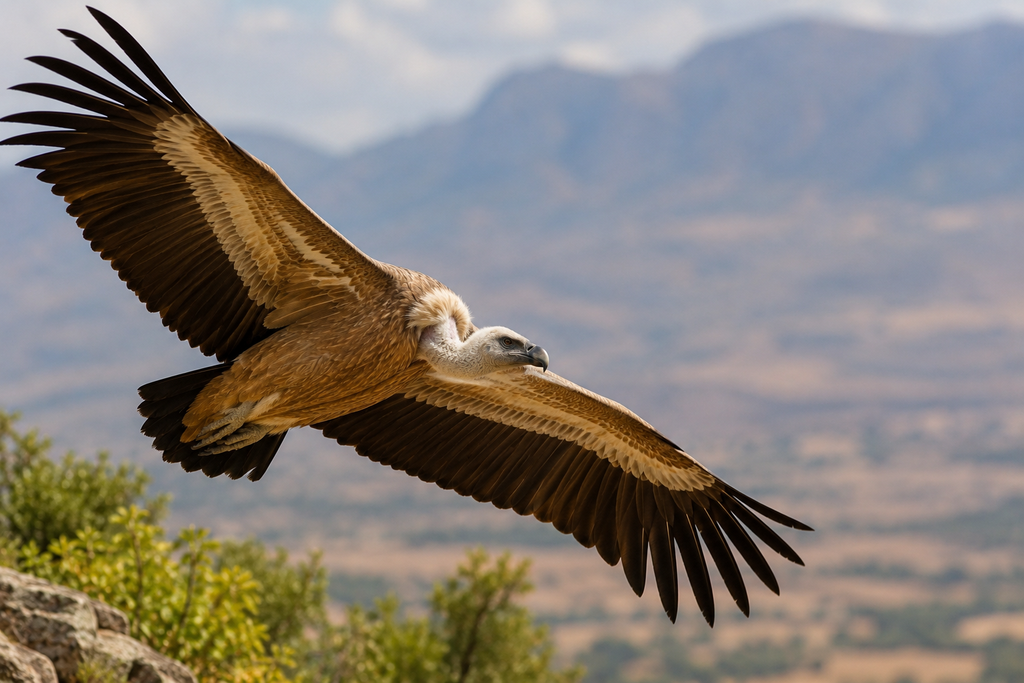
When it comes to birds vulture species, the split between New World and Old World families runs deeper than geography — these two groups evolved their scavenging lifestyles completely independently.
That’s convergent evolution at work, and it’s fascinating. New World vultures (family Cathartidae) are found exclusively in the Americas, ranging from southern Canada all the way down through South America. Old World species span Europe, Asia, and Africa — and despite looking remarkably similar, they’re more closely related to hawks and eagles.
The sensory differences are striking. New World vultures rely heavily on their sense of smell to locate carrion — a rare trait among birds. The Turkey Vulture is a textbook example, using olfactory receptors to sniff out carcasses hidden beneath dense forest canopy. Old World species, by contrast, depend almost entirely on keen eyesight, scanning vast open landscapes from altitude.
There’s also a structural difference worth knowing: New World vultures lack a syrinx — the avian voice box — which means they can only hiss or grunt. No calls, no songs. Old World vultures vocalize more freely.
Behavioral patterns differ too. You’ll often spot turkey vultures roosting in trees in communal groups, with roosting vultures gathering at traditional sites night after night. Old World species tend toward cliff ledges and rocky outcrops.
Understanding these vulture bird types side by side reveals something important: the physical machinery behind each family is built very differently — which sets up a natural question about exactly how that anatomy works.
Anatomy of an Efficient Scavenger
The vulture bird is, anatomically speaking, a biological hazmat unit — every major feature exists to handle death safely and efficiently.
The bald head isn’t just distinctive; it’s a hygiene adaptation. Feathers trap bacteria. A bare, exposed head stays far cleaner when plunged deep inside a carcass — and for birds like the massive lappet faced vulture, that head can reach surprisingly far. Even the Georgia vultures and Everglades vultures birders commonly spot share this same practical design logic.
Their digestive systems are equally extreme. Stomach acid in vultures is among the most corrosive of any vertebrate, capable of neutralizing pathogens — anthrax, cholera, botulinum toxin — that would kill most other animals outright. What looks like black vultures (a common misspelling, but the birds are real enough) scavenging recklessly is actually a highly controlled biological process.
Then there are the wings. Broad, long, and built for soaring, vulture wings are optimized to ride thermals — columns of warm rising air — for hours with minimal effort. If you’re all about turkey vultures, that wide, fingered silhouette against a blue sky is unmistakable.
Whether you’re studying one on a safari ltd vulture figurine or watching the real thing circle overhead, those wings tell the whole story. That distinctive shape is exactly what makes individual species identification so rewarding — and the next section breaks down the specific visual cues you’ll want to know.
Key Identification Markers for Common North American Species
Turkey Vulture, the more widespread of the two common North American species, is actually straightforward to identify. That bare red head (gray in juveniles) is visible at closer range, but the real diagnostic is vulture flight: the Turkey Vulture holds its wings in a distinct “V” shape and rocks side to side like a boat caught in a slow swell. It rarely locks into a flat, steady glide. That wobbling, teetering pattern is the tell.
The Black Vulture is almost the opposite in the air. Its wings stay flat and horizontal, and it flaps more frequently between glides. Up close, look for the gray, unfeathered head and the bright white patches at the wingtips — clean, high-contrast marks that stand out even at a distance. According to the Cornell Lab’s All About Birds, the Black Vulture’s shorter tail and stockier build further separate it from its red-headed relative.
Both species share overlapping habitat across much of the U.S. — open countryside, highway corridors, agricultural land, and the edges of forests where thermals develop reliably. A vulture bird of either species is just as likely to turn up soaring above a suburban freeway as over a remote ridgeline.
Worth noting: while Old World species like the Egyptian vulture, white-rumped vulture, and the rarer golden vulture occupy very different ranges, the identification logic— reading body shape, wing posture, and head color—transfers directly. The next section takes a closer look at the Turkey Vulture specifically, including the sensory superpower that sets it apart from nearly every other bird of prey.
1. The Turkey Vulture (Cathartes aura)
The Turkey Vulture is the most widespread vulture bird in North America — found in all lower 48 states — and two field marks make it unmistakable: its rocking, dihedral flight and its freakishly good nose.
Dihedral flight is the diagnostic tool every birder leans on. Rather than holding wings flat like an eagle might, Turkey Vultures raise both wings into a shallow “V,” then tip side to side on thermals. That constant teeter is a giveaway from hundreds of yards out.
Their olfactory system is equally remarkable — a supersized olfactory bulb lets them sniff out hidden carcasses beneath dense forest canopy, something even vultures and buzzards in other parts of the world can’t reliably do. If you’ve spotted vultures on the roof of a house circling your neighborhood, a Turkey Vulture probably led the way.
Despite occasional confusion with painted vulture references or National Geographic vulture features on exotic species, this bird is purely American — no vulture bird price tag, no captivity required. The next section covers their close cousin, the Black Vulture, whose personality is a different story entirely.
2. The Black Vulture (Coragyps atratus)
The Black Vulture is stockier and more aggressive in personality than the Turkey Vulture, with a shorter tail and a flap-heavy flight style that makes it easy to distinguish overhead.
Unlike the lazy, tilting soar of its cousin, the Black Vulture beats its wings frequently between glides. And because it lacks the Turkey Vulture’s sharp sense of smell, it often tails those birds directly to food sources — a clever social workaround. Think of it as the vulture world’s equivalent of following someone else’s GPS. Spotting vultures on top of a house or roosting in groups? Black Vultures are frequently the culprits, since they’re far more communal by nature.
As for aggression: these birds, vulture enthusiasts, are typically shy around humans, but they will defend nests. That’s a meaningful distinction from bold raptors like eagles and vultures of other genera.
They’re nothing like the dramatic bearded vulture of Eurasia, the white-backed vulture of Africa, or the Tibetan vulture of high-altitude Asia, all of which have reputations built on sheer size and striking vulture bird wings.
The Black Vulture is comparatively reserved, though famously bold around carcasses, sometimes displacing larger competitors. And no, despite what internet folklore (or rumors about a zoo bird named George the vulture) might suggest — unprovoked attacks on people are essentially unheard of.
Vulture Behavior: Deciphering Unusual Activity
Vultures display some of the strangest behaviors in the bird world — and almost every one of them has a precise biological purpose you can learn to read.
Urohidrosis is a prime example. Unlike mammals, vultures can’t sweat through their skin, so they urinate on their own legs. The evaporating liquid cools the blood vessels near the surface — it’s genuinely effective thermoregulation, even if it’s not exactly charming. Both the turkey vulture and the black vulture use this method, and it may also carry mild antimicrobial properties.
The horaltic pose — wings spread wide, facing the sun — serves a dual role. It warms core body temperature after cold nights and helps bake off feather parasites. You’ll spot this posture regularly in the morning, whether you’re watching a turkey vulture in flight or finding one perched motionless on a fence post.
If you’re wondering, why would a vulture be in my yard? — it’s almost always one of two things: a nearby food source (carrion you haven’t noticed yet) or thermal updrafts rising from your roof or pavement. An injured turkey vulture, on the other hand, will look listless and won’t take flight when approached — that’s a clear signal to contact a wildlife rehabilitator rather than handling it yourself.
These same behavioral patterns appear globally. African vulture species, including the Rüppell’s griffon vulture, use identical wing-spreading postures documented across sub-Saharan Africa.
The black turkey vulture variation — a colloquial term sometimes applied to darker-plumaged individuals — shows the same urohidrosis behavior as the standard black vulture. And no, despite what you might find in obscure corners of the internet, a black vulture for sale is not legal to own as a pet in the U.S. under the Migratory Bird Treaty Act.
Understanding why individual vultures behave strangely sets the stage for something even more striking: what happens when dozens of them gather together.
1. Understanding the Kettle and the Committee
Vulture group names are some of the most evocative in birding — and they actually tell you something meaningful about what the birds are doing.
When you spot a swirling mass of birds vulture species riding a thermal column upward, that’s called a kettle. The term fits perfectly: they churn and spiral like water coming to a boil. Both the American black vulture and the Turkey Vulture form mixed kettles, though you can often pick them apart mid-flight — the black vulture in flight shows those distinctive white wingtip patches, while large turkey vulture individuals tilt and teeter on turkey vulture wings held in a shallow V.
On the ground or perched in trees, that same group becomes a committee (sometimes called a volt). If you’ve ever had black vultures on my roof — or your roof — you’ve witnessed a committee in action, often gathered to warm up before the day’s soaring begins. (More on that sunning behavior in the next section.)
Feeding hierarchy adds another layer. Dominant birds, typically larger, more experienced individuals, feed first. The black-headed vulture’s bold personality often edges out competitors, and the American black vulture, as a species, is known to displace Turkey Vultures from carcasses despite being smaller. Interestingly, an owl-vulture analogy occasionally gets applied to roosting behavior, since both use communal sites strategically for safety in numbers.
2. Thermoregulation and Sunlight
That wide-winged, motionless posture you spot on a fence post at dawn isn’t a sick bird — it’s a vulture running a precise biological maintenance routine.
Spreading their wings to absorb solar heat is a genuine energy-saving strategy. Rather than burning calories to warm up after a cold night, birds vulture species — from the regal king of vulture to the high-altitude himalayan vulture — let the sun do the work. A young turkey vulture adopts this posture just as instinctively as any adult.
Sunlight also acts as a natural disinfectant. UV rays help kill bacteria clinging to feathers after a meal, reducing the risk of infection from the pathogens that come with feeding on carrion. Even the rüppell’s griffon vulture, known for flying at extreme altitudes, performs this ritual at ground level.
The misconception that a sunning vulture is dying is one of the most common misreads in backyard birding — and it’s worth correcting firmly. (You’re not witnessing distress; you’re watching self-maintenance.) No reputable wildlife organization lists “sunning posture” as a sign of illness, and neither the biggest vulture in the world nor the smallest performs this behavior out of weakness.
Worth noting: searches like “vultures for sale” or “griffon vulture for sale” do spike online, but these birds are federally protected in the U.S. — not available as pets. Those numbers alone hint at how much raw data surrounds vultures globally, which sets up the fascinating statistics ahead.
Vultures By The Numbers: Global Scavenger Statistics
With 23 extant species worldwide — spanning everything from the spectacularly colored king vulture to the understated hooded vulture — vultures represent one of nature’s most specialized ecological guilds.
That number breaks down across two entirely separate evolutionary lineages: Old World vultures in Africa, Europe, and Asia, and New World vultures across the Americas. North American vultures alone include the turkey vulture, black vulture, and California condor. So if you’ve been Googling “vultures near me” after spotting a large, dark soaring bird, you’re likely dealing with one of those three.
The altitude numbers are genuinely staggering. Rüppell’s vulture holds the avian altitude record at over 37,000 feet — roughly cruising altitude for a commercial jet. That’s a different conversation entirely, and one worth exploring further.
On the metabolic side, vultures can survive weeks between meals. Their digestive systems are tuned for feast-or-famine cycles in ways most birds simply aren’t. In African savanna ecosystems, vultures (including the so-called “white vulture bird” morphs seen in some species) account for up to 70% of carrion consumption, outpacing mammalian scavengers by a wide margin.
Different types of vultures often partition carcasses by feeding role — and that efficiency is exactly what makes the group irreplaceable. (And no, the king vulture is not for sale — the “king vulture for sale” search trend reflects curiosity, not legal commerce.)
1. Avian Altitude Records
Vultures don’t just soar — they climb to elevations that rival commercial flight corridors, making them some of the highest-flying birds on the planet.
The cinereous vulture, Europe and Asia’s largest bird of prey, has been recorded cruising above 20,000 feet. That’s not far below standard cruising altitude for regional aircraft. The Indian vulture and other Old World species similarly exploit thermal columns that push them well above most birds vulture watchers ever expect to see. Even a juvenile black vulture, still mastering flight mechanics, catches thermals with surprising efficiency.
Physiologically, high-altitude soaring demands serious adaptation — hemoglobin that binds oxygen more aggressively at low partial pressures, enlarged lungs, and a slower, more efficient metabolic burn. The north american black vulture shares some of these traits, though it typically soars lower than its Old World counterparts.
The strategic payoff is enormous. Height equals range. From altitude, vultures scan thousands of square miles for carrion, effectively acting as aerial scouts. Spot 4 vultures spiraling downward and you can almost guarantee something dead is below — that behavioral signal is exactly what other scavengers (and curious humans who’ve noticed vultures on house rooftops) have learned to read.
It’s a foraging network operating at 15,000 feet. And before anyone wonders — no, the “bearded vulture for sale” search trend doesn’t reflect legal trade; these birds are strictly protected. That altitude mastery translates directly into the outsized ecological value we’ll unpack next.
2. Ecosystem Services and Economic Impact
Vultures function as nature’s most cost-effective sanitation crew, saving economies billions of dollars annually by disposing of carcasses before disease has a chance to spread.
The numbers are striking. Researchers estimate that vulture scavenging provides sanitation services worth hundreds of millions of dollars each year in regions where the birds are abundant — services that would otherwise require government-funded carcass removal programs.
The griffon vulture alone, one of Europe’s most widespread scavengers, processes enormous volumes of livestock remains across Spain, Portugal, and the Balkans. When vulture populations crash, those carcasses don’t disappear.
They linger, attracting feral dogs and rodents, which then become disease vectors for rabies and anthrax. South Asia witnessed this directly: the collapse of vulture populations in the 1990s correlated with a dramatic spike in feral dog numbers and, consequently, human rabies cases.
The red-headed vulture, once common across South and Southeast Asia, has nearly vanished from much of its range — and communities there are paying a measurable public health price for it. Similarly, populations of the black and white vulture species and even the so-called buzzard black variants that once kept landscapes clean are now struggling in fragmented habitats.
Not every birds vulture species does the same job, either. The Bearded Vulture (Gypaetus barbatus) occupies a completely unique ecological niche: it eats bone marrow. It carries large bones aloft and drops them onto rocks to crack them open — a behavior so specialized that it fills a gap no other scavenger can. All about vultures comes down to understanding that each species plugs a specific hole in the ecosystem.
And then there’s the curiosity factor. Searches for topics like “pet vulture for sale” and about turkey vultures reflect genuine public fascination with these birds — but that interest hasn’t yet translated into the conservation funding these species urgently need. The ecological and economic stakes, though, point clearly toward what comes next: the very real threats still working against vulture survival.
Limitations and Conservation Challenges
Vultures face a dangerous combination of threats that no single country can solve alone — and understanding those threats starts with knowing more about vulture bird biology and behavior.
Lead poisoning is one of the most documented killers across types of vultures worldwide. When hunters field-dress game and leave gut piles behind, scavenging birds — from the familiar turkey vulture to the striking griffon vulture in flight — ingest lead ammunition fragments embedded in the tissue. It accumulates fast and kills quietly.
The Bearded Vulture (Gypaetus barbatus) illustrates just how fragile specific species can become. Habitat loss across European mountain ranges has pushed this bird to critically low numbers in some regions.
Appearance doesn’t help public perception either. Whether you’re trying to show me turkey vultures or explaining why an all black vulture is circling overhead, most people’s first instinct is unease. Even juvenile turkey vultures — with their pinkish heads and hunched posture — read as menacing to the uninitiated. The so-called “rainbow vulture” myth (the idea that vivid coloring signals danger) reflects just how deeply misunderstood these birds are.
And protecting migratory species? That’s genuinely hard. A griffon vulture in flight crosses borders that don’t care about conservation treaties. Coordinating protections about vulture bird populations across dozens of nations — each with different laws, enforcement capacity, and agricultural practices — remains an unresolved challenge. Those cultural and political gaps are worth keeping in mind as we examine the misconceptions that make conservation messaging even harder.
Common Misconceptions and Fears
Vultures don’t circle dying animals — they circle thermals, riding rising columns of warm air to scan vast territories below.
That image of large vultures lazily orbiting a suffering creature is pure Hollywood. What’s actually happening is efficient soaring. Birds vulture species like the turkey vulture use updrafts to conserve energy, and any apparent “waiting” is often tied to gas buildup inside a carcass, which signals a meal is ready. So if you spot a Ruppell’s griffon vulture or a turkey vulture georgia resident wheeling overhead, something below is already dead — not dying.
Is it rare to see a vulture? In most rural and suburban areas of North America, not at all. If you’ve ever searched “show me a turkey vulture” or worried about turkey vultures in my yard, you’re in good company — and those sightings are genuinely common. Presence is seasonal, though; populations migrate and concentrate depending on temperature and food availability.
Exotic species like the amazon king vulture or a red feathered vulture belong to specific tropical ranges, making those sightings genuinely unusual. But the threats these birds face — from power lines to toxic veterinary drugs — are anything but rare, and those dangers deserve a closer look.
Environmental Threats and Human Impact
Vultures face a quiet crisis — one that plays out across power lines, wind farms, and contaminated carcasses long before most people ever think to wonder “show me a vulture” in the wild.
Power line collisions kill large soaring birds vulture species in alarming numbers globally, and wind turbines add another layer of risk for wide-ranging raptors like Rüppell’s vulture, which soars at altitudes up to 37,000 feet. Even the palm nut vulture, a smaller and more specialized African species, isn’t immune to habitat-driven displacement. These infrastructure threats are growing faster than mitigation efforts.
Then there’s diclofenac. This veterinary anti-inflammatory drug — when ingested through treated livestock carcasses — causes fatal kidney failure in Old World vultures. It’s been catastrophic across South Asia and parts of Europe, collapsing populations by over 95% in some regions. Whether you’re looking at field guides, a schleich vulture figurine, or audubon black vulture illustrations, none of that captures the scale of what diclofenac has done to real populations.
If you find an injured vulture — maybe one grounded near vultures in my yard territory after a collision — don’t attempt to handle it yourself. These birds aren’t the “vultures” of cartoon imagination; they’re large, stressed animals with powerful beaks. Contact a licensed wildlife rehabilitator immediately. State wildlife agencies and raptor centers have the training and permits to intervene safely and give the bird a real chance at recovery. The next section pulls all of this together into the essentials worth remembering.
Key Takeaways
Vultures are among the most ecologically essential birds on the planet — specialized, non-aggressive, and irreplaceable in ways most people never stop to appreciate.
The identification basics are worth keeping straight. The wild turkey vulture shows a red, bare head and rocks side to side in flight with wings held in a shallow V; the Black Vulture has a gray head, shorter tail, and flaps more frequently. Same sky, very different bird.
Across the globe, species like the Himalayan griffon, the Cape Vulture, and the king vulture share one critical role: consuming carcasses before pathogens spread. That’s not incidental — it’s a biological service no other bird replicates at scale.
Here’s what you can actually do with that knowledge:
- Switch to lead-free ammunition — it’s the single biggest action hunters can take to reduce vulture poisoning deaths
- Support habitat protection for roosting corridors, including if you find vultures roosting on your house — relocation, not extermination, is the right call
- Skip the novelty searches — inquiries like bearded vulture price or vulture falconry reflect a misunderstanding of what these birds are; they’re not pets or falconry partners, they’re wild specialists
And respect the biology. These aren’t dangerous raptors eyeing your pets. They’re highly adapted scavengers doing quiet, unglamorous, essential work — and they need a functioning ecosystem just as much as that ecosystem needs them.