Skip to content

So, what colors attract birds? The honest answer is that it depends on the species. Hummingbirds key in on red, orange, and yellow because those warm colors are linked to nectar-rich flowers, while bluebirds and jays respond to blue, and goldfinches visit yellow blooms. But color is only part of the story, because reliable food, fresh water, and safe shelter matter far more than the paint on your feeder.
There is real science behind these preferences. Birds see color very differently from people: they have four types of color receptors instead of our three, plus the ability to detect ultraviolet light. Research on wild hummingbirds has even shown they can distinguish color combinations that humans cannot perceive at all. This guide breaks down what the research actually says, which colors help with each bird group, and how to put that knowledge to work in your yard without wasting money on gimmicks.

What Colors Attract Birds to Feeders and Flowers?
Here is the practical summary before we get into the science. Red, orange, and yellow are the strongest draws for hummingbirds, since these colors signal nectar in the wild. Blue appeals to bluebirds and blue jays, and yellow flowers pull in goldfinches and warblers. Earth tones like green, tan, and brown do not excite birds, but they attract shyer species such as quail, doves, and sparrows by offering a sense of shelter and safety.
Keep one caveat in mind throughout this article: the research on feeder and flower color preferences is real but limited. Many popular claims come from small studies, extension handouts, and observed patterns rather than large controlled trials. Treat the guidance below as well-supported direction, not iron law. A fresh, well-placed feeder with the right food will outperform a perfectly colored empty one every time.
How Birds See Color Differently From Us
To understand which colors attract birds, you first need to understand how birds see. The difference between bird vision and human vision is not small. It is a whole extra dimension of color.
Tetrachromatic Vision: Four Receptors Instead of Three
Humans are trichromats: we detect color with three types of cone cells tuned to red, green, and blue light. Birds are tetrachromats: they carry a fourth type of cone that is sensitive to ultraviolet (UV) light. On top of that, bird cones contain tiny oil droplets that act as internal filters, sharpening each receptor’s sensitivity and improving the ability to tell similar hues apart.
This matters for your garden because flowers and feathers look different to birds than to us. Many petals carry nectar guides, patterns that steer pollinators toward nectar, and some of these markings show up only in ultraviolet. A flower that looks plain yellow to you may carry bold UV patterns to a bird. The color you choose is being judged by a much more demanding eye than yours.
The Princeton Hummingbird Experiments
The most striking proof comes from field experiments led by Princeton researcher Mary Caswell Stoddard, published in the Proceedings of the National Academy of Sciences in 2020. The team trained wild broad-tailed hummingbirds in a Colorado alpine meadow to find sugar water next to LED tubes glowing in specific colors, recording more than 6,000 feeder visits across 19 experiments.
The hummingbirds learned to discriminate what scientists call non-spectral colors: blends of wavelengths from far-apart parts of the spectrum that never appear in a rainbow. They reliably distinguished ultraviolet+green from pure green, and told apart two subtly different mixes of ultraviolet+red, differences that looked identical to the human researchers. As Princeton’s research news reported, the birds can theoretically perceive up to five such non-spectral colors, compared to just one (purple) for humans.
What does this mean for your backyard? A flower or feeder you see as simply red may read to a hummingbird as a far richer signal, especially when it reflects UV. Color choices for hummingbird plantings operate on a visual channel you cannot see, which is one reason native, nectar-rich flowers keep working even when our eyes tell us little about why.
Red, Orange, and Yellow: The Hummingbird Magnets
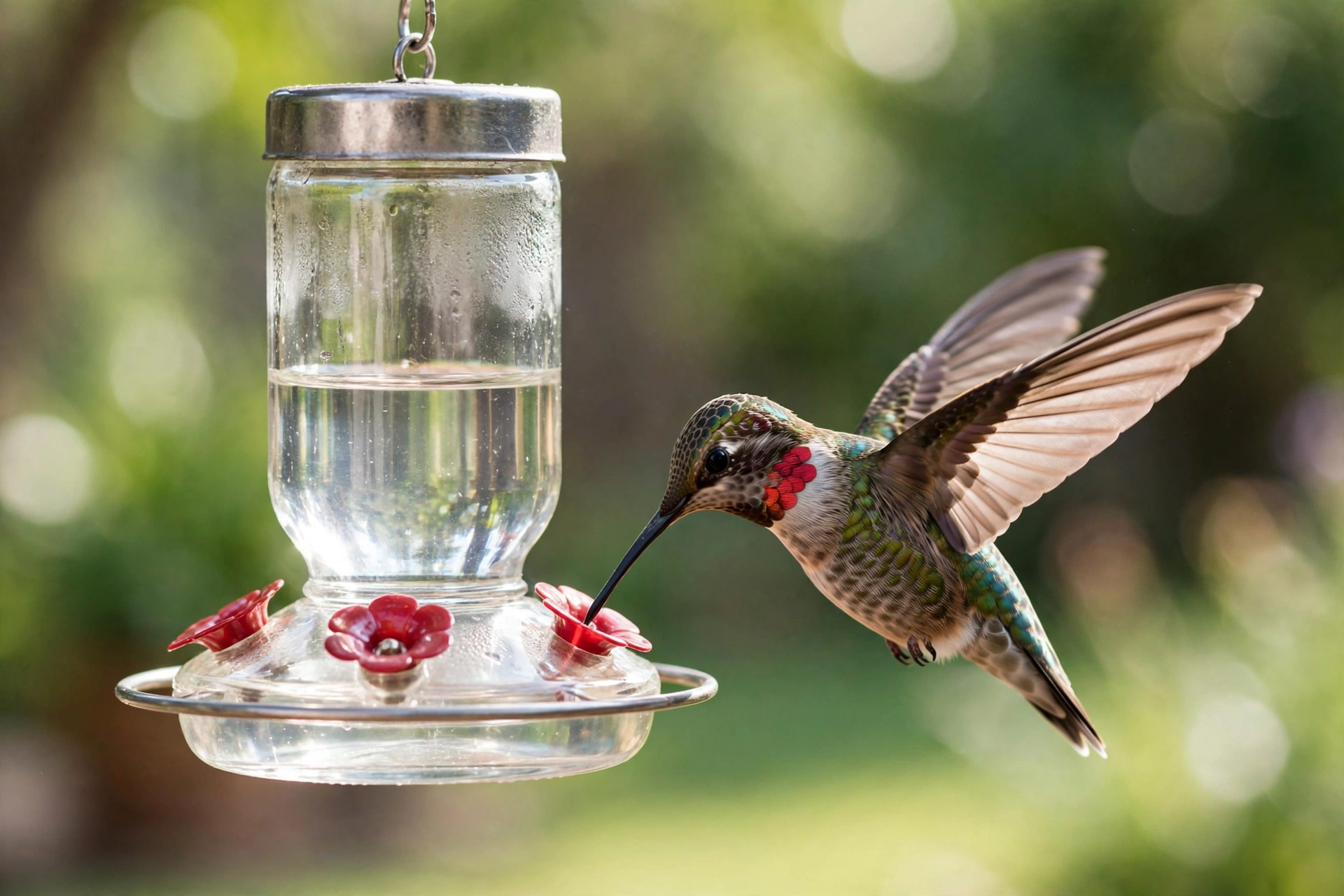
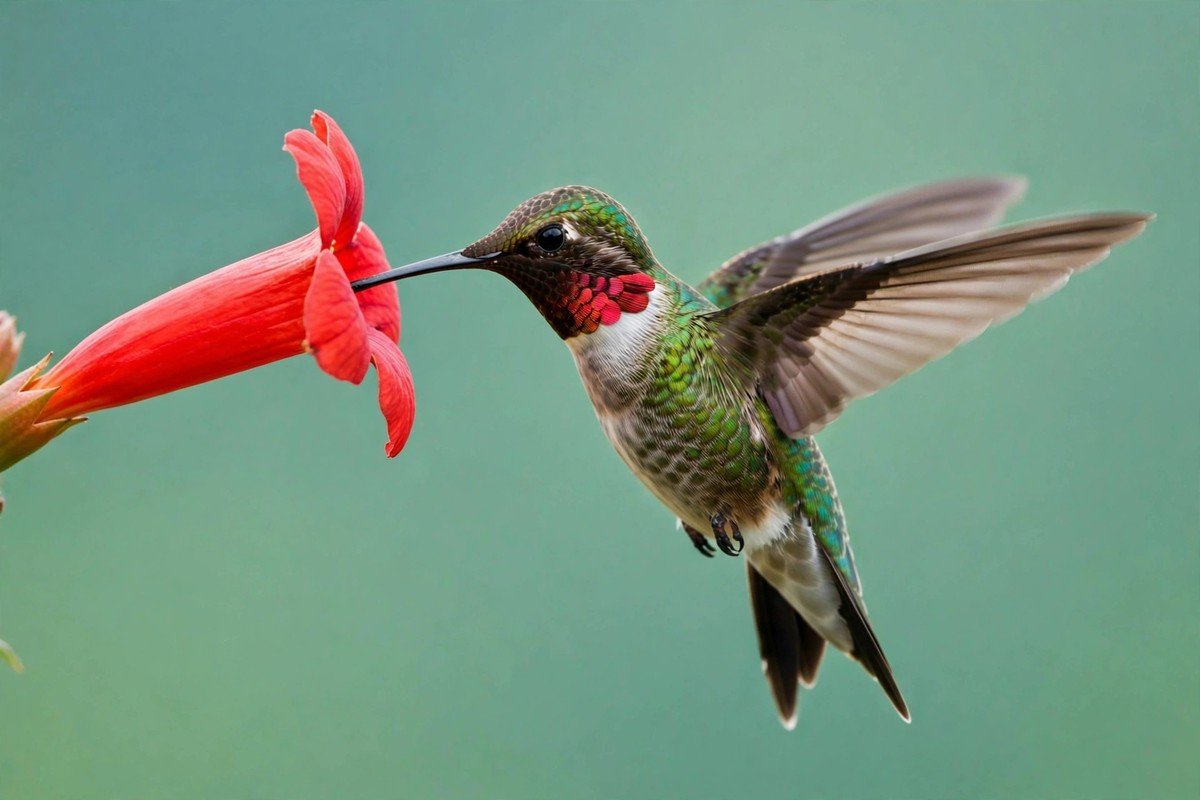
Red is the single most recommended color for attracting hummingbirds, and the reason is ecological. Many nectar-rich, tubular flowers that evolved alongside hummingbirds bloom red, orange, or pink. Hummingbirds learn this association and scan for it. A red feeder, red ribbon tied near a feeder, or red blooms in the garden all serve as beacons.
Orange and yellow sit right beside red on the preference list. Coral honeysuckle, trumpet vine, bee balm, and similar warm-colored tubular flowers are hummingbird staples, and a University of Illinois Extension guide to flower colors for pollinators and birds notes that hummingbirds are especially attracted to red and pink flowers, with orange and yellow close behind.
There is an interesting twist in the science here. Research by Robert Gegear found that red flowers may have evolved partly as “antibee” flowers rather than specifically “bird flowers”: bees cannot see red well, so red blooms discourage bee visits while their complex tubular shape reserves the nectar for long-billed hummingbirds. Either way, red in your garden means more hummingbird attention and fewer competing bees.
The Red Dye Warning: Keep Nectar Clear
Here is a critical safety rule. Red on the feeder is good; red dye in the nectar is not. Audubon’s hummingbird feeding guidance is explicit: never use red dye, because natural nectar is clear and the coloring could be harmful. Mix one part plain white sugar with four parts water, skip the honey, brown sugar, and commercial red mixes, and let the red feeder parts do the attracting. For full details on picking and placing the right feeder, see the site’s hummingbird feeder guide.

Blue: Bluebirds, Jays, and Warblers
Blue is the color most associated with, well, blue birds. Eastern bluebirds, western bluebirds, blue jays, and indigo buntings all carry vivid blue plumage, and blue flowers, bluebird boxes painted soft blue, and blue-accented feeders are commonly recommended to draw their attention. Bluebirds in particular seem to investigate blue nest boxes readily, which makes color a practical tool when setting up housing.
Yellow joins the list for goldfinches and warblers: goldfinches are drawn to yellow flowers such as coneflowers and sunflowers, both for the color signal and for the seeds those blooms later produce. Planting yellow alongside red and orange gives you coverage across the most color-responsive backyard species.
One caution: the evidence for blue-specific attraction is observational and anecdotal rather than experimental. No one has run the equivalent of the Princeton hummingbird trials on bluebird feeder color. Blue remains a sensible, low-risk choice for bluebird-focused setups, but present it as practical wisdom rather than proven science. If you are building a bluebird program from scratch, pair the color strategy with proven basics like proper nest box dimensions and placement, covered in this guide to attracting bluebirds with food, nest boxes, and habitat.
Earth Tones, White, and Black: What Neutral Colors Do
Not every color needs to shout. Earth tones such as green, tan, and brown attract shyer ground-feeding birds like quail, doves, and sparrows because those colors read as shelter and safety. A feeder or birdbath in natural tones blends into the landscape, which nervous species prefer. If your target birds are the bold, colorful ones, brights work; if you want the quiet foragers, go natural.
White deserves care. A University of Illinois Extension handout flags white as the one color to use sparingly around birds: too much white will not necessarily scare birds out of your garden, but it can keep some away. White is a stark contrast against greenery, and several species flash white feathers or tail patches as alarm signals, so large white surfaces can read as a warning. Use white accents rather than white everything.
Black and very dark colors have a different drawback: heat. A black feeder in full summer sun can make nectar or seed spoil faster and can make metal parts uncomfortably hot. Choose dark colors for shaded spots, or pick lighter shades for sunny placements.
Colors and Materials That Can Startle or Repel Birds
Sometimes the question is not what to add but what to avoid. Highly reflective and flashing materials are the main offenders. Mirrored surfaces, metallic pinwheels, and strips of shiny mylar tape are sold specifically as bird deterrents for gardens and orchards because sudden flashes of reflected light startle birds. That same effect works against you if your feeder area is full of glinting metal.
Predator eye patterns are another known deterrent. Decals and balloons printed with large staring eyes mimic an owl or hawk gaze and are used to keep birds off buildings and crops. Avoid decorating your feeding station with anything resembling a watching eye. Similarly, keep feeders away from windows with strong reflections, since the flashing glare can both confuse and deter approaching birds.
Be honest about the limits here. Scare tactics with reflective materials work inconsistently, birds habituate to them, and most “repel” claims come from pest-control contexts rather than backyard studies. The practical takeaway is modest: avoid mirror-bright, flashing decor near feeders and houses, and you remove one possible reason for birds to stay away.
Choosing Feeder and Flower Colors by Bird
Use this table as a starting point, then adjust for what actually visits your yard. Local species, seasons, and food availability will always outweigh color.
| Bird group | Best colors | Notes |
|---|---|---|
| Hummingbirds | Red, orange, pink | Red feeder parts or blooms; nectar always clear, never dyed |
| Bluebirds | Blue | Blue nest boxes and blue accents; pair with mealworms and proper box placement |
| Blue jays | Blue | Blue platform or tray feeders; jays respond strongly to peanuts and suet too |
| Goldfinches | Yellow | Yellow flowers and yellow nyjer feeders; goldfinches also love coneflower seed heads |
| Orioles and warblers | Orange | Orange halves and orange blooms; orioles also visit grape jelly feeders |
| Quail, doves, sparrows | Green, tan, brown | Earth tones signal shelter; ground or low platform feeding suits them |
When you shop for feeders, color is a tiebreaker, not the decision. Pick feeders that come apart for scrubbing, hold the right food, and suit the species you want. For flower choices that do double duty as color signals and nectar sources, the site’s roundup of the best flowers for hummingbirds lists proven tubular bloomers in the warm shades hummingbirds favor.
If you are starting from zero, work the fundamentals first. The complete beginner guide to attracting birds walks through food, water, shelter, and placement in the order that actually brings birds in, with color as a finishing touch rather than the foundation.

Frequently Asked Questions
Does feeder color really matter, or is food more important?
Food matters more, by a wide margin. Color helps birds notice a new feeder or flower patch, especially red for hummingbirds, but no color compensates for stale seed, dirty nectar, or a feeder placed where birds feel unsafe. Get the food, water, cleanliness, and location right first, then use color to give new visitors a visual cue.
Should hummingbird nectar be red?
No. The nectar should be completely clear: one part plain white sugar dissolved in four parts water. Red dye adds nothing, natural flower nectar is clear, and Audubon warns the coloring could be harmful. Use red on the feeder itself, on nearby ribbons, or in surrounding flowers to catch the birds’ attention instead.
What color birdhouse attracts birds best?
For most cavity nesters, natural wood tones or muted earth colors work best because they blend in and stay cooler. Blue-painted boxes are popular for bluebirds and are readily investigated, which makes blue a fine choice if bluebirds are your goal. Avoid glossy white (glare and heat) and dark colors in full sun. Interior should always stay unpainted.
Do birds see ultraviolet light?
Yes. Birds have a fourth color receptor sensitive to ultraviolet light, on top of the red, green, and blue receptors humans share. Princeton experiments with wild hummingbirds showed they can even distinguish blended colors that include UV, such as ultraviolet+green, from the plain visible colors humans see. Many flowers carry UV nectar guides invisible to us, so birds are judging your garden on a channel you cannot see.
Do birds like the color red?
Hummingbirds strongly associate red with nectar, so red is the most effective attention-getter for them. Other birds do not share that specific link, and the Illinois Extension handout even suggests that too much white, not red, is the color to be careful with. Red will not hurt or repel most backyard birds; it simply matters most to hummingbirds.
What color bird feeder attracts the most birds?
There is no single color that attracts the most birds across all species, and be skeptical of any source that names one. Red wins for hummingbirds, blue suits bluebirds and jays, yellow draws goldfinches, and earth tones comfort shy ground feeders. The honest answer is to match the color to the birds you want, and remember that fresh food and safe placement beat color every time.
Conclusion
Color is a genuine tool for attracting birds, backed by real vision science. Hummingbirds see a richer world than we do, with ultraviolet channels and non-spectral blends confirmed in wild field experiments, and their pull toward red, orange, and yellow is one of the most reliable patterns in backyard birding. Blue serves bluebirds and jays, yellow draws goldfinches, and earth tones reassure the shy ground feeders.
Still, keep the science in proportion. Feeder-color research beyond hummingbirds is thin, and no paint color substitutes for fresh food, clean water, and safe cover. Use what colors attract birds as your guide for flowers, feeder accents, and nest boxes, then let the fundamentals do the heavy lifting. The birds will tell you what works: watch, adjust, and enjoy the results.