Skip to content

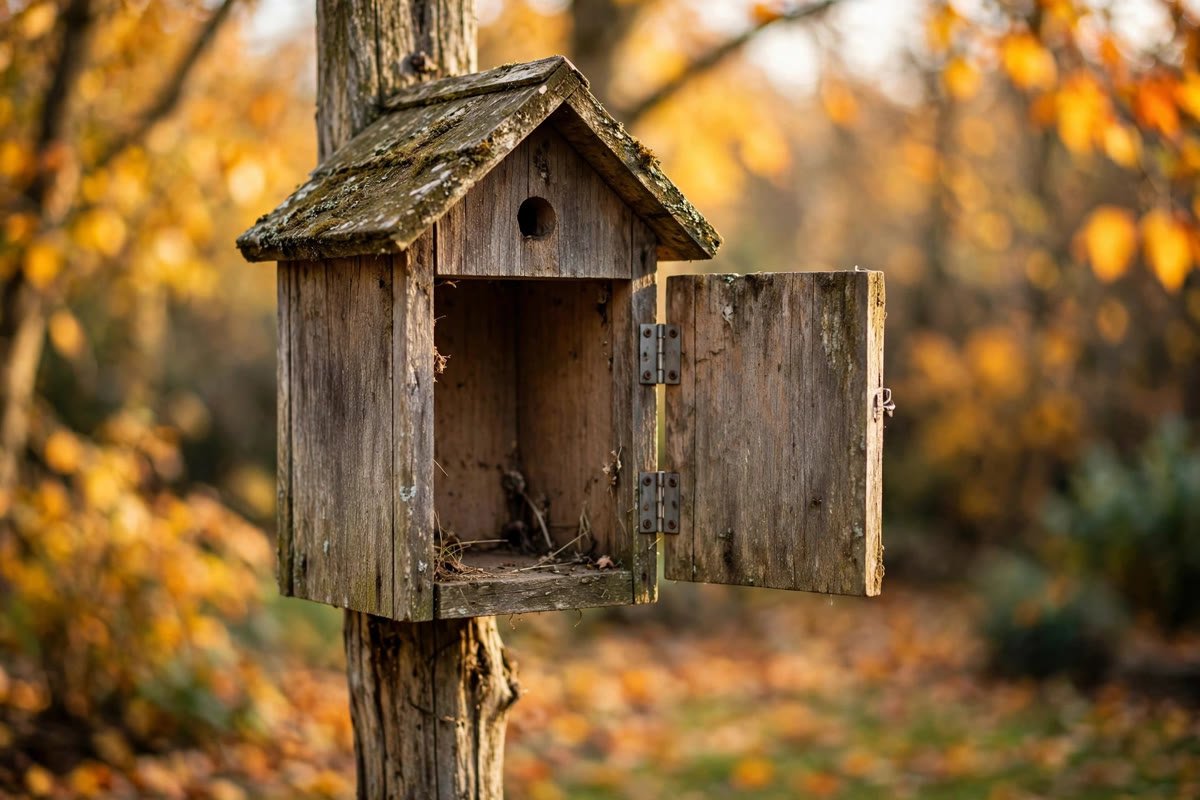
Yes. If you have birdhouses in your yard, you should clean them out every fall once nesting season is over. Old nests left in a box can harbor mites, lice, and blowfly larvae that attack nestlings, and stacked nests push next spring’s chicks closer to the entrance where predators can reach them. Learning how to clean out birdhouses is one of the simplest chores a backyard birder can do, and it takes about twenty minutes per box.
The ideal window is October and early November in most of the United States, after the last brood has fledged. Open the box, remove the old nest, scrape and scrub the interior, disinfect if needed, let it dry in the sun, and check for repairs. A clean box gives winter roosting birds a healthier shelter and makes your boxes far more attractive to bluebirds, chickadees, and wrens when they start scouting for nest sites in spring.

The Short Answer: Yes, Clean Them Every Fall
Birdhouses should be cleaned out once a year, every year, after the breeding season ends. This is not optional maintenance. It is the single most important thing you can do for cavity-nesting birds in your yard.
Many people assume birds want a furnished home and leave last year’s nest in place as a head start. Birds do not think that way. Most cavity nesters, including bluebirds and chickadees, prefer to build a fresh nest on a clean floor. Some species, like house wrens, will build right on top of an old nest, which creates its own problem: each layer raises the nest cup higher in the box, putting young birds closer to the entrance hole where predators can reach them.
A dirty box also works against you in spring. Returning birds inspect boxes carefully, and a box full of matted, soiled nesting material signals parasite trouble. According to the Cornell Lab’s NestWatch program, monitors should clean boxes at the end of the breeding season, because birds also use clean boxes as winter roosts.
Why Old Nests Must Go
The strongest reason to clean is parasites. Old nesting material is a living ecosystem, and most of it is bad news for chicks.
Blowfly larvae are the worst offenders. Adult blowflies lay eggs in nests, and the larvae feed on nestling blood, mostly at night, hiding in the nest material during the day. They drop to the bottom of the nest to pupate, and the pupae can survive right through winter in the old material, ready to attack next year’s brood. Infestations tend to get worse in second and third broods as summer wears on, which is exactly when boxes are dirtiest.
Mites, lice, and fleas overwinter in old nests too, and fungi and disease pathogens can persist in damp, soiled material, especially in boxes with poor drainage. Then there is the space problem: birds that build on top of old nests, particularly wrens, can stack several seasons of material until the nest cup sits inches below the entrance hole, within reach of predators and close enough that restless fledglings can fall out early. One thorough cleaning each fall resets the box to its designed depth.
Finally, empty boxes get claimed by squatters. Wasps, mice, and spiders move into dirty, unmaintained boxes, and a birdhouse containing an active wasp nest is a birdhouse no bird will enter. Fall cleaning evicts these tenants before they establish.
When Exactly to Clean
Timing matters because you must never clean a box that is still in use. The rule is simple: wait until the last brood of the season has fledged, then clean as soon as practical. In most of the country, that window falls between September and November.
Do not assume the season is over just because spring’s first brood left months ago. Bluebirds, house wrens, and chickadees often raise two or even three broods in a summer. A box that looked quiet in July may have hosted a second family in August. If you want to track the season precisely, learn how long baby birds stay in the nest so you can estimate when the final brood should be gone.
Regional timing varies. In the northern states and New England, most cavity nesters finish by late September, so early October is ideal. In the mid-Atlantic and Midwest, aim for mid to late October. In the Deep South, where nesting can run long, November is the safer bet. Wherever you live, confirm the box is truly empty before you start.
To check, approach the box quietly, stand to the side rather than in front of the entrance hole, and tap the box gently. Listen for movement or chirping. Then open the access panel and look inside. If you see eggs, nestlings, or a bird sitting tight, close the box and come back in a week. When in doubt, wait. An extra week of patience costs nothing; disturbing an active nest costs everything.
Also watch for fall roosters. Some birds, especially chickadees and titmice, start using empty boxes as nighttime roosts in autumn. If a bird is sleeping in the box, clean during midday when it is out foraging, and put the box back quickly so it is available by dusk.
What You Will Need
You probably own most of this already. Gather everything before you open the first box so you are not hunting for tools with a nest in your hand.
- Work gloves: old nests are dusty and can carry parasites. Disposable gloves work too.
- Dust mask: nesting material holds fine dust, mold spores, and dried droppings.
- Stiff brush or old toothbrush: for scrubbing the interior walls and corners.
- Putty knife or paint scraper: to dislodge stuck-on nests and droppings.
- Plastic trash bags: one per box, for sealing up the old material.
- Bucket and spray bottle: for wash and rinse water.
- Mild, unscented detergent: a small squirt in warm water for scrubbing.
- Household bleach: for the disinfecting solution, mixed one part bleach to ten parts water.
- Old rags or paper towels: for wiping and drying.
- Screwdriver and pliers: for tightening hardware and removing the box from its mount.
- Fine sandpaper: to smooth any splinters inside the box.
- Replacement screws, wood scraps, or a metal entrance-hole guard: for the repairs you will find.
A note on the disinfecting solution: the Cornell Lab’s NestWatch program recommends scrubbing the box with mild detergent and water, and using a solution of one part bleach to ten parts water when the nest is soiled with fecal matter. That 1:10 ratio is the guidance to follow: a weak bleach wash, a thorough rinse, and full drying in the sun.
How to Clean Out Birdhouses, Step by Step
Work on a calm, dry day. Midday is best, when any roosting birds are out. Here is the full process for each box.
- Confirm the box is empty. Tap the side, listen, then open the access panel or roof and look inside. Check for eggs, nestlings, sleeping birds, and also for wasps or mice before reaching in.
- Remove the box from its mount if you can. Cleaning on a workbench or sawhorse is easier and safer than working on a ladder. If the box is fixed in place, open the access panel and work carefully.
- Pull out the old nest with gloved hands. Place it directly into a plastic trash bag. If a nest is stuck, loosen it with the putty knife. Remove every bit of material, including the compressed layer at the bottom where blowfly pupae hide.
- Scrape the interior. Use the putty knife to remove stuck-on droppings, mud, and debris from the walls, floor, and ceiling. Get into the corners, where parasites collect.
- Scrub with warm water and a little mild detergent. Use the stiff brush on all interior surfaces, the entrance hole rim, and the drainage holes. Do not use strong soaps, scented cleaners, or insecticides; residue can harm birds.
- Disinfect if the box was heavily used. Spray or wipe the interior with the one-part-bleach-to-ten-parts-water solution, let it sit for about ten minutes, then rinse thoroughly with clean water. A box that saw only one light brood may need nothing more than the scrub.
- Clear the drainage and ventilation holes. Poke them through with a nail or twig so rainwater can escape. Clogged drain holes are a leading cause of damp, moldy boxes.
- Dry the box in full sun. Leave the access panel open and set the box in direct sunlight for at least a day. Sunlight breaks down any remaining bleach residue and discourages mold. Do not close up a damp box.
- Inspect, repair, and rehang. Fix anything you find now (see the repairs section below), then put the box back in its original spot. Birds remember locations, so keep the entrance facing the same direction.

What to Do With the Old Nest Material
Bag it and throw it in the trash. Tie the bag shut so parasites and debris stay contained. This is the guidance echoed by wildlife experts across the board: seal the material in a bag and dispose of it properly.
Do not dump old nests on the ground beneath the box. Scattered nesting material can attract predators to the area and teaches them to check your boxes. Do not toss it into a compost pile near your birdhouses either; composting does not reliably kill blowfly pupae and mites, and you would be seeding the next generation of parasites right where your birds nest.
One interesting exception comes from bluebird trail monitors: if a nest had a severe blowfly infestation, some monitors take the bagged nest away from the yard, empty it on the ground elsewhere, and leave it. Tiny parasitoid wasps that attack blowfly pupae mature inside those pupae, and dumping the material far from the boxes lets these beneficial wasps complete their cycle while keeping them away from your yard. This is an advanced trick, not a requirement; bagging and trashing is the right default.
If you find unhatched eggs or dead nestlings while cleaning, dispose of them with the nest material. It is unpleasant but normal, and removing them prevents disease from spreading to future occupants.
Repairs to Make While You Are at It
Fall cleaning is also your annual inspection. A box is only as good as its condition, and small problems caught in October are easy fixes. Big problems found in April are emergencies. Check each of these while the box is open and dry.
- Drainage: every box needs small drain holes in the floor corners. Re-drill any that have swollen shut, and clear out debris.
- Ventilation: there should be small vent holes or gaps near the top of the walls. Without airflow, summer boxes overheat and winter boxes trap moisture.
- Entrance hole size: squirrels and woodpeckers chew holes larger over time. Bluebird boxes need a 1.5-inch hole; chickadees do well with 1.125 inches. A metal portal guard screwed over the hole restores the correct size and stops future chewing.
- Predator guards: check the baffle or guard on the mounting pole. Replace cracked or slipped guards, and make sure the box still sits at least five feet off the ground with a clear flight path.
- Roof and walls: replace rotted or warped boards, re-seal gaps, and make sure the roof overhangs the entrance by a couple of inches to shed rain. Use untreated wood only.
- Hardware: tighten loose screws and hinges, and hammer down or remove any protruding nails and splinters. Sand the interior lightly if the wood has gone rough; fledglings need a grippable surface to climb out, but no sharp points.
- Perches: if your box has a perch below the entrance hole, remove it. Birds that use birdhouses do not need perches, and perches give predators and competing house sparrows a convenient foothold.
- Mounting stability: wiggle the post or bracket. A box that sways in winter storms is a box birds will avoid in spring.
If a box is too far gone, with rotted floors or split sides, retire it and build a replacement over winter. A clean, well-built new box, weathered for a few months before spring, is often adopted faster than a shabby old one. If you want to draw the right tenants to it, read our guide on how to attract bluebirds to your yard and how to attract chickadees to your yard for placement and habitat tips.
Should You Leave Birdhouses Up for Winter?
Yes, in most cases. Once cleaned, your birdhouses become some of the most valuable real estate in your yard through winter. Chickadees, bluebirds, wrens, titmice, and nuthatches all use nest boxes as nighttime roosts when temperatures drop. On the coldest nights, small birds may even pile into a box together, sharing body heat to survive until morning.
Leaving boxes up costs you nothing and helps birds that stay through winter, which is worth doing alongside other cold-weather support like food and water. See our guide on how to help birds in winter for the full picture.
You do have options if winter tenants worry you. Some people seal their boxes for winter or prop the door open to keep mice and squirrels out, then close them again in late winter before nesting season. A box full of mouse droppings in March needs cleaning again, so prevention is worth it.
There is also a difference between a nest box and a true winter roost box. Roost boxes are built for sleeping, not nesting: they often have the entrance hole near the bottom and perches inside, so rising warm air stays trapped around the birds. If you live where winters are brutal, adding one or two dedicated roost boxes is a nice upgrade, but your cleaned nest boxes will do the job for most backyard species.
In regions with extreme winter weather, some landlords take boxes down entirely and store them under cover to extend their life. That is a reasonable choice, but if you do it, mark your calendar to rehang them by late February. Birds begin scouting nest sites earlier than most people expect, and a missing box is a missed opportunity.

Frequently Asked Questions
Do birds reuse old nests in birdhouses?
Some do, but most cavity nesters prefer a fresh start. Bluebirds typically build a new nest for each brood, and chickadees usually build fresh each spring. House wrens are the notable exception: they happily build on top of old material. Even when birds tolerate an old nest, a clean box is healthier and more attractive, and it restores the proper interior depth that keeps chicks safe from predators.
Will cleaning scare birds away next spring?
No. Fall cleaning happens months before birds start prospecting for nest sites, so there is no connection in a bird’s mind between your cleaning and the box. What actually deters birds is a dirty, parasite-filled box or one occupied by wasps and mice. A clean, well-maintained box in a good location is far more likely to be claimed.
What should I do if I find an active nest or eggs during fall cleaning?
Stop and close the box. Some species nest surprisingly late, and a quiet box can still hold a final brood. Wait at least a week, then check again. Only clean when you are certain there is no breeding activity: no eggs, no nestlings, no adult sitting. When in doubt, waiting is always the right call.
Can I leave the old nest in for winter roosting insulation?
It is better to clean it out. Old nesting material insulates poorly once it is matted and damp, and it carries the season’s parasites into winter. Birds roosting in a clean box stay warmer and healthier than birds sleeping on a mat of mite-infested debris. Clean the box, and let roosting birds bring their own body heat.
Should I put fresh nesting material in the box after cleaning?
For most songbird boxes, no. Bluebirds, chickadees, wrens, and swallows all bring their own materials and have strong preferences about them. An empty, clean box is the correct starting point. The exception is boxes for wood ducks, owls, and kestrels, which do not carry in nesting material; those boxes should get a few inches of fresh wood shavings after cleaning.
Should I clean between broods during the summer too?
You can, and many bluebird trail monitors do, because it reduces parasites for the second brood. But it is optional, and the timing is delicate: you must be certain the first brood has fully fledged and no new eggs have been laid. If you are unsure, skip the mid-season clean. The essential cleaning is the fall one, done thoroughly once the season is truly over.
What if I find dead birds or unhatched eggs in the box?
This is normal and not a sign you did anything wrong. Nest failure happens in nature. Wear gloves, place the remains in the trash bag with the old nest material, and clean and disinfect the box as usual. Do not try to keep eggs or specimens; in many places, possessing wild bird eggs without a permit is illegal.
Conclusion
Cleaning out birdhouses in fall is a small job with an outsized payoff. Twenty minutes per box removes the parasites, disease, and debris that threaten next year’s chicks, resets the interior depth that keeps nestlings out of predators’ reach, and turns each box into a clean winter shelter for roosting chickadees, bluebirds, and wrens. The process is straightforward: confirm the box is empty, remove and bag the old nest, scrape, scrub, disinfect with a weak bleach solution only if needed, rinse well, and dry in the sun.
Do it once the last brood has fledged, typically October through early November across most of the country, and make your repairs while the box is open. When you know how to clean out birdhouses properly, you are not just tidying up. You are giving every bird that visits your yard, in winter and in spring, a safer place to sleep and raise its young.