 Skip to content

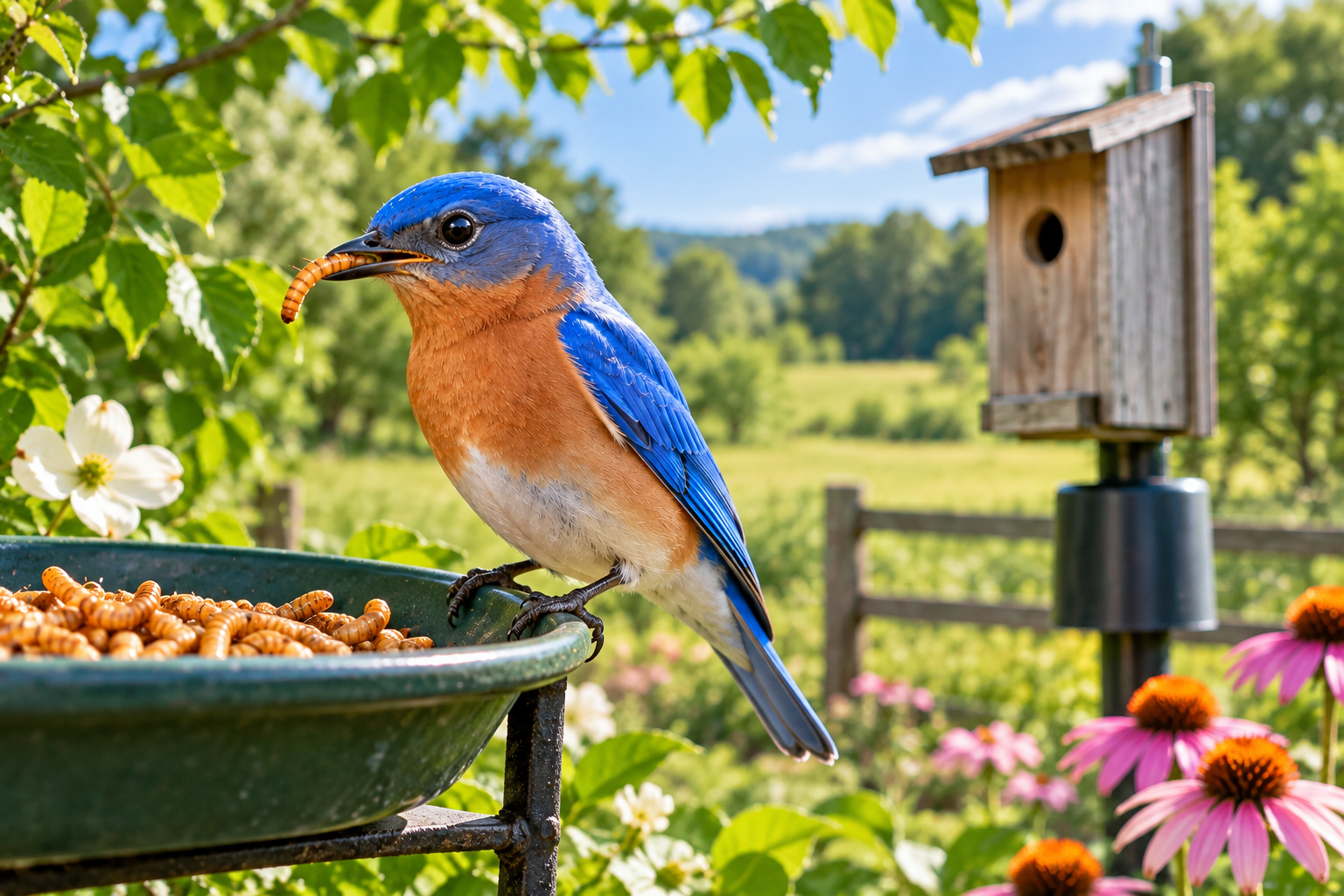
Many people fill a bird feeder with ordinary seed and wonder why bluebirds stay away. The key is understanding that bluebirds need more than a bluebird feeder. To learn how to attract bluebirds to your yard, provide bluebird food, open space, clean water, and nesting opportunities.
Bluebirds hunt insects and eat seasonal fruits, so knowing what do bluebirds eat can guide food choices. A suitable bluebird house, bluebird birdhouse, or bluebird nesting box can provide shelter during breeding season.
Proper bluebird house placement matters, and knowing where to put a bluebird house can improve nesting opportunities. Whether you want to attract bluebirds to your backyard, learn how to attract eastern bluebirds, or discover how to attract western bluebirds, species and regional conditions should guide your bluebird habitat setup across regions.
What Attracts Bluebirds to a Backyard?

A flash of cobalt drops from a fence wire, hovers momentarily over the grass, and catches a cricket. That single moment is the whole story of what bluebirds want from a yard open ground, low cover, something alive to eat, and a safe place to raise a family within sight of it all.
Learning how to attract bluebirds means thinking like a landlord rather than a host. Anyone can put out a snack. Keeping a pair through nesting, fledging, and a second brood requires an ecosystem that supports them year-round.
Five key elements do the heavy lifting:
- Food. Bluebirds hunt insects from a perch — caterpillars, beetles, grasshoppers, spiders — and switch to berries when cold weather thins the bug supply.
- Nesting cavities. They cannot excavate their own holes. They need an existing cavity or a well-built nest box, and natural ones are scarce in managed landscapes.
- Open habitat. Short grass with scattered perches gives them a clear line of sight to prey. Dense shrubbery and closed canopy send them elsewhere.
- Water. A shallow, moving source for drinking and bathing pulls in birds that never touch a feeder.
- Safety. Predator-proofed boxes, controlled competitors, and a yard that isn’t sprayed into sterility keep the insects coming and the nestlings alive.
Get those five aligned and bluebirds stop being visitors. They become residents that return to the same box season after season.
10 Ways to Attract Bluebirds
Learning how to attract bluebirds to your yard is easier when you focus on the things they naturally need: suitable food, open habitat, water, nesting sites, and protection.
The following steps can help you create a backyard habitat that appeals to Eastern Bluebirds, Western Bluebirds, and Mountain Bluebirds while supporting their natural feeding and nesting behavior.
1. Offer Bluebird Mealworms From a Dedicated Feeder
One of the simplest ways to attract bluebirds is to offer mealworms. Bluebird mealworms provide an easy supplemental food source, especially when natural insects are harder to find or during nesting season. Live mealworms can be especially useful during the breeding season, while dried mealworms can also work as a convenient option.
Use a shallow, smooth-sided dish inside a bluebird feeder to keep the worms contained. A covered or selective feeder can also help reduce competition from larger birds such as European Starlings and jays. Place the feeder where bluebirds have a clear view of their surroundings and can perch nearby before approaching.
2. Choose Bluebird Food Instead of Relying on Seed Feeders
Understanding what do bluebirds eat can help you avoid one of the most common backyard-feeding mistakes. Bluebirds primarily search for insects and other invertebrates, along with berries and small fruits, rather than feeding like typical seed-eating songbirds.
You can keep your regular seed feeder for chickadees, finches, and other birds, but it should not be your main strategy to attract bluebirds. Offer mealworms, native berries, and suitable supplemental foods in a separate location where bluebirds can feed without competing with a crowded seed station.
3. Plant Native Plants and Berry-Producing Shrubs
Plants that attract bluebirds can turn your yard into a reliable source of natural food. Native berry-producing shrubs and trees can provide fruit when insects become less abundant, while native vegetation can also support the insects that bluebirds depend on.
Consider species suited to your region, such as serviceberry, dogwood, sumac, elderberry, native viburnum, and eastern red cedar where appropriate. Planting several compatible native plants together can create a stronger food source than relying on a single specimen. This approach also improves overall bluebird habitat and supports backyard bird conservation.
4. Create Open Bluebird Habitat
Bluebirds prefer open areas where they can spot insects on the ground. A yard with short grass, meadow edges, pasture-like spaces, or scattered trees can provide better hunting opportunities than a landscape filled with dense vegetation.
Keep part of your yard relatively open and move thick shrubs toward the edges where they can provide shelter, berries, and insect habitat. Leave clear areas between perches and the ground so bluebirds can watch for prey and drop down to catch it. This hunting-friendly structure is an important part of a productive bluebird habitat.
5. Install a Proper Bluebird Nesting Box
A suitable bluebird house can give cavity-nesting birds access to a safe place to raise their young. When choosing or building a bluebird birdhouse, look for durable, untreated wood, adequate ventilation, drainage holes, an overhanging roof, and an opening designed for the target bluebird species.
The entrance hole is particularly important because it needs to accommodate bluebirds while reducing access for larger competing species such as European Starlings. The inside wall below the entrance should also provide enough texture for fledglings to climb toward the opening.
A well-designed bluebird nesting box should also provide easy access for responsible inspection and seasonal cleaning.
6. Get Bluebird House Placement Right
Knowing where to put a bluebird house can make a major difference in whether it gets used. Bluebird house placement should generally favor open habitat with nearby perches, short grass, and a clear flight path.
Mount the nest box securely on a pole or other stable support in an area that is easy to monitor. Consider local weather conditions when choosing the direction of the entrance, particularly strong prevailing winds and excessive heat.
Avoid placing a bluebird house deep inside dense vegetation or in locations that give climbing predators easy access. Before installing a box, consider how Eastern Bluebirds, Western Bluebirds, or Mountain Bluebirds use habitat in your region.
7. Add a Clean, Shallow Bird Bath
Do bluebirds use bird baths? Yes. Providing clean, accessible water can make your backyard more attractive to bluebirds and other wild birds.
Choose a shallow basin with a gradual depth and place a few flat stones inside for secure footing. Position the bird bath in an open location where birds can watch for predators while still having access to nearby cover.
Moving water from a dripper, bubbler, or small fountain can make the water easier for birds to notice. Clean the basin regularly and replace the water frequently to keep it fresh and hygienic.
8. Provide Natural Perches Near Feeding and Nesting Areas
Bluebirds need convenient places to land, watch for insects, and survey their surroundings. Natural perches can include small tree branches, fence lines, sturdy posts, or safely retained dead limbs.
Place a perch within sight of the feeding area and another near the nest box when the habitat allows. These launch points can make an open lawn more useful for bluebirds because they provide the elevated positions birds use to search for prey.
Good perch placement can benefit both feeding behavior and nesting activity without adding complicated equipment to your backyard habitat.
9. Reduce Pesticide Use and Protect Natural Insects
Insects are a major part of bluebird food, particularly during the nesting season when adults need to find food for nestlings. Heavy pesticide use can reduce the insect population that bluebirds depend on and may also affect the wider backyard ecosystem.
Rather than treating the entire yard, use targeted approaches when necessary and allow some natural insect activity to remain. Native plants, healthy soil, and less intensive lawn management can support insects while creating a more productive feeding environment.
A yard with plenty of natural insects can help provide food for bluebirds without relying entirely on a feeder.
10. Protect Bluebirds From Predators and Nest Competitors
Once you attract bluebirds, protecting them is just as important as bringing them into the yard. Install a predator baffle on pole-mounted nest boxes to reduce access by climbing animals such as raccoons and other predators. A properly designed entrance guard can provide another layer of protection around the opening.
Keep cats indoors, particularly during nesting season, and monitor nest boxes responsibly. House Sparrows and European Starlings can also compete aggressively for cavity-nesting sites, so using species-appropriate nest-box dimensions and managing boxes carefully can help bluebirds gain access to suitable nesting space.
These simple precautions can make your backyard safer while supporting long-term bird conservation.
What Do Bluebirds Eat?
Ask what do bluebirds eat and the honest answer changes with the calendar. For most of the year they are insect hunters, and during nesting season they are almost exclusively so. Caterpillars, grasshoppers, crickets, beetles, spiders, snails, and the occasional small lizard make up the bulk of what adults catch and what nestlings are fed. That diet is why insect-friendly landscaping outperforms any feeder you can buy.
When frost ends the insect season, bluebirds switch to fruit. Native berries — dogwood, sumac, holly, cedar, hackberry, pokeweed, wild grape — carry flocks through winter and explain why bluebirds sometimes appear in a yard in January and never in June.
This is where a lot of well-meaning backyard setups go wrong. Bluebirds do not eat millet, cracked corn, safflower, or whole sunflower seed. A seed feeder does not register as food for them. The few seed-adjacent items worth offering are hulled sunflower chips and peanut hearts in a shallow open tray, and even those are a garnish.
Mealworms are the exception that works reliably. Offer them in a dish with slick vertical sides so the worms stay put. A small handful once or twice a day is sufficient enough to establish a habit, not enough to replace natural foraging.
During cold snaps and while parents are feeding young, increase the portion. Dust mealworms with a calcium supplement during nesting season, since a worm-heavy diet is low in calcium. Crushed eggshell, baked and offered in the same tray, does the same job.
What Type of Birdhouse Do Bluebirds Like?
Bluebirds are secondary cavity nesters. They use holes made by woodpeckers or created by rot, and since dead trees get cut down in most neighborhoods, a well-built nest box is often the only cavity available for miles. Build or buy one to these specifications:
- Untreated, unpainted natural wood. Cedar, cypress, or pine at least three-quarters of an inch thick insulates against heat and cold. Skip plastic and skip interior paint or stain.
- A snug floor and a deep interior. The cavity should be tall enough that the nest sits well below the entrance, which keeps eggs out of a raccoon’s reach.
- An entrance hole cut precisely for bluebirds. Too small and the birds can’t enter; too large and starlings take over. Use a template sized to the species in your region — Mountain Bluebirds need a slightly larger opening than Eastern.
- No perch below the hole. Bluebirds don’t need one, and a perch gives house sparrows a foothold to harass the nest.
- A roughened interior wall beneath the entrance. Saw grooves or a strip of hardware cloth give fledglings traction to climb out.
- A side or front panel that opens. Monitoring and cleaning are non-negotiable, and a box you can’t open is a box you can’t maintain.
- A sloped, overhanging roof with ventilation slots and floor drainage. Wet, overheated nests fail.
Leave the exterior unfinished or paint it a light, neutral color to reflect summer heat.
Where Should You Put a Bluebird House?
Placement does more for occupancy than anything else you buy. Bluebirds want open, short-grass ground with scattered perches — lawns, pastures, hayfields, orchards, cemeteries, golf course roughs, and the edges where a mowed area meets a field. If you can stand at the box and see a clear stretch of grass in front of it, you have the right spot.
Avoid dense woods, thickets, and the interior of shaded suburban lots. Bluebirds will not hunt where they can’t see the ground, and wooded settings invite house wrens, which puncture eggs. Keep boxes away from busy sidewalks, driveways, and dog runs. Distance from buildings matters too, because barns, sheds, and houses attract the house sparrows that cause the most nest failures.
Bluebird house height is a compromise between the birds’ comfort and your ability to check the nest. Mount the box on a freestanding metal pole somewhere between chest and eye level low enough to open easily, high enough to keep ground predators from reaching it, and always with a baffle below.
Point the entrance away from prevailing wind and rain, and toward a tree, shrub, or fence within a short flight so fledglings have a landing target on their first attempt. Face open ground, not a wall. That single decision separates boxes that fill every spring from boxes that sit empty.
How to Attract Bluebirds in Different Seasons
Spring. Clean and mount boxes before the weather breaks, since bluebird nesting season starts earlier than most people expect and scouting pairs check cavities weeks before they build. Offer mealworms with a calcium supplement, keep the grass short so adults can hunt, and start monitoring boxes weekly. Remove house sparrow nests on sight.
Summer. Water becomes the main draw. Keep the bath filled and clean through heat waves, and add a dripper if the yard goes quiet at midday. Continue weekly nest checks; bluebirds often raise a second or third brood, so clean out the old nest after each set of fledglings leaves and leave the box up for the next round. Watch for blowfly larvae under the nest material.
Fall. Let native berry plants do their work. Skip the hard cleanup — leaf litter shelters overwintering insects, and seed heads and fruit left standing feed birds into November. This is also the best planting window for shrubs and small trees that will fruit in future winters.
Winter. Shelter matters most. Leave boxes up as roosting sites, add a roost box if winters are harsh in your area, and keep water liquid with a heated bath. Offer mealworms and chopped fruit during cold snaps and ice storms, when natural food is buried and a reliable source can hold a small flock nearby.
Why Aren’t Bluebirds Coming to My Yard?
Run through the likely causes in this order.
- Habitat. Too many trees, too much shrub cover, or grass left long. Bluebirds need open sightlines and a hunting perch. If the yard is shaded and dense, nothing else you change will matter.
- Box placement. Mounted on a tree, facing a wall, too close to the house, or without a baffle. Move it to a pole in the open and try again.
- Food mismatch. A yard with nothing but seed feeders reads as empty. Add live mealworms in an open dish and native fruit plants.
- Competition and predation. House sparrows and house wrens claim boxes aggressively. Starlings take over any entrance hole large enough. If a box sits empty but shows disturbed nesting material, a competitor is working it.
- Pesticides. A treated lawn has no insects, and no insects means no reason to stay.
- Region. Some areas simply sit outside local bluebird range or population density. Check recent sightings near you before assuming the yard is at fault.
How Long Does It Take to Attract Bluebirds?
Set expectations honestly: this is a seasons-long project, not a weekend one. Some yards get a pair investigating a new box within days, particularly when the box goes up in open country where bluebirds already hunt. Others wait a full year or two before the first nest.
Three factors control the timeline. Habitat quality comes first — an open, insect-rich yard shortens the wait more than any other change. Timing comes second; a box installed in late winter has a real chance that spring, while one installed in July may sit until the following year. Competition comes third, since sparrows and wrens can occupy a good box before bluebirds find it.
Leave the setup in place through a full cycle before changing anything major. Consistency is what turns a promising yard into an occupied one.
How to Keep Bluebirds Coming Back
Returning pairs are the real measure of success, and they come back to yards that stayed dependable.
- Keep food and water steady. Offer mealworms on a predictable schedule rather than in bursts, and never let the bath go dry or dirty for long. Birds map reliable resources and route their daily movements around them.
- Maintain the nest box. Clean it out after each brood fledges, scrape the floor, and check for wasp nests, blowfly larvae, and loose hardware. Do a full cleaning at the end of the season and leave the box up through winter as a roost.
- Stay ahead of predators. Inspect baffles and hole guards every spring, tighten anything that has loosened, and keep cats indoors.
- Protect the insects. A pesticide-free yard restocks itself every year, which is what makes the whole arrangement sustainable rather than something you have to prop up.
Common Mistakes When Trying to Attract Bluebirds
- Feeding seed only. The single most common error. A full seed feeder is invisible to a bluebird — switch to mealworms, insect suet, and fruit.
- Mounting boxes in the wrong place. Trees, wooden posts, shaded corners, and walls facing the entrance all reduce occupancy. Open ground, metal pole, clear view.
- Skipping the baffle. An unguarded pole is an invitation to raccoons and snakes, and a predated nest can cost you the pair for the season. Baffles are cheap; installing one after a loss is too late.
- Ignoring competitors. Letting house sparrows finish a nest in a bluebird box almost guarantees a failure. Remove their material every time.
- Spraying the lawn. Broad-spectrum insecticide erases the food supply that made the yard attractive.
- Never opening the box. Boxes need cleaning between broods. Unmonitored boxes accumulate old nests, parasites, and wasps.
Bluebird Attraction Checklist
- Open, short-grass area with clear sightlines
- Scattered perches near the feeding and nesting zones
- Native berry shrubs and small trees planted in clusters
- Mealworms offered in a smooth-sided dish or caged feeder
- Calcium supplement or crushed eggshell during nesting
- Properly sized nest box, untreated wood, no perch, openable side
- Metal pole with predator baffle and entrance hole guard
- Entrance facing open ground and away from prevailing weather
- Shallow bird bath, cleaned regularly, heated in winter
- No broad-spectrum pesticides anywhere in the yard
- Weekly nest monitoring through the breeding season
- Cleanout after every brood and again in fall
Which Bluebird Is Visiting Your Yard?
Three species share the name, and telling them apart is straightforward once you know where to look — the throat and the belly do most of the work.
Eastern Bluebird. Deep blue above with a rusty orange throat and breast and a white belly. The orange wraps up onto the throat, which is the quickest field mark.
Western Bluebird. Similar orange breast, but the throat is blue rather than orange, and the orange often extends onto the upper back as a rusty patch.
Mountain Bluebird. No orange at all on males — sky blue overall, paler below, with a slimmer build. Females are gray-brown with blue in the wings and tail. Mountain Bluebirds hover over grassland more than the other two.
| Species | General range | Preferred habitat |
|---|---|---|
| Eastern Bluebird | Eastern and central North America | Open fields, farmland, orchards, suburban lawns |
| Western Bluebird | Western North America | Open woodland edges, oak savanna, burned pine forest |
| Mountain Bluebird | Western interior, higher elevations | Alpine meadows, sagebrush, open rangeland |
Ranges overlap in parts of the West, so expect the occasional mixed neighborhood.
Frequently Asked Questions
Do Bluebirds Eat Bird Seed?
Bluebirds are primarily insect and fruit eaters, so standard birdseed is not the best way to attract bluebirds. Their natural diet includes insects, berries, and other small fruits. While they may occasionally sample foods such as hulled sunflower chips or peanut hearts, offering bluebird food such as mealworms and native berries is generally more useful than filling a traditional seed feeder.
Are Dried Mealworms as Good as Live Mealworms for Bluebirds?
Both live and dried mealworms can be used as supplemental bluebird food, although live mealworms often behave more like the insects bluebirds naturally hunt and contain more moisture. Dried mealworms can be a convenient option, particularly after birds learn to recognize a bluebird feeder. Offering mealworms consistently in a shallow feeder can help attract bluebirds to your yard.
Should I Put a Perch on My Bluebird House?
A bluebird house generally does not need a perch below the entrance. Bluebirds can grip the entrance opening and enter the bluebird nesting box without one. Leaving the perch off can also make the box less convenient for some competing species and predators. When choosing or building a bluebird birdhouse, focus instead on the correct entrance size, ventilation, drainage, and secure construction.
Can I Use the Same Bluebird House for Several Years?
Yes, a well-built bluebird house can be used for multiple nesting seasons when it remains structurally sound. Clean and inspect the box between broods and after the nesting season, following local wildlife guidance. Check the roof, entrance hole, floor, and mounting hardware for damage. Replace or repair the box if the wood becomes weak or the entrance becomes enlarged. Proper bluebird house maintenance can make a nest box a reliable part of your backyard habitat.
Will Bluebirds Share a Yard With Other Birds?
Yes. Bluebirds commonly share suitable habitat with other cavity-nesting birds, although competition can occur around nest boxes. In some situations, placing compatible nest boxes at appropriate distances can reduce direct conflict between bluebirds and Tree Swallows. The goal is to provide enough nesting opportunities while limiting aggressive competition from species such as House Sparrows and European Starlings.
Do Bluebirds Migrate?
Migration depends on the species and population. Some Eastern Bluebirds, Western Bluebirds, and Mountain Bluebirds migrate seasonally, while others remain in the same general area throughout the year. Food availability, weather, and location all influence movement. Providing natural berries, sheltered habitat, clean water, and suitable nesting boxes can make your yard useful to bluebirds during both breeding and nonbreeding seasons.
Is It Safe to Look Inside an Active Bluebird Nest Box?
Responsible monitoring can be useful during nesting season, but visits should be brief, infrequent, and appropriate for the species and local wildlife guidelines. A quick inspection can help identify problems such as damaged nests, excessive parasites, wasp activity, or competing birds. Avoid unnecessary disturbance, especially when nestlings are very young or fledglings are close to leaving the box.
What Should I Do If House Sparrows Take Over My Bluebird House?
House Sparrows can compete aggressively with bluebirds for nest boxes. If you manage a bluebird house, inspect it regularly for signs of House Sparrow activity and follow local wildlife regulations and accepted nest-box management practices. Using a correctly sized entrance, choosing appropriate box designs, and managing nesting material can help reduce competition. Never harm protected native birds, eggs, or nests, and check applicable local laws before removing an active nest.
Where Should I Put a Bluebird House?
The best bluebird house placement usually provides open habitat, short grass, nearby perches, and a clear approach to the entrance. Avoid placing the box deep inside dense vegetation or directly where predators can easily climb to it. Knowing where to put a bluebird house is especially important because Eastern Bluebirds, Western Bluebirds, and Mountain Bluebirds can prefer somewhat different habitats. Choose an open location that matches the bluebird species found in your region.
Do Bluebirds Use Bird Baths?
Yes, bluebirds can use bird baths for drinking and bathing when clean, shallow water is available. A bird bath can complement other efforts to attract bluebirds by adding an important backyard resource alongside bluebird food, native plants, and nesting opportunities. Keep the basin shallow, provide secure footing, refresh the water regularly, and position it where birds have a clear view of approaching predators.
What Food Is Best for Attracting Bluebirds?
The best supplemental bluebird food usually includes mealworms, while native berry-producing plants can provide natural seasonal food. Bluebirds also hunt insects in lawns, meadows, pastures, and other open areas, so improving the habitat can be just as important as using a feeder. A combination of mealworms, native berries, insects, water, and nesting opportunities creates a more complete bluebird-friendly environment.
How Can I Attract Eastern Bluebirds, Western Bluebirds, and Mountain Bluebirds?
To attract bluebirds successfully, first identify which species occurs in your region because habitat preferences can differ. Eastern Bluebirds are commonly associated with open and semi-open areas, while Western and Mountain Bluebirds also use open landscapes in their respective ranges. Providing suitable bluebird habitat, natural food, clean water, safe perches, and a species-appropriate bluebird nesting box gives birds more of the resources they need.
Final Thoughts
The formula is short enough to remember standing in the yard: open ground, live insects, a safe cavity, clean water, and no poison. Everything else the feeder style, the shrub list, the baffle model is refinement on top of those five.
What separates a yard that sees a bluebird once from a yard that hosts three broods a summer is follow-through. Clean the box. Refill the bath. Leave the leaf litter. Skip the spray. Plant one more serviceberry this fall than you planted last fall. Each of those choices compounds, and the birds notice long before you do.
Build the habitat and the visits take care of themselves. A pair that fledges young from your box has every reason to come back to it next March, and the young they raise carry the map of your yard with them.





