Skip to content

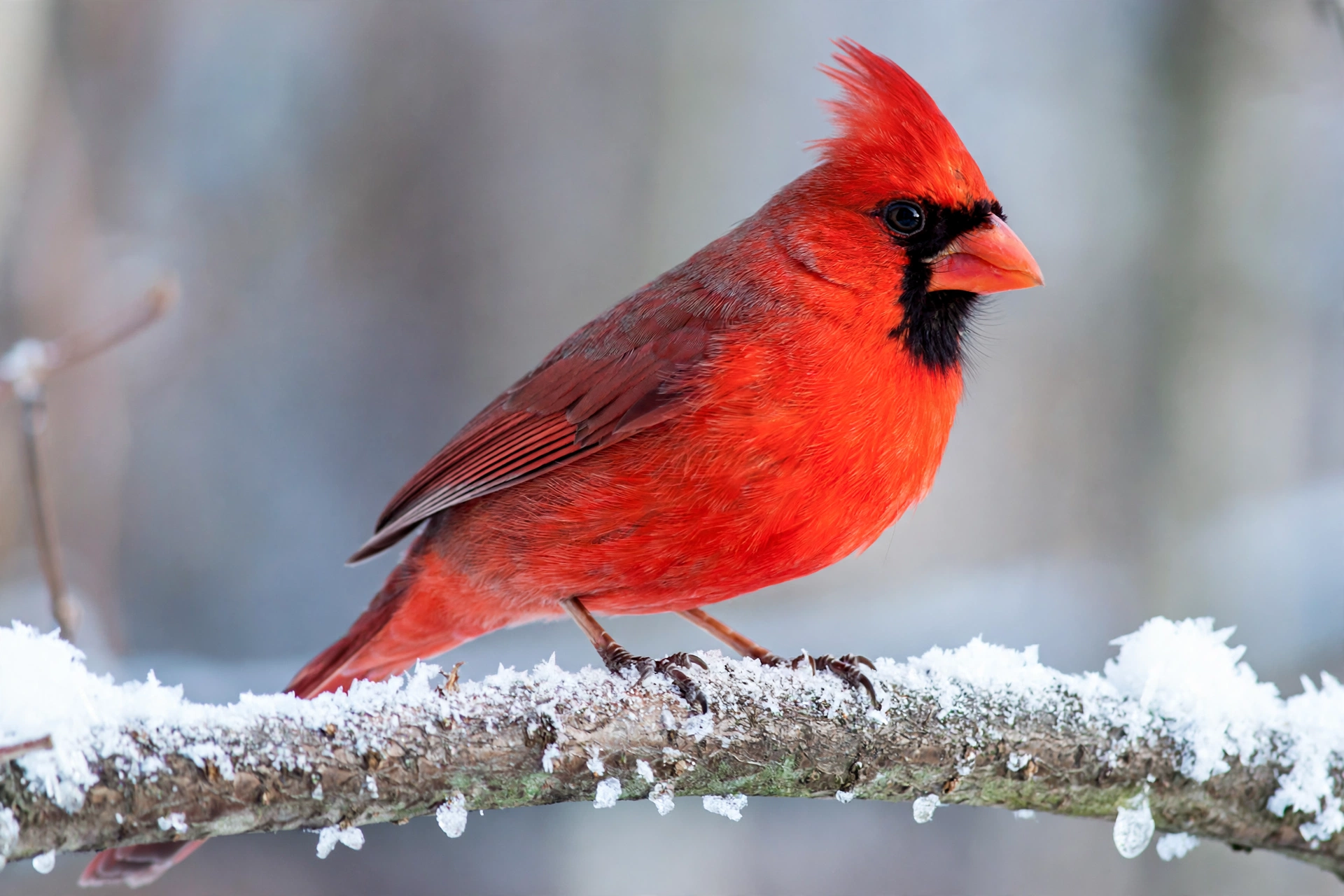
The northern cardinal is the bird that makes people stop. The male is impossible to miss, a splash of crimson against snow or summer green, and he seems to know it, singing his heart out from the highest perch he can find. But half the cardinals visiting your feeder wear a different uniform: warm brown feathers, a sharp crest, and a surprisingly vivid red bill.
Learning male vs female cardinal identification takes about five minutes once you know what to look for, and it changes the way you watch your backyard. The male’s color gets all the attention, but the female is the one picking nest sites, doing the incubating, and singing right back at her mate. She is not a faded copy of him. She is a different, equally well-designed bird.
This guide gives you five easy ways to tell them apart at a glance, explains the science behind why the female looks the way she does, and clears up the juvenile look-alike problem that fools almost everyone.
Male vs Female Cardinal at a Glance
If you only have three seconds, here is the short version. A male northern cardinal is brilliant crimson red all over, with a bold black face mask and a bright coral-red bill. A female is warm brown with red tinges on her crest, wings, and tail, a softer gray face mask, and the same bright coral-red bill. Once you have seen both side by side, you will never confuse them again.
The Cornell Lab of Ornithology puts it nicely: even the brown females sport a sharp crest and warm red accents, and cardinals never molt into a dull plumage, so both sexes look their best year round.
| Feature | Male | Female |
|---|---|---|
| Body plumage | Brilliant crimson red, slightly darker on back and wings | Warm grayish-brown to fawn, with red tinges |
| Face mask | Bold black mask over the eyes, extending to the upper chest | Gray to black mask, much softer and less defined |
| Crest | Red crest, same color as the body | Brown crest with brick-red tips |
| Wings and tail | Red, darker than the breast | Brown with warm red accents on the edges |
| Bill | Bright coral-red, thick and cone-shaped | Bright coral-red, thick and cone-shaped |
| Size | Slightly larger on average | Slightly smaller on average |
| Song | Loud, repeated whistles from exposed perches | Also sings, often from the nest or dense cover, sometimes more elaborately |
5 Easy Ways to Tell a Male vs Female Cardinal Apart
Work through these five marks in order. The first two solve nearly every sighting on their own. The rest confirm the call when the light is bad or the bird will not sit still.
- Body Color: This is the obvious one and it works every time on adult birds. The male is saturated, brilliant red from crest to tail, the kind of red that seems to glow in winter sunlight. The female is a warm, toasty brown, sometimes described as fawn or buff, with a reddish wash on her crest, wings, and tail. If the whole bird is red, it is a male. If the whole bird is brown with red accents, it is a female.
- Face Mask: Look at the face, right around the bill and eyes. The male wears a sharp black mask that extends from the eyes down to the upper chest, and the contrast against his red feathers is striking. The female has a mask too, but it is gray to dull black and fades softly into the surrounding brown feathers. A crisp black mask means male. A blurry gray one means female.
- Where the Red Appears: On the male, red is everywhere. On the female, red is an accent. Check the crest first: hers is brown with brick-red tips, his is solid red. Then look at the wings and tail. Her flight feathers and tail show warm red edges against brown, like the bird was dipped in color at the extremities. His wings and tail are fully red, just a shade darker than his breast. This pattern is the fastest way to sex a cardinal at distance.
- Behavior and Voice: In spring, the male does most of his singing from the tops of trees and other exposed spots, belting out the familiar cheer, cheer, cheer and purty, purty, purty phrases to defend his territory. The female sings too, often from lower, denser cover, and researchers have found that female song from the nest appears to tell the male when to bring food. She also tends to stay closer to the nest while he patrols the territory boundary. A cardinal singing from the highest branch in April is almost certainly the male. If you want to understand when and why all this singing happens, our guide to why birds chirp in the morning breaks down the dawn chorus.
- The Juvenile Trap: Here is the one that fools people. Young cardinals of both sexes look like adult females until they molt into adult plumage in the fall. Brown body, reddish tinges, same general pattern. The giveaway is the bill. Juveniles have dark gray or blackish bills, while every adult cardinal, male or female, carries that bright coral-red bill. So if you see a brown cardinal with a dark bill, you are looking at a youngster whose sex you cannot determine yet. Brown with a red bill means adult female. The section below walks through this in detail.

Why Female Cardinals Look the Way They Do
The female’s brown plumage is not a lesser version of the male’s red. It is camouflage, and it is superb. A brown bird sitting on a nest woven into a shrub or thicket is nearly invisible to hawks, jays, and cats. The male’s red is a billboard advertising his health and vigor. Her brown is a cloaking device protecting the next generation. Both are exactly what the species needs.
The red itself comes from the diet. Cardinals cannot manufacture red pigment from scratch. They get carotenoids from seeds, fruits, and insects, then convert those pigments into red feather coloration during molt. According to detailed plumage research, both red and yellow carotenoid pigments contribute to the color, and males metabolize them into a red that differs from the pigments they actually ate. When males are fed only yellow pigments in experiments, they grow in pale red instead of crimson.
This is why the brightest males are the healthiest males. A male that finds enough carotenoid-rich food to produce deep, saturated red is advertising that he can forage well and fight off disease. Studies have linked redder males to denser territories and higher reproductive success, and redder plumage in both sexes has been correlated with better parental care. The color you see is an honest signal. Feeding the birds that produce it starts with the right seeds, which our cardinal feeding guide covers in detail.
Occasionally the system glitches in fascinating ways. A few rare cardinals, called yellow morphs, lack the enzyme that converts carotenoids into red pigment, so they grow in yellow where the red should be. White cardinals with leucism have also been documented. And in one famous case, a bilateral gynandromorph cardinal was found in Pennsylvania, a bird that was literally male on one side and female on the other, red feathers on the right and brown on the left. These oddities are vanishingly rare, but they show how tightly feather color is tied to the bird’s biology.
Do Female Cardinals Sing?
Yes, and this surprises a lot of people. In most North American songbirds, singing is the male’s job. Cardinals break that rule. Both males and females are enthusiastic singers, and they often sing year round, not just in spring.
Female cardinals may actually sing more often and more elaborately than males in some contexts. They sing from the nest, from dense shrubs, and during courtship, and researchers believe the female’s song from the nest gives the male information about when to bring food. Mates often share much of the same song repertoire, and neighboring pairs develop local song dialects that diverge with distance. If you hear two cardinals trading phrases back and forth in the bushes, you may be listening to a duet between partners.
The famous cardinal phrases are worth learning. The male’s classic song is often rendered as cheer, cheer, cheer or purty, purty, purty, repeated in clear whistled notes. The female’s songs use similar notes but tend to be delivered from cover rather than from the treetops. Both sexes also use a sharp chip note as an alarm call, which is often how you find cardinals hiding in dense tangles. Listen for the chip, then look for the red or the brown.

Courtship: The Beak-to-Beak Breakfast
One of the sweetest sights in backyard birding is a male cardinal feeding his mate. During courtship, the male picks up a seed, hops over to the female, and passes it to her beak to beak. This behavior, called mate feeding or courtship feeding, strengthens the pair bond and may also demonstrate to the female that he is a capable provider.
Cardinals are largely monogamous, and pairs often stay together across breeding seasons. A typical pair raises two to three broods per season, sometimes more. The female builds the cup-shaped nest from twigs and grasses, usually tucked into a shrub or thicket about four to five feet off the ground. She does the incubating, sitting on three to four pale, speckled eggs for about twelve to thirteen days, while the male brings her food and defends the territory.
Once the chicks hatch, both parents feed them, and the young are fed almost exclusively insects at first. The chicks leave the nest at only nine to ten days old. If the female starts a second brood, the male takes over care of the fledglings from the first. It is a busy, cooperative operation, and the pair’s bond is what holds it together. For the full story on how long these partnerships last, see our article on whether cardinals mate for life.
Juvenile Cardinals: The Look-Alike Stage
Every summer, someone posts a photo of a “female cardinal” that is actually a young male. Juvenile cardinals of both sexes wear plumage very similar to the adult female: brown above, red-brown below, with brick-red coloring on the crest, forehead, wings, and tail. There is no reliable way to sex a cardinal in this plumage by color alone.
The bill is the key. Young cardinals have dark bills, gray to blackish, that gradually turn the adult coral-red as the bird matures. If you see a brown cardinal with a dark bill, you are looking at a bird born this year, and its sex is still a mystery. When it molts in the fall, males grow in their crimson feathers and females settle into their adult brown, and the mystery resolves itself.
This also explains the “changing color” cardinal some people report in late summer. A patchy-looking bird with mixed brown and red feathers and a half-dark bill is not sick or strange. It is a young male midway through his first molt into adult plumage. Within a few weeks, the transformation is complete, and he will look like every other male at the feeder.
One more juvenile clue: young birds often look a little scruffy and short-tailed compared to adults, and they may beg from their parents with fluttering wings well after fledging. If a brown cardinal is following a bright red male around chirping insistently, you are watching a father feeding his fledgling, regardless of what color that youngster will eventually become.

FAQs
What color is a female cardinal?
A female northern cardinal is warm brown, often described as fawn or buff, with reddish tinges on her crest, wings, and tail. She has a softer gray face mask rather than the male’s bold black one, and her bill is the same bright coral-red as his. She is not dull, just beautifully camouflaged.
Do female cardinals sing?
Yes. Both male and female cardinals sing, and females sometimes sing more often or more elaborately than males. Female song from the nest is thought to signal the male when to bring food. Mates often share much of the same song repertoire.
Can you tell a baby cardinal’s gender?
Not by plumage. Juvenile cardinals of both sexes look like adult females until their fall molt. The one reliable clue is the bill: juveniles have dark gray or blackish bills, while all adults have bright coral-red bills. Once a young male molts into red feathers in the fall, his sex is obvious.
Why are male cardinals brighter than females?
The male’s crimson plumage comes from carotenoid pigments in his diet, converted into red feather color during molt. Brighter red signals better health and foraging ability, which females use to judge potential mates. The female’s brown plumage is camouflage that hides her while she sits on the nest.
Do cardinals mate for life?
Cardinals are largely monogamous and pairs often stay together across breeding seasons, raising two to three broods per year. The male feeds the female during courtship and incubation, and both parents care for the chicks. Our full article on whether cardinals mate for life covers the details.
Do female cardinals have a crest?
Yes. Both sexes have the cardinal’s signature pointed crest. The male’s crest is red like the rest of his body, while the female’s crest is brown with brick-red tips. The crest is one of the best features for identifying a brown bird as a cardinal in the first place.
Conclusion
Telling a male vs female cardinal apart comes down to a handful of field marks you can learn in one afternoon at the feeder. Red all over means male. Brown with red accents, a soft gray mask, and the same bright bill means female. Dark bill on a brown bird means a juvenile of unknown sex, so give it until fall.
But the real reward of learning the difference is watching the pair together. The male’s courtship feeding, the female’s song from the nest, the way they trade phrases across the yard, all of it becomes visible once you know which bird is which. The male may be the one that stops you in your tracks, but the female is the one running the show. Keep watching, and you will see it.