 Skip to content

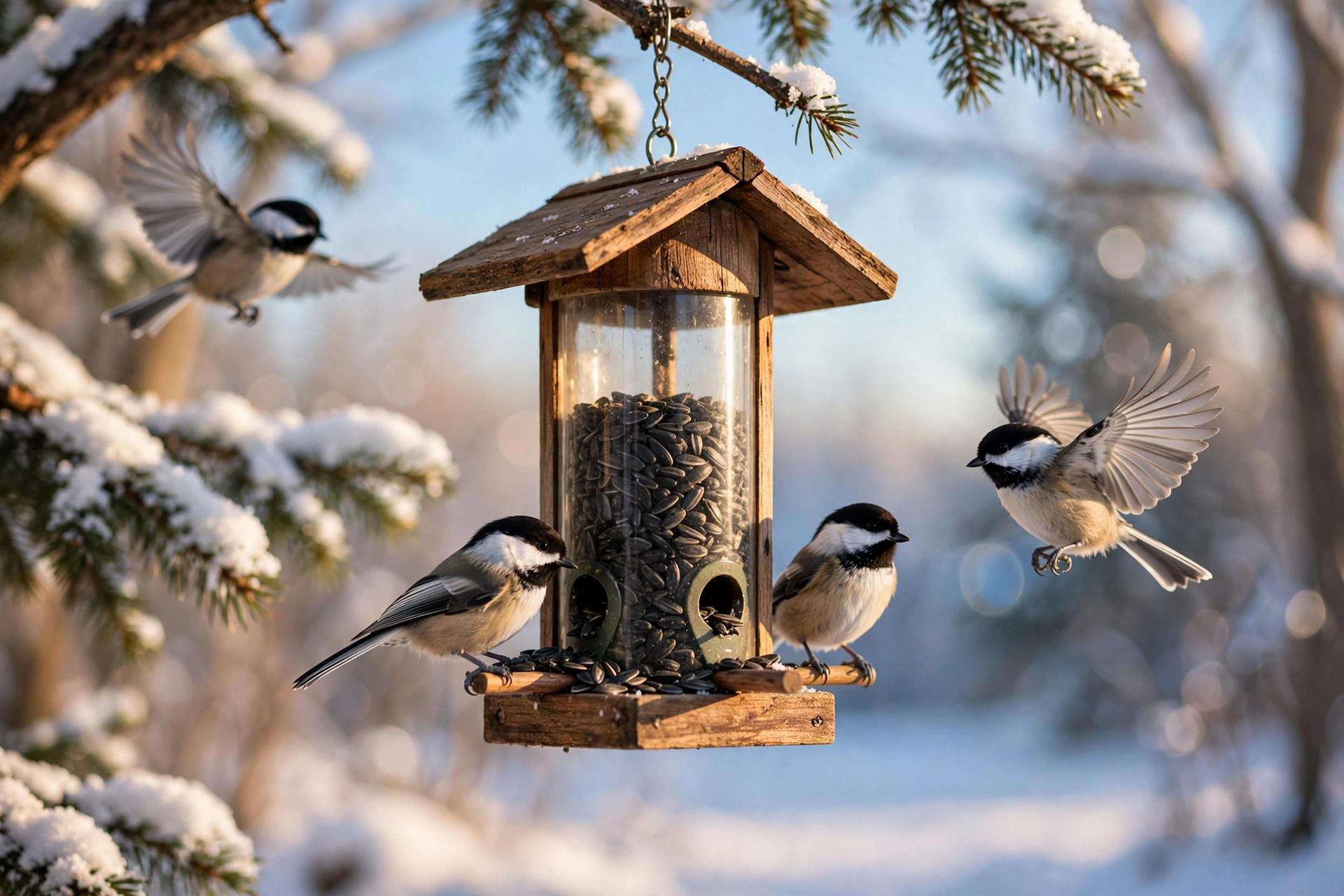
Every winter, tens of thousands of people across North America do something quietly remarkable: they watch the birds at their feeders and turn those sightings into real science. The project that makes it possible is Project FeederWatch, a joint citizen science effort from the Cornell Lab of Ornithology and Birds Canada. The 2026-27 season opens on November 1, and signups are open right now. If you have ever wanted your birdwatching to mean something bigger, this is the year to join.
This guide walks you through everything: what FeederWatch is, why the data matters, how to sign up at feederwatch.org, how to set up your count site, the exact two-day counting protocol, how to submit counts through the FeederWatch app, and what happens to your observations once they leave your notebook. By the time you finish reading, you will be ready to count birds like a scientist this winter.
What Is Project FeederWatch?
Project FeederWatch is a winter bird survey that runs every year from November 1 through April 30. Anyone in the United States or Canada can take part. You choose a fixed spot, usually your backyard or somewhere near your feeders, and count the birds you see there over two consecutive days, as often as once a week through the season.
The project began in Canada in 1976 as the Ontario Bird Feeder Survey, the brainchild of researcher Erica Dunn, and it grew across North America under the FeederWatch name from 1986. Nearly four decades later, it draws more than 25,000 participants a year who submit around 180,000 individual counts in a typical season. That long, unbroken record is exactly what makes it so valuable: few datasets track everyday backyard birds across the whole continent, winter after winter, like FeederWatch does.
Here is the part that surprises most newcomers: you do not even need a bird feeder to take part. Feeders certainly make counting easier and more productive, but the only real requirement is a consistent location where you can watch birds, such as a garden with trees, shrubs, and open space. If you can see and identify birds, you can contribute. The project supplies identification resources to help you learn the regulars at your site.
Why Your Winter Bird Counts Matter for Science
Winter is a demanding season for birds, and it is also a season when professional ornithologists cannot be everywhere. FeederWatch fills that gap. Your counts join a continental dataset that researchers use to track where winter birds are, how many there are, and how both answers change over time.
The discoveries that have come out of FeederWatch data are genuinely significant. Long-term counts documented the northward spread of the Northern Cardinal, which has expanded its winter range over decades. The same dataset has flagged troubling declines in Evening Grosbeaks and other finches, trends that might have gone unnoticed for years without thousands of volunteers watching their feeders each winter.
Scientists also use the data to study how bird populations respond to weather and climate shifts, how disease outbreaks ripple through feeder birds, and how habitat changes affect common species. Your observation of a House Finch with swollen eyes, for example, feeds directly into monitoring of the eye disease that has affected finch populations. It is one more reason the protocol asks you to watch for sick birds and note signs of disease during your counts.
For you personally, regular counting sharpens your identification skills faster than casual watching ever could, and many participants describe their count mornings as the calmest part of the week.

How to Join Project FeederWatch for the 2026-27 Season
Signups for the 2026-27 season are open now, and joining before November 1 means you can start counting on day one of the season. During the season, print materials take a few weeks to arrive, but you can begin counting immediately after you register, so there is no penalty for joining at any point before April 30. Here is the signup process, step by step.
- Go to feederwatch.org and click Join. The official site handles all registration. Make sure you are on the genuine Cornell Lab and Birds Canada project site before entering any payment details.
- Choose your country. Project FeederWatch covers the United States and Canada. The fee structure differs slightly between the two.
- Pay the participation fee. In the United States the fee is $18 per season, or $15 for Cornell Lab members. In Canada, participation is by donation of any amount. The fee supports the research programme, the data infrastructure, and the participant materials, and it is the project’s main source of funding.
- Set up your account and your count site. After payment, you will be able to register your count site, describe your yard and feeding setup, and access the online data entry area, called Your Data, plus the free FeederWatch mobile app for Apple and Android devices.
- Watch for your Research Kit. New participants receive a kit with instructions, a poster showing the most common feeder birds, and a calendar. It arrives a few weeks after you sign up, but do not wait for it before you start counting.
Your registration also includes digital access to Living Bird, the Cornell Lab’s quarterly magazine, and the annual Winter Bird Highlights summary, which reports what the previous season’s data revealed. Many participants find that the year-end report is the best part: it shows how your individual counts fitted into the continent-wide picture.
On the Canadian side, remember that the programme accepts a donation of any amount, so cost never has to be a barrier to joining.
Setting Up Your Count Site
Your count site is the fixed area you will watch all season, and choosing it well makes every count easier. FeederWatch asks you to pick a portion of your yard that is simple to monitor, ideally visible from one vantage point, such as a kitchen window or a favourite chair. Consistency matters: use the same site for every count so the data stays comparable across the season.
A site with feeders is the classic choice, because feeders concentrate birds where you can see and count them. If your feeders are empty or your birds have not arrived yet, take a look at how birds discover new feeding spots, which explains why patience in the early season pays off. And if you notice that birds are ignoring your feeder entirely, it is usually fixable with a few adjustments to placement, food, or timing.
Feeders are not mandatory, though. A garden bed with seed-bearing plants, a brush pile, a water feature, or fruiting shrubs all attract birds you can legitimately count. The rule is simple: count the birds that are attracted to resources you provide, whether those are feeders, plantings, or water. Birds that merely fly over your site, like a distant flock of Canada Geese, do not count.
Before the season starts, give your setup a once-over. Scrub your feeders so you start the winter with clean equipment, since clean your feeders is part of responsible feeding. Check that you can see your whole site from your chosen vantage point without moving around, and note landmarks that define the site’s boundaries so you count the same area every time.
The FeederWatch Counting Protocol, Step by Step
This is the heart of the programme. Every participant follows the exact same method, which is what makes the data scientifically usable. Here is how a count works.

- Pick two consecutive days. For each count, select two days in a row, as often as once a week. The organisers recommend leaving at least five days between each two-day count, and suggest scheduling your counts in advance. Counting less often is completely fine. Even a single two-day count across the whole season produces valuable data.
- Watch your site as much or as little as you like. There is no minimum observation time. Some people watch for hours across the two days, others for a few relaxed sessions. Record how much time you spent observing, since effort is part of the data.
- For each species, record the largest number seen at one time. This is the key rule. Each time you look, count how many individuals of each species are visible simultaneously and write that number down. If you later see more of the same species at once, revise your number upward. If you see fewer, keep the higher number. Do not add your counts together across looks or across days.
- Keep one running tally across both days. Treat the two days as a single count. This design means you will never report the same individual bird twice, which is precisely why the method works.
- Count only the right birds. Count birds in your site during the day that are attracted to something you provide: feeders, water, fruits, or ornamental plantings. Hawks and other predators drawn in by your feeder birds count too. Ignore birds that simply fly over, and ignore anything you see on non-count days.
- Note the optional extras. Alongside your counts, you can record mammals seen in your site, sick birds and any mortality, and behavioural interactions such as a predator attack. During winter, keep an eye out for eye disease in House Finches, Purple Finches, Evening Grosbeaks, and goldfinches, and note how many of each species show symptoms at one time.
- Submit one report per two-day count. At the end of the second day, your final tally for each species is the largest simultaneous number you recorded. Enter it through the Your Data section of the website or the mobile app, along with your observation time.
The “maximum at one time” rule trips up almost every beginner, so here is the classic example the project itself uses. You watch your site three times over two days and see four Blue Jays at once, then three, then eight. Your final number is eight, not fifteen. It feels like you are undercounting, but this conservative method is what keeps the data honest across thousands of observers.
Using the FeederWatch App to Submit Your Data
Data entry happens in two places: the Your Data section of feederwatch.org, or the free FeederWatch mobile app available for Apple and Android devices. The app is free to registered participants and walks you through entering your counts, your observation time, and any extra details like snow cover at your site.
Regular participants praise the app for how it presents the birds you are most likely to see, with photos to confirm your identification before you enter a number. If you are unsure about a tricky species, the Cornell Lab’s Merlin app is a useful companion for identification, and the project itself suggests using it. The two tools fit together neatly: Merlin helps you name the bird, FeederWatch helps you count it.
One practical tip: enter your counts on the evening of your second count day while the details are fresh, then compare your tallies with what nearby participants are reporting, which becomes surprisingly addictive as the season builds.
What Happens to Your Data After You Submit It
Your counts flow into the project’s central database, where they join hundreds of thousands of other counts from across the continent. Cornell Lab and Birds Canada scientists analyse this pooled data to track winter bird distribution and abundance, and the results appear each autumn in the Winter Bird Highlights report that participants receive.
The data also powers features participants can explore during the season. The Site List, for example, shows what percentage of counts from nearby FeederWatchers include each species you report, and can even name species your neighbours have reported that you have not seen yet. It is a friendly nudge to look harder, and it shows the community dimension of the project.
Beyond the annual summaries, FeederWatch data feeds published scientific research on population trends, range shifts, and disease dynamics. Your Tuesday morning tally of chickadees genuinely becomes part of the evidence base that conservation decisions draw on. That is the quiet bargain of citizen science: a little of your time, multiplied by tens of thousands, becomes knowledge no single researcher could gather alone.

Tips for First-Time FeederWatch Counters
Your first season will teach you things no guide can, but a few pointers flatten the learning curve considerably. Start with these.
- Start with a clean, well-stocked site: clean your feeders before the season and keep them filled. Consistent food keeps birds visiting regularly, which makes your counts steadier and your identification practice easier.
- Learn your ten most common species first: most sites see the same dozen birds all winter. Master those, and the occasional surprise visitor becomes a treat rather than a frustration.
- Keep a field guide and tally sheet by the window: even app users find a paper backup handy during busy feeder moments, when a dozen birds of five species arrive at once.
- Count early in the day: feeder activity usually peaks in the morning, so your highest simultaneous numbers often come from the first hour or two after sunrise.
- Do not skip a count because it was quiet: a count with few birds is still data. Low numbers tell scientists as much as high ones, sometimes more.
- Photograph anything unusual: a strange visitor is worth a photo for later confirmation, and unusual sightings may be flagged for verification.
- Read the detailed instructions before your first submission: the summary above covers the essentials, but the full instructions on the official FeederWatch counting instructions answer edge cases, like how to handle a bird you can hear but not see, or a species that only visits at night.
Project FeederWatch vs Other Bird Counts
FeederWatch is not the only citizen science bird project, and newcomers often wonder how it differs from the others. Here is a quick comparison of the three best-known options.
| Feature | Project FeederWatch | Great Backyard Bird Count | eBird |
|---|---|---|---|
| Season | November 1 to April 30 | One long weekend in February | Year-round |
| Time commitment | Two-day counts, weekly or less often | As little as 15 minutes, one weekend | Whenever you like |
| Fee | $18 in the US, $15 for Lab members, donation in Canada | Free | Free |
| Where you count | One fixed count site all season | Anywhere | Anywhere |
| Method | Maximum seen simultaneously over two days | Best estimate per checklist | Complete checklists with counts |
| Best for | Long winter trends at your own site | A fun one-off snapshot | Serious year-round listing |
The projects complement each other rather than compete. Many birders do FeederWatch all winter, join the Great Backyard Bird Count weekend in February, and log everything in eBird year-round. If you can only manage one, FeederWatch gives you the most structured picture of your own backyard through the hardest months of the year. Read how FeederWatch helps scientists track birds for more on the science.
Frequently Asked Questions About Project FeederWatch
Do I need a bird feeder to join Project FeederWatch?
No. Feeders make counting easier and attract more birds, but the project explicitly welcomes participants without them. Any consistent spot where you can watch birds attracted to resources you provide, such as plantings, fruit, brush, or water, works as a count site. What matters is that the site stays the same all season.
How much does Project FeederWatch cost?
In the United States, the participation fee is $18 per season, reduced to $15 for Cornell Lab members. In Canada, you participate with a donation of any amount. The fee funds the research, the data systems, and your participant materials, including the Research Kit, the feeder bird poster, the calendar, digital access to Living Bird magazine, and the annual Winter Bird Highlights report.
What if I can only count once or twice all winter?
That is perfectly fine, and the project says so directly. Even a single two-day count across the whole season is valuable data. The organisers would rather have occasional counts from many sites than perfect weekly records from a few. Start small; many once-a-season counters become weekly regulars once they get hooked.
Do I add up my counts from day one and day two?
Never. This is the single most important rule. You record the largest number of each species seen at one time across the whole two-day period, using one running tally for both days. Adding days together would count the same birds twice and distort the data. When in doubt, report the smaller, simultaneous number.
What birds should I not count?
Ignore birds that simply fly over your count site without interacting with it, like high-flying geese or passing raptors that show no interest in your feeders. Also ignore any birds you see on non-count days, however exciting. On the other hand, do count hawks that are actively attracted by the birds at your feeders, since they are part of your site’s ecology.
Is Project FeederWatch good for beginners?
It is one of the best citizen science projects for beginners. There is no minimum observation time, the identification resources and app photo guides support learning, and the protocol is forgiving of a quiet or imperfect count. Local training events run in many areas each autumn, including early October sessions ahead of the November start, which are worth attending if one is near you.
Join Now and Be Ready for November 1
The 2026-27 Project FeederWatch season begins on November 1, and signups are open today. Joining now gives you time to receive your Research Kit, set up your count site, clean your feeders, and learn your regular visitors before the first official count day. There is no reason to wait: you can start counting the moment you register.
Winter birdwatching has a particular magic. The yard goes quiet, the snow falls, and the birds that stay become individuals you know. Project FeederWatch turns that private pleasure into public science, one two-day count at a time. Choose your site, pick your days, and count the highest number you see at once. Tens of thousands of people will be doing exactly the same thing, and together you will be writing the next chapter of what we know about North America’s winter birds. Start at feederwatch.org.





