 Skip to content

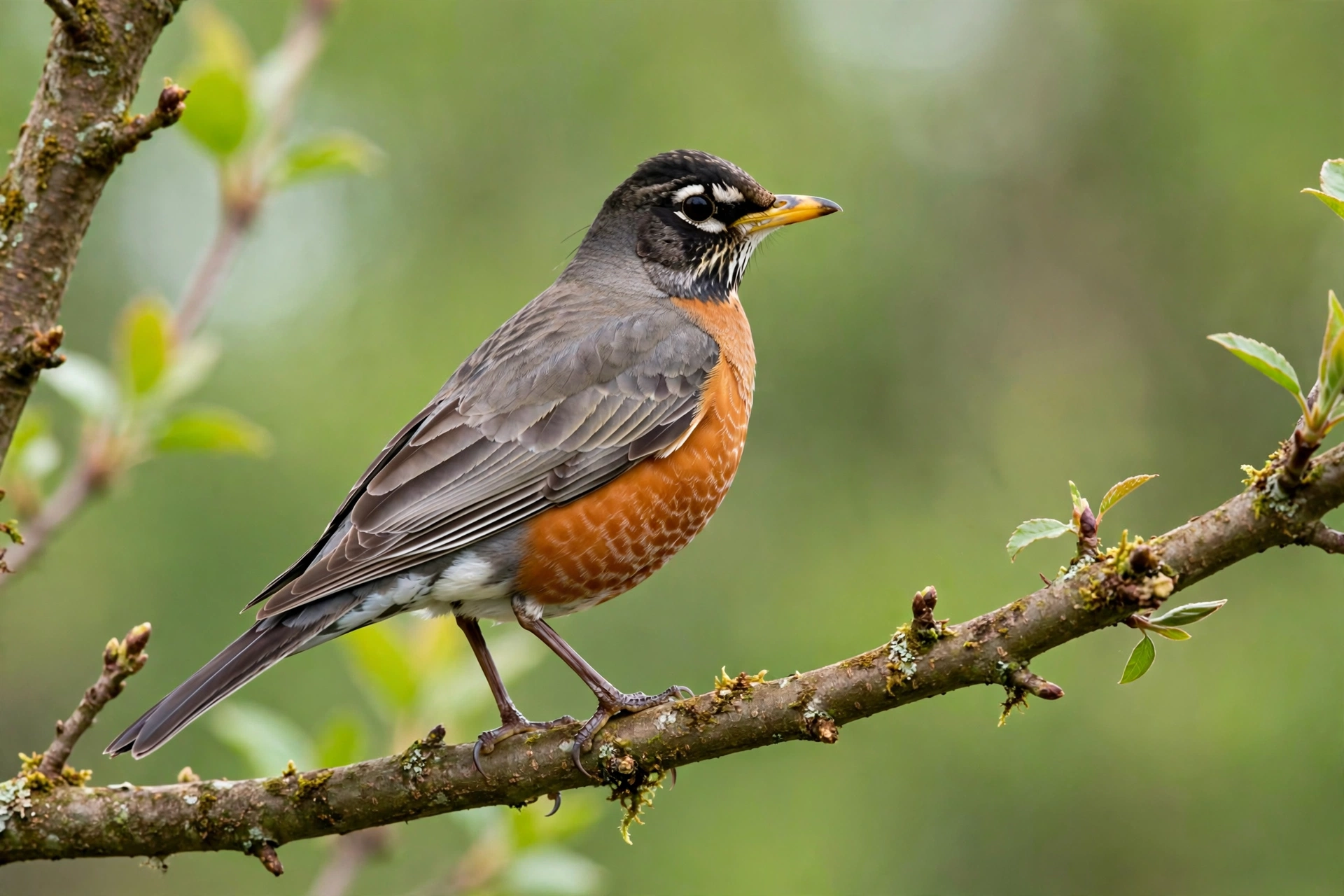
No, birds are not mammals. They belong to an entirely different class of animals. Birds are members of Class Aves, while mammals belong to Class Mammalia. That is the simple scientific answer to the question “are birds mammals,” and it is settled biology, not a matter of opinion.
So why does the question come up so often? Birds and mammals share some striking similarities. Both are warm-blooded. Both breathe air, have four-chambered hearts, and feed their young with devoted care. A robin stuffing worms into gaping chicks can look an awful lot like a mammal nursing its babies. But the differences run far deeper than the similarities. Once you know the handful of traits that define a mammal, you will never mix the two up again.
Are Birds Mammals? The Simple Scientific Answer
Biologists sort animals into nested groups based on shared ancestry and anatomy, and the level that matters here is the class. Mammals sit in Class Mammalia. Birds sit in Class Aves. A robin and a human are both vertebrates in the phylum Chordata, but their family trees split hundreds of millions of years ago, long before either group looked like anything we would recognize.
Class membership is not about vibes. It is about a checklist of defining traits. Mammals have them. Birds do not. And birds have their own defining traits that no mammal possesses. The rest of this article walks through both checklists, the confusing similarities, the tricky edge cases, and the twist in the family tree that puts birds closer to crocodiles than to us.
What Makes a Mammal a Mammal?
Mammals are defined by a short list of traits, and the list is stricter than most people realize. According to the standard biological definition, summarized on Wikipedia’s mammal overview, mammals are characterized by milk-producing mammary glands, hair or fur, three middle ear bones, and a large neocortex region of the brain. Let us take them one at a time.
Mammary glands
This is the big one, the trait that gives mammals their name. Female mammals produce milk from specialized mammary glands to nourish their young. No bird does this. Pigeons, doves, and flamingos make a nutritious substance called crop milk, but it is produced in the crop lining, not from mammary glands, and it is chemically different from true milk.
Hair or fur
All mammals grow hair or fur at some stage of life, even whales, which keep only a few bristles as adults. Hair is made of keratin and serves as insulation, camouflage, and sensory equipment. Birds grow feathers instead. Feathers are also made of keratin, but they are a completely different structure, unique to birds.
Three middle ear bones
Mammals have three tiny bones in the middle ear, the malleus, incus, and stapes, which transmit sound with remarkable efficiency. These bones actually evolved from the jawbones of ancient mammal ancestors. Birds have only a single middle ear bone. Their hearing works perfectly well, as any owl could tell you, but it works differently. (For more on how avian ears function, see do birds have ears.)
A neocortex
Mammals possess an enlarged neocortex, the brain region associated with complex perception, learning, and problem solving. Birds are famously intelligent, and some crows and parrots rival primates in problem solving, but their brains are wired differently, without a neocortex. Avian intelligence runs on different hardware.
Beyond the headline four, mammals also share a muscular diaphragm for breathing, a single bone in the lower jaw, and teeth specialized into different types for biting, tearing, and grinding. And while most mammals give birth to live young, there is a famous exception: the platypus and echidna, the monotremes, lay eggs. That exception is worth remembering, because it means egg laying alone does not disqualify an animal from being a mammal. Birds fail the mammal test on the other traits, not just this one.
What Makes a Bird a Bird?
Birds have their own exclusive checklist, and it is just as strict. Drawing on standard biology references such as Course Sidekick’s bird biology guide, here are the traits that define Class Aves.
Feathers
Feathers are the single defining trait of birds. If it has feathers, it is a bird, full stop. No mammal, reptile, or fish grows true feathers. Feathers insulate, enable flight, waterproof the body, and serve as billboards for courtship. Their branching structure of barbs and barbules is unique in the animal kingdom.
A beak, and no teeth
Modern birds have toothless jaws sheathed in a horny beak. Teeth are heavy, and evolution stripped them away in favor of a lightweight bill. Ancient birds like Archaeopteryx still had teeth, a clue to their reptilian ancestry. Mammals, by contrast, are famous for their specialized teeth: incisors, canines, premolars, and molars, each shaped for a job.
Wings and flight-ready bones
A bird’s forelimbs are modified into wings, and its skeleton is lightened with hollow, air-filled bones. Even flightless birds like ostriches and penguins carry this architecture. No mammal has hollow pneumatic bones. Bats fly with skin stretched over elongated fingers, a completely different engineering solution to the same problem.
Hard-shelled eggs
All birds lay eggs, and all bird eggs have hard calcium shells. Fertilization is internal, and the shelled egg develops outside the mother’s body, usually under the warmth of an incubating parent. No bird gives live birth, not even one. For birds, egg laying is universal, unlike in mammals, where it is a rare exception.
Birds also run a radically different respiratory system, with air sacs that keep fresh air flowing through the lungs in one direction, and they lack both a diaphragm and a urinary bladder. Even their waste system is distinct: birds excrete uric acid rather than urea, which is why bird waste works so differently from mammal urine.

Birds vs Mammals: Trait by Trait
Here is the side-by-side comparison that settles the question at a glance.
| Trait | Mammals | Birds |
|---|---|---|
| Body covering | Hair or fur | Feathers |
| Milk production | Yes, from mammary glands | No (crop milk is not true milk) |
| Reproduction | Mostly live birth; monotremes lay eggs | Always lay hard-shelled eggs |
| Mouthparts | Teeth, specialized by type | Toothless beak |
| Middle ear bones | Three (malleus, incus, stapes) | One |
| Breathing muscle | Diaphragm | Air sacs, no diaphragm |
| Warm-blooded | Yes | Yes |
| Four-chambered heart | Yes | Yes |
| Neocortex | Yes | No |
| Urinary bladder | Yes | No |
The Similarities That Cause the Confusion
If birds fail the mammal checklist so completely, why does the question keep getting asked? Because the two groups converged on some impressive similarities, and those similarities are exactly what our eyes notice first.
Both are warm-blooded
Birds and mammals are both endothermic, meaning they generate their own body heat and maintain a steady internal temperature. A chickadee shivering through a winter night and a mouse doing the same thing are running the same basic strategy. This shared trait is probably the single biggest source of confusion, since nearly everything else warm-blooded that we meet in daily life is a mammal.
Both have four-chambered hearts
Birds and mammals independently evolved four-chambered hearts that keep oxygen-rich and oxygen-poor blood separate. High-performance warm-blooded bodies demand efficient circulation, and both groups arrived at the same solution. Most reptiles never did. When two unrelated groups land on the same design, biologists call it convergent evolution.
Both care intensely for their young
A robin feeding chicks, a killdeer faking a broken wing to lure predators away, penguins huddling around a single egg in the Antarctic winter: bird parental care is legendary. Mammals nurse their young with milk, which looks different, but the devotion reads the same to a human observer. Add in complex social behavior and communication, from the dawn chorus to flock coordination, and birds can feel strikingly mammal-like.
None of these similarities makes a bird a mammal, though. Warm blood, efficient hearts, and devoted parenting evolved separately in the two groups, as two different answers to the challenges of an active life. Classification follows ancestry and defining anatomy, not lifestyle.

Bats, Whales, and Kiwis: The Tricky Cases
Classification gets fun at the edges. Consider the bat: it flies, it hunts insects on the wing at dusk, and at a glance it could pass for a strange bird. But a bat has fur, gives live birth, nurses its pups with milk, and hears with three middle ear bones. It is unambiguously a mammal that happens to fly.
Whales and dolphins are even more extreme. They are fully aquatic, nearly hairless as adults, and shaped like fish. Yet they breathe air through lungs, nurse their calves with milk, and carry the mammalian ear bones and warm blood. Hair at some life stage, milk production, and those three ear bones settle it every time, no matter how fishlike the packaging.
Birds have their own edge cases. The kiwi, a flightless bird of New Zealand, grows hair-like feathers so shaggy it looks furred, and it snuffles through leaf litter with nostrils at the tip of its long beak, almost like a mammal foraging. Penguins are torpedo-shaped swimmers that effectively fly underwater. Neither lays claim to a single mammal trait, though: no milk, no hair, no three ear bones, and every one of them hatches from an egg.
The lesson is that class membership is decided by anatomy and ancestry, not lifestyle. Flying does not make a bat a bird. Swimming does not make a whale a fish. And looking fluffy does not make a kiwi a mammal.
Are Birds More Closely Related to Reptiles or Mammals?
Reptiles, and it is not close. This is where the story gets genuinely surprising.
Birds evolved from theropod dinosaurs, the same group that includes Tyrannosaurus rex and Velociraptor. As Scientific American explains, birds are not just descended from dinosaurs, they are dinosaurs: one surviving branch of the family tree, in the same way that bats are one branch of mammals. Their closest living relatives are crocodilians. In the modern cladistic sense of the word, birds actually are reptiles.
The fossil evidence is spectacular. Archaeopteryx, which lived about 150 million years ago, had feathers and wings like a bird but teeth, clawed fingers, and a long bony tail like a small dinosaur. Since its discovery, paleontologists have unearthed many feathered dinosaurs, plenty of which never flew at all, showing that feathers first evolved for insulation and display long before they were used for flight.
Mammals, meanwhile, branched off from an entirely different lineage, the synapsids, more than 300 million years ago, during the Carboniferous period. Our ancestors and the ancestors of birds were already on separate evolutionary paths before the first dinosaur ever walked the Earth.
So the family reunion looks like this: a sparrow’s closest living relatives include alligators and crocodiles. Humans are far more distant cousins, related only through a common ancestor that lived hundreds of millions of years before feathers existed. The next time someone asks whether birds are mammals, you can tell them the truth is stranger: birds are living dinosaurs, more closely related to a crocodile than to any mammal on the planet.
FAQs
Are birds animals?
Yes. Birds are firmly in Kingdom Animalia. They are vertebrate animals in the phylum Chordata, just like mammals, reptiles, amphibians, and fish. Being a non-mammal does not make them any less of an animal.
Are birds warm-blooded?
Yes. Birds are endothermic, meaning they produce their own body heat and maintain a constant internal temperature, just like mammals. This is one of the main reasons people mistake them for mammals, but warm blood evolved independently in both groups.
Do any birds give live birth?
No. Every bird species lays eggs, without exception. All bird eggs have hard calcium shells, and fertilization happens internally before the egg is laid. This is one of the firmest dividing lines between birds and mammals, where live birth is the rule.
Do birds produce milk?
No. Birds have no mammary glands and cannot produce true milk. Pigeons, doves, and flamingos feed their chicks a nutritious secretion called crop milk, but it is produced in the crop lining, not from mammary glands, and it is not milk in the biological sense.
Do birds have hair?
No. What looks like hair on some chicks is soft downy feathers. Feathers and hair are different structures, even though both are made of keratin. If an animal has true hair or fur, it is a mammal, not a bird.
Are birds reptiles?
In the modern cladistic sense, yes. Birds evolved from theropod dinosaurs, and their closest living relatives are crocodilians, so scientists place them within the reptile branch of the tree of life. In everyday language, though, birds get their own class, Aves, because feathers, flight, and beaks make them so distinct.
Why do people think birds might be mammals?
Because the similarities are the ones we notice first. Birds are warm-blooded, breathe air, have four-chambered hearts, care for their young, and communicate in complex ways. Nearly every other animal we know with that combination is a mammal, so the guess is reasonable. It just happens to be wrong.

Conclusion
So, are birds mammals? No. Birds belong to Class Aves, defined by feathers, beaks, and hard-shelled eggs. Mammals belong to Class Mammalia, defined by mammary glands, hair, and three middle ear bones. The two checklists do not overlap, and no bird on Earth carries the mammal traits.
But the question is a good one, because it leads somewhere wonderful. The traits birds and mammals share, warm blood, efficient hearts, devoted parenting, evolved twice, independently, as two different answers to the challenges of an active life. And the traits they do not share reveal a family tree stranger than most people imagine, one in which the robin on your fence is a living dinosaur, closer to a crocodile than to the squirrel raiding your feeder. That is a far better story than a simple yes or no, and now you know how to tell it.




