 Skip to content

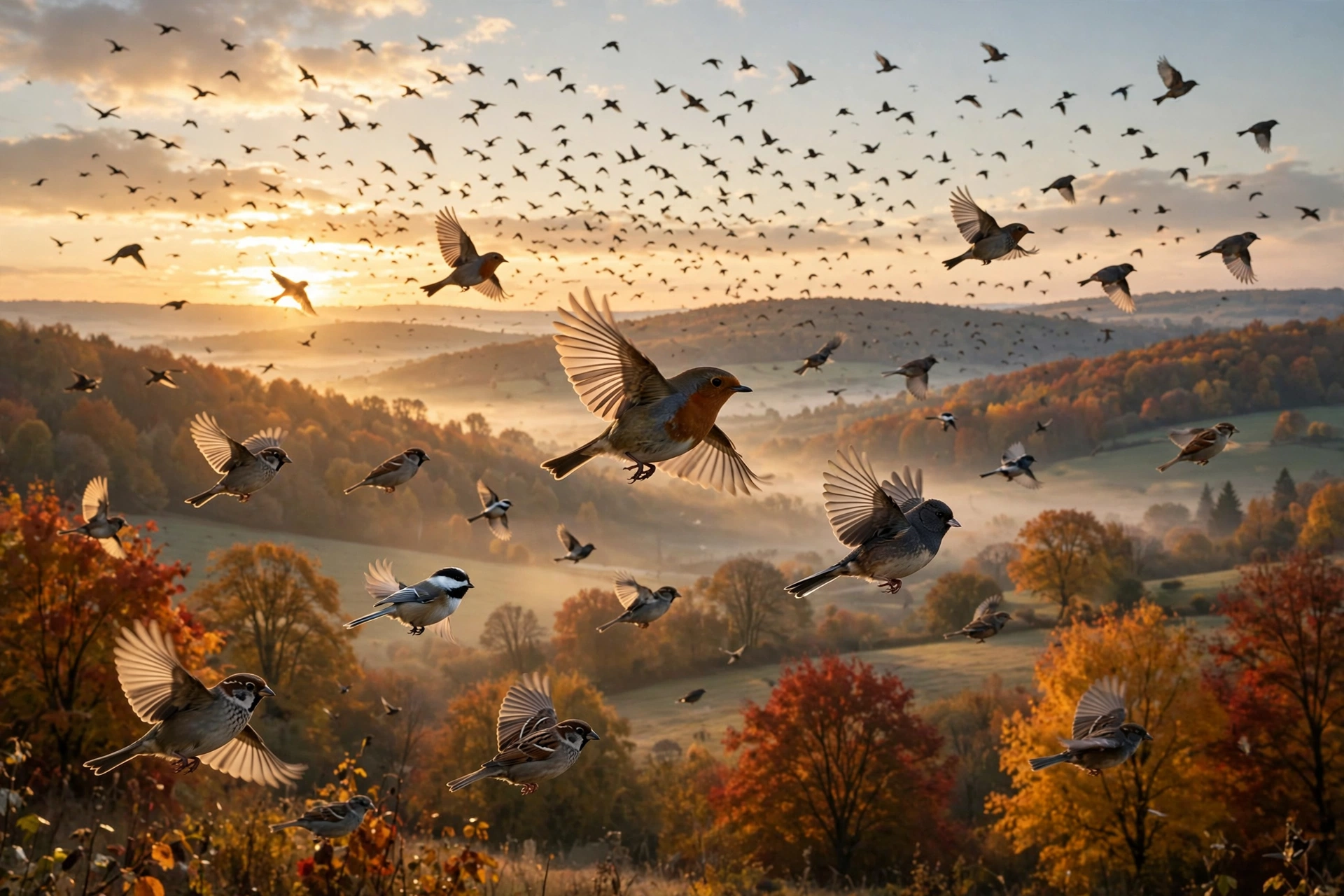
October is the peak month of fall migration across North America, and the sky is busier now than at any other point in autumn. Billions of birds are on the move, from tiny kinglets weighing less than a coin to skeins of snow geese stretching across the horizon. If you have ever wondered which birds migrate in October, this is your month.
This guide covers 20 birds that migrate in October, grouped by type so you know exactly what to look for. For each species you will find where it is headed, when it moves within October, and the best places to see it. Grab your binoculars, because October bird migration rewards anyone who simply looks up.
October sits at the crossroads of the two great migration seasons. If you want the full picture of how the year fits together, read our guide to the spring and fall migration seasons explained.
Why October Is the Peak Month for Fall Migration
Fall migration is a long, drawn-out affair, stretching from August into December. Unlike spring, when birds race north to claim breeding territories, autumn birds can afford to wait for the right weather. October is when everything converges: late songbirds, peak raptors, waves of waterfowl, and the first great flocks of geese and cranes.
Several forces combine to make October the busiest month:
- Cold fronts: the first strong cold fronts of autumn push waves of migrants south overnight, and the morning after a front can be spectacular.
- Shortening days: falling daylight triggers the migratory urge in most species, and by October even the late movers are on their way.
- Food runs out: insects fade and northern wetlands begin to cool, so insect eaters and waterfowl have strong reasons to leave.
- Night flights: over 80 percent of migratory species in North America travel at night, according to BirdCast, which means every October morning can bring fresh arrivals.
The result is a constantly changing cast. Some birds are just passing through, others are arriving to spend the winter, and a few are still staging for the final push south. Here is who to watch for, group by group.
Songbirds on the Move
The warbler waves of September are mostly gone, but October belongs to the hardy songbirds: sparrows, kinglets, thrushes, and the last of the warblers. These birds migrate mainly at night and drop into thickets, hedgerows, and gardens at dawn to refuel.

1. Yellow-rumped Warbler
The yellow-rumped warbler is the last warbler standing. While most warblers cleared out in September, yellow-rumps linger into late October, gleaning insects from shrubs and bayberries along hedgerows. They winter across the southern United States, Mexico, and Central America. Watch for the flash of the yellow rump patch in flight, and listen for their sharp chip note, the soundtrack of an October thicket.
2. White-throated Sparrow
This boreal breeder moves south en masse in October, and it turns up at feeders as if on a schedule. Most birds winter across the Southeast and Midwest, entirely south of their breeding range. Listen for the clear whistled song that birders render as “Old Sam Peabody”. They scratch in leaf litter beneath feeders and shrubs, so keep the ground under your feeders messy.
3. Dark-eyed Junco
The dark-eyed junco is the classic “snowbird”, arriving in October as a reliable sign that winter is close behind. Juncos breed across northern forests and winter through most of the United States. They feed on the ground in loose flocks, flashing white outer tail feathers as they flush. A platform feeder with millet will keep a flock visiting all winter.
4. Ruby-crowned Kinglet
Tiny, restless, and suddenly everywhere in October woodlands. Ruby-crowned kinglets pour out of the boreal forest through the month, bound for the southern United States and Mexico. Watch for the constant wing flicking and listen for the dry, rattling chatter. The ruby crown stays hidden most of the time, flashing only when the bird is excited.
5. Hermit Thrush
The hermit thrush times its October journey to the berry crop. These spotted thrushes move through the month, stopping to feast on wild grapes, dogwood berries, and crabapples. They winter across the southern United States and into Mexico. Listen at dawn for the soft “chup” call note, and watch shaded trails where they pump their tails up and down.
Waterfowl Riding the Cold Fronts South
October is when the northern marshes empty and the southern wetlands fill. Dabbling ducks ride the cold fronts south in waves, and a single morning can transform a quiet lake into a raft of thousands. Early arrivals come in late August and September, but October is the main event.
6. Mallard
The most familiar duck of all, and its migration is in full swing in October. Mallards breed across the northern prairies and parklands, then head for unfrozen water across the United States and northern Mexico. Scan farm ponds, flooded fields, and shallow wetlands for big rafting flocks. Drakes in fresh plumage gleam green-headed in the autumn sun.
7. Northern Pintail
Slim, elegant, and one of the earliest ducks on the move. The first pintails arrive in late August, and October brings the main push south to the Central Valley of California, the Gulf Coast, and Mexico. Drakes show the long pin tail, chocolate brown head, and white neck stripe. Watch shallow marshes and flooded rice fields at dawn.
8. Green-winged Teal
North America’s smallest dabbling duck is also one of its fastest fliers. Green-winged teal move through October toward wintering grounds from the southern United States to Mexico. Look for tight, twisting flocks low over marshes. The male’s chestnut head, green ear patch, and white shoulder stripe make him unmistakable when he banks in good light.
9. American Wigeon
The whistling duck of October marshes. American wigeons leave the boreal forest and prairies in mid to late October, wintering along both coasts, through the southern states, and into Mexico. Males show a white forehead and green eye stripe. They graze on shoreline grasses like tiny geese, and their three-note whistle carries across the water.
Raptors Riding the Thermals
Hawkwatches along the Appalachian ridges and Great Lakes shorelines count their biggest October numbers now. Raptors migrate by day, riding thermals and ridge lift south, which makes them the easiest migrants to watch. A sunny October morning on a ridge can deliver hundreds of birds an hour.

10. Sharp-shinned Hawk
The classic October hawkwatch bird. Sharp-shinned hawks stream down the Appalachian ridges and Great Lakes shorelines, peaking in late September and continuing strongly through October. They winter across the United States, Mexico, and Central America. Watch for the quick flap-flap-glide flight and squared-off tail as they power past a lookout.
11. Bald Eagle
Eagles follow the ducks. As waterfowl concentrate in October, bald eagles drift south from northern breeding grounds to open water across the United States. Some only move as far as the ice forces them. Big rivers, reservoirs, and the tailwaters below dams are the classic October viewing spots, where eagles gather to fish.
12. Turkey Vulture
The third week of October belongs to the kettles. Turkey vultures gather in rising columns and glide south in long, loose lines, heading for the southern United States and Central America. They ride thermals by day, so late mornings on sunny days are the best time to watch. Look for the teetering, wobbly flight on broad, silvery wings.
Big Flocks and Icons of the Season
Some October migrants need no binoculars. These are the headline birds of the season: cranes bugling over prairies, snow geese whitening the sky, pelicans wheeling in formation, and loons calling across northern lakes before the ice comes.

13. Sandhill Crane
The bugle call of October. Sandhill cranes stage in huge numbers on the northern prairies through the month, then push south in late October toward wintering grounds in Texas, New Mexico, and northern Mexico. Listen for the rolling, rattling call carrying for miles across open country. Dawn flyouts from roosting wetlands are unforgettable.
14. Snow Goose
Late October brings the first great skeins of snow geese south from the Arctic tundra. They winter by the millions across the southern United States and Mexico. Watch for long, shifting V formations and listen for the high, excited gabbling that announces them long before they appear. Refuges along the Mississippi and Central flyways fill fast.
15. American White Pelican
A soaring giant on the move in October. American white pelicans leave northern breeding colonies for the Gulf Coast, Florida, and Mexico. They travel in coordinated flocks that wheel, climb, and glide in near perfect unison. Big lakes and reservoirs are the places to watch, especially where flocks circle up on morning thermals.
16. Common Loon
Common loons leave the northern lakes in October and November, ahead of the ice. Adults depart first, while young birds of the year often wait until the last open water freezes, weeks later. They winter on coastal waters of both coasts and the Gulf of Mexico. Catch the haunting yodel on a calm October evening while you still can.
Late Movers and Backyard Regulars
Not every October migrant is headed far. Some of the month’s most visible birds are short-distance travellers, flocking up and drifting south in noisy waves. Many will spend the winter in your region, which makes October the month to set up feeders, fill the birdbath, and plant for berries. Cedar waxwings also sweep through in nomadic fruit-chasing flocks this month, while American goldfinches gather in chattering groups, newly moulted into their soft olive winter plumage.
17. American Robin
Not gone yet, but moving in waves. American robins pour south in noisy flocks through October, following the fruit crop. Many winter wherever berries persist, sometimes far north of the Gulf states. A fruiting crabapple, holly, or juniper can hold hundreds of robins overnight, and a fresh birdbath draws them in by the dozen.
18. European Starling
October is murmuration season. European starlings gather in enormous evening flocks through the month, swirling in shape-shifting clouds before dropping into a roost. Northern birds drift south, though many stay put all winter. Introduced to North America in 1890, the starling is now one of the continent’s commonest birds, for better or worse.
19. Red-winged Blackbird
The blackbird roosts of October are a spectacle worth seeking out. Red-winged blackbirds gather in flocks of thousands, joining grackles and cowbirds at evening roosts in marshes and dense trees. Most migrate to the southern United States, though some winter surprisingly far north. Grain fields and cattail marshes at dusk are the show.
20. Brown-headed Cowbird
The quiet companion of the blackbird flocks. Brown-headed cowbirds travel south with red-wings and grackles in October, heading for the southern states and Mexico. Males show a glossy black body and rich brown head. Watch for mixed flocks wheeling over fields like smoke, and check the edges for the smaller, shorter-tailed cowbirds.
October Migration Timing at a Glance
Use this table to plan your birding. Timing refers to the peak movement through the central and eastern United States; northern areas run a week or two earlier, southern areas later.
| Species | October peak timing | Winter destination |
|---|---|---|
| Yellow-rumped Warbler | Early to late October | Southern US, Mexico, Central America |
| White-throated Sparrow | Throughout October | Southeast and Midwest US |
| Dark-eyed Junco | Early to mid October | Most of the United States |
| Ruby-crowned Kinglet | Early to mid October | Southern US, Mexico |
| Hermit Thrush | Mid to late October | Southern US, Mexico |
| Mallard | Throughout October | US, northern Mexico |
| Northern Pintail | Early to mid October | California, Gulf Coast, Mexico |
| Green-winged Teal | Throughout October | Southern US, Mexico |
| American Wigeon | Mid to late October | Coasts, southern US, Mexico |
| Sharp-shinned Hawk | Late September to mid October | US, Mexico, Central America |
| Bald Eagle | Mid to late October | Open water across the US |
| Turkey Vulture | Mid to late October | Southern US, Central America |
| Sandhill Crane | Late October | Texas, New Mexico, Mexico |
| Snow Goose | Late October into November | Southern US, Mexico |
| American White Pelican | October | Gulf Coast, Florida, Mexico |
| Common Loon | October into November | Both coasts, Gulf of Mexico |
| American Robin | Throughout October | Wherever berries persist |
| European Starling | October flocking | Mostly resident, some drift south |
| Red-winged Blackbird | October | Southern United States |
| Brown-headed Cowbird | October | Southern US, Mexico |
How to Catch the Migration Yourself
You do not need to travel to a famous hotspot to witness October migration. Follow these four steps and the birds will come to you. For a full walkthrough of the forecast tools, see our BirdCast live migration forecast guide.
- Check the BirdCast forecast: BirdCast uses weather radar to predict how many birds will be aloft over your county tonight. A red night on the map means a big morning. Set an alert for your city and plan your dawn walk around it.
- Watch for cold fronts: the morning after a strong cold front passes is prime time. Northwest winds push birds south overnight, and they drop into the first good habitat at dawn. Check the weather map, then check the thickets.
- Go out at dawn: nocturnal migrants land just before sunrise, hungry and relatively tame. The first two hours of daylight are the best of the day for songbirds. For raptors, shift to late morning when thermals build.
- Join October Big Day: the October Big Day is a global birding event that falls right in peak migration. Birding with thousands of others turns a good day into a great one, and your sightings help science.
One more tip: turn off unnecessary outdoor lights during October. Artificial light draws night migrants off course and into hazards like glass. The National Audubon Society runs Lights Out programmes across the continent, and joining yours is one of the simplest ways to help migrating birds.
October Migration FAQs
Which birds migrate latest in October?
The latest October movers are the waterfowl and the big flocking birds. Mallards, wigeons, and diving ducks keep arriving into November, sandhill cranes and snow geese push south in late October, and young common loons wait for the ice before leaving. If you want late action, watch lakes and refuges rather than woodlands.
Do all birds migrate in October?
No. Many species are residents that stay put all year, and some, like blue jays and robins, are partial migrants where only part of the population moves. October is simply the month when the greatest number of species are in transit at once. Migration as a whole stretches from August into December, with different groups peaking at different times.
What is the best time of day to watch October migration?
Dawn is best for songbirds, which land after a night of flying and feed actively in the first two hours of light. Late morning to early afternoon is best for raptors and vultures riding thermals. Dusk belongs to the big spectacles: blackbird roosts, waterfowl flighting into refuges, and starling murmurations.
How far do these October migrants fly?
It varies enormously. Short-distance migrants like juncos and robins may travel only a few hundred kilometres to wherever food holds out. Long-distance migrants like yellow-rumped warblers and sharp-shinned hawks fly thousands of kilometres to Mexico and Central America. Snow geese make one of the longest journeys, from Arctic tundra to the southern United States and Mexico.
Will October migrants visit my backyard?
Yes, October is one of the best months for backyard birding. White-throated sparrows and dark-eyed juncos arrive at feeders, robins and waxwings strip berry bushes, and sharp-shinned hawks may cruise through hunting the feeder birds. Keep feeders full, water fresh, and leave some leaf litter and native berries in place.
The Bottom Line
October is the one month no birder should waste. Twenty species barely scratch the surface, but they capture the season: the last warblers and the arriving sparrows, ducks riding the cold fronts, hawks streaming down the ridges, and cranes bugling over the prairie at dawn. Every cold front reshuffles the deck, so no two October days bird alike.
Start simple this week. Check the BirdCast forecast tonight, visit a local thicket or lakeshore at dawn tomorrow, and keep a list of what you find. Try a new spot each weekend, because different habitats hold different migrants, and a marsh that was quiet on Tuesday can be full of ducks and geese by Saturday. The birds are moving right now, overhead and all around you. All you have to do is look up and enjoy the greatest wildlife show of the autumn.





