Skip to content

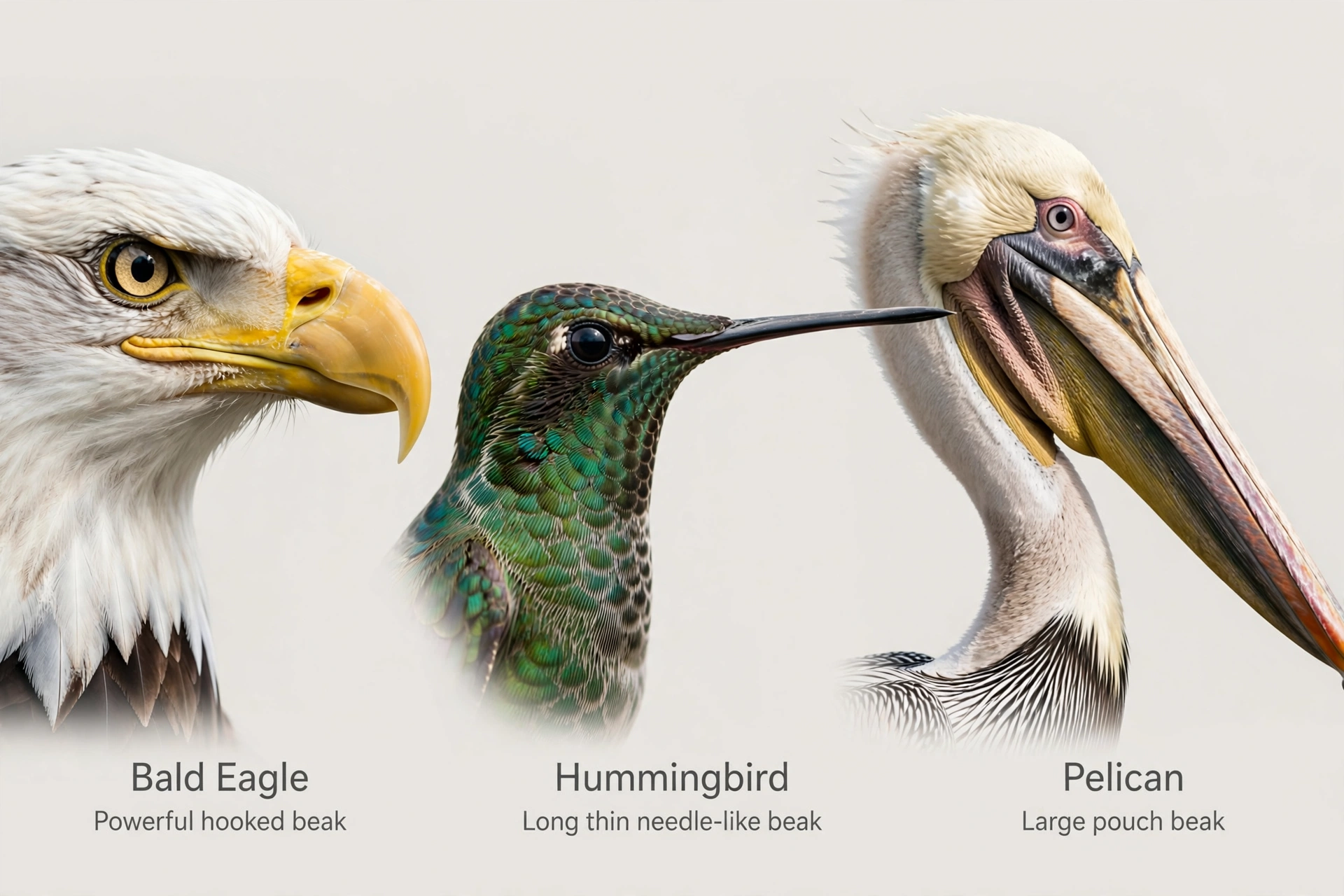
Look at a bird’s beak and you are looking at its life story. That single structure tells you what the bird eats, how it catches its food, and often where it lives. Biologists consider the beak a bird’s most versatile tool. It works as a pair of hands, a set of teeth, and a construction crane all at once.
More than 10,000 bird species share this basic tool, yet beak shapes vary enormously from one species to the next. Each shape is an answer to a feeding challenge, refined over millions of years of evolution.
This guide breaks down the seven main bird beak types, explains the anatomy behind them, and shows how beak shape can help you identify birds in the field. You will also learn how beaks evolved, why Darwin’s finches made them famous, and what beaks do beyond eating.
What a Bird Beak Is Made Of
Before comparing shapes, it helps to know what a beak actually is. The core is bone: an upper jaw called the maxilla and a lower jaw called the mandible. The bone is typically hollow or porous, which keeps it light enough for flight.
Over that bone sits a thin, hard sheath of keratin called the rhamphotheca. Keratin is the same protein that forms your fingernails and a bird’s own feathers. Between the sheath and the bone lies a vascular layer rich in blood vessels and nerves, which is why a damaged beak can bleed.
Three facts about this construction matter for everything that follows. First, birds have no teeth. They swallow food whole, and a muscular stomach called the gizzard grinds it up. Some species evolved serrated cutting edges called tomia that work like teeth, but these are keratin ridges, not true teeth.
Second, the keratin sheath grows continuously throughout a bird’s life and wears down with use, much like a fingernail. Third, many birds have a concentration of sensory receptors at the bill tip, known as the bill tip organ.
According to the Cornell Lab of Ornithology, this organ is especially well developed in ducks and geese, which probe murky water by touch, but it is absent in pigeons and sparrows.
Beaks also change with the seasons in some species. Puffins shed the bright outer plates of their beaks after the breeding season, which is why they look duller in winter.
Some pelicans shed a temporary structure called a bill horn once breeding ends. These details matter for identification, as you will see below.
1. Conical Beaks: The Seed Crushers
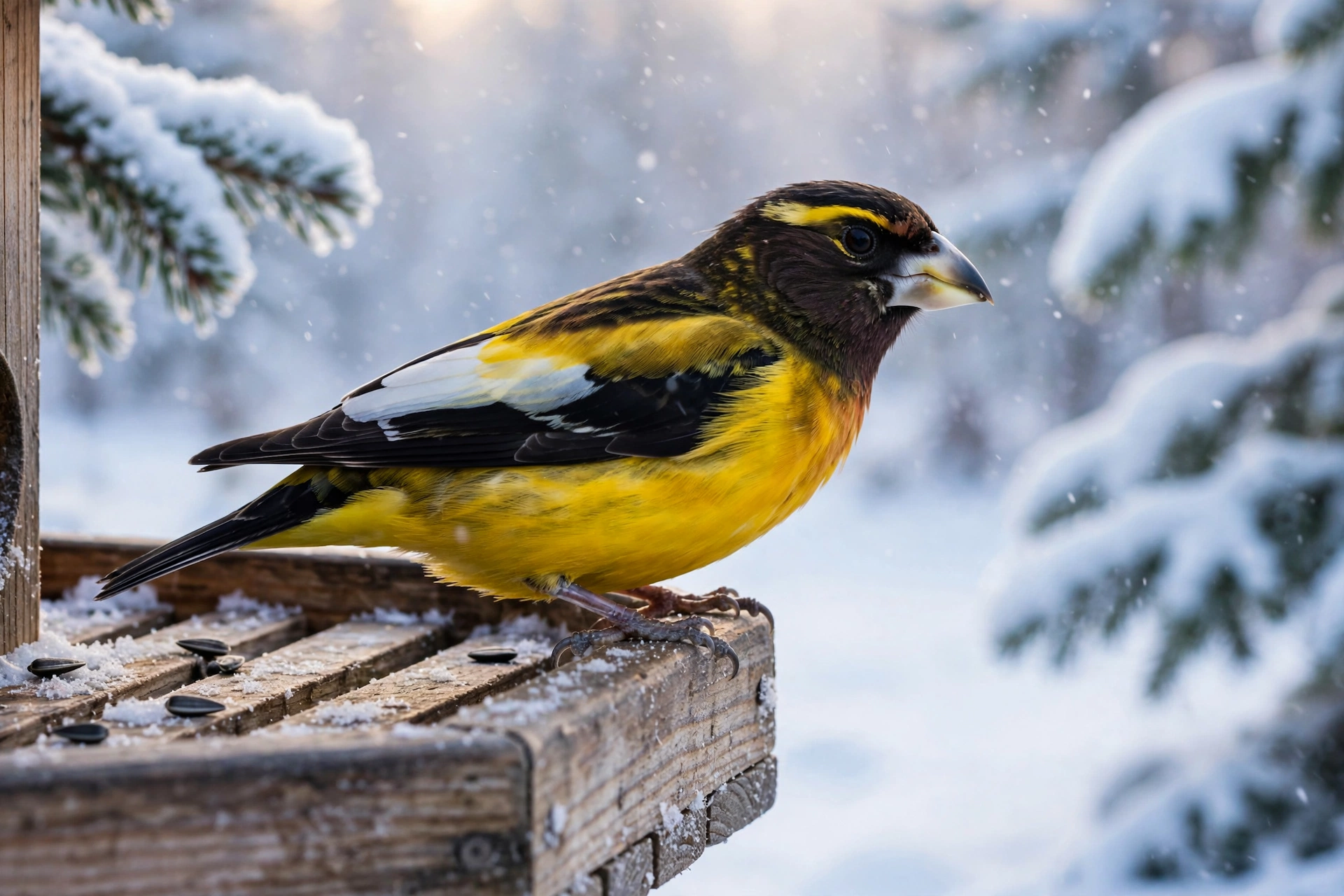
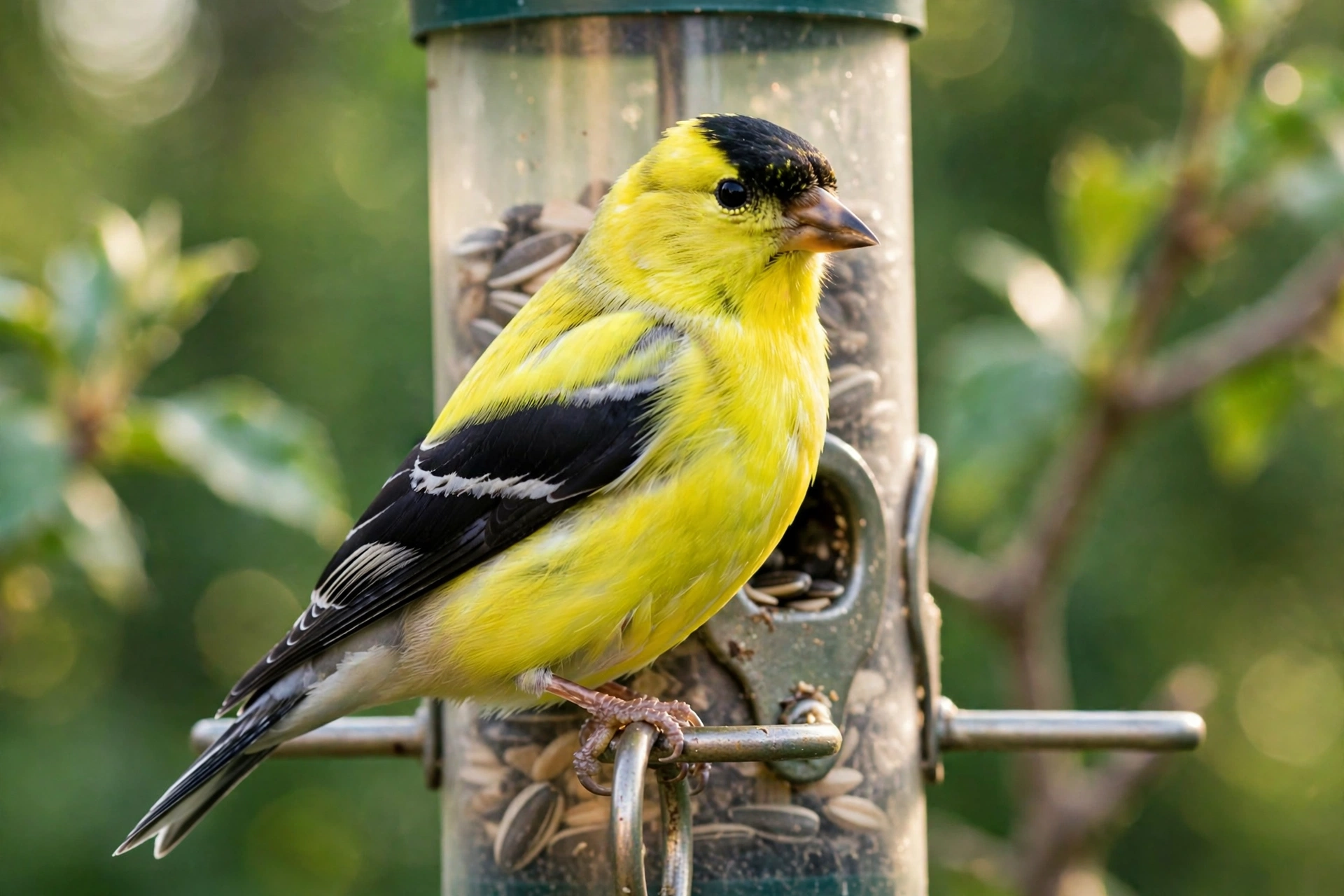
The classic seed eater’s beak is short, stout, and cone shaped. Think of a house finch, a sparrow, a cardinal, or a grosbeak. The thick base provides the muscle leverage needed to crack hard shells, while the pointed tip handles precise picking.
Look closely and you will find fine ridges along the cutting edges. These ridges help the bird grip a seed and slice through its hull. The seed’s kernel is eaten and the husk discarded, often with an expert flick of the tongue.
Strength varies with diet: grosbeaks wield massive bills that can crack cherry pits, while goldfinches carry slimmer cones suited to thistle seeds.
What it reveals: a short, thick, triangular bill almost always means a seed eater. If you see this shape at your feeder, expect a granivore working through sunflower seeds or millet.
2. Hooked Beaks: The Meat Tearers
Raptors carry the most dramatic beaks in the bird world. In eagles, hawks, falcons, and owls, the upper bill extends past the lower one and curves down into a sharp hook. This is a tearing tool built for gripping flesh and ripping it into swallowable strips.
Falcons add a specialist feature: a sharp projection on the upper bill called a tomial tooth, with a matching notch below. They use it to sever a prey animal’s spinal cord quickly. Shrikes, the songbirds that hunt like raptors, evolved their own version of tomial teeth made entirely of keratin, which they use to dispatch insects and small vertebrates.
The hook’s size tracks the hunter’s typical prey. An eagle’s massive hooked bill can tear apart a fish or rabbit, while a kestrel’s smaller hook is scaled for insects and voles.
What it reveals: a strongly hooked bill means a predator that tears meat. If you are comparing large raptors, bill proportions are a genuine field mark. Our bald eagle vs golden eagle identification guide shows how head and bill shape help separate these two lookalikes.
3. Probing Beaks: The Nectar Specialists
Hummingbirds and sunbirds carry some of the slenderest beaks in nature: long, thin, and often slightly curved downward. The shape is a perfect match for tubular flowers. The bird hovers or perches, slides its bill into the blossom, and laps nectar with a brush tipped tongue.
The extreme example is the sword-billed hummingbird of the Andes. Its bill can reach four inches long, which is actually longer than the bird’s body. That extraordinary length gives it exclusive access to deep, trumpet shaped flowers that no other bird can reach, and in return the bird pollinates those flowers.
Curvature matters too. Hermit hummingbirds have strongly decurved bills that match the curved flowers they feed from. The fit between bill and blossom is so precise that it works like a lock and key, a textbook case of coevolution between plant and pollinator.
What it reveals: a long, needle thin bill points to nectar feeding, or sometimes to probing mud and bark for small prey, as in ibises and some shorebirds. To see what fuels these high energy birds, read our guide on what hummingbirds eat.
4. Chisel Beaks: The Woodworkers
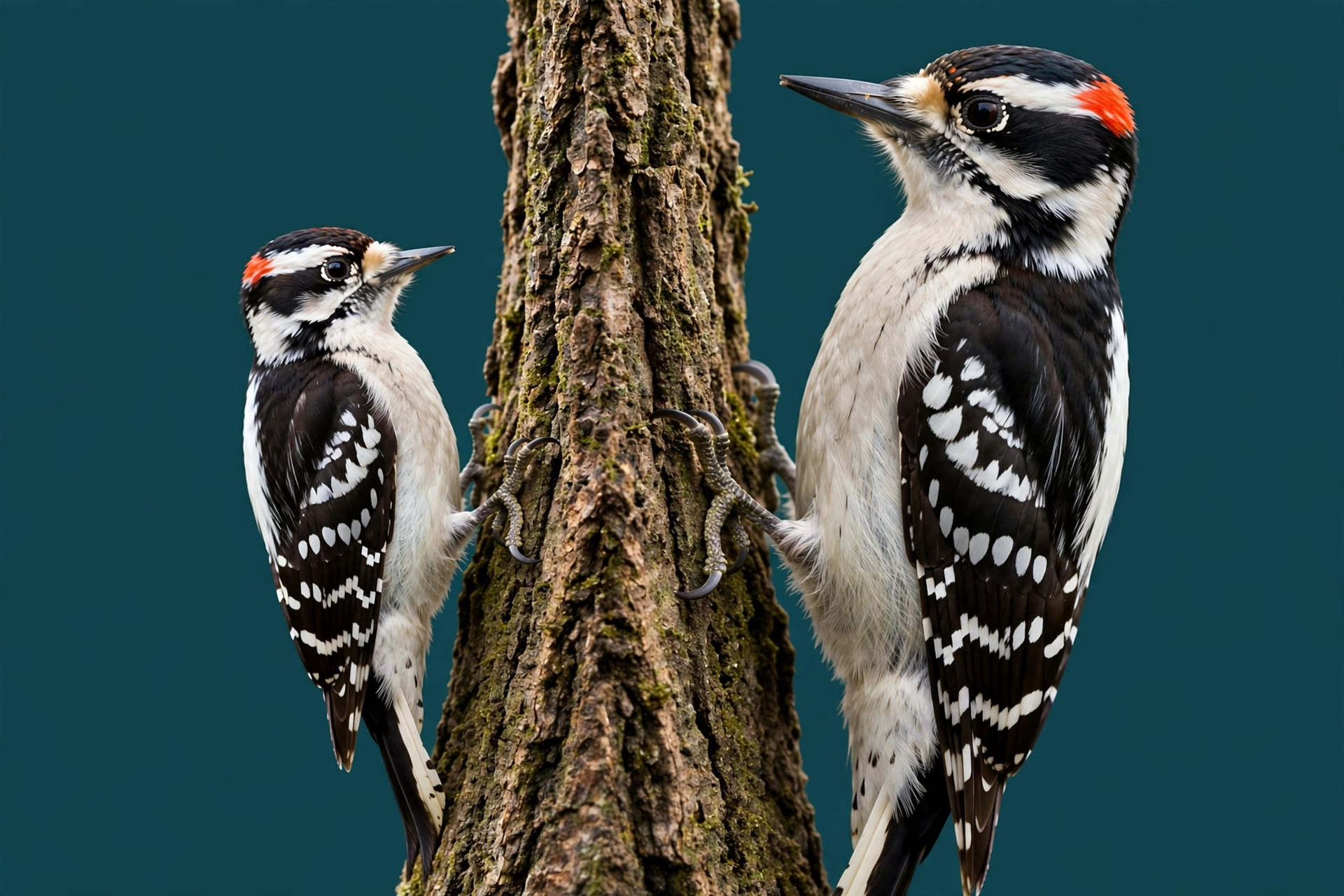
A woodpecker’s bill is straight, strong, and sharply pointed, built like a chisel. The bird hammers it into bark and wood to expose beetle larvae, ants, and other hidden insects. Shock absorbing structures in the skull protect the brain from the repeated impacts.

Different woodpeckers tune the chisel to their specialty. Sapsuckers drill neat rows of small holes and return later to lap up the sap and the insects it traps. Pileated woodpeckers excavate large rectangular holes in search of carpenter ants. Flickers, which feed largely on ground ants, have slightly more curved bills suited to probing soil.
The chisel serves communication as well as feeding. Woodpeckers drum rapid bursts on resonant wood or even metal gutters to claim territory and attract mates. Each species drums at its own tempo, so experienced birders identify woodpeckers by sound before they ever see the bird.
What it reveals: a straight, stout, pointed bill on a tree climbing bird means a woodpecker style lifestyle. Even in winter, when insects are scarce, these birds switch to nuts and suet but keep the same trusty tool.
5. Spear Beaks: The Fish Stabbers
Herons, egrets, and kingfishers hunt with bills shaped like daggers: long, straight, and sharply pointed. A heron stands motionless in shallow water, then strikes with explosive speed, spearing or grasping a fish before it can react. The whole attack takes a fraction of a second.
Kingfishers work the same principle from the air. They plunge dive from a perch, hit the water bill first, and emerge with a minnow or small fish. Their bills are reinforced to survive the impact, and their eyes adjust for the way water bends light.
Some fish eaters add grip to the spear. Mergansers, the fish eating ducks, carry sawtooth serrations along the bill edges that clamp onto slippery prey.
Puffins take a different approach to the same problem: their deep, laterally flattened bills can hold multiple fish crosswise at once, and they have been recorded carrying ten or more small fish back to the colony in a single trip.

What it reveals: a long, straight, sharp bill on a waterside bird means a fish hunter. Watch how it hunts and you can often guess the species: the statue still heron, the plunge diving kingfisher, the underwater chasing merganser.
6. Filtering Beaks: Nature’s Strainers
Not every beak grabs or stabs. Some work like sieves. Flamingos feed with their heads upside down, sweeping their bent bills through shallow water. Inside the bill, fringe like plates called lamellae trap algae, tiny crustaceans, and other small organisms while water flows out.
The pink color flamingos are famous for comes from carotenoid pigments in exactly this filtered food. Spoonbills sweep a similar bill from side to side through wetlands, snapping shut when touch receptors detect prey.

Ducks are the everyday filter feeders most people know: a dabbling mallard strains water through comb like bill edges, keeping seeds and invertebrates while water escapes. That sensitive bill tip organ makes ducks remarkably good at finding food by touch in muddy water.
What it reveals: a broad, flat bill means a bird that strains food from water or mud. The flatter and wider the bill, the more committed the bird is to filter feeding.
7. Pouch Beaks: The Scoop Nets
Pelicans carry the largest bills of any bird relative to their feeding style. Beneath a long upper bill hangs an expandable throat pouch made of skin. The pelican scoops up fish and water together, then contracts the pouch to squeeze the water out before swallowing the catch.
Brown pelicans plunge dive from height and surface with a pouch full of fish, while white pelicans fish cooperatively, herding fish into shallow water to scoop in turn.
The pouch is not watertight storage. It is a temporary net, and the bird empties it within seconds. Before swallowing, a pelican typically tosses the fish into the air and catches it headfirst so it slides down smoothly.
What it reveals: a huge bill with a visible throat pouch belongs to a pelican, and the pouch’s color can even signal breeding condition, flushing brightly during courtship season.
The 7 Beak Types Compared
Here is a quick reference for the seven types covered in this guide.
| Beak Type | Shape | Main Food | Example Birds |
|---|---|---|---|
| Conical | Short, stout, triangular | Seeds and grains | Finches, sparrows, cardinals, grosbeaks |
| Hooked | Curved, sharp tip overhanging | Meat and prey | Eagles, hawks, falcons, owls |
| Probing | Long, thin, often downcurved | Nectar | Hummingbirds, sunbirds |
| Chisel | Straight, strong, pointed | Wood boring insects | Woodpeckers, sapsuckers, flickers |
| Spear | Long, straight, dagger like | Fish | Herons, egrets, kingfishers |
| Filtering | Broad, flat, spoon shaped or bent | Strained plants and tiny animals | Flamingos, spoonbills, ducks |
| Pouch | Long bill with expandable throat sac | Scooped fish | Pelicans |
How Beaks Evolved: Lessons from Darwin’s Finches
No story explains beak evolution better than Darwin’s finches of the Galapagos Islands. A single ancestral finch reached the islands long ago, and its descendants radiated into many species, each with a beak tuned to a different food.
Some crack hard seeds, some probe cactus flowers, some pick insects from bark. This branching from one ancestor into many forms is called adaptive radiation.
What makes the finches extraordinary is that scientists have watched evolution happen in real time. Princeton biologists Peter and Rosemary Grant have measured nearly every finch on the island of Daphne Major since the 1970s.
During a severe drought in 1977, seeds grew scarce and only finches with larger, stronger beaks could crack the tough seeds that remained. Those birds survived and passed the trait on.
Decades later, a larger finch species colonized the island and outcompeted the residents for big seeds. When drought struck again in 2003 and 2004, the resident finches shifted toward smaller seeds, and natural selection favored smaller, more dexterous beaks. Researchers documented the whole shift as it happened, a rare start to finish observation of evolution driven by competition.
Genetics has since revealed how fast this works. A large genome study found that 45 percent of the variation in finch beak size traces to just six regions of DNA, including a cluster of genes inherited together as a unit.
Small genetic changes, filtered by drought and competition, reshape beaks within a few generations. You can read the original reporting on the Grants’ fieldwork at New Scientist and the genome findings at UC Santa Cruz.
Reading a Bird by Its Bill: ID Tips
Beak shape is one of the fastest identification shortcuts in birding. Before plumage details or songs, the bill tells you which family you are looking at. A thick cone says finch. A hooked bill says raptor. A thin downcurved bill says you are watching a nectar feeder or bark prober.
Combine the bill with behavior for a stronger ID. A long straight bill on a bird standing statue still in a marsh is a heron. The same general shape on a bird plunge diving from a wire is a kingfisher. Shape sets the category, behavior narrows it to species.
Bird banders even measure the culmen, the length along the top of the upper bill, because it varies consistently between similar species.
Watch for seasonal changes. A puffin’s bright bill plates drop off after breeding season, so a winter puffin looks like a different bird. Some pelicans develop temporary bill ornaments for courtship. And remember that a robin’s slender pointed bill is a worm pulling tool first and a berry eating tool second, which is exactly why robins find worms the way they do.
Beaks Do More Than Eat
Feeding gets the attention, but beaks are multi purpose instruments. Preening is a daily job: birds draw each feather through the bill to clean it and spread waterproofing oil from the uropygial gland near the tail. Without regular preening, feathers lose their insulation and flight worthiness.
Nest building is beak work too. Weavers stitch elaborate hanging nests with their bills. Woodpeckers excavate entire nesting cavities. Even simple cup nests require thousands of bill carried twigs and grass blades.
Beaks also signal and defend. A puffin’s colorful bill advertises breeding fitness. Hornbills fence with their bills in territorial clashes. Shrikes use their hooked bills to impale prey on thorns, creating larders they return to later.
Some beaks even regulate temperature. The toco toucan’s enormous bill is laced with blood vessels, and the bird adjusts blood flow to release excess heat. The bill can be a third of the bird’s body length yet only a twentieth of its weight, thanks to a lightweight foam like bone structure inside.
Frequently Asked Questions
Do birds have teeth?
No. Modern birds have no true teeth. Their beaks are keratin sheaths over bone, and food is swallowed whole and ground up in the muscular gizzard. Some species evolved tooth like serrations along the bill edges, such as the falcon’s tomial tooth and the merganser’s sawtooth ridges, but these are keratin structures, not teeth.
Do bird beaks keep growing?
Yes. The keratin sheath grows continuously and wears down through daily use. In healthy wild birds the two processes balance out. Pet birds with soft diets sometimes develop overgrown beaks that need trimming by a veterinarian, which shows how constant the growth is.
Why do puffin beaks change color?
Atlantic puffins grow bright, colorful outer bill plates for the breeding season and shed them afterward. The winter beak underneath is smaller and duller. This is why the same puffin can look strikingly different between summer and winter.
Which bird has the longest beak?
Measured against body size, the sword-billed hummingbird wins: its bill can exceed the length of its entire body. In absolute terms, pelicans and large hornbills carry some of the longest bills of any birds.
Can you identify a bird by its beak alone?
Often you can narrow it to the right family, which is a huge head start. A conical bill means a seed eater, a hooked bill means a raptor, a chisel bill means a woodpecker. Combine the bill with size, habitat, and behavior, and identification becomes much easier.
Conclusion
A bird’s beak is evolution made visible. Seven basic designs cover nearly every feeding challenge in nature, from cracking seeds to straining plankton to scooping fish. Each shape carries the signature of the food it handles and the habitat where that food is found.
The next time you watch birds, start with the bill. Ask what job it was built to do, and you will find yourself reading behavior, diet, and even evolutionary history in a single glance. That is the real lesson of Darwin’s finches: the beak is never just a beak. It is a record of everything the bird needs to survive.