 Skip to content

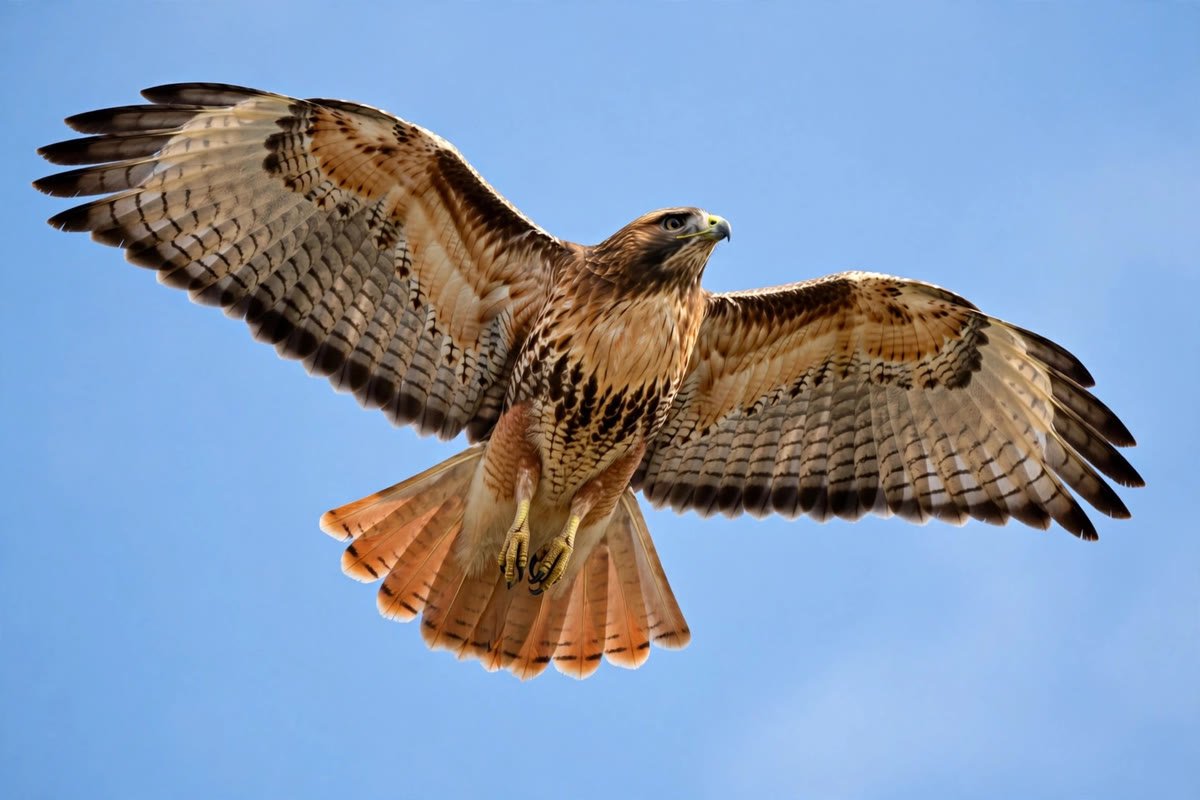
A bar-headed goose flies over the Himalayas at nearly 24,000 feet, where the air holds a fraction of the oxygen at sea level. A hummingbird beats its wings 50 times a second, burning energy faster, pound for pound, than any other vertebrate. A peregrine falcon folds into a 200-mile-per-hour stoop without blacking out. None of this should be possible with lungs like ours.
How do birds breathe? With a respiratory system completely different from mammals: rigid lungs that never inflate, a set of air sacs that work like bellows, and a one-way airflow that bathes the lungs in fresh air during both inhalation and exhalation. The result is the most efficient breathing apparatus in the vertebrate world, and the hidden engine behind everything birds do.
In this guide, you will learn how the avian lung differs from yours, what the nine air sacs actually do, the elegant two-breath cycle that moves air through the system, why one-way airflow outperforms tidal breathing, and the superpowers this design makes possible.

How Do Birds Breathe? The Short Answer
Birds breathe using small, rigid lungs plus a system of air sacs that pump air through those lungs in a single direction. When a bird inhales, fresh air flows past the lungs into rear air sacs. When it exhales, that stored fresh air is pushed forward through the lungs. A second breath completes the circuit.
The key difference from mammals is that air moves through a bird’s lungs in one direction only, like a one-way street, instead of flowing in and out the same way. Fresh, oxygen-rich air passes over the gas-exchange surfaces during both inhalation and exhalation, so the lungs receive a near-continuous supply of oxygen. Mammalian lungs, by contrast, mix fresh and stale air with every breath.
This is not a minor upgrade. The avian system extracts oxygen so efficiently that birds routinely function in air too thin for mammals to survive, and it powers the most metabolically expensive form of locomotion on Earth: flapping flight.
Lungs That Never Inflate
Mammalian lungs are elastic bags. They inflate when we inhale and deflate when we exhale, and gas exchange happens across tiny sacs called alveoli as air sloshes in and out. Bird lungs work nothing like this.
Avian lungs are small, rigid, and fixed in place against the ribcage. They do not expand and contract. Instead of alveoli, they contain a labyrinth of tiny parallel tubes called parabronchi, lined with air capillaries where oxygen crosses into the blood. The total surface area for gas exchange is enormous relative to the lung’s size, far greater per unit volume than in mammals.
Birds also lack a diaphragm, the muscular sheet mammals use to power breathing. Instead, the entire ribcage and the air sac system do the pumping. The lungs themselves are passive gas-exchange surfaces; all the mechanical work of moving air happens elsewhere. It is a complete redesign of the breathing machine, and every part of it serves flight.
The Air Sacs: Nine Bellows
The air sacs are the most alien part of the system. Most birds have nine of them: paired sacs in the neck, chest, and abdomen, plus a single sac near the collarbone. They are thin-walled, balloon-like structures that extend through much of the body, and in many species they even invade the hollow bones.
Crucially, almost no gas exchange happens in the air sacs themselves. Their walls are poorly supplied with blood vessels. They are bellows and holding tanks, not lungs. Their job is to store air and push it through the real lungs in the right direction at the right time.
The sacs fall into two functional groups. The posterior sacs, toward the tail, receive fresh air on inhalation and hold it in reserve. The anterior sacs, toward the head, collect stale air that has already passed through the lungs and route it out of the body. This division of labor is what makes the one-way flow possible.
The connection to hollow bones is a bonus, not the main event. Air sac extensions pneumatize many bones, lightening the skeleton for flight, and researchers note the sacs also help dump excess heat during the furnace-like exertion of flapping. But breathing comes first; everything else is a side benefit.

From Egg to First Breath: How Chicks Boot Up the System
The respiratory story starts before hatching. Inside the egg, the developing chick breathes through the porous shell, exchanging gases with the outside world across the inner membrane. As hatching approaches, the chick grows too large for this trickle of oxygen and turns to a built-in reserve: the air cell, a pocket at the blunt end of the egg formed as the contents cool and contract after laying.
In a behavior called internal pipping, the chick pierces the membrane into the air cell and takes its first true breaths of air, switching on the lungs and air sacs before the shell is even cracked. This is why a chick can survive the exhausting work of pipping its way out: its breathing machinery is already running on the air cell’s supply.
The air cell also explains the classic freshness test for eggs. As an egg ages, moisture escapes through the shell pores and the air cell grows larger, which is why an old egg floats in water while a fresh one sinks. The same pocket that launches a chick’s first breaths doubles as a kitchen freshness gauge.
The Two-Breath Cycle, Step by Step
Here is the elegant part. Moving one gulp of air completely through a bird’s respiratory system takes two full breaths, in four choreographed stages.
- First inhalation: fresh air streams through the trachea, past the lungs, and fills the posterior air sacs. Meanwhile, stale air left in the lungs from the previous cycle is displaced forward into the anterior sacs.
- First exhalation: the posterior sacs squeeze, pushing their fresh air forward through the lungs, where oxygen exchange happens. At the same time, the anterior sacs push their stale air out through the trachea.
- Second inhalation: fresh air again fills the posterior sacs, while the now-stale air that just crossed the lungs drains into the anterior sacs.
- Second exhalation: the anterior sacs expel the stale air from the body, and the posterior sacs push fresh air into the lungs once more, ready for the next cycle.
Follow any single parcel of air through this sequence and you see the genius of it: air enters the system, waits one beat in the posterior sacs, crosses the lungs exactly once, waits one beat in the anterior sacs, and leaves. It never reverses direction, never mixes with incoming fresh air, and crosses the exchange surfaces at full oxygen concentration.
Why One-Way Airflow Beats Our Two-Way Lungs
| Feature | Bird lungs | Mammal lungs |
|---|---|---|
| Airflow direction | One-way, continuous | Two-way, tidal (in and out) |
| Fresh air over exchange surfaces | During both inhalation and exhalation | Only during inhalation |
| Mixing of fresh and stale air | Essentially none | Significant, dilutes each breath |
| Lung structure | Small, rigid, fixed volume | Large, elastic, inflating |
| Breathing muscle | Ribcage and air sacs (no diaphragm) | Diaphragm and rib muscles |
| Gas exchange design | Cross-current: air and blood flow at angles for maximum extraction | Alveoli: air sits in sacs while blood passes |
| Bonus functions | Lightens bones, dumps flight heat | None comparable |
The cross-current design deserves a closer look. In the parabronchi, air flows in one direction while blood flows across it at an angle, maintaining a concentration gradient along the whole exchange surface. Oxygen keeps diffusing into the blood along the entire path instead of equilibrating early and stalling, the way it does in an alveolus. Engineers would call this a counter-flow heat exchanger pattern, and it is one of the most efficient gas-exchange geometries known.
The practical result is stark. At altitudes where a mammal would lose consciousness, birds keep flying, hunting, and navigating. The system does not just support flight; in a real sense, powered flight as we know it is only possible because this breathing system exists. To appreciate what that flight looks like in action, read how birds actually stay airborne.
Superpowers the System Makes Possible
Once you understand the machinery, several famous bird feats stop looking like miracles and start looking like engineering.
- Extreme altitude: bar-headed geese migrate over the Himalayas, routinely flying where the effective oxygen is a fraction of sea-level values. Their one-way lungs extract enough oxygen from thin air to power continuous flapping.
- Non-stop endurance: godwits fly for over a week without landing, and swifts stay airborne for months. Continuous fresh airflow means muscles never wait for oxygen, even at maximum exertion.
- Sleeping on the wing: frigatebirds and swifts snatch sleep mid-flight, a feat that demands a respiratory system efficient enough to run on autopilot. Read do birds sleep while flying for the full story.
- Rapid recovery: after explosive takeoffs or long chases, birds repay their oxygen debt far faster than a mammal could, because every breath delivers more usable oxygen.
- Long migrations: the marathon flights that define why birds migrate are, at bottom, respiratory achievements as much as navigational ones.

Frequently Asked Questions
Do birds have a diaphragm?
No. Birds lack the muscular diaphragm that powers mammalian breathing. Instead, movements of the ribcage and sternum, coordinated with the air sacs, pump air through the system. The lungs themselves stay rigid throughout; all the mechanical work happens in the sacs and body wall.
Why are bird bones hollow?
Partly for lightness, but the full story involves breathing. Extensions of the air sacs invade many bones, a condition called pneumatization, which both lightens the skeleton and connects the bone interiors to the respiratory airflow. Not all bird bones are hollow, though: penguins and loons, which dive, have denser bones for ballast.
Can birds get lung diseases like pneumonia?
Yes. The air sac system that makes birds such efficient breathers also gives airborne pathogens and fungal spores an extensive network to colonize. Aspergillosis, a fungal infection of the air sacs and lungs, is a well-known killer of captive and stressed wild birds. Good ventilation matters enormously in aviaries for exactly this reason.
Do birds breathe faster when flying?
Breathing rate rises with exertion, and in many species wingbeats and breaths synchronize during flight, coupling the locomotor and respiratory muscles for efficiency. A hovering hummingbird, with the highest mass-specific metabolism of any vertebrate, breathes at an extraordinary rate to feed its flight muscles.
How is a bird’s syrinx related to breathing?
The syrinx, the avian voice box, sits where the trachea splits into the bronchi, deep in the chest rather than at the top of the windpipe like our larynx. This placement, combined with the powerful airflow of the respiratory system, lets birds produce two independent sounds at once and sing with remarkable volume and complexity.
Why do birds pant with their beaks open on hot days?
Panting and gular flutter, the rapid vibration of the throat tissues, dump excess heat using the same air sac network that powers breathing. Birds cannot sweat, so they use their respiratory surfaces as a cooling radiator. An open-beaked, panting bird on a summer afternoon is air-conditioning itself with its lungs.
Did dinosaurs breathe like birds?
Evidence increasingly says the air-sac system predates birds. Fossilized vertebrae of theropod dinosaurs and giant sauropods show the same pneumatization patterns made by air sacs, suggesting unidirectional airflow evolved long before flight. Birds inherited a breathing superpower from their dinosaur ancestors and then put wings on it.
Conclusion
How do birds breathe? Not like us, and that is the whole story. Rigid lungs that never inflate, nine air sacs working as bellows, and a two-breath cycle that drives air in a single direction across the exchange surfaces: the avian respiratory system is a from-scratch redesign optimized for one brutal demand, the oxygen cost of flight.
The payoff is written across the sky. Geese over the Himalayas, godwits crossing the Pacific without landing, hummingbirds hovering on pure metabolic fire: each of these feats runs on one-way airflow and cross-current exchange. Mammalian lungs are fine instruments, but they were never asked to power flight, and it shows.
The next time you watch a hawk circle effortlessly upward, remember the invisible machinery doing the real work. Every effortless-looking wingbeat is paid for in oxygen, and birds, better than any other vertebrate, know exactly how to collect it.






[…] How a bird breathes is closely tied to how it stays alive, and you can learn more about the system behind it in our article on how birds breathe. […]