

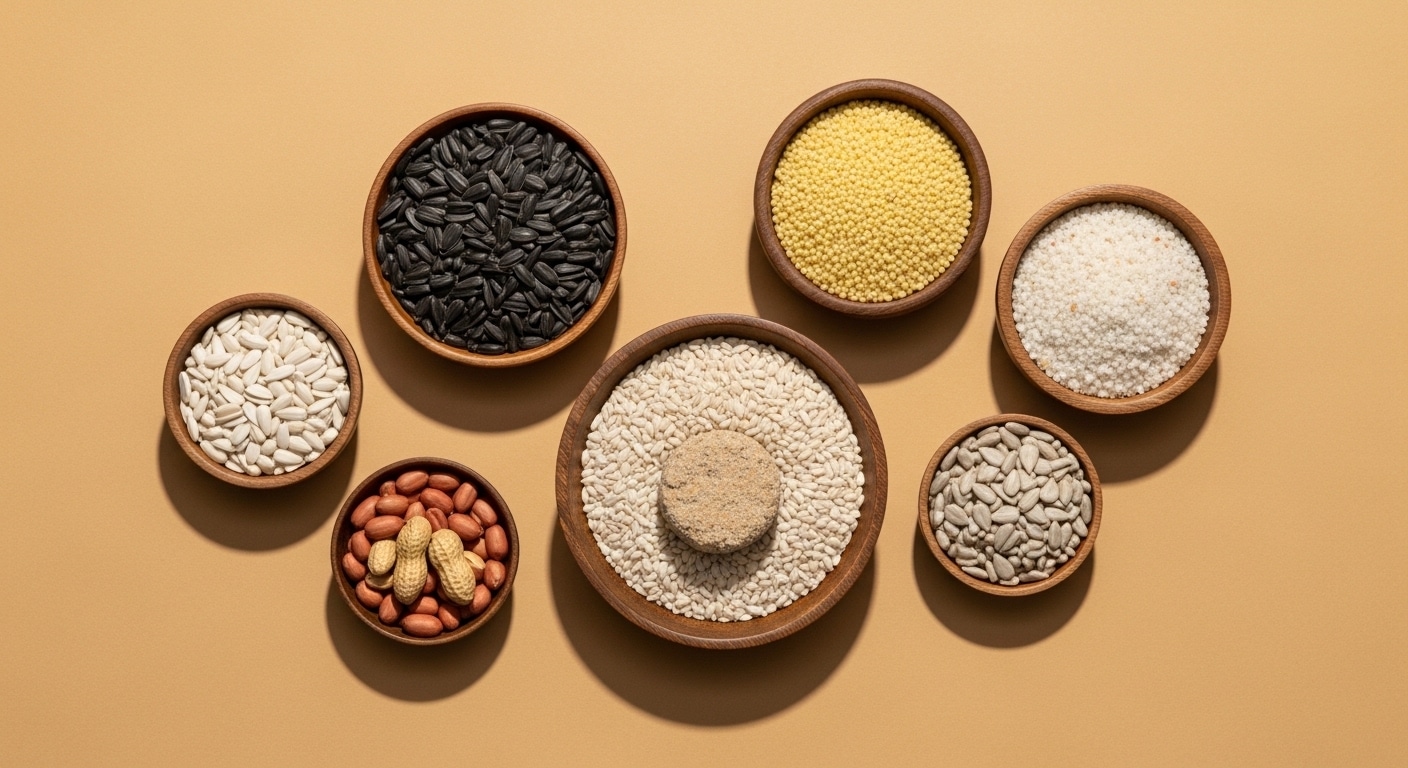
Choosing the right bird seed can turn any backyard into a lively sanctuary filled with color, song, and movement. Across the USA, different species have unique dietary needs, making it essential to select the best bird seed and wild bird food tailored to each visitor.
From finches that love millet seed for birds to cardinals that prefer sunflower-rich blends, understanding bird seed ingredients is key to success. This complete guide explores the best bird seeds, including the best wild bird seed mix and best seed for wild birds.
While highlighting bird seed fillers to avoid, like excess milo seed for birds. Whether you’re searching for the best bird food to attract colorful birds or the best bird seed for feeders, using high-quality bird seed from trusted bird seed brands ensures healthier, happier birds. Get ready to discover how the best bird food can transform your outdoor space.
Why Choosing the Best Bird Seed Matters?

Choosing the right bird seed can literally transform your backyard into a lively, vibrant playground. The quality and type of wild bird food you reach for will have a big impact on which birds you’ll get visiting, how healthy they stay and how little mess you’ll be left to deal with.
The bird seed you choose really does matter:
- Attract all sorts of species: Honestly, the best bird seed for wild birds can vary wildly – sunflower seeds tend to draw in loads of different birds, while millet seed is more of a hit with the ground feeders.
- Give them the right fuel: You want to be fending off cold snaps or supporting a busy breeding season, so the best bird food needs to pack a high-fat, high-energy punch.
- Cut down on waste: Let’s face it, those cheap mixes often get chucked, and they’re usually loaded with fillers like wheat that just get ignored. Choosing the best wild bird seed helps keep the mess to a minimum.
- Bird health and safety come first: The fresher, higher-quality bird seed you can get means less risk of mold and disease.
- Feeding time made easy: And then there are options like millet seeds and sunflower hearts – easy to chomp on, easy to digest.
Best Bird Seeds for Different Birds in the USA

1. Black Oil Sunflower Seeds: The Best All-Around Choice
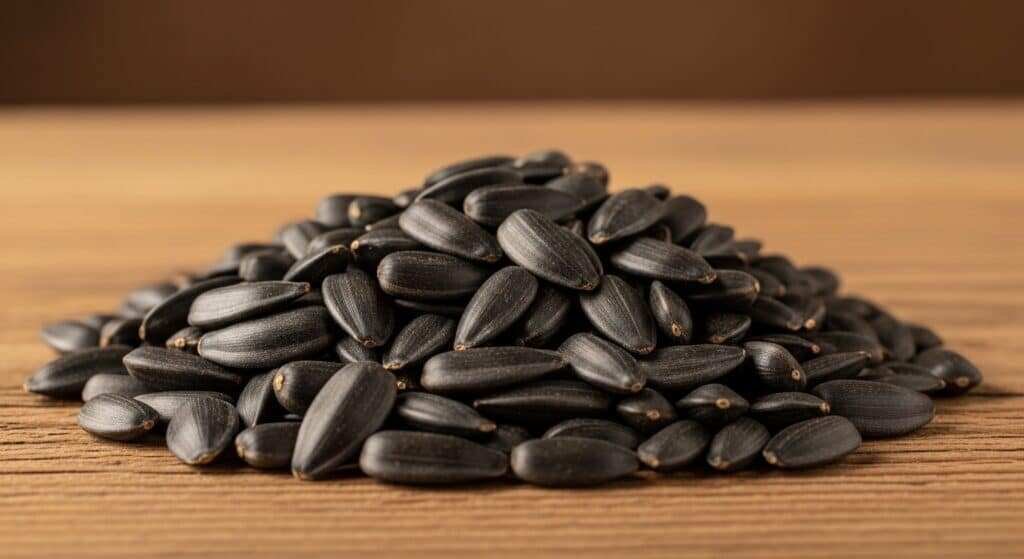
If there is one seed that every backyard birder should stock, it is the black oil sunflower seed. Widely regarded as the single most effective seed for attracting a broad range of birds.
Black oil sunflower seeds have thin shells that are easy for small and large birds alike to crack open. They are also high in fat, making them an excellent energy source.
Which Birds Love Black Oil Sunflower Seeds
Black oil sunflower seeds attract an impressive list of species, including northern cardinals, black-capped chickadees, white-breasted nuthatches, house finches, and purple finches.
American goldfinches, dark-eyed juncos, blue jays, evening grosbeaks, tufted titmice, and several woodpecker species. In short, if you only buy one type of seed, make it this one.
These seeds work well in tube, hopper, and platform feeders. They can also be scattered on the ground for species that prefer ground feeding. Because of their universal appeal, black oil sunflower seeds are often the foundation of any high-quality bird seed mix.
2. Nyjer (Thistle) Seeds: The Finch Favorite
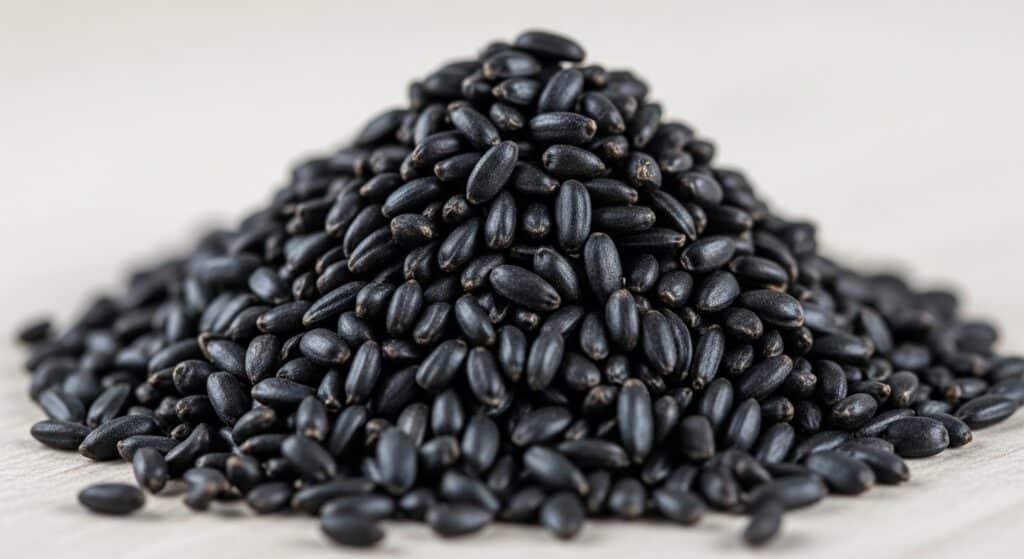
Nyjer, also commonly called thistle seed, is a tiny black seed imported from Africa and Asia. It is high in oil and fat, making it particularly beloved by small, acrobatic finches. Nyjer seeds require a specialized tube feeder with small ports to prevent the seeds from spilling out too quickly.
Which Birds Are Attracted to Nyjer Seeds
Nyjer is the preferred choice for American goldfinches, lesser goldfinches, pine siskins, common redpolls, and house finches. If you want to draw a crowd of cheerful, brightly colored finches to your yard, a dedicated Nyjer feeder is a must. These birds are agile enough to cling to the small ports of finch feeders and extract the seeds efficiently.
3. White Proso Millet: The Ground Feeder Essential
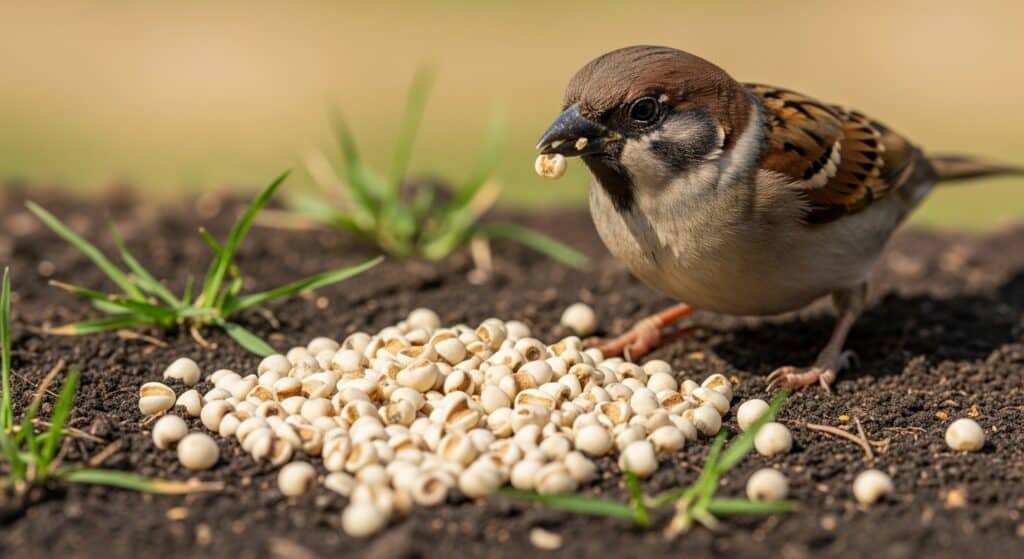
White proso millet is small, round, and pale in color. It is one of the most effective seeds for attracting ground-feeding birds, which represent a surprisingly large portion of native bird diversity in the United States.
Which Birds Eat White Proso Millet
This seed is a top choice for dark-eyed juncos, white-throated sparrows, white-crowned sparrows, song sparrows, mourning doves, common ground doves, eastern towhees, spotted towhees, bobwhite quails, and chipping sparrows.
Many of these species feed almost exclusively on the ground or on low-platform feeders, so scattering white millet directly on clean ground or on a low tray feeder is often the most effective approach.
In the American Southwest, white millet is especially effective given the regional abundance of ground-feeding sparrow species.
For birders in Texas, the Midwest, and along the Eastern Seaboard during migration season, stocking up on white millet can yield exciting sightings of passing sparrow species.
Safflower Seeds: Cardinals and Pest-Deterrence Combined

Safflower seeds are white, conical, and slightly bitter. That bitterness is actually one of their greatest advantages for backyard birders because most squirrels and European starlings dislike safflower intensely, leaving more food for the birds you actually want to attract.
Which Birds Prefer Safflower
Northern cardinals are the most enthusiastic consumers of safflower seeds. Beyond cardinals, house finches, chickadees, tufted titmice, mourning doves, and grosbeaks will also readily eat safflower. Because squirrels tend to avoid this seed, safflower is an excellent choice for feeders that are difficult to squirrel-proof by design.
Safflower can be offered in hopper, tube, or platform feeders. It is sometimes used as the primary seed in feeders positioned near shrubs or hedgerows where cardinals love to perch and feel sheltered.
Suet: High-Energy Food for Winter and Woodpeckers
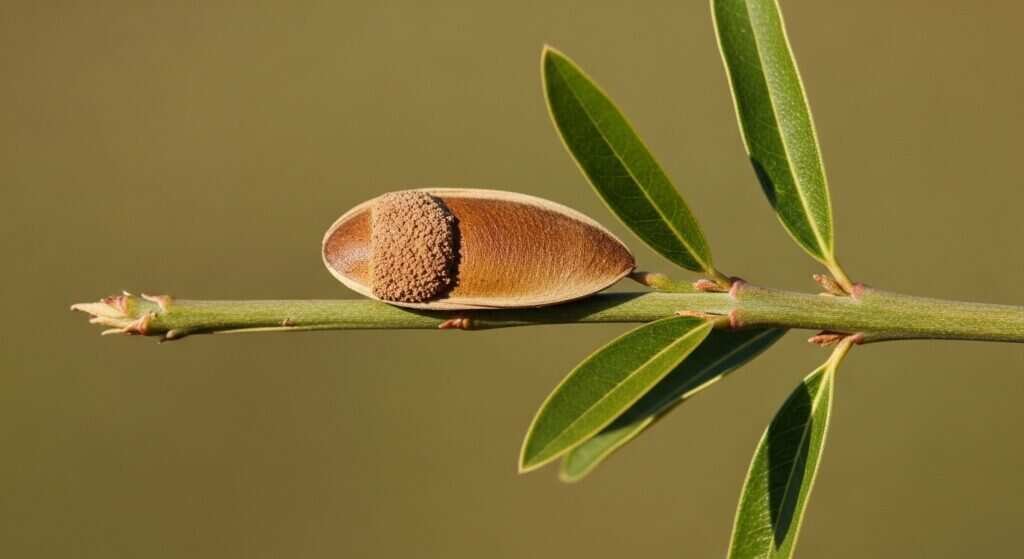
Suet is rendered beef fat, often blended with seeds, peanuts, berries, or insects. It is a calorie-dense food source that is particularly vital during cold winter months when insects are scarce and birds need maximum energy to maintain body heat.
Which Birds Are Attracted to Suet
Downy woodpeckers, hairy woodpeckers, red-bellied woodpeckers, pileated woodpeckers, white-breasted nuthatches, red-breasted nuthatches, black-capped chickadees, Carolina wrens, and European starlings all readily consume suet.
Starlings can be a nuisance at suet feeders, but upside-down suet feeders solve this problem since clinging birds like woodpeckers and nuthatches feed easily while starlings cannot manage the inverted position.
Suet should be offered in wire cage feeders designed specifically for this purpose. In warmer climates or during summer months, opt for no-melt suet formulas to prevent the fat from going rancid.
Peanuts: A High-Protein Powerhouse
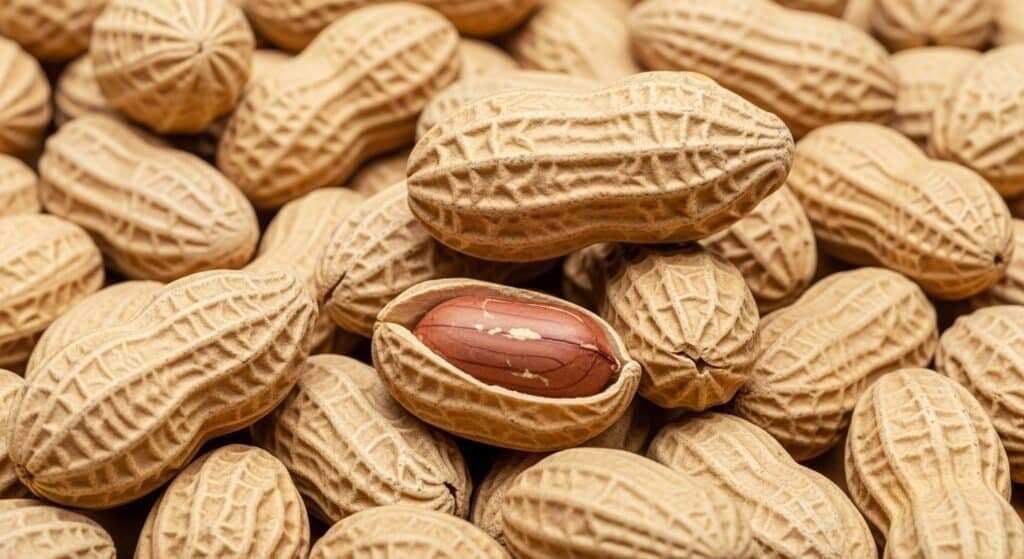
Peanuts, whether shelled or unshelled, are one of the highest-protein foods you can offer wild birds. They attract a bold and energetic crowd that includes some of the most charismatic species in North America.
Which Birds Love Peanuts
Blue jays, Steller’s jays, scrub jays, red-bellied woodpeckers, downy woodpeckers, tufted titmice, white-breasted nuthatches, and Carolina wrens are among the biggest fans of peanuts.
Shelled peanuts work in tube feeders or platform feeders, while unshelled peanuts on a platform feeder create entertaining watching as jays and woodpeckers choose and carry whole nuts away.
Always offer raw, unsalted peanuts with no added flavorings. Salted or roasted peanuts designed for human consumption can be harmful to birds. Look for peanuts specifically marketed as bird food to ensure they are free from aflatoxin mold.
Sunflower Hearts and Chips: The No-Mess Premium Option
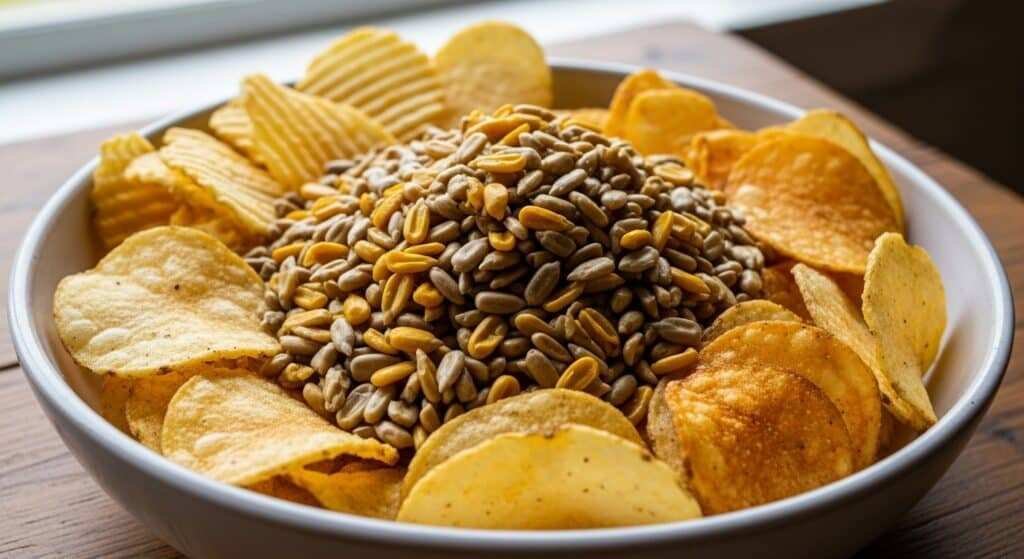
Sunflower hearts, also known as sunflower chips or hulled sunflower seeds, are black oil sunflower seeds with the shells already removed. They offer all the nutritional benefits of whole sunflower seeds without the mess of discarded shells accumulating beneath feeders.
Because they require no cracking, sunflower hearts are accessible to virtually every seed-eating bird species, including smaller and less powerful birds like ruby-crowned kinglets that might struggle with whole seeds. They are a premium option that typically costs more per pound, but the lack of shell waste makes them cleaner and more efficient.
Sunflower hearts work particularly well in urban or suburban settings where fallen shells can be unsightly or damage lawns. They also reduce the risk of shell buildup creating a dead zone in your grass beneath feeders.
Specialty Foods for Specific Birds
Beyond seeds, certain birds require entirely different food types to be attracted reliably.
Baltimore orioles and Bullock’s orioles are famously attracted to grape jelly and fresh orange slices placed on open platform feeders or specialized oriole feeders. These birds have specialized bills designed for probing flowers and soft fruits, not cracking seeds.
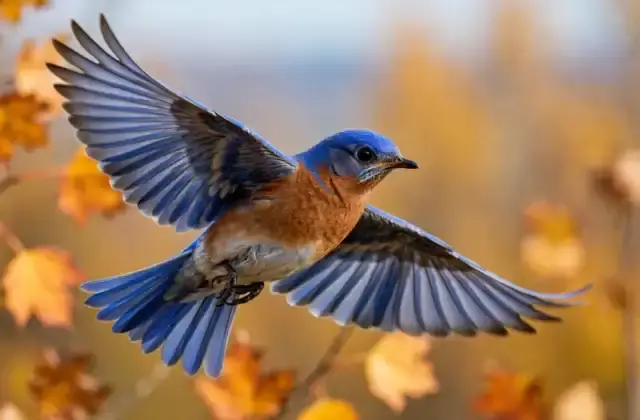
Eastern bluebirds, western bluebirds, and mountain bluebirds are primarily insectivorous and are best attracted with dried mealworms offered in low platform feeders or bluebird-specific feeders. In winter, when insects are unavailable, mealworms become an especially powerful attractant for these beloved birds.
Filler Seeds to Avoid
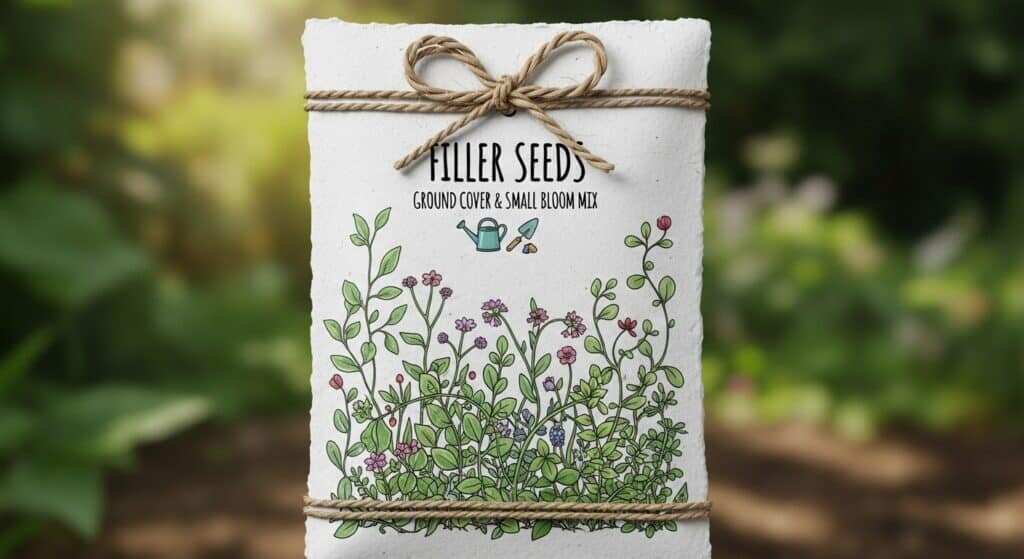
Many inexpensive commercial bird seed mixes are padded with filler seeds that most birds discard or ignore. The most common fillers to watch out for include red millet (birds often kick it aside in favor of white millet), golden millet, flaxseed, wheat, oats, and canary seed blends heavy in sorghum.
These fillers add bulk and reduce cost for manufacturers but result in significant seed waste as birds toss them to the ground, which can attract rodents and create a mess.
When shopping for bird seed mixes, read the ingredient list carefully. The best mixes lead with black oil sunflower seeds, white millet, and safflower, with minimal filler content.
Buying individual seed types and blending your own mix is often the most cost-effective and waste-free approach for serious backyard birders.
Regional Tips for Attracting Birds Across the USA
Attracting birds across the USA isn’t one-size-fits-all, it’s about matching food, habitat, and climate. From humid southern gardens to snowy northern backyards, choosing the best bird seed and offering reliable resources can transform your space into a bird haven.
Regional Bird Attraction Tips:
- South (Zones 8–11): Offer nectar and fruit alongside wild bird food; hummingbirds love sugar water, while orioles enjoy citrus. Use high-quality bird seed sparingly due to heat.
- Northeast & Mid-Atlantic: Focus on native trees and shrubs; add suet and the best wild bird seed mix for winter survival.
- Midwest & Great Plains: Use millet seed for birds and sunflowers; install nesting boxes for open-land species.
- Mountain & West: Provide moving water and dense shrubs; choose the best bird seed for feeders suited to dry climates.
- Nationwide: Select the best bird seeds with clean bird seed ingredients; avoid bird seed fillers, such as excess milo seed for birds.
How to Store Bird Seeds Properly?
Proper storage of bird seed is essential to maintain freshness, nutrition, and to attract birds consistently. Whether you’re using the best bird seed for feeders or a premium wild bird food mix, poor storage can lead to mold, pests, and spoilage. Keeping your high-quality bird seed in the right conditions ensures birds enjoy safe, nutritious meals while reducing waste and cost.
Key Tips for Storing Bird Seed Properly:
- Store bird seed in a cool, dry, and dark place like a shed or garage.
- Use airtight, pest-proof containers such as metal cans or sealed plastic bins.
- Keep seed off the ground to avoid moisture and contamination.
- Never mix old and new bird seed, especially in best wild bird seed mixes.
- Freeze seed for 3–5 days to kill insects.
- Clean containers regularly before refilling.
- Avoid low-quality fillers; choose bird seed ingredients like millet seeds for birds or milo seed for birds.
Proper storage helps preserve the best bird food to attract colorful birds.
Building the Perfect Feeding Station
The most effective backyard bird feeding stations offer multiple seed types in multiple feeder styles, placed at different heights. A tube feeder with Nyjer attracts finches.
A hopper or platform feeder with black oil sunflower seeds serves a wide range of mid-size birds. A suet cage draws woodpeckers. A ground-level tray or scattered area with white millet welcomes sparrows and doves.
Position feeders within view of natural cover such as shrubs, trees, or hedgerows so birds can quickly retreat from perceived danger. Keep feeders at least three feet from windows to minimize collision risk, or use window feeders specifically designed to prevent fatal collisions.
Final Thoughts
Choosing the best bird seeds for your backyard is one of the most impactful decisions you can make as a birder. Black oil sunflower seeds remain the single best all-around option for attracting the widest variety of species. Nyjer brings in finches. White millet serves ground feeders. Safflower wins over cardinals while deterring squirrels. Suet and peanuts fuel woodpeckers and jays through cold months.
By offering a thoughtful mix of quality seeds, avoiding unnecessary fillers, and tailoring your choices to the birds native to your region, you will create a thriving backyard habitat that rewards you with color, song, and wildlife activity throughout every season of the year.




[…] Best Bird Seeds for Different Birds in the USA: The Complete Guide […]