 Skip to content

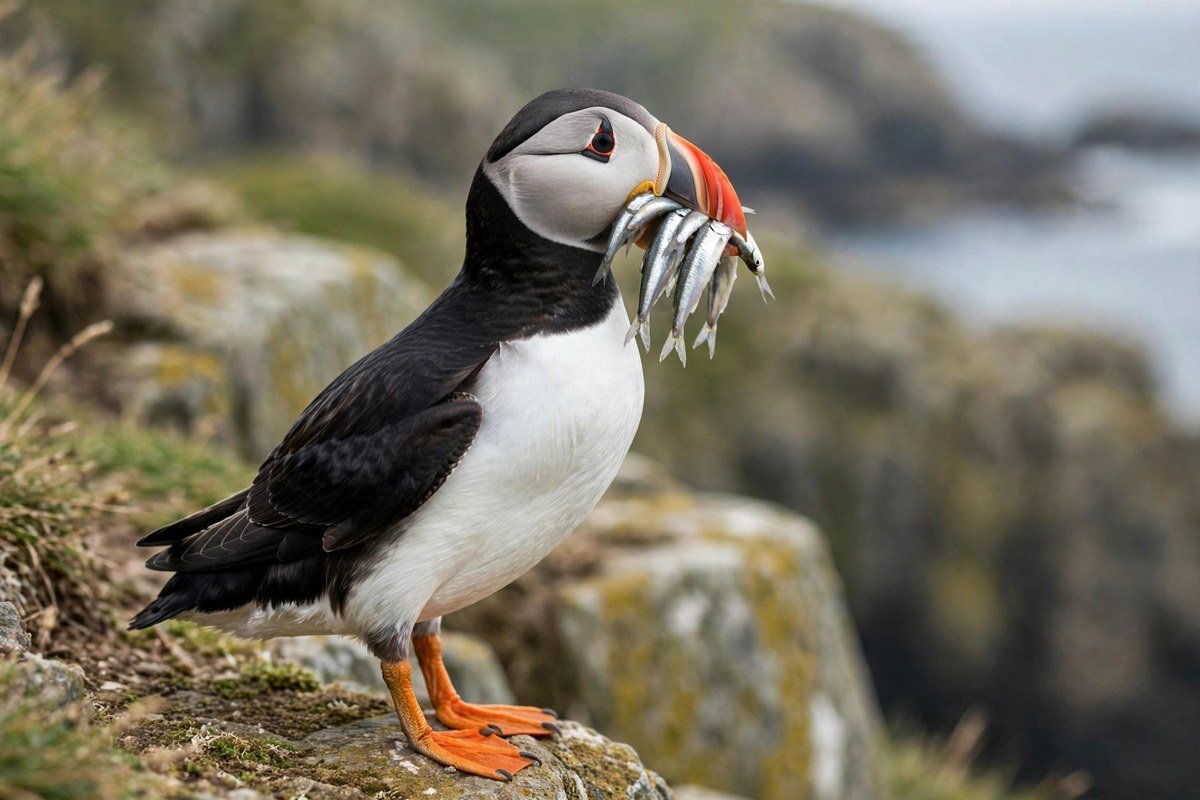
With their tuxedo plumage, bright triangular bills, and clown-like expressions, puffins rank among the most photographed seabirds in the world. These puffin facts reveal far more than a pretty face: hidden engineering in the bill, record-breaking fishing skills, and a life split between bustling cliff colonies and the lonely open ocean. What follows is the science behind the cuteness.
The Atlantic puffin (Fratercula arctica) is the species most people picture, though two cousins, the tufted puffin and horned puffin, live in the North Pacific. Across all three, the pattern holds: a serious ocean hunter disguised as a cartoon character. Below, 15 verified puffin facts cover the color-changing beak, deep dives, burrow nesting, and the long-lived family life that makes these seabirds so remarkable.

Meet the Atlantic Puffin
The Atlantic puffin is a small, stocky seabird about 25 cm (10 inches) long and weighing roughly 500 g. It belongs to the auk family (Alcidae), the northern hemisphere’s answer to the diving seabirds of the south. Its black back and white underparts look like formal wear, but every feature serves survival at sea. Males and females look essentially identical, with males tending only slightly larger.
Key facts about the Atlantic puffin at a glance:
| Detail | Fact |
|---|---|
| Scientific name | Fratercula arctica |
| Family | Alcidae (auks) |
| Range | North Atlantic, from Maine and Newfoundland to Iceland, Norway, and the British Isles |
| Size | About 25 cm long, around 500 g |
| Diet | Small fish such as herring, sand eels, and capelin |
| Nesting | Burrows in grassy cliff tops or rock crevices |
| Lifespan | Typically 20 years, with some reaching 30 or more |
Most puffins spend the majority of their lives at sea, resting on the waves when not hunting. They come ashore only to breed, transforming quiet cliffs into noisy colonies each spring and summer. Unlike songbirds that flash color year-round, the puffin earns its bright bill through a hormonal cycle tied to breeding, then discards the decoration when the season ends. Now for the main event: the facts that make puffins famous.
The Three Puffin Species
Only three puffin species exist, all in the genus Fratercula, and they split between two oceans. The Atlantic puffin is the smallest at about 25 cm; the tufted puffin and horned puffin of the North Pacific are slightly larger, averaging around 38 cm. All three share the stocky build, black-and-white plumage, and seasonal bill plates.
Each species has its own signature look during breeding season. The Atlantic puffin wears the classic triangular orange-red bill with a blue-gray base. The tufted puffin grows long golden head plumes, while the horned puffin develops a fleshy black “horn” above each eye. Outside breeding season, all three shed these ornaments and look far plainer at sea.
Where puffins live depends entirely on the species. Atlantic puffins stay in the North Atlantic, from eastern North America across to Iceland, Norway, and Britain. Tufted and horned puffins range across the North Pacific, from Alaska and Siberia south to California and Japan. No puffin species ever occurs in the Southern Hemisphere.
15 Fascinating Puffin Facts
Beak and Looks
Fact 1: The colorful bill is a seasonal outfit. The bright orange-red bill puffins wear in summer is temporary. Each spring, special outer keratin plates grow over the true bill, and at the close of the breeding season these plates and the eye ornaments are shed in a partial moult, as described in the Atlantic puffin species account. The bill then looks smaller and much duller through winter at sea. A new set regrows the following spring.
Fact 2: Puffins are nicknamed “sea parrots.” The triangular, brightly colored bill led sailors and naturalists to dub the Atlantic puffin the “sea parrot.” It is also called the “clown of the sea.” Unlike a real parrot, though, the puffin uses its bill for catching fish, not cracking nuts.
Fact 3: The bill works like a fishing tool belt. Spines on the roof of the mouth grip each caught fish, so a puffin can keep hunting without swallowing its catch first. This hinge-like system lets one parent deliver a whole load of fish to the chick in a single trip back to the burrow.
Fact 4: Their feet change color too. Bright orange webbed feet turn a duller shade in winter, matching the seasonal dulling of the bill. The feet act as rudders underwater and as brakes when the bird lands at the colony.
Ocean Life and Diving
Fact 5: Puffins dive to 200 feet. The Audubon field guide notes that Atlantic puffins do most foraging within 50 feet of the surface but can dive to about 200 feet (61 meters). A typical dive lasts only 20 to 30 seconds, so the hunting is quick, shallow, and efficient.
Fact 6: They fly underwater. Puffins “fly” beneath the surface using half-open wings in a motion like airborne flight, while their webbed feet steer. This underwater flying technique makes them agile hunters of fast-moving schools of sand eels and herring.
Fact 7: One puffin once carried 61 fish at once. A dozen fish per trip is common, but the documented record belongs to a puffin photographed with 61 sand eels and one rockling clamped crosswise in its bill. Each fish is caught individually and pinned against spines in the upper palate, a feat reported in a Smithsonian magazine feature on puffins (via The Free Library).
Fact 8: In the air, they beat their wings up to 400 times per minute. Short wings built for swimming demand furious effort in the sky. Puffins reach flight speeds of about 55 mph (88 km/h), often skimming low over the waves, and their landings at the colony are famously crash-prone. National Geographic’s Atlantic puffin profile documents both the wingbeat rate and the top speed.

Burrows, Eggs, and Chicks
Fact 9: Puffins are burrow nesters, not cliff ledgers. Breeding pairs dig tunnels 3 to 7 feet long into grassy soil atop cliffs, or nest in rock crevices and under boulders. Both partners help excavate, and the chamber is lined with grass and feathers.
Fact 10: Each pair raises just one egg per year. The female lays a single white egg, and both parents take turns incubating it for roughly 39 to 42 days. This low birth rate is why long adult lifespans matter so much to the species.
Fact 11: Baby puffins are called pufflings. The chick hatches covered in dark gray down and depends on parents for about six weeks. At fledging time, the young puffling leaves the burrow at night and flies straight out to sea, alone, without any guidance from its parents.
Fact 12: Young puffins stay at sea for years. After fledging, juveniles head for the open ocean and do not return to land for several years. They first breed at around age five, gradually developing the broader, more grooved bills of mature adults.
Colonies and Behavior
Fact 13: Puffins mate for life and keep the same address. Pairs form long-term bonds and often reunite at the same burrow site year after year. Courtship includes head flicking and bill clashing, where partners swing their bills sideways and tap them together repeatedly.
Fact 14: Iceland hosts about 60 percent of the world’s Atlantic puffins. The birds breed along North Atlantic coasts and islands, from Maine and Newfoundland across to Iceland, Norway, and the British Isles. Iceland alone is the breeding home of perhaps three-fifths of the global population.
Fact 15: The Atlantic puffin is listed as Vulnerable. The IUCN classifies the species as Vulnerable because numbers are declining across parts of its European range. Researchers point to overfishing of prey fish, pollution, climate-driven shifts in fish stocks, and bycatch in fishing nets as leading pressures.
Puffins vs Penguins: Clearing Up the Confusion
The black-and-white plumage fools plenty of people, but puffins are not penguins. Penguins belong to the family Spheniscidae and live only in the Southern Hemisphere; puffins belong to the auk family (Alcidae) and live only in the northern oceans. The biggest difference is obvious: puffins fly, while penguins cannot.
Both groups evolved similar body plans because both hunt fish by swimming, a case of convergent evolution. There is one more telling difference: penguins are silent, waddling walkers on land, while puffins are noisy, sociable colony birds with growling burrow calls that some observers compare to a revving chainsaw. Penguins lost the ability to fly entirely; puffins kept it and perfected underwater flight instead. If you want the full story on the flightless side of the family, our penguin facts guide covers penguin habitat, diet, and adaptations in detail.
Where to See Puffins
The best puffin watching happens during the breeding season, roughly May through August in the Northern Hemisphere. Classic locations include Iceland, Scotland’s Isle of May, Wales’s Skomer Island, Newfoundland’s Witless Bay, and Maine’s coastal islands, where Project Puffin restored breeding colonies starting in the 1970s. On Maine’s Eastern Egg Rock, for example, a handful of transplanted chicks grew into a self-sustaining colony that now anchors puffin boat tours each summer.
Outside the breeding season, puffins scatter across the open North Atlantic and are rarely seen from shore. Visiting a colony at dawn or dusk gives you the famous “puffin parade,” when adults stream back from fishing trips with bills loaded with silvery fish. Bring binoculars and keep a respectful distance from burrows, since the tunnels collapse easily underfoot. If ocean birds fascinate you, our frigate bird facts guide covers another remarkable seabird, the tropical aerial pirate.

Frequently Asked Questions
How deep can puffins dive?
Atlantic puffins typically hunt within 50 feet of the surface but can dive to about 200 feet (61 meters) when chasing fish. Most dives last 20 to 30 seconds.
Why do puffin beaks change color?
The bright breeding-season bill comes from outer keratin plates that grow each spring. After breeding, these plates are shed in a partial moult, leaving a smaller, duller bill for winter. A new colorful set grows the next spring.
How many fish can a puffin carry?
A puffin commonly carries around a dozen small fish crosswise in its bill, held by spines on the upper palate. The recorded record is 61 sand eels plus one rockling, clamped in a single bill at once.
Do puffins mate for life?
Yes. Atlantic puffins form long-term pair bonds, and mated pairs often reunite at the same burrow every breeding season. Both partners share incubation and chick feeding duties.
Are puffins endangered?
The Atlantic puffin is listed as Vulnerable on the IUCN Red List, meaning it faces a high risk of decline, though it is not endangered globally. Its Pacific cousins, the tufted and horned puffins, are currently listed as Least Concern.
Can puffins fly?
Yes, and well. Puffins beat their short wings up to 400 times per minute and can reach about 55 mph. Their small wings also let them “fly” underwater while hunting. The effort shows: puffins take off with a running start across the water and land with a charming lack of grace. Penguins, their frequent look-alikes, cannot fly at all.
How long do puffins live?
Puffins typically live about 20 years, with some individuals reaching 30 or more. Their long lifespan compensates for raising only a single chick per year. For more on how bird lifespans compare across species, see our guide on how long birds live.
Conclusion
These puffin facts show a bird built for two worlds: a seasonally dressed showpiece on the breeding cliffs and a serious underwater hunter out at sea. The color-changing bill, the 200-foot dives, the 61-fish payload, and the lifelong pair bonds all point to one of nature’s most finely tuned seabirds.
That tuning is also fragile. With the Atlantic puffin listed as Vulnerable and fish stocks shifting, the colonies at places like Iceland and Maine are worth protecting. Overfishing of sand eels and herring, ocean warming, and entanglement in fishing gear all press on populations that raise only one chick a year.
Learn these puffin facts, visit a colony responsibly, and you will never again mistake a sea parrot for a penguin.





