 Skip to content

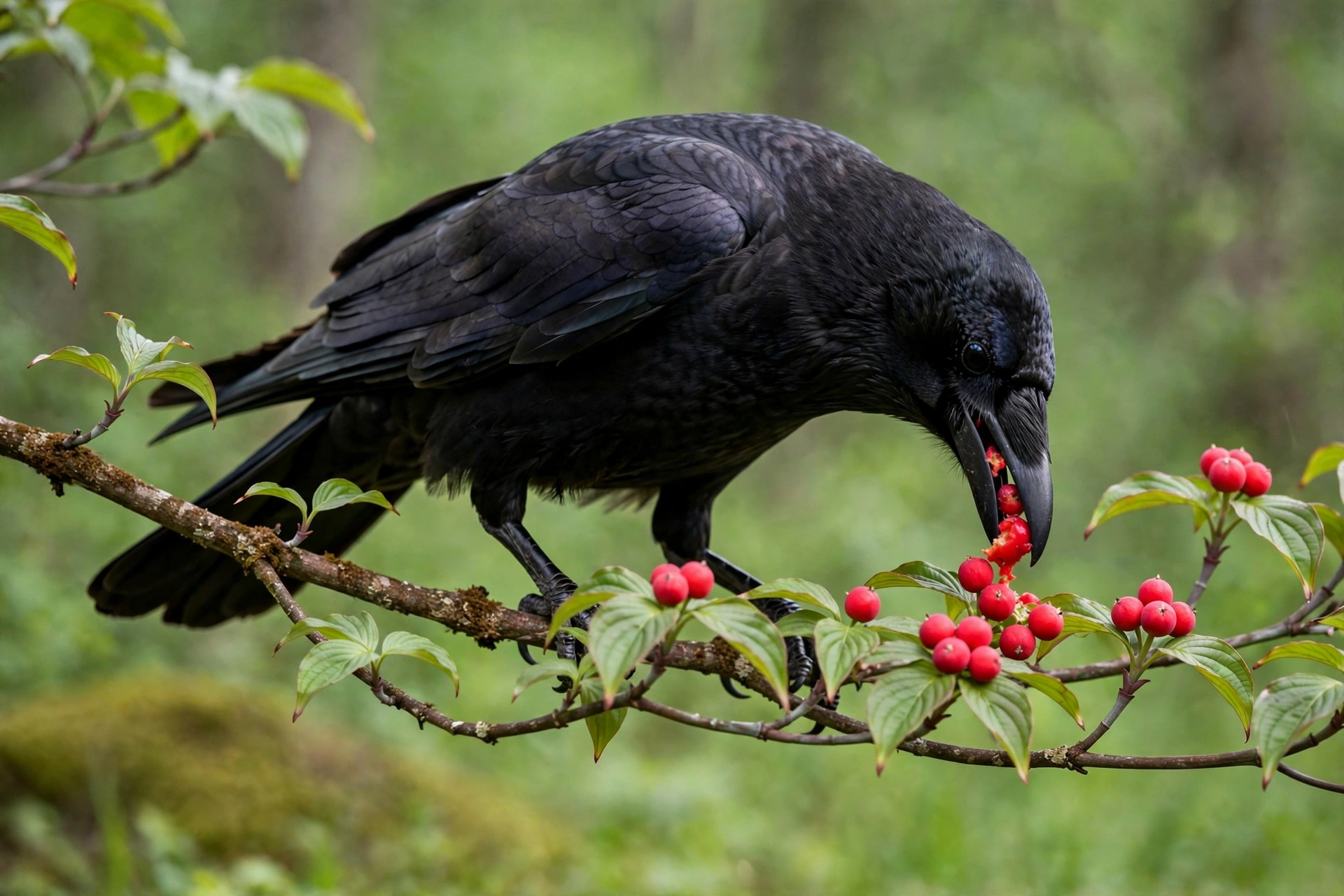
Crows eat almost anything, but their diet is more structured than it looks. These clever black birds are omnivores with a strong plant habit: classic diet research found that plant matter makes up roughly 72 percent of an American crow’s annual food, with animal foods covering the rest. The menu changes with the seasons, shifting from protein-rich insects and worms in spring to nuts, grain, and berries in fall, then to carrion and scavenged scraps in the leanest winter weeks.
This guide breaks down the full crow diet season by season, explains the science behind the 72 percent figure, and gives you practical advice on what to offer crows at a feeder and which foods to avoid. If you are not certain the black bird at your feeder is a crow at all, start with our guide on how to tell a crow from a raven, then come back here to learn what it is eating.
Crows Are Omnivores: The 72/28 Split
Biologists call crows omnivores, which means they eat both plant and animal foods. They do not hunt like hawks, and they do not live on seeds like finches. They sample nearly every food group available in their habitat, from cornfields to garbage cans to coastal mudflats.
The well-known 72 percent figure comes from early stomach-content studies of American crows, which estimated that plant foods made up about 72 percent of the diet over a full year and animal foods about 28 percent. Later pellet studies support the same pattern. One year-round study of crow pellets in Kansas found that field crops such as wheat, sorghum, oats, sunflower, and corn made up 59 percent of identifiable food residues, while invertebrates accounted for 26.5 percent and mammal remains just 2.6 percent.
Those percentages describe a full year. Month to month, the balance swings widely, because a crow raising chicks in May eats very differently from a crow surviving January. That seasonal swing is the key to understanding the whole diet, and it is backed by the Cornell Lab’s American Crow guide, which lists insects, spiders, earthworms, small mammals, carrion, eggs, fruit, seeds, nuts, and human food scraps among their foods.
What Crows Eat by Season
A crow’s menu is a calendar. As different foods appear and disappear through the year, crows switch feeding strategies fast. The table below summarizes the pattern, and the sections that follow explain what happens in each season.
| Season | Primary foods | Why the diet shifts |
|---|---|---|
| Spring | Insects, earthworms, spiders, eggs, nestlings | Protein demand peaks during nesting and chick feeding |
| Summer | Grasshoppers, beetles, fruits, berries, early corn | Abundant insects plus ripening fruit and grain |
| Fall | Nuts, acorns, wild seeds, mature grain crops | High-energy foods build fat before winter |
| Winter | Carrion, human scraps, stored grain, leftover seed | Cold and snow limit live prey and natural forage |
Spring: Insects, Worms, and Eggs
Spring is the most carnivorous season for crows. Breeding adults need dense protein to produce eggs and feed fast-growing chicks, so they patrol lawns, fields, and wetlands for insects and their larvae. Beetles, caterpillars, grasshoppers, and cutworms make up a large share of spring food.
Earthworms are another spring staple. After rain, crows walk wet lawns and fields pulling worms from the soil, sometimes eating hundreds in a single morning. Spiders, snails, crayfish, and small frogs appear in the diet wherever habitat allows.
Spring is also when crows raid nests. They take eggs and small nestlings of other birds, which is why nesting songbirds often mob crows loudly through April and May. This behavior is completely natural, and it fills the protein gap exactly when crow chicks need it most.
Summer: Fruit, Berries, and Corn
By early summer, the menu broadens. Insects remain important, with grasshoppers and beetles caught in fields and gardens, but ripening fruit starts to take over. Crows eat blackberries, cherries, mulberries, serviceberries, wild grapes, and dogwood berries as each species ripens.
Corn becomes a major summer and late-summer food. Crows pull at young corn ears in fields, and they also eat spilled grain along field edges. Farmers have complained about this for centuries, which shows how long crows and agriculture have been sharing the same buffet.
Summer crows also visit water. They eat small fish trapped in shallow pools, frogs, tadpoles, and crayfish, and they drink and bathe daily in hot weather. Coastal crows add mussels, clams, and crabs, sometimes dropping shellfish onto rocks to crack them open.

Fall: Nuts, Grain, and Mast
Fall is feast season. Crows shift heavily toward energy-dense plant foods: acorns, hickory nuts, walnuts, pecans, beechnuts, and pine seeds. They carry nuts in their bills and drop them onto hard surfaces such as roads to crack the shells, then swoop down to eat the meat.
Grain crops dominate where farms are nearby. Harvested corn, wheat, oats, and sorghum leave spilled seed across fields, and crow flocks move through in the hundreds to glean it. Wild seeds from weeds and grasses fill in the gaps.
Fall is also caching season. Like their jay cousins, crows hide surplus nuts and seeds in soil and leaf litter, then recover many of them later. Crows remember cache locations well, and you can learn more about the brainpower behind this behavior in our article on how smart crows really are.
Winter: Carrion, Scraps, and Leftovers
Winter strips the landscape bare, and crows respond by becoming full-time scavengers. Carrion becomes a primary food: roadkill, deer carcasses, dead livestock, and any other animal remains. A crow’s strong stomach acid lets it digest food that would sicken many other birds.
Human food waste becomes critical in cities and suburbs. Crows learn garbage pickup schedules, patrol fast-food parking lots, and raid open dumpsters. In the countryside, they glean leftover grain from farmyards, visit compost piles, and pick through manure for undigested seed.
Winter is also when crows form their famous giant flocks. Thousands of birds travel together from communal roosts to daytime feeding areas, covering huge territories to find enough food. If you have ever watched a river of black birds pour across the evening sky, read why crows gather in huge roosts to understand what they are doing.
Animal Foods: The Protein Side
Animal foods make up roughly 28 percent of the crow’s yearly diet, but they supply most of the protein. Crows are generalist foragers rather than specialists, so they take whatever animal food is easiest to catch, steal, or find already dead.
- Insects: Beetles, grasshoppers, caterpillars, crickets, grubs, and ants. Crows flip over cow patties and logs to find them, and they follow plows to grab exposed insects and worms.
- Earthworms: A spring favorite. Crows probe soft soil with their strong bills after rain, and a flock can clear a lawn of worms in one visit.
- Small mammals: Mice, voles, shrews, and young rabbits. Crows hunt them in open fields and along field edges, especially when rodent numbers are high.
- Carrion: Dead animals of all kinds, including roadkill. Crows are among the first scavengers to arrive, and their feeding helps clean up carcasses.
- Eggs and nestlings: Taken from the nests of other birds during breeding season. Parent crows feed these protein-rich foods directly to their own chicks.
- Fish and aquatic prey: Minnows, crayfish, frogs, tadpoles, snails, mussels, and clams. Coastal crows drop shellfish onto hard surfaces to crack them, a technique scientists use as an example of crow tool-like behavior.
- Human scraps: Meat scraps, pet food left outdoors, fast-food waste, and compost. Urban crows learn exactly when and where these appear.
Crows also invent ways to make hard foods edible. They dunk dry bread and hard scraps in water to soften them, carry walnuts to roads where cars crack them, and cache extra meat for later. These are not accidents. They are learned tricks, refined by one of the sharpest brains in the bird world.
Plant Foods: The 72 Percent
Plants dominate the crow diet for most of the year, which surprises people who think of crows as meat-eaters. Grain, fruit, nuts, and seeds are simply the most reliable calories in a crow’s world, and crows eat them in enormous quantities.
- Grain crops: Corn, wheat, oats, sorghum, barley, and sunflower seeds. Field crops can account for more than half of identifiable food in some studies, which is why crows have been called agricultural pests for generations.
- Wild seeds: Weed seeds, grass seeds, and seeds from wetland plants. Crows strip seed heads directly from the stems.
- Fruits and berries: Blackberries, cherries, mulberries, dogwood berries, wild grapes, persimmons, sumac, and pokeweed berries. Crows track ripening fruit across their territory all summer and fall.
- Nuts and mast: Acorns, hickory nuts, walnuts, pecans, beechnuts, and pine seeds. These high-fat foods fuel the fall and winter body.
- Backyard offerings: Peanuts, sunflower seeds, cracked corn, bread scraps, and fruit pieces left on feeders and tables.
Crows digest plant foods efficiently, and their flexible gut handles a wide range of fruits, grains, and seeds. This dietary flexibility is a big reason crows thrive in so many habitats, from deep woods to downtown parking lots. The Animal Diversity Web’s account of the American crow notes that this species eats a variety of plant and animal foods, including fruits, seeds, small mammals, carrion, and garbage, and remains active across North America year-round.

What to Feed Crows at Your Backyard Feeder
Crows will visit feeders, but they need a different setup from songbirds. They are large, heavy birds that cannot cling to tube feeders, so they do best with open platform feeders, tray feeders, or food scattered directly on the ground. Offer modest amounts once or twice a day rather than keeping food out constantly.
- Peanuts in the shell: A top-tier crow food. The shell keeps the peanut fresh, and crows love the challenge of cracking it. Offer raw, unsalted peanuts.
- Cracked corn: Cheap, calorie-dense, and familiar. Crows eat it from fields naturally, so it is an easy transition to feeders.
- Black oil sunflower seeds: High in fat and easy to open. Crows eat them readily from platforms and the ground.
- Suet: Excellent winter energy. Offer plain suet cakes or suet chunks on a platform, especially during cold snaps.
- Mealworms: Dried or live. They mimic the insect protein crows seek in spring and summer.
- Hard-boiled or scrambled eggs: A natural protein source with no seasoning. Crush the shell and offer it too, since it adds calcium.
- Fresh fruit: Grapes, apple chunks, berries, and melon pieces. Skip seeds from apples and pits from stone fruit.
- Plain cooked meat scraps: Small amounts of unseasoned cooked meat are fine. Keep portions modest to avoid attracting rats or raccoons.
- Cat or dog kibble: Many crow feeders use it because it is protein-rich. Offer small amounts, and soak it in water to soften it first.
Feed on a consistent schedule if you can. Crows are excellent at learning routines, and a regular feeding time turns occasional visitors into daily regulars. Clean the feeding area often, since leftover food draws pests and can spread disease.

Foods You Should Never Feed Crows
Crows have tough digestive systems, but some human foods are genuinely dangerous for them. Avoid these every time.
- Salted or seasoned snacks: Chips, salted nuts, pretzels, and flavored crackers. Birds cannot handle high salt loads, and seasoning additives are a needless risk.
- Chocolate: Contains theobromine, which is toxic to birds just as it is to dogs.
- Avocado: Contains persin, a compound toxic to many birds, including corvids.
- Onion and garlic: Contain compounds that can damage red blood cells in birds.
- Dried or raw beans: Contain hemagglutinin, which is toxic unless the beans are fully cooked.
- Alcohol and caffeine: Both are toxic to birds even in small amounts. Never offer coffee grounds, tea, or alcoholic drinks.
- Moldy or spoiled food: Mold toxins can kill birds. Throw out anything you would not eat yourself.
- Processed junk food: Candy, sugary cereals, and heavily processed snacks offer empty calories and often carry salt, sugar, and additives.
A common question is whether bread is safe. Plain bread is not poisonous, but it is poor nutrition, basically empty calories, and it can attract pigeons, rats, and other pests to your yard. If you offer bread, keep it to small amounts of plain whole-grain bread, and treat it as a rare snack rather than a staple. Audubon’s American crow field guide emphasizes that crows eat a wide omnivorous diet, so you have far better options than bread.
How to Attract Crows Without Causing Problems
Feeding crows is rewarding, but it works best with ground rules. Crows are loud, messy, and extremely loyal to a good food source, so set up your feeding station thoughtfully.
- Use a platform or ground setup: A sturdy tray feeder, a low table, or a clean patch of ground. Skip tube feeders and small perches, since crows are too heavy for them.
- Provide fresh water: A shallow birdbath or ground-level dish for drinking and dunking food. Clean it regularly, especially in warm weather.
- Feed at set times: Morning is ideal. Crows learn schedules quickly, and a routine reduces the amount of food sitting out all day.
- Keep portions small: Offer only what the crows finish in an hour or two. Leftovers attract rats, raccoons, and gulls.
- Stay patient: Crows are cautious with new food sources. It can take days or weeks before the first bold bird lands, but once one crow trusts the spot, the whole family follows.
- Respect the neighbors: Crow gatherings get loud. Keep feeding modest and consistent so you do not create a noisy mob that bothers the street.
Frequently Asked Questions
Do crows eat baby birds?
Yes. During breeding season, crows take eggs and small nestlings from the nests of other birds and feed them to their own chicks. This is natural predator behavior, and it supplies the concentrated protein that growing crow chicks need. It is also why songbirds mob crows aggressively in spring.
Do crows eat rats and mice?
Yes. Crows hunt mice, voles, shrews, and young rats in fields and along edges, especially when rodent numbers are high. They are not specialized rodent hunters like owls, but rodents are a regular part of the animal side of the diet.
Do crows eat carrion and roadkill?
Yes, and they are important scavengers. Crows are often among the first birds to find a carcass, and they feed on roadkill, deer carcasses, and other dead animals year-round, with carrion becoming especially important in winter when live prey is scarce.
What is a crow’s favorite food?
If there is one standout, it is peanuts in the shell. Crows also strongly favor corn, eggs, meat scraps, and suet. In the wild, seasonal favorites track the calendar: earthworms and insects in spring, berries and corn in summer, nuts and grain in fall, and carrion in winter.
Can crows eat bread?
Plain bread will not poison a crow, but it is a poor food choice. It offers little nutrition and fills crows up on empty calories, and it attracts pests. Offer peanuts, cracked corn, sunflower seeds, fruit, or eggs instead.
Do crows eat other birds’ eggs?
Yes. Eggs are a regular spring food for crows, and parent crows feed them to nestlings. Crows locate nests by watching other birds, and they remember productive nesting areas from year to year.
Conclusion
So, what do crows eat? Nearly everything, but with a clear pattern behind the variety. About 72 percent of the annual diet comes from plant foods such as corn, wheat, berries, fruit, and nuts, while the remaining 28 percent comes from insects, worms, small mammals, eggs, and carrion. That balance shifts dramatically with the seasons, from protein-heavy spring foraging to nut and grain feasting in fall and scavenging through winter.
This flexibility is the crow’s superpower. It lets them thrive in forests, farmland, suburbs, and cities, and it is powered by remarkable intelligence. If you feed them, stick with natural, unsalted foods like peanuts, cracked corn, sunflower seeds, fruit, and eggs, keep portions modest, and skip salted snacks, chocolate, and processed junk.
Watch a crow work a food source for a few minutes and you will see the whole strategy at once: probe, test, remember, and adapt. That is what makes the crow one of the most successful and interesting birds you can attract to your feeder.





