 Skip to content

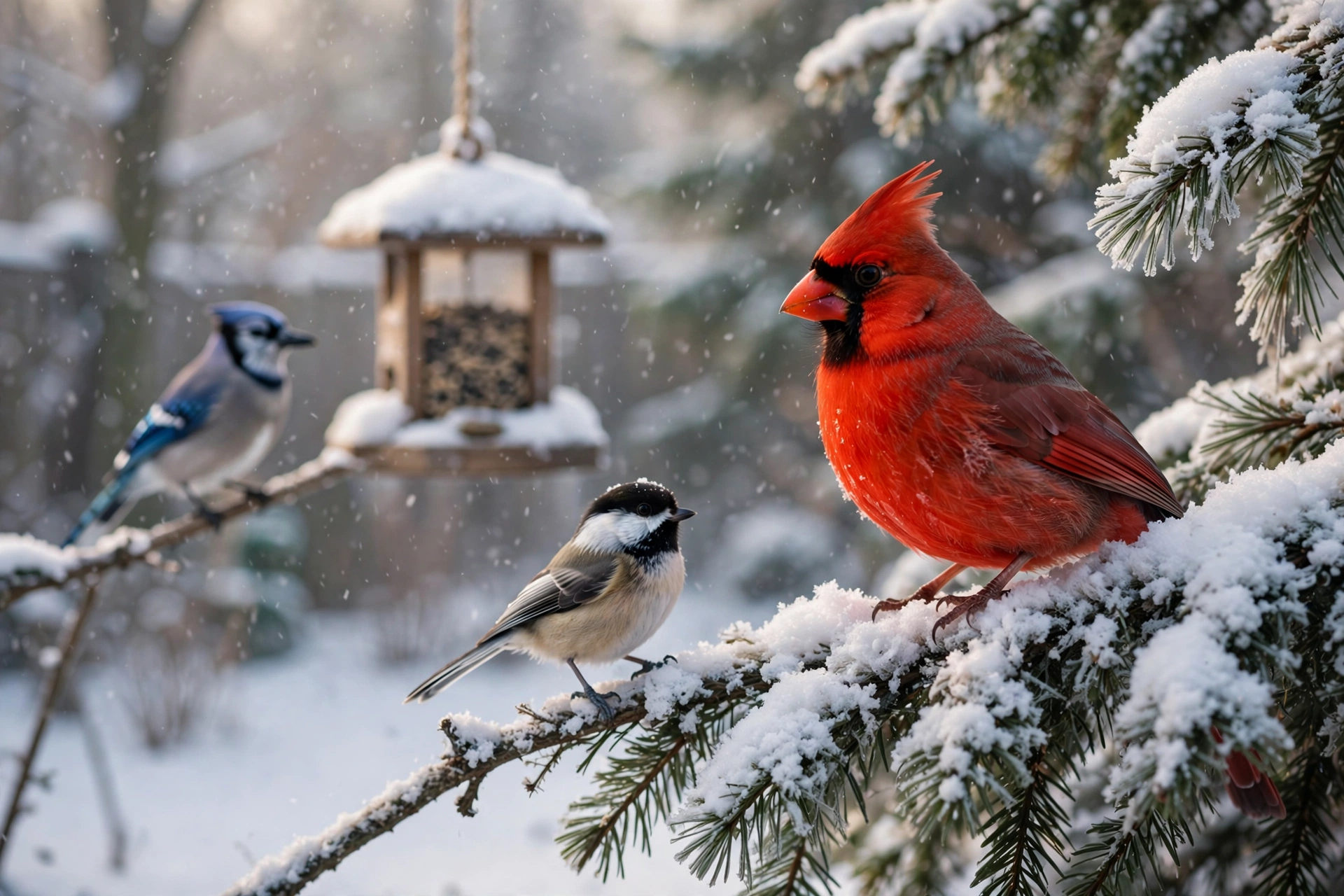
When the last leaves fall and the first snow arrives, millions of birds head south. But not all of them. Birds that don’t migrate, known as resident or non-migratory species, stay right where they are through the coldest months of the year. Instead of flying thousands of miles, they rely on a remarkable set of winter survival tricks, from nightly torpor to seed caching to simply fluffing up their feathers into a down jacket.
These year-round neighbors are the birds that make winter backyards feel alive: cardinals glowing red against the snow, chickadees scolding from the pines, and blue jays digging up acorns they buried in the fall. If you have ever wondered which birds stay in winter and how they pull it off, this list has you covered. Below are 15 species that tough it out in North America all winter, plus how each one survives and what you can offer them at your feeders.
How Birds Survive Winter Without Migrating
Migration is only one answer to winter. Resident birds use a toolkit of adaptations that scientists are still studying in detail. According to research on how birds stay warm in the winter from the Cornell Lab of Ornithology, the main strategies fall into a few categories. If you want the full picture of avian thermoregulation, read our guide on how birds stay warm in winter too.
- Feather insulation: Birds fluff their contour feathers to trap a thick layer of still air against the body, creating a down jacket they can adjust at will.
- Shivering thermogenesis: Muscle shivering generates heat without movement. Small birds shiver almost constantly on bitter nights.
- Counter-current heat exchange: Warm blood flowing down to the legs passes next to cold blood returning to the body, so heat is recycled. Birds can let their feet chill to near freezing without losing core heat.
- Regulated hypothermia: Some species, famously chickadees, drop their body temperature overnight to cut energy costs, then rewarm at dawn.
- Food caching: Jays, nuthatches, chickadees, and titmice hide seeds and nuts in thousands of hiding spots in fall and retrieve them all winter.
- Communal roosting: Crows and some smaller birds pile into shared roosts, where many bodies in a sheltered spot lose less heat per bird.
- Diet switching: Insect eaters shift to seeds, berries, and fat-rich foods such as suet when bugs disappear.
Each species on this list leans on a different mix of these strategies. Here is who stays and how they do it.
The 15 Winter Birds That Refuse to Leave
1. Northern Cardinal
The cardinal is the poster bird of winter. Males keep their brilliant red plumage all year, and against fresh snow there is no more striking sight in a backyard. Cardinals are true residents: pairs hold territories year-round and do not migrate.
How it survives: Cardinals puff their feathers to trap insulating air and tuck their feet and legs, cooled by counter-current heat exchange, so little core heat escapes. They spend the harshest weather deep in dense evergreens and thickets that block wind. At feeders they favor black-oil sunflower seeds and cracked corn, which they crack with their powerful conical bills. Mated pairs often stay together through winter, calling to each other in the early morning dark.
2. Black-capped Chickadee
Weighing less than half an ounce, the black-capped chickadee is one of the most astonishing winter survivors on the continent. It stays put from Alaska to Newfoundland no matter how far the temperature drops.
How it survives: Every cold night the chickadee enters regulated hypothermia, dropping its body temperature by around 10 to 15 degrees Fahrenheit to slash energy costs, then shivers itself awake before dawn. During the short winter day it feeds almost nonstop, caching hundreds of seeds in bark crevices and under leaves with a spatial memory that would shame a chess master. For ID help and more detail, see the Cornell Lab’s Black-capped Chickadee overview.

3. Tufted Titmouse
This crested gray sprite is a chickadee’s close cousin and nearly as tough. Tufted titmice are fixtures at eastern and midwestern feeders all winter, scolding intruders with their hoarse calls.
How it survives: Like chickadees, titmice cache seeds in bark crevices and travel in mixed-species winter flocks, where many eyes watch for hawks while everyone feeds. On the coldest nights they roost in tree cavities or nest boxes, and their dense feathering plus constant foraging keeps the furnace running. Sunflower seeds and peanuts are their winter staples at feeders.
4. White-breasted Nuthatch
The nuthatch that walks headfirst down tree trunks is a strict homebody, rarely straying far from its woodland territory in any season. Its comical upside-down foraging is actually a winter food-finding strategy.
How it survives: Nuthatches wedge seeds into bark furrows as fall caches, then retrieve them by probing the same crevices in winter. They join chickadee and titmouse flocks for safety and roost in natural cavities or old woodpecker holes on frigid nights. Their short legs and compact body lose little heat, and like chickadees they can let body temperature dip overnight.
5. Blue Jay
Blue jays are among the loudest, busiest winter residents. Though some jays drift south in big flocks in fall, most individuals stay on or near their breeding grounds all winter.
How it survives: The blue jay is one of nature’s great hoarders. A single jay may cache thousands of acorns and beechnuts in one autumn, burying them one at a time across its territory and remembering many of the hiding spots. This habit also plants future oak forests, since forgotten acorns sprout. Our guide to how birds store food for winter caching explains this memory feat in detail. In winter, jays also raid feeders for peanuts and suet, and their thick plumage handles the cold with ease.
6. Downy Woodpecker
North America’s smallest woodpecker is a familiar sight at winter suet feeders. Downies are strictly non-migratory and can be found across the continent in any month of the year.
How it survives: When insects vanish, downies switch to probing bark for dormant beetles, larvae, and eggs hidden in crevices, then supplement with suet and sunflower seeds at feeders. Their stiff tail feathers prop them against trunks, saving the energy that hovering would cost. On cold nights they tuck into old nesting cavities or crevices, and several birds sometimes share the same hole.
7. Hairy Woodpecker
The hairy’s bigger cousin of the downy is just as sedentary. Hairy woodpeckers hold year-round territories in mature woods and visit backyard suet feeders regularly in winter.
How it survives: A longer, chisel-like bill lets the hairy excavate deeper into bark and dead wood for wood-boring beetle larvae that smaller woodpeckers cannot reach. In winter, males and females divide the foraging territory to reduce competition: males tend to work trunks and larger limbs while females take smaller branches. Suet, peanuts, and sunflower seeds round out the winter diet.

8. Red-bellied Woodpecker
Despite the confusing name (the red is a faint wash on the belly; the showy patch is on the head), this is one of the most common winter woodpeckers in the eastern United States, and its range has been steadily expanding northward for decades.
How it survives: Red-bellied woodpeckers have a famously long, barbed tongue that can flick two inches past the bill tip to snag insects deep in bark. In winter they also cache seeds and nuts in bark crevices, eat wild fruits and berries, and visit suet feeders. They roost alone in cavities on cold nights, and their adaptability to suburban trees explains their northward spread.
9. American Crow
Crows are year-round residents across almost all of North America, and winter is when they are most spectacular: enormous communal roosts can gather thousands of birds in a single stand of trees.
How it survives: Crows are extreme omnivores, eating everything from roadkill and garbage to acorns and frozen fruit. Their biggest winter weapon is the communal roost, where hundreds or thousands of bodies packed into sheltered trees share warmth and safety. Each morning the roost disperses across the countryside to forage and regroups at dusk. Their intelligence helps too: crows learn where reliable winter food sources are and remember them year after year.
10. American Goldfinch
Many people think their goldfinches left for the winter, but they are still there. Goldfinches molt into dull olive-brown winter plumage, which is why they seem to disappear.
How it survives: Goldfinches switch almost entirely to seeds in winter, feeding in chattering flocks on thistle, coneflower heads, alder catkins, and nyjer seed at feeders. They roost together in dense conifers and thickets, and their small, efficient bodies are built for an all-seed diet. Leaving seed heads standing in your garden through winter is one of the best gifts you can give them.
11. House Finch
Introduced to the East Coast in the 1940s, the house finch is now one of the most abundant feeder birds in North America, and it does not migrate. Rosy males and streaky females crowd tube feeders all winter long.
How it survives: House finches form large winter flocks that roost together in evergreens and dense shrubs, conserving heat as a group. They are seed specialists with thick bills built for cracking sunflower and nyjer seed, and they readily use feeders. Because they cluster so tightly at feeders, keeping feeders clean is especially important for this species.
12. Mourning Dove
That soft cooing you hear on a still winter morning is a mourning dove that never left. While some northern doves drift south, huge numbers stay put and form winter flocks.
How it survives: Mourning doves are ground feeders that glean waste grain, weed seeds, and spilled feeder seed from beneath feeders. They huddle together on roosts, fluffing their soft gray-brown plumage into a warm cloak, and they can digest seeds so efficiently that a full crop can fuel them through a long, cold night. Open water or melted snow provides drinking water when everything else is frozen.
13. Wild Turkey
The wild turkey is a heavyweight resident that never migrates. Flocks scratch through snow in fields and woodland edges all winter, and their tracks are a classic sign of winter wildlife.
How it survives: Turkeys are powerful scratchers, using their strong feet to dig through a foot of snow to reach acorns, beechnuts, and waste grain. At night they fly up into large trees to roost, safe from ground predators, and on bitter nights flocks roost close together. They can go for stretches on stored body fat and buds when snow seals the ground, and they readily visit ground-level feeding areas.

14. Eastern Screech-Owl
This small, stocky owl is a permanent resident of eastern woodlands and suburbs. If you have a nest box up, a screech-owl may be sleeping in it right now, invisible until dusk.
How it survives: Screech-owls roost by day in tree cavities or nest boxes, which shelter them from wind and deep cold. At night they hunt from low perches, dropping onto voles, shrews, and mice that stay active under the snow, and they also take small birds at feeders. They stash surplus prey in cavity corners as a living pantry. Their dense, soft plumage is among the best insulation in the bird world.
15. Northern Mockingbird
Mockingbirds are famously territorial, and that attitude pays off in winter. Instead of migrating, they claim a patch of berry-laden shrubs and defend it fiercely all season.
How it survives: The mockingbird’s winter strategy is real estate. A single bird may guard a holly, hawthorn, or multiflora rose thicket and chase off all competitors, securing a private berry supply for the whole winter. When berries run low they switch to suet and mealworms at feeders. They roost in dense evergreens and keep singing on mild winter days, one of the few birds that does.
Quick Comparison: Winter Strategy at a Glance
| Species | Key Winter Survival Strategy | Favorite Winter Feeder Food |
|---|---|---|
| Northern Cardinal | Feather fluffing, counter-current heat exchange in legs | Black-oil sunflower seed |
| Black-capped Chickadee | Nightly torpor, seed caching | Sunflower seed, suet, peanuts |
| Tufted Titmouse | Seed caching, mixed-flock foraging | Sunflower seed, peanuts |
| White-breasted Nuthatch | Bark-crevice caches, cavity roosting | Suet, peanuts, sunflower seed |
| Blue Jay | Mass acorn caching | Peanuts, suet, sunflower seed |
| Downy Woodpecker | Bark probing for dormant insects, cavity roosting | Suet |
| Hairy Woodpecker | Deep excavation, split foraging zones | Suet, peanuts |
| Red-bellied Woodpecker | Long-tongue bark feeding, seed caching | Suet, peanuts |
| American Crow | Communal roosts, omnivorous diet | Cracked corn, peanuts, suet |
| American Goldfinch | All-seed diet, flock roosting in conifers | Nyjer seed, sunflower seed |
| House Finch | Flock roosting in evergreens | Nyjer seed, sunflower seed |
| Mourning Dove | Ground gleaning, huddling | Millet, cracked corn (ground) |
| Wild Turkey | Scratching through snow, tree roosts | Cracked corn (ground) |
| Eastern Screech-Owl | Cavity roosting, prey caching | Not a feeder bird (needs nest box) |
| Northern Mockingbird | Defended berry territories | Suet, mealworms, berries |
How to Help Winter Birds in Your Backyard
Resident birds are superbly adapted, but winter is still the hardest season of their lives. A well-stocked backyard genuinely helps them make it to spring. Our complete winter feeding guide covers foods and feeder setups in detail, and Project FeederWatch offers excellent advice on feeding birds safely, including how to clean feeders to prevent disease.
- Offer high-fat, high-energy foods: Black-oil sunflower seed, peanuts, and suet give birds the calories they burn to stay warm. Fat is winter fuel.
- Keep feeders filled consistently: Once birds learn your yard is reliable, they plan their daily foraging routes around it. Do not let feeders sit empty during cold snaps.
- Provide fresh water: Liquid water is often harder to find than food in winter. A heated birdbath is one of the most valuable things you can add.
- Leave natural shelter: Brush piles, dense evergreens, and standing seed heads give birds windbreaks, roosting spots, and food. Hold off on fall cleanup in part of the yard.
- Put up roost boxes: Unlike nest boxes, roost boxes have perches and the entrance near the bottom to trap heat. Several small birds may pile into one on bitter nights.
- Clean feeders regularly: Wash seed and suet feeders every week or two with soap and water, and rake up hulls and droppings underneath to slow disease spread.
Frequently Asked Questions
Do all chickadees stay for winter?
Black-capped, Carolina, mountain, and boreal chickadees are all year-round residents that stay through winter. They rely on nightly torpor, feather insulation, and cached seeds rather than migration. Some northern populations make short, irregular movements in years when food is scarce, but they do not undertake true seasonal migration.
Which birds stay in winter in the northern United States?
The most common northern winter residents include northern cardinals, black-capped chickadees, tufted titmice, white-breasted nuthatches, blue jays, downy and hairy woodpeckers, American crows, American goldfinches, house finches, mourning doves, and wild turkeys. Dark-eyed juncos are also a classic winter sight, but they are short-distance migrants that breed farther north and winter in the same areas, rather than true year-round residents.
How do small birds not freeze to death in winter?
Small birds combine several defenses: fluffed feathers that trap insulating air, constant shivering that generates heat, counter-current heat exchange that keeps their feet cold while the body stays warm, and in some species, regulated hypothermia at night that cuts energy use. Just as important, they feed almost continuously during short winter days to keep their internal furnace fueled.
Do cardinals migrate south for winter?
No. Northern cardinals are non-migratory and hold territories year-round. Pairs that nested in your yard in summer are usually the same birds visiting your feeder in January. They survive by sheltering in dense evergreens, fluffing their plumage, and eating calorie-rich seeds and berries.
When should I start feeding winter birds?
Begin stocking feeders in late fall, around October or November, so resident birds learn your yard is a reliable stop before the hardest weather arrives. Keep feeders filled consistently through March, when natural food is still scarce. Clean feeders regularly all season to keep visiting birds healthy.
Conclusion
Birds that don’t migrate are some of the toughest animals in North America. While their cousins fly thousands of miles to escape the cold, these 15 species stay and fight winter with feather insulation, nightly torpor, hidden seed caches, communal roosts, and sheer stubbornness. A chickadee weighing less than two nickels can survive a night well below zero by dropping its body temperature and shivering itself awake at dawn. That is not just survival; it is engineering.
For backyard birders, these residents are a gift. They keep the yard lively when the migrants are gone, and they reward a little help generously. Stock your feeders with sunflower seed, peanuts, and suet, keep water open, leave some brush and seed heads standing, and you will have cardinals, chickadees, jays, and woodpeckers through the darkest months. Winter belongs to the birds that stay. Give them a reason to stay in your yard.





