 Skip to content

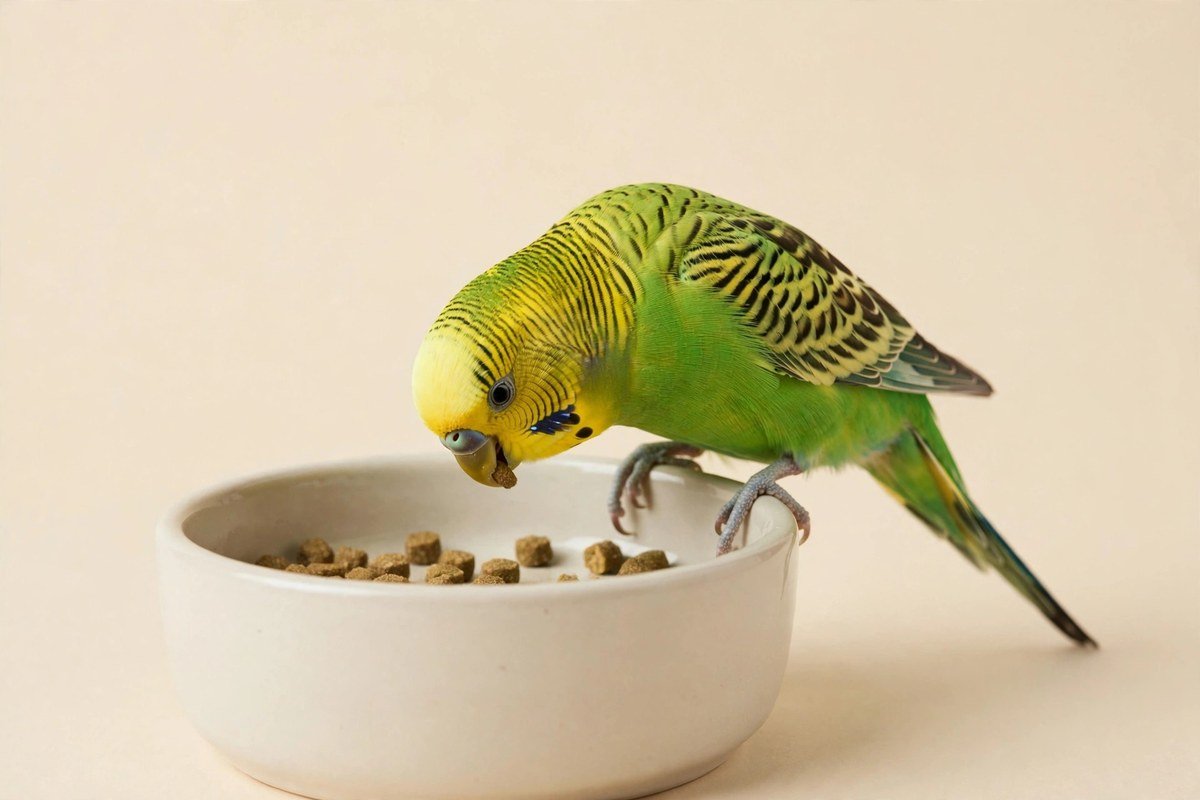
So, what do budgies eat to stay healthy for a full, active life? The short answer: a pellet-based diet, fresh vegetables every day, a little fruit, and only a small amount of seeds as treats, plus a cuttlebone and fresh water available at all times.
Most budgies in pet homes are still fed an all-seed diet, and avian vets link that pattern to fatty liver disease, vitamin A deficiency, and obesity. Budgies love seeds, which makes the seed bowl look like a success, but enthusiasm and nutrition are different things. A wild budgie’s diet of Australian grass seeds is far more varied and lower in fat than the seed mixes sold in pet stores.
This guide lays out exactly what to feed, how much of each food, which fruits and vegetables are safe, which foods are toxic, and a simple weekly budgie diet plan you can start today.

What Do Budgies Eat Every Day? The Ideal Diet Breakdown
A balanced budgie diet follows a simple ratio that avian nutrition experts broadly agree on: pellets as the base, vegetables and leafy greens as the daily side, a little fruit, and seeds kept to treat level. Lafeber, one of the most trusted names in bird nutrition, recommends about 80 percent nutritionally balanced food with the remaining 20 percent made up of fresh greens, vegetables, fruit, and healthy table foods.
- Pellets: the base of every meal, making up roughly 60 to 80 percent of the diet. They deliver the same complete nutrition in every bite, which stops the selective eating that makes seed mixes unbalanced.
- Vegetables and leafy greens: a daily serving of chopped dark greens and orange or yellow vegetables, about 20 to 25 percent of the diet. These supply vitamin A and keep meals interesting.
- Fruit: a few small pieces a few times a week. Fruit is higher in sugar, so it stays a side dish, not a staple.
- Seeds and grains: a measured teaspoon or two per day, used as treats and training rewards rather than the main course.
- Cuttlebone or mineral block: clipped in the cage at all times for calcium and beak conditioning.
- Fresh water: changed daily, with food and water dishes washed regularly.
Do not be surprised if your budgie ignores vegetables at first. Budgies are neophobic, meaning they distrust unfamiliar foods, and most will need days or weeks of repeated, no-pressure exposure before they take a bite. Birds that are hand-tame and comfortable with you are often more willing to try new foods, so working to tame your budgie can genuinely improve mealtimes too.
Why Seeds Alone Are a Problem
The classic pet-store seed mix is mostly millet and canary seed. It is high in fat and low in vitamin A, calcium, and several essential amino acids. Worse, budgies hull each seed and pick out their favorites, so even vitamin-fortified mixes lose the added nutrients with the discarded hulls. Lafeber’s nutrition team puts it bluntly: with loose seeds, the bird removes the hull and the nutrition goes with it.
Over time, seed-only diets are linked to hepatic lipidosis (fatty liver disease), vitamin A deficiency, and obesity, all common in pet budgies. Vitamin A deficiency shows up as respiratory infections, crusty skin around the eyes and cere, and poor feather quality, while fatty liver can cause overgrown beaks, lethargy, and a swollen abdomen. These conditions are described in detail in this avian veterinary feeding guide, which is worth a read if your budgie currently eats seeds only.
There is also the empty-hull trap. A seed dish can look full when it is actually full of husks, and a budgie can starve in front of what looks like plenty of food. Blow or scoop the husks off the top daily, refill with fresh seed, and change the water every day, because husks and droppings foul it fast.
Pellets: The Foundation of the Best Food for Budgies
Pellets are ground grains, seeds, vegetables, and added vitamins and minerals, baked or extruded into uniform bites. Because every pellet is identical, your budgie cannot cherry-pick the fatty bits the way it does with a seed mix. That uniformity is the whole point: complete nutrition in every bite.
Trusted pellet brands for small parrots include Harrison’s, Lafeber, Roudybush, and ZuPreem. Choose a formula sized for budgies or parakeets, since pieces made for larger parrots are hard for a small beak to manage. Pick plain, naturally colored pellets rather than dyed or sugary ones, and store the bag sealed in a cool, dry place to keep the nutrients fresh.
Expect some changes when you switch. Droppings often become larger and lighter in color on a pelleted diet, which is normal. What is not normal is a bird that stops eating, loses weight, or sits fluffed up for hours. That means slow the transition down or call an avian vet. Lafeber’s guidance on pet bird nutrition explains why pellets should anchor the diet and how fresh foods fit around them.
How to Switch a Seed-Eating Budgie to Pellets Safely
A budgie can genuinely starve rather than eat something it does not recognize as food, so never remove all familiar food at once. Convert gradually with these steps:
- Keep the seed dish available while you introduce pellets in a second dish. Your budgie must never face an empty cage.
- Mix a small amount of pellets into the seed, then slowly raise the pellet share over two to four weeks.
- Offer pellets first thing in the morning, when your budgie is hungriest, and offer seeds later in the day.
- Try different presentations: dry, lightly moistened into a mash, or crushed and sprinkled over a favorite food.
- Weigh your budgie weekly on a small kitchen scale. A steady weight means the transition is working; weight loss means you are moving too fast.
- Pause and call an avian vet if your bird stops eating entirely, drops food without swallowing, or looks fluffed and lethargic.
Budgie Safe Fruits and Vegetables: What to Serve Daily
Vegetables should appear every day, while fruit plays the smaller, sweeter supporting role. Chop pieces to budgie-beak size, wash everything thoroughly to remove pesticides, and serve fresh foods in a separate dish from the pellets. Remove uneaten fresh food after two to four hours so it cannot spoil, especially in warm weather.
Safe vegetables to rotate through the week:
- Dark leafy greens: kale, spinach, Swiss chard, romaine, and dandelion greens.
- Broccoli: florets and leaves, raw or lightly steamed.
- Carrot and sweet potato: grated raw or cooked and cooled. These are vitamin A stars.
- Bell peppers: any color, seeds removed.
- Green beans and snap peas: raw or lightly steamed.
- Corn and peas: fresh, frozen-thawed, or lightly cooked.
- Cucumber and celery: hydrating but light on nutrients, so pair them with richer greens.
- Fresh herbs: basil, cilantro, parsley, and dill.
Safe fruits, in small portions a few times a week:
- Apple slices: seeds and core removed.
- Banana: a thin coin or two is plenty.
- Berries: blueberries, strawberries, and raspberries.
- Mango, papaya, and melon: most budgies love these.
- Grapes: halved so they are easy to handle.
- Pear and peach: pits removed.
- Kiwi and pomegranate seeds: tangy favorites for many birds.
Rotate what you offer instead of serving the same two vegetables forever. A rotating menu exposes your budgie to a wider range of nutrients and keeps meals interesting. If your bird only licks the carrot for the first week, that still counts as progress.

Seeds, Grains, and Healthy Treats
Seeds are not the enemy. The portion is. A level teaspoon or two of a quality budgie seed mix per day is plenty, offered as treats or training rewards rather than the main course. Millet spray is budgie candy: wonderful for taming and for rewarding training sessions, including work to teach your parakeet to talk, but a whole spray left in the cage all day is too much of a good thing.
Sprouted seeds are a genuine step up from dry seed. Soaking and sprouting lowers the fat content and raises the available nutrients, and many budgies prefer the softer texture. Rinse sprouting seed well, and offer only what gets eaten within a few hours, since damp sprouts spoil fast. A little cooked egg, with the shell washed, crushed, and cooked in, is a useful protein boost during molting.
What about grit? Budgies husk their seeds before swallowing, so insoluble grit serves no digestive purpose for them, and a bird that eats a lot of it can develop a crop blockage. Skip the grit dish and keep a cuttlebone or mineral block instead, which supplies calcium in a safer form. If you are new to pet birds entirely, our first-time bird owner care tips cover cage setup and daily routines beyond the food dish.
Foods Toxic to Budgies: What to Never Feed
Some human foods are genuinely dangerous to a bird that weighs about 30 grams, where a single bite is an enormous dose relative to body weight. Keep these completely out of reach, and watch out for crumbs, uncovered coffee cups, and cooking ingredients.
- Avocado: every part of the plant contains persin, a cardiac toxin, and small birds like budgies are considered especially susceptible. Respiratory distress can appear within 12 hours of ingestion.
- Chocolate: theobromine and caffeine overstimulate the heart and nervous system. Darker chocolate is worse.
- Caffeine: coffee, tea, energy drinks, and some sodas. Cover your mug, because a curious budgie can take a sip in a second.
- Alcohol: toxic even in tiny amounts. Never share drinks.
- Onion and garlic: can damage red blood cells. Concentrated forms like powders and soup mixes are more potent than the raw vegetables.
- Salt and salty snacks: chips, pretzels, and salted nuts. Budgies cannot handle human salt levels.
- Fruit pits and apple seeds: contain cyanide compounds. Always remove pits and seeds before serving fruit.
- Rhubarb leaves: high in oxalic acid. Keep the whole plant away from the cage.
- Xylitol: this sweetener in sugar-free gum and some peanut butters is dangerous to pets.
- Dairy, fried, and heavily processed foods: not acutely toxic, but the fat and salt load feeds the exact fatty liver problem a good diet is meant to prevent.
Toxic risks are not limited to the food dish. If your budgie flies free around the house, read our guide to toxic houseplants for birds, since nibbled leaves are another common poisoning route. For a printable reference, this do-not-feed list from a parrot rescue covers the same dangers in checklist form.

The Budgie Diet Plan: A Simple Weekly Schedule
You do not need a spreadsheet, just a rhythm. Pellets stay available all day, vegetables change daily, fruit appears a few times a week, and seeds stay measured. The Royal Veterinary College’s budgie care sheet recommends a complete pellet diet at about 80 percent, with vegetables, a small amount of sprouted seeds, and seeds only as treats, which lines up exactly with the plan below.
- Every morning: fresh pellets in a clean dish, fresh water, and the day’s chopped vegetables in a separate dish.
- Midday: remove uneaten fresh food after two to four hours and do a quick dish check.
- Evening: top up pellets if low, offer the measured seed treat, and swap in fresh water for the night.
- Monday, Wednesday, Friday: leafy greens plus an orange vegetable like carrot or sweet potato.
- Tuesday and Thursday: add a small fruit portion alongside the vegetables.
- Saturday: try one new vegetable your budgie has not seen before.
- Sunday: rest day with the usual staples, plus a cage and dish deep-clean.
- Weekly: weigh your budgie and note the number. A stable weight is the simplest proof the diet is working.
Seeds vs Pellets vs Fresh Foods: At a Glance
Here is how the three pillars of the diet compare, so you can see why each one has a different job.
| Food type | Role in the diet | Strengths | Watch-outs |
|---|---|---|---|
| Pellets (60-80%) | Complete nutritional base | Same nutrition in every bite; prevents selective eating | Some budgies resist the switch; choose plain, budgie-sized pellets |
| Seeds (5-10%) | Treats and training rewards | Natural foraging behavior; great training motivator | High fat and low vitamin A; birds pick favorites and waste the rest |
| Fresh vegetables (20-25%) | Daily vitamins and variety | Vitamin A, hydration, mental stimulation | Spoil quickly; wash well and remove uneaten portions |
| Fruit (small amounts) | Occasional treat | Vitamins; most budgies love the taste | High sugar; always remove pits and seeds |
| Cuttlebone or mineral block | Calcium and beak care | Self-serve calcium; keeps the beak trimmed | Not a food; replace when worn down |
Frequently Asked Questions
Can budgies survive on a seed-only diet?
Short term, yes, which is why the myth persists. Long term, a seed-only diet is linked to fatty liver disease, vitamin A deficiency, and obesity, and it can shorten a budgie’s life. Seeds work fine as a small treat portion inside a pellet-and-vegetable diet, but they should never be the whole diet.
How much food does a budgie need each day?
A common veterinary guideline is 1.5 to 2 level teaspoons of seed mix per budgie per day, used as the treat portion rather than the main meal. Pellets should be available throughout the day so your bird can graze, and vegetables should be offered fresh daily. If seed is left over at the end of the day, you offered too much.
How do I get my budgie to eat vegetables?
Offer them first thing in the morning when your budgie is hungriest, and try different presentations: clipped whole leaves, woven through the cage bars, finely chopped, or lightly steamed. Eat some yourself nearby, since budgies are flock eaters and curiosity helps. Most birds need days or weeks of repeated exposure, so keep offering without pressure.
Can budgies eat bananas?
Yes, bananas are safe for budgies in small pieces. They are higher in sugar than most vegetables, so treat banana as an occasional fruit portion rather than a daily food, and remove any uneaten pieces within a few hours.
Do budgies need grit?
No. Budgies husk their seeds before swallowing, so insoluble grit serves no digestive purpose for them, and eating a lot of it can cause a crop blockage. A cuttlebone or mineral block is the better cage accessory: it supplies calcium and helps keep the beak trimmed.
What should I do if my budgie stops eating?
Act quickly. Budgies have fast metabolisms and should never go more than 24 hours without food. Keep favorite foods available, watch for fluffed-up posture, tail bobbing, or changes in droppings, and call an avian vet promptly. For the warning signs that apply to small parrots generally, see when a cockatiel stops eating.
Conclusion
So what do budgies eat for a long, healthy life? Mostly pellets, with fresh vegetables every day, a little fruit a few times a week, seeds as measured treats, and a cuttlebone plus fresh water always on hand. That single shift, from seeds as the main course to pellets as the base, prevents the fatty liver disease and vitamin A deficiency that cut so many pet budgies’ lives short.
Start with one change this week: add a small dish of chopped dark greens beside the pellets and leave it there every morning. Keep the toxic-foods list on your fridge, weigh your budgie once a week, and be patient with new foods. A budgie that eats well is an active, bright-eyed, chatty companion, and building that diet is one of the simplest, highest-impact things you can do as an owner.





