 Skip to content

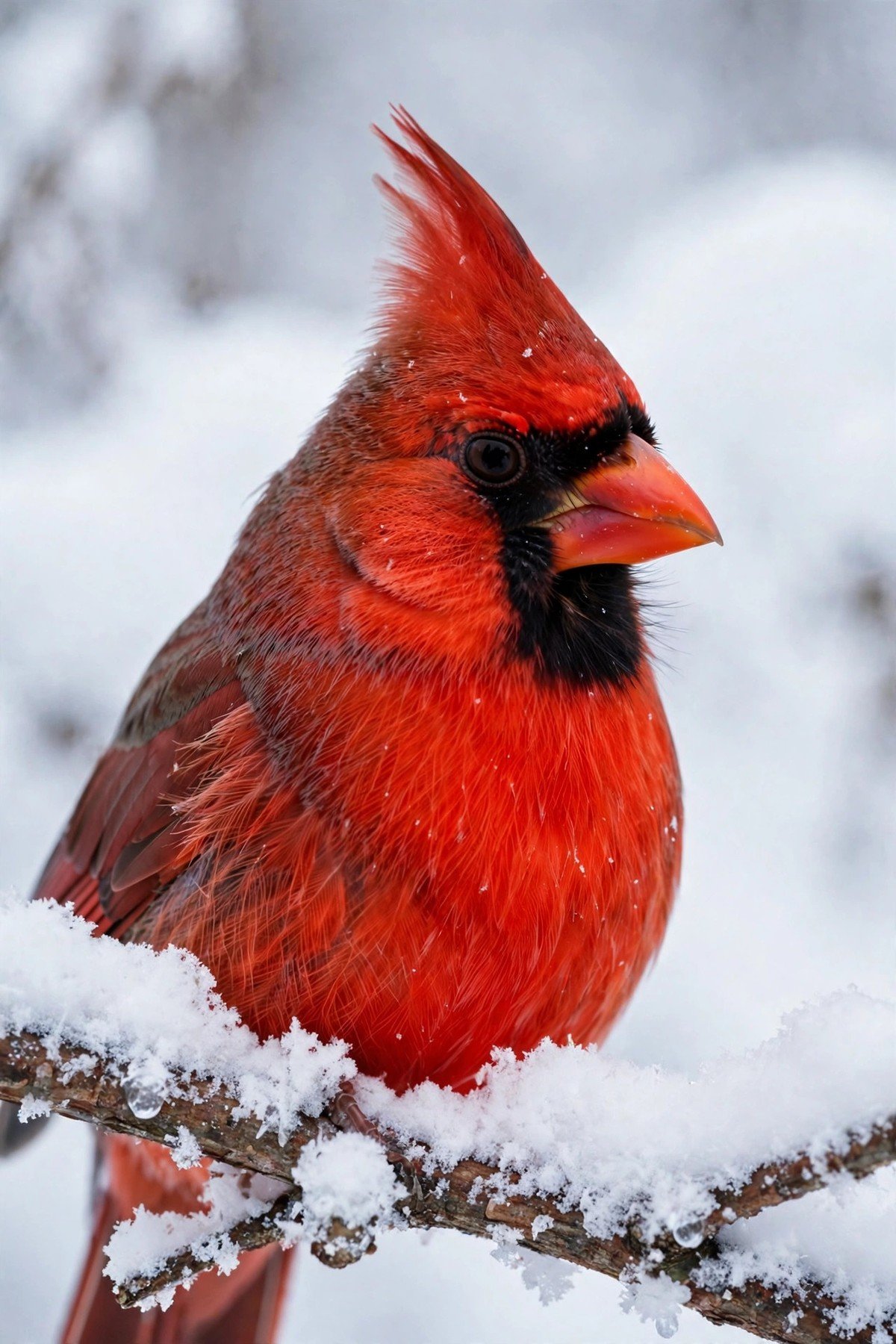
A flash of crimson at the window can stop anyone in their tracks. If you are wondering what does it mean when you see a cardinal, you are far from alone: this bright red songbird sparks more meaning-seeking searches than almost any other backyard bird in America.
The honest answer has two sides, and both are worth knowing. The first is natural and practical: cardinals are year-round residents that visit feeders daily and stand out vividly in winter. The second is cultural: for generations, people have treated the cardinal as a spiritual messenger, a symbol of love, and a sign that a departed loved one is near.
This guide covers both sides. You will learn the natural reasons a cardinal visits, what different traditions believe about cardinal meaning, and the real natural-history facts that make this bird so special.
What Does It Mean When You See a Cardinal? The Natural Explanation First
Before reaching for symbolism, consider the biology. The simplest meaning behind a cardinal sighting is that you live inside its range and the bird found something it likes. Northern cardinals are non-migratory, which means they stay put through every season. The Cornell Lab of Ornithology notes in its Northern Cardinal species profile that cardinals do not migrate and do not molt into dull plumage, so they remain vivid even in snowy backyards.
Cardinals are also some of the most loyal feeder visitors in North America. They readily eat sunflower seeds, safflower, peanuts, and cracked corn, and they forage mostly on or near the ground. If one keeps showing up, your yard probably offers food, water, dense shrubs for cover, or a territory worth defending.
There are a few more natural reasons a cardinal suddenly appears:
- Winter visibility: bare branches and white snow make red plumage impossible to miss, even if the bird has been visiting all year.
- Territory defense: in spring, cardinals may tap or attack windows, car mirrors, and shiny surfaces. Both males and females do this, mistaking their reflection for a rival.
- Mated pairs: cardinals often travel in pairs, so where you see one red male, a brownish female with red accents may be nearby.
- Dawn chorus: their sweet whistling songs are among the first sounds of a summer morning, which makes them easier to notice.
None of this makes a sighting less special. It simply means the natural explanation and the symbolic one can coexist: a bird can be drawn by your sunflower seeds and still carry personal meaning for you.

What Cardinals Symbolize in Culture and Folklore
The meanings below come from cultural beliefs, folklore, and memorial traditions, not from ornithology. Scientists study what cardinals do; people decide what cardinals mean. Treat everything in this section as reported belief, and take whatever brings you comfort.
A Spiritual Messenger and Sign From Loved Ones
The most widespread belief about cardinal meaning is that the bird acts as a messenger between the living and those who have passed. Many people describe a cardinal appearing shortly after a loss, at a graveside, on an anniversary, or during a hard week, and interpret it as a visit from a loved one.
This interpretation shows up across modern memorial culture, where cardinals appear on sympathy cards, remembrance jewelry, and memorial garden ornaments. guides that separate red cardinal symbolism from cardinal science often note that the spiritual meaning is a matter of belief rather than a scientific fact, which is exactly the right framing. The comfort people feel is real; the mechanism belongs to faith.
The messenger idea gained much of its modern reach through grief communities and online remembrance groups, where people share cardinal sightings the way they might share a memory. That collective storytelling has turned a regional folk belief into one of the most recognizable bird symbols in American culture.
Love, Devotion, and Faithfulness
Cardinals also symbolize love and devotion, and their actual behavior helps explain why. Northern cardinals form strong pair bonds, and mated pairs often feed each other and stay together through the seasons. That lifelong partnership has made the cardinal a natural emblem of committed love.
Folklore adds a romantic twist: some traditions say that spotting a cardinal means romance is near, while others treat it as a reminder to honor the partner you already have. Whether you take that literally or as poetry, the link between cardinals and devotion is one of the oldest in the bird’s symbolism.
Hope, Renewal, and Good Fortune
A third common meaning ties the cardinal to hope and renewal. Because cardinals stay through winter and sing through cold months, their red flash against gray days feels like a promise that life persists. Many people interpret a winter sighting as a reminder to keep going through a difficult stretch.
In some traditions, seeing a red cardinal is considered good luck or a nudge toward a fresh start. The red cardinal symbolism of vitality runs through these beliefs: red suggests passion, courage, and life force, and the bird carries all of it on its wings.
Cardinals in Native American and Christian Traditions
Beliefs about the cardinal reach far back. According to folklore summaries, the idea of a cardinal as a heavenly visitor appears in ancient Egyptian, Irish, Celtic, and Hindu spiritual traditions, and it has been documented among many Native American tribes. In several Native American traditions, the cardinal is associated with the south, fire, and renewal, and its red plumage is read as passion, courage, and vitality.
Christian interpretations also run deep. Early European settlers named the bird for the Roman Catholic cardinals, whose red vestments the male’s plumage resembled. Many Christians associate the color red with Christ’s sacrifice and eternal life, so a cardinal can feel like reassurance that loved ones are not truly gone. During the holidays, when people reflect on departed family members, red birds fit naturally into the season, and cardinals remain visible at Christmastime because they do not fly south. One explainer on the significance of red birds during the holidays traces how the cardinal’s color, name, and winter presence made it a Christmas icon.
A careful note matters here: specific tribal and denominational beliefs vary widely, and broad summaries cannot speak for any living tradition. The general pattern, though, is consistent: across cultures, people have read hope and remembrance into this bird.
The Natural Side: Fascinating Northern Cardinal Facts
Whatever meaning you take from a sighting, the bird itself is remarkable. These verified facts from ornithology give the symbolism its roots, and they make a handy reference the next time a cardinal appears at your window.
| Fact | Detail |
|---|---|
| Appearance | Males are brilliant red with a black mask and crest; females are warm brown with red accents on the crest, wings, and tail. Both have thick orange-red conical beaks built for cracking seeds. |
| Range and movement | Northern cardinals are year-round residents across eastern and central North America, from southern Canada to Mexico. They do not migrate. |
| Song | Both sexes sing loud, clear whistles through every season. The female often sings from the nest, and mated pairs share song phrases. Fewer than a handful of North American female songbirds sing at all. |
| State bird | The northern cardinal is the state bird of seven states, more than any other species: Illinois, Indiana, Kentucky, North Carolina, Ohio, Virginia, and West Virginia. |
| Lifespan | Most wild cardinals live only a few years, but the oldest recorded female reached 15 years and 9 months. For perspective on how long birds live, small songbirds often outlast expectations when they find good habitat. |
| Diet | Seeds, fruit, and insects. They favor sunflower and safflower seeds at feeders and forage mainly on or near the ground. |
| Name origin | European settlers named the species after Roman Catholic cardinals because the male’s red plumage resembled their robes. |
One more fact worth knowing: cardinals learn their songs, so the exact tune varies by region. If you learn your local cardinal’s whistle, you will start noticing the bird everywhere. And if you want to tell a cardinal apart from other red-plumaged visitors, our identification guide to red-headed birds with black wings walks through the key differences with pictures.

What to Do When You Keep Seeing a Cardinal
Whether you read the sighting as a message or a feeder visit, you can make your yard more welcoming. Cardinals return to places with reliable food, water, and cover, so repeated visits usually mean you are doing something right.
- Keep feeders stocked with what they love: black oil sunflower seeds and safflower are cardinal favorites. A hopper or platform feeder suits their feeding style.
- Add dense shrubs and low branches: cardinals nest and shelter in thick tangles. Undergrowth along yard edges gives them the cover they seek.
- Provide fresh water: a shallow birdbath, kept clean and unfrozen in winter, draws cardinals as reliably as food.
- Learn the song: knowing the local whistle turns every walk into a cardinal count. Both sexes sing, so listen for duets in spring.
- Write down the moments: if sightings feel meaningful, keep a short journal of when and where they happen. Patterns often emerge, and the record becomes a keepsake either way.
For a complete plan, see our full guide to attracting cardinals to your yard, which covers feeder placement, plants, and water in detail. If you ever wonder whether the bird recognizes you back, the research on whether birds recognize human faces suggests many species remember individual people.

Frequently Asked Questions
Is seeing a cardinal good luck?
Many traditions treat it that way. Seeing a red cardinal is widely interpreted as a sign of hope, renewal, or an encouraging message during hard times, and some folklore calls it outright good luck. This is a cultural belief, not a verified fact, but if a sighting lifts your spirits, that counts for something real.
What does it mean when a cardinal visits you repeatedly?
Naturally, it means your yard offers food, water, cover, or a good territory, and cardinals are loyal to places that meet their needs. Symbolically, many people read repeated visits as an ongoing message of comfort or encouragement. Both readings can be true at once: the bird comes for the sunflower seeds, and you get to decide what the moment means.
What does a female cardinal symbolize?
The female cardinal, with her warm brown plumage and red accents, is often associated with quieter strengths: nurturing, domestic harmony, and inner beauty. Some traditions link her to maternal care and the home. Biologically, she is remarkable in her own right, since she is one of the few female North American songbirds that sings.
Why do cardinals appear in winter?
Cardinals do not migrate, so they are present all year; winter only makes them easier to see. Bare branches remove hiding spots, snow creates a bright backdrop for red plumage, and scarce natural food pushes them to feeders more often. Their winter visibility is a big reason they became symbols of hope and endurance.
What does it mean to dream of a cardinal?
Dream dictionaries and folklore treat a cardinal in a dream much like one in waking life: a symbol of hope, a message from the subconscious, or a connection to someone you miss. Because dreams are personal by nature, most traditions suggest asking what the bird represented to you in the dream rather than applying a fixed meaning. This is belief territory, not science, so take the interpretation that resonates.
What does it mean when a cardinal taps on your window?
Ornithologists have a clear answer: the bird sees its reflection and treats it as a rival to chase away. Both males and females do this, mostly in spring when territorial hormones run high. Folklore sometimes reads window tapping as an urgent message or a loved one trying to get your attention. The biological explanation does not cancel the personal one, but it is the reason the behavior starts and, thankfully, the reason it usually stops on its own within weeks.
Conclusion
So what does it mean when you see a cardinal? Naturally, it means a beautiful year-round resident found your yard worth visiting, probably for food, water, or shelter. Culturally, it can mean whatever your heart needs it to mean: a message from someone you miss, a sign of devotion, or a flash of hope on a gray day.
The bird does not ask you to choose between these answers. Science explains the visit; tradition gives it weight. Keep the feeders full, learn the song, and the next time that red flash crosses your window, you will know exactly what you are looking at, and you can decide for yourself what it means.





