 Skip to content

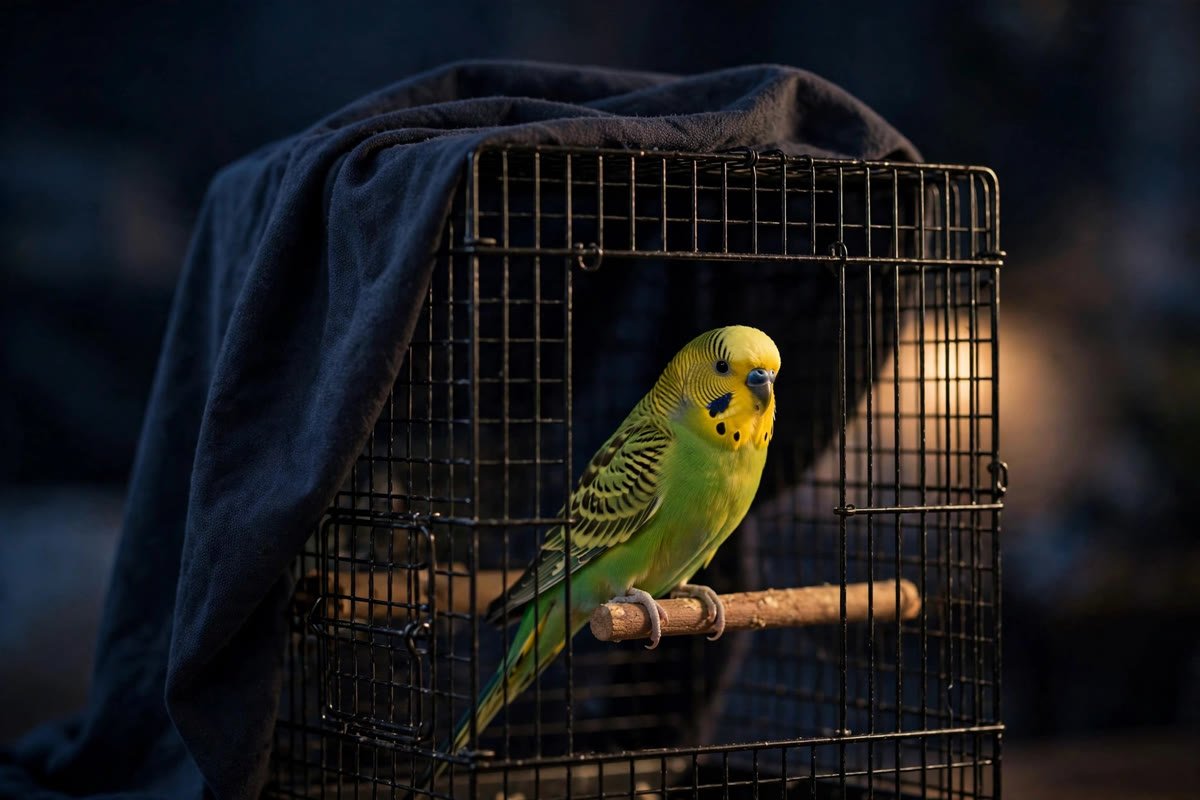
If you wonder should you cover your bird cage at night, the short answer is yes for most pet birds. Pet parrots and other companion birds need 10 to 12 hours of dark, quiet, uninterrupted sleep every night, and a cage cover is the simplest way to give it to them in a home with lamps, televisions, and late evenings. Avian veterinarians point to steady darkness as one of the foundations of good bird health, right alongside a proper diet and a clean cage.
That said, the fabric, the fit, and the routine all matter. A heavy cover with no airflow can trap heat, a loose or frayed one can catch toes, and a bird that panics under a full cover needs a different plan. This guide lays out what vets say about nighttime sleep, the real benefits of covering, the mistakes to avoid, and how to set up a bedtime routine your bird will actually sleep through.

Should You Cover Your Bird Cage at Night? Yes, With a Few Conditions
Covering the cage at night is standard practice among avian veterinarians and experienced bird keepers. In the wild, most parrots sleep about 12 hours, from roughly sunset to sunrise, tucked into dark, sheltered roosts. A cage cover recreates that shelter in a living room that stays bright until 11 p.m.
UC Davis School of Veterinary Medicine states it plainly: it is optimal for birds to get 10 to 12 hours of uninterrupted sleep each night, and birds prefer a constant sleep schedule. A cover pulled at the same time every evening becomes a reliable bedtime cue, the way turning off the lights works for people.
The cover is not the only way to do it, though. Lafeber Pet Birds notes that covering is not strictly necessary for every bird. A bird in a genuinely dark, quiet room may sleep fine uncovered, and some birds actually prefer that. The deciding factor is the darkness and quiet, not the fabric itself. If your bird’s room stays lit or noisy after bedtime, a cover is the practical fix.
So treat the cover as a tool, not a rule. Use it when your household schedule would otherwise cut your bird’s sleep short, and skip or adjust it when the bird is clearly uncomfortable underneath it.
Why Darkness Matters So Much to Pet Birds
Birds run on light. Their brains use day length to time sleep, feeding, molting, and breeding, which is why captive birds kept under bright artificial light late into the night so often develop problems. Chronic sleep deprivation is linked to biting, screaming, crankiness, and self-directed behaviors like feather plucking.
The Royal Veterinary College’s exotic animal service connects the dots directly: excessive light disrupts sleep patterns and can trigger hormonal changes connected with reproduction, which can lead to frustration-based feather plucking. In plain terms, a bird that never gets a proper night is more likely to chew its own feathers and act out its hormones.
Long days also tell a bird’s body that breeding season is here. For female birds prone to chronic egg laying, too much light encourages the reproductive cycle to keep going, and vets routinely recommend cutting daylight back to 8 to 10 hours to break the cycle. That longer dark period is, of course, delivered by covering the cage early.
The 10 to 12 hour figure comes up again and again in veterinary guidance. UC Davis recommends 10 to 12 hours of uninterrupted sleep. The Royal Veterinary College suggests around 12 hours. Consistency matters as much as the total: birds sleep better on a fixed schedule, so timers on room lights or a strict cover routine help.
The Benefits of a Night Cover
A good cage cover does four jobs at once. First, it blocks light. Room lamps, televisions, hallway lights, and passing car headlights all keep a bird in a twilight state where real rest never starts. A dark cover shuts that visual noise out.
Second, it muffles sound and movement. Birds are prey animals, and a bird that can see every shadow cross the room may never settle. The cover turns the cage into a private roost where the bird cannot see the dog pacing or the teenager raiding the fridge.
Third, it traps a little warmth and cuts drafts. A cage in a breezy corner of the house benefits from the insulation a cover provides, especially on cold nights when the heating cycles off. This is a side benefit, not a substitute for a warm room, but it smooths out the night.
Fourth, it builds routine. Pulling the cover at the same hour each night, paired with a quiet goodnight, teaches the bird when its day ends. Most birds learn this cue within a couple of weeks, and many will start settling down on their own as cover time approaches. For general nighttime noise problems, our guide on why your bird screams at night and how to stop it covers the wider picture.
The Risks of Covering Done Wrong
Covering is safe only when it is done thoughtfully. The most common mistake is using a thick, non-breathable cover, like a heavy quilt or plastic-backed material, draped all the way to the floor. That traps body heat and cuts airflow, and an overheated bird can be in real trouble by morning.
Fabric hazards come second. Loose threads, frayed edges, and woven materials with open loops can snag a toe or a claw overnight, and some birds will chew fabric and swallow fibers. Any cover with dangling threads should be repaired or retired.
Some birds genuinely hate full coverage. A bird that was never covered as a chick may pace, flap, or call when the cover goes on, and forcing a full cover on an anxious bird trades one sleep problem for another. Lafeber’s avian staff give the honest version: sometimes a bird prefers being covered, sometimes it does not, and there is no absolute rule.
Then there are night frights, and cockatiel owners should pay attention here. Cockatiels are prone to sudden panic episodes in the dark, thrashing around the cage and sometimes breaking blood feathers. Lafeber notes that cockatiels do better with a nightlight because of this. A full cover in total darkness can actually make some tiels more frightened when a sudden noise hits, because they cannot see what caused it.
How to Cover the Cage Properly
Start with the right material. Choose a breathable, dark fabric like a cotton sheet, a light fleece blanket, or a purpose-made cage cover in a dark color. Avoid anything with loose weave, hanging loops, or waterproof backing. The cover should be wide enough to drape over the top and most of the sides.
Leave an opening for airflow. Do not tuck the cover tight around the bottom of the cage. Cover the top and three sides and leave part of the front lower section open, or lift one corner slightly, so air moves freely. The cover must never touch heat lamps or ceramic heaters, which are fire hazards near fabric.
Keep a consistent schedule. Pick a cover time that gives your bird 10 to 12 hours before your wake-up time, and stick to it within about half an hour every day, weekends included. Uncover at the same time each morning. A light timer in the bird room can backstop your routine.
Introduce the cover gradually for nervous birds. On the first few nights, cover only the top and back, leaving the front open, and watch the bird’s body language. Relaxed fluffing, a tucked head, and a tucked-up leg signal comfort. Pacing, panting, or frantic calling signal that you should slow down and try a partial cover for a while longer.
What not to use: heavy quilts, electric blankets, plastic sheeting, scented or chemically treated fabrics, and anything that sheds lint the bird might inhale. Wash the cover regularly, since it collects dust and dander, and replace it when it frays. For more on setting up a healthy home routine from day one, see our step-by-step bird care tips for first-time bird owners.
Alternatives to a Full Cover
If a cover does not suit your bird or your setup, you still have options for delivering dark, quiet sleep.
- Sleep cage: Many avian veterinarians consider a separate smaller cage in a quiet, dark room the gold standard. The bird sleeps in its day cage in the living room and moves to the sleep cage at bedtime. UC Davis notes that covering the cage at night may not provide optimal rest, so a separate dark room may be required.
- Dark room, no cover: If you have a room you can darken completely and keep quiet, from a spare bedroom to a home office, the bird can sleep uncovered there. This works well for birds that hate covers and for cockatiels that need a nightlight, since you can control the lighting.
- Partial covering: Cover the top and three sides while leaving the front partly open. This blocks overhead light and gives a sense of shelter while letting the bird see out. It is also the version many night-fright-prone cockatiels tolerate best.
- Light schedule management: For rooms that cannot be darkened, a strict light timer that shuts everything off at bedtime, plus blackout curtains on windows, can get you most of the way there.

Species Notes: Budgies, Cockatiels, Conures, and African Greys
Budgies are easy sleepers as a rule. They settle quickly under a cover and most adapt within a few nights. Budgies are small and cool easily, so a breathable cover in a drafty room helps them stay warm, but do not overdo heavy fabric in a warm house. If you are still building trust with your bird, our beginner’s budgie bonding guide can help bedtime go more smoothly.
Cockatiels are the species that needs the most thought. They are famously prone to night frights, sudden panics in the dark that can cause thrashing and broken blood feathers. Pair a partial cover with a low nightlight near the cage so the bird can see its surroundings, and keep the cage in a stable spot away from windows where headlights sweep across. Chewy’s bird care writers note that partial covering, allowing some light in, reduces the frequency of night frights.
Conures are loud, playful, and often terrible at self-regulating sleep. Without a cover, a conure in the family room will simply join the evening activity and become cranky the next day. They usually take well to a full cover and a firm bedtime. Conures that pluck or scream may be showing sleep debt, and our guide to molting versus plucking explains how to tell normal feather loss from a behavior problem.
African greys are sensitive and routine-driven, and they notice changes in their environment. Introduce a cover gradually rather than springing it on a grey overnight. They tend to do best with the most consistent schedule of any common pet species, the same cover time and uncover time every single day, and many owners find a sleep cage in a quiet room works beautifully for them.

Frequently Asked Questions
Can I use a regular blanket to cover my bird’s cage?
Yes, as long as it is breathable, dark, and in good repair. A clean cotton sheet or light fleece blanket works well. Avoid heavy quilts, electric blankets, plastic-backed fabrics, and anything with loose threads or loops that could snag a toe. Purpose-made cage covers are convenient because they fit, but they are not required.
Should the cover touch the cage bars?
Light contact with the cage is fine, but never tuck the cover tight all the way around the base. Air needs to move through the cage, and a tightly sealed cover traps heat and stale air. Leave part of the front lower section open, or leave one corner lifted, so ventilation stays free.
Do birds need total darkness to sleep?
Darkness is the goal, but total blackout is not required for every species. Most birds sleep well in a well-darkened cover, and a small gap for airflow is perfectly fine. Cockatiels are the exception: a faint nightlight near the cage helps them orient themselves and can reduce night frights, and that small compromise is worth it.
What if my bird chews the cover?
Chewing the cover is common, especially in young parrots. Switch to a tight-weave fabric with no loose threads, and keep the cover from hanging inside the cage where the bird can grab it. If the bird chews through fabric and swallows pieces, that is a vet visit, since swallowed fibers can cause crop problems. A separate sleep room may be the better solution for dedicated fabric chewers.
My bird panics when I cover the cage. What should I do?
Do not force it. Try a partial cover for a few weeks, covering only the top and back, and let the bird get used to the ritual. Some birds also do better if you cover while you are still in the room, talking quietly, rather than plunging them into sudden darkness. If the bird never accepts a cover, move to a dark quiet room or a sleep cage instead.
Should I use a nightlight too?
For cockatiels and other night-fright-prone species, yes. A low-wattage amber or dim white nightlight on the far side of the room gives the bird a visual reference without ruining the darkness. Most other species sleep fine in full dark. Avoid bright blue or white bulbs right next to the cage, which can disturb sleep.
What time should I cover and uncover the cage?
Work backward from your wake time. If you uncover the cage at 7 a.m., cover by 7 to 9 p.m. to give 10 to 12 hours. Keep the same times daily within about half an hour, even on weekends, since a steady rhythm is part of what makes sleep restorative. A plug-in timer on the room light helps on nights you are out late.
Conclusion
So, should you cover your bird cage at night? For most pet birds, yes, because a cover is the most reliable way to deliver the 10 to 12 hours of dark, quiet sleep that avian veterinarians recommend. It blocks the light and noise of a busy home, adds a little warmth, and turns bedtime into a cue your bird can count on.
Do it right, though: breathable dark fabric, airflow left open at the bottom, a steady schedule, and no forcing a panicking bird into full darkness. Cockatiels get a partial cover plus a nightlight, nervous birds get a gradual introduction, and every bird gets checked at bedtime and first thing in the morning.
The cover is a means to an end. However you deliver it, through fabric, a dark room, or a separate sleep cage, a well-rested bird is a calmer, healthier, and more enjoyable companion. Start tonight, keep the routine steady, and let the good sleep do its quiet work.





