 Skip to content

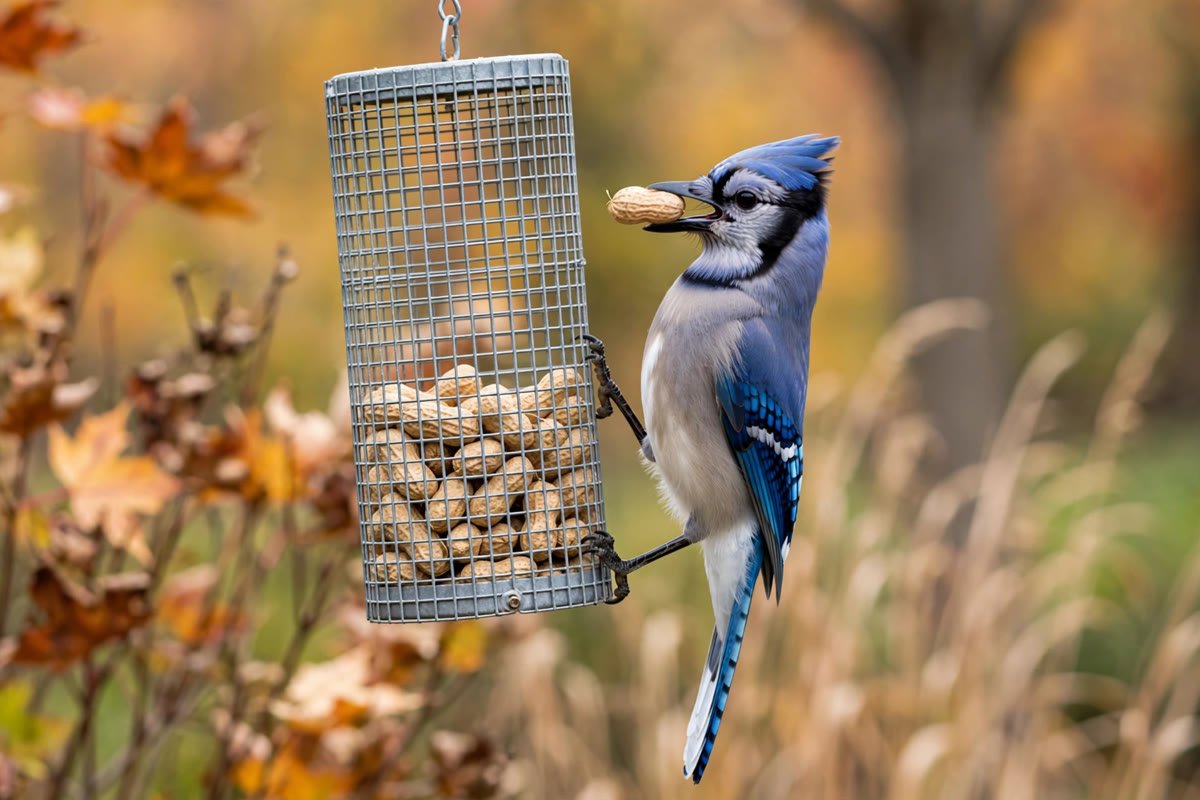
Put a handful of peanuts in a feeder and stand back. Within minutes, a blue jay will likely swoop in, grab one, and hammer it open on a nearby branch. Woodpeckers, chickadees, and nuthatches will follow. Few feeder foods create that kind of commotion.
Can birds eat peanuts? Yes, most wild birds can safely eat peanuts, and they are an excellent high-energy food, especially in fall and winter. But there are important conditions: the peanuts must be unsalted and unflavored, stored dry to prevent mold, and served in the right form for the birds visiting your yard. Salted cocktail peanuts and stale, moldy peanuts can genuinely harm birds.
In this guide, you will learn the nutritional benefits of peanuts, the difference between raw and roasted, the aflatoxin risk and how to avoid it, which birds eat peanuts and which need caution, how to serve them safely, and how much is too much.

Can Birds Eat Peanuts? The Short Answer
Yes. Peanuts are safe and nutritious for most wild birds when they are plain, unsalted, and fresh. They pack a powerful combination of protein, healthy fats, and micronutrients into a small package, which makes them especially valuable during cold weather, migration, and breeding season when birds burn enormous amounts of energy.
The rules are simple but non-negotiable. Offer only unsalted, unflavored peanuts, raw or dry-roasted. Keep them dry and discard any that look or smell moldy. Crush or chop them for smaller birds, and offer in-shell peanuts mainly to larger species like jays and woodpeckers that can handle them. Treat peanuts as a supplement to a varied diet, not the entire menu.
Pet birds are a separate question with a more careful answer, which we cover below. For backyard wild birds, peanuts are one of the best high-energy foods you can offer, provided you follow the safety basics in this guide.
Peanut Nutrition: Why Birds Love Them
Peanuts are legumes, not true tree nuts, but nutritionally they behave like the energy-dense seeds birds prize. A single ounce, about 28 grams, delivers roughly 164 calories, 14 grams of fat, and 7 grams of protein, along with fiber and a useful spread of vitamins and minerals.
The standout nutrients for birds include:
- Healthy fats: concentrated energy for cold nights, migration, and egg production.
- Protein: supports feather growth, muscle maintenance, and chick development.
- Vitamin E: an antioxidant that supports immune function.
- B vitamins, especially niacin and folate: involved in energy metabolism.
- Magnesium, phosphorus, and potassium: important for muscle and bone health.
This profile explains the feeder frenzy. In late fall, a jay caching peanuts is stockpiling exactly the kind of dense fuel its body needs. In winter, the fat content helps birds maintain body heat through long, cold nights. Few single foods deliver this much usable energy per bite.
Raw vs Roasted: Which Peanuts Are Safe for Birds?
Both raw and roasted peanuts can be safe, but they are not identical. Here is how they compare.
| Factor | Raw peanuts | Dry-roasted, unsalted peanuts |
|---|---|---|
| Safety | Safe if fresh and properly stored | Safe; roasting reduces mold and aflatoxin risk |
| Aflatoxin risk | Higher if stored damp or too long | Lower, heat inhibits the mold that produces it |
| Digestibility | Good | Good, possibly slightly easier |
| Availability | Common in bird-food aisles | Common in grocery stores, check the label |
| What to avoid | Anything shriveled, discolored, or musty | Salted, honey-roasted, flavored, or oil-roasted with additives |
The practical takeaway: if you buy raw peanuts, buy human-grade stock from a reputable source and store it impeccably. If you buy roasted, read the label like a detective. “Roasted peanuts” often means salted, honey-roasted, or seasoned. You want exactly two words on the ingredient list: peanuts, and possibly salt-free confirmation. When in doubt, peanuts sold specifically for birds or wildlife are the safest bet.
Never feed salted, smoked, honey-roasted, Cajun, or otherwise flavored peanuts. Excess salt can harm birds, and flavorings add unknown risks. Chocolate-covered or candy-coated peanuts are obviously out.
The Aflatoxin Risk: Mold Is the Real Enemy
The single biggest danger in feeding peanuts is not the peanut itself but the mold that can grow on it. Peanuts stored in warm, damp conditions can develop Aspergillus mold, which produces compounds called aflatoxins. Aflatoxins are toxic to birds and can cause serious liver damage.
This sounds alarming, but it is entirely manageable with basic food hygiene:
- Buy fresh, human-grade peanuts: from stores with good turnover, not dusty bulk bins of unknown age.
- Store them dry and cool: in a sealed container away from moisture and heat. A pantry or garage shelf works; a damp shed does not.
- Inspect before serving: discard peanuts that look shriveled, discolored, or dusty, or that smell musty or off.
- Do not put out more than birds eat in a day or two: peanuts left in wet feeders grow mold quickly.
- Clean feeders regularly: old peanut fragments trapped in a mesh feeder are a mold risk.
Roasted peanuts carry a lower inherent aflatoxin risk because the heat of roasting inhibits the mold, which is one more reason many experienced birders prefer them. Either way, freshness and dry storage are what keep peanuts safe.

Which Birds Eat Peanuts?
Peanuts attract some of the most entertaining feeder birds. The main customers include:
- Blue jays: the undisputed peanut champions. They carry off whole in-shell peanuts, sometimes several at a time, to cache for later. Our guide to attracting blue jays to your yard has more on their habits.
- Woodpeckers: downy, hairy, and red-bellied woodpeckers hammer shelled peanuts at feeders all winter.
- Chickadees and titmice: prefer shelled or crushed pieces they can carry to a perch.
- Nuthatches: wedge peanut pieces into bark crevices and hammer them, a classic nuthatch move.
- Crows and ravens: large, smart, and very fond of peanuts in the shell.
- Cardinals and grosbeaks: strong bills handle shelled peanuts easily.
Smaller finches and sparrows generally cannot manage whole peanuts, but they will pick at crushed pieces. If your yard is full of small songbirds, serve peanuts chopped or crushed rather than whole.
One caution: peanuts also attract squirrels with great enthusiasm. If you are already fighting that battle, see our guide to keeping squirrels out of bird feeders before adding peanuts to the menu.
Peanuts and Pet Birds: A More Careful Answer
Wild birds and pet birds are different cases. For pet parrots, cockatiels, budgies, and other companion birds, peanuts should be treated with more caution than they get at the backyard feeder.
The concerns are the same ones, amplified. Aflatoxin risk matters more for a bird eating peanuts daily as a caged pet than for a wild jay eating them as part of a varied wild diet. Peanuts are also very high in fat, and captive birds with limited exercise can develop weight and liver problems on fatty diets. Some avian veterinarians also note that peanuts can harbor fungal contaminants that particularly affect sensitive species.
If you offer peanuts to a pet bird, use only fresh, human-grade, unsalted peanuts in strict moderation, as an occasional treat rather than a dietary staple. For species like budgies, cockatiels, and lovebirds, many vets recommend skipping peanuts in favor of formulated pellets, vegetables, and safer treats. When in doubt, ask an avian veterinarian about your specific bird, and review our guide to toxic foods for birds for the full do-not-feed list.
How to Serve Peanuts Safely
How you offer peanuts matters as much as which peanuts you buy. Match the form to your birds.
- Choose the right form: in-shell peanuts for jays, crows, and woodpeckers; shelled peanuts for mid-size birds; crushed or chopped pieces for chickadees, nuthatches, and finches.
- Use a proper feeder: a wire mesh peanut feeder holds in-shell peanuts securely and lets birds cling while they work. A platform or tray feeder works for shelled peanuts.
- Start with small amounts: a handful a day lets you gauge demand without waste or spoilage.
- Keep them dry: use feeders with drainage or covers, and bring peanuts in during prolonged rain.
- Offer peanut butter sparingly: plain peanut butter with no added salt, sugar, or xylitol can be smeared thinly on bark or a pine cone. Use small amounts; sticky globs can be difficult for small birds to manage.
- Clean up regularly: remove old fragments and shells, and scrub the feeder periodically to prevent mold buildup.
For more ideas on building a complete feeding station, see our guide to the best bird seeds for different birds, and our companion piece on whether birds can eat bread for another common feeding question.
How Much Is Too Much?
Peanuts are calorie-dense, and birds, like people, do best on variety. A feeder full of nothing but peanuts is not a balanced diet. Offer peanuts as part of a rotation that includes seed, suet, and fruit, so birds get the full range of nutrients they need.
Watch your visitors for guidance. If peanuts vanish within minutes every day, you can increase the ration modestly, but there is no need to keep a feeder topped up around the clock. In winter, when energy demands peak, larger servings make sense. In summer, when natural food is abundant, scale back and let birds forage naturally.
Also remember that you are feeding the neighborhood, not just birds. Large daily peanut offerings will attract squirrels, raccoons, and rats. Modest, consistent servings keep the focus on birds and reduce unwanted guests.

Frequently Asked Questions
Can birds eat salted peanuts?
No, do not feed salted peanuts to birds. Excess salt can cause dehydration and kidney problems in birds, which have small bodies and cannot process large salt loads. Always choose unsalted peanuts, and check roasted peanut labels carefully, since most grocery-store roasted peanuts are salted.
Can birds eat peanuts in the shell?
Larger birds like blue jays, crows, and woodpeckers handle in-shell peanuts easily and seem to enjoy the work of opening them. Smaller birds like chickadees and finches do better with shelled or crushed peanuts. The shell itself is not toxic, but sharp fragments and choking risk make shelled the safer choice for small species.
Do peanuts cause aflatoxin poisoning in birds?
Peanuts themselves do not contain aflatoxin; the toxin comes from Aspergillus mold that grows on peanuts stored in warm, damp conditions. Fresh, properly stored peanuts are safe. Discard any peanuts that look shriveled, discolored, or musty-smelling, keep storage dry and cool, and do not leave peanuts sitting in wet feeders.
Can baby birds eat peanuts?
Parent birds decide what their chicks eat, and they rarely choose peanuts for very young nestlings, which need soft insects. Fledglings learning to feed themselves may pick at crushed peanut pieces. Never feed peanuts or anything else to a rescued baby bird yourself; contact a licensed wildlife rehabilitator instead.
Are peanuts better than sunflower seeds for birds?
Neither is strictly better; they serve different roles. Peanuts are higher in fat and protein per bite, making them excellent cold-weather fuel. Black oil sunflower seeds are eaten by a wider range of species and are a better everyday staple. A good feeding station offers both.
Will feeding peanuts make birds dependent on me?
No. Research on supplemental feeding shows that backyard birds use feeders as one food source among many and continue foraging naturally. Peanuts will not make birds dependent, but consistent feeding does build habits, so if you start, try to keep it reasonably regular through the season.
Conclusion
Can birds eat peanuts? For wild birds, the answer is a confident yes, with conditions that are easy to meet. Choose unsalted, unflavored peanuts, raw or dry-roasted. Store them dry, inspect them before serving, and match the form to your birds: in-shell for jays and woodpeckers, shelled or crushed for smaller species. Keep servings modest and the menu varied.
The mold risk is real but entirely preventable, and it is the one part of peanut feeding that deserves your attention. Fresh peanuts in a clean, dry feeder are a safe, high-energy food that birds clearly love. Stale peanuts in a soggy feeder are a hazard. The difference is all in the handling.
Done right, a peanut feeder becomes one of the liveliest spots in your yard. The jay hammering a shell on your fence, the nuthatch wedging pieces into bark, the chickadee darting in for a crushed bit: that is backyard birding at its most entertaining, powered by one of the simplest foods you can offer.





