 Skip to content

Introduction
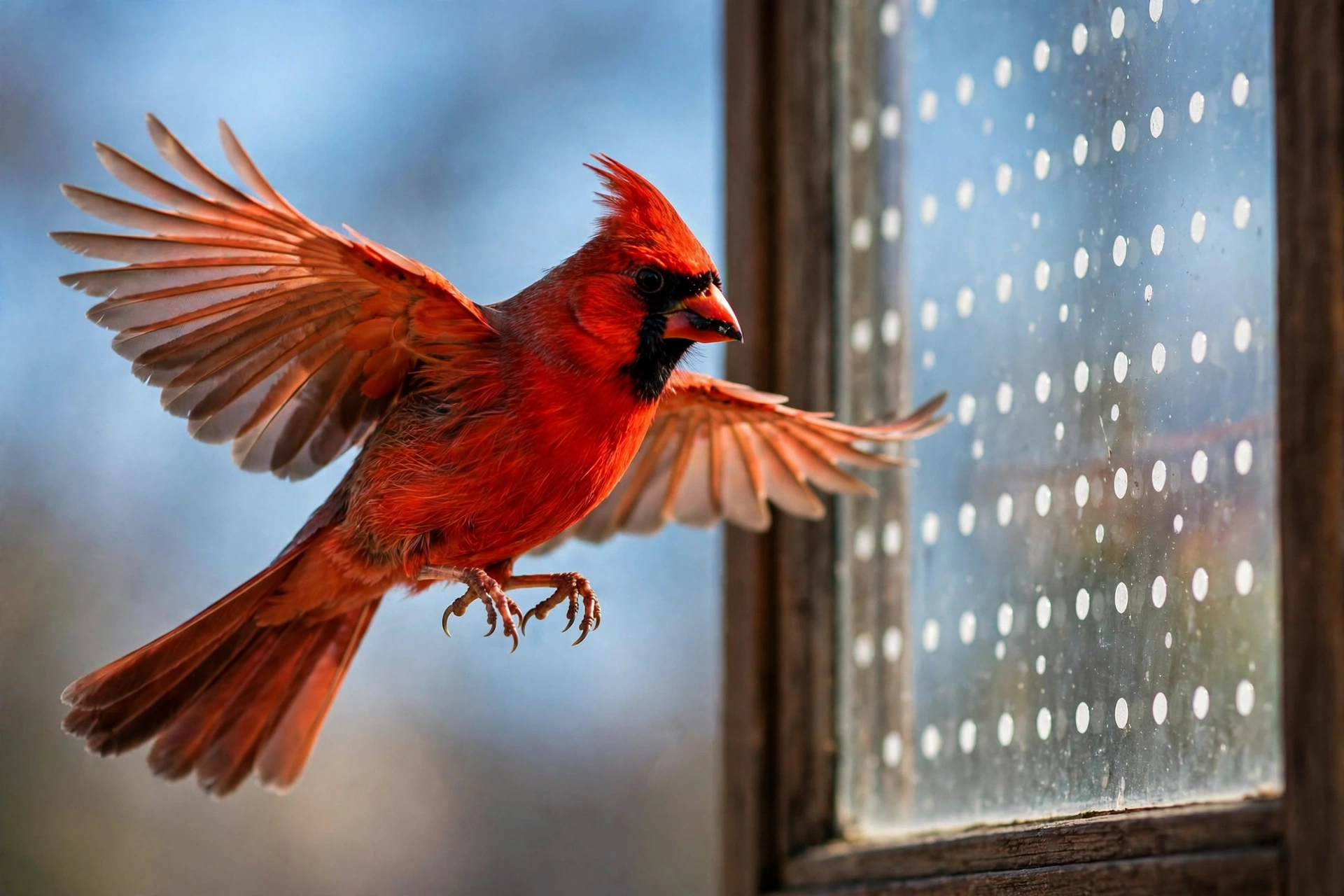
A dull thud against the glass is a sound no bird lover wants to hear. If you have ever watched a stunned bird flutter on your patio after flying full speed into a window, you already know this is not a rare accident. It happens at houses, apartments, schools, and offices every single day.
The good news is that preventing window strikes is one of the easiest conservation actions you can take at home. Researchers have spent decades testing exactly what works, from decal spacing rules to feeder placement, and the solutions are cheap, simple, and proven. This guide walks you through all of them, step by step, so you can make every window in your home bird safe.
This complete guide shows you how to stop birds hitting windows for good.
Why Birds Fly Into Windows
Birds do not fly into windows because they are careless. They fly into them because glass is effectively invisible to them. To a bird, a clean window shows one of two things: a clear path to the sky or garden on the other side, or a perfect mirror reflection of trees, sky, and habitat.
Daniel Klem Jr. of Muhlenberg College has studied bird and glass collisions since the 1970s. In his account, a window pane simply does not register to a bird as a solid object. Their visual systems evolved to detect branches, leaves, and sky, not transparent barriers.
There are three main reasons a bird strikes your glass:
- Reflections. The outside surface of a window acts like a mirror at certain times of day, reflecting sky, trees, and shrubs. The bird sees inviting habitat and flies straight toward it.
- Transparent corridors. When two windows face each other, such as a patio door and a kitchen window, birds see a clear flight path through the house and try to fly through.
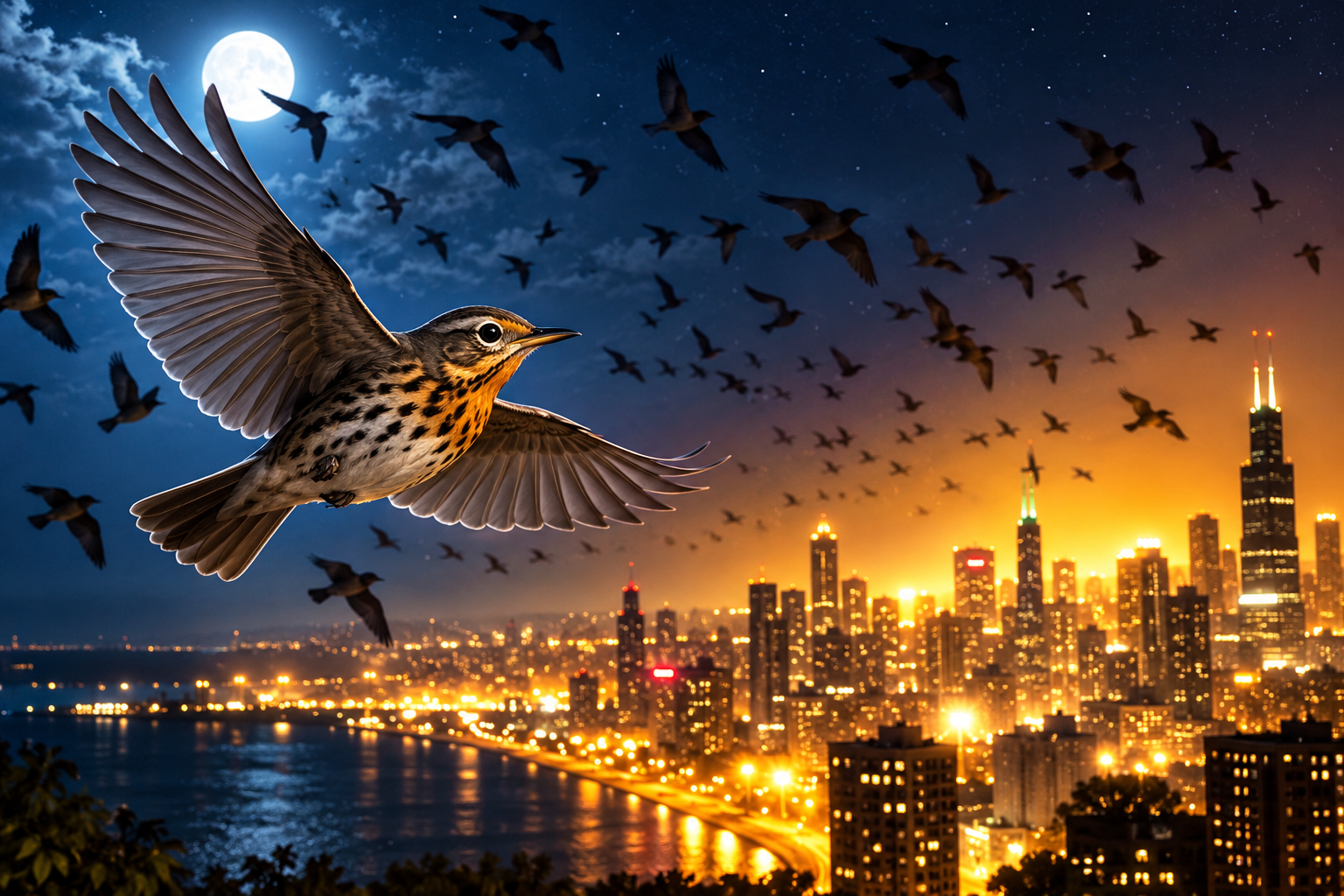
- Night lights. During migration, artificial light shining through windows or from nearby porches draws night migrants toward glass.
Here is the tragic part. Birds cannot learn to avoid glass, because most collisions are fatal or nearly so. Researcher Daniel Klem describes a window pane as an indiscriminate killer that takes the fit as well as the unfit of a species’ population. Prevention is the only answer, because the birds will never figure it out on their own.
This connects to how birds perceive color and light. If you are curious about the biology behind it, our guide on how bird vision works explains why their eyes miss what seems obvious to us.
How Many Birds Die From Window Strikes
The numbers are staggering, and they are why your windows matter more than you might think.
A 2014 study by Loss and colleagues in the journal The Condor estimated that between 365 and 988 million birds, with a median of 599 million, are killed annually by building collisions in the United States. A 2024 study by Ar Kornreich and colleagues in PLOS ONE found that 60 percent of bird and building collision victims brought to rehabilitators died, mostly from brain injuries. When you account for birds that fly away after a strike and die later from swelling or trauma, the true annual toll reaches approximately 1 billion birds in the US alone. The US Geological Survey now reports that up to 2 billion birds are killed each year in the United States by collisions with glass, noting that single mass-collision events, such as 1,000 birds striking one Chicago building in a single night, add to a toll that is mostly invisible.
Here is the surprise most people get wrong. It is not the skyscrapers doing most of the damage. The Loss study found that roughly 56 percent of building deaths happen at low-rise buildings and 44 percent at homes, with under 1 percent at high-rise towers. The ordinary house, and its ordinary windows, matter more than any glass tower.
Some species are hit harder than others. According to the American Bird Conservancy, the birds most threatened by building collisions include the golden-winged warbler, Canada warbler, white-throated sparrow, dark-eyed junco, ovenbird, song sparrow, painted bunting, Kentucky warbler, worm-eating warbler, and wood thrush. Many of these are species already in decline.
The scale is what makes your own windows worth fixing. If nearly half of all collision deaths happen at homes, then every treated window is a real, measurable act of conservation.
The 2×4 Rule: The Pattern Spacing That Works
Almost every effective solution comes down to one principle: break up the reflection or transparency with a pattern birds can see. But the pattern only works if it is dense enough.
Researchers, led by Daniel Klem, established what is now called the 2×4 rule. It is simple:
- Horizontal lines should be spaced no more than 2 inches apart.
- Vertical lines should be spaced no more than 4 inches apart.
Birds will try to fly through any gap larger than that. The American Bird Conservancy’s home collision guidance recommends marks no more than 2 inches apart in either direction for maximum safety. Around feeders and in areas where hummingbirds fly, use an even tighter 2×2 inch grid, since hummingbirds are small enough to thread through a 2×4 gap.
Three more rules make or break the result:
- Pattern width: stripes and marks should be at least 1/4 inch wide so birds can actually see them.
- Outside surface: the pattern must go on the outside of the glass. Under many lighting conditions, the outer surface acts as a mirror and hides anything applied on the inside.
- Full coverage: the pattern must cover the entire pane. A partial treatment leaves open flight lanes.
Why One Decal Does Not Work
The most common mistake is the lone hawk silhouette. One sticker in the middle of a big clean window does nothing, because the bird simply flies around it and hits the clear glass on either side. The American Bird Conservancy’s glass FAQ explains this plainly: a single decal leaves wide open flight paths around it.
A window covered in many small decals, dots, or strips, spaced according to the 2×4 rule, is a completely different thing. That is what the research supports, and that is what this guide will help you build.
9 Proven Ways to Stop Birds Hitting Windows
These are the methods researchers and conservation groups recommend, ordered roughly from cheapest to most involved. Any one of them beats doing nothing.

1. Dot or stripe decals
What it is: Small adhesive dots, squares, or strips applied in rows across the outside of the glass.
Why it works: A dense grid of dots breaks the reflection into cells too small for a bird to attempt. This is the most widely tested home solution.
How to do it: Follow the 2×4 rule, or a 2×2 grid near feeders and hummingbird routes. Several companies sell pre-made dot strips and tape designed for this purpose, including translucent options that are less visible to humans but obvious to birds.
2. Tempera paint patterns
What it is: Nontoxic tempera paint applied freehand or with stencils on the outside of the glass.
Why it works: It is cheap, durable in rain, and completely customizable. A US Fish and Wildlife Service information sheet lists it at roughly 13 cents per square foot, making it one of the cheapest proven options.
How to do it: Paint dots, stripes, or artwork with a brush or sponge, keeping the 2×4 spacing. It removes easily later with vinegar and water or a damp cloth. Turn it into a family project and let the kids design seasonal patterns.
3. Tape strips
What it is: Strips of masking tape, electrical tape, or specialty bird tape applied to the outside of the window.
Why it works: Simple, cheap, and effective when spaced correctly. The US Fish and Wildlife Service estimates tape and decal products at roughly 2.50 to 8 dollars per square foot.
How to do it: Run horizontal strips no more than 2 inches apart, or vertical strips no more than 4 inches apart. The American Bird Conservancy makes a translucent bird tape that birds can see but that is far less noticeable to people.
4. Zen curtains (Acopian BirdSavers)
What it is: Lengths of paracord hung vertically in front of the window, spaced a few inches apart, like a curtain of strings.
Why it works: The hanging cords break up the reflection and move slightly in the wind, which makes them even more visible to birds. They cost about 11 cents per square foot if you build them yourself.
How to do it: Hang 1/8 inch paracord pieces from a board or PVC pipe above the window, spaced less than 4 inches apart. You can buy them pre-made or make them from hardware store materials in an afternoon.
5. Insect screens or netting
What it is: A screen or fine net mounted a few inches in front of the glass.
Why it works: It does two jobs at once. It kills the reflection so birds see a barrier, and it cushions the blow for any bird that still flies into it.
How to do it: Mount the screen or netting 2 to 3 inches in front of the window, pulled tight so a bird bounces off instead of hitting the glass behind it. Use mesh with openings of 1/2 inch or smaller so birds cannot get tangled. The US Fish and Wildlife Service estimates screens and netting at roughly 1.83 dollars per square foot.
6. One-way window film
What it is: Adhesive film applied to the glass that adds a visible pattern or reduces reflectivity.
Why it works: It changes how the glass looks from the outside, removing the mirror effect that fools birds.
How to do it: Choose a film with a built-in pattern, or one rated for bird collision deterrence. Follow the manufacturer’s outdoor application guidance, and treat the whole pane.
7. External shades, awnings, and shutters
What it is: Anything mounted outside the window that shades or covers the glass.
Why it works: A shaded window reflects less sky, and a covered window is simply not visible as a flight path.
How to do it: This is the priciest option on this list, but if you already have exterior shutters or sunshades, closing them during peak migration mornings and evenings costs nothing.
8. Move the bird feeder
What it is: Changing where your feeder hangs relative to the glass.
Why it works: Feeder placement controls how much speed a bird carries if it startles toward a window. This is covered in detail in the section below, because it deserves your full attention.
How to do it: Place feeders either within 3 feet of the window or more than 30 feet away. Nothing in between.
9. Treat the problem windows first
What it is: Prioritizing instead of doing everything at once.
Why it works: Most homes have one or two killer windows: large panes facing the garden, corner windows, or glass near feeders. Treating those first gives you most of the benefit for a fraction of the effort.
How to do it: Walk around your home and look at each window from the outside. The ones that reflect the most sky or garden, and the ones closest to feeders, go first.
Where to Place Your Bird Feeder: The 3 Foot and 30 Foot Rule
This is the single most misunderstood part of window safety, so let us be precise.

Cornell Lab and Project FeederWatch recommend two safe feeder placements: within 3 feet of the glass, or more than 30 feet away. Here is why each works:
- Within 3 feet: A bird leaving the feeder cannot build up lethal speed before reaching the glass. If it does bump the window, it is a soft bump, not a fatal strike.
- More than 30 feet away: The bird is far enough out that the window no longer reads as part of its immediate flight path, and it has room to see and avoid the house.
The danger zone is between 3 and 30 feet. A Project FeederWatch winter summary found that 75 percent of observed collisions happened at windows 3 to 30 feet from feeders. Note what that number means: it is the share of reported collisions, not proof that feeders cause strikes. It tells you where the risk concentrates, so you can move feeders out of that band.
Two more tips for feeder safety:
- Soften the flight path. If your feeder must sit far from the house, plant shrubs between it and the windows. Vegetation gives birds cover and breaks up long straight flights toward the glass.
- Keep feeding. Some people worry that feeders cause the problem and consider taking them down. The research does not say that. What science says about bird feeders is far more encouraging: feeders support birds through winter and migration. The answer is safe placement, not no placement.
Stop Nighttime Collisions: Turn Off the Lights
Not all strikes happen in daylight. During spring and fall migration, millions of birds travel at night, and artificial light pulls them toward buildings.
The fixes are simple:
- Turn off unneeded lights during migration seasons, especially from late evening to early morning.
- Close curtains and blinds at night so lit rooms do not glow through the glass.
- Aim security lights down and use motion sensors instead of leaving floodlights on all night.
Programs like Audubon’s Lights Out campaigns have shown that darkening buildings during migration saves enormous numbers of birds. Your home can be part of that, starting tonight.
If you want to time your lights-out nights to the heaviest migration traffic, our guide to reading the BirdCast migration forecast shows you how to see when big flights are coming.
What to Do When a Bird Hits Your Window
Even with every precaution, a strike can still happen. What you do in the next minutes matters enormously, because many birds that look stunned are actually badly injured.

Follow these steps in order:
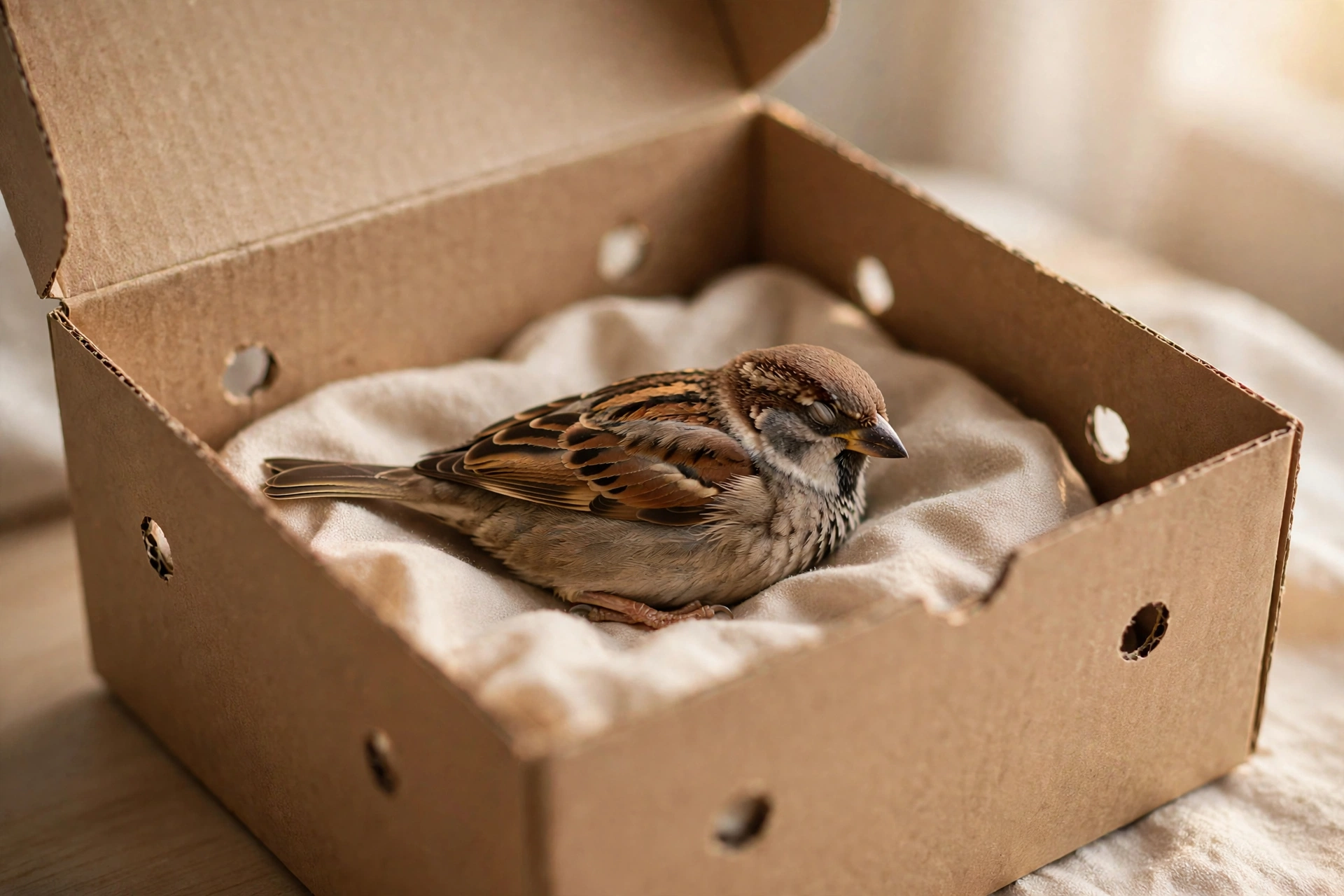
- Prepare a box. Find a small cardboard box or paper bag and line it with a paper towel or soft cloth. Poke a few air holes in the lid.
- Move the bird gently. Pick it up carefully and place it in the box. Cover the box to keep it dark.
- Keep it dark, quiet, and warm. Put the box somewhere safe from pets, children, and noise. Darkness calms the bird and reduces stress.
- Give no food and no water. An injured bird cannot feed safely, and water can do more harm than good.
- Wait and watch. Many birds recover within 30 minutes to an hour. If the bird is alert, upright, and flying strongly, release it near dense cover, away from windows.
- Call a professional if it does not recover. If the bird is still dazed, bleeding, or unable to fly after an hour, contact a licensed wildlife rehabilitator. Do not try to treat it yourself.
One critical fact from the research: birds that fly away after a strike are not necessarily fine. A 2024 study found that many collision victims suffer brain swelling, the same kind of injury people get in car accidents, and die hours later. So take every strike seriously, even the ones where the bird seems to shake it off.
For a fuller walkthrough with more scenarios, see our step-by-step rescue guide for injured birds.
Window Striking vs Window Pecking: Know the Difference
Not every bird at your window is having a collision. In spring, you may see a cardinal or robin repeatedly pecking or fluttering at the glass, sometimes for days. That is a different problem with a different fix.
That behavior is territorial reflection aggression. The bird sees its own reflection, mistakes it for a rival, and attacks it. It happens most in breeding season, and the birds involved are usually males defending territory. Covering the outside of the glass or hanging something in front of it usually ends it.
A true window strike is a high-speed impact, often with a loud thud, and the bird is usually injured or killed. The prevention methods in this guide are aimed at strikes.
If you are dealing with the pecking problem instead, read our full explanation of why birds peck at windows and how to stop it.
Get the Free Printable Checklist
Everything in this guide fits on one page. Download the free Window Strike Prevention Checklist, print it, and work through it once per window. It covers the 2×4 rule, feeder placement, screens, lights, and exactly what to do when a bird hits the glass.
Pin it to your fridge or keep it in your garden shed. One page, one walk around the house, and your windows become dramatically safer for birds.
Frequently Asked Questions
Do window decals really work?
Yes, when they are applied correctly. Research supports decals, dots, and strips spaced according to the 2×4 rule: horizontal marks no more than 2 inches apart, vertical marks no more than 4 inches apart, applied to the outside of the glass and covering the full pane. A single decal in the middle of a window does not work. A full grid of small marks does.
Why do birds keep hitting the same window?
Because the same reflection or transparent corridor is there every day. The window is reflecting sky or garden, or the bird sees a clear path through two facing windows. Until the glass itself is treated, the bird has no way to know the barrier is there.
What is the 2×4 rule for bird windows?
The 2×4 rule, developed from the research of Daniel Klem Jr., says that patterns on glass should have horizontal lines no more than 2 inches apart and vertical lines no more than 4 inches apart. Birds will try to fly through any gap larger than that. For hummingbirds and near feeders, the American Bird Conservancy recommends a tighter 2×2 inch grid.
Should I put my bird feeder closer to or farther from the window?
Either within 3 feet of the window or more than 30 feet away. Within 3 feet, a startled bird cannot build lethal speed. Beyond 30 feet, the window is no longer part of its flight path. The danger zone is 3 to 30 feet, where most feeder-related collisions are reported.
What should I do if a bird hits my window and flies away?
Do not assume it is fine. Research shows that many birds that fly off after a strike die later from brain swelling and internal injuries. If you can safely contain the bird, do so and watch it. If it already left, treat your windows using this guide so it does not happen again.
Do birds learn to avoid windows?
No. Birds cannot learn to avoid glass because most collisions are fatal or nearly fatal. The window is, in researcher Daniel Klem’s words, an indiscriminate killer. Prevention on your side is the only reliable fix.
Are some windows worse than others?
Yes. Large panes that reflect sky or garden, corner windows, glass near feeders, and windows facing each other across a room are the most dangerous. Treat those first for the biggest impact.
Conclusion
Up to 2 billion birds die each year in the United States from flying into glass, and nearly half of those deaths happen at ordinary homes. That is a devastating number, but it also means the solution is in ordinary hands.
You now know the 2×4 rule, the feeder placement rule, the methods that researchers have actually tested, and exactly what to do when a strike happens. Most of these fixes cost a few dollars and an afternoon. Start with your worst window today, print the free checklist, and work through the rest this week.
Every window you treat is one less invisible wall in a bird’s world. Share this guide and the checklist with a neighbor, a school, or your local nature center, because the birds they save are the same ones visiting your feeder.
Choose Bird-Safe Glass for New Windows
If you are replacing windows or building new, this is the moment to solve the problem permanently. Bird-safe glass has patterns built right into the pane that birds can see.
Fritted glass has tiny ceramic dots or lines baked into the exterior surface during manufacturing. The pattern is subtle to humans but obvious to birds. UV-patterned glass uses special coatings that create patterns birds can see but humans barely notice.
Bird-safe glass costs more than standard glass, but the price gap has narrowed as demand has grown. For a permanent, zero-maintenance solution, it is the closest thing to a fit-and-forget fix.
Deterrents That Do Not Work: Owl Decoys, Noise Devices, and Dirty Glass
Owl statues, hawk kites, and ultrasonic noise devices are popular because they sound logical. In practice, they fail. Birds may startle the first time, but they habituate within days and soon ignore the decoy completely.
More importantly, these devices do nothing to make glass visible. A bird that has learned to ignore a plastic owl will still fly full speed into a reflective pane. Visual markers on the glass itself are the only reliable fix.
Similarly, do not rely on dirty glass. A dusty window is slightly less reflective, but not enough to prevent strikes. Treat the glass properly instead of skipping the cleaning.




[…] Light is only half the battle. Glass kills by day as well as by night, so treat your riskiest windows while you are at it. Apply decals, dots, or tape to the outside of the glass with markers spaced no more than two inches apart in a grid. A single hawk silhouette in the middle of a big window does not work; birds try to fly through the unmarked gaps. For the full treatment plan, see our window collision prevention guide. […]