 Skip to content

Park under the wrong tree at the wrong moment and you will learn something about birds the messy way. A quick squat on a branch, a splatter of white and dark on the pavement below, and the bird is already gone. It looks nothing like what a mammal leaves behind, which raises an obvious question: do birds pee?
The short answer is yes, but not the way you do. Birds produce nitrogen waste just like mammals, yet they package it completely differently. Instead of liquid urine held in a bladder, most birds excrete a white paste of uric acid that leaves the body together with solid waste through a single opening called the cloaca.
This unusual system saves water, cuts weight for flight, and explains exactly why bird droppings look the way they do. In this guide, you will learn how bird waste actually works, why birds have no bladder, how seabirds drink seawater without harm, and what your pet bird’s droppings can reveal about its health.
The Short Answer: Yes, Birds Pee (Just Not Like Mammals)
Every animal that digests protein has to get rid of nitrogen waste. Mammals solve the problem by converting it into urea, dissolving it in water, storing the resulting urine in a bladder, and releasing it through a separate opening. Birds took a different evolutionary path.
Birds convert nitrogen waste into uric acid instead of urea. Uric acid is far less toxic than urea and needs almost no water to leave the body safely. It emerges as a white, chalky paste rather than a liquid stream. As BBC Science Focus puts it, birds get rid of excess nitrogen as a paste-like substance, which is exactly what you are looking at in the white portion of a dropping.
So when people ask “do birds pee,” the most accurate answer is this: the white part of bird poop is the pee. Birds simply combine both jobs into one motion.
Behind the scenes, the process starts in the kidneys. Two kidneys filter nitrogen waste out of the blood around the clock, just as yours do. The difference is entirely downstream: where your kidneys send urea-rich urine to a bladder for storage, a bird’s kidneys send uric-acid-rich urine straight to the cloaca for immediate exit.
Meet the Cloaca: One Opening for Everything
Birds have a single rear opening called the cloaca, from a Latin word meaning sewer. The digestive tract, the urinary tract, and the reproductive tract all empty into it. Waste, sperm transfer, and egg laying all pass through this one doorway.
This sounds cramped, but the cloaca is well organized. It has three chambers, each with a job to do.
- Coprodeum: receives solid waste from the intestines.
- Urodeum: receives urine from the two ureters coming down from the kidneys.
- Proctodeum: the final chamber, where everything gathers before leaving through the vent.
As waste sits briefly in these chambers, the cloacal walls reabsorb water back into the body. That last squeeze of water recovery is one reason bird droppings can be so dry, and it is a big part of how birds conserve water.
Why Birds Have No Bladder
Birds do not have a urinary bladder, and they have no urethra either. Two kidneys filter the blood, each sends urine down its own ureter, and the ureters empty straight into the cloaca. Nothing is stored along the way.
The missing bladder is widely understood as an adaptation to flight. A bladder full of liquid urine is dead weight, and weight is the enemy of every flying animal. By skipping storage entirely and excreting waste the moment it is ready, birds stay lighter and can fly farther on less energy. Ditching the bladder is one of several weight-saving designs for flight, alongside the traits covered in our guide to how birds fly.
There is a second payoff: water. Uric acid can be excreted as a semisolid, so birds lose very little water with each dropping. For small birds with fast metabolisms, that thrift matters every single day.
The savings are not trivial. A bladder holding even a small amount of liquid would add weight a bird must lift with every wingbeat, thousands of times a day. For a warbler that weighs less than half an ounce, every fraction of a gram counts. Skipping storage is one of the quiet reasons birds can fly as far as they do on such tiny bodies.
The Ostrich Exception
Almost every rule in biology has an exception, and here it is the ostrich. The ostrich is the one living bird that passes urine separately from its feces, storing solid waste in the terminal rectum while liquid urine leaves on its own. Ostriches are huge, flightless, and live in dry country, so they play by slightly different rules than a sparrow. For every other bird you are likely to meet, pee and poop arrive together.

Uric Acid vs Urea: The Chemistry of Bird Pee
The choice between uric acid and urea shapes the whole waste system. Here is how the two strategies compare.
| Feature | Birds: uric acid | Mammals: urea |
|---|---|---|
| Waste chemical | Uric acid | Urea |
| Toxicity | Very low | Moderate |
| Water needed to excrete it | Very little | A lot |
| Form it takes | White paste or semisolid | Liquid urine |
| Storage organ | None | Bladder |
| Weight cost to the animal | Minimal | Higher |
| Safe inside a shelled egg | Yes | No, it would need diluting |
That last row matters more than it might seem. A developing chick inside an egg cannot flush waste away, so it needs a waste product harmless enough to sit in the shell until hatching. Uric acid fits that bill. Reptiles use the same strategy, which is one more reminder of the deep evolutionary link explored in our article on are birds dinosaurs.
Uric acid is not free, though. Building it costs the bird more metabolic energy than making urea would. Evolution accepted that price because the payoff is enormous: waste that needs almost no water to excrete and adds almost no weight to carry. For a flying animal, water and weight are the two currencies that matter most, so birds spend energy to save both.
There is even a flexible middle ground. Hummingbirds process enormous volumes of sugary nectar, and when water is plentiful they can excrete a share of their nitrogen waste as ammonia, the simplest and cheapest option. When water is scarce, they shift back toward uric acid. Few animals tune their waste chemistry to conditions this precisely.
From Beak to Dropping: How Water Moves Through a Bird
Waste is only half the story. To understand bird pee, it helps to see how water enters and leaves the bird in the first place.
How Birds Drink: Scoop, Tilt, Swallow
Most birds drink by dipping the bill into water and then tilting the head back so gravity carries the water down the throat. Watch a robin at a birdbath and you will see the dip, lift, and swallow repeated in a steady rhythm.
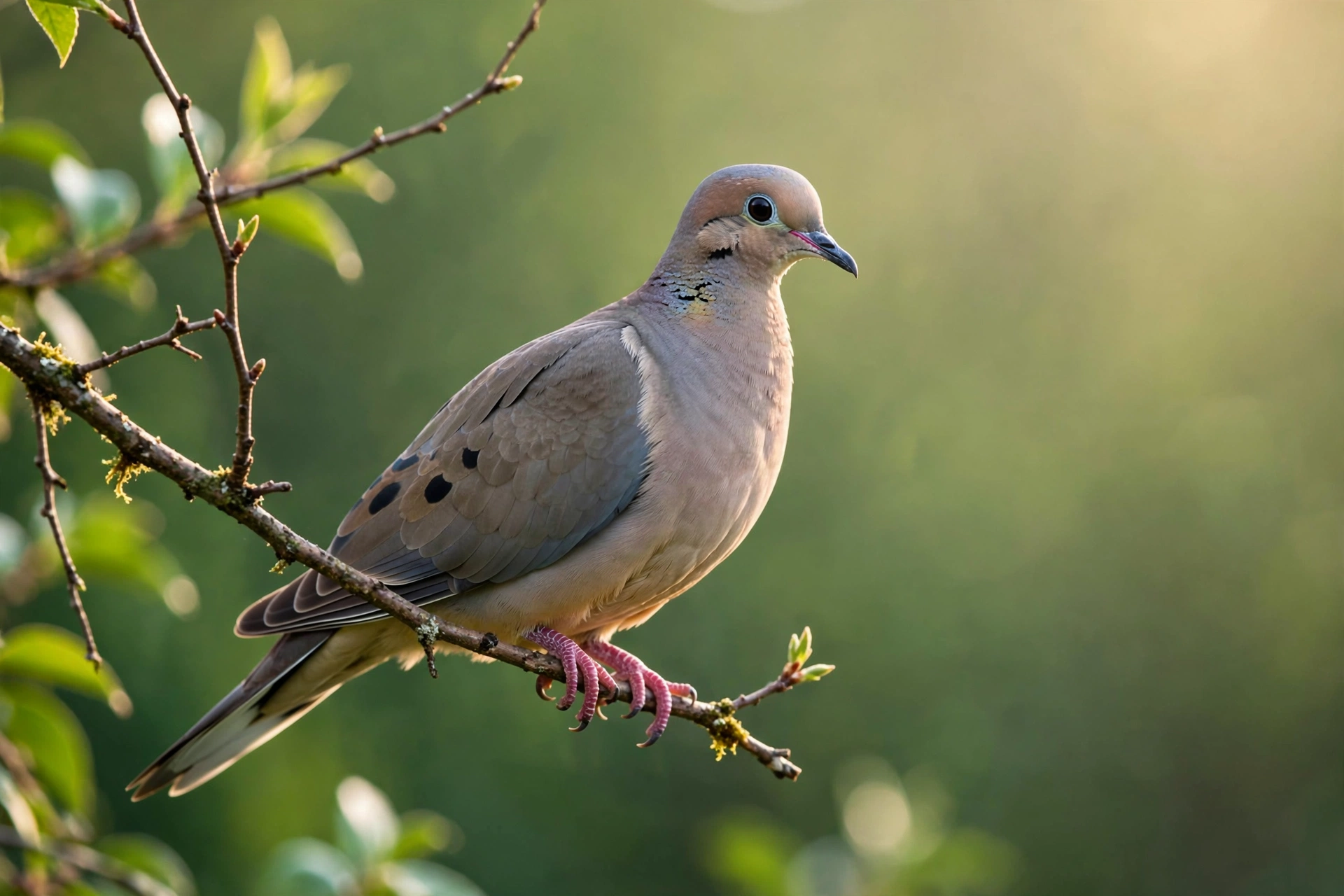
Doves and pigeons are the famous exception. They keep the beak in the water and suck it up continuously, never needing to tilt the head back. As Wildside Nature Tours documents with photo sequences, the mourning dove drinks like a person with a straw while the robin beside it works against gravity.
Desert Birds: Masters of Water Conservation
Birds that live in arid country take thrift to another level. Many get most of their water from their food, especially from insects, fruit, and green vegetation. Their kidneys are highly efficient at reclaiming water, and their droppings emerge extremely dry.
This is the same uric-acid advantage scaled up. When every drop counts, excreting waste as a paste instead of a liquid can be the difference between surviving a hot week and not. It is no coincidence that some of the toughest desert survivors are birds.
Seabirds: Drinking Seawater Without Harm
Seabirds face the opposite problem: water everywhere, but far too salty to use. A bird’s kidneys cannot concentrate salt much beyond blood levels, so flushing seawater salt through urine alone would dehydrate the bird.
The workaround sits just above the eyes. Seabirds carry paired supraorbital salt glands, specialized organs that pull sodium chloride straight out of the bloodstream and secrete it as a concentrated brine. The brine drains through ducts into the nasal cavity and drips or is sneezed out through the nostrils. That “runny nose” you sometimes see on a gull or pelican is actually the bird excreting salt.
These glands are far more efficient than the kidney at removing salt, which is how petrels, penguins, and gulls thrive on an ocean diet. As BBC Science Focus explains, the extra-salty fluid simply drips down the side of the beak, letting seabirds drink seawater that would quickly sicken a mammal.

Do Birds Poop While They Fly?
Yes, routinely. Birds have no bladder to hold liquid waste and no real reason to hold solid waste either. When it is time to go, it goes, including mid-flight.
Speed helps. A bird’s digestive tract is short and built for fast throughput, because carrying a heavy load of digesting food costs energy in the air. A small songbird can pass a berry in as little as half an hour, while a human meal takes a day or more. With food moving that fast, there is little point in waiting for a convenient landing spot.
This is also why the underside of a favorite roosting branch looks the way it does. Birds tend to relieve themselves right before takeoff to lighten the load, and right after landing too. Your car parked under a starling roost is simply in the flight path of efficient plumbing.
There is a practical upside for birdwatchers in all this. Fresh droppings under a roost tell you who spent the night there, and the whitewash streaking a cliff face can reveal a nesting colony from a surprising distance. Waste is waste, but in the field it doubles as a signpost.
What Your Pet Bird’s Droppings Can Tell You
If you share your home with a parrot, budgie, or cockatiel, you already study droppings more than you ever expected. A healthy dropping has three visible parts: the white or cream urates (the pee), the darker coiled feces (the poop), and a small amount of clear liquid urine around them.
Because all three leave together, droppings are a daily health report. Watch for the baseline first: what your bird’s droppings normally look like on its usual diet. Then notice real changes. Droppings that stay runny, change color dramatically, or lose the white urate portion for more than a day are worth attention.
Diet shifts, stress, and a chill can all move the baseline temporarily, so one odd dropping is rarely an emergency. But sudden, lasting changes rank among the early signs your pet bird is sick, and birds hide illness well. When in doubt, call an avian vet rather than waiting to see.
It also helps to learn the rhythm of your own bird. Droppings change through the day: first-morning droppings are often larger after a night of rest, and a bird that just drank a lot of water will pass more liquid. Judging against your bird’s normal pattern beats judging against any photo on the internet.

Frequently Asked Questions
Do birds have bladders?
No, with one famous exception. Birds have no urinary bladder and no urethra. Urine flows from the kidneys through the ureters directly into the cloaca, where it leaves the body together with solid waste. The ostrich is the exception: it passes urine separately from its feces.
Why is bird poop white?
The white part is uric acid, which is the bird equivalent of pee. Because birds excrete nitrogen waste as a white paste instead of a yellow liquid, the urates coat or mix with the darker fecal matter in every dropping.
Do birds poop and pee at the same time?
Yes. Both leave through the cloaca in a single motion. The kidneys deliver uric acid to the cloaca while the intestines deliver feces, and the two exit together through the vent.
How do birds drink water?
Most birds scoop water into the bill and tilt the head back so gravity does the work. Doves and pigeons are the exception: they suck water up continuously like drinking through a straw, without lifting the head.
Do birds fart?
Probably not in any noticeable way. Food races through a bird’s short digestive tract, often in under an hour, leaving no time for the fermentation that creates gas in mammals. Birds also lack the dense gas-producing gut bacteria that mammals carry. Any gas produced likely slips out unnoticed with regular droppings.
Can birds get dehydrated?
Yes. Despite their water-saving design, birds still lose moisture through breathing and droppings, and heat raises the cost fast. In the yard, a clean birdbath with fresh water genuinely helps. For pet birds, fresh water should be available at all times, and reduced drinking paired with lethargy deserves a vet call.
Conclusion
So do birds pee? They do, just in a form you would never mistake for your own. The white paste in every dropping is uric acid doing the job that liquid urine does for mammals: carrying nitrogen waste out of the body with as little water as possible.
The whole system hangs together beautifully. No bladder means less weight to carry and nothing to store. The cloaca merges every exit into one efficient doorway while reclaiming water on the way out. Uric acid keeps the waste safe and nearly dry, which even lets chicks develop inside sealed eggs. And where the basic design is not enough, evolution added extras like salt glands for seabirds and flexible waste chemistry for hummingbirds.
Next time a dropping lands where you wish it had not, you will at least know exactly what you are looking at: one of the cleverest plumbing systems in the animal kingdom, working exactly as designed.




