Skip to content

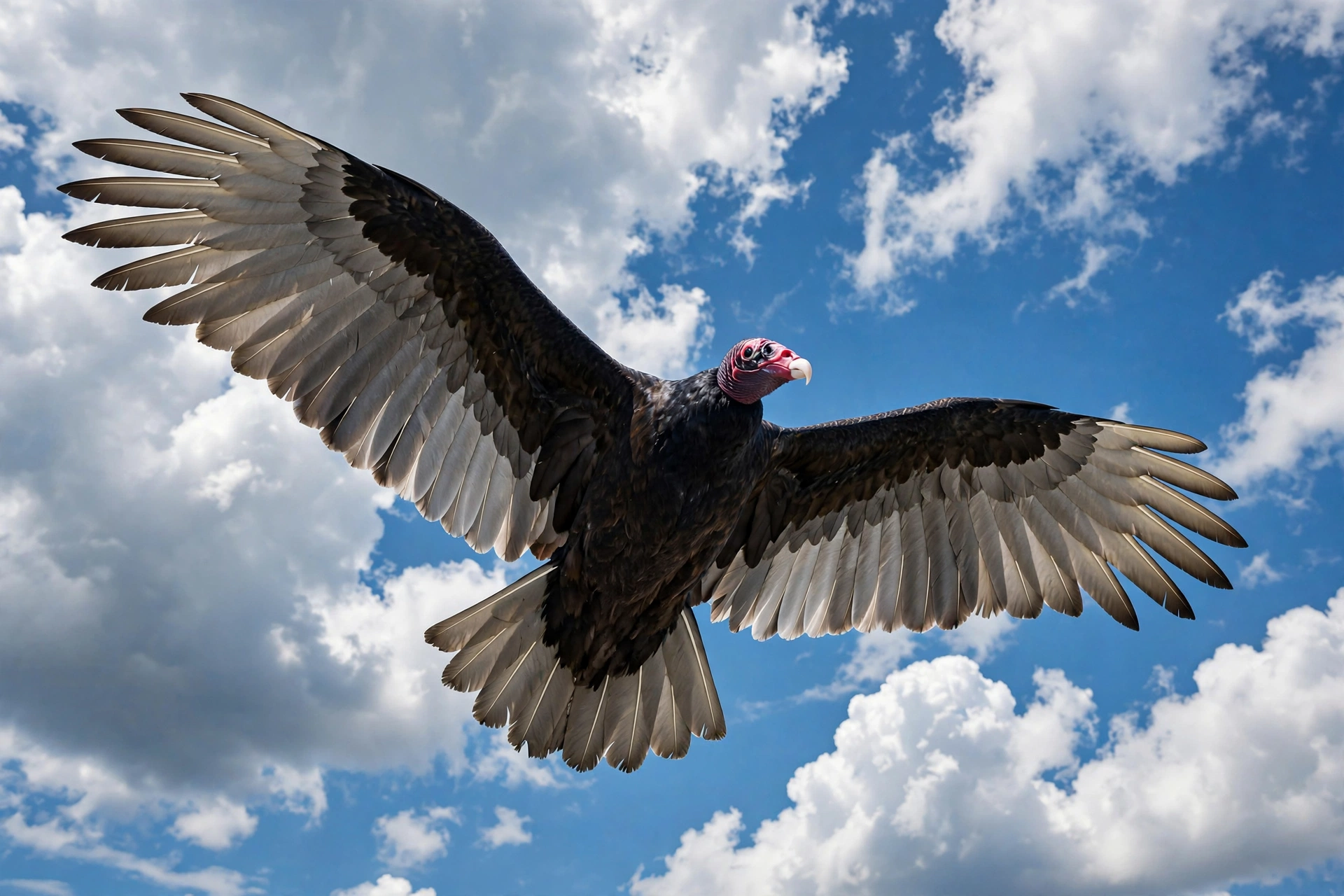
A large dark bird is circling high overhead. Is it a turkey vulture or a hawk? This is one of the most common identification puzzles in North American birdwatching, and even experienced birders pause before answering.
Here is the short answer. A turkey vulture soars with its wings held in a shallow V (called a dihedral) and rocks side to side like it is balancing on a wire. A hawk, usually a red-tailed hawk, soars with its wings held flat and steady, and it flaps far more often. Once you know these two clues, the dihedral and the wobble, you can separate them almost every time.
This guide walks you through every in-flight difference between turkey vultures and hawks. We will cover wing posture, flight style, wing and tail shape, size, silhouettes, behavior clues, and the lookalikes that still cause confusion.
Turkey Vulture vs Hawk: At a Glance
Before we go deep, here is the side-by-side summary most birders use in the field. Keep it bookmarked for your next outing.
| Feature | Turkey Vulture | Hawk (Red-tailed) |
|---|---|---|
| Soaring wing posture | Shallow V (dihedral), wingtips raised | Nearly flat, held level |
| Flight stability | Teetering, rocking, wobbly | Steady, even circles |
| Flapping | Rare, soars for minutes on thermals | Frequent, slow heavy wingbeats |
| Underwing pattern | Two-toned: silvery flight feathers, dark linings | Pale with dark patagial bar at leading edge |
| Wingtip shape | Long separated primaries, like fingers | Broad and rounded, slight fingers |
| Tail | Long, rounded, extends well past the body | Short, broad, fan-shaped |
| Head | Tiny, red and bare in adults | Proportioned, brown, feathered |
| Length | 25 to 32 inches | 18 to 26 inches |
| Wingspan | 67 to 70 inches | 45 to 52 inches |
| Body shape | Lanky, slender | Stocky, barrel-chested |
| Typical flight | Low over roads and fields, sniffing for carrion | High circles over open country, hunting live prey |
Flight Style: The Dihedral and the Wobble
The single best field mark is wing posture. A soaring turkey vulture holds its long wings tilted upward in a shallow V, a position birders call a dihedral. Seen head-on, the bird looks like a very shallow letter V drifting across the sky.
A red-tailed hawk soars on wings held nearly flat and level. There is no V. The silhouette looks like a straight board with a broad tail, steady as a table. If you see flat wings, think hawk. If you see the V, think vulture.
The second great clue is stability. Turkey vultures rock and teeter as they ride thermals, tipping side to side like a tightrope walker catching their balance. Their wing flex adjusts constantly to gusts. Red-tailed hawks trace smooth, even circles with barely a tremor.
Flapping frequency seals the deal. Turkey vultures can soar for minutes without a single wingbeat, sometimes for hours when thermals are strong. Red-tailed hawks intersperse soaring with slow, heavy wingbeats, a flap-flap-glide rhythm that looks powerful rather than lazy. If the bird flaps a lot, it is almost certainly a hawk.
Wing Shape: Long Fingers vs Broad Paddles
Look closely at the wingtips. Turkey vultures have long, separated primary feathers that splay outward like the fingers of an open hand. This fingered look is visible even at distance and gives the wingtip a ragged, starry outline.
Red-tailed hawks have broad, rounded wings that look like paddles. They show some primary separation, but nothing like the vulture’s dramatic fingers. The overall impression is of width and solidity rather than length.
Underwing color tells the same story in a different way. A turkey vulture shows a clean two-toned underside: silvery-gray flight feathers contrasting with dark brown wing linings. Light shining through the wing makes this pop.
A red-tailed hawk is mostly pale below with two dark marks to memorize. The dark patagial bar runs along the leading edge of the wing between the shoulder and the wrist. Many birds also show a streaked belly band across the body. These marks are consistent enough that hawk watchers use them as the first check on any distant buteo.

Tail and Head Shape in Flight
Turkey vultures have long tails that extend well past the feet in flight. The tail looks rounded and adds to the bird’s lanky, stretched-out profile. Combined with the long wings, the whole bird looks built for effortless gliding.
Red-tailed hawks have short, broad, fan-shaped tails. The tail barely reaches past the wingtips on a folded wing, and in flight it looks compact and powerful. This is one of the fastest shape checks you can make.
The head gives another clue. A turkey vulture’s head is tiny and looks almost too small for the body. Adults have a bare red head, though at distance you will notice the small size before any color. A red-tailed hawk has a well-proportioned, fully feathered brown head that looks balanced on the body.
Size and Silhouette: Reading the Outline
Turkey vultures are noticeably larger. They measure 25 to 32 inches long with a wingspan of about 67 to 70 inches, which is bigger than a red-tailed hawk in every dimension. The red-tailed hawk measures 18 to 26 inches long with a wingspan of about 45 to 52 inches.
But be careful with size alone. A lone bird against an empty sky has no reference point, and size is the field mark beginners misjudge most. Use size as a supporting clue, never the deciding one.
Instead, read the whole silhouette. The turkey vulture outline is lanky: long narrowish wings in a V, long tail, tiny head. It looks like a stretched cross. The red-tailed hawk outline is compact: broad flat wings, short wide tail, sturdy body. It looks like a flying anchor.
Practice this at a hawkwatch site or even from your car window. After a dozen birds, the two shapes start sorting themselves in your mind automatically.

Behavior and Context Clues
What the bird is doing often matters as much as what it looks like. Turkey vultures are scavengers, so they fly low over roads, fields, and valleys, quartering back and forth as their extraordinary sense of smell searches for carrion. They gather in loose groups called kettles, riding the same thermal in a wheeling, drifting mass.
Red-tailed hawks are hunters. They soar higher in wide, steady circles over open country, scanning the ground for rabbits, voles, and snakes. They also perch prominently on poles and trees, watching the ground below. A big raptor sitting on a roadside pole in daylight is very likely a red-tailed hawk, since vultures perch in groups at roosts and on dead snags.
Time of day helps too. Turkey vultures wait for thermals to build, so they are most active from late morning through afternoon. Early on a cold morning, a lone soaring raptor is more likely a hawk. And if you hear a harsh, raspy scream, that is the red-tailed hawk, the famous movie sound effect. Turkey vultures lack a syrinx and can only hiss.
If kettles fascinate you, our full guide on why vultures circle in kettles explains the soaring behavior in detail.
Common Confusion Species
Not every dark soaring bird is a turkey vulture or a red-tailed hawk. A few other species complicate the picture, so here is how to handle them.
- Black vulture: A close relative with a short square tail, pale gray wingtips, and quicker, choppier wingbeats. It holds its wings flatter than a turkey vulture and rarely rocks.
- Osprey: Shows a crooked, gull-like wing with a distinct bend at the wrist, plus bold black and white underwing patterning. It flaps far more than either bird here.
- Bald eagle: Much larger with a massive head and bill, plank-straight wings, and slow deliberate wingbeats. Juveniles are all dark and confuse beginners.
- Northern harrier: Flies low over marshes and fields with wings in a shallow V like a vulture, but it is much smaller and slimmer, with a white rump patch and an owl-like facial disk.
- Zone-tailed hawk: A real trickster that mimics turkey vulture flight, dihedral and rocking included. Check for banded tail and smaller size; it mostly occurs in the Southwest.
For another tricky pair, see our bald eagle vs golden eagle identification guide, which uses the same silhouette-first method.
Practice Tips for Nailing the ID
Start with the two-second test. V or flat? Wobbly or steady? Those two questions resolve most sightings before you even lift binoculars.
Watch how it enters the thermal. Vultures drift in low and settle into rocking circles. Hawks arrive higher, flap a few times, then lock into smooth glides. The entrance tells you a lot.
Count the flaps. Set a mental timer for one minute. A turkey vulture may not flap at all. A red-tailed hawk will flap several times in that span. This is the most objective test you have.
Check the company it keeps. A loose wheeling group of five to twenty birds is a kettle of vultures. A single bird or a pair circling high is more likely hawks. Mixed kettles happen, so stay alert.
Learn the call, or rather the lack of one. Red-tailed hawks scream; turkey vultures stay silent. On a birding walk, your ears can solve the puzzle your eyes cannot.
Finally, note where you saw it. Vultures cruise low along roadsides and over farmland. Hawks favor open hunting territories with good perches. Habitat narrows the options fast.
If hawks are visiting your property for the wrong reasons, our guide on how to keep hawks away from chickens covers humane deterrents.

Frequently Asked Questions
What is the easiest way to tell a turkey vulture from a hawk in flight?
Check wing posture first. Turkey vultures hold their wings in a shallow V (dihedral) and rock side to side as they soar. Hawks hold their wings flat and circle steadily. This one clue solves the majority of sightings.
Do turkey vultures ever flap their wings?
Yes, but rarely. They take a few flaps to get airborne and may flap when leaving a roost, but once they catch a thermal they can soar for minutes or even hours without flapping. Constant flapping points to a hawk instead.
Is a turkey vulture bigger than a red-tailed hawk?
Yes. Turkey vultures measure 25 to 32 inches long with a wingspan around 67 to 70 inches. Red-tailed hawks measure 18 to 26 inches long with a wingspan around 45 to 52 inches. Still, judge shape before size, since distance makes size hard to estimate.
What does the V shape in a turkey vulture’s wings mean?
The shallow V is called a dihedral, and it gives the bird stability while riding thermals. The wings flex at the joints and adjust to gusts, which creates the famous teetering, wobbly flight style. It is one of the most reliable field marks in raptor watching.
Can hawks soar without flapping like vultures?
Hawks soar beautifully, but they flap more. A red-tailed hawk mixes slow, heavy wingbeats with gliding and soaring, while a turkey vulture soars almost continuously. If the bird flaps every few seconds, it is a hawk.
Why do turkey vultures rock side to side?
The rocking comes from constant small adjustments to stay balanced on rising thermal air. Their raised dihedral wings catch gusts unevenly, so the bird tips and corrects in a teetering rhythm. Hawks hold their wings flatter, so they stay steadier.
Do turkey vultures and hawks ever fly together?
They share the same thermals, so you will sometimes see hawks circling with a kettle of vultures. This is actually great practice, since the flat-winged steady hawk stands out clearly against the rocking V-winged vultures around it.
What is the dark bar on a hawk’s wing called?
It is called the patagial bar, a dark mark along the leading edge of the underwing between the shoulder and the wrist. Combined with the streaked belly band, it is the classic in-flight field mark of the red-tailed hawk and is absent on turkey vultures.
Conclusion
Turkey vulture vs hawk is a classic ID challenge, but it has a simple answer. The vulture flies like a rocking V, teetering through the sky on rarely flapped wings with silvery fingered feathers. The hawk flies like a flat board, steady and strong, mixing heavy wingbeats with smooth glides and flashing its dark patagial bars.
Next time a big dark bird crosses your sky, ask the two questions. V or flat? Wobbly or steady? You will have your answer in seconds, and each sighting will make the next one easier. Happy birding.
References
- Cornell Lab of Ornithology, All About Birds: Turkey Vulture Identification
- Cornell Lab of Ornithology, All About Birds: Red-tailed Hawk Identification