 Skip to content

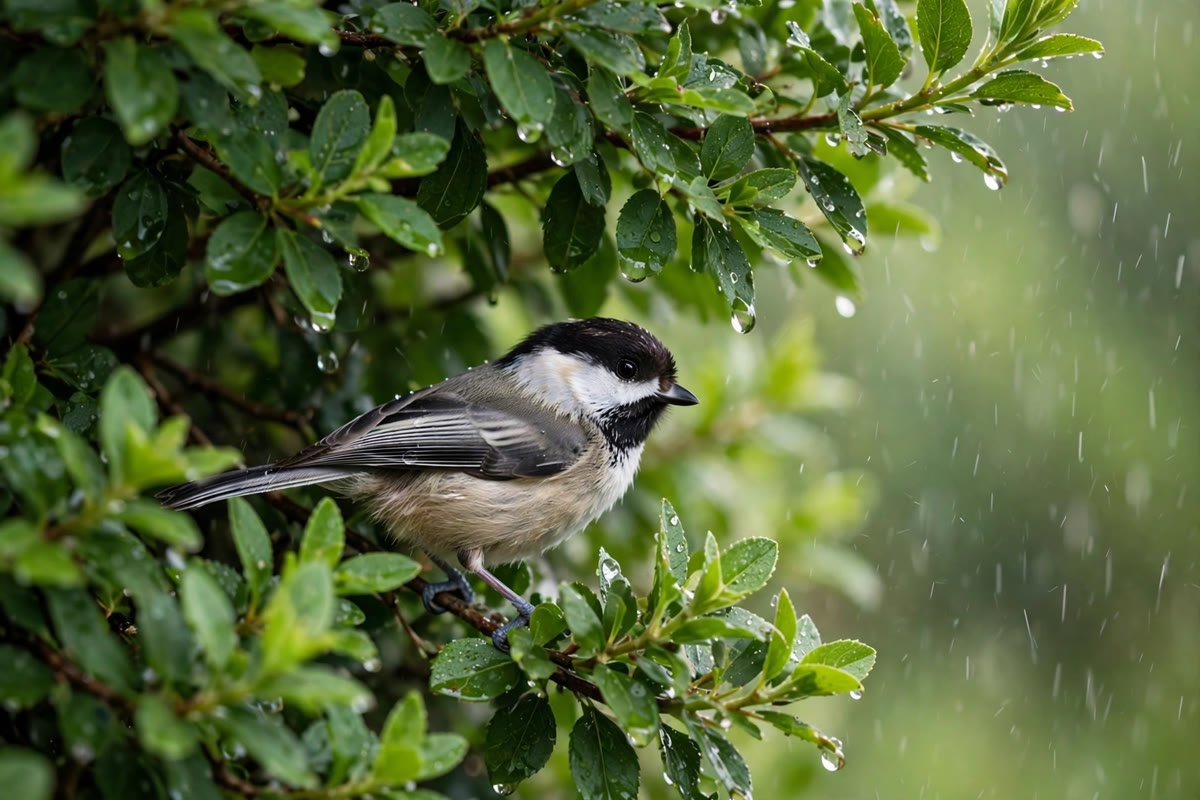
When rain starts pouring and the yard suddenly goes silent, the question comes naturally: where do birds go when it rains? The short answer is that most birds ride out the storm close by, tucked into dense foliage, tree cavities, or the sheltered side of a trunk, waiting for the weather to pass.
Their feathers are far tougher than they look. A built-in system of waterproofing, smart perching, and even early storm detection helps most birds survive ordinary rain without much trouble. The real danger comes from big storms and hurricanes, which can blow migrants far off course and strip away the cover birds depend on.
This guide explains where birds shelter in storms, how their feathers stay dry, whether they fly in rain, and what you can do in your own yard after a storm passes.

Where Do Birds Go When It Rains? How Birds Shelter in Storms
During a downpour, small songbirds usually seek the thickest cover they can find. Dense shrubs, evergreens, and the leafy canopy of trees block both raindrops and wind, so a chickadee sitting deep inside a hedge may barely feel the storm. The lee side of a tree trunk, the side away from the wind, works the same way, offering a pocket of calmer, drier air.
Research from Tufts University explains why these microhabitats work so well. Wind speed drops dramatically on the sheltered side of trees and inside thick hedges, and these pockets can also stay much drier even in driving rain. A bird that simply stays put in the right spot barely gets buffeted at all.
Dense Foliage and Evergreens
Evergreens are some of the best natural rain shelters in a yard. Their needles stay dense year round and their layered branches shed water outward, like a series of tiny roofs. Songbirds often crowd into conifers and thick shrubs before and during rain, sometimes huddling together for extra warmth.
If you want to see where your local birds go, watch a hedge or pine tree during a heavy shower. You will usually spot birds working their way inward as the rain gets heavier, settling on inner branches where the foliage is thickest.
Tree Cavities, Nest Boxes, and Hollows
Woodpeckers, nuthatches, chickadees, and bluebirds use natural tree cavities as storm shelters. A hollow trunk or an empty nest box gives a bird a dry roof and walls of wood between it and the wind. Cavity nesters often return to the same hollows outside breeding season, so a sturdy cavity is a year round refuge.
Nest boxes you put up for bluebirds or wrens can double as rain shelters. Keep them maintained and dry, and they may save a bird during a summer downpour as well as during nesting season.
Man-Made Shelters: Eaves, Porches, and Bridges
Birds also borrow human structures. House sparrows and finches tuck under eaves, porch overhangs, and window awnings, while swallows and phoebes nest under bridges and ledges partly because those spots stay dry. A bridge or barn overhang protects from rain and from the driving wind that makes flying dangerous.
These spots come with a trade-off, though. Shelter under buildings often sits closer to predators and people, so birds tend to prefer natural cover when both are available.
How Do Birds Stay Dry?
Birds stay dry with two tools: waterproof feathers and smart posture. Both work together every time it rains, and both are more effective than most people realize.
Preen Oil and Interlocking Feathers
Nearly all birds carry a preen gland, also called the uropygial gland, just above the base of the tail. The gland produces an oily, waxy secretion. The bird collects it on its beak and spreads it through the plumage while preening. This coating helps the tiny interlocking barbules of each feather hold their structure, and healthy, well maintained barbules form a barrier that sheds water.
As BBC Science Focus explains, water cannot easily penetrate the oil coating on intact feathers, so rain beads up and rolls off instead of soaking in. Studies also show that birds deprived of preen oil gradually lose waterproofing as their feather structure deteriorates. So the daily preening you see at your feeder is maintenance for the raincoat as well as for cleanliness.
Watch a bird after a shower and you will often see it preen for several minutes. It is re-zipping the feather barbules and redistributing oil, restoring the waterproofing before the next bout of weather.
Posture Tricks That Keep Rain Off
Birds also change how they sit in the rain. A perched bird will fluff its feathers slightly, trapping a layer of insulating air underneath, then hunch into a rounded ball with its back to the rain. The rounded shape lets water run off the back instead of seeping toward the skin.
Some birds tuck their beaks into their shoulder feathers and point their tails downward into the wind. This stance keeps the most vulnerable parts covered and presents the oiled back feathers to the weather. It is a simple posture, but it makes the difference between damp and dry during a long drizzle.

Do Birds Fly in Rain?
Whether birds fly in rain depends on the bird and on how hard it is falling. Light rain barely bothers most birds. They keep feeding and moving, just looking a little bedraggled, because their waterproofing handles a drizzle with ease.
A heavy downpour is a different story. Small songbirds usually stop flying and wait it out. Rain makes their feathers heavier, cold water against the skin raises the risk of hypothermia, and wind gusts make flying both exhausting and dangerous. As IFLScience notes, wet feathers are cold feathers, and small birds with a high surface area to body size ratio face the greatest risk.
Waterbirds play by different rules. Ducks, gulls, and herons handle rain well and often keep flying and feeding right through a storm. Their feathers carry heavier waterproofing, their bodies tolerate wet conditions, and some species even seem to enjoy it, bathing and splashing in rain showers.
So when rain turns heavy, look for your backyard songbirds sitting tight in cover, while the ducks on the pond carry on as if nothing happened. Both are behaving exactly as their bodies allow.
Birds Can Sense Storms Before They Arrive
One of the most remarkable findings in recent ornithology is that some birds detect big storms well before any human forecast would warn them. In a well documented case reported by AAAS Science Update, golden-winged warblers fitted with tracking devices evacuated their Tennessee breeding grounds one to two days before a major tornado outbreak arrived. Pressure, wind, and cloud cover at the study site had not changed yet when the birds left. Researchers suspect the warblers heard infrasound, extremely low frequency noise from the distant storm system that travels hundreds of miles and sits below human hearing range.
Birds also sense smaller, nearer changes. Many species can detect drops in barometric pressure, and watchers have long reported a feeding surge before storms: birds feed intensely, as if stocking up energy they know they will not be able to gather during the bad weather. Whether the trigger is pressure, sound, or a combination, the pattern is consistent enough that birders treat an empty feeder on a calm morning as a possible sign of weather on the way.
Where Do Birds Go During Hurricanes?
Hurricanes push bird survival strategies to the limit. What a bird does depends largely on whether it can leave or must stay.
Resident birds, the cardinals, blue jays, and mockingbirds that live in an area year round, hunker down much as they do in heavy rain: deep in woodland, in tree holes, under brush, or behind buildings. As the Sarasota Audubon Society has described after Florida storms, some survive and some do not. Drenching rain brings hypothermia, and gale winds can slam birds into objects.
Migrating birds face a different danger: being carried off course. Strong circulating winds around a hurricane can entrain birds, pulling them along for long distances until the storm dissipates. After Hurricane Sandy, sea birds were found far inland, and ornithologists noted that birds deposited hundreds of miles from their range often arrive exhausted, with little energy to make it back.
Hurricane Wilma in 2005 gave a sobering example. Thousands of migrating birds were carried northward by the storm, and the following summer, roost counts in Quebec showed the chimney swift population there had fallen by roughly 50 percent, according to the Georgia Department of Natural Resources. Not every displaced bird perishes, but storms that hit during peak migration can reshape local populations for years.
Hurricanes also destroy the habitat birds need after the storm. Winds strip leaves and branches, removing both cover and food. As National Audubon Society chief scientist Gary Langham has explained, coastal shorebirds can cope with losing one or two refueling sites, but the loss of insects, fruits, and seeds across a wide area leaves migrants without the calories to continue. A bird that survives the wind can still starve in the wreckage.
Migration does not stop for weather, and migrants cannot always outrun it. For a look at when birds travel and how weather shapes their schedules, see the guide to spring and fall migration seasons.
What to Do for Birds After a Storm
Once the sky clears, backyard birders can genuinely help. Birds that rode out the storm are often hungry, thirsty, and short on cover. A few simple actions make a real difference.
- Keep feeders stocked: storms scatter insects and knock seeds and berries off plants, so reliable food helps birds refuel. High energy foods work best in cold or wet weather, as explained in the guide to what to feed birds in winter.
- Leave fallen insects and debris for a day or two: robins, wrens, and thrushes forage on storm tossed insects and worms. Resist the urge to tidy the yard immediately.
- Refresh water sources: rain often fouls bird baths with debris. Empty, scrub, and refill them so birds have clean drinking water, following the steps in the bird bath cleaning guide.
- Check nest boxes for flooding: driving rain can flood boxes and drown nestlings. Open boxes, drain them, and remove soaked nesting material so the box can dry out.
- Plant for next time: dense native shrubs and evergreens are the storm shelters birds actually use. The Bermuda Audubon Society recommends storm hardy native plantings, and a bird-friendly garden built with shelter in mind protects birds long before the next storm arrives.
If you find an injured bird, keep pets away and contact a licensed wildlife rehabilitator rather than handling it yourself. State wildlife agencies usually list rehabbers by county on their websites.

Frequently Asked Questions
Do birds get sick from rain?
Healthy adult birds rarely get sick from ordinary rain. Their waterproofing keeps the skin dry, and preening restores it afterward. Prolonged cold rain is harder on small birds, which can lose body heat through wet feathers, but a healthy bird that shelters sensibly usually recovers quickly.
Can birds fly in a hurricane?
Most birds cannot fly safely in hurricane force winds and do not try. Resident birds shelter low and wait, while migrants caught in a storm may be carried far off course by the circulating winds. Seabirds sometimes stay in the calmer eye of the storm rather than fighting the winds around it, but this is survival, not choice.
Why do birds disappear before a storm?
Birds often go quiet and vanish into cover before the first drops fall. They sense falling barometric pressure and possibly infrasound from distant storms, and many feed heavily beforehand. An empty feeder on a calm day is a classic sign birders watch for.
Do birds drown in heavy rain?
Adult birds almost never drown in rain because they can shelter and their feathers shed water. Nestlings are more vulnerable: driving rain can flood open nests and nest boxes, which is why checking boxes after a storm matters.
Where do ducks go when it rains?
Ducks largely stay put and keep swimming, feeding, and even flying in rain that would ground a songbird. Their heavier waterproofing and larger bodies handle wet weather well, and many ducks actively bathe in rain showers.
Do birds sleep in the rain?
Yes, birds sleep through rain when they must, usually in the same sheltered spots they use during the day. Their roosting habits favor protected perches, dense cover, and cavities, which double as rain shelters.
How can I help birds during a storm?
Before a storm, the best help is habitat: dense shrubs, evergreens, and maintained nest boxes give birds somewhere to hide. During the storm, leave them alone. Afterward, restock feeders, refresh bird baths, check nest boxes for flooding, and let storm tossed insects stay on the ground for foraging birds.
Conclusion
Where do birds go when it rains? Most of them stay surprisingly close: deep in a hedge, inside a tree hollow, under an eave, or on the calm side of a trunk, feathers oiled and fluffed against the weather. Their bodies are built for this, with waterproofing they maintain daily and instincts that tell them when to hide.
Ordinary rain is something birds handle well. It is the big storms that test them, scattering migrants, stripping cover, and emptying the pantry of insects and seeds. After a storm, a stocked feeder, clean water, and a yard with real shelter do more good than anything else. Watch your bushes during the next downpour and you will see the whole system working: a quiet, waiting bird, perfectly dry under the leaves.




