


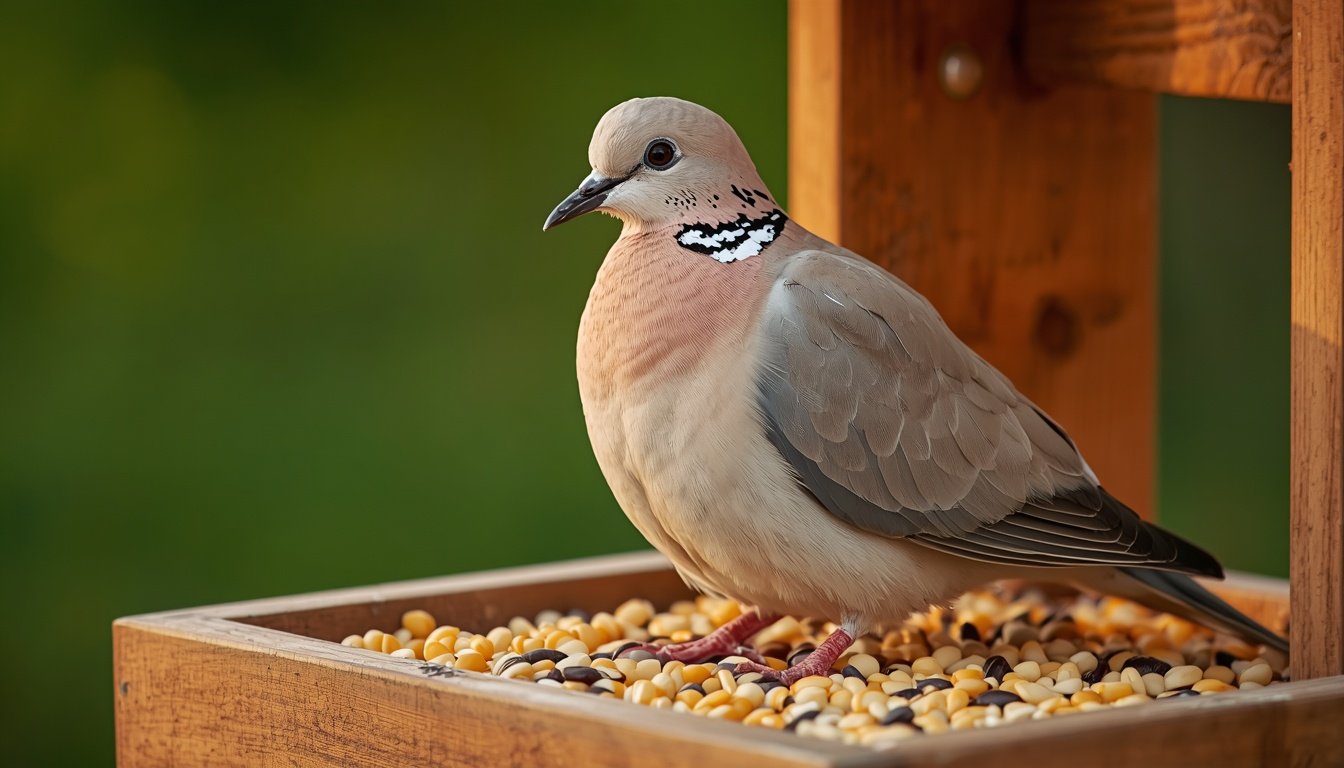
Do you enjoy keeping doves at home? And do you want to know what do doves eat? If your answer is yes, then you have come to the right blog post. Here, I will tell you about some of the best foods for doves and provide plenty of other useful information that will help you learn how to care for them properly.
Mourning doves are probably the ones many of us have the pleasure of watching in our backyards in North America. Thanks to their gentle nature & that soothing cooing sound they make all the time. Plenty of birdwatchers wanna know what mourning doves eat when trying to get these quiet visitors to come hang out in your yard some more, and understandably so.
The answer is pretty clear-cut: when it comes to their diet, it’s all about 99% seeds & grains, so you can see just how important it is to get the right bird food if you want to keep these birds healthy & coming back for more.
This complete guide will introduce you to their fave foods, the best feeders to use, seasonal feeding strategies, foods to steer clear of, & all sorts of other expert tips on how to attract more of these lovely doves to your yard. It also just touches on what those “don’t eat this” bits are all about, as they actually have no bearing on what mourning doves like to eat.
Table of Contents
What Do Doves Eat in the Wild?

Mourning doves are naturally born searchers. Most of their day is spent scrabbling about in open fields, out on farms, in grasslands and along the sides of roads, and even in the occasional backyard. If you’re wondering what a dove prefers to snack on, well.
The answer is pretty straightforward: seeds & grains make up just about 99% of their diet. They’ll usually feed on whatever wild grasses they come across, along with millet, wheat, corn, and other small seeds that are just lying around on the ground.
After the seasons change, a bit of small berries, soft fruits, or the odd tiny snail or insect to give them a bit extra in the way of nutrients to keep them going won’t go amiss. As it just so happens, their natural diet bears a fair bit of resemblance to the top choice pick for mourning doves in backyard feeders.
For this reason, a good quality bird feed mix of millet, cracked corn & safflower seeds is a pretty safe bet. A well-balanced dove seed mix does a great job of complementing their wild feeding ways and means they’ll be in top shape all year round.
Best Bird Food for Mourning Doves

1. White Proso Millet
If you’re wondering what do mourning doves eat, white proso millet is widely considered their favorite seed. It closely matches their natural dove diet, making it the best food for mourning doves throughout the year.
These small, soft seeds are easy to swallow whole, allowing doves to feed quickly before storing food in their crop for later digestion. White proso millet is commonly found in premium dove seed mixes and high-quality wild bird food blends.
Scatter it on a ground feeder for doves or a large platform bird feeder, as these birds rarely use hanging feeders. If you’re wondering what to feed wild doves or are interested in attracting mourning doves and other backyard birds, white proso millet should always be your first choice.
2. Black Oil Sunflower Seeds
Many bird enthusiasts ask, do doves eat sunflower seeds? The answer is yes. Black oil sunflower seeds are an excellent addition to mourning dove food because they provide healthy fats, protein, and essential nutrients.
Their thin shells are much easier to crack than larger sunflower varieties, making them suitable for mourning doves. Although these seeds are nutritious, they should complement rather than replace staples like millet. They become especially valuable during winter, when birds need extra calories to maintain body heat.
Offer them on a platform bird feeder or mix them into a quality bird food for doves placed on the ground. Including black oil sunflower seeds in your feeding routine helps support a healthy dove diet while encouraging regular visits from peaceful backyard birds.
3. Safflower Seeds
Safflower seeds are another excellent option for anyone wondering what do doves like to eat. These nutritious seeds contain healthy fats and fiber that help support a balanced dove diet while providing long-lasting energy.
One advantage of safflower seeds is that many nuisance birds are less interested in them, allowing mourning doves easier access to food. They are commonly included in premium bird food for doves and homemade dove seed mix blends.
For the best results, scatter them on a ground feeder for doves or use a spacious platform bird feeder where the birds can feed comfortably. Mixing safflower seeds with millet and cracked corn creates a more natural feeding experience and is an effective way of attracting mourning doves to your backyard.
4. Cracked Corn
Cracked corn is an affordable and reliable food that closely matches what mourning doves naturally find while foraging. Because the kernels are broken into smaller pieces, they are much easier to swallow than whole corn, making them an ideal ingredient in mourning dove food.
Many commercial wild bird food mix products contain cracked corn because it provides carbohydrates that fuel daily activity. It works especially well when combined with white proso millet and other grains in a balanced dove seed mix.
Scatter it directly on the ground or place it on a ground feeder for doves, where these birds naturally prefer to feed. If you’re deciding what to feed wild doves, cracked corn is a simple, economical choice that attracts many peaceful backyard birds.
5. Milo (Sorghum)
Milo, also called sorghum, is a nutritious grain that frequently appears in commercial bird food for doves and wild bird food mix products. While it may not be their absolute favorite like millet, mourning doves readily eat milo when it is mixed with other quality seeds.
This grain supplies carbohydrates that support daily energy needs and complements a balanced dove diet. Milo performs best when combined with white proso millet, cracked corn, and safflower seeds rather than being offered alone.
Place the mixture on a platform bird feeder or directly on bare ground to match the birds’ natural feeding behavior. Including milo in your feeding station creates a more varied diet while helping with attracting mourning doves and other seed-eating backyard birds.
6. Wheat
Wheat is a natural grain that mourning doves commonly find in agricultural fields, harvested farmland, and open grasslands. As a rich source of carbohydrates, it provides steady energy and fits well into their natural dove diet.
Many premium dove seed mix products include wheat because it blends well with white proso millet, cracked corn, and milo. Although wheat should not be the only food offered, it serves as an excellent supplemental grain in a balanced feeding program.
Scatter it on a ground feeder for doves or mix it into a quality bird food for doves to encourage natural foraging behavior. If your goal is attracting mourning doves, adding wheat to a diverse seed blend can make your backyard feeding station more appealing throughout the year.
7. Chopped Peanuts
Many people ask, do doves eat peanuts? Yes, mourning doves will eat chopped, unsalted peanuts, but they should only be offered in moderation. Peanuts are rich in protein and healthy fats, making them especially beneficial during colder months when birds need extra energy to stay warm.
Because whole peanuts can be difficult to handle, always offer them chopped into small pieces and mix them with white proso millet, black oil sunflower seeds, or other ingredients in a balanced dove seed mix.
Avoid salted or flavored peanuts, as they are unhealthy for wild birds. While people often ask do doves eat fruit, fruit is only an occasional treat, whereas chopped peanuts are a better seasonal supplement for healthy mourning dove food when used sparingly.
H2: Complete List of Foods Doves Can Eat
Include a table:
| Food | Safe for Doves | Nutritional Benefits | How Often to Feed | Notes |
|---|---|---|---|---|
| White Proso Millet | ✅ Yes | Favorite seed, rich in carbohydrates | Daily | Best overall seed for mourning doves |
| Black Oil Sunflower Seeds | ✅ Yes | Healthy fats, vitamin E, protein | Daily in moderation | Thin shells are easy to crack |
| Safflower Seeds | ✅ Yes | Healthy fats and fiber | Daily | Helps discourage some nuisance birds |
| Cracked Corn | ✅ Yes | Excellent energy source | Daily | Easier to digest than whole corn |
| Milo (Sorghum) | ✅ Yes | Good source of carbohydrates | Frequently | Common ingredient in bird seed mixes |
| Wheat | ✅ Yes | Natural grain with fiber | Frequently | Commonly eaten in farm fields |
| Oats (Rolled or Whole) | ✅ Yes | Fiber and carbohydrates | Occasionally | Offer plain, uncooked oats only |
| Barley | ✅ Yes | Complex carbohydrates | Occasionally | Best mixed with other grains |
| Rice (Uncooked) | ✅ Yes | Safe source of energy | Occasionally | Plain white or brown rice works well |
| Chopped Unsalted Peanuts | ✅ Yes | High protein and healthy fats | Occasionally | Feed sparingly because of high fat content |
| Canary Seed | ✅ Yes | Protein and essential nutrients | Occasionally | Often included in premium bird mixes |
| Flaxseed | ✅ Yes | Omega-3 fatty acids | Occasionally | Mix with other seeds rather than feeding alone |
| Sesame Seeds | ✅ Yes | Healthy oils and minerals | Occasionally | Small quantities only |
| Small Wild Berries | ✅ Yes | Natural vitamins and antioxidants | Seasonal | Includes elderberries and serviceberries |
| Wild Fruits | ✅ Yes | Natural sugars and vitamins | Seasonal | Doves eat fallen soft fruits occasionally |
| Commercial Dove Seed Mix | ✅ Yes | Balanced blend of grains and seeds | Daily | Choose mixes high in millet and cracked corn |
Foods Mourning Doves Should Avoid
Mourning doves thrive on a natural diet of seeds and grains, but not every food is safe for them. Feeding the wrong foods can lead to poor nutrition, digestive problems, or even serious health risks.
- Salted Nuts: Never feed salted peanuts or other salted nuts, as excess sodium can be harmful to mourning doves.
- Bread as a Regular Food: Bread fills birds up without providing the nutrients they need, making it a poor staple food.
- Moldy Seeds: Discard any moldy or damp seeds immediately, as mold can produce toxins that are dangerous to birds.
- Chocolate: Chocolate contains compounds that are toxic to birds and should never be offered.
- Avocado: Avocados contain persin, a substance that can be poisonous to many bird species.
- Sugary Snacks: Cookies, candy, and other sweet foods provide no nutritional value and can negatively affect a dove’s health.
- Processed Human Foods: Chips, crackers, seasoned foods, and other processed snacks contain salt, sugar, and additives that are unsuitable for wild birds.
- Spoiled Grains: Old, wet, or rotten grains can harbor bacteria and fungi, increasing the risk of illness. Always provide fresh, clean bird food and remove uneaten food regularly.
How to Attract More Mourning Doves to Your Backyard?
Creating a welcoming backyard habitat is the best way to attract mourning doves and encourage them to visit regularly. By providing the right food, shelter, and a safe feeding environment, you can enjoy these gentle birds year-round.
- Open Feeding Spaces: Mourning doves prefer feeding in open areas where they have a clear view of their surroundings and can quickly spot predators.
- Low Platform Feeders: Use wide, low platform feeders that provide enough room for these larger birds to stand and feed comfortably.
- Bare Ground Feeding: Scatter seeds on clean, bare ground or a ground tray to mimic the doves’ natural foraging behavior.
- Fresh Water: Keep a shallow birdbath or water dish filled with clean, fresh water for drinking and bathing every day.
- Quiet Environment: Place feeding stations in calm areas away from heavy foot traffic, loud noises, and active pets.
- Shrubs and Trees Nearby: Plant shrubs, small trees, or hedges close to the feeding area so doves have safe places to rest, nest, and escape predators.
- Consistent Feeding Schedule: Refill feeders at regular times each day, as mourning doves quickly learn reliable food sources and often return on a routine.
- Avoid Frequent Disturbances: Minimize sudden movements, frequent landscaping, or repeated feeder moves, as disturbed birds may stop visiting your backyard.
Conclusion
Mourning doves thrive on a simple, seed-rich diet that closely matches their natural feeding habits. Offering favorites like white proso millet, cracked corn, safflower seeds, and black oil sunflower seeds provides the nutrition they need while encouraging regular visits to your yard.
Pair these foods with a ground feeding area or a wide platform feeder, and always provide fresh water and a separate source of grit to support healthy digestion. A quiet, safe environment with nearby shrubs and a consistent feeding routine will make your backyard even more inviting.
By recreating the conditions these gentle birds prefer, you’ll not only support their health but also enjoy watching them feed and interact throughout the seasons. With the right setup, mourning doves can become some of the most reliable and peaceful visitors to your backyard bird feeding station.
