
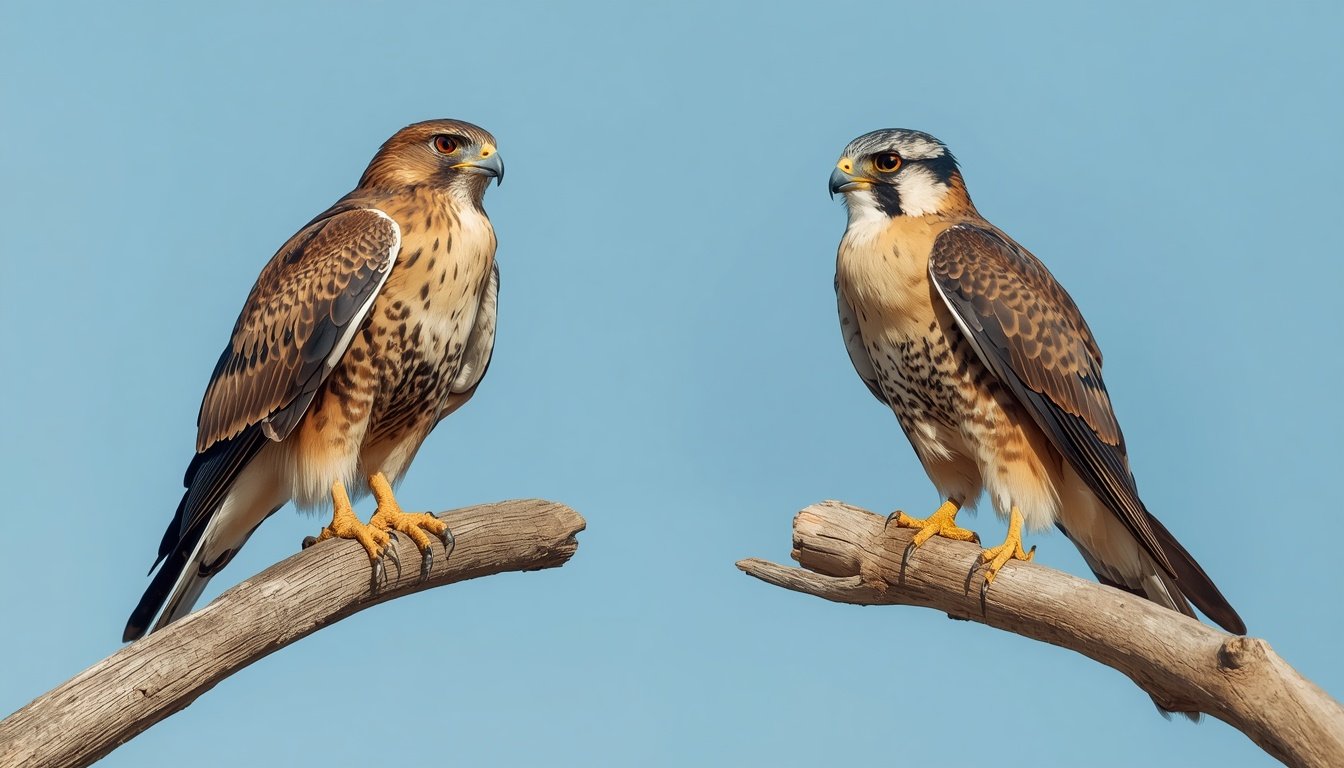
Birdwatchers often get hawks and falcons mixed up – and no surprise really, given these birds of prey are just as agile and powerful in the air. But despite their looks being kinda similar, they actually belong to completely different families, and have some pretty distinct flight patterns too. Mastering the art of Hawk vs Falcon Identification starts by paying close attention to all the key details.
Such as wing shape, how they fly, body shape, beak type, and what kind of hunting game they like to play – rather than just going by size or color. Whether you’re trying to tell falcon vs hawk apart or figuring out the difference between a falcon and a hawk, you can use these features to make identification a whole lot easier.
This guide does a great job of going over all the important details in a way that’s easy to follow, even if you’re a complete beginner – so you can head out on your next birdwatching trip feeling pretty confident you’ll be able to tell raptors apart.
Along the way, you’ll also pick up on the difference between a hawk and a falcon, learn some key hawk vs falcon characteristics, and avoid getting caught out comparing them with an eagle – hawk vs eagle is a whole different story after all.
Hawk vs Falcon Identification at a Glance
Create an easy comparison table covering:
| Feature | Hawk | Falcon |
|---|---|---|
| Wing Shape | Broad, rounded | Long, pointed |
| Flight Style | Soaring, gliding | Fast wingbeats, diving |
| Tail Shape | Wide and fan-shaped | Narrow and streamlined |
| Hunting Method | Ambush and soaring | High-speed pursuit |
| Beak | Smooth curved | Tomial tooth |
| Eyes | Yellow or amber | Dark, large |
| Body | Stockier | Slim and aerodynamic |
| Habitat | Forests, mountains, suburbs | Cliffs, coastlines, open fields, cities |
Are Hawks and Falcons Actually Related?

Although raptors and birds of prey arent you typically thinking of as close as they actually are. Hawks & falcons, though both fantastic hunters, arent as closely related as they both are excellent predators, but they do belong to different families.
The Accipitridae’s where hawks mostly live & the Falconidae’s with the falcons. The reason for that is simple – they split from the same ancestor a rather long time ago, which explains the main differences between these two birds of prey and how they go about catching their food.
To distinguish hawks from falcons, you really need to get inside their heads & figure out what makes them tick. After all, if you’re trying to spot a hawk or a falcon in the wild or compare one to an eagle, it’s actually pretty crucial to know the difference.
Hawks tend to rely on brute force & sneaky moves – getting the drop on their prey before pouncing. On the other hand, falcons are built for speed & use that to outmaneuver their prey, often swooping in from out of nowhere.
Complete Hawk vs Falcon Identification Guide
1. Wing Shape: The Fastest Way to Identify Hawks and Falcons
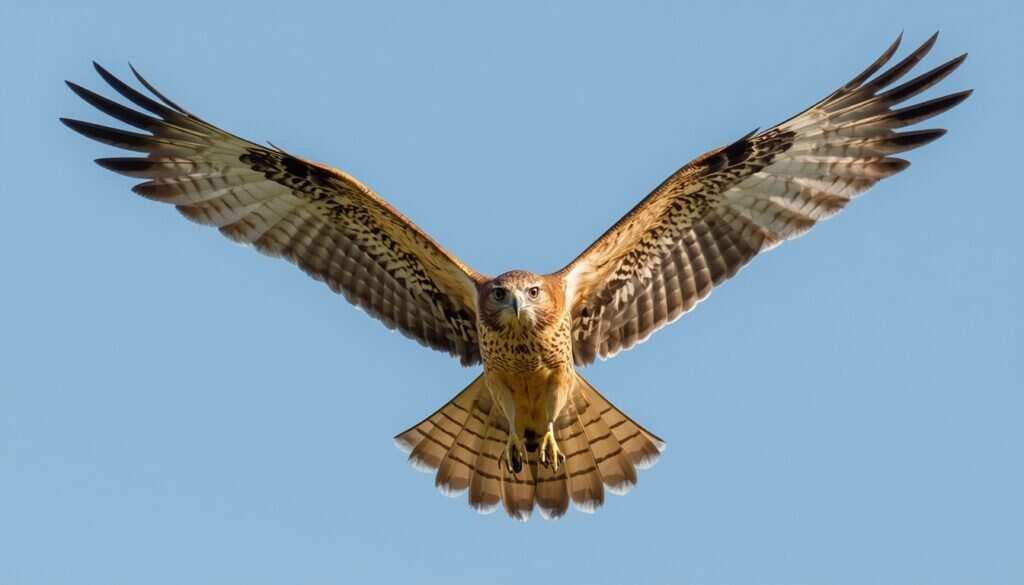
One of the easiest ways to tell these birds apart is by looking at their wings in flight. Wing shape is often the quickest clue when comparing falcon vs hawk or learning the difference between hawk and falcon.
Hawk Wings
- Broad wings with rounded tips for maximum lift.
- Distinct finger-like feathers spread at the ends.
- Large surface area allows effortless soaring and gliding.
- Ideal for circling over open landscapes before diving on prey.
- Common examples include the Red-tailed Hawk, Red-shouldered Hawk, and Harris’s Hawk.
Falcon Wings
- Long, narrow wings with sharp, pointed tips.
- Highly aerodynamic, similar to fighter jet wings.
- Built for high-speed pursuit and rapid aerial maneuvers.
- Perfect for chasing birds in open skies.
- Common examples include the Peregrine Falcon, American Kestrel, and Merlin Falcon.
These wing differences are a key feature in Hawk vs Falcon Identification, making the difference between falcon and hawk much easier to recognize than comparing a hawk vs eagle or falcons vs hawks.
2. Flight Style Differences You Can Spot From Hundreds of Feet Away
Watching a bird in flight is one of the easiest ways to tell its identity from hundreds of feet away. Flight patterns reveal the difference between hawk and falcon more clearly than color or size.
- How Hawks Fly: Hawks soar on warm thermal currents with broad wings, glide for long distances, flap slowly, and circle overhead while conserving energy. This effortless style is a key clue when comparing hawk vs falcon and falcon vs hawk.
- How Falcons Fly: Falcons use rapid wingbeats, direct flight paths, sudden acceleration, and precise aerial maneuvers to chase birds at high speed. These traits separate falcons vs hawks and highlight the difference between a hawk and a falcon.
- What Is a Falcon’s Famous Stoop? A peregrine falcon performs a spectacular stoop, folding its wings into a steep dive that can exceed 200 mph (320 km/h). This hunting technique makes it the fastest animal on Earth. Spotting this high-speed dive is one of the clearest signs in any hawk vs eagle or hawks vs falcon identification.
Beak Differences: The Hidden Clue Most Beginners Miss
One of the easiest ways to spot the difference between hawk and falcon is by looking closely at the beak. While many beginners focus on wings, the beak often provides the most reliable clue during Hawk vs Falcon Identification.
Hawk Beak
- The hawk beak has a smooth, evenly curved hook designed to grip and tear prey into smaller pieces.
- Hawks depend more on their powerful talons than their beaks to make the initial kill.
- This simple hooked shape helps explain the difference hawk and falcon when comparing falcon vs hawk or falcons vs hawks.
Falcon Beak
- The falcon beak features a distinctive tomial tooth, a small notch on the upper mandible.
- After a high-speed stoop or dive, species like the peregrine falcon use this notch to sever the spinal cord of prey quickly.
- The tomial tooth is one of the best close-range features for identifying a hawk vs falcon, and it also separates them from a hawk vs eagle comparison.
Head, Eyes, and Facial Markings
When comparing a falcon and a hawk, facial features often provide some of the quickest clues for identification. Looking closely at the head, eyes, and markings can help you tell these impressive raptors apart, even from a distance.
Hawk Features
- Flatter, broader head that blends smoothly into the neck.
- Usually bright yellow or golden-yellow eyes in adult birds.
- Less dramatic facial markings, giving the face a cleaner appearance.
- Relies more on wide-angle vision than specialized forward focus.
Falcon Features
- Larger, darker eyes that enhance speed-based hunting.
- Rounded head with a more compact profile.
- Distinct dark “mustache” stripe, especially noticeable on the Peregrine Falcon, extending below the eye.
- American Kestrel shows bold facial patterns with contrasting stripes and colorful markings.
- Better forward vision helps track fast-moving prey during high-speed dives.
These characteristics are useful whether you’re comparing falcon vs eagle vs hawk, falcon vs hawk vs eagle, hawk vs eagle vs falcon, hawk vs falcon vs eagle, or eagle vs falcon vs hawk, making field identification much easier.
Hunting Style: Their Behavior Reveals Their Identity
A bird’s hunting behavior is one of the easiest ways to identify it in the wild. Watching how a falcon and hawk pursue prey often reveals more than their appearance alone.
Hawk Hunting Strategy
- Wait-and-watch: A hawk patiently scans from a tree branch or high perch before making a move.
- Surprise attacks: It relies on sudden bursts of speed to catch prey off guard.
- Woodland ambush: Hawks use forests and dense vegetation to hunt stealthily.
- Soaring before striking: Many hawks circle overhead, then dive quickly when they spot an opportunity.
Falcon Hunting Strategy
- Chase birds mid-air: A falcon actively pursues flying birds instead of waiting.
- High-speed interception: Falcons use incredible speed to overtake prey in open skies.
- Precision aerial attacks: They strike with remarkable accuracy during flight.
These behaviors clearly separate the hawk and falcon, making comparisons like falcon vs eagle vs hawk, hawk vs falcon vs eagle, or falcon vs hawk vs eagle much easier during birdwatching.
Hawk vs Falcon Identification Mistakes Beginners Make
Many beginners misidentify birds of prey because they focus on a single feature instead of observing the whole bird. Accurate identification comes from combining shape, flight style, behavior, and habitat.
- Judging by size alone: Size can be misleading because large falcons and small hawks may appear similar at a distance. Compare multiple features, not just body size.
- Ignoring wing shape: A falcon and hawk have distinctly different wings. Falcons usually have long, pointed wings, while hawks have broader, rounded wings.
- Watching color instead of behavior: Plumage varies with age and lighting, but hunting style and flight pattern remain more reliable.
- Confusing soaring with gliding: Hawks often soar on rising air currents, while falcons usually fly with fast, powerful wingbeats.
- Forgetting habitat clues: Woodland, open grassland, and coastal areas can all provide useful identification hints.
- Assuming every fast bird is a falcon: Speed alone is not enough. When comparing falcon vs eagle vs hawk, hawk vs falcon vs eagle, or hawk and falcon, always evaluate wing shape, behavior, and habitat together for accurate identification.
Step-by-Step Hawk vs Falcon Identification Checklist
Accurately telling a falcon and hawk apart becomes much easier when you follow a simple observation process. Instead of relying on one feature, compare several visible traits before making your identification.
- Step 1: Observe the wing shape. Falcons have long, pointed wings, while hawks have broader, rounded wings.
- Step 2: Watch the flight style. Falcons fly with fast, powerful wingbeats, while hawks often soar and glide.
- Step 3: Check the tail shape. Falcons usually have shorter, narrower tails, while hawks often have wider, longer tails.
- Step 4: Notice hunting behavior. Hawks ambush prey, whereas falcons chase prey in fast aerial pursuits.
- Step 5: Look for facial markings. Many falcons display a dark “mustache” stripe.
- Step 6: Identify the habitat. This helps compare a hawk and falcon in the proper setting.
- Step 7: Use binoculars to inspect the beak. Falcons have a notched beak, while hawks have a smoothly curved one.
This checklist also makes comparisons like falcon vs eagle vs hawk, hawk vs falcon vs eagle, and eagle vs falcon vs hawk much easier during birdwatching.
Final Thoughts
Mastering the art of telling a hawk from a falcon takes a lot of practice, but if you focus on getting the right field marks under your belt, each sighting will become a whole lot more enjoyable. Keep your eyes peeled for the wing shape, the way they fly, the shape of their tail, the shape of their beak, and the markings on their face – because when it comes down to it, color really isn’t enough when you’re trying to tell a hawk from a falcon.
The good news is that when you pay close attention to these details, identifying either a hawk or a falcon becomes a whole lot easier. The upshot is that you’ll be able to tell whether you’re looking at a hawk or a falcon even in tricky situations.
If you’re comparing a hawk perched in a tree with a falcon in a nearby tree, its behavior is likely to be the first clue, and if you’re observing a hawk vs a falcon in flight, movement and behavior will give you the first real indication of which is which.
The key to getting better at spotting birds of prey is to keep watching in all sorts of habitats and to observe through the seasons. And before you know it, you’ll be able to tell whether you’re looking at a hawk or a falcon with confidence & accuracy – and the more you do it the better you will become.