 Skip to content

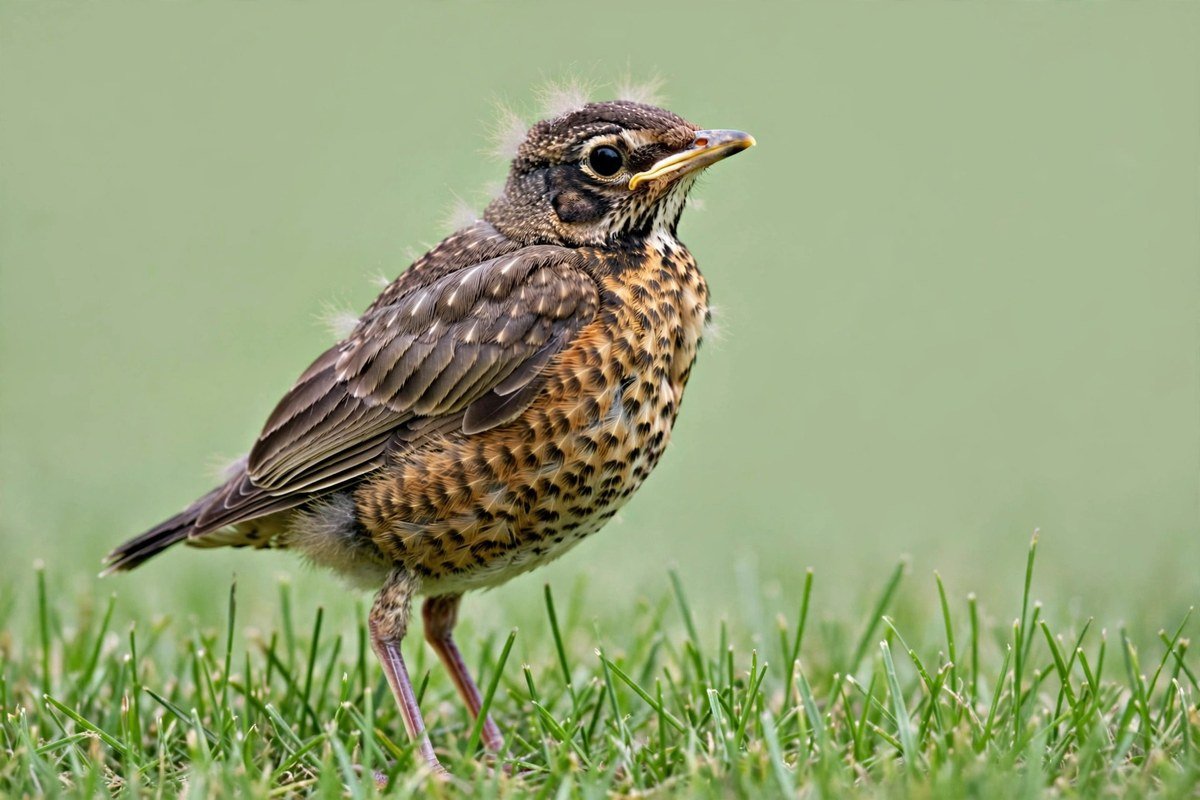
You spot it on the lawn: a small bird sitting in the grass, blinking, unable to fly. Your instinct says pick it up and help. Before you do anything, take a breath. Knowing what to do if you find a baby bird starts with one quick question: is this a nestling or a fledgling?
That single distinction changes everything. A featherless nestling on the ground is in real trouble and usually needs your help getting back to its nest. A feathered fledgling hopping through the bushes is almost certainly fine, with its parents watching from nearby and still feeding it. This guide walks you through telling the two apart, the exact steps to take in each case, and the mistakes that can turn a good intention into a tragedy.

Nestling or Fledgling? How to Tell the Difference
Young songbirds pass through two very different stages after hatching, and they look nothing alike. A nestling is the helpless newborn stage: mostly naked, eyes often still closed, and completely unable to move around. A fledgling is the awkward teenager stage: fully feathered, bright-eyed, and already hopping, fluttering, and exploring the world outside the nest.
Learning to tell them apart takes less than a minute, and it is the most important skill in this entire guide. Use this comparison table as your field reference.
| Nestling | Fledgling | |
|---|---|---|
| Feathers | None or only sparse downy tufts; pink skin clearly visible | Mostly or fully feathered; looks like a small, fluffy adult |
| Eyes | Often closed or only just opening | Open, bright, and alert |
| Mobility | Cannot hop, walk, or grip; may only squirm weakly | Hops, flutters, perches, and can grip a finger tightly |
| Tail | Barely there | Short but clearly visible |
| Needs rescue? | Yes, if it is out of the nest | Almost never, unless injured or in immediate danger |
What a Nestling Looks Like
A nestling is a bird that hatched only days ago. If you want a sense of just how young, read about how long bird eggs take to hatch for typical timelines by species. These chicks cannot regulate their own body temperature, cannot eat on their own, and have zero chance of surviving outside the nest without intervention. A nestling on the ground fell or was blown out, and it needs help fast.
What a Fledgling Looks Like
A fledgling left the nest on purpose. For many species, leaving the nest before they can truly fly is a normal and vital part of development. The young birds spend days on the ground building strength, and their parents continue to feed and protect them the whole time. Picking up a healthy fledgling does not save it. It separates a baby from the only caregivers equipped to raise it.
What to Do If You Find a Baby Bird: Decide in Minutes
Once you know which stage you are looking at, the right move becomes clear. Work through the situation that matches yours below.
If It Is a Healthy Fledgling: Leave It Alone
A fledgling that is feathered, alert, and hopping around does not need rescuing, even if it looks clumsy or lonely. The parents are almost certainly nearby, watching and waiting for you to leave so they can come feed it. The U.S. Fish and Wildlife Service guidance is direct on this point: fledglings do not need help, and you should give them plenty of space.
Keep dogs on a leash and bring cats indoors. Domestic cats are one of the top threats birds face, and a grounded fledgling is an easy target. Watch from a distance, ideally from inside the house or through binoculars. Give it up to two hours. If you see an adult of the same species arriving with food, the system is working exactly as it should, and you can walk away.
Move the fledgling only if it is in immediate danger, such as sitting in a road or in the path of a lawnmower. In that case, lift it gently and place it in nearby cover, on a low branch or under a shrub, as close as possible to where you found it. Dense shrubs and brush piles make ideal fledgling shelter, which is one more reason creating a bird-friendly garden pays off during nesting season.
If It Is a Nestling: Put It Back in the Nest
A nestling on the ground is an emergency, but a fixable one. Look up and around for the nest. If you can find it and reach it safely, gently place the chick back inside. Do this even if the other chicks look a little bigger or smaller than the fallen one. Parents feed whoever is in the nest.
Worried the parents will reject a chick touched by human hands? They will not. That is a persistent myth, and wildlife agencies debunk it at every opportunity. Birds have a poor sense of smell, and parent birds identify their chicks by sight and sound, not scent. Wear gloves if you have them, mostly for your own protection, then make the return quickly and step away.
After re-nesting, retreat well out of sight and watch for up to two hours. Parent birds will not approach while a perceived predator, which includes you, is standing nearby. If an adult returns with food, the rescue is complete.
If the Nest Is Destroyed or Unreachable: Build a Substitute
Sometimes the original nest is shredded by a storm, wedged somewhere you cannot reach, or simply nowhere to be found. In that case, build a replacement. A small plastic berry basket, a margarine tub, or any small container with drainage works. Line it with dry grass or paper towels, avoiding terry cloth or cotton products that can tangle tiny feet.
Fasten the substitute nest securely in a shaded spot in the nearest tree or tall shrub, close to where you found the chick. Place the nestling inside, tucking its feet underneath its body. Then back off and watch from a distance for one to two hours. Parents will often feed chicks in a substitute nest just as readily as in the original.

How to Keep a Baby Bird Safe Until Help Arrives
If the bird is injured, cold, caught by a cat, or clearly orphaned, your job is not to raise it. Your job is to stabilize it and get it to a licensed professional. Follow these steps in order.
- Prepare a ventilated box first. Find a small cardboard box and poke air holes in the sides near the top. Line the bottom with paper towels or a soft non-terry cloth. A box is better than a cage or an open basket, because darkness calms the bird and prevents further injury from frantic fluttering.
- Warm the bird gently. Cold kills nestlings fast. Place a heating pad set on low under half of the box, never inside it and never directly under the bird, so the chick can move away from the heat if needed. A hot water bottle wrapped in a towel, or a clean sock filled with dry uncooked rice and microwaved for a minute, works as a substitute. The bird should never touch a heat source directly.
- Handle the bird as little as possible. Wear gloves, move the bird with cupped hands or a soft cloth, and settle it into the box quickly. Every extra minute of handling adds stress, and stress is genuinely dangerous for a bird in shock.
- Put the box somewhere dark, warm, and quiet. A closet or a quiet room works well. Keep children, dogs, and cats completely away. Cover the box loosely with a lid or towel, leaving the air holes clear.
- Call a wildlife rehabilitator immediately. Do not wait to see if the bird perks up. Describe the species if you know it, the bird’s condition, and exactly where you found it. Follow whatever instructions the rehabilitator gives you.
What Not to Do With a Baby Bird
Good intentions cause most baby bird deaths. These are the mistakes rehabilitators see over and over, and every one of them is avoidable.
- No food: Baby birds need precise, species-specific diets fed at exact intervals. The wrong food can cause fatal digestive problems, and feeding technique matters as much as the food itself. Never attempt it.
- No water: This surprises people, but it is critical. Baby birds inhale droplets easily, and water in the lungs causes aspiration pneumonia. A hydrated-looking bird can die from one careless dropper of water.
- Do not keep it as a pet: Beyond being illegal for most native species, hand-raised birds imprint on humans and lose the survival skills their parents would have taught them. An imprinted bird cannot be released and faces a bleak life in captivity.
- Do not put a fledgling back in the nest: Fledglings left the nest deliberately. Forcing one back in can disturb the remaining chicks and may even be illegal in some areas. Leave fledglings where their parents expect to find them.
- Do not hover: Standing over a baby bird, checking on it every ten minutes, or letting children gather around keeps the parents away. Distance is a form of care.
One important distinction: everything in this guide applies to wild baby birds. If you share your home with a pet bird, the rules are entirely different, and these bird care tips for first-time bird owners cover feeding, housing, and health for companion birds.
How to Find a Licensed Wildlife Rehabilitator
A licensed wildlife rehabilitator is a trained, permitted professional who knows how to feed, medicate, and house wild birds by species and age. If a baby bird is injured, was caught by a cat or dog, is cold and lethargic, or has been without parents for hours, this is the person to call. Here is how to find one.
- Start with the national directory: The National Wildlife Rehabilitators Association maintains a “Found Injured Wildlife” page with a state-by-state map of resources and guidance for what to do when a rehabilitator does not answer right away.
- Check your state wildlife agency: Most state fish and wildlife agencies publish lists of permitted rehabilitators by county or region. Search for your state name plus “licensed wildlife rehabilitator.”
- Try an animal emergency database: AnimalHelpNow is a free searchable database that matches your location to nearby wildlife helpers. Keep the name in your phone during spring and summer.
- Call a vet or animal control as backup: Not every clinic can take wildlife, so call first. Many will stabilize a bird or refer you to someone who can.
- Act fast on cat-caught birds: A bird grabbed by a cat needs antibiotics even if it looks unhurt. Bacteria from cat saliva can kill a bird within a day or two, and only a rehabilitator or veterinarian can treat it. Do not adopt a wait-and-see approach here.
Rehabilitators are often volunteers juggling hundreds of patients during baby season, so you may not reach one on the first try. Leave a detailed message with the species, the bird’s condition, and your callback number. While you wait, keep the bird warm, dark, and quiet, exactly as described above, and resist the urge to intervene further.

The Law: Why You Cannot Raise a Baby Bird Yourself
It feels wrong to hear, but in the United States, raising a wild baby bird on your own is not just risky. It is illegal for most native species. The Migratory Bird Treaty Act of 1918 makes it unlawful to pursue, capture, possess, or keep migratory birds, their nests, or their eggs without a federal permit. The law covers more than 1,000 native species, which includes nearly every songbird you are likely to find in your yard.
The law exists because hand-raising almost never works. Wild chicks need round-the-clock feeding with species-correct diets, precise temperature control, and, crucially, the behavioral education only wild parents provide: what to eat, what to fear, and how to be a bird. Well-meaning people raise thousands of chicks each year that can never be released. Read the Migratory Bird Treaty Act explained by National Audubon for the full background on why this century-old law still matters.
None of this means you should walk past a suffering bird. Briefly containing an injured chick and transporting it to a licensed rehabilitator is exactly what wildlife agencies ask the public to do. What the law forbids is deciding to become the bird’s keeper yourself.
Frequently Asked Questions
Will the parents reject a baby bird I touched?
No. This is one of the most persistent wildlife myths, and every major bird organization debunks it. Birds have a poor sense of smell and recognize their chicks by sight and sound. The National Audubon’s FAQ confirms that returning a touched chick to the nest is perfectly fine. So do not let this worry stop you from re-nesting a nestling.
What should I feed a baby bird I found?
Nothing. Do not offer bread, milk, birdseed, worms from the garden, or water. Baby birds have extremely specific dietary needs that change by species and by age, and the wrong food or a feeding mistake can kill them. Keeping the bird warm, dark, and quiet matters far more than food in the short term. Get it to a rehabilitator, who has the correct formulas and feeding tools.
I found a baby bird at night. What should I do?
Follow the stabilization steps: ventilated box, gentle warmth, dark and quiet room. Do not try to re-nest or release anything in the dark, since the parents cannot find or feed a chick at night either. Keep the bird safely boxed overnight and call a rehabilitator first thing in the morning. Never leave a nestling outside overnight unprotected.
A fledgling is sitting in the middle of the road. Should I move it?
Yes, but only as far as necessary. Gently lift it to the nearest safe cover, such as a shrub, a low branch, or the grass verge, as close as possible to where you found it. The parents locate their young by call, so keeping the fledgling in the same general area lets the family reunite.
What about baby ducks, goslings, or other fluffy downy chicks?
Those are precocial species, meaning they hatch ready to walk, swim, and follow their mother. They never go back into a nest. If you find one alone, look for the mother and siblings nearby and reunite them by placing the chick close to the family, then watch from a distance. If the family is gone or the chick is injured, call a rehabilitator. Do not take a lone duckling home.
How long should I watch before deciding a bird is truly orphaned?
For a fledgling, watch from a hidden vantage point for up to two hours. Parent visits can be brief and easy to miss if you are standing in the open. For a nestling you re-nested or placed in a substitute nest, the same one-to-two-hour window applies. If no adult tends the bird in that time, or if the chick is visibly injured, cold, or lethargic at any point, call a rehabilitator without further delay. Bird Watcher’s Digest advice offers more detail on reading these situations.
Conclusion
Finding a baby bird tugs at every protective instinct you have. Now you know what to do if you find a baby bird: first decide whether it is a nestling or a fledgling, return nestlings to the nest whenever you can, leave healthy fledglings to their parents, and call a licensed rehabilitator the moment something looks truly wrong.
Keep your handling gentle, your box warm and dark, and all food and water out of the picture. Bring cats indoors during nesting season and give young birds the space their parents need to do their jobs. Most of these chicks do not need a hero. They need watchful parents and a safe yard, and the restraint you show today may be the reason that bird is singing from your fence next spring.






[…] is usually a fledgling learning to fly, not a sick bird, and it should be left alone. Our guide on what to do if you find a baby bird explains how to tell the […]