 Skip to content

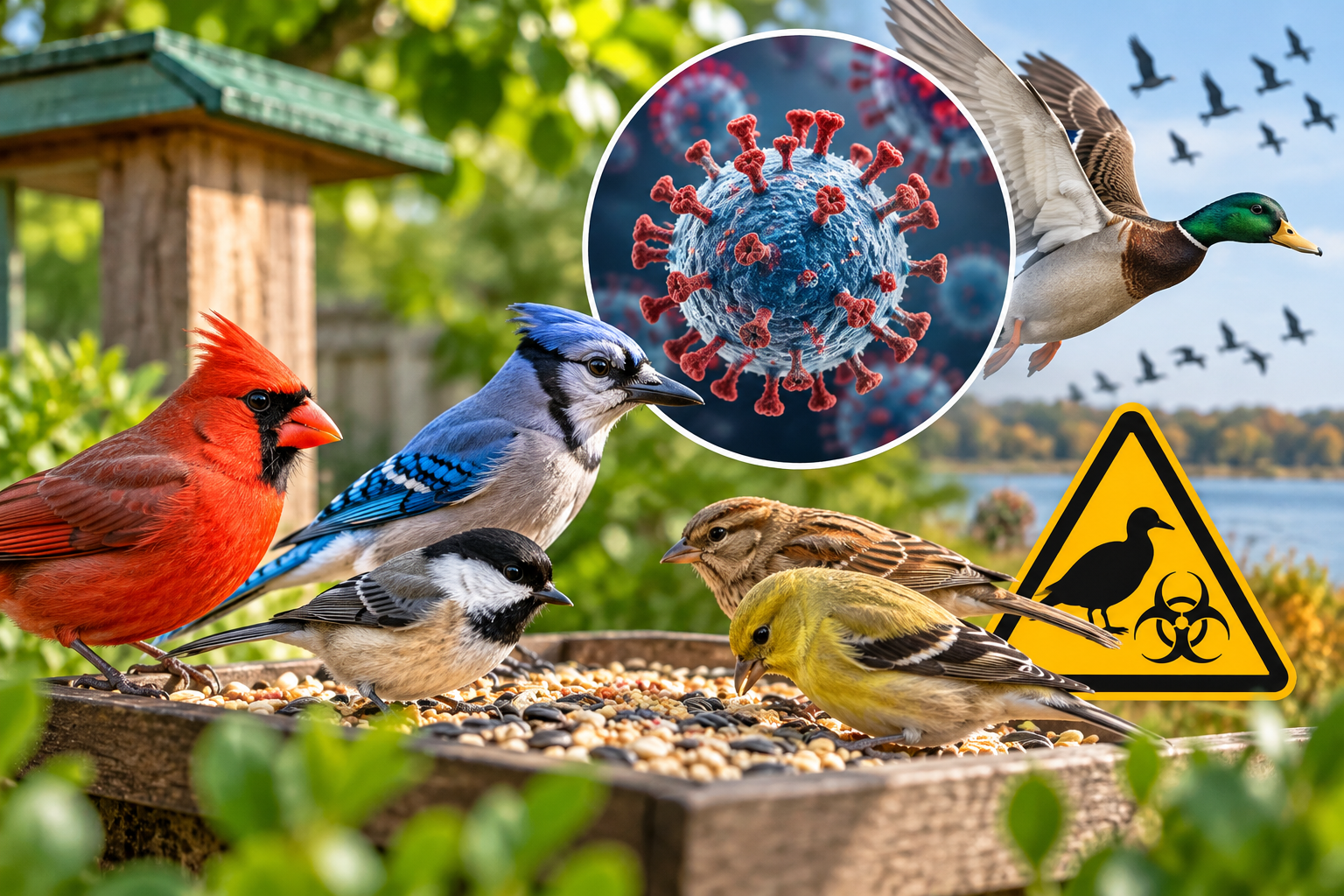
If you have spent any time watching your feeders this fall, you have probably asked yourself one question: is it still safe to feed the birds? Headlines about bird flu keep circulating, and every new report of sick waterfowl makes backyard bird lovers wonder whether their chickadees and finches are at risk. It is a fair question, and you deserve a clear, science-based answer.
Here is the good news up front: for most backyard feeding setups, the answer is yes, keep feeding. Songbirds, the chickadees, titmice, finches, and cardinals that visit your feeders every day, are at low risk for highly pathogenic avian influenza, the strain of bird flu making the news.
Wildlife health experts, including the Cornell Lab of Ornithology and the USDA, have consistently said that everyday backyard feeding is safe for the vast majority of people.
That does not mean there is nothing to do. Fall migration is underway, and it changes the risk picture every year. Waterfowl arriving from the north can carry the virus, feeder hygiene matters more than ever, and there are specific situations when pausing your feeders is the right call.
This guide walks you through exactly what bird flu means for your backyard in 2026, plus the simple steps that keep your feathered visitors safe.

What Is Bird Flu, Anyway?
“Bird flu” is the everyday name for avian influenza, a family of flu viruses that occur naturally in wild birds. The one in the headlines is highly pathogenic avian influenza, usually shortened to HPAI, most often the H5N1 subtype. “Highly pathogenic” describes how severe it is in poultry, where it can be devastating, not how contagious it is at your seed feeder.
Low pathogenic strains of avian flu circulate in wild waterfowl all the time and usually cause no visible illness at all. The current concern is the highly pathogenic H5N1 strain that surged in Europe around 2020 and reached North America in 2021. Since then it has caused die-offs in wild birds, swept through poultry flocks, and even spilled over into mammals. That spectrum matters, because the risk to your backyard visitors depends almost entirely on which species they are.
Where Bird Flu Stands in Fall 2026
The outbreak is far from over. European surveillance recorded detections of HPAI H5N1 in domestic and wild birds across multiple countries through summer 2026, a seasonal low, but experts there have already warned that arriving migratory birds are expected to raise the risk in the coming weeks. The virus has also kept expanding its reach geographically through 2026.
In the United States, the pattern is playing out the way it does most years. State agriculture departments noted in September 2026 that the virus was already being detected in poultry in several states as fall migration began, and urged animal owners to stay vigilant. There is a familiar rhythm to this outbreak: cases rise when birds migrate in spring, dip through the summer lull, and climb again when waterfowl head south in the fall.
For people, the public health picture has stayed stable. The CDC continues to rate the risk to the general public as low, with rare human infections linked to close, prolonged contact with infected poultry. Standard precautions apply: avoid handling sick or dead wild birds, wash your hands after cleaning feeders, and keep your distance from wildlife that looks ill.
Songbirds vs. Waterfowl: Know Where the Real Risk Is
Not all birds face the same risk, and this is the single most important thing to understand. USDA surveillance has consistently found that songbirds make up only a tiny fraction of reported wild bird cases, roughly three percent, and research shows they are less likely to contract the virus and less likely to shed it in large amounts. They are not considered reservoirs of the virus.
Waterfowl are the engine of this outbreak. Ducks, geese, and swans are the main group impacted, and they frequently carry and spread the virus while looking perfectly healthy. Raptors such as hawks and eagles, shorebirds, gulls, and some corvids like crows and jays have also tested positive, often after feeding on or around infected waterfowl. The table below lays out how the groups compare.
| Bird Group | Common Examples | HPAI Susceptibility | Role in Spread |
|---|---|---|---|
| Waterfowl | Ducks, geese, swans | High | Primary carriers; often spread the virus while appearing healthy |
| Songbirds | Chickadees, finches, cardinals, sparrows | Low | Rarely infected and shed little virus; not considered reservoirs |
| Raptors | Hawks, eagles, owls | High mortality when infected | Catch it from infected prey; do not drive the outbreak |
| Corvids | Crows, jays, ravens, magpies | Moderate | Some positive cases; scavenging brings exposure |
| Shorebirds and gulls | Sandpipers, gulls, terns | Moderate to high | Affected in some outbreaks; share habitats with waterfowl |
| Domestic poultry | Chickens, ducks, turkeys | Very high | Extremely vulnerable; outbreaks spread fast within flocks |
The takeaway is reassuring for feeder watchers. The birds visiting your sunflower seeds and suet, mostly songbirds, sit at the low-risk end of this spectrum. The real concern zones are ponds, marshes, and poultry flocks, not your platform feeder. That is precisely why the Cornell Lab of Ornithology says the short answer for most people is no, you do not need to take your feeders down.
Your Feeder Hygiene Playbook

Here is the truth that gets lost in bird flu headlines: your feeder’s biggest everyday disease risks are not exotic at all. Salmonella and conjunctivitis spread at dirty feeding stations far more readily than H5N1 does, and both are far more deadly to your feeder visitors. The same cleaning routine that protects against those common killers also guards against bird flu.
The Ten Percent Bleach Method
The gold standard is simple: one part household bleach to nine parts water. Take feeders down every two weeks, scrub them with soap and water, soak or wipe them with the bleach solution, rinse thoroughly, and let them dry completely before refilling. That drying step matters, because moisture grows mold and bacteria in old seed.
While you clean, sweep up fallen seed and hulls beneath the feeders, since droppings collect under feeding stations and ground-feeding birds pick through them. Wear disposable gloves or wash your hands thoroughly afterward, and rinse your brushes and gloves too. For the full step-by-step routine with feeder-type-specific tips, see our guide on how to clean bird feeders.
Smart Feeder Placement
Spread the love around your yard. Several smaller feeders in different spots beat one giant feeding station, because they keep birds from crowding shoulder to shoulder. Space feeders at least ten feet apart when you can, and keep them away from areas where ducks or geese gather, such as ponds or open lawns where flocks land.
Avoid scattering seed directly on the ground in large piles, since ground feeding creates exactly the kind of dense gathering where diseases of all kinds transmit easily. Tube and hopper feeders with drainage holes keep seed drier and cleaner than platform feeders, though any feeder works if you clean it regularly. Rake and refresh the ground beneath your feeders through the season.
Bird Bath Best Practices
Water is trickier than seed, because bird baths can harbor pathogens and attract species you did not invite. Dump and scrub bird baths every two to three days with the same bleach solution, rinse well, and refill with fresh water. Shallow baths with a rough surface dry faster and clean more easily than deep, smooth ones.
If migrating ducks or geese start visiting your bath, consider emptying it temporarily until they move on. Moving water features, like drippers and small solar fountains, stay cleaner than still water and are irresistible to songbirds. During the coldest weeks, heated bird baths are wonderful, just keep up the cleaning schedule.
Should You Take Your Feeders Down?
This is the question every bird lover asks, so here is the direct answer: there is currently no blanket recommendation to remove backyard bird feeders. The Cornell Lab of Ornithology, USDA wildlife disease experts, and state wildlife agencies have all stated that feeding songbirds is safe.
The one clear exception is households that keep domestic poultry. If you have backyard chickens, ducks, or other captive birds, experts advise taking down wild bird feeders or moving them well away from your flock, because poultry are so much more vulnerable than songbirds. The goal is to keep wild birds away from your poultry, not to keep songbirds away from each other.
When Feeders Can Stay Up
- No poultry at home: You keep no chickens, ducks, or other domestic birds on your property
- Songbird visitors: Your station attracts chickadees, finches, nuthatches, woodpeckers, and other songbirds, not ducks and geese
- No local outbreak: Your state wildlife agency has not reported HPAI detections or advised feeder removal in your area
- Hygiene routine: You clean feeders regularly and watch for sick birds at your station
If all of those describe your situation, keep feeding with confidence. Your daily visitors depend on you, especially as natural food sources thin out toward winter.
When to Pause Feeding Temporarily
- You keep poultry: Take feeders down or relocate them far from your flock as a biosecurity step
- Local guidance says so: Your state or local wildlife agency recommends temporary removal in your area
- High-risk visitors: Waterfowl, crows, or ravens are hanging around your feeding station
- Sick birds appear: You spot lethargic, disoriented, or dying birds at your feeders

A temporary pause usually lasts about two weeks, or until your wildlife agency says the local risk has passed. When in doubt, follow your local agency’s guidance, since officials monitoring the virus may recommend temporary removal, avoiding certain habitat areas, or other precautions specific to your region.
Why Fall Migration Matters for Your Backyard
October is one of the busiest bird months of the year. Millions of waterfowl, ducks, geese, and swans, move south along the flyways right now, and many pass through or winter near populated areas. Because waterfowl are the primary carriers of HPAI H5N1, this seasonal movement is the main reason detections tick upward each fall.
The Seasonal Pattern
Waterfowl often carry the virus without looking sick at all, which is exactly why migration spreads it so efficiently. Infected ducks and geese shed the virus in saliva, mucus, and droppings, seeding the ponds, puddles, and wet fields they visit. Local birds that share those water sources, including raptors that prey on sick waterfowl, can then pick it up. Songbirds at your feeder rarely visit open water the way ducks do, which is one reason their exposure stays low.
The pattern repeats year after year: a spring spike as birds head north, a quiet summer, then a fall rise as they head south. In North America, waterfowl migration peaks from mid-October through November, and cold winter weather can help the virus survive longer in the environment. Knowing this rhythm helps you time precautions like stepping up feeder cleaning as migrants arrive.
When Migrants Arrive Near You
If you live near a lake, river, wetland, or even a golf course pond that hosts ducks and geese, assume those waterways sit on the virus’s travel route this season. Urban and suburban yards can also see visiting migrants stop briefly at decorative ponds and bird baths. This does not make your yard dangerous. It makes autumn the season to be a more observant and careful feeder manager.
Watch your state wildlife agency’s updates for confirmed HPAI detections near you, because local guidance is the best trigger for temporary changes. Your everyday chickadees are not the concern; it is the overlap between waterfowl routes and your feeding station that matters.

What to Do If You Find a Sick or Dead Bird
Sooner or later, most dedicated bird watchers encounter a bird in trouble. A sick bird may look lethargic or unusually tame, hold its head at an odd angle, show discharge around the eyes, or struggle to fly. The rule is simple: do not handle the bird.
Keep children and pets, including pet birds, away from the sick or dead bird. Then contact your local or state wildlife agency, which can determine the cause of death and arrange testing at the appropriate lab. Many states have online reporting tools or wildlife health hotlines for exactly this purpose. Reporting helps scientists track the outbreak and protect other wildlife.
- Observe from a distance: Note the species, symptoms, and location without touching the bird
- Keep pets away: Bring cats and dogs indoors and keep them away from the area
- Report it: Call your state wildlife agency or use its online wildlife disease reporting tool
- Clean the area: After authorities remove the bird, disinfect feeders and the ground beneath them
One important distinction: a healthy-looking young bird on the ground in spring is usually a fledgling learning to fly, not a sick bird, and it should be left alone. Our guide on what to do if you find a baby bird explains how to tell the difference.
Keep Cats Indoors During Migration Season
Your cat may be the biggest bird flu risk in your household. HPAI H5N1 has infected a range of mammals, and cats are among the susceptible ones, with cases linked to eating infected birds. An outdoor cat that catches or scavenges a sick bird can become seriously ill.
Keeping cats indoors, or in a secure catio, protects both sides of the equation: your cat avoids exposure to the virus, and local birds avoid a highly effective predator. Fall migration season, when sick waterfowl and raptors are most likely to be on the ground, is an especially good time to make the indoor switch if you have not already. Your cat will adjust, and the birds will thank you.
Helping Birds Beyond Your Feeders
Feeders are only one way to support birds through a tough season. Native plants, especially berry-producing shrubs and seed-bearing flowers, give birds natural food spread across your yard instead of concentrated at one spot. A brush pile offers shelter, and a clean water source helps birds when puddles freeze.
You can also contribute to the bigger picture. Participate in citizen science counts like Project FeederWatch or the Christmas Bird Count, which help researchers track how bird populations are faring. And if you want the full landscape of what birds are up against this year, read our roundup of the top threats to birds in 2026 and the solutions giving them a fighting chance.
Frequently Asked Questions
Can backyard songbirds get bird flu?
Songbirds can technically be infected, but it is uncommon. USDA surveillance has found that they make up only a tiny fraction of reported wild bird cases and do not shed the virus in large amounts. Your feeder’s chickadees, finches, and cardinals are considered low risk.
Should I take down my bird feeders right now?
For most people, no. The Cornell Lab of Ornithology, the USDA, and state wildlife agencies have said feeding songbirds is safe, with no blanket recommendation to remove feeders. Take them down temporarily if you keep poultry, if your local wildlife agency advises it, or if you see sick or dead birds at your station.
How often should I clean my feeders during bird flu season?
Clean feeders every two weeks at minimum, and weekly during migration peaks or if you notice sick birds. Scrub with soap and water, disinfect with one part bleach to nine parts water, rinse thoroughly, and dry completely before refilling. Clean bird baths every two to three days.
Is bird flu dangerous to my family or pets?
The CDC rates the risk to the general public as low. Human infections have been rare and linked to close, prolonged contact with infected poultry or their environments. Pets are more of a concern: keep cats indoors and dogs away from sick or dead birds, and never let pets eat wild birds.
What are the symptoms of bird flu in birds?
Signs include lethargy, loss of coordination, head tilt or tremors, swollen or runny eyes, respiratory distress, and sudden death. Many waterfowl carry the virus with no visible symptoms at all. Never try to diagnose a bird yourself; report it to your wildlife agency instead.
What should I do if I find a dead bird in my yard?
Do not touch it with bare hands. Keep children and pets away, and contact your local or state wildlife agency; they may want to collect it for testing. After authorities remove the bird, disinfect nearby feeders and the ground beneath them, and wash your hands thoroughly.
Can I catch bird flu from touching a bird feeder?
The risk from routine feeder handling is extremely low. Still, good hygiene is smart: wear gloves when cleaning feeders, wash your hands afterward, and avoid touching your face while handling feeders or seed. These habits protect you from salmonella and other common feeder germs too.
Bird flu is a serious wildlife health issue, but it does not have to end the joy of feeding birds. Songbirds remain at low risk, the science supports keeping your feeders up, and a solid cleaning routine handles the rest. Stay observant this fall, follow your local wildlife agency’s guidance, and keep those feeders clean.






[…] The same logic applies to eggs, feathers, and droppings. Rabies spreads through saliva or nerve tissue entering a wound or a mucous membrane, not through feathers, eggs, or dried droppings. Touching a bird, cleaning a feeder, or handling eggs does not expose you to rabies. To learn about the diseases birds do carry, read our guide to bird flu and backyard birds. […]