 Skip to content

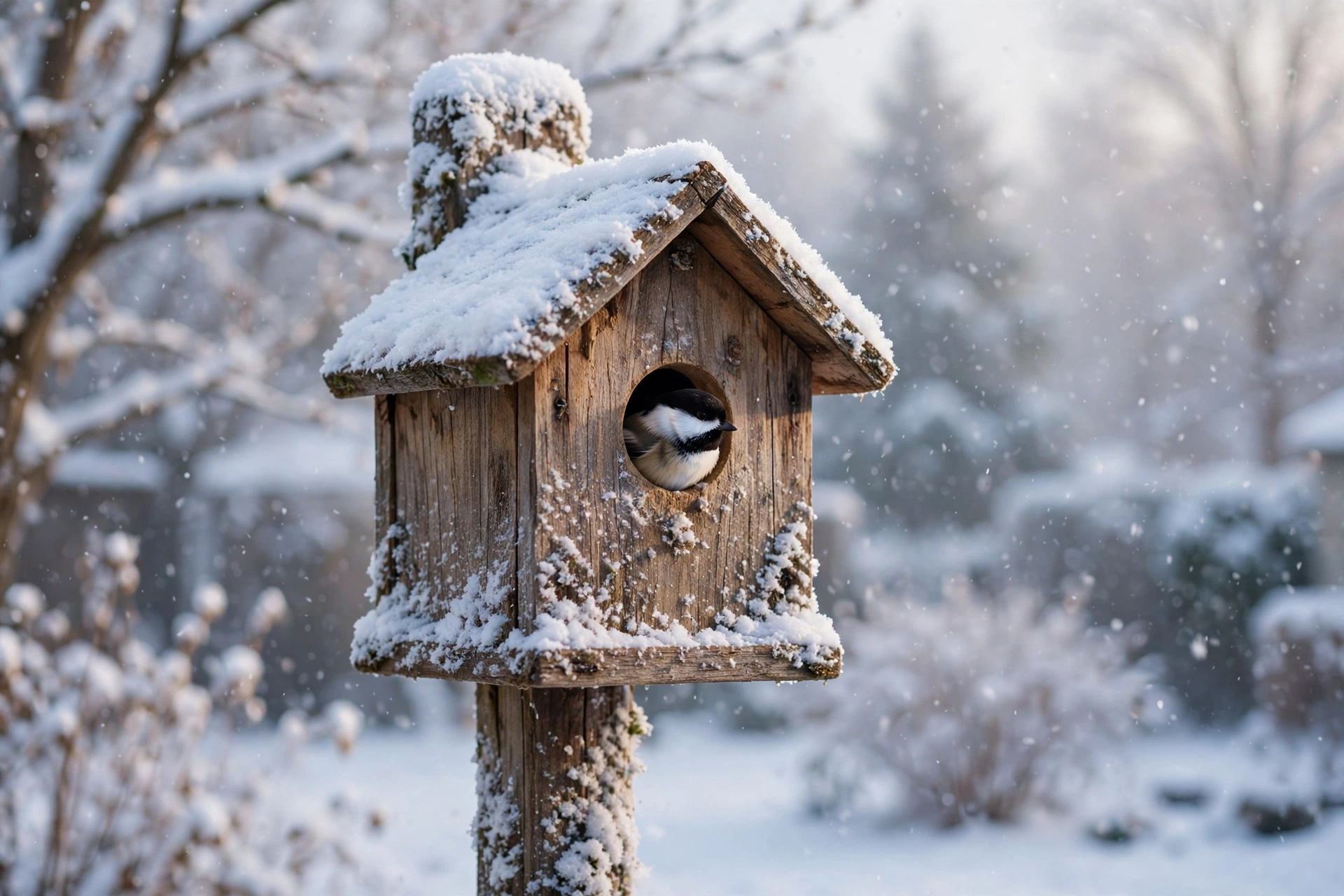
Do birds use birdhouses in winter? Yes, and October is the perfect time to get yours ready. Many cavity-nesting birds trade their summer homes for winter roosting spots, and your empty birdhouse can become a life-saving shelter on a freezing night.
While nesting season is over, the job of a birdhouse is not done. Chickadees, bluebirds, wrens, nuthatches, and woodpeckers all seek out enclosed spaces to survive the coldest months. Some even pile in together, sharing body heat to make it through the night.
This guide covers which birds roost in birdhouses, how communal roosting works, and exactly how to winterize your boxes now so they are ready when temperatures drop.
Which Birds Roost in Birdhouses During Winter?
There is a simple rule of thumb from birding experts: birds that nest in cavities tend to roost in cavities too. According to Kenn and Kimberly Kaufman, birds like chickadees, wrens, and bluebirds that raise families in tree holes or birdhouses will seek similar enclosed spots to sleep at night, especially in cold winter weather.
That means if a species used your box in spring, it is a good candidate for winter roosting. Here are the most common winter tenants:
- Chickadees: Black-capped and Carolina chickadees are regular winter roosters, often sleeping alone or in small groups inside boxes.
- Bluebirds: Eastern, Western, and Mountain bluebirds famously pile into a single box on cold nights.
- Wrens: Carolina wrens and House wrens frequently use boxes and other cavities as nighttime shelters.
- Nuthatches: White-breasted and Red-breasted nuthatches roost in cavities and boxes through winter.
- Titmice: Tufted titmice join the chickadee crowd in winter boxes.
- Downy woodpeckers: These small woodpeckers commonly roost in boxes and hollow snags at night.
- Eastern screech-owls: A larger tenant, but one that may claim a box as a daytime roost all winter.
Not every backyard bird will do this. Open-nesting birds like goldfinches rarely enter enclosed spaces. Flocks of goldfinches instead sleep close together in the sheltering branches of evergreen trees on cold winter nights.
Communal Roosting: How Birds Share Body Heat
Some birds roost alone, tucking themselves into a corner. Others, famously bluebirds, roost together in a group. On the coldest nights, half a dozen or more bluebirds will fly into a single nesting box shortly before sunset, disappearing one by one into a space that seems far too small.
The reason is pure survival math. Small birds lose heat fast, and on bitter nights a lone bird can struggle to stay alive until morning. Huddled shoulder to shoulder, birds share body warmth and cut their individual heat loss dramatically. Inside the box, their combined warmth can raise the air temperature well above the freezing cold outside.
Observers note that roosting bluebirds do not sit randomly. They pack tightly with heads tucked and feathers fluffed, pressing against each other and the box walls where warm air collects. By morning they burst out one after another and get straight to feeding, replacing the energy spent overnight.

Winter Roosting Table: Which Species Use Boxes
| Species | Roosting Style | Group Size | Notes |
|---|---|---|---|
| Eastern Bluebird | Communal | Up to 6+ | Piles into one box on the coldest nights |
| Black-capped Chickadee | Solo or small groups | 1-4 | Uses boxes, pipes, and any tight cavity |
| Carolina Wren | Solo or pairs | 1-2 | Roosts in boxes, garages, and porch corners |
| White-breasted Nuthatch | Solo | 1 | Prefers natural cavities but uses boxes |
| Tufted Titmouse | Solo or pairs | 1-2 | Often joins chickadees in winter boxes |
| Downy Woodpecker | Solo | 1 | Excavates its own roost holes but uses boxes too |
| Eastern Screech-Owl | Solo | 1 | Daytime roost; may claim a box all winter |
This table covers the most common box users. Your exact winter guests will depend on your region and which species live in your yard year round.
Roosting vs. Nesting: What Changes After Breeding Season
A birdhouse serves two different purposes across the year, and the birds treat it differently each time. In spring, a box is a nursery. One breeding pair claims it, defends it from rivals, builds a nest, and raises young over several weeks.
In winter, the same box becomes a bedroom. There is no territory to defend and no nest to build. Birds arrive near dusk, slip inside, fluff up their feathers, and sleep. They leave at dawn and may not return until the next evening.
This shift changes what makes a box ideal. Nesting boxes are deliberately ventilated so summer heat does not harm eggs or chicks. That same ventilation works against birds on a January night, letting precious body heat escape. A dedicated roosting box keeps the entrance hole low, so rising warm air stays trapped inside, and reduces upper ventilation gaps.
You do not need to buy a special roost box, though. An ordinary nesting box works fine for winter shelter, and you can improve it with a few simple winterizing steps.
How to Winterize Your Birdhouse (Do It Now)
October is the ideal time to prep your boxes. Nesting season is over, but the hardest cold is still ahead. Here is the checklist:
- Clean it out: Remove old nesting material, which can harbor mites and bacteria from summer tenants. Scrape out debris and let the box dry fully. Birds will not roost in a box stuffed with a stale old nest.
- Repair any damage: Check for cracked boards, loose screws, and warped lids. A box that leaks rain or wobbles in the wind will not attract tenants.
- Unclog drainage holes: Floor drainage holes matter in winter too. Meltwater and moisture need somewhere to go, or the box turns into a damp ice box.
- Reduce upper drafts: Many birders plug the large ventilation gaps near the roof with foam or cloth so body heat stays inside. Leave the entrance hole and floor drainage open, since trapped moisture is worse than lost heat.
- Face it away from winter wind: In most regions, the harshest winter winds come from the north and northwest. If you can, angle the entrance away from those directions to keep icy gusts from blowing straight in.
- Leave it up all winter: Do not take sturdy wooden boxes down. Birds need them most from December through February, and a box removed now is a box nobody can use.
If you have flimsy gourd houses, clay boxes, or heavily decorated birdhouses that snow and ice could destroy, those are the exception. Store them until spring and leave the sturdy wooden boxes up.

The Bedding Debate: Should You Add Hay or Shavings?
Ask five birders whether to add bedding to a winter birdhouse and you will get six opinions. The honest answer is that it depends on the material, and there is real nuance worth knowing.
Some sources recommend adding a couple of inches of dry, untreated wood shavings or dried grass to the box floor. This gives roosting birds a softer, slightly insulated surface and helps keep the box cleaner. Woodpeckers, waterfowl, and owls actually prefer a few inches of dry wood shavings in the bottom of a box.
Others caution against hay and straw. These materials can absorb moisture, mat down, and grow mold, and old hay can harbor mites and parasites carried in from the field. Some birders skip bedding entirely, reasoning that a clean, empty, draft-reduced box is the safest option and that birds never bring their own bedding in winter anyway.
Here is the balanced take: if you add anything, use clean, dry, untreated wood shavings in a thin layer, and never use hay from unknown sources or anything treated with chemicals. If you would rather leave the box empty, that is perfectly fine too. Birds roost on bare wood in natural tree cavities every night. What matters most is that the box is clean, dry, and sheltered from the wind.
No Perch Needed: How Roosting Birds Actually Sleep
You may notice that good birdhouses have no perch on the outside. That is by design, since external perches give predators like house sparrows and starlings a place to stand while harassing tenants. But what about inside?
Inside a nesting box, roosting birds simply do not need perches. They cling to the interior wooden walls with their feet, wedge into corners, or settle on the box floor. A chickadee can grip rough wood effortlessly, even while asleep, thanks to its locking foot tendons.
Dedicated roosting boxes sometimes include interior dowels so several birds can line up side by side. That is a nice upgrade, but it is not required. A plain wooden box with rough interior walls is perfectly usable, which is why so many species happily roost in standard nesting boxes every winter.
What to Watch For: Droppings and Late-Season Tenants
Once winter arrives, you can check for tenants without disturbing them. The best time to look is midday, when roosting birds are out foraging. A few white droppings on the box floor or small feathers stuck near the entrance hole are reliable signs of overnight guests.
Never open a box at night or shine a bright light inside. Startled birds burn precious energy fleeing into the dark, which can be deadly on a cold night.
You may also get non-bird tenants. Mice, flying squirrels, and even wasps sometimes claim empty boxes in late fall. A quick midday check lets you evict squatters before winter sets in. Flying squirrels are actually communal roosters too, but most people prefer to reserve their boxes for birds.
By late February or March, the winter arrangement breaks up. Pairs begin prospecting the same boxes for spring nesting. Remove any winter insulation materials at that point so the box is clean and ready for the breeding season. For more on how birds handle the cold in general, see our guide on how birds stay warm in winter.

Frequently Asked Questions
Should I take my birdhouses down in winter?
No. Leave sturdy wooden birdhouses up all winter. Birds need them most from December through February, when natural cavities are scarce and nights are longest. Only store fragile gourd, clay, or decorated houses that snow and ice could damage.
Do birds sleep in birdhouses every night in winter?
It depends on the weather and the bird. Chickadees and bluebirds use boxes most on the coldest nights, and may skip them during mild spells. Think of the box as an emergency shelter they visit when conditions demand it, not a nightly hotel.
Will more than one bird use the same box?
Yes. Bluebirds famously pile in together, sometimes half a dozen or more in a single box. Chickadees and titmice may also share. Communal roosting lets them share body heat and survive nights that would kill a lone bird.
Should I put food inside the birdhouse?
No. Never put food inside a roosting box. It attracts rodents, spoils in damp conditions, and can foul the roosting space. Keep feeders nearby instead, so birds can fuel up before bedtime and first thing in the morning.
Do I need a special roosting box, or will a nesting box work?
A standard nesting box works fine. Dedicated roosting boxes have design advantages, like a lower entrance hole and less ventilation to trap heat, but ordinary boxes shelter birds successfully every winter. Winterizing steps like plugging upper drafts make a regular box even better.
What month should I clean out birdhouses for winter?
Clean them in early fall, around September or October, after breeding season ends and before hard cold arrives. This clears out mites and old nest material in time for winter roosters to move in. For step-by-step guidance, see our fall cleaning guide linked above.
Can I watch the birds roost without disturbing them?
Yes, if you are careful. Watch from a distance at dusk as birds arrive; you will often see them slip in one by one in the last minutes of daylight. Never open the box or shine lights inside at night, and do any inspections at midday when birds are out feeding.
Do owls use birdhouses in winter?
Eastern screech-owls do. They may claim a box as a daytime roost for the whole winter, dozing inside through the daylight hours and hunting at night. If you find a sleepy owl face in your box one morning, consider yourself lucky. Learn more about where other birds spend the night in our article on where ducks sleep at night.
Conclusion
So, do birds use birdhouses in winter? Absolutely. Your quiet summer boxes become some of the most valuable real estate in the neighborhood once the temperature drops. Chickadees, bluebirds, wrens, nuthatches, and woodpeckers all depend on enclosed shelters to survive the longest, coldest nights.
The best part is that the work is simple and the timing is now. Clean your boxes this month, make basic repairs, cut the drafts, and leave them up. By January, you may have a half-dozen bluebirds piled inside a single box, sharing warmth through the night.
That is a pretty wonderful return on a twenty-minute October chore. If you want to make your yard even more winter-friendly, read our guide to attracting woodpeckers to your yard next.
References
- Cornell Lab of Ornithology, NestWatch: nestwatch.org (nest box design and maintenance guidance)
- National Audubon Society: audubon.org (winter bird shelter and roosting behavior)
- National Wildlife Federation: nwf.org (backyard wildlife habitat in winter)





