
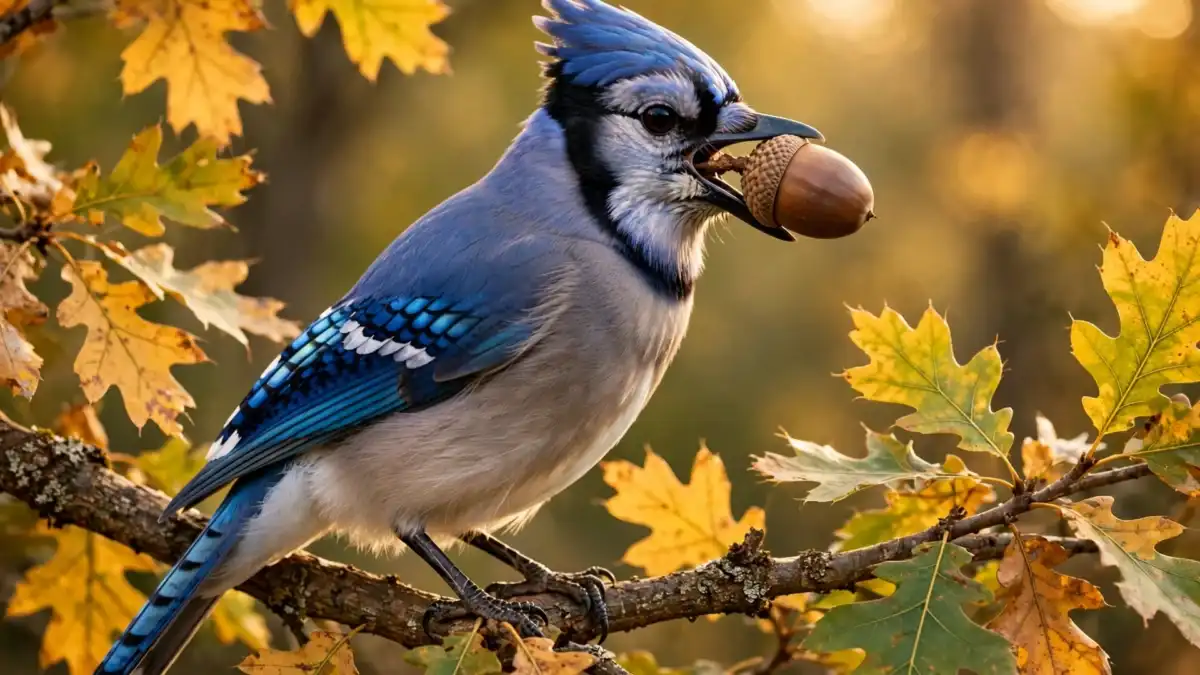
Yes, many birds eat acorns. Blue jays, woodpeckers, nuthatches, ducks, and wild turkeys all rely on acorns as a rich autumn food, and some species store thousands of them for winter. Acorns pack fat, protein, and carbohydrates into a small shell, which makes them one of the most valuable wild foods a bird can find. The catch is tannin, a bitter compound that makes raw acorns hard to digest. Birds have evolved clever ways to deal with it, from choosing low tannin white oak acorns to wedging acorns into tree bark and letting time do the work. Here is how it all works, and whether you should offer acorns at your own feeder.
Which Birds Eat Acorns?
Acorn eaters come from very different bird families, and each one handles the nuts in its own way. Some crack them on the spot. Others carry them away and hide them for later. A few eat them whole, shell and all.
- Blue jays: The most famous acorn eaters in North America. A single jay can carry up to five acorns at once, one in its bill and the rest tucked in its throat pouch.
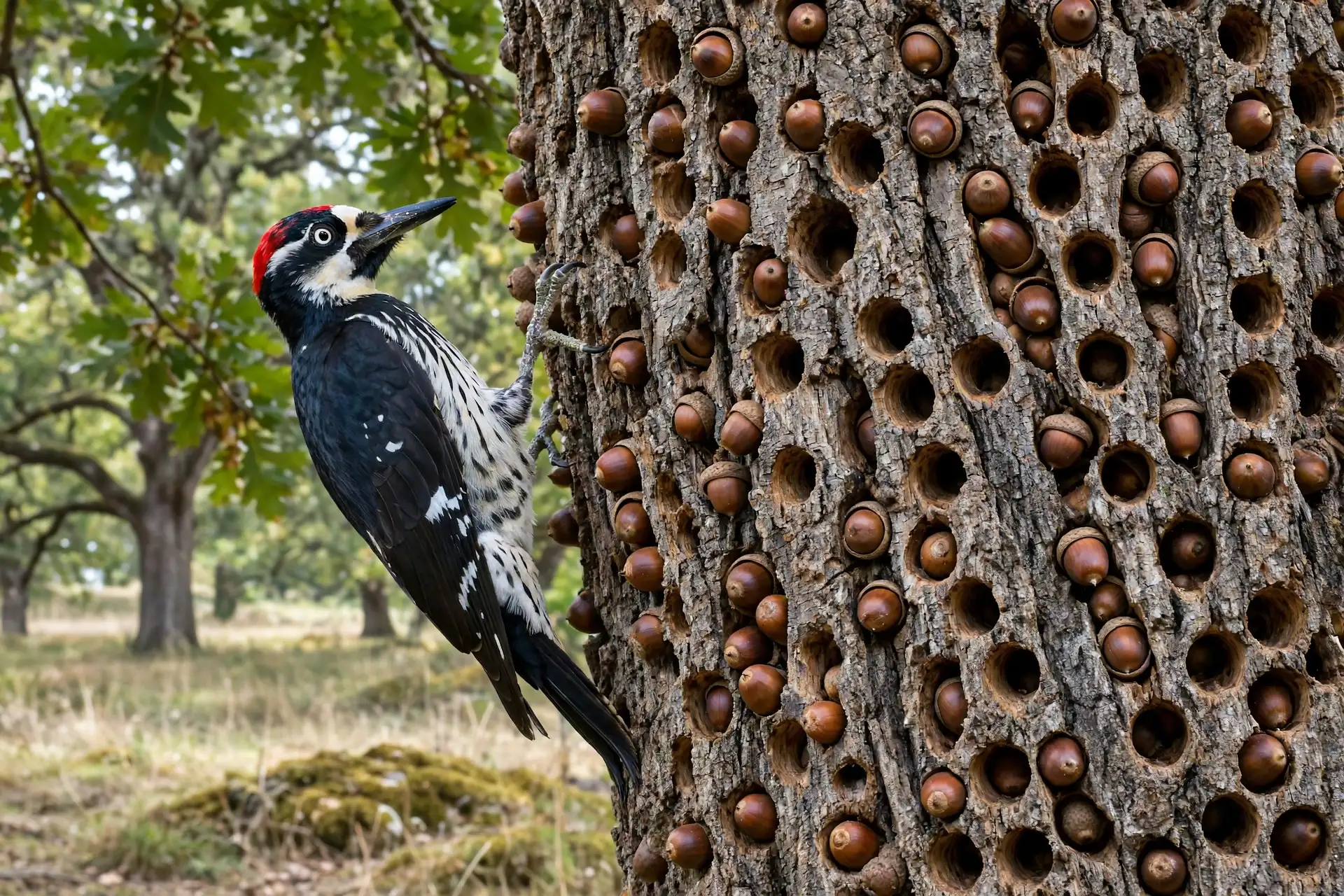
- Acorn woodpeckers: These communal birds drill holes in dead trees and wedge acorns into them, building granaries that hold thousands of nuts.
- Red-headed woodpeckers: They cache acorns in bark crevices and fence posts, and they are one of the few woodpeckers that store food regularly.
- White-breasted nuthatches: They wedge an acorn into a bark crack and hammer it open with their sharp bill, a trick they also use on sunflower seeds.
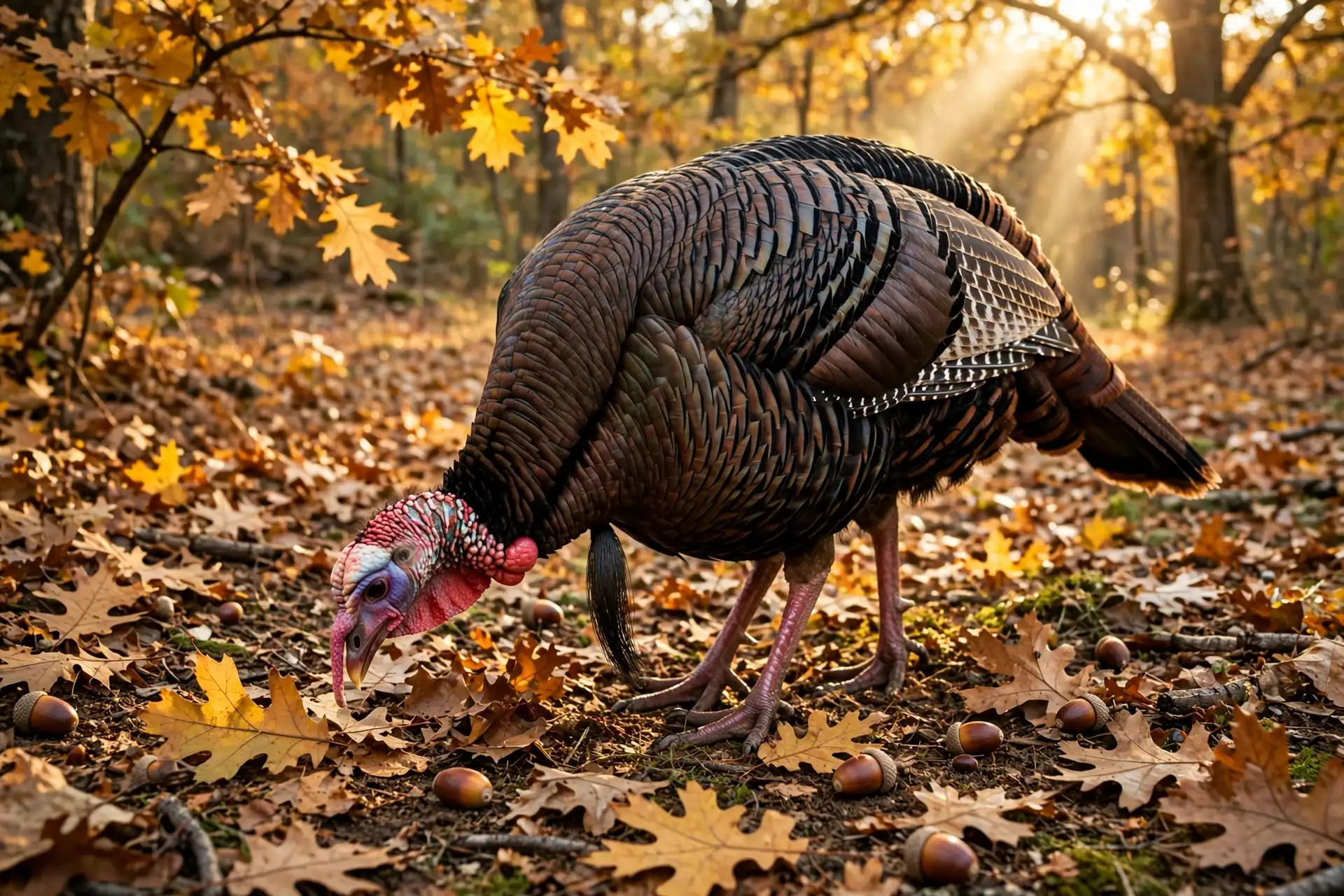
- Wild turkeys: Flocks scratch through autumn leaf litter for fallen acorns, and acorns can make up a large share of a turkey’s fall diet.
- Wood ducks: They swallow small acorns whole and let their gizzard grind the shell and kernel together.
- Mallards and other dabbling ducks: They pick up acorns in flooded oak woodlands, where the nuts drop straight into shallow water.
- Common ravens and crows: Corvids carry acorns away, cache them in soil, and remember many of their hiding places for months.
Blue jays deserve special attention because they do more than eat acorns. They move them. A jay may fly a kilometre or more with a load of acorns, bury them in the ground, and never return for some of them. Those forgotten acorns grow into new oak trees. Cornell Lab notes that the blue jay’s fondness for acorns helped spread oak trees across North America after the last glacial period, which makes the jay one of the most important forest planters in the bird world.
Wild turkeys take a different approach. They feed in flocks, scratching through leaf litter with strong feet and picking up acorns one by one. A turkey’s large gizzard grinds the nuts efficiently, so the birds can process big meals quickly before moving on. In oak rich woodland, a flock can strip the ground under a productive tree in a single morning.
Ducks add a twist that surprises many people. Wood ducks and mallards do not need to crack acorns at all. They swallow small ones whole, and the muscular gizzard does the crushing work. This is why flooded bottomland forests matter so much to waterfowl. Acorns drop into shallow water, and ducks simply scoop them up.
How Birds Crack Open an Acorn
An acorn is a tough package. The shell is hard, the cap clings tightly, and the kernel inside is protected by a thin skin. Birds use several methods to get past these defences, and the method depends on the bird’s bill and body size.
Nuthatches and woodpeckers use the wedge and hammer method. The bird jams the acorn into a bark crevice or a drilled hole, which holds it steady, then strikes it with rapid pecks until the shell splits. The nuthatch then extracts the kernel in pieces and eats it on the spot.
Blue jays use a combination of carrying and pounding. They hold the acorn against a branch with one foot, then hammer the shell with their strong bill. Jays also swallow small acorns whole when they plan to cache them, since an intact acorn stores better than a cracked one.
- Pick: The bird selects an acorn, often testing several by weight and feel before choosing one.
- Carry: Jays and crows fly the acorn to a favourite anvil branch or a caching site.
- Crack: The bird wedges the acorn into bark or holds it with a foot, then hammers until the shell splits.
- Extract: The kernel is pulled out in chunks and eaten, or the whole acorn is swallowed if it will be stored.
- Cache: Surplus acorns are buried in soil or tucked into bark for later, when food grows scarce.
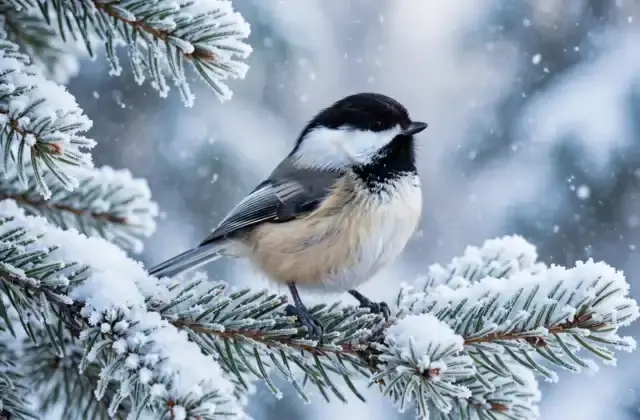
Size matters. A small bird like a chickadee cannot crack an acorn, so it ignores them entirely. A nuthatch can manage one only by wedging it first. The birds that eat acorns regularly all have bills strong enough to split the shell, or gizzards strong enough to grind it.
Tannins: Why Acorns Taste Bitter
Tannins are the reason acorns taste bitter. They are plant compounds that bind to proteins and make food hard to digest, and in large amounts they can upset a bird’s stomach. This is not a flaw in the acorn. It is a defence that protects the seed from being eaten too easily.
Birds handle tannins in three ways. First, they choose acorns with lower tannin levels when they have the choice. Second, they eat acorns as part of a varied diet rather than filling up on them alone. Third, some species store acorns and eat them later, after weeks or months of storage have softened the bitter compounds.
The biggest difference a bird faces is between white oak and red oak acorns. The two groups ripen on different schedules, taste different, and store differently, so birds treat them differently too.
| Feature | White oak acorns | Red oak acorns |
|---|---|---|
| Tannin level | Low, mildly bitter | High, strongly bitter |
| Taste to birds | Eaten fresh in autumn | Often cached and eaten later |
| Germination | Sprouts the same autumn | Needs winter chilling first |
| Storage life | Short, must be eaten soon | Long, keeps through winter |
| First choice for | Blue jays, turkeys, ducks | Acorn woodpeckers, jays caching for winter |
White oak acorns are the autumn favourite because their low tannin levels make them edible right away. The trade off is that they sprout within weeks of falling, so birds must eat or cache them quickly. Red oak acorns taste far more bitter, so birds often store them first and eat them later in winter, after storage has reduced the tannin bite. The red oak acorn also needs a cold winter before it can germinate, which makes it a natural long term food store.
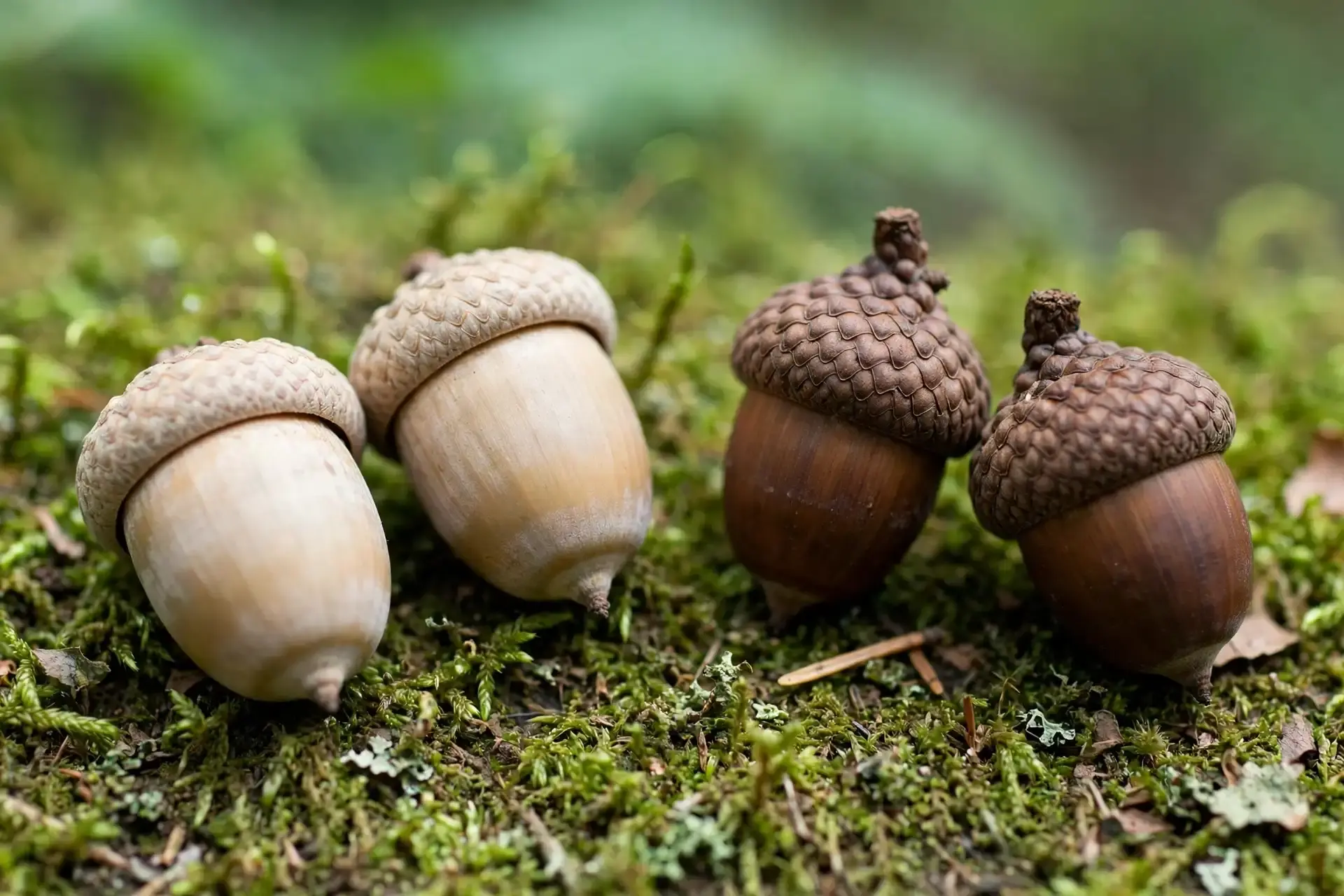
This split explains a pattern birdwatchers see every autumn. Jays and turkeys gorge on white oak acorns as soon as they fall, while red oak acorns sit on the ground longer and disappear gradually through winter. Birds are not being fussy. They are managing tannin levels across the season.
For people, the lesson is simple. Acorns are not poison, but they are not a gentle food either. Tannins are bitter and mildly toxic in large amounts, so no bird eats acorns to the exclusion of everything else. Variety is the safety valve, and birds instinctively mix acorns with insects, seeds, berries, and other foods.
The Acorn Woodpecker’s Granary System
No bird takes acorn storage further than the acorn woodpecker. These birds live in family groups in western oak woodlands, and each group maintains a granary tree, a dead trunk or branch riddled with holes, each hole holding a single acorn wedged in tight.
A granary is a group project. Young birds help drill new holes, wedge in fresh acorns, and guard the store from thieves. A single granary can hold thousands of acorns, and some famous granary trees have held tens of thousands. The birds test each hole for fit, because an acorn wedged too loosely gets stolen by jays and squirrels, while one wedged too tightly cannot be pulled out later.
The system has a clever side effect. As stored acorns dry and shrink, they loosen in their holes, so the birds regularly move them into smaller holes to keep them secure. This constant maintenance keeps the granary stocked and defended through the whole winter. Cornell Lab describes how a group member is always on alert to guard the hoard while others race through the trees giving their parrotlike waka waka calls.
Granaries are so valuable that groups defend them fiercely, and a granary tree can be used by the same family line for generations. When a group loses its granary, it may have to abandon its territory entirely. That is how central stored acorns are to this species.
To learn more about the woodpeckers that build these stores, read our guide on what woodpeckers eat across the seasons, from insects in summer to nuts and fruit in winter.
Mast Years: Feast, Then Famine
Oaks do not produce the same number of acorns every year. In a mast year, a single oak can drop thousands of acorns, and whole forests produce a bumper crop at once. The next year, the same trees may produce almost nothing. This boom and bust cycle is called masting, and it shapes the lives of every bird that eats acorns.
In a mast year, acorn eaters thrive. Jays cache more nuts than they can ever recover, turkeys grow fat, and ducks find easy meals in flooded woodland. Bird numbers rise because food is abundant, and the extra birds mean more acorns get planted in new places. The forgotten caches of a mast year become the oak saplings of the next decade.
In a lean year, the same birds must work harder. They switch to other foods such as beechnuts, hickory nuts, and pine seeds, and they raid their caches earlier in the season. Some jays travel further to find productive oak stands, and winter survival rates can drop when the acorn crop fails across a wide area.
Scientists believe masting evolved to overwhelm seed predators. In a mast year, there are so many acorns that birds and squirrels cannot eat them all, so plenty survive to germinate. In a lean year, the predators go hungry, and their numbers fall, which protects the next crop. It is a strategy that has worked for oaks for millions of years.
Caching: How Birds Plant the Next Oak Forest
Caching is the habit of hiding food for later, and acorn eating birds are among the best cachers in the bird world. A single blue jay may hide several thousand acorns in one autumn, burying each one in a separate spot across its territory.
Jays remember many of their caches using landmarks, and they return to them through winter when snow covers other foods. But they never recover them all. Studies of jay caching suggest a large share of buried acorns is never retrieved, and those leftovers are what keep oak forests regenerating. Each forgotten acorn is a planted seed, already buried at the right depth.
Different birds cache in different places. Jays bury acorns in soil, often in open ground and lawn edges. Nuthatches tuck them into bark crevices. Crows hide them under leaf litter. This variety matters, because acorns buried in soil are the ones most likely to germinate, while those in bark are the ones most likely to be eaten.
If you want to see this behaviour in your own yard, the best step is to attract blue jays to your yard with a tray feeder and a few oak trees. Jays that visit for peanuts and sunflower seeds will also carry away acorns, and you may spot them burying nuts in your lawn.
Should You Offer Acorns at Your Feeder?
Acorns fall naturally in autumn, and birds that eat them usually find their own supply. You do not need to put acorns in a feeder, and in most yards it is unnecessary. But if you live near oak woodland and want to support acorn eaters through winter, a few simple steps help.
- Leave fallen acorns alone: Raking up every acorn removes food that jays, turkeys, and ducks depend on. Leave a patch of leaf litter under your oaks.
- Offer cracked acorns: If you collect acorns, crack a few and scatter them on a tray feeder or on the ground. Cracked acorns are easier for nuthatches and jays to eat.
- Choose white oak acorns: Their lower tannin levels make them the safer choice for a feeder, and birds prefer them fresh.
- Skip red oak acorns at the feeder: Their high tannin levels make them bitter, and birds will usually ignore them until they have been stored for months.
- Never offer mouldy acorns: Acorns that have sat in damp piles can carry mould, so only offer clean, dry, intact nuts.
- Plant an oak: The best long term gift is a young oak tree. It will feed birds for decades, and jays will plant its acorns across your neighbourhood.
A tray feeder or a ground feeding area works best for acorns, since jays and turkeys feed on the ground or on flat surfaces. Hanging tube feeders are not suited to large nuts. If you feed birds through winter, our guide on what to feed birds in winter covers the full seasonal menu, from suet and peanuts to the right seeds for cold weather.
One warning matters. Never offer acorns that have been treated with pesticides or collected from sprayed lawns. Birds are sensitive to chemical residues, and a treated acorn can do more harm than a missed meal. Collect only from untreated trees, and wash the acorns before you offer them.
Frequently Asked Questions
Can birds eat raw acorns?
Yes, birds eat raw acorns regularly, and their digestive systems handle tannins better than ours do. Species like blue jays, wild turkeys, and wood ducks eat raw acorns straight from the ground. Birds balance the tannin load by eating a varied diet and by preferring low tannin white oak acorns when they have the choice.
Are acorns poisonous to birds?
Acorns are not poisonous to the birds that eat them, but tannins are bitter and mildly toxic in large amounts. Wild birds manage this by choosing low tannin acorns, caching high tannin ones until they mellow, and mixing acorns with other foods. Pet birds should not be offered acorns, since their diets are controlled and acorns are not a standard safe food for caged species.
Do blue jays eat acorns whole?
Blue jays swallow small acorns whole when they plan to cache them, and they crack larger ones with their bill when they eat on the spot. A jay can carry up to five acorns at once, one in its bill and several more in its throat pouch. Audubon notes that jays harvest acorns and store them in holes in the ground, and that acorns can make up a large part of their vegetable diet.
Why do birds bury acorns instead of eating them?
Birds bury acorns to save food for winter, when insects and fresh seeds are scarce. Jays, crows, and nuthatches all cache surplus acorns in autumn, then recover them through the cold months. The acorns they never recover often germinate, which is why jays are credited with spreading oak forests across North America.
Do squirrels compete with birds for acorns?
Yes, squirrels are the main competitors for acorns, and they are fast and thorough. Jays cope by caching acorns in many scattered spots, burying them quickly, and sometimes pretending to bury one while hiding the real cache elsewhere. This scatter hoarding makes it harder for squirrels to find every nut.
What time of year do birds eat acorns?
Birds eat acorns mainly from early autumn through winter, when the nuts fall and ripen. White oak acorns are eaten fresh in autumn, while red oak acorns are often eaten later in winter after months of storage. In a mast year, acorns remain available into spring, and birds keep visiting their caches until the supply runs out.
Conclusion
Birds eat acorns, and they do it with skill. Jays carry and plant them, woodpeckers store them by the thousand, nuthatches hammer them open, and turkeys and ducks grind them down. Tannins set the rules, white oak acorns are eaten fresh and red oak acorns are saved for winter, and the birds that never recover their caches end up planting the next generation of oak trees. Leave a few acorns on the ground this autumn, and you will feed birds and forests at the same time.