
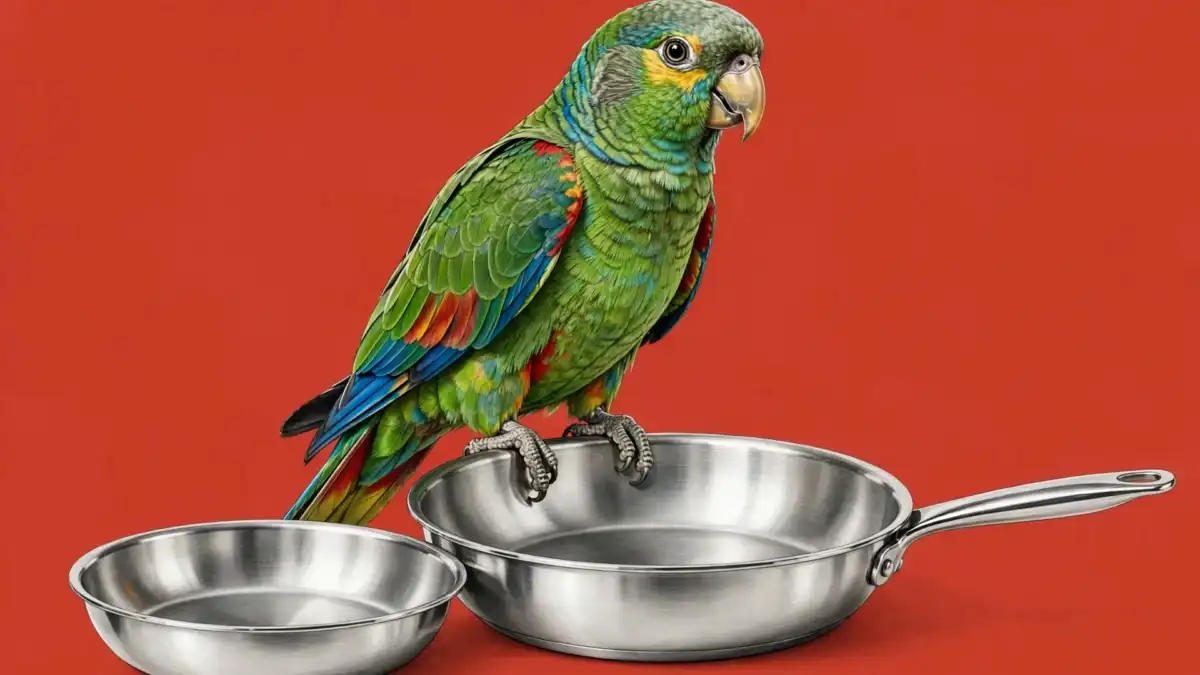
If you are asking about bird safe cookware, here is the direct answer: yes, overheated Teflon and other PTFE coatings can kill a parrot, quickly, and the risk is real enough that many avian vets advise bird homes to avoid PTFE cookware entirely.
Birds breathe far more efficiently than people, so fumes that barely affect a human can cause rapid, fatal respiratory distress in a bird. This guide explains PTFE, the PFOA-free confusion, hidden PTFE sources, warning signs, what to do after exposure, and safe alternatives.
Safety disclaimer: This article is general information only, not veterinary advice. If you suspect PTFE exposure, move the bird to fresh air immediately and seek an avian vet urgently, even if the bird looks fine at first. Do not wait for symptoms to worsen. If no avian vet is available, contact an emergency vet clinic at once and explain suspected PTFE fume exposure.
Can Teflon kill a parrot?
Yes. When PTFE, polytetrafluoroethylene, the coating sold under the brand name Teflon and used in many nonstick pans, is overheated, it can release fumes that are toxic to birds. In birds, those fumes can cause lung bleeding, fluid in the lungs, and rapid suffocation. Death can occur within minutes of heavy exposure, and it can occur without obvious warning to people in the same room.
That speed is what makes PTFE so dangerous in a bird home. A pan left empty on high heat, a pan preheated too long, a grill left on, or an oven self-clean cycle can create a dangerous event while the cook is focused on food, not on the bird in another room. Ventilation helps in general, but standard range hoods do not reliably capture all fumes, and ventilation alone should not be treated as protection for a bird.
Not every use of a nonstick pan harms a bird. Low-heat cooking with food in the pan, for a short time, in a well-ventilated kitchen, with the bird far from the kitchen, carries lower risk than high-heat, dry, or empty-pan cooking. Lower risk is not no risk, though, and the safest advice from avian vets and bird rescues is consistent: if you keep parrots, remove PTFE cookware from the home.
If you cannot replace everything at once, prioritise the highest-risk items first: old or scratched nonstick pans, pans used on high heat, waffle makers, griddles, and any appliance with a nonstick interior that heats strongly. Store PTFE items out of use, or give them away to a home without birds, rather than keeping them for occasional use.
Why birds are so sensitive
Birds have a highly efficient respiratory system built for flight. Air flows through lungs and air sacs in a way that extracts oxygen more effectively than a mammal lung does. That efficiency is an advantage in flight and a vulnerability with airborne toxins. A bird inhales a larger effective dose from the same air, and its delicate airways react faster.
Birds are also small, with high metabolic rates. A small body means a small margin between a tolerable exposure and a fatal one. A fume level that causes a human to notice nothing, or only a mild irritation, can overwhelm a parrot, budgie, cockatiel, or conure.
This sensitivity is not limited to PTFE. Smoke, scented candles, air fresheners, cleaning sprays, and overheated cooking oil can all harm birds more than people. PTFE stands out because it is common, invisible when it fails, and often present in items people do not think of as cookware.
PTFE vs PFOA-free: the confusion
The most dangerous label confusion in bird-safe cooking is PFOA-free. Many shoppers see PFOA-free on a pan and assume it is bird-safe. It is not. PFOA-free does not mean PTFE-free. PFOA and PTFE are different chemicals, and a PFOA-free pan can still contain PTFE.
PFOA, perfluorooctanoic acid, was once used in the manufacture of PTFE coatings and has largely been phased out due to health and environmental concerns. PTFE itself is the nonstick coating. A manufacturer can truthfully label a pan PFOA-free while the cooking surface is still PTFE. For a bird, the PTFE is the problem, not the historical PFOA.
What to look for instead is PTFE-free, stated clearly by the manufacturer, plus a description of the actual cooking surface. Stainless steel, cast iron, enamelled cast iron, glass, and stoneware have no PTFE coating to overheat. Ceramic-coated pans can be safe, but only if verified PTFE-free. Some ceramic coatings are marketed as ceramic nonstick while still containing fluoropolymer layers, so do not trust the word ceramic alone.
When in doubt, contact the manufacturer and ask a direct question: does this product contain PTFE, polytetrafluoroethylene, or any fluoropolymer coating on any heated surface, including interior, exterior, drip tray, or heating element cover? Keep the reply. If the manufacturer cannot confirm PTFE-free status in writing, treat the product as unsafe for a bird home.
Temperature and risk
PTFE coatings are generally stable at normal low to medium cooking temperatures, and risk rises sharply as temperature climbs. Many guides cite around 260 degrees Celsius, about 500 degrees Fahrenheit, as the point where decomposition and fume release become a serious concern, with risk increasing at higher temperatures. Exact thresholds vary by product, age, and condition, so do not treat any single number as a safe line to cook up to.
High-risk cooking patterns include preheating an empty nonstick pan, searing on high heat, broiling with a nonstick tray, using a nonstick pan under a grill, and leaving a pan on a hot burner after food is removed. Scratched, warped, or very old coatings may behave less predictably than new ones. A pan that looks fine can still be a risk if it is overheated.
For bird homes, the practical rule is simpler than memorising temperatures: do not rely on temperature control to make PTFE safe. Remove PTFE, use safe materials, and keep birds out of the kitchen during cooking. Temperature knowledge helps you understand risk, but it does not make a PTFE pan bird-safe.
Hidden PTFE sources
Cookware is the best-known source, but PTFE hides in many heated household items. Check each one, not just pans.
Hidden sources list: Air fryers: Many baskets and trays use nonstick coatings. Check the coating, not just the brand. Self-cleaning ovens: Self-clean cycles reach very high temperatures and can release fumes from oven coatings and residues. Space heaters: Some heaters use PTFE-coated elements or parts that release fumes when first heated or overheated.
Heat lamps and brooders: Coated bulbs and fixtures can be a risk in bird rooms. Waffle makers, sandwich makers, and griddles: Often nonstick throughout, including plates that heat strongly.
Popcorn makers and electric skillets: Check interior coatings and drip trays. Hair dryers, straighteners, and irons: Some contain PTFE-coated parts, a risk if used near birds or in a closed room. Drip trays and oven liners: Nonstick liners can overheat even if the main pan is safe.
New appliances deserve special care. Bird rescues advise a burn-in for new heated appliances: run the appliance, ideally outside or in a garage far from birds, with good ventilation, before first indoor use.
That burn-in can release manufacturing residues and reveal odours before a bird is exposed. If a new appliance smells strongly during burn-in, do not bring it near birds until the smell is gone and the manufacturer confirms its coating.
Air fryers
Air fryers are a common question, because they feel modern and healthy, and many owners assume they are safer than pans. The answer depends entirely on coating, not on the air fryer idea itself.
Many air fryers use nonstick baskets, trays, or crisping plates. If those parts are PTFE-coated, the same overheating risk applies, especially because air fryers run hot and circulate air efficiently, which can spread fumes quickly. A PTFE air fryer in a small kitchen, with a bird nearby, is a high-risk combination.
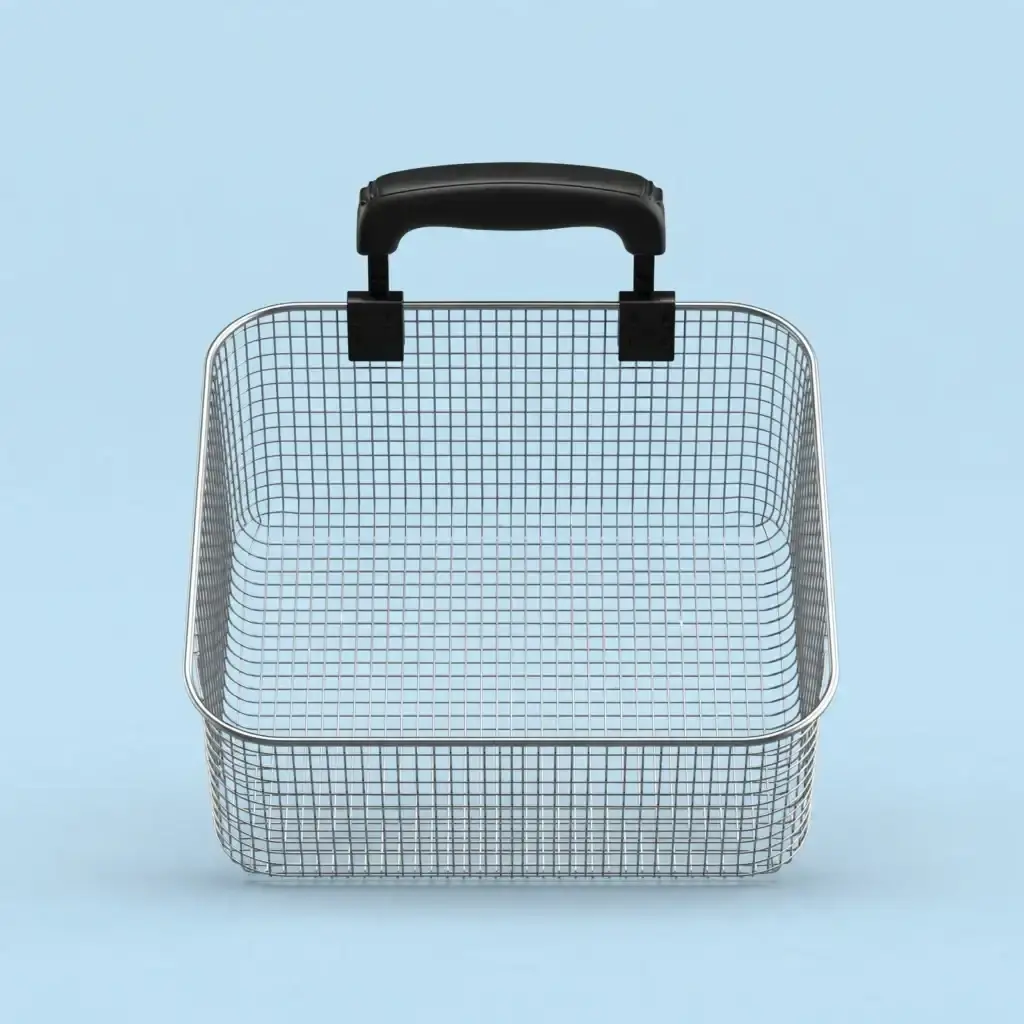
Safe air fryer options exist, but you must verify them. Look for models with a stainless-steel basket, tray, and interior, or where the manufacturer clearly states PTFE-free for every heated part, not just the outer shell. Also check replacement baskets, because a safe model can become unsafe if someone later fits a nonstick replacement part.
Even with a verified PTFE-free air fryer, keep birds out of the kitchen during cooking, ventilate well, and never run the fryer empty on high heat. Good habits protect against other cooking risks, such as smoke, oil fumes, and overheated food, which also harm birds.
Self-cleaning ovens
Self-cleaning oven cycles are one of the highest-risk household events for birds. The cycle heats the oven to very high temperatures to burn off residue, and that heat can release fumes from oven coatings, leftover food, grease, and any nonstick tray left inside.
Bird owners should not run a self-clean cycle with birds in the home, and ideally not with birds in the same building airspace. If a self-clean cycle is essential, move birds to a separate location with separate airspace well before the cycle, ventilate the kitchen thoroughly, and do not return birds until the oven has cooled and the home has aired fully. Even then, many avian vets advise against self-clean cycles in bird homes altogether.
Clean ovens manually instead, with bird-safe methods, and remove any nonstick trays, liners, or foil with nonstick coating before any high-heat cooking. Check the oven manual for coating information, and if the manual is unclear, ask the manufacturer about PTFE in oven interiors, racks, and liners.
Symptoms and what to do after exposure
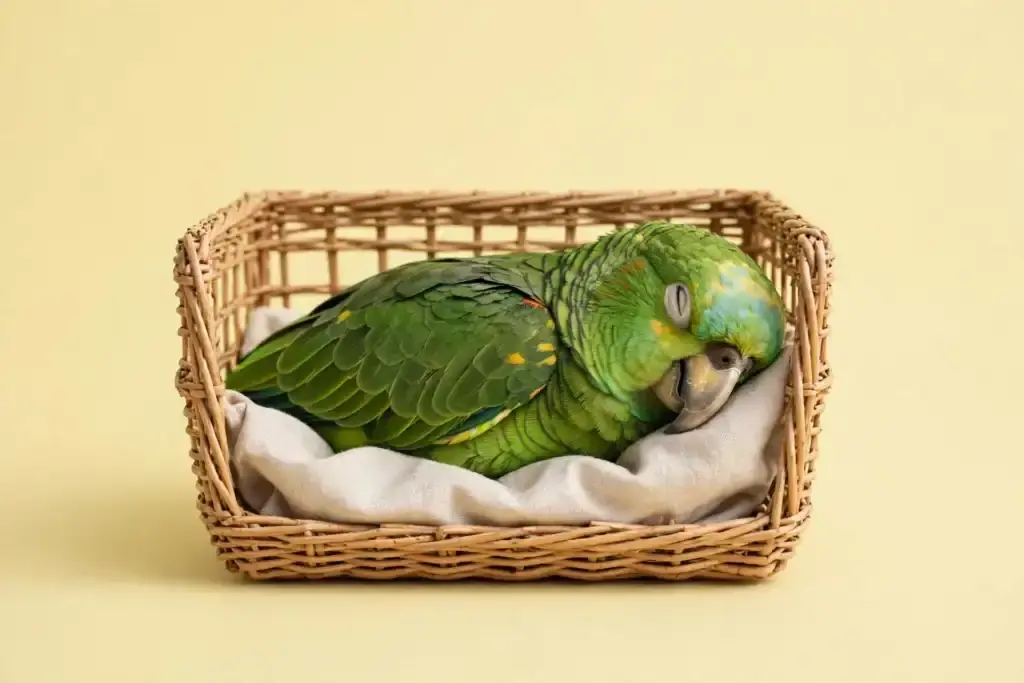
PTFE toxicity symptoms in birds can appear quickly and progress fast. Watch for labored or open-mouth breathing, tail bobbing, wheezing, weakness, loss of balance, collapse, or sudden death with no prior warning. Some birds show distress within minutes, others may seem fine at first and deteriorate later. Do not rely on a bird looking fine as proof of safety.
If you suspect exposure, act at once. Move the bird to fresh air, away from the kitchen and any smoke or fumes, in a warm, quiet, covered carrier. If you can do so safely, turn off the heat source, ventilate the home, and do not put the bird back near the source to check. Handle gently and keep handling minimal, because stress worsens breathing distress.
Seek an avian vet urgently, even if symptoms seem mild. Call ahead, explain suspected PTFE exposure, and follow the vet instructions for transport. If you can’t reach an avian vet, go to an emergency vet clinic and clearly explain the exposure. Time matters, and early oxygen and supportive care give a bird the best chance.
After any exposure, even if the bird recovers, remove the source before the bird returns home. A bird that survived one exposure can be harmed by a second. Discuss follow-up checks with the vet, and review every heated item in the home, not just the pan involved.
Safe alternatives comparison
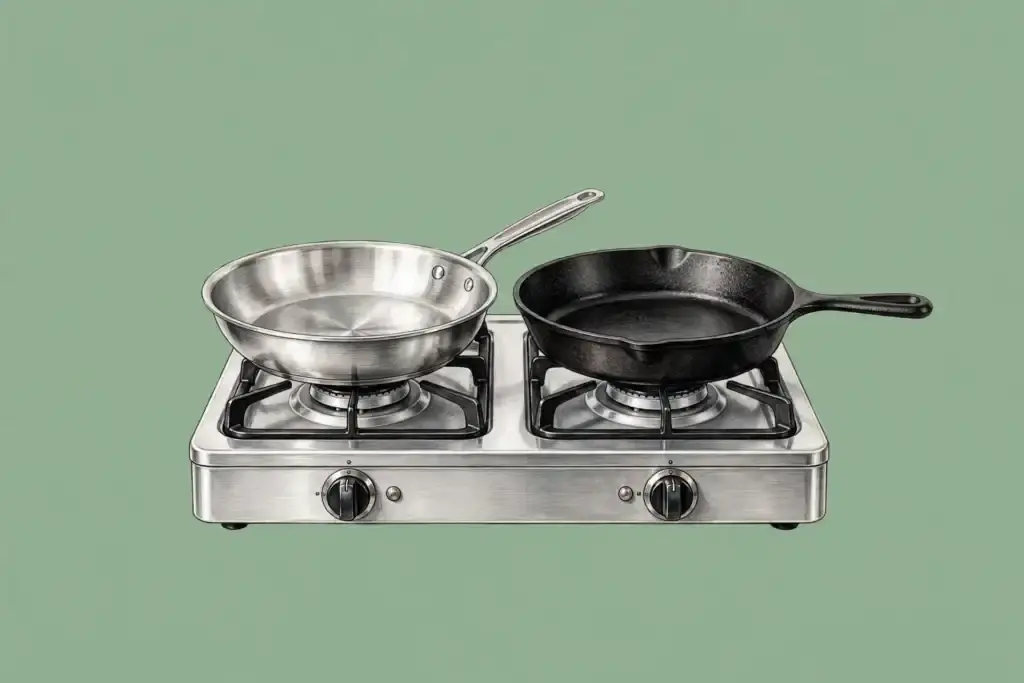
Comparison table as prose: Stainless steel / Safe when uncoated / Durable, high-heat tolerant, easy to clean / Food sticks without technique, check for coatings. Cast iron / Safe when unseasoned or simply seasoned / Excellent heat retention, naturally nonstick when seasoned / Heavy, needs seasoning, avoid acidic foods in unenameled pans.
Enameled cast iron / Safe when PTFE-free / Easy cleanup, durable, good heat retention / Heavy, check enamel for chips, confirm no fluoropolymer. Verified PTFE-free ceramic / Safe only if verified PTFE-free / Nonstick feel, easy cleanup, lighter than cast iron / Verify every part, coating wears over time. Glass and stoneware / Safe / Inert, ideal for baking and roasting / Not for stovetop searing, handle thermal shock carefully.
Stainless steel is the workhorse choice for most bird homes. Learn the technique: preheat the pan, add oil, let food release naturally, and deglaze with liquid for sauces. Food sticking is a technique issue, not a reason to return to nonstick.
Cast iron suits owners who enjoy slower cooking and do not mind weight and seasoning. A well-seasoned cast iron pan becomes impressively nonstick, and it lasts for decades. Enameled cast iron offers similar heat benefits with easier cleanup, at a higher cost and weight.
Verified PTFE-free ceramic feels closest to traditional nonstick and suits owners who want easy cleanup. Verify the claim, replace the pan when the coating wears, chips, or loses performance, and don’t use a worn ceramic pan on high heat just because it still looks safe.
Glass bakeware, stoneware, and ceramic baking dishes cover roasting and baking without any coating risk. They don’t replace a stovetop pan, but they remove an entire category of oven risk.
A bird-safe kitchen checklist
Kitchen checklist: Remove PTFE: Audit pans, air fryers, griddles, waffle makers, oven liners, and heaters for PTFE. Verify replacements: Choose stainless steel, cast iron, verified PTFE-free ceramic, or glass, and keep manufacturer confirmations.
Keep birds out: Keep birds out of the kitchen during cooking, and never in the kitchen during self-clean cycles. Ventilate: Use extraction, open windows where safe, and avoid smoke buildup, even with safe pans.
Never heat empty: Never preheat empty pans on high heat, and never leave cooking unattended. Burn in new appliances: Run new heated appliances away from birds first, with ventilation. Plan emergencies: Know your nearest avian vet and emergency clinic number, and keep a carrier ready. Check gifts and replacements: A new pan, basket, or tray can reintroduce PTFE silently.
For related safety reading, see toxic foods for birds, toxic houseplants for birds, and signs your pet bird is sick. External sources for this guide include Chewy on bird-safe cookware, For the Birds Rescue on household dangers, and PetShun on ceramic nonstick pans and parrots.
Frequently asked questions
Can Teflon kill a parrot?
Yes. Overheated PTFE fumes can cause rapid respiratory failure and death in birds, sometimes within minutes, even when people in the same room feel no effect.
Is PFOA-free the same as bird-safe?
No. PFOA-free means the pan was made without PFOA, but the surface can still be PTFE. Look for PTFE-free, confirmed by the manufacturer.
Are ceramic pans safe for birds?
Only verified PTFE-free ceramic pans are safe. The word ceramic alone does not guarantee safety, and worn coatings should be replaced.
Are air fryers safe for parrots?
Only if every heated part, basket, tray, and interior, is verified PTFE-free. Many air fryers use nonstick coatings, so check before use.
Can I run a self-cleaning oven with birds in the house?
Do not run self-clean cycles with birds in the home. The high temperatures and fumes are a serious risk. Clean manually instead.
What should I do if my bird was exposed to Teflon fumes?
Move the bird to fresh air at once, keep handling gentle, and seek an avian vet urgently, even if the bird looks fine. This article is general information, not veterinary advice.
Is stainless steel really bird-safe?
Uncoated stainless steel is bird-safe. Check that the pan has no nonstick layer, and confirm PTFE-free status if the product description is unclear.
Conclusion
Bird safe cookware is not about buying a fashionable pan. It is about removing a silent, fast-acting risk from a home where a small, efficient respiratory system leaves almost no margin for error. PTFE can kill a parrot when overheated, PFOA-free does not mean PTFE-free, and hidden sources in air fryers, heaters, and self-cleaning ovens matter just as much as pans.
Choose stainless steel, cast iron, verified PTFE-free ceramic, or glass. Keep birds out of the kitchen while cooking, never heat empty pans on high, and have your avian vet’s number before you need it. These steps cost little, change cooking habits only slightly, and remove one of the most preventable causes of sudden bird death at home.