
Every October, owls turn up on Halloween decorations, door wreaths, and party costumes. But why are owls associated with Halloween at all? They are simply nocturnal birds of prey, yet they sit at the centre of the holiday’s imagery alongside ghosts, witches, and black cats.
The short answer is that Halloween celebrates the eerie, and few animals look and sound eerier than an owl on a moonlit night. Silent flight, chilling screeches, unblinking stares, and heads that swivel in impossible arcs made owls natural symbols of mystery centuries before trick-or-treating existed. Ancient Rome treated them as omens of death. Aztec belief linked them to the god of the dead. Medieval Europe tied them to witches. Then pop culture, from Shakespeare’s stage to Harry Potter’s post owls, cemented the connection.
But the real story is better than the superstition. Every “spooky” owl trait is a hunting superpower refined over millions of years. This article walks the folklore trail across cultures, then explains the biology behind the myths, so you can tell what is spooky, what is misunderstood, and what simply deserves respect.
The Short Answer
Owls are associated with Halloween because they combine almost every trait the holiday celebrates: darkness, mystery, death symbolism, and strange behaviour. They hunt at night, fly in total silence, rotate their heads in ways that look unnatural, and some species screech instead of hooting.
Centuries of folklore gave those traits supernatural meanings. Owls became omens of death, companions of witches, and messengers of the underworld. Halloween imagery simply collected all of it. The biology, though, tells a more interesting story. Nothing an owl does is designed to frighten people. Every spooky trait is an adaptation that makes it a better hunter.
What Makes Owls Seem So Spooky
Before the folklore, there was the bird itself. Picture a village centuries ago, with no electric light and no explanation for the night’s sounds. Now consider what owls actually do. Each of their strangest traits has a practical explanation, but each one also feels unsettling when you meet it in the dark.
They Fly Without a Sound
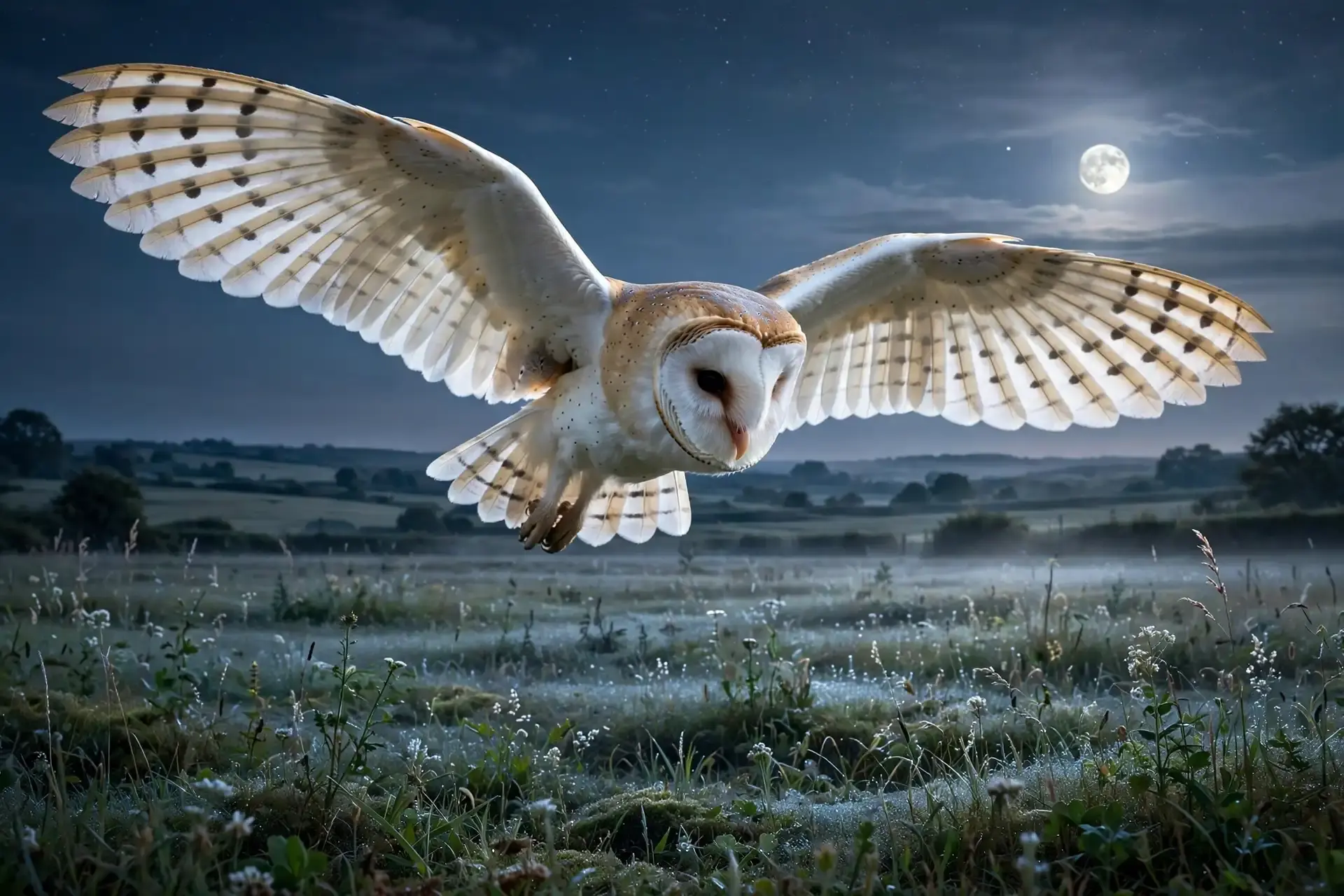
Most birds announce themselves with wingbeats. Owls do not. The leading edges of their flight feathers carry comb-like serrations that break up turbulence, while a velvety layer of down muffles the remaining noise. Their broad wings let them fly slowly, which reduces sound further still.
This silence is a hunting tool. A mouse can hear an ordinary bird coming and freeze or flee. An owl arrives unheard. To a person walking a night path, though, a large bird gliding past without a whisper feels wrong in a way that invites ghost stories. Their whole hunting strategy depends on stealth, as our guide to what owls eat explains.
They Screech Instead of Hoot
Not every owl hoots. The great horned owl delivers the classic deep, rhythmic hooting people expect. The barn owl, though, produces a long, harsh, rasping screech that sounds disturbingly like a person screaming in the distance. Cornell Lab of Ornithology’s barn owl guide describes these calls and the bird behind them.
These are territorial and courtship calls, carrying far across open ground on still nights. To listeners centuries ago, an unexplained scream from the dark was proof that something unnatural was out there. If you have ever wondered about the softer side of owl calls, our article on why owls hoot at night covers the seven reasons behind them.
Their Eyes Seem to Stare Into You
Owl eyes face forward, like human eyes, which gives them the binocular vision needed to judge distance when striking prey. They are also enormous, built to gather every scrap of available light. That forward-facing gaze reads as an intense, personal stare.
Here is the detail that makes it eerier: owl eyes are tube-shaped and fixed in their sockets. They cannot roll their eyes the way people can. So when an owl watches you, the whole head locks on and follows. It is a hunting posture, not a curse, but few people meeting that gaze in the dark have felt reassured by it.
Their Heads Appear to Spin
Because the eyes cannot move, the neck does the work instead. Owls can rotate their heads about 270 degrees, which looks nearly impossible. They manage it with extra neck vertebrae (fourteen, compared with seven in humans) and a remarkable arrangement of blood vessels that keeps blood flowing to the brain during the twist.
Researchers studying owl anatomy found air sacs and flexible vessel connections that stop the arteries from pinching shut during extreme rotation. The result is an adaptation that compensates for fixed eyes. It also happens to be one of the most unsettling sights in nature.
They Rule the Night
Owls are most active when humans feel most uneasy: after dark. Their calls carry through the quiet, their eyes reflect torchlight, and their hunting happens while the rest of the bird world sleeps. Halloween is a night holiday, so the owl became its mascot species almost by default. A bird that embodies the hours the holiday celebrates will always feel like it belongs there.
The Folklore Trail: How the Owl Got Its Spooky Reputation
Biology made owls strange. Folklore made them supernatural. The same traits that unsettle a night walker became, in story after story, proof that owls carried messages from darker worlds. Follow the trail across cultures and a pattern emerges: almost every civilisation noticed the owl’s strangeness, but they did not all agree on what it meant.
Ancient Rome: The Bird of Bad Omens
Roman writers counted the owl among birds of ill omen. An owl’s hoot heard before a battle, a journey, or a death was read as a warning from the gods. Pliny the Elder’s Natural History discusses birds of omen at length, and the owl sits firmly on the unlucky side of the list.
What matters here is the mechanism. Romans did not fear owls because owls did anything to them. They feared them because the birds were active at the hours when disasters seemed to arrive, and their cries were impossible to ignore. Superstition filled in the rest.
The Aztec Owl: Messenger of the Underworld
In Nahuatl, the language of the Aztecs, the owl was the tecolotl, and it carried one of the darkest associations in Mesoamerican belief. Owls were linked to Mictlantecuhtli, the god of the dead who ruled Mictlan, the underworld. Hearing an owl call at night could be read as a death omen.
Again the pattern holds: a night bird, a chilling call, a culture that needed explanations for mortality. The Aztec owl was not evil in the modern sense. It was a messenger between worlds, which is arguably the more interesting role, and the one Halloween imagery still borrows.
Medieval Europe: Witches and the Screech-Owl
Medieval folk belief tied owls to witchcraft. Owls were said to accompany witches, serve as their familiars, or even be transformed witches themselves. The barn owl’s scream fitted the picture perfectly: what else would a witch’s companion sound like?
The Latin word strix named a mythical night creature associated with witchcraft, and the scientific genus Strix (the wood owls, including the barred owl) takes its name from it. Even modern taxonomy carries the superstition. When Shakespeare’s witches chant in Macbeth, the owl is never far from the audience’s imagination.

Ancient Greece: The Exception That Proves the Pattern
Not every culture feared the owl. In ancient Athens, the little owl was sacred to Athena, goddess of wisdom, and owls appeared on the city’s coins. The association was positive: watchfulness, intelligence, clear sight in darkness.
The Greek owl survives in the modern phrase “wise old owl” and in countless Halloween decorations that present the owl as clever rather than creepy. It is a useful reminder that the spooky reading is cultural, not biological. The same bird inspired both dread and admiration, depending on who was watching.
Myth vs Reality: The Halloween Owl Scorecard
Halloween folklore and owl biology tell two versions of the same story. Put them side by side and the myths start to look like early, poetic attempts to describe real adaptations.
| The Myth | The Reality |
|---|---|
| Owls are messengers of death. | Their night calls coincided with human fears of the dark. They are simply predators that control rodent populations. |
| An owl’s stare curses whoever it fixes on. | Forward-facing eyes give binocular vision for judging strike distance. The “stare” is a hunting posture. |
| Owls can spin their heads all the way around. | They manage about 270 degrees, thanks to extra neck vertebrae and specialised blood vessels. Still astonishing. |
| Owls are blind in daylight. | Owls see perfectly well by day. Their night vision is simply far superior, and most species prefer hunting after dark. |
| Hearing an owl brings bad luck. | It means a healthy local ecosystem. A calling owl is usually defending territory or courting a mate. |
| Owls serve witches as familiars. | A medieval folk belief. Owls were common night birds near villages, so they ended up in the stories. |
The Harry Potter Effect
No modern force has done more for the owl’s image than Harry Potter. Hedwig, the snowy owl, turned owls into postal carriers, loyal companions, and the single most recognisable Halloween costume bird. After the books and films, owl merchandise surged every October, and the link between owls and all things magical became permanent for a new generation.
The effect has a serious side. Wildlife groups have warned that portraying owls as pets can increase demand for wild-caught owls, and conservationists urge people to admire owls in the wild or at reputable sanctuaries rather than seeking them as pets. The fictional owl delivers letters. The real owl delivers pest control, and it does its best work left alone.
Harry Potter also revived the older Greek strand of owl symbolism. Hogwarts owls are clever, loyal, and useful: the wise old owl in a wizard’s robe. Two thousand years after Athena’s coins, the owl is still doing double duty as both omen and sage.
Meet the Real Owl
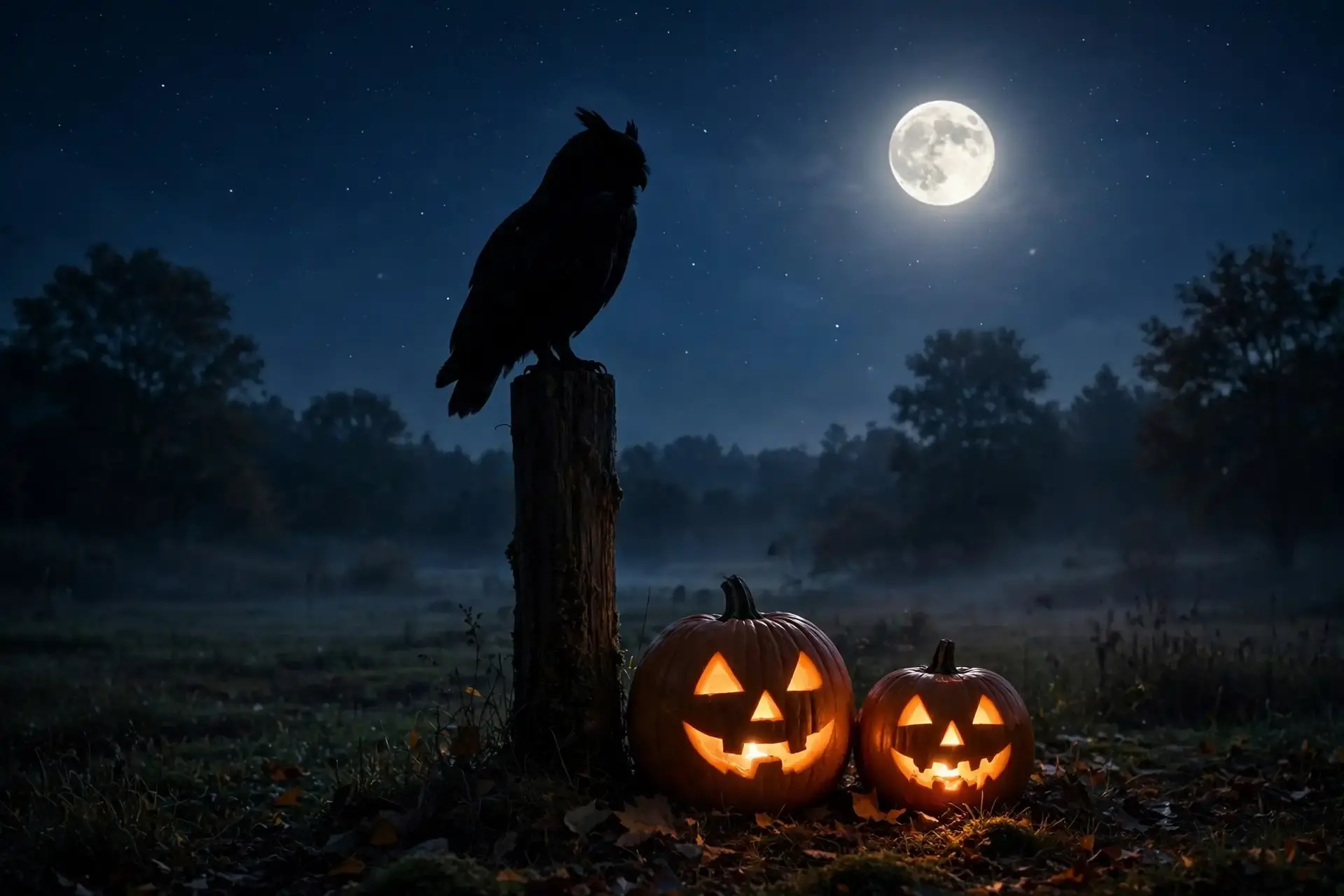
Strip away the folklore and the owl that remains is more impressive than any myth. A barn owl can locate a mouse in complete darkness using hearing alone, thanks to a facial disc that funnels sound like a satellite dish and asymmetrically placed ears that triangulate position. A great horned owl can take prey larger than itself. The silent flight, the swivelling head, the night vision: every trait that made owls seem supernatural is simply world-class hunting equipment. For a broader look at the species behind the stories, Britannica’s owl overview covers their biology and distribution.
If you hear an owl this Halloween, consider it a good sign. It means your neighbourhood still supports top predators, which means the food web below them is working. Keep outdoor lights low, give calling birds space, and if you would like more of them around, a properly placed nest box works better than any decoration. Our guide to attract owls to your yard explains which species might visit and what they actually need.
Owl and Halloween Questions, Answered
Why are owls a symbol of Halloween?
Because Halloween celebrates mystery, darkness, and the supernatural, and owls supplied all three honestly. Their night habits, silent flight, and eerie calls gave centuries of folklore material to work with, from Roman omens to witches’ familiars. The symbol stuck because the bird genuinely fits the mood.
Can owls really turn their heads all the way around?
No, but close. Owls rotate their heads about 270 degrees, not the full 360 the myth claims. They need the extra range because their tube-shaped eyes cannot move in their sockets. Fourteen neck vertebrae and specially adapted blood vessels make the twist possible without cutting off circulation.
Why do owls screech at night?
Screeching, especially from barn owls, is usually a territorial or courtship call. Sound carries far on still nights, which is why the calls seem so loud and unsettling. What sounds like a scream to us is simply an owl announcing itself to other owls.
Are owls bad omens?
No. The bad-omen reputation comes from ancient cultures that associated night, death, and the unknown with owls’ natural behaviour. Scientifically, owls are beneficial predators that control rodent populations. In ancient Greece, they symbolised wisdom.
Which owl species are most associated with Halloween?
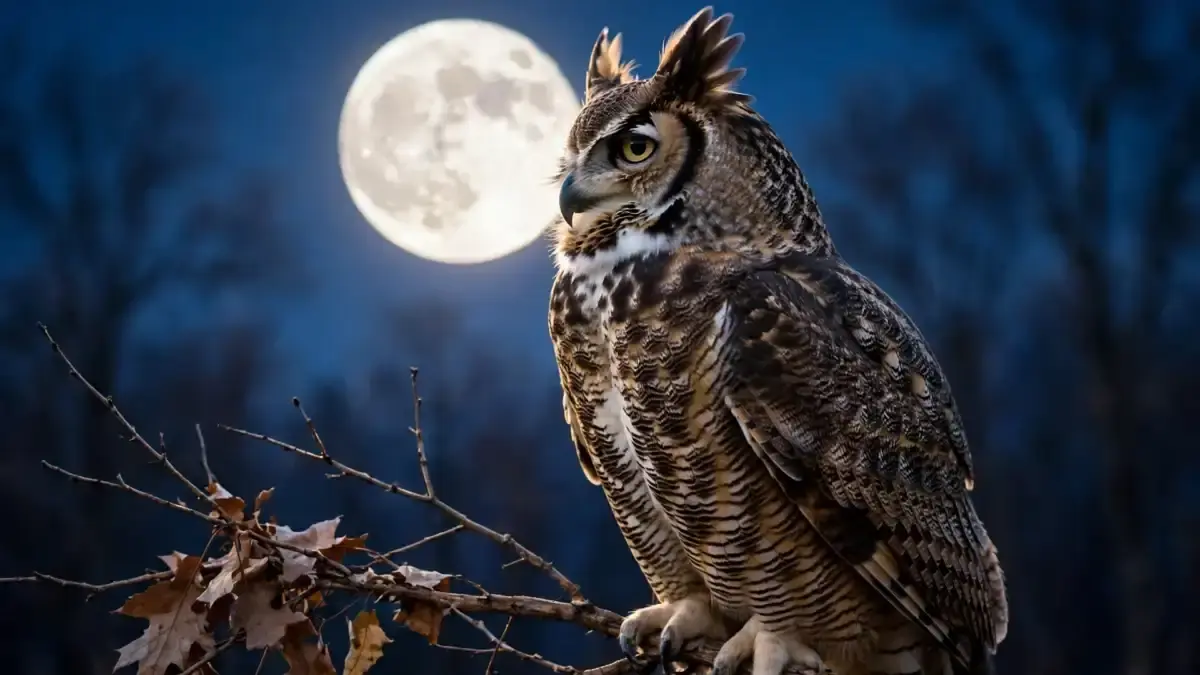
The great horned owl and the barn owl carry most of the Halloween imagery. The great horned owl supplies the “hoot” and the dramatic ear tufts seen on decorations. The barn owl supplies the ghostly white face and the infamous screech. Cornell Lab of Ornithology’s Great Horned Owl guide is a good place to start learning the real bird.
Is it good luck to see an owl?
Folklore is split: some traditions call it a warning, others, like the Greek association with Athena, call it a sign of wisdom. Biologically, it is simply good fortune in the practical sense. Owls are elusive, so spotting one means you were in the right place at the right time, and it says your local habitat is healthy.
The Last Word on Halloween’s Favourite Bird
So why are owls associated with Halloween? Because the holiday needed a mascot for the beautiful unease of autumn nights, and the owl volunteered through sheer biology. Silent wings, staring eyes, swivelling heads, and midnight screams gave every culture that met the bird a reason to tell stories about it.
The stories were wrong about the details but right about one thing: owls are extraordinary. Roman omens, Aztec messengers, witches’ companions, and postal owls all tried to explain a predator that hunts by sound in total darkness and never makes a noise doing it. Science finally gave the better explanation, and it is the one worth repeating this Halloween. The spookiest thing about owls was never magic. It was always mastery.