
Why Are Geese So Aggressive? Reasons and How to React Safely
Geese hiss at joggers, chase children across parks, and stare down dogs twice their size. It looks like pure hostility. In most cases, though, it is something simpler: parenthood. A gander charging at you is not looking for a fight. He is defending his mate, his eggs, or his goslings, and in his eyes you are a predator walking straight into his nursery. This article explains the real reasons behind goose aggression, the warning ladder geese show before they charge, and exactly what to do when one turns on you. Read it once and these encounters get boring again, which is the best possible outcome.
The Short Answer
Geese are aggressive because they are highly protective parents with almost no physical weapons. Aggression peaks in the breeding and nesting season, roughly March through June, when male geese (ganders) defend mates, nests, eggs, and goslings against anything that approaches. Canada geese nest on the ground near ponds and paths, so people wander into their territory constantly. Outside breeding season, flocks are usually tolerant. Attacks on humans are rare and almost always defensive. A goose that is docile in October can charge head-down in March, because the context changed, not the bird.
The 5 Real Reasons Geese Turn Aggressive
1. Breeding Season Hormones and Territory
The single biggest driver of goose aggression is the breeding season, which runs roughly from March through June, with some birds starting as early as late February. During this window, pairs split off from the winter flock and claim a nesting territory they will defend fiercely.
Hormonal shifts heighten territoriality in both sexes, but especially in males. Testosterone-linked dominance behaviour primes the gander for vocal threats, posturing, and physical confrontation. What looks like rage is a bird operating exactly as its breeding biology demands.
2. The Gander: A Full-Time Bodyguard
The most aggressive goose you will meet is almost always a gander. While the female incubates the eggs, the male stands guard nearby, patrolling the area around the nest and chasing off anything that comes too close. Anything includes people, dogs, cyclists, and other geese.
Kevin McGowan, an ornithologist at the Cornell Lab of Ornithology, has explained that attacks are rare and defensive in nature. In his assessment, ganders are guarding their mates, eggs, and hatchlings, and every charge is a calculated attempt to move a perceived threat away from the family.
3. Goslings Bring the Most Defensive Phase
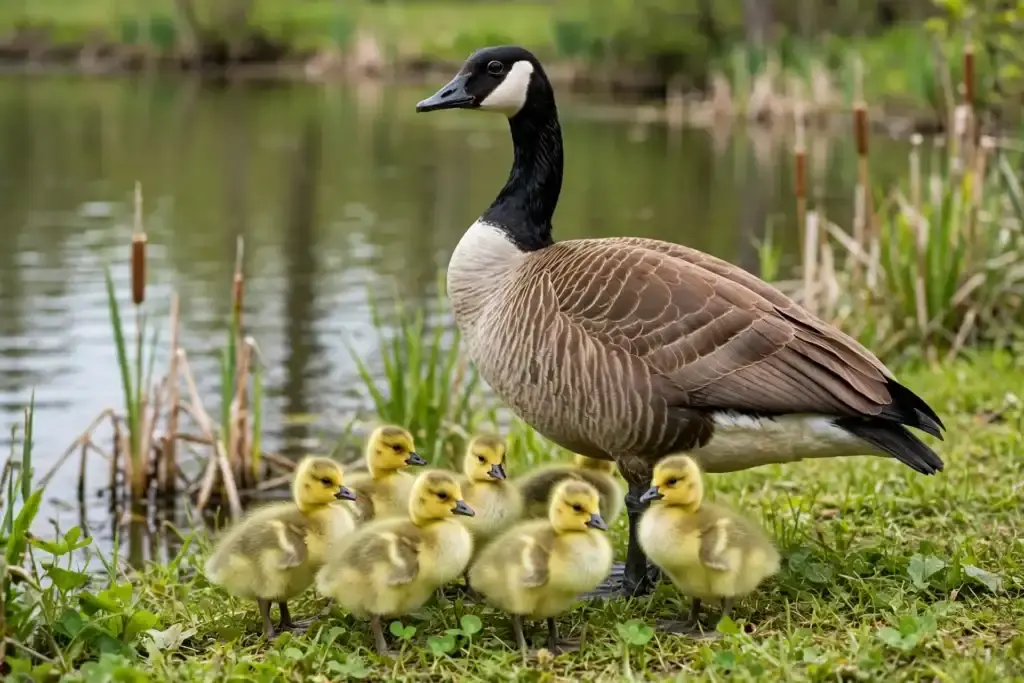
If you think a goose on eggs is touchy, wait until the goslings hatch. A hen with downy young is arguably the most defensive bird in the park, and the gander becomes even more vigilant alongside her. Both parents will hiss, charge, and strike with their wings at anything they perceive as a threat to the brood.
During May and June, goslings cannot fly, so the family has no escape option. That is precisely when parental aggression runs hottest. Give any family with small yellow goslings a wide berth and you sidestep the most dangerous weeks of the goose calendar.
4. Ground Nests Sit Right in Human Traffic
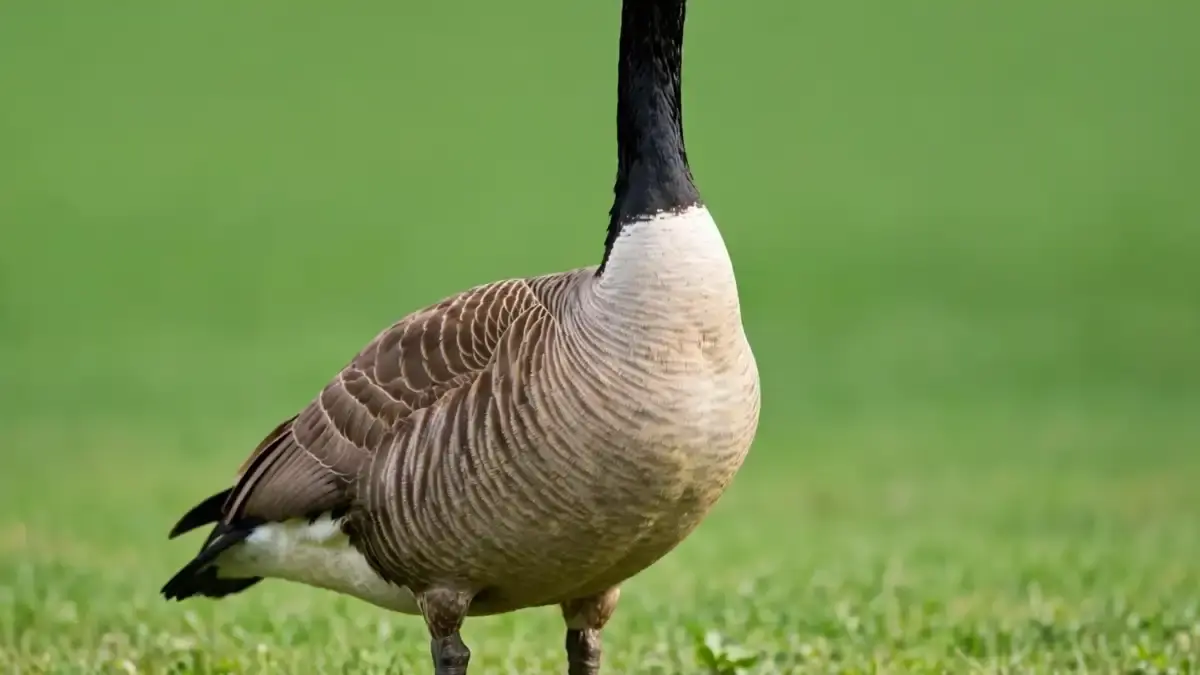
Canada geese nest on the ground, often near ponds, lawns, campuses, and park paths. Unlike many birds that nest in trees or dense cover, they set up in the open, right where people walk, jog, and walk their dogs. Humans cross into their territory dozens of times a day without realising it.
Once a pair claims a nest site, they return to the same general area year after year. Their strong site fidelity means a goose that nested beside your walking path last spring will likely be back, and it will treat your daily route as a repeated intrusion. That explains why the same goose seems to “have it in for you” every spring.
5. Bluffing Is All They Have, and Feeding Makes It Worse
Geese have no claws and no teeth, so they have few real defences. Their entire protection strategy is bluff: look big, sound fierce, and charge before the intruder calls the bluff. A goose bite feels like a hard pinch, and a wing can deliver a startling whack, but serious injury to an adult human is uncommon.
Feeding makes the problem worse. Geese that people feed regularly lose their fear of humans and grow bolder around food sources. A habituated goose may demand food aggressively, hiss at anyone near its feeding spot, and treat the whole park as its territory. This is one reason feeding waterfowl is discouraged by wildlife authorities.
The Warning Ladder: How a Goose Tells You to Back Off
Geese almost never attack without warning. They climb a clear ladder of escalating signals, and each step is your cue to give them space. Learn the sequence and you can defuse most encounters before they start.
- Loud hissing and honking: The first and clearest warning. A goose that hisses as you approach is telling you plainly that you are too close.
- Neck stretching or lowering with a direct stare: The goose fixes its eyes on you and points its neck, sizing you up as a threat.
- Head bobbing up and down: Repeated head pumping signals rising agitation and a readiness to escalate.
- Wing spreading and flapping: The goose makes itself look as large as possible, sometimes slapping its wings to appear more intimidating.
- Charging and chasing: The final step. The goose runs at you, often with its neck stretched low to the ground, snapping and beating its wings.
The ladder runs fast, sometimes in seconds, but it almost always runs in order. If you back away at step one or two, you rarely see step five.
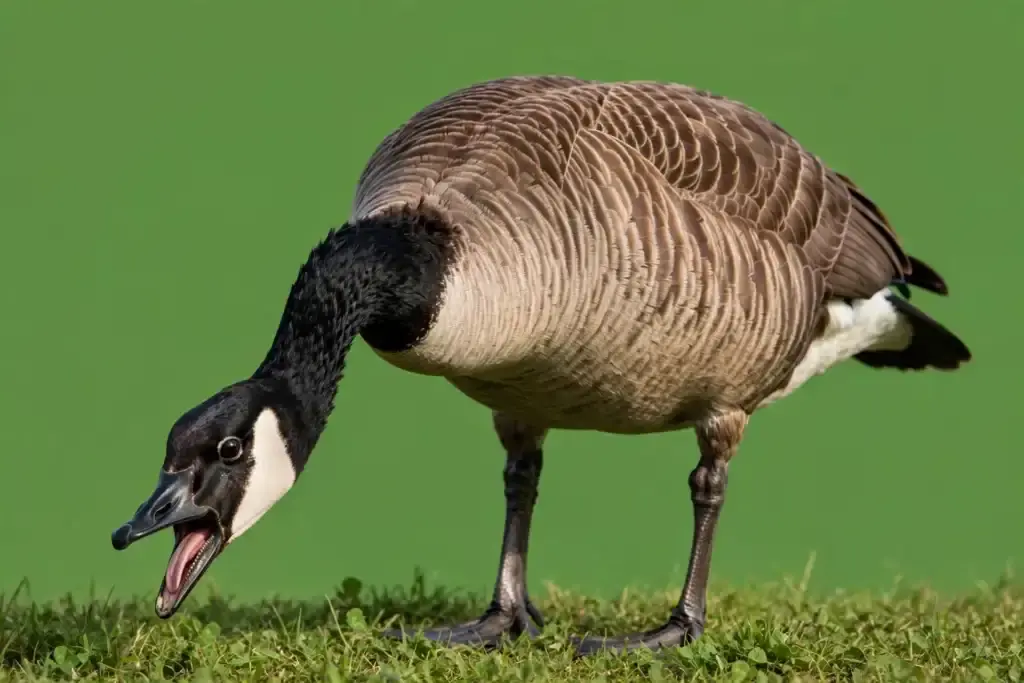
Bluff Signals vs Real Attack Signs
Most goose confrontations are theatre. Knowing the difference between intimidation and a genuine attack helps you respond calmly instead of panicking.
| Signal | Bluff (intimidation) | Real attack (committed) |
|---|---|---|
| Neck position | Neck stretched up or level, staring | Neck stretched low and forward, driving at you |
| Vocalisation | Loud hissing and honking | Sudden silence before the rush |
| Wings | Spread wide, flapped for show | Beating against you as it charges |
| Movement | Holds ground or makes short rushes | Sustained chase over distance |
| Outcome | Disengages when you back away | Continues until you leave its territory |
Bluffing is the far more common scenario. Even when a goose charges, it usually pulls up once you retreat. It wants you gone, not hurt.
What a Real Goose Attack Feels Like
For all the drama, a committed goose attack is less dangerous than it looks. The bird rushes in with its neck stretched low, snaps its serrated-edged bill at your legs, and beats its wings against you. The bite pinches hard enough to bruise, and a wing strike can sting, but there are no puncture wounds because there are no fangs or talons.
Most adults walk away with nothing worse than a startled heart rate and a bruise. Children are the exception worth worrying about: a goose can knock a small child over, and a fall onto concrete hurts more than the bird ever could. That is why wildlife advice consistently singles out supervision of children near nesting geese as the one precaution that really matters.
Do Geese Recognise Individual People?
Geese have excellent memories, and there is good reason to believe they recognise individual humans. Regular park visitors report that a territorial gander singles out the same jogger, the same dog walker, or the same cyclist day after day, while ignoring others who pass at a greater distance.
This is not a grudge in the human sense. It is pattern recognition: the same figure crossing the territory boundary at the same time each day becomes a familiar, repeated threat. The recognition works in your favour too. Once you learn where the nest is and change your route, the goose recalibrates and the daily standoff ends.
Why Encounters Are Rising: More Geese, More People
Goose aggression is not just a seasonal quirk. It is also a numbers story. Giant Canada geese in Michigan, for example, grew from about 9,000 birds in 1970 to roughly 300,000 by 2018. Similar growth has played out across suburban North America, where resident geese thrive on fertilised lawns and predator-free ponds.
More geese plus more people walking, jogging, and picnicking in the same parks means more encounters. Each spring, thousands of first-time joggers discover that the quiet pond from last autumn now has a gander standing guard over a nest. The seasonal contrast explains the shock: a goose that was perfectly docile in October can charge head-down in March. The bird did not change its personality. It changed its job.
Geese that fly in the classic V-formation in autumn are the same birds holding a nesting territory in spring. Understanding why geese honk in flight is part of the same picture: vocal communication that turns into territorial warning calls when the calendar says breed. If you manage poultry too, note the overlap with keeping hawks away from chickens, where the same principle applies: predators, real or perceived, trigger a defensive response.
The Safe Response Playbook
When a goose turns aggressive, your goal is simple: leave its space without triggering a chase. Follow these steps in order.
- Watch for the early signs. Hissing, head bobbing, and honking mean you are inside the bird’s comfort zone. Act at this stage, not later.
- Do not turn your back. Face the goose and keep it in view while you move. Turning away can trigger the chase instinct.
- Stay calm and quiet. Do not yell, wave your arms wildly, or make sudden movements. Calm behaviour signals that you are not a threat.
- Back away slowly. Move backwards at a steady pace until you are well outside the nesting area, roughly 20 feet or more from the nest site. Do not run, since running can trigger pursuit.
- Choose a different route in spring. If a goose guards a nest beside your walking path during breeding season, take another path until the goslings are grown. Avoiding the territory is easier than negotiating it daily.
- Never feed geese. Feeding teaches geese to associate people with food, removes their fear, and creates the boldest, most demanding birds. It is also bad for their health.
What Not to Do Around an Aggressive Goose
- Do not try to shoo it away aggressively. Chasing a gander escalates the confrontation and you will not win a territory dispute on its ground.
- Do not corner it. A goose with no escape route fights harder. Always leave it a clear exit.
- Do not let dogs approach. Dogs are exactly the kind of predator a gander is wired to confront, and they are the most common trigger for serious goose attacks.
- Do not throw things at it. Projectiles turn a defensive display into a genuine conflict and can injure the bird.
- Do not pick up a gosling. Even a brief touch brings both parents down on you, and handling wildlife is harmful to the young bird.

Frequently Asked Questions
When are geese most aggressive?
From roughly March through June, the breeding and nesting season. Pairs are claiming territories, hens are incubating eggs, and goslings are hatching. Aggression drops sharply after summer as birds rejoin flocks and territorial boundaries dissolve.
Are male or female geese more aggressive?
Males, called ganders, are usually the more aggressive sex because they take on the guard role while the female incubates. That said, a female with goslings is extremely defensive too. Treat both parents with equal respect during nesting season.
Can a goose seriously injure a person?
Serious injury is uncommon. Geese have no claws or teeth, so their weapons are a pinching bite and beating wings. The main risks are being knocked over, scratched, or bitten, and children can be frightened or bruised. Real attacks are rare; most encounters are bluff that ends when you retreat.
Why does the same goose attack me every year?
Site fidelity. Geese return to the same nesting areas each spring, so the pair beside your walking path is often the same pair year after year. They also remember individual people and routines, which is why the confrontation can feel personal. It is territorial, not a grudge.
Should I run if a goose charges at me?
No. Running can trigger the goose to chase you further. Face the bird, stay calm, and back away slowly until you are clear of its territory. Once you are out of range, the goose almost always disengages.
Is it safe to walk past geese with goslings?
Give them a wide berth. A family with small goslings is at peak defensiveness, especially in May and June. Cross to the other side of the path or choose a different route. Close encounters with goslings are the most likely to end in a charge.
Does feeding geese make them aggressive?
It contributes to the problem. Fed geese lose their fear of people and grow bolder around food, sometimes demanding it aggressively. Feeding also harms their health and pollutes ponds. Enjoy watching them, but let them forage naturally.
How long does the aggressive season last?
Expect peak defensiveness from March through June. By midsummer, goslings are larger and the family’s aggression eases, and by autumn the birds rejoin flocks and territorial behaviour largely dissolves. Mark April and May as the months for maximum caution on park paths.
Conclusion
Goose aggression is seasonal, defensive, and almost always avoidable. Learn the warning ladder, respect the breeding season from March to June, and give nesting families space. The gander is not your enemy. He is a parent doing his job, and the safest move is simply to walk around it. For more on goose behaviour, see the research on why geese attack and how to react at Biology Insights, practical encounter advice from The Weather Network, and the field naturalist’s read on goose-on-goose aggression at Birds and Wetlands.