
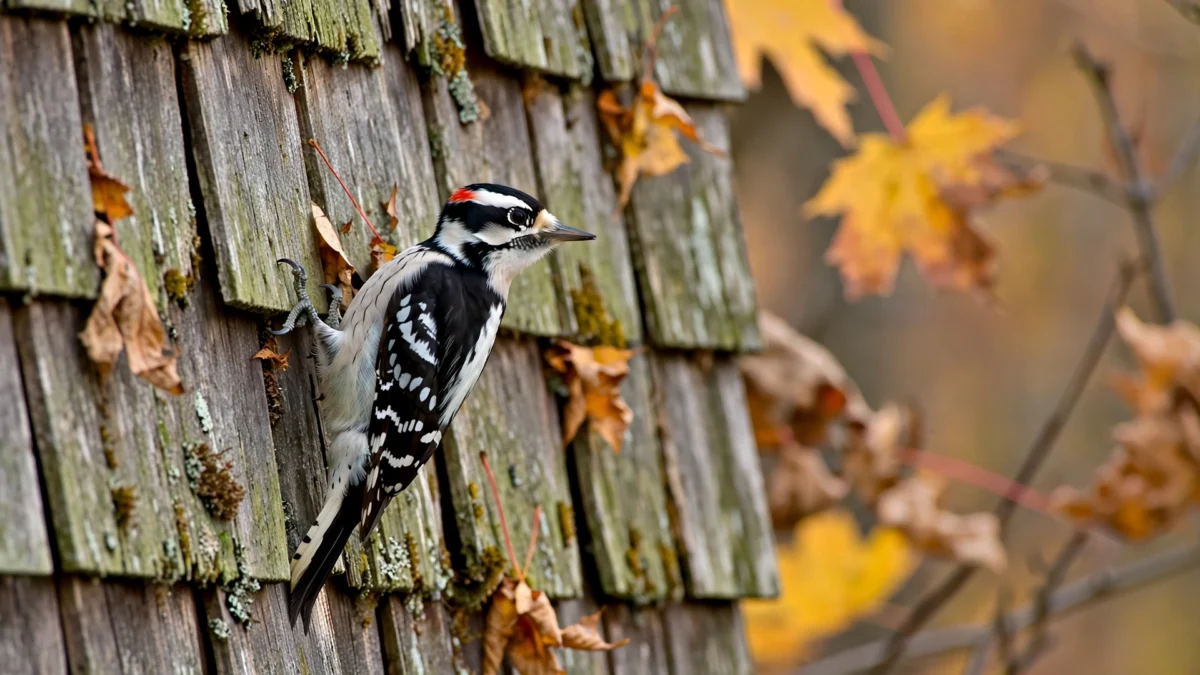
It starts as a faint tapping somewhere on the siding, easy to mistake for a branch in the wind. Then it gets louder, more insistent, and unmistakably rhythmic. A woodpecker is hammering on your house, and it picked October to do it.
Fall is prime season for woodpecker damage, not because the birds have suddenly discovered your home, but because autumn puts three powerful motivations on a collision course with your siding: insects burrowing in to overwinter, the urgent need for a winter roosting cavity, and one last round of territorial drumming.
The good news is that the sound and the damage pattern tell you exactly which reason brought the bird, and each reason has a specific, humane fix. Here is how to read the clues and reclaim your siding without harming a federally protected bird.
The Short Answer
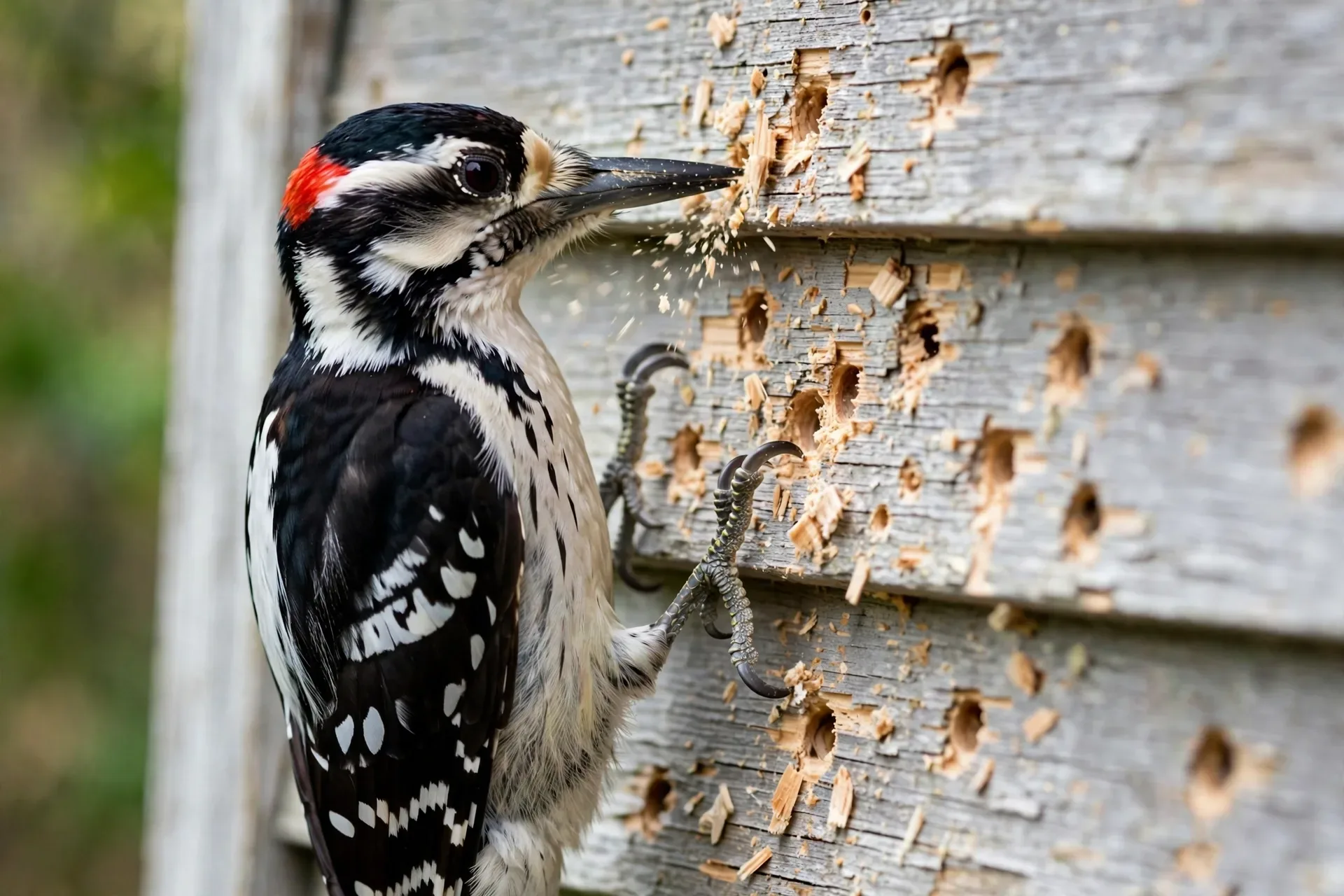
Woodpeckers peck at houses in fall for three reasons: foraging for insects hiding in or behind the siding, excavating a roosting cavity for winter shelter, and drumming to proclaim territory. Foraging makes irregular holes and scattered damage.
Excavation makes one or two large, deep, round holes, usually under eaves. Drumming makes shallow dents and a lot of noise with little real damage. Identify the pattern first, because the fix for insects is different from the fix for drumming.
Reason 1: Hunting Insects Behind Your Siding
The most common fall motivation is food. As temperatures drop, wood-boring beetles, carpenter bee larvae, and other insects burrow deeper into wood to hibernate for the winter. To a woodpecker, your siding is a pantry door.
Woodpeckers do not peck blindly. They tap the surface and listen for the hollow sound or faint movement that betrays a larva underneath, then drill precisely to extract it.
Houses with cedar or redwood siding are especially vulnerable, as is wood that has been stained rather than painted, because insects colonize it more easily. Grooved plywood siding with its inviting channels is another favorite target.
Here is the uncomfortable truth about this scenario: if a woodpecker is finding food in your walls, you have an insect problem wearing a bird costume.
Chasing the bird away without addressing the insects just invites the next woodpecker. A pest inspection is often the real solution, and it protects your house from two kinds of damage at once.
For context on what these birds normally eat when they are not raiding houses, see what woodpeckers eat, which covers their natural diet of insects, larvae, and suet. Maine Audubon’s wildlife staff, who field these complaints every spring and fall, note that food-seeking birds mean a bigger insect problem worth investigating on its own (Maine Audubon).
Reason 2: Carving a Winter Roosting Cavity
The second fall motivation is shelter. Woodpeckers do not build nests for winter; they excavate roosting cavities, snug insulated holes where they can ride out freezing nights. In the wild they carve these into dead or decaying trees. In a suburb full of healthy trees and cedar-sided houses, your fascia board starts to look like an excellent dead tree.
Roost excavation looks different from foraging. The bird works one spot obsessively, usually high up under an eave, on a corner board, or along the fascia, and the hole it makes is large, deep, and round, sometimes more than an inch across. This is the most structurally serious kind of woodpecker damage because the hole goes deep and invites water, fungus, and secondary insect invasion.
The timing is the tell. Roost excavation peaks in fall because the bird needs the cavity finished before severe cold arrives. A woodpecker drilling a deep hole in October is not feeding. It is house-hunting.
Reason 3: Drumming for Territory
Drumming, the loud rapid-fire hammering that sounds like a tiny jackhammer, is primarily a spring behavior tied to mating and territory. But woodpeckers also drum in fall, when young birds are dispersing and adults are reasserting claims on winter territories.
Fall drumming is about sound, not holes. The bird wants the loudest possible surface, which is why metal gutters, chimney flashing, and hollow siding are favorite drums. The damage is usually cosmetic: shallow, conical dents rather than deep holes. If your house is being used as a musical instrument, the bird is advertising, not eating or excavating.
We covered the metal-drumming habit in detail in why woodpeckers drum on metal, including why gutters and chimney caps make such irresistible instruments.
Which Woodpeckers Peck Houses?
In most of North America, the culprits are a small cast of usual suspects. Downy and hairy woodpeckers are the most frequent house-peckers, small enough to work trim and siding comfortably.
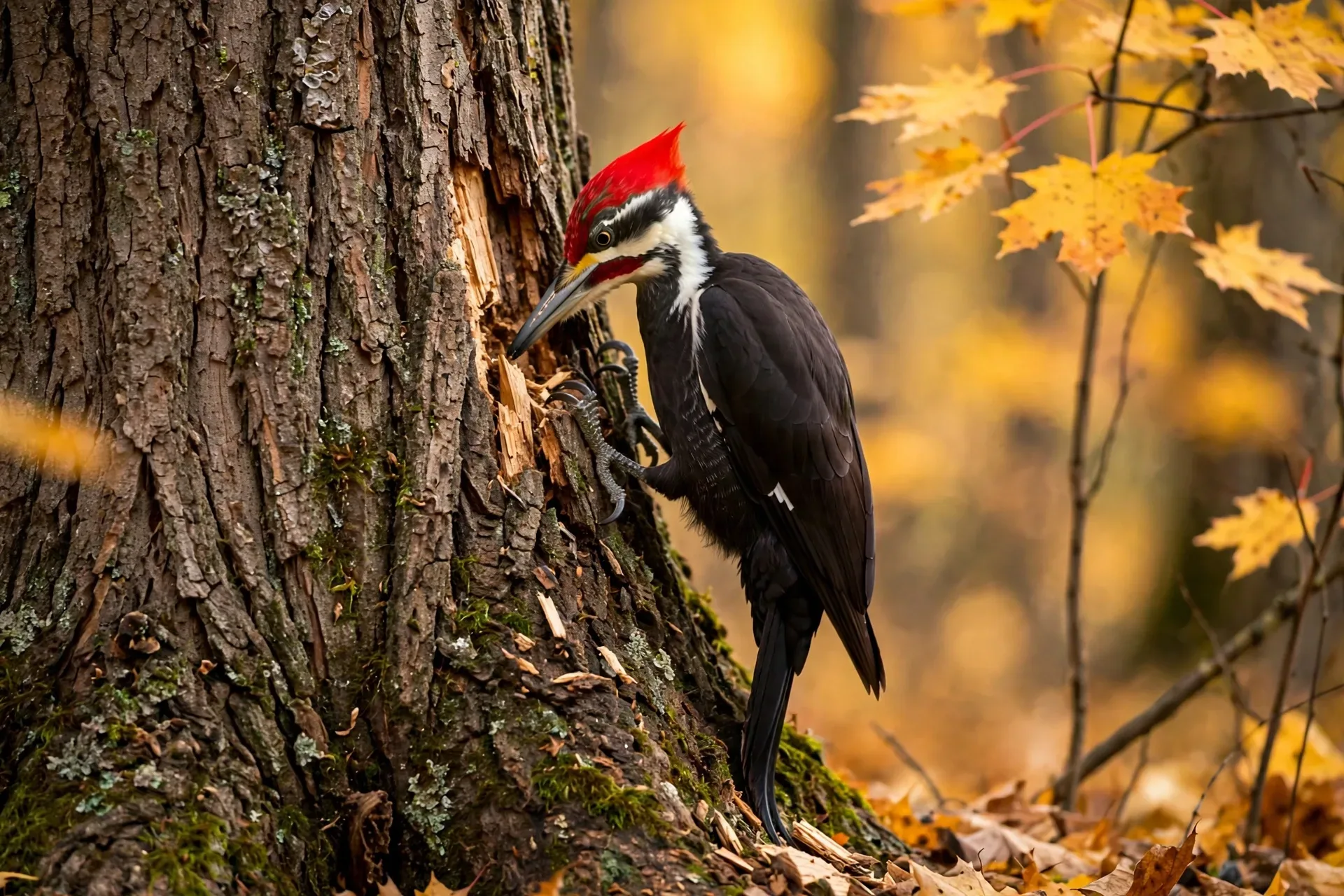
Northern flickers favor the ground for ants but will drum on houses with enthusiasm. Red-bellied woodpeckers and, in the West, acorn woodpeckers round out the lineup, and pileated woodpeckers occasionally excavate dramatic holes in larger wooden structures.
Knowing the species helps because size predicts damage. A downy woodpecker’s foraging holes are neat and small; a pileated woodpecker’s excavation can look like someone attacked the wall with a chisel.
If the holes are large and rectangular, you are likely dealing with a pileated, and exclusion netting becomes the priority rather than an option.
Diagnose It: What the Damage Pattern Tells You
Before you buy a single deterrent, spend five minutes reading the evidence. The pattern of sound and damage points straight at the cause, and the cause dictates the cure.
| What You See and Hear | Likely Reason | What to Do |
|---|---|---|
| Irregular holes scattered across siding, often in lines; pecking is slow and deliberate | Foraging for insects | Get a pest inspection; treat the insect problem; then repair and deter. |
| One or two large, deep, round holes, usually high under eaves or on corners | Excavating a roost cavity | Block the cavity site with netting or hardware cloth; offer a roost box as an alternative. |
| Loud rapid drumming, shallow dents, little or no deep damage; often on metal or hollow trim | Territorial drumming | Visual deterrents on the drumming spot; the behavior often fades in a week or two. |
| Damage returns to the same spot year after year | Habit plus a rewarding site | Repair thoroughly and change the surface; the bird remembers productive spots. |
How to Stop Woodpeckers From Pecking Your House
Every method below is humane and legal. Woodpeckers are protected, so the goal is always to redirect the bird, not to harm it. Work through these in order.
- Break the visual pattern at the damage spot. Hang something that moves and flashes in front of the exact area: strips of mylar tape, aluminum pie plates on strings, or reflective streamers. The motion and glint unsettle the bird. This alone resolves many drumming cases within a week or two. Wildlife extension specialists recommend the same approach: the University of New Hampshire Extension advises visual deterrents like reflective streamers and netting as first-line responses to house-pecking (UNH Extension).
- Exclude the bird from the area. For persistent excavation, hang lightweight bird netting from the eave so it stands a few inches off the siding. The bird cannot reach the wood through the net and gives up. Remove the net once the bird has moved on for a couple of weeks.
- Address insects if foraging is the cause. This is the step people skip. Have a pest professional inspect for carpenter bees, wood-boring beetles, or other wood-dwelling insects, and treat as needed. A woodpecker that stops finding food stops coming.
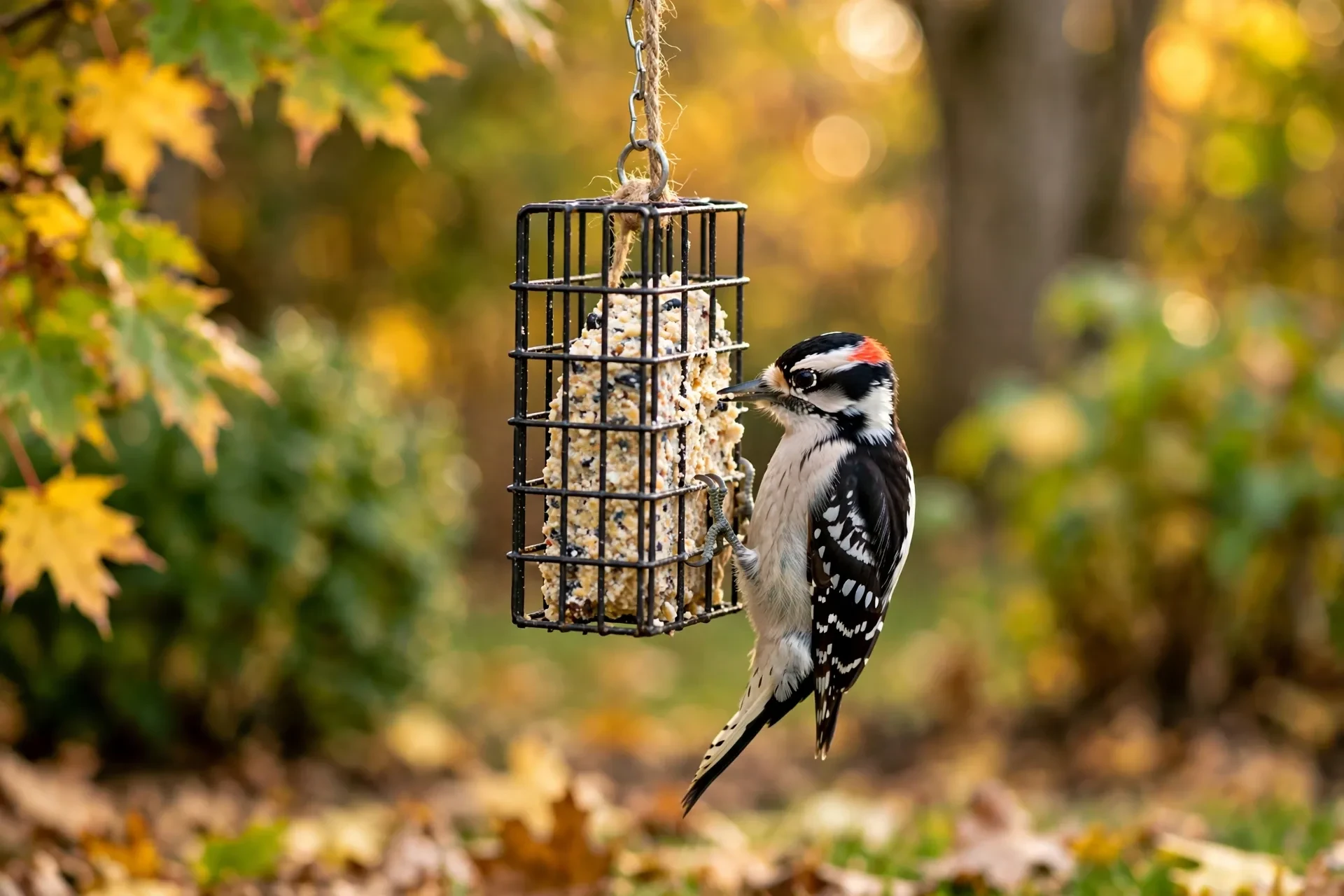
- Offer a better option nearby. Hang a suet feeder away from the house to give a foraging woodpecker an easier meal, and consider mounting a roost box on a tree or pole for a cavity-seeker. Our guide to attracting woodpeckers to your yard covers feeder and box placement that keeps them happily off your siding.
- Repair damage promptly and thoroughly. Fill holes, sand, and repaint. Unrepaired holes signal “good woodpecker real estate” to every bird that flies past, and water entering old holes causes rot that attracts more insects, restarting the whole cycle.
- Harden vulnerable surfaces. Where damage recurs, consider replacing a section of soft siding with a harder material, or painting stained wood, since insects prefer unpainted surfaces and woodpeckers follow the insects.
What NOT to Do
A frustrated homeowner can make things worse fast. A few firm rules:
- Never harm the bird. Woodpeckers are protected under the Migratory Bird Treaty Act in the United States, and similar protections exist in Canada under the Migratory Birds Convention Act. Harming one without a federal permit is illegal. The Canadian Wildlife Federation’s FAQ confirms the three motives, food, home-building, and territory marking, and stresses acting quickly with scare tactics rather than force (Canadian Wildlife Federation).
- Never use sticky repellents. Tacky gels and pastes can coat feathers, impairing flight and insulation, and they stain siding. Wildlife agencies specifically warn against them.
- Do not seal a cavity while a bird is inside. If a woodpecker has already excavated a deep hole, check that it is unoccupied before blocking it, and do the work in the morning when the bird is out foraging.
- Do not ignore it and hope. Fall pecking rarely resolves on its own. Foraging continues while insects remain, excavation continues until the cavity is finished, and unrepaired damage compounds through winter.
Fall Checklist: Woodpecker-Proofing Before Winter
October is the ideal month for this work. Do it now and you prevent both the current bird and the winter damage cycle.
- Walk the perimeter: Inspect siding, fascia, eaves, and trim for fresh holes, paying special attention to cedar, redwood, and stained wood.
- Listen at dawn: Woodpeckers are most active in the morning. A week of dawn listening tells you exactly which walls are targeted.
- Deploy deterrents early: Mylar tape and netting work best when installed at the first sign of activity, before the habit hardens.
- Schedule the pest inspection: If foraging is suspected, book it now; insect treatments need time to work before deep cold.
- Repair and repaint: Close every hole before winter moisture gets in.
- Mount the alternative: A roost box installed in fall may be claimed within weeks, giving cavity-seekers somewhere better than your eaves.
Woodpecker House Damage FAQ
Will a woodpecker actually cause serious structural damage?
Usually the damage is cosmetic, but it can escalate. Deep excavation holes let in moisture and insects, and neglected damage can lead to rot in the underlying structure. The cost of ignoring it almost always exceeds the cost of early deterrents and repair.
Do woodpeckers peck at brick or vinyl siding?
Rarely for foraging, since there are no insects inside, but they will drum on anything loud, including metal gutters, chimney caps, and hollow vinyl. If the pecking is on a non-wood surface, it is almost certainly drumming, and visual deterrents are the right response.
Why does the woodpecker come back to the exact same spot?
Birds remember productive sites. A spot that yielded insects or made a great drum last year gets revisited, and successful spots can even attract other woodpeckers. Thorough repair plus a surface change breaks the memory.
Is it legal to remove a woodpecker nest or roost hole?
Active nests are strictly protected. An unoccupied roost cavity in your siding may be blocked, but check that no bird is inside first, and never disturb a nest during breeding season. When in doubt, contact your state wildlife agency or a licensed wildlife professional.
Do fake owls and hawk decoys work?
Briefly, at best. Woodpeckers habituate to stationary decoys within days. Deterrents that move, flash, or make unpredictable noise, like mylar tape and spinning reflectors, stay effective far longer.
The Takeaway
A woodpecker on your house in fall is not random vandalism. It is a wild animal solving an autumn problem, food, shelter, or territory, with the materials at hand.
Read the damage pattern to learn which problem you are looking at, fix the underlying cause rather than just the symptom, and redirect the bird with humane deterrents and better alternatives.
Do it in October and you will spend winter listening to quiet, not tapping. Your siding and the woodpecker both come out ahead.