
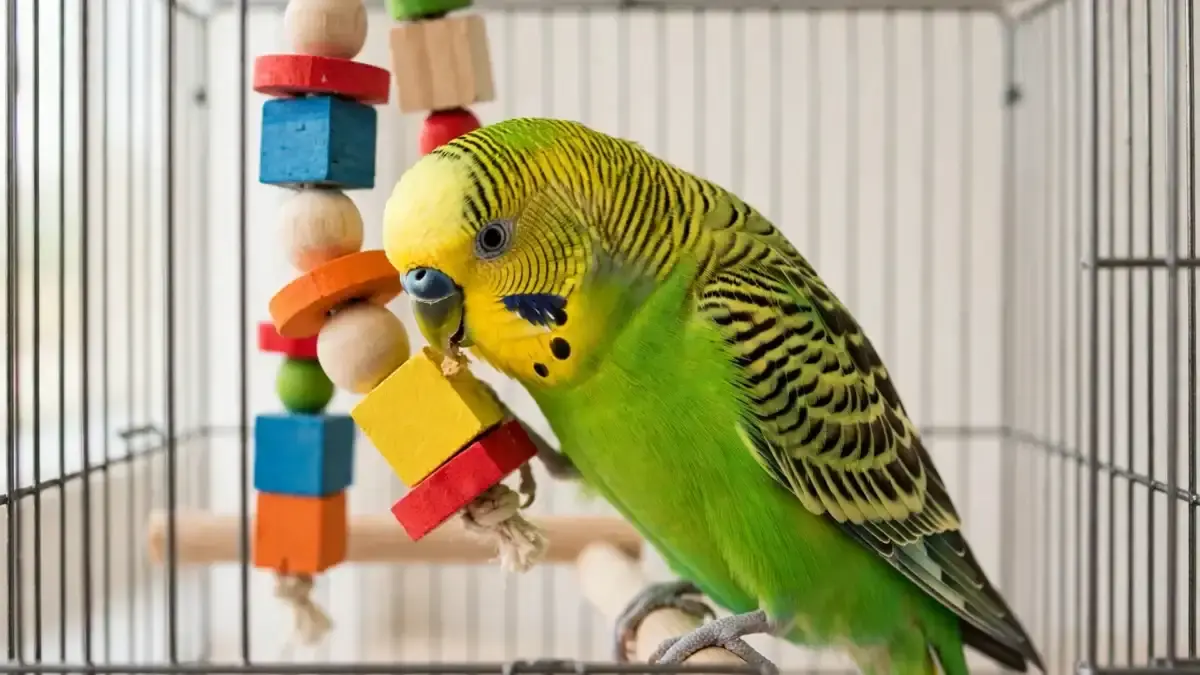
Yes, birds get bored, and it is one of the most common problems in pet birds. In the wild, a parrot spends most of its day searching for food, exploring, and socializing. In a cage, that same bird gets its food in a bowl and its world in a few square feet. The result is frustration, and frustration shows up as screaming, feather plucking, pacing, and aggression. The good news is that boredom is fixable, and the fix is simpler than most owners expect.
Why Boredom Hits Birds So Hard
Birds are not like hamsters. They are intelligent, social, and built to work for their food. A wild parrot spends up to 80 percent of its daylight hours foraging. It flies miles between feeding sites, cracks open seeds, digs for roots, and watches for predators. Every hour brings a new problem to solve.
A pet bird gets none of that. Food arrives in a bowl. Water arrives in a bottle. The same toys hang in the same places for weeks. The same walls surround it every day. For a creature with the intelligence of a small child, that life is deeply boring.
The problem is worse for flock species. Budgies, finches, cockatiels, and parrots evolved to live in groups. They talk, groom, squabble, and play together all day. A single bird kept alone in a quiet house loses its social world as well as its physical one. Boredom and loneliness feed each other.
This is not a minor welfare issue. Chronic boredom raises stress hormones, weakens the immune system, and leads to behaviors that can injure the bird. A bored bird that starts plucking may not stop, even after its environment improves. Early action matters.
Do Wild Birds Get Bored Too?
Wild birds rarely face boredom in the way pets do, because their lives are full of challenge. They search for food, defend territory, avoid predators, raise young, and migrate. Every day demands attention and decision making.
That said, wild birds in captivity for rehabilitation can show boredom signs, and so can birds in zoos with poor enclosures. The pattern is the same: when a bird’s environment stops demanding anything from it, the bird starts inventing its own stimulation, and that stimulation is often destructive.
The lesson for owners is clear. Boredom is not a personality flaw in your bird. It is a sign that the environment is failing the bird. Fix the environment, and the behavior usually improves. Caged birds with minimal enrichment show the same pattern, with bar biting, pacing, and feather plucking appearing when there is nothing to do.
Signs Your Bird Is Bored
Boredom shows up in many ways, and some of them look like other problems. A bird that is sick, stressed, or in pain can show similar signs, so always rule out illness first. If a vet clears your bird and the behavior continues, boredom is the likely cause.
| Sign | What it looks like | What it may mean |
|---|---|---|
| Feather plucking | Pulling out feathers, leaving bare patches on the chest or wings | Self stimulation to fill empty time; can become a habit |
| Excessive screaming | Loud, repeated calls with no clear cause | Calling for attention or social contact |
| Pacing or circling | Walking the same path on a perch, over and over | Repetitive behavior from a lack of stimulation |
| Bar biting | Chewing the cage bars again and again | Frustration and a need to chew or escape |
| Head bobbing or swaying | Rhythmic movements with no purpose | A repetitive habit that fills empty time |
| Aggression | Biting, lunging, or attacking hands that used to be welcome | Frustration turning outward |
| Loss of appetite | Ignoring food or treats the bird used to love | Low mood or depression from understimulation |
| Apathy | Sitting still for hours, not vocalizing, not playing | The most serious sign; the bird has given up trying |
One sign deserves special attention. Feather plucking can have many causes, including molting, skin infection, and poor diet. Before you assume boredom, read our guide on why your bird is losing feathers. It explains how to tell molting apart from plucking, and when to see a vet.
Which Birds Get Bored Most Easily
All pet birds can get bored, but some species are more vulnerable than others. Intelligence and social need are the two biggest factors.
Parrots and cockatoos
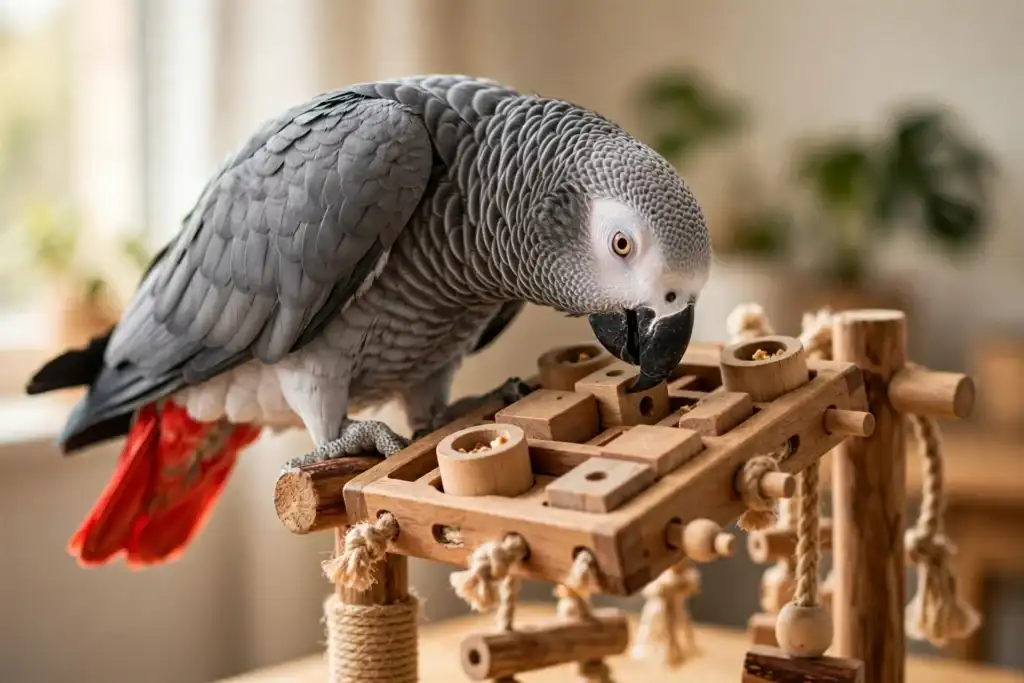
African greys, cockatoos, macaws, and amazons are the most intelligent pet birds, and the most prone to boredom. They need puzzles, training, and social time every day. A cockatoo left alone for eight hours in a bare cage will almost certainly develop a behavior problem. These birds are also the loudest when bored, which is why so many are surrendered to rescues.
Budgies and cockatiels
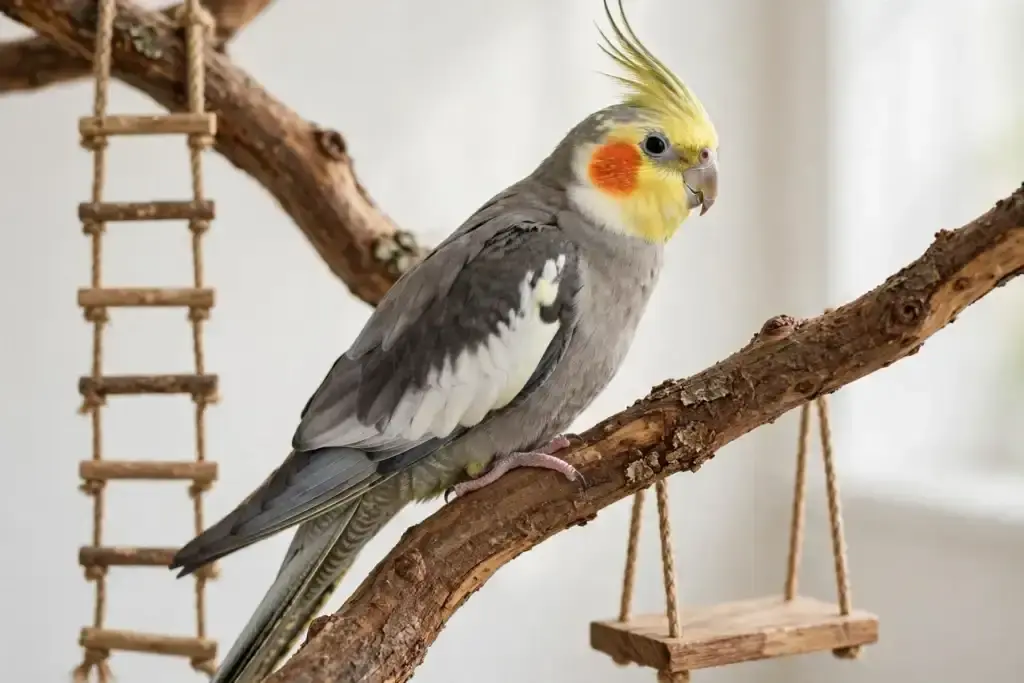
Budgies and cockatiels are social flock birds. A single budgie in a quiet room is a lonely bird. They do best in pairs or with several hours of daily interaction. Their boredom signs are quieter: they stop singing, sit still, and lose interest in toys. Owners often miss the signs because the bird is not screaming.
Finches and canaries
Finches and canaries are less interactive with humans, but they still need stimulation. They need space to fly, other birds to socialize with, and fresh greenery to explore. A finch in a small cage with no companion will sit fluffed and still, which owners mistake for contentment.
Conures and lovebirds
Conures and lovebirds are energetic and playful. They need toys they can destroy, things to climb, and daily out of cage time. Without it, they become nippy and destructive. A lovebird that attacks your hand every time you reach in is often a bored lovebird, not an aggressive one.
The Five Types of Enrichment Your Bird Needs
Enrichment is the word vets and behaviorists use for everything that makes a bird’s life interesting. It comes in five types, and your bird needs all five. The idea is simple: environmental enrichment should let a bird express its natural behaviours, from foraging and investigating new items to social interaction and play.
Foraging enrichment
This is the most important type. In the wild, birds work for food. In your home, they should too. Hide treats inside cardboard boxes, wrap pellets in paper, or use a puzzle feeder that makes the bird work to get each bite. Scatter food on the cage floor instead of putting it all in a bowl. A bird that spends an hour foraging is a bird that is not plucking.
Physical enrichment
Birds need to move. Provide ladders, ropes, swings, and perches of different sizes and materials. Natural wood branches are better than smooth dowels, because they exercise the feet and give the bird something to chew. Out of cage time matters most. Aim for at least one to two hours of supervised time outside the cage every day.
Sensory enrichment
Birds experience the world through sound, sight, and touch. Play bird safe music or nature sounds. Put the cage near a window so the bird can watch wild birds outside. Offer fresh leaves, herbs, and safe flowers to shred and explore. Change the view sometimes by moving a perch or adding a new object.
Social enrichment
Birds are social animals, and no toy replaces company. Talk to your bird every day. Sit near the cage while you read or work. Teach simple tricks with clicker training, which gives the bird mental work and strengthens your bond. If your schedule keeps you away for long hours, consider a second bird of the same species as a companion.
Talking and training also help. If you want to teach your bird to talk, our guide on why parrots can talk explains the science, and our realistic guide to teaching a parakeet to talk gives a step by step method that works without frustration.
Cognitive enrichment
Intelligent birds need problems to solve. Puzzle toys with sliding doors, twistable parts, or hidden compartments work well. Rotate the puzzles every week so the bird does not memorize them. Teach new tricks regularly, even simple ones like turning around or touching a target stick. Learning is enrichment.
A Simple Weekly Enrichment Plan
You do not need to buy expensive equipment. A good enrichment plan uses cheap materials and a little routine. Here is a plan that works for most pet birds.
- Monday: new foraging puzzle. Hide treats in a paper bag or a cardboard tube.
- Tuesday: training session. Ten minutes of clicker training with a favorite treat.
- Wednesday: toy rotation. Swap two toys for two different ones from storage.
- Thursday: fresh branches. Offer a clean, pesticide free branch with leaves to shred.
- Friday: bath day. Offer a shallow dish of water or a gentle misting.
- Saturday: out of cage adventure. Let the bird explore a safe room or a play stand.
- Sunday: rest and social time. Sit with your bird, talk, and let it relax on your shoulder.
The key is consistency. Birds thrive on routine, and a predictable schedule of new experiences keeps them engaged without stressing them.
DIY Enrichment Toys That Actually Work
Pet store toys are fine, but homemade toys are often better, because you can make them fresh and cheap. Here are ideas that cost almost nothing.
- Paper roll forager: fold the ends of a clean toilet paper roll, put a few treats inside, and hang it from the cage top.
- Shredding basket: fill a small woven basket with crinkle paper, dried leaves, and a few seeds. Let the bird dig through it.
- Veggie skewer: thread chunks of apple, carrot, and broccoli onto a bird safe skewer and hang it like a kebab.
- Cardboard box maze: cut holes in a small box, hide treats inside, and let the bird reach in to find them.
- Foot toys: offer small wooden blocks, bottle caps, or beads the bird can pick up and drop.
Always check materials for safety. Avoid zinc coated metals, toxic glues, painted wood, and anything with small parts that can be swallowed. Untreated wood, plain paper, palm leaf, and stainless steel are safe choices.

Common Mistakes That Make Boredom Worse
Well meaning owners often make errors that reduce enrichment or create new problems. Avoid these.
Leaving the same toys in place for months
Birds lose interest in a toy within a week or two. Rotate toys every five to seven days. You do not need to buy new ones. Just swap them out and bring back an old favorite later. A toy that was boring last month can feel new again after a break.
Using mirrors as a substitute for company
Some birds enjoy mirrors, but mirrors can create false social bonds. A bird may bond with its reflection, become territorial over the mirror, and ignore real social contact. Mirrors are not a substitute for another bird or for time with you.
Overfeeding from a bowl
A full food bowl is the enemy of enrichment. When food is free, the bird has nothing to do. Put only part of the daily food in the bowl and hide the rest in foraging toys. This single change does more than any toy.
Ignoring routine
Birds thrive on predictability. A bird that does not know when it will be fed, handled, or let out becomes anxious, and anxiety looks a lot like boredom. Keep feeding, play, and sleep times consistent.
Assuming a quiet bird is a happy bird
A bird that sits silently for hours is not content. It is likely bored or depressed. Healthy birds vocalize, move, explore, and interact. Silence in a normally vocal species is a warning sign.
When Boredom Becomes a Medical Problem
Boredom can turn into illness. Chronic stress from understimulation raises corticosterone, a stress hormone that suppresses the immune system. Bored birds are more likely to develop infections, and they eat poorly, which makes the problem worse.
Feather plucking can become a habit that continues even after the environment improves. Once a bird has plucked for months, the behavior can become compulsive, like nail biting in humans. Breaking the habit takes time, patience, and often help from an avian veterinarian or behaviorist.
Self mutilation is the most serious outcome. Some birds chew their own skin, opening wounds that need veterinary treatment. If your bird is injuring itself, do not wait. See an avian vet immediately.
There is also a simple rule to follow. If a new behavior appears suddenly, or if it comes with weight loss, changes in droppings, or a loss of appetite, see a vet first. Rule out illness before you assume boredom. A bird that is sick and a bird that is bored can look very similar, and treating the wrong cause wastes time the bird does not have.
How Much Time Does a Bird Actually Need?
Owners often ask for a number. The honest answer is that it depends on the species, but there are useful baselines.
- Daily interaction: at least one to two hours of direct time with you, through play, training, or simple companionship.
- Out of cage time: at least one hour of supervised time outside the cage, every day.
- Foraging time: aim for the bird to spend at least an hour a day working for food, through puzzles and hidden treats.
- Toy rotation: change at least two toys every week.
- New experiences: introduce something new, a branch, a food, a sound, or a trick, at least once a week.
If your schedule cannot meet these baselines, consider a second bird. Two budgies entertain each other in ways no toy can. A companion bird is often the best enrichment money can buy.
Frequently Asked Questions
Do birds get bored in cages?
Yes. Birds in cages get bored when their environment does not challenge them. In the wild, birds spend most of their day foraging, exploring, and socializing. A cage with a full food bowl and unchanging toys offers none of that. The result is screaming, feather plucking, pacing, and other repetitive behaviors.
How can I tell if my bird is bored?
Look for feather plucking, excessive screaming, pacing, bar biting, head bobbing, aggression, loss of appetite, or unusual silence. Any of these can also signal illness, so a vet check comes first. If the vet clears your bird and the behavior continues, boredom is the likely cause.
What is the best toy for a bored bird?
The best toy is one that makes the bird work for food. Foraging puzzles, shreddable toys, and puzzle feeders beat static toys every time. Rotate toys weekly, and combine them with daily interaction and out of cage time. No single toy fixes boredom on its own.
Do birds get depressed?
Birds can show signs that look like depression: apathy, loss of appetite, silence, and a lack of interest in play. These signs usually come from chronic boredom, loneliness, or illness. A bird that sits still and quiet for hours is not content. It needs veterinary attention and environmental change.
Can I leave my bird alone while I work?
Most pet birds can handle a normal workday if their environment is enriched. Leave foraging toys, a radio or nature sounds, and a window view. Come home to an hour of interaction. If you are away for ten or more hours a day, consider a second bird or a pet sitter visit. A bird left alone in a bare cage for most of its waking hours will develop problems.
Is it better to get a second bird or more toys?
For flock species like budgies, cockatiels, and lovebirds, a second bird is usually better. No toy replaces a companion. For highly intelligent species like African greys and cockatoos, you need both: a companion or a lot of human time, plus puzzles and training. Toys alone rarely solve boredom in these species.
Conclusion
Birds get bored, and boredom is not a small problem. It causes screaming, plucking, aggression, and illness, and it is one of the main reasons pet birds are surrendered. The fix is straightforward: make your bird work for its food, give it new things to explore, rotate its toys, and spend real time with it every day. A bird with a busy mind is a healthy bird, and a healthy bird is a happy companion.