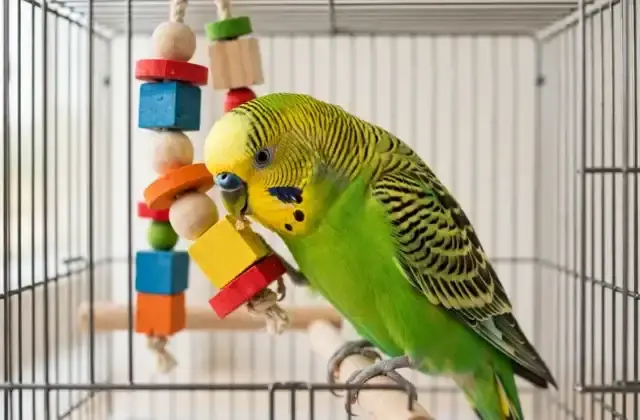


Yes, birds can get drunk. When the first frosts arrive, berries left on trees and bushes start to ferment. Hungry birds eat those berries, the alcohol reaches their bloodstream, and they fly badly, wobble on branches, or sit dazed on the ground. Most recover on their own, but a drunk bird is a vulnerable bird, and a little help from you can keep it alive.
The Short Answer: Yes, and It Happens Every Autumn
Every year, as temperatures drop, people report the same strange sight. A robin stumbles across a lawn. A waxwing flies into a window for no clear reason. A blackbird sits on a pavement, swaying gently, as if it forgot how gravity works.
The cause is simple. Cold weather concentrates the sugars in fruit still hanging on trees. Natural yeasts, which live on every berry, turn those sugars into alcohol. The fruit looks almost the same, so birds keep eating it. In late autumn and winter, insects are gone and seeds are buried, so fruit becomes a major food source. Birds that depend on fruit can eat far more of it than usual, and some of that fruit is already fermenting.
Scientists have documented this for decades. A peer reviewed study in The Auk, Ornithological Advances, showed how ethanol from fermented fruit enters a bird’s bloodstream and disrupts balance, coordination, and flight. The effect is real, measurable, and entirely natural.
How Berries Turn Into Alcohol
Fermentation needs three things: sugar, yeast, and time. Autumn berries provide all three. As berries ripen and then overripen, their sugars build up. The cycle of freezing nights and warming days speeds up the breakdown of the fruit. Yeast cells on the skin of the berry get to work, and alcohol is the result.
This process is fastest in fruit that stays on the plant through the first frosts. Crabapples, holly berries, rowan berries, juniper berries, and the fruit of ornamental shrubs are common culprits. Grapes left on the vine and fallen fruit rotting under a tree ferment even faster, because the damaged skin lets yeast in more easily.
Birds do not choose fermented fruit on purpose. In cold months, they cannot afford to be picky. A robin that needs several hundred calories a day to stay warm will eat whatever fruit is available. If that fruit has been fermenting for a week, the bird eats alcohol with its meal.
Which Birds Get Drunk Most Often
Not every bird is equally at risk. The birds most often seen drunk are the ones that eat the most fruit in cold weather.
Robins
American robins and European robins switch to a fruit heavy diet in winter. When insects disappear, they gather in flocks and work through berry bushes. Flocks of robins have been seen stumbling around yards and flying into windows after feeding on fermented holly berries.
Cedar Waxwings
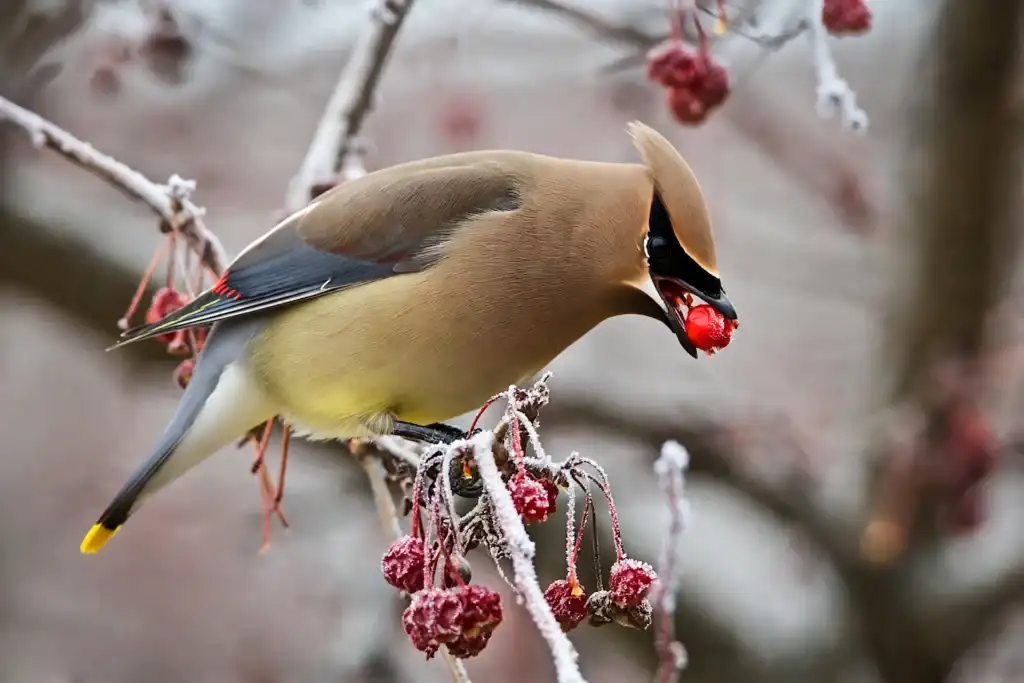
Waxwings are the classic drunk bird. They eat almost nothing but fruit in winter, and they eat it in large quantities. A flock can strip a berry tree in a day. Waxwings do have some protection: they have relatively large livers that help process alcohol, and an expandable esophagus that lets them store berries in the throat. Even so, they are regularly found dazed after a heavy feeding session.
Blackbirds and Thrushes
Blackbirds, fieldfares, and redwings are frequent victims. In August 2011, twelve dead juvenile blackbirds were found in one location. Post mortem testing confirmed they had likely eaten too many fermented berries and flown to their deaths, according to a 2012 research letter in the journal Veterinary Record. One surviving bird was unsteady on its feet and pressed both wings to the ground to support itself, leaning against the walls of its enclosure as though it was drunk.
Grosbeaks, Cardinals, and Magpies
Wildlife workers in northern regions report that grosbeaks, cardinals, and magpies are also susceptible, because all of them eat large amounts of fruit when other food is scarce. Any fruit eating bird can be affected, including starlings, mockingbirds, and bluebirds.
What Alcohol Does to a Bird’s Body
Birds are small, and their metabolism runs fast. That combination means alcohol hits them harder and faster than it would a human. A few fermented berries can be enough to affect balance.
An intoxicated bird may misjudge landings, fly into objects, or sit still for long periods. Some appear unusually calm. Others seem confused. Their flight becomes erratic, their landings clumsy, and their reactions slow. Most recover once the alcohol is metabolized, but during that window, they are vulnerable to predators, traffic, and the cold.
Alcohol also affects a bird’s ability to keep warm. Birds maintain a body temperature around 104 to 106 degrees Fahrenheit, and they burn a lot of energy to do it. A bird that is too drunk to feed or to find shelter can lose heat fast. In freezing weather, that can turn a funny story into a fatal one.
There is one more danger. Some berries are toxic as well as fermentable. Holly berries, for example, carry a natural toxicity that lessens but does not disappear after fermentation. A bird eating fermented holly berries faces alcohol and a mild toxin at the same time.
Signs a Bird May Be Drunk
A drunk bird does not look like a sick bird, and telling the difference matters. Here are the signs people most often notice.
- Wobbly flight: the bird flies in an uneven line, bumps into branches, or misses its landing perch.
- Window strikes: the bird flies into a window it would normally avoid. Drunk birds lose their sense of direction and cannot judge glass.
- Sitting on the ground: the bird sits on a pavement, lawn, or driveway for a long time, not moving away when you approach.
- Unsteady posture: the bird sways, leans to one side, or uses its wings to prop itself up.
- Unusual calm: a normally skittish bird lets you walk right up to it. This is not tameness. It is disorientation.
- Fluffed and still: the bird sits puffed up and quiet. Some puffing is normal in cold weather, but a bird that stays puffed and motionless for an hour needs attention.
If you want to understand normal puffed up behavior, read our guide on why birds puff up their feathers. It explains when puffing is warmth, when it is sleep, and when it is a warning sign.
What to Do If You Find a Drunk Bird
Most drunk birds need only time and safety. Alcohol leaves a bird’s system in a few hours, just as it does in humans. Your job is to keep the bird safe while it sobers up.
Step 1: Watch from a distance first
Give the bird a few minutes. Some birds shake off a light dose and fly away on their own. If it flies off strongly, let it go. No intervention is needed.
Step 2: Protect it from predators and traffic
If the bird is on the ground in an exposed spot, it is in danger from cats, dogs, and cars. Gently pick it up with both hands, keeping its wings folded against its body. Move it to a quiet, sheltered spot, such as a bush or a low branch.
Step 3: Use the box method
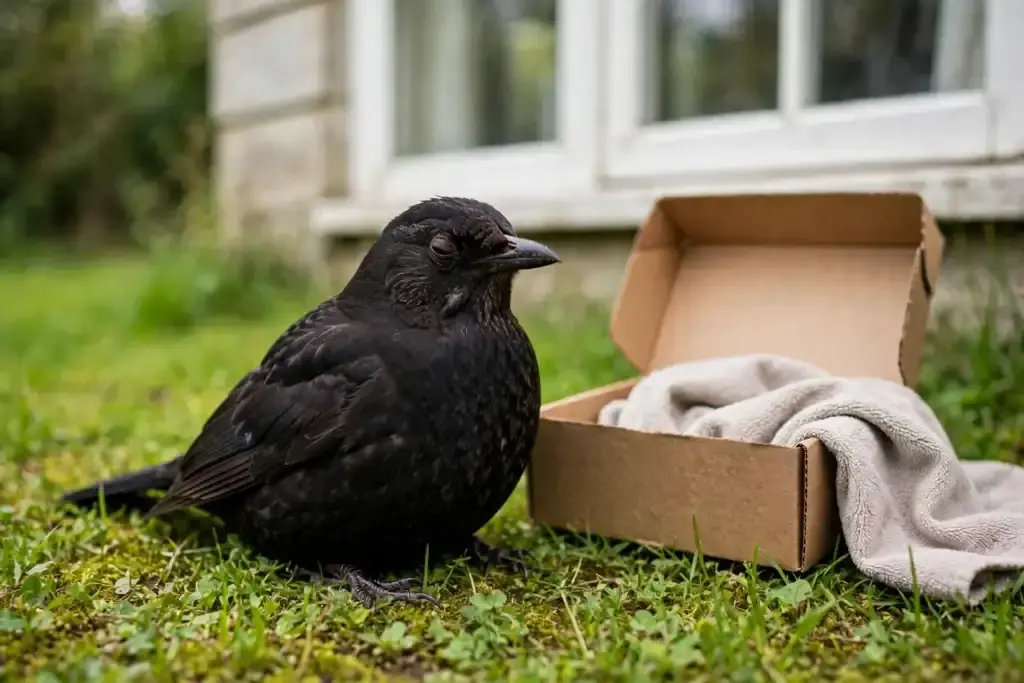
If the bird cannot fly or seems badly disoriented, place it gently in a cardboard box with air holes and a soft cloth inside. Put the lid on loosely, keep the box in a quiet, dark place, and leave the bird alone. This is the same method used by wildlife workers in the Yukon, where the territorial environment agency set up a drunk tank for intoxicated birds. The birds stay in the tank, actually a small animal cage, until they dry out, then they are released.
Do not offer food or water while the bird is in the box. A disoriented bird can choke. Do not try to keep it warm with a heating pad unless a wildlife rehabilitator tells you to. Room temperature and quiet are enough.
Step 4: Release or call for help
After one to two hours, take the box outside, open it, and see if the bird flies away. If it flies off strongly, the job is done. If it still cannot fly, or if it hit a window hard, call a licensed wildlife rehabilitator. Birds that look fine can still have internal injuries from a collision, so professional help matters when recovery stalls.
The Famous Cases: Owls, Blackbirds, and the Yukon Drunk Tank
Drunk birds are not a new story, and some cases have become famous.
The Yukon drunk tank
Environment Yukon, the territory’s environment agency, set up a drunk tank where intoxicated birds can sober up safely. Staff there confirm that the birds do get drunk, and that window strikes are the most common consequence. Birds that fly into windows are brought in, kept in a small cage until they recover, and then freed.
The 2011 blackbird deaths
In August 2011, twelve juvenile blackbirds were found dead. Toxicology testing pointed to fermented berries. The birds had eaten so much fermented fruit that they flew into fatal collisions. The case was published as a research letter in Veterinary Record in 2012, and it remains one of the clearest documented links between fermented fruit and bird deaths.
The German owl and the schnapps bottles
In 2011, a German owl was found on a road, unable to fly. It had not eaten fermented berries. It had found discarded schnapps bottles and drunk from them. The bird was taken to a local bird expert, sobered up, and survived. The story was reported by Der Spiegel, and it shows that the attraction to alcohol is not limited to natural fruit.
Berries That Ferment Most Often
Some plants are more likely to produce drunk birds than others. If you have these in your yard, it is worth knowing the risk.
| Berry or fruit | Why it ferments | Birds that eat it |
|---|---|---|
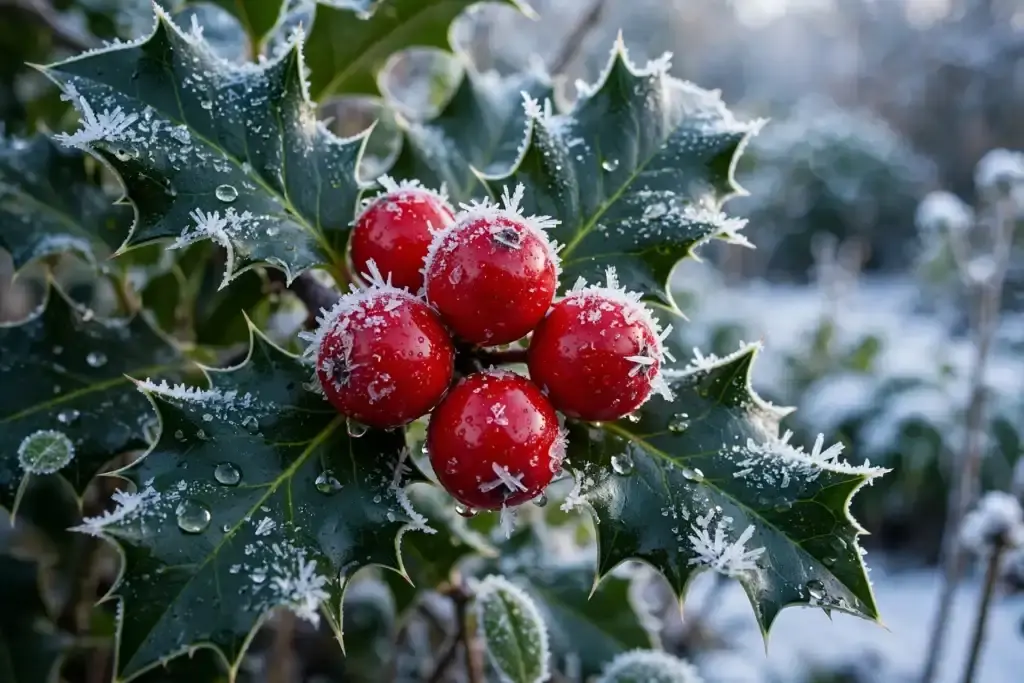
| Holly berries | Stay on the plant through frost; sugars concentrate as they freeze and thaw | Robins, blackbirds, thrushes |
| Crabapples | Hang on branches for months; soften and ferment after frost | Waxwings, robins, grosbeaks |
| Rowan berries | High sugar content; ripen in large clusters that ferment together | Waxwings, thrushes, starlings |
| Juniper berries | Persist through winter; ferment slowly in freeze thaw cycles | Robins, bluebirds, cedar waxwings |
| Ornamental grapes | Thin skins split easily; yeast enters fast | Cardinals, mockingbirds, catbirds |
| Fallen fruit | Rots on the ground; damaged skin speeds fermentation | Blackbirds, starlings, robins |
None of these plants is dangerous on its own. The risk comes from timing. Fruit that has sat through several freeze thaw cycles in late autumn is far more likely to be fermenting than fresh fruit in summer.
Can Birds Build a Tolerance?
This is a fair question, and the answer is partly yes. Fruit eating birds have evolved to handle small amounts of alcohol. Waxwings, for example, have larger livers relative to body size than many other birds, and their digestive system is built for a fruit heavy diet. Research suggests that birds that regularly eat fermented fruit metabolize ethanol more efficiently than birds that do not.
But tolerance has limits. A bird can handle the alcohol in a few berries. It cannot handle the alcohol in a full crop of fermented berries eaten in one sitting. Flocks are a special risk, because birds in a flock compete for food and eat fast. A waxwing that gorges on fermented rowan berries can take in far more alcohol than its liver can clear.
Age matters too. Young birds are the most vulnerable. Their livers are smaller, their experience is lower, and they are more likely to gorge. The twelve dead blackbirds in 2011 were juveniles.
Drunk Birds and Window Strikes
The biggest danger of a drunk bird is not the alcohol itself. It is what the bird does while drunk. Window strikes are the leading cause.
A sober bird can usually see a window, or at least avoid it by flying around a building. A drunk bird loses its sense of direction and its ability to judge distance. It flies into glass it would normally avoid. Even a strike that does not kill outright can cause brain swelling or internal bleeding that shows up hours later.
If you live near berry bushes and you get window strikes in autumn, there are practical steps you can take. Put decals, tape, or a patterned film on the outside of the windows nearest the berry bushes. Move feeders either very close to the window, under three feet, or far away, over thirty feet, so birds cannot build up speed. Keep curtains partly closed during the day so the glass reflects less sky.
If a bird hits your window and seems dazed, use the box method described above. Even if it flies off, watch it for a few minutes. A bird that flies off weakly may land nearby and need help.
Should You Remove Fermenting Berries?
Most experts say no. Berries are a vital winter food source, and removing them would hurt the birds you are trying to help. Fermented fruit is a natural part of the season, and most birds handle it without trouble.
There are two exceptions. First, if a particular bush is producing repeated window strikes, consider netting the bush or pruning the fruit that hangs closest to the glass. Second, clear fallen fruit from driveways and paths, where drunk birds are most likely to be hit by cars or found by cats. Raking up fallen crabapples and grapes is a small job with a real benefit.
What you should not do is put out alcohol, beer, or any human drink for birds. That is not a joke to test. The German owl case shows that birds will drink from bottles, and human alcohol is far stronger than anything in a berry.
How to Help Birds Through the Cold Season
Drunk birds are one small part of winter survival. The same cold months that ferment berries also make food scarce. A few simple steps make your yard safer for every bird.
- Offer high energy food: black oil sunflower seeds, suet, and peanuts give birds the calories they need to stay warm. Our guide on whether birds can eat oats explains which kitchen foods are safe and which to avoid.
- Provide clean water: a heated birdbath or a shallow dish refreshed daily helps birds drink and bathe when natural water freezes.
- Leave shelter standing: dense shrubs, brush piles, and evergreen trees give birds places to roost and hide. Learn more in our guide to where birds sleep at night.
- Keep cats indoors: a drunk bird on the ground is an easy target. Keeping cats inside during the morning, when birds are most active, saves lives.
- Check for window strike victims: walk past your windows once a day in autumn. A bird sitting quietly below a window may be a strike victim, not a resting bird.
Frequently Asked Questions
Can birds get drunk on fermented berries?
Yes. When berries ferment, natural yeast turns their sugars into alcohol. Birds that eat large amounts of fermented berries, especially robins, waxwings, and blackbirds, can become intoxicated. Their flight becomes erratic, they may fly into windows, or they may sit dazed on the ground. Most recover within a few hours.
How long does it take a drunk bird to sober up?
Usually one to two hours. A bird kept quietly in a dark box will metabolize the alcohol and recover. If it still cannot fly after two hours, it may have an injury from a collision, and a wildlife rehabilitator should be called.
Do birds die from getting drunk?
Rarely, but it happens. The alcohol itself is seldom fatal. Deaths usually come from secondary causes: flying into windows, being hit by cars, freezing because the bird cannot find shelter, or being caught by a predator while disoriented. Twelve juvenile blackbirds died in 2011 after eating fermented berries and flying into fatal collisions.
Which berries make birds drunk?
Any fruit that stays on the plant through frost can ferment. The most common are holly berries, crabapples, rowan berries, juniper berries, ornamental grapes, and fallen fruit rotting under trees. The risk rises after several freeze thaw cycles in late autumn.
Is it safe to feed birds fermented fruit on purpose?
No. Never offer fermented fruit, alcohol, or beer to birds. Fermented fruit in nature is an accident of the season. Deliberately feeding it to birds is unnecessary and can harm them. Offer fresh fruit, seeds, and suet instead.
Can pet birds get drunk?
Yes, and it is dangerous for them. Pet birds should never be given alcohol, fermented fruit, or foods cooked with alcohol. Their small bodies process alcohol poorly, and even a small amount can cause serious harm. If a pet bird ingests alcohol, contact an avian veterinarian immediately.
Conclusion
Birds can get drunk, and it happens every autumn. Fermented berries are a natural part of the cold season, and most birds handle them without trouble. The ones that overdo it need only time, quiet, and safety to recover. If you find a tipsy bird, give it a box, give it darkness, and give it an hour. That small act can be the difference between a funny story and a lost bird.