Introduction
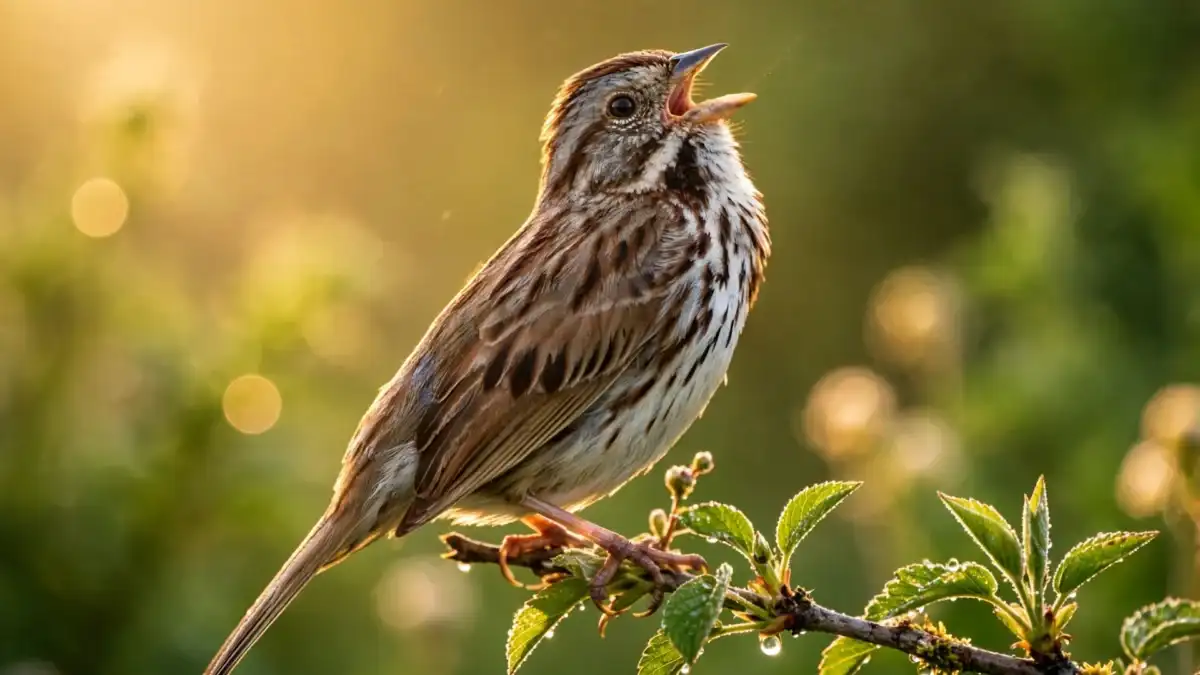
Bird songs are learned music with a job to do. A singing male is claiming a territory, advertising his health to females, or doing both at once. Only the songbirds, the oscines, learn their songs from tutors, and they perform them on a two sided voice box called the syrinx that can sound two notes at the same time. This guide explains how songs differ from calls, why birds sing hardest at dawn, how a young bird learns its song, which species sing best, and how you can learn to recognize the singers in your own neighborhood.
Song vs Call: What Is the Difference?
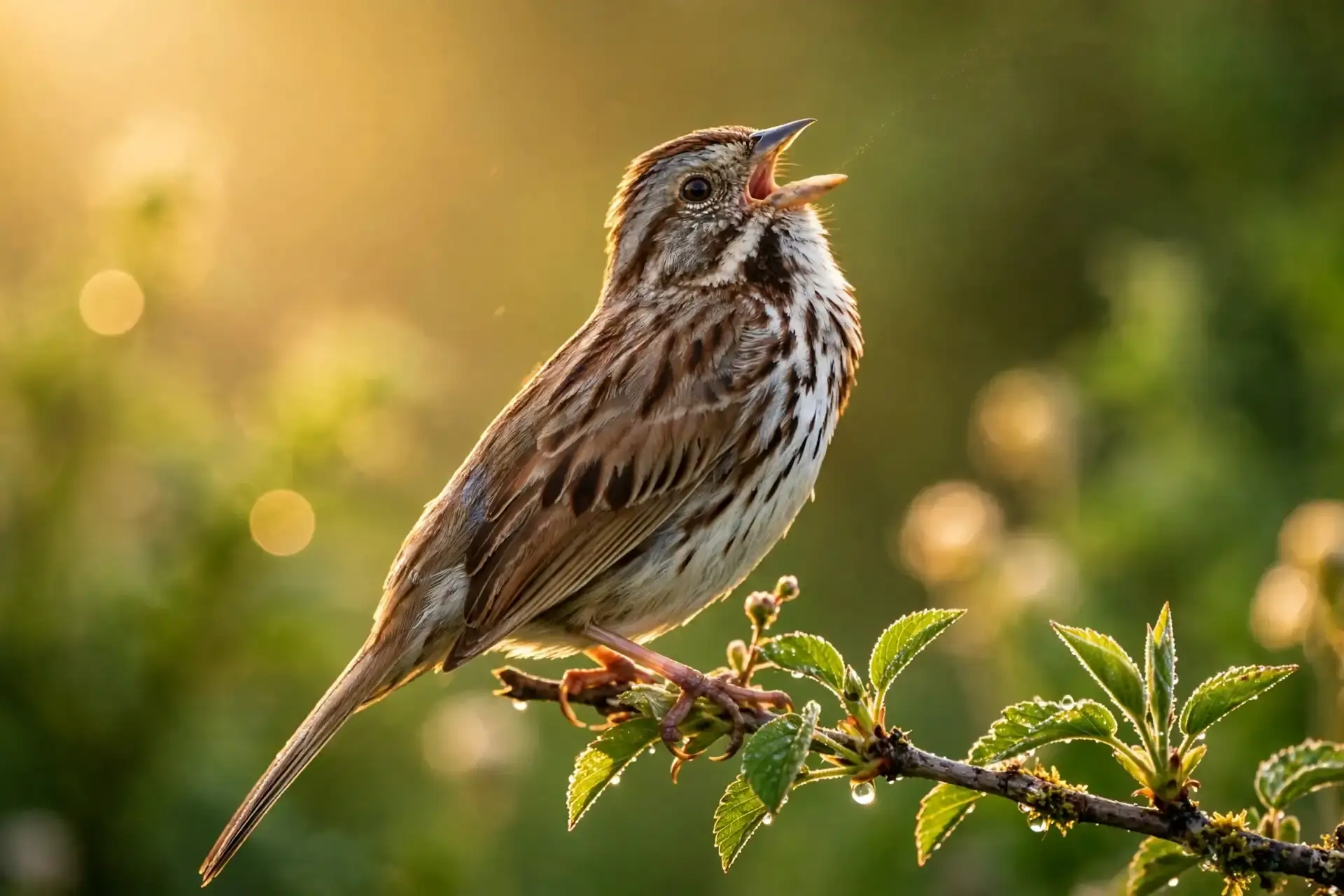
Every sound a bird makes belongs to one of two broad groups: songs and calls. According to the Cornell Lab of Ornithology, a song is a relatively structured vocalization produced to attract a mate or defend a territory. Songs tend to be longer, more musical, and built from phrases repeated in a set pattern.
Calls are shorter and simpler. Birds use them for immediate business: warning of a nearby threat, announcing their location, or keeping contact with a mate or flock. A chickadee’s alarm note and a goose’s flight call are calls, and almost every bird species makes them, singer or not.
Sometimes it can be difficult to distinguish between songs and calls, but knowing their purpose will help. The range of songs and calls produced by a bird in different situations is known as its repertoire. Knowing whether a bird in your yard is producing a song or call can therefore tell you what it is trying to achieve.
Why Birds Sing
Singing is expensive. The Cornell Lab points out that it is energetically draining, and it alerts predators to exactly where the singer is sitting. Birds pay that price because song is how a male stakes his claim. One message goes to rival males: this territory is taken. The other goes to females: here is a healthy mate with a good territory.
Song is also an honest signal of quality. A male that sings strongly at dawn has survived the night and found enough food to fuel an expensive performance. Studies show that song plays a crucial role in attracting and impressing potential mates, and it may signal the overall health of the singer. In canaries, females consistently prefer males whose trills are faster and span a wider range of pitches.
In temperate regions, most singers you hear are male, and most singing happens in the breeding season, switched on by lengthening spring days. The picture changes in the tropics, where female songbirds commonly sing too, and many pairs perform coordinated duets to maintain their bond and their territory.
The Dawn Chorus
On a spring morning, song peaks in the hour around sunrise. This daily event is the dawn chorus, and if you have ever wondered why do birds chirp in the morning, the chorus is the answer. The Cornell Lab is candid that scientists are not fully sure why birds concentrate their singing at dawn, though dawn songs are thought to warn rivals away from territories and mates.
Several explanations likely work together. The light before sunrise is too dim for efficient foraging, so singing costs a bird little lost feeding time, and low light makes the singer harder for predators to spot. The air is still and quiet, and the RSPB notes that birdsong has been shown to carry up to 20 times farther at dawn than later in the day.
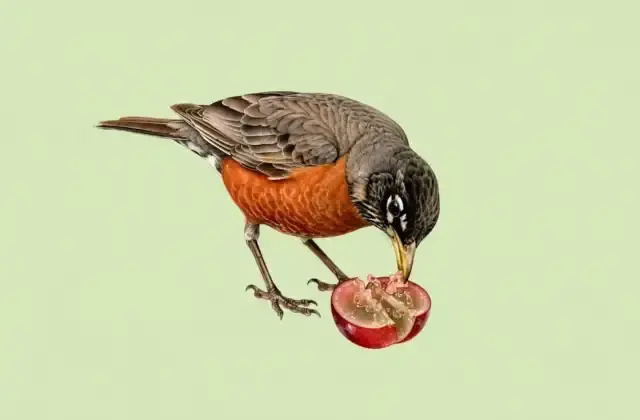
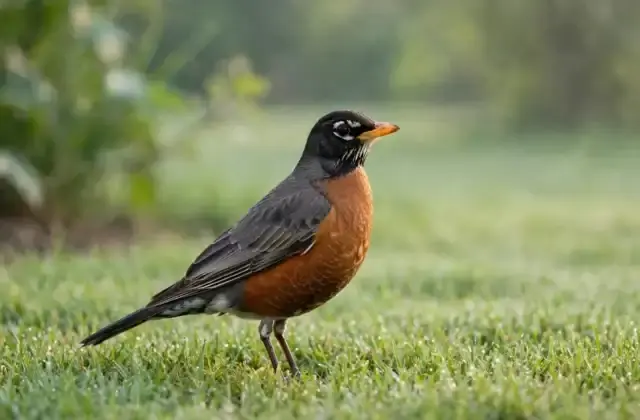
A loud dawn performance also proves the singer survived the night in good shape, a message aimed at rivals and mates alike. Many migrants travel at night and land at dawn, so residents sing first thing to tell newcomers the neighborhood is full. The RSPB puts the peak at about half an hour before to half an hour after sunrise, with thrushes, blackbirds, and robins among the first voices, and wrens and warblers joining as the light grows.
City birds face an extra pressure. Audubon reports that in Seville, Spain, researchers who played recorded traffic noise before dawn found that spotless starlings and house sparrows started singing about 20 minutes earlier, apparently getting their songs in before rush hour could drown them out.
How Birds Produce Song
Birds do not sing with a larynx the way we do. Their instrument is the syrinx, a specialized voice box that sits deep in the chest, exactly where the trachea splits into the two bronchi. Membranes and tissues called labia vibrate as air passes over them, and muscles shape that vibration into notes of different pitch, length, and volume.
As the syrinx is divided into two parts, Wood Thrushes can produce two-note songs. As each side of the syrinx vibrates separately, the Wood Thrush can end its song with a two-note sound, by having one high note and one low note.
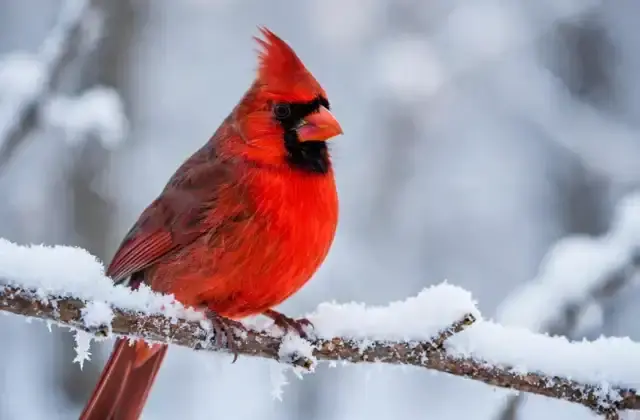
Fast songs are another party trick. The Northern Cardinal can sing more notes in a tenth of a second than are on a piano keyboard. This is achieved by changing sides in the middle of a note in the syrinx, so that there is no pause in the song. Canaries also change sides to produce quick trills.
How Birds Learn Their Songs
The true songbirds, the oscines, must learn their songs rather than growing them by instinct. This is a remarkable commitment: songbirds make up almost half of the world’s 10,000 bird species, and every one of them starts life needing a teacher. The Cornell Lab calls the early listening stage the critical period, when a nestling in the nest memorizes the songs of adults singing nearby.
Those adults are the young bird’s tutors, usually its father and the neighboring males. After fledging, the youngster starts to practice. Its first efforts are a soft, rambling babble called subsong, much like a human baby’s. Over weeks of rehearsal it compares its own output with the memorized model, trimming and correcting until the song crystallizes into its finished adult form.
Species differ in how long the classroom stays open. Some birds, including the white crowned sparrow, learn only during their first year and sing the same song for life. Others keep learning as adults: mockingbirds add new material to their repertoires throughout their lives. At the other extreme, suboscines such as flycatchers never learn at all. Experiments have shown that young Alder Flycatchers exposed to recordings of Willow Flycatcher song still grew up singing their own species’ song.
Because songs are learned locally, they drift from place to place. Populations separated by mountains, wide rivers, or stretches of unsuitable habitat develop distinct regional dialects, passed from tutor to pupil down the generations. The Cornell Lab notes that after many generations, birds of one valley can sound noticeably different from the same species in the next. Indigo Buntings are one well studied example of a species with strong local dialects. In some places the change is abrupt enough that a short walk can carry you out of one dialect and into another.
The Great Singers
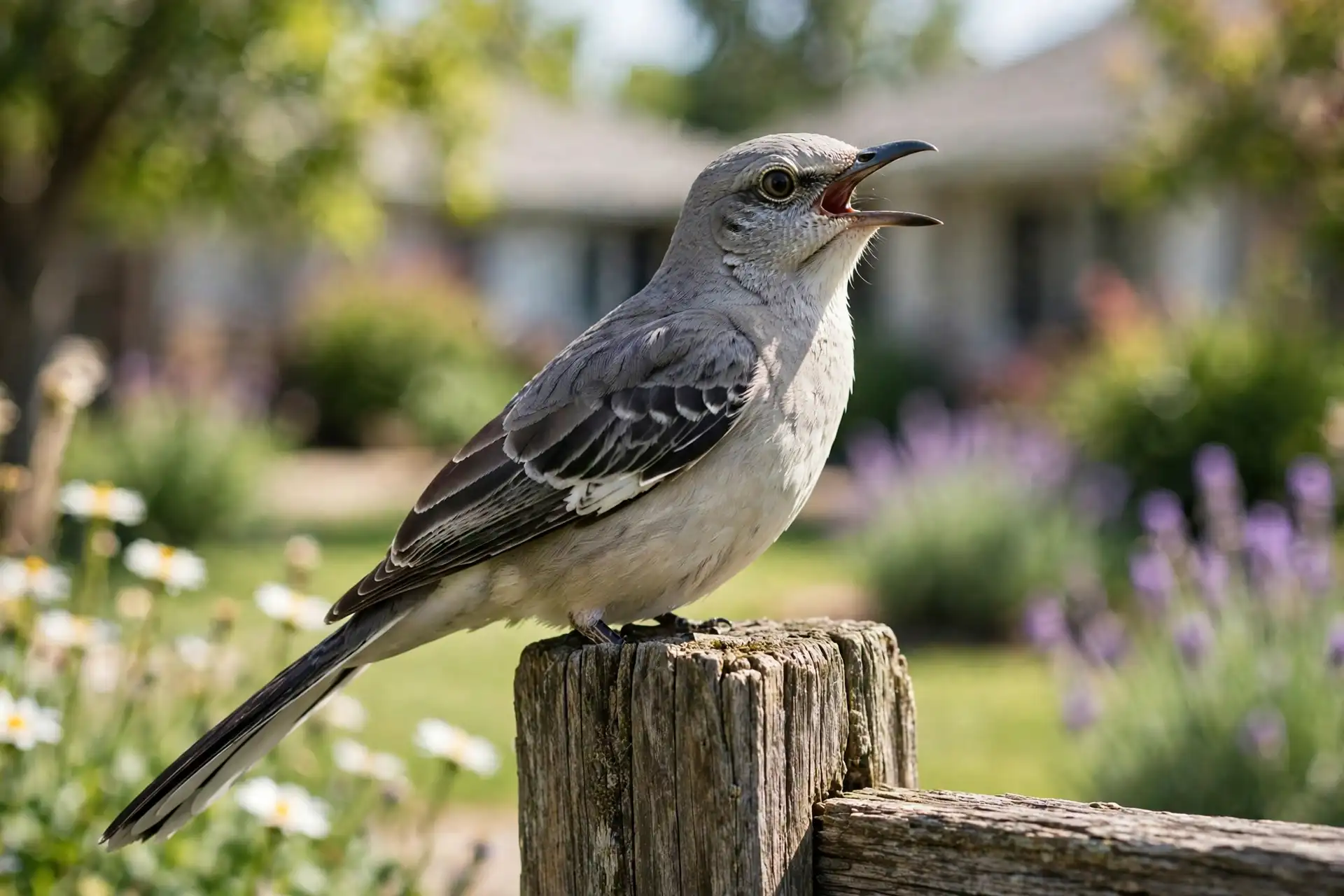
Ask birders to name the finest singer in North America and the Northern Mockingbird is always in the argument. It performs from rooftops, poles, and fence posts, repeating each phrase several times before switching to the next, and it can keep going for hours. A male may learn around 200 songs over the course of his life, and he sings in two seasons, building one repertoire for spring and another for fall.
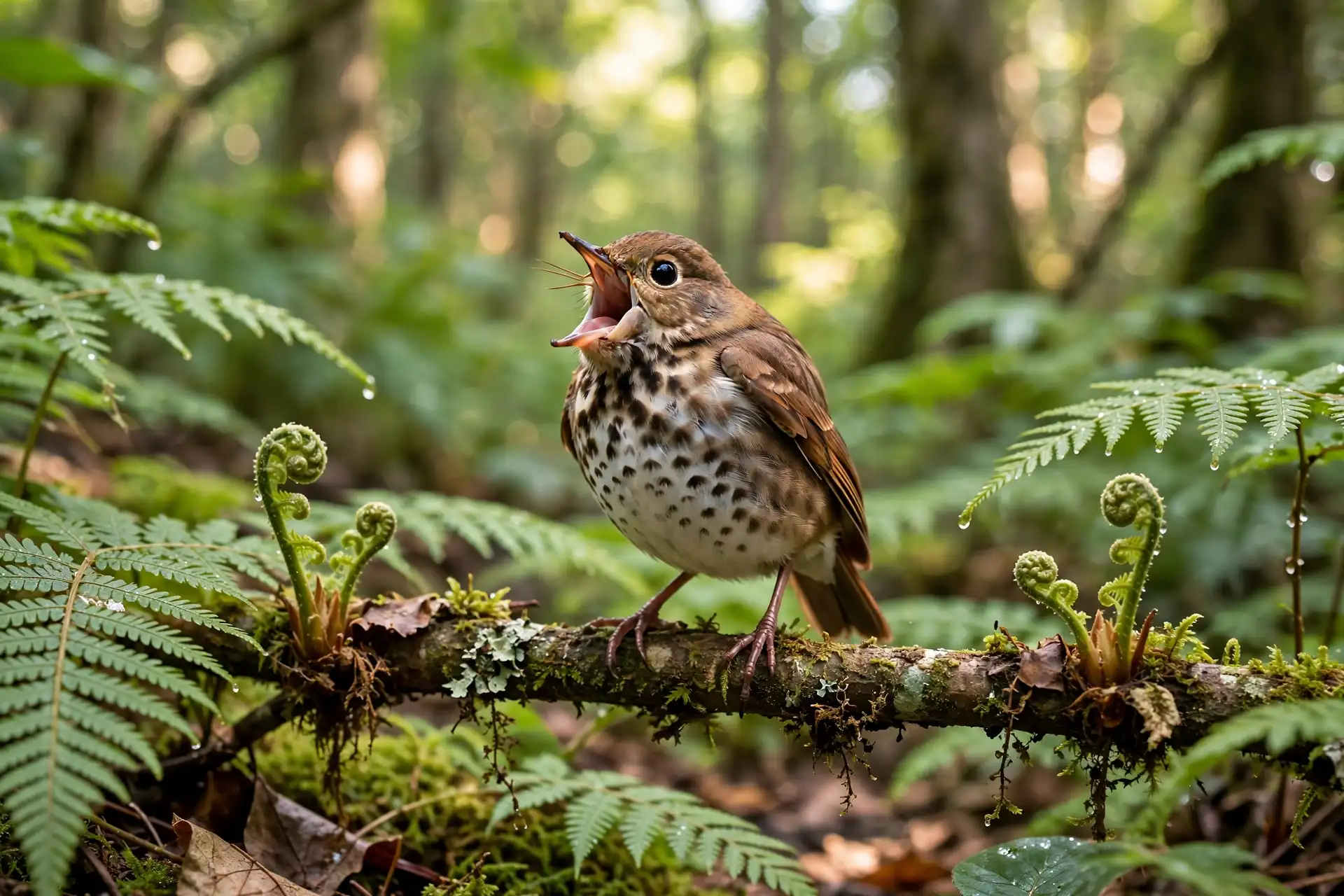
The Hermit Thrush is the connoisseur’s choice. Deep in northern and mountain forests, it opens with a single clear whistled note, then delivers phrases at different pitches, each one pure and flute like. Many listeners rank it as the most beautiful bird song on the continent, and it sings most at dawn and dusk, when the woods are quiet enough to do it justice.
Europe’s legend is the Common Nightingale, a plain brown bird with an outsized voice. Its rich, varied song pours out by day and, famously, by night in spring, when males that have not yet found a mate do much of their singing. Closer to home, the Wood Thrush deserves its place on this list for sheer technical brilliance, ending phrases with two notes sung at once. And for memory, nothing touches the Brown Thrasher, which the Cornell Lab credits with over 1,000 song types, one of the largest repertoires in the bird world.
| Bird | Known for | When it sings |
|---|---|---|
| Northern Mockingbird | Around 200 learned songs, much of the repertoire borrowed | Long spring and summer days, and again in fall |
| Hermit Thrush | Pure, flute like phrases ranked among the finest of all bird songs | Dawn and dusk in summer forests |
| Common Nightingale | A powerful, varied song famous across Europe | Day and night in spring |
| Wood Thrush | Two notes sung at once in its closing trill | Dawn and dusk in eastern forests |
| Brown Thrasher | Over 1,000 song types, one of the largest repertoires known | Spring days in thickets and hedgerows |
| Song Sparrow | A cheerful song of clear opening notes and trills | All day in spring, from low perches |
Mimics and Borrowed Songs
Mimicry is the mockingbird family’s party trick, and the Northern Mockingbird is its star. Along with songs copied from other birds, its repertoire can include frog calls and even mechanical sounds such as car alarms and creaky gates. The bird is so celebrated as a singer that it serves as the official bird behind five of the state birds: Arkansas, Florida, Mississippi, Tennessee, and Texas all chose it.
Why steal songs? One leading theory is that females prefer males with larger repertoires, so a male who keeps adding borrowed material out sings his rivals. A big, varied repertoire may also advertise age and survival skills. In one Texas study, the mockingbirds with the largest repertoires held the best territories, rich in insects and wild fruit.
The mockingbird’s relatives, the Gray Catbird and the Brown Thrasher, are skilled mimics too, though each has its own style: the thrasher repeats phrases twice, the catbird strings copied notes into a rambling stream. Mimicry among songbirds is about display, not deception or understanding. For birds that go further and learn the words of another species entirely, see our guide to talking birds, where parrots and their relatives take vocal learning to a different level.
How to Learn Bird Songs Yourself
Birding by ear changes everything, because most birds are heard long before they are seen. It also turns a familiar walk into a census, since you will find yourself counting species that never show themselves at all. The good news is that you do not need a musical ear, just a method and a few minutes of regular practice. Start with the birds around your home and learn them one at a time.
- Start small: master five common local songs before adding more
- Use mnemonics: hang the song on a phrase that matches its rhythm
- Listen for pattern: ask whether the song rises, falls, trills, or buzzes
- Watch the singer: seeing the bird as it sings locks the sound to the species
- Practice at dawn: the spring chorus is the best classroom there is
Mnemonics are the oldest trick in the book, and the Smithsonian’s Migratory Bird Center collects the classics. The Eastern Towhee sings “drink your tea,” with the last word drawn out. The Carolina Wren belts out “teakettle, teakettle, teakettle,” and the Song Sparrow offers “Maids, maids, maids, put on your teakettle ettle ettle.” The White Throated Sparrow whistles “Old Sam Peabody, Peabody, Peabody” in the United States, which Canadian birders hear as “Oh sweet Canada, Canada, Canada.”
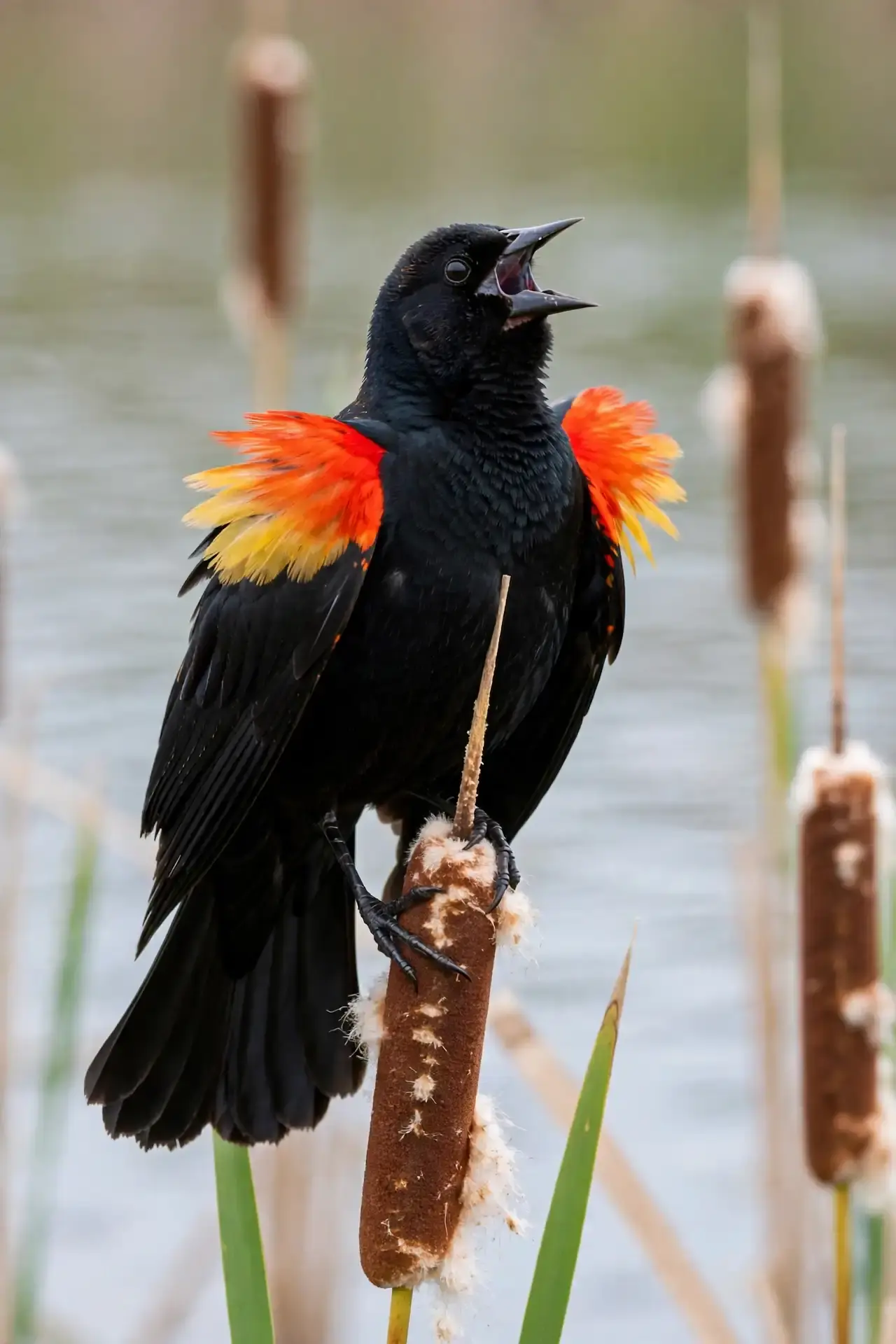
In the marsh, listen for the male Red Winged Blackbird, whose short, gurgling song from a cattail perch is one of the easiest to learn first. Technology can speed things up too. The Cornell Lab’s free Merlin Bird ID app includes Sound ID, which listens through your phone and suggests the likely species in real time, drawing on the Macaulay Library’s vast recording archive. Treat it as a tutor standing beside you, then confirm each suggestion with your own ears.
Frequently Asked Questions
What is the difference between a bird song and a bird call?
A song is a longer, structured vocalization used mainly to attract mates and defend territory, and it is heard mostly in the breeding season. A call is a short, simple sound for immediate needs, such as raising an alarm, announcing a location, or keeping contact with the flock. Almost all birds make calls, but true learned songs belong to the songbirds.
Do female birds sing?
Yes, though in temperate regions most of the singing you hear comes from males. Females of many species sing shorter or simpler songs, and in the tropics female song is common. Many tropical pairs sing coordinated duets, taking turns so precisely that the two birds can sound like one.
Why do birds sing most at dawn?
Scientists are not completely sure, and several reasons probably combine. The dim light is poor for foraging, so singing costs little, and still morning air lets songs carry much farther than later in the day. A strong dawn song also proves the singer survived the night and warns off migrants that arrived in the dark.
How can a bird sing two notes at once?
Its voice box, the syrinx, has two sides, and each side is controlled independently. By vibrating both sides at different pitches, a bird can produce two unrelated notes simultaneously. The Wood Thrush uses this ability in the closing trill of its song, layering a rising tone over a falling one.
Are birds born knowing their songs?
Songbirds are not. They memorize a tutor’s song as nestlings during a critical period, then practice for weeks until their version matches. Some other birds are born knowing their sounds: flycatchers, for example, develop their species’ song without any tutoring at all.
Which bird knows the most songs?
The Brown Thrasher is credited with over 1,000 song types, one of the largest repertoires in the bird world. The Northern Mockingbird is the other famous heavyweight, learning around 200 songs during its life. Mockingbirds keep adding new material as adults, while most songbirds settle their repertoire in their first year.
Why does the same species sound different in different places?
Because songs are learned, each local population develops its own dialect, passed from older tutors to young birds. Mountains, wide water, and other barriers keep populations apart, so the differences build up over generations. Birders often notice the change when they travel, even within the same state.
What is the easiest way to start learning bird songs?
Learn a few common birds around your home first, and attach a word phrase to each song, such as “drink your tea” for the Eastern Towhee. Go out at dawn in spring, when the chorus is loudest, and watch the birds as they sing. The free Merlin Bird ID app can name singers in real time while you build the skill yourself.
Conclusion
Bird song is not background noise. It is a learned language of territory, health, and courtship, performed on an instrument that can sing two notes at once. Learn a handful of songs this spring, starting with the dawn chorus outside your window, and the outdoors will never sound the same again.
Sources and Further Reading
- Cornell Lab of Ornithology, Bird Academy: Bird Song
- Cornell Lab of Ornithology, All About Birds: Why Do Some Birds Mimic the Sounds of Other Species?
- Cornell Lab of Ornithology, All About Birds: Northern Mockingbird
- Audubon: Urban Birds Are Rising Earlier Because of Traffic Noise
- RSPB: The Dawn Chorus, Everything You Need to Know
- Smithsonian Migratory Bird Center: Bird Memory Phrases
- Cornell Lab of Ornithology: Merlin Bird ID