
Introduction
Each US state has an official bird. Some are surprises, with two states choosing the chicken, one choosing an imported game bird from Asia and seven choosing the same red songbird. The choice of state birds is the most democratic of bird symbolism, with most being chosen by the public, usually by school children taking part in a poll across the state. They are then made official by being written into law by state legislatures. This article lists the official bird of each of the 50 states along with their scientific name. It also explains how they were chosen between the 1920s and 1970s and how many are shared between multiple states.
How State Birds Were Chosen
The idea gained traction during the 1920s. Kentucky was the first state to adopt its official bird in 1926 when they chose the northern cardinal. This was spurred on by a national campaign by the General Federation of Women’s Clubs which called on states to adopt their own official bird. In 1927, seven states adopted their state bird: Alabama, Florida, Maine, Missouri, Oregon, Texas and Wyoming.
Women’s clubs usually didn’t decide on the birds. They partnered with Audubon societies, bird clubs and newspapers to hold a vote. Many times children voting in schools were involved. In 1928 the cardinal was chosen by school children in Illinois. It was then officially recognized by the legislature the following year. In Montana, grade school children voted for the western meadowlark. In North Carolina it was decided by a public vote organized by the state bird club. The cardinal was chosen in 1943.
Washington can be an example of how complicated it can get. School children voted in 1928, selecting the meadowlark. However, several other states had also claimed this bird. In 1931 the Washington Federation of Women’s Clubs voted again. This time the goldfinch won. The legislature sent the issue back to the school children due to there being two conflicting birds. The goldfinch was chosen in 1951, finally solving the problem. If you have goldfinches visiting your yard, our guide on what do goldfinches eat will tell you their favorite foods.
Minnesota had a long battle. The women’s clubs supported the robin in the 1920s and the goldfinch in the 1930s but the legislature would not make any commitment. Eventually a state commission decided to have a vote by schoolchildren and 20 birds were nominated. The scarlet tanager won, but it was not a popular choice among adults. The legislators turned a blind eye and eventually decided on the common loon in 1961. Minnesota was one of the last states to decide.
The campaigns were not purely for aesthetic reasons. Bird conservation was still a relatively new concept in the 1920s, and conservation groups felt that having state birds would help raise public awareness, especially among children, for wild birds. Each school child would have a local bird species to learn about. This is why so many of the winning birds are songbirds found on farms, in gardens and schoolyards rather than rare species found in remote areas of the wild.
The selection process spanned many decades. Some states selected during the 1930s and 1940s while others took until the 1950s and 1960s. The last state to select an official bird was New York, which adopted the eastern bluebird in 1970. As people often selected a bird they would recognize within their yards and fields, many of the same common birds were chosen. Some states also have additional official birds for hunting and conservation, including state game birds, state waterfowl and state raptors.
The Birds Shared by the Most States
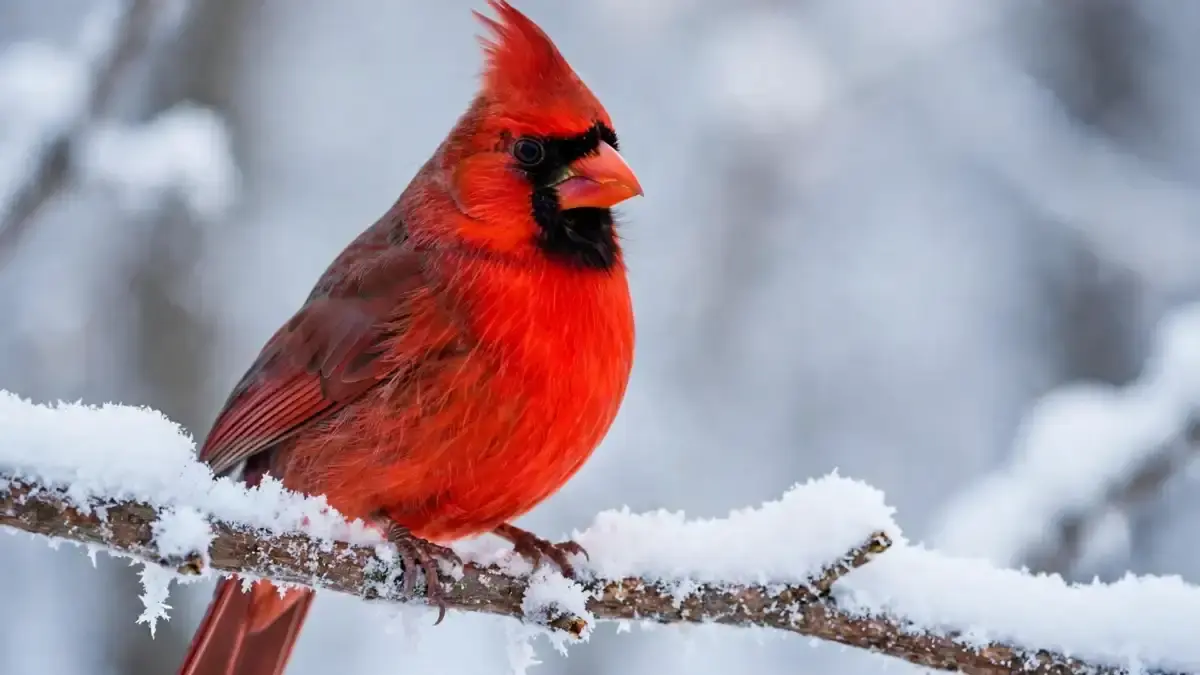
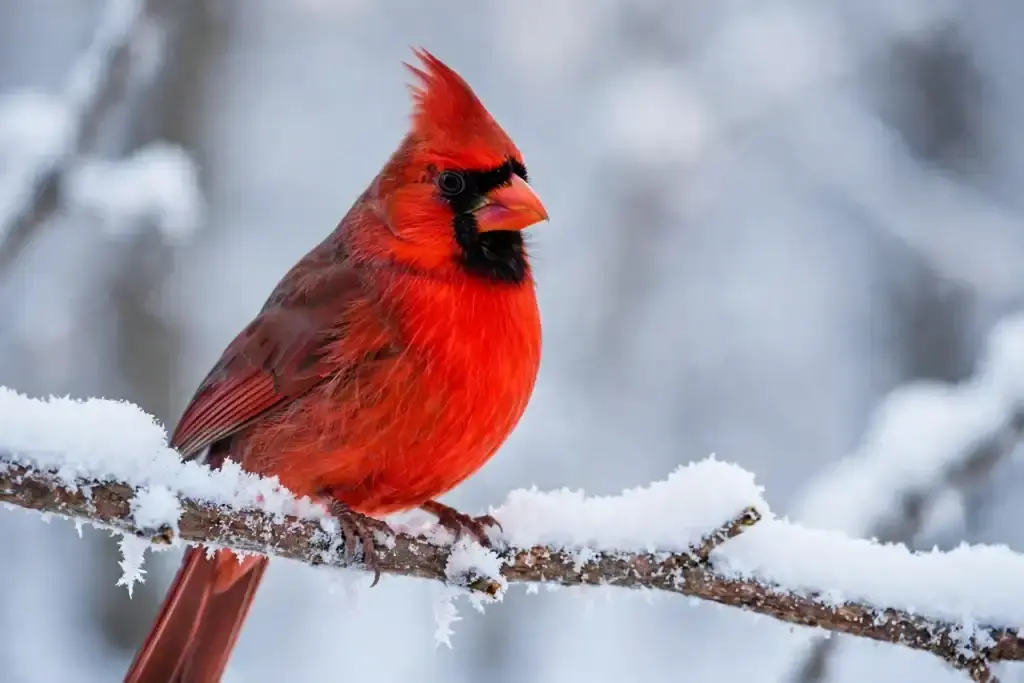
There is one bird that stands out from the rest. The northern cardinal is the state bird of Kentucky, Illinois, Indiana, Ohio, North Carolina, Virginia, and West Virginia. This bird has everything people want in a bird. It has a crest, a strong song, stays in feeders all year round and males are bright red, making them stand out against snow. Our article on why are cardinals red explains where that color comes from.
In second place we have the western meadowlark with six states: Kansas, Montana, Nebraska, North Dakota, Oregon and Wyoming. This bird is known as the voice of the western grasslands as they can be seen singing their fluted songs perched on fence posts throughout the plains and ranch areas. However, Oregon has the strangest claim to this bird. It was proclaimed by a governor in 1927 but was never officially adopted by the legislature. In 2017 it was redesignated the official state songbird.

The northern mockingbird is the state bird of Arkansas, Florida, Mississippi, Tennessee, and Texas. It was almost the sixth state bird, as South Carolina had the northern mockingbird from 1939 until it changed in 1948 to the Carolina wren. The northern mockingbird is an excellent mimic and imitates the songs of other birds. This makes it the obvious choice as the state bird for many Southern states, as they can be heard singing from rooftops and along fences for most of the year.

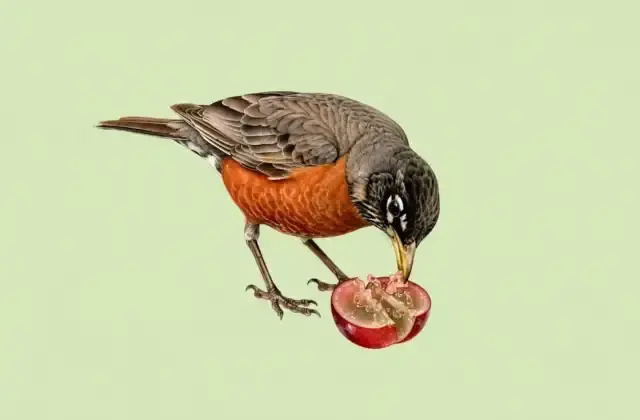
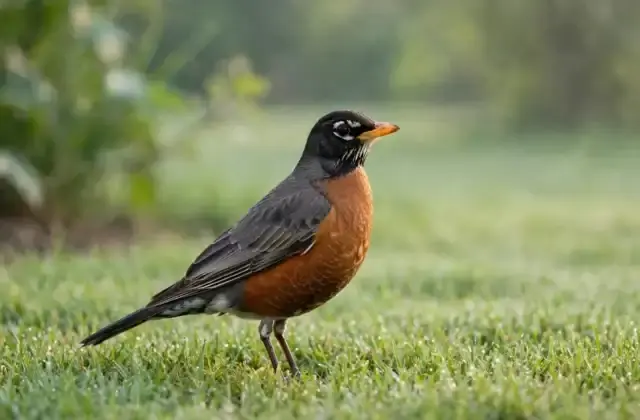
There are also two birds that are shared across three states. The american robin is found in Connecticut, Michigan and Wisconsin. The American goldfinch is found in Iowa, New Jersey and Washington. There are four birds that are shared between two states. These are the eastern bluebird (Missouri and New York), mountain bluebird (Idaho and Nevada), chickadee (Maine and Massachusetts) and chicken (Delaware and Rhode Island). Overall there are only 18 states that have a completely unique state bird. The remaining 32 all share their bird with another state. This wasn’t planned. Each state voted individually and often years apart. However they still ended up with the same common birds.
The flip side of the sharing is a set of birds claimed by exactly one state, and several of them could belong nowhere else. New Mexico’s greater roadrunner and Arizona’s cactus wren are desert birds. California’s California quail carries its state in its name. Hawaii’s nene lives nowhere else on Earth. Alaska’s willow ptarmigan turns white with the northern winter. These unique picks tend to be the ones birders praise most, because each one could only represent its own state.
A Few Unusual Choices
The chicken was chosen by Delaware. The Delaware blue hen chicken was adopted on April 14, 1939. This is a domestic game chicken, not a wild species. Its fame goes back to the Revolutionary War, when a company of Kent County under the command of Captain Jonathan Caldwell had game fowl said to be descendants of one famous blue hen. These were famous fighting chickens, and the soldiers fought so well alongside them that they were likened to fighting cocks.
Rhode Island also selected a chicken. The Rhode Island red (adopted in 1954) is a practical farm breed developed in the 1800s in the state. They were popular as a source of eggs and meat. Although it may be the least glamorous bird on the list, few state birds have fed as many families as this bird. The two chickens are the only domestic birds to be state symbols.
South Dakota chose a non-native bird as their state bird. The ring-necked pheasant was adopted in 1943. This bird is native to Asia, but was introduced into the United States in the 1800s as a game bird. The bird flourished in the farmland and grassland of the plains states. South Dakota took to the bird so much that it became a symbol for the state. Only three state birds are not native species. These are the pheasant, blue hen and Rhode Island red.
Utah has the best story. In 1848 settlers had just planted their first crops in the Salt Lake Valley but were facing starvation after the crops were ravaged by enormous hordes of Mormon crickets. Just in time flocks of California gulls flew in from the Great Salt Lake and ate the crickets for weeks, saving most of the crop. This event became known as the Miracle of the Gulls, and the rescue is honored by the Seagull Monument on Temple Square in Salt Lake City. The California gull was also declared the state bird by the legislature in 1955.
State Birds of All 50 States
Here is the full list of birds for each state in alphabetical order. The scientific name is given for each bird. Where there are two notes in the table, the law of Maine only refers to the chickadee and the ruffed grouse is an official state game bird in Pennsylvania. See notes below.

| State | State Bird | Scientific Name |
|---|---|---|
| Alabama | Northern flicker (yellowhammer) | Colaptes auratus |
| Alaska | Willow ptarmigan | Lagopus lagopus |
| Arizona | Cactus wren | Campylorhynchus brunneicapillus |
| Arkansas | Northern mockingbird | Mimus polyglottos |
| California | California quail | Callipepla californica |
| Colorado | Lark bunting | Calamospiza melanocorys |
| Connecticut | American robin | Turdus migratorius |
| Delaware | Delaware blue hen chicken | Gallus gallus domesticus |
| Florida | Northern mockingbird | Mimus polyglottos |
| Georgia | Brown thrasher | Toxostoma rufum |
| Hawaii | Nene | Branta sandvicensis |
| Idaho | Mountain bluebird | Sialia currucoides |
| Illinois | Northern cardinal | Cardinalis cardinalis |
| Indiana | Northern cardinal | Cardinalis cardinalis |
| Iowa | Eastern goldfinch | Spinus tristis tristis |
| Kansas | Western meadowlark | Sturnella neglecta |
| Kentucky | Northern cardinal | Cardinalis cardinalis |
| Louisiana | Brown pelican | Pelecanus occidentalis |
| Maine | Chickadee | Poecile atricapillus (de facto) |
| Maryland | Baltimore oriole | Icterus galbula |
| Massachusetts | Black-capped chickadee | Poecile atricapillus |
| Michigan | American robin | Turdus migratorius |
| Minnesota | Common loon | Gavia immer |
| Mississippi | Northern mockingbird | Mimus polyglottos |
| Missouri | Eastern bluebird | Sialia sialis |
| Montana | Western meadowlark | Sturnella neglecta |
| Nebraska | Western meadowlark | Sturnella neglecta |
| Nevada | Mountain bluebird | Sialia currucoides |
| New Hampshire | Purple finch | Haemorhous purpureus |
| New Jersey | Eastern goldfinch | Spinus tristis tristis |
| New Mexico | Greater roadrunner | Geococcyx californianus |
| New York | Eastern bluebird | Sialia sialis |
| North Carolina | Northern cardinal | Cardinalis cardinalis |
| North Dakota | Western meadowlark | Sturnella neglecta |
| Ohio | Northern cardinal | Cardinalis cardinalis |
| Oklahoma | Scissor-tailed flycatcher | Tyrannus forficatus |
| Oregon | Western meadowlark | Sturnella neglecta |
| Pennsylvania | Ruffed grouse (state game bird) | Bonasa umbellus |
| Rhode Island | Rhode Island red chicken | Gallus gallus domesticus |
| South Carolina | Carolina wren | Thryothorus ludovicianus |
| South Dakota | Ring-necked pheasant | Phasianus colchicus |
| Tennessee | Northern mockingbird | Mimus polyglottos |
| Texas | Northern mockingbird | Mimus polyglottos |
| Utah | California gull | Larus californicus |
| Vermont | Hermit thrush | Catharus guttatus |
| Virginia | Northern cardinal | Cardinalis cardinalis |
| Washington | Willow goldfinch | Spinus tristis salicamans |
| West Virginia | Northern cardinal | Cardinalis cardinalis |
| Wisconsin | American robin | Turdus migratorius |
| Wyoming | Western meadowlark | Sturnella neglecta |
Notes on the List
The District of Columbia is not a state and therefore doesn’t have an official state bird. However, the wood thrush (Hylocichla mustelina) is the official district bird, chosen in 1938. The wood thrush is a forest bird known for having one of the most beautiful songs of any bird in North America. It breeds in woodland areas throughout the eastern states during the summer months.
Maine’s entry needs a footnote. The 1927 law says only that the state bird is the chickadee, without naming a species, and Maine has two chickadee species. The black-capped chickadee is treated as the state bird in practice, and the table above lists it as the de facto species. In 2019, lawmakers considered a bill to settle the question and voted it down in committee, so the law still just says chickadee.
Pennsylvania is the one state that never adopted an official state bird. What it has, since 1931, is a state game bird, the ruffed grouse, and that is the bird listed for Pennsylvania in the table. Any list of state birds that shows a bird for Pennsylvania is showing the grouse.
Lastly, two small facts to be aware of. In Iowa and New Jersey, the goldfinch is referred to as the eastern goldfinch, while in Washington it is called the willow goldfinch. These are subspecies of the American goldfinch. And Oregon’s western meadowlark, proclaimed in 1927, is officially the state songbird since 2017, a title it holds alongside the osprey as state raptor.
Frequently Asked Questions
What was the first state bird?
Kentucky was the first state to adopt an official bird. It chose the northern cardinal in 1926, at the start of the national campaign led by the General Federation of Women’s Clubs. Seven more states followed in 1927 alone, and the cardinal went on to become the most shared state bird of all, with seven states in total.
Which state chose its state bird most recently?
New York was the last of the 50 states to adopt a state bird. It chose the eastern bluebird in 1970, more than four decades after Kentucky started the tradition. The bluebird had been a popular unofficial symbol in New York for years before the legislature finally made it official.
Which bird is the state bird of the most states?
The northern cardinal, with seven states: Kentucky, Illinois, Indiana, Ohio, North Carolina, Virginia, and West Virginia. The western meadowlark is second with six states, and the northern mockingbird is third with five. No other bird is claimed by more than three states.
Does Pennsylvania have a state bird?
Not officially. Pennsylvania never adopted a state bird. In 1931 it named the ruffed grouse its state game bird, and the grouse is the bird usually shown for Pennsylvania in state bird lists, including this one. It is the only state in that position.
Which states have a chicken as their state bird?
Two states chose domestic chickens. Delaware adopted the Delaware blue hen chicken in 1939, honoring a fighting game chicken linked to its Revolutionary War soldiers. Rhode Island adopted the Rhode Island red chicken in 1954, a farm breed developed in the state. They are the only domestic birds on the list.
What is the state bird of Hawaii?
Hawaii’s state bird is the nene, Branta sandvicensis, adopted in 1957. The nene is a goose found only in Hawaii, where it evolved from Canada goose ancestors. It is also one of the rarest state birds, with a wild population that was once down to only a few dozen birds.
What is the bird of the District of Columbia?
The District of Columbia has a district bird rather than a state bird: the wood thrush, designated in 1938. The wood thrush, Hylocichla mustelina, is a spotted forest thrush known for its flute-like song. It is a fitting pick for a district full of wooded parks along the Potomac River.
Has any state ever changed its state bird?
Yes. South Carolina originally chose the northern mockingbird in 1939, then replaced it with the Carolina wren in 1948. Oregon kept its bird but changed its title, redesignating the western meadowlark as the official state songbird in 2017. Maine debated naming a specific chickadee species in 2019 and decided to leave its law unchanged.
Conclusion
There are fifty states, fifty different options and a small selection of popular birds. The birds have been chosen by school children, women’s clubs, bird clubs and legislatures between 1926 and 1970. The list reflects much about the country, with red cardinals in the East, meadowlarks on the plains, a gull in the desert and two proud chickens. This is not a bad thing if your state shares a bird with others; it means that the same bird has been symbolic of home for people in multiple states. Check the table to find your state. Once you know what your state bird is, look outside! Most state birds are quite common so you will likely be able to see your bird nearby.
Sources and Further Reading
- List of U.S. state birds, Wikipedia
- List of State Birds, State Symbols USA
- State Bird: California Gull, Utah’s Online Public Library
- Washington State Bird, Washington State Legislature
- Thinking about the State of the State Bird, Maine Audubon
- Delaware Blue Hen, Wikipedia