Introduction
Some birds have amazing imitative abilities and can mimic human speech so well that they will get responses from visitors in another room. Only a few birds are able to mimic human speech, these include parrots, songbirds such as mynas and starlings, and a few others. This guide will tell you what talking actually is, why parrots are the best at it, and which birds talk the clearest, from the African grey to the tiny budgerigar. We will also tell you the truth about talking birds, most are just mimicking and not understanding what they are saying, and can take a long time to train. We will also tell you which non-parrots can talk, from the hill myna to the raven. Start here if you want a talking bird.
What Talking Really Is: Vocal Mimicry
When a bird talks, it is not using language the way a child does. It is reproducing sounds it has heard, a skill scientists call vocal mimicry.
Vocal learning is very rare in the animal kingdom. Most animals are born with their calls. However parrots, songbirds and hummingbirds all must learn to vocalize by listening, just like babies learn to speak.
Audubon notes that young songbirds are born with a template for their species song, but unless they hear it, they never learn to sing it correctly. Copying is not a trick for these birds. It is how their voices develop at all.
The bird doesn’t have vocal cords. Instead it has a syrinx near the bottom of the windpipe. The sound is created by the muscles and membranes in the throat.
Birds also have no lips, which limits some sounds. Even so, a skilled mimic controls airflow and tongue movement precisely enough to produce words a human ear recognizes easily.
The ability to learn is used by wild parrots to form local dialects within contact calls of flocks. Contact calls are short calls used to keep in contact during flight and feeding.
Budgerigars raised in captivity have been shown to develop a common “clan signature” contact call when they are all put into one group (Scientific American). Your pet parrot will use the same instinct to learn the flock call of your family by using your words.
Mimicry can be very useful. Having a large and diverse repertoire can be used to advertise your fitness to potential mates and competitors. Some wild mimics will collect sounds just like other birds collect colorful feathers.
Why Parrots Can Talk
Parrots are the master mimic as vocal learning is central to their whole society. In the wild they will only mimic other members of their own species and the dialect of their local flock.
African greys are a partial exception. Scientific American notes that wild greys are known to imitate other species of birds, which may help explain their unusual range as mimics.
Size helps with human speech in particular. Larger parrots can sing lower notes than smaller birds, so they reproduce the pitch of a human voice more closely.
A pet parrot will learn to mimic from its human social partners. Talking is a way to keep the flock together. Read our guide to why parrots can talk for more information on their anatomy and brain.
The Best Talking Birds
Not every parrot talks, and no species talks on command. The birds below are the ones with the strongest records for speech, ranked by reputation among keepers and researchers.
Two birds of the same species, raised the same way, can end up at opposite ends of the scale: one chattering in sentences, the other whistling only.
African Grey Parrot
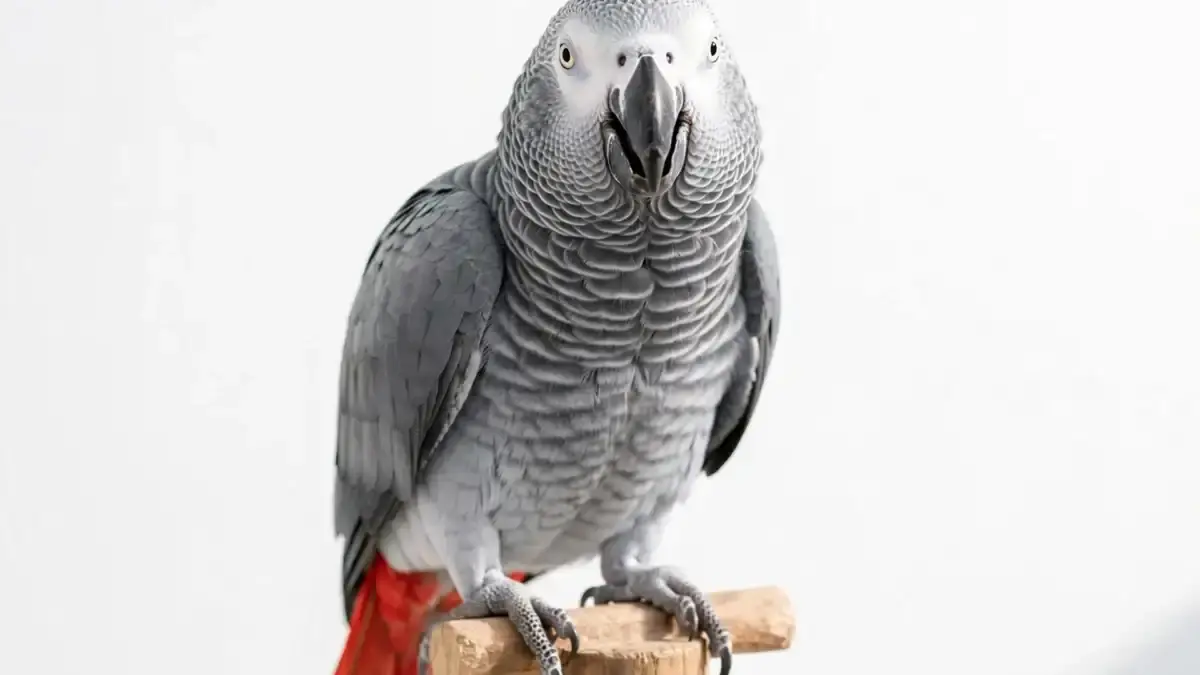
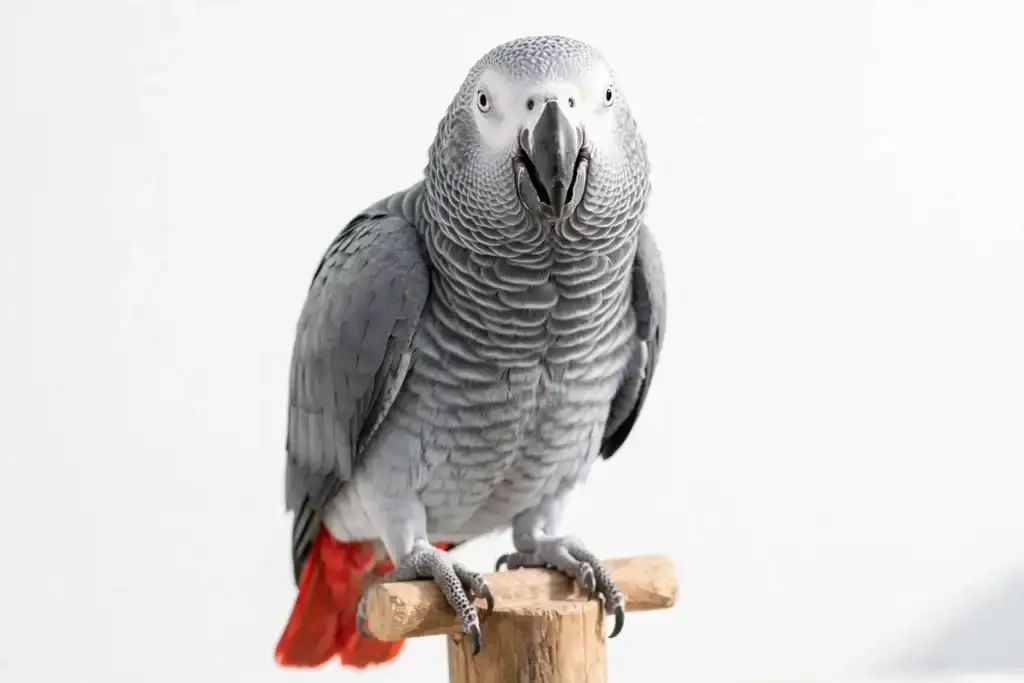
The African grey is widely considered the best talking bird in the world. Greys combine clear pronunciation with large vocabularies, and they often use words in the right context.
Two species are typically kept. The larger and more well known is the Congo African grey. The Timneh often begins to talk sooner, sometimes within their first year. Many Congos will not talk until they are 12-18 months old.
They are also responsible for the most serious research into avian speech and cognition (see Understanding below) and this has contributed largely to their position at the top of any list of talking birds.
Budgerigar
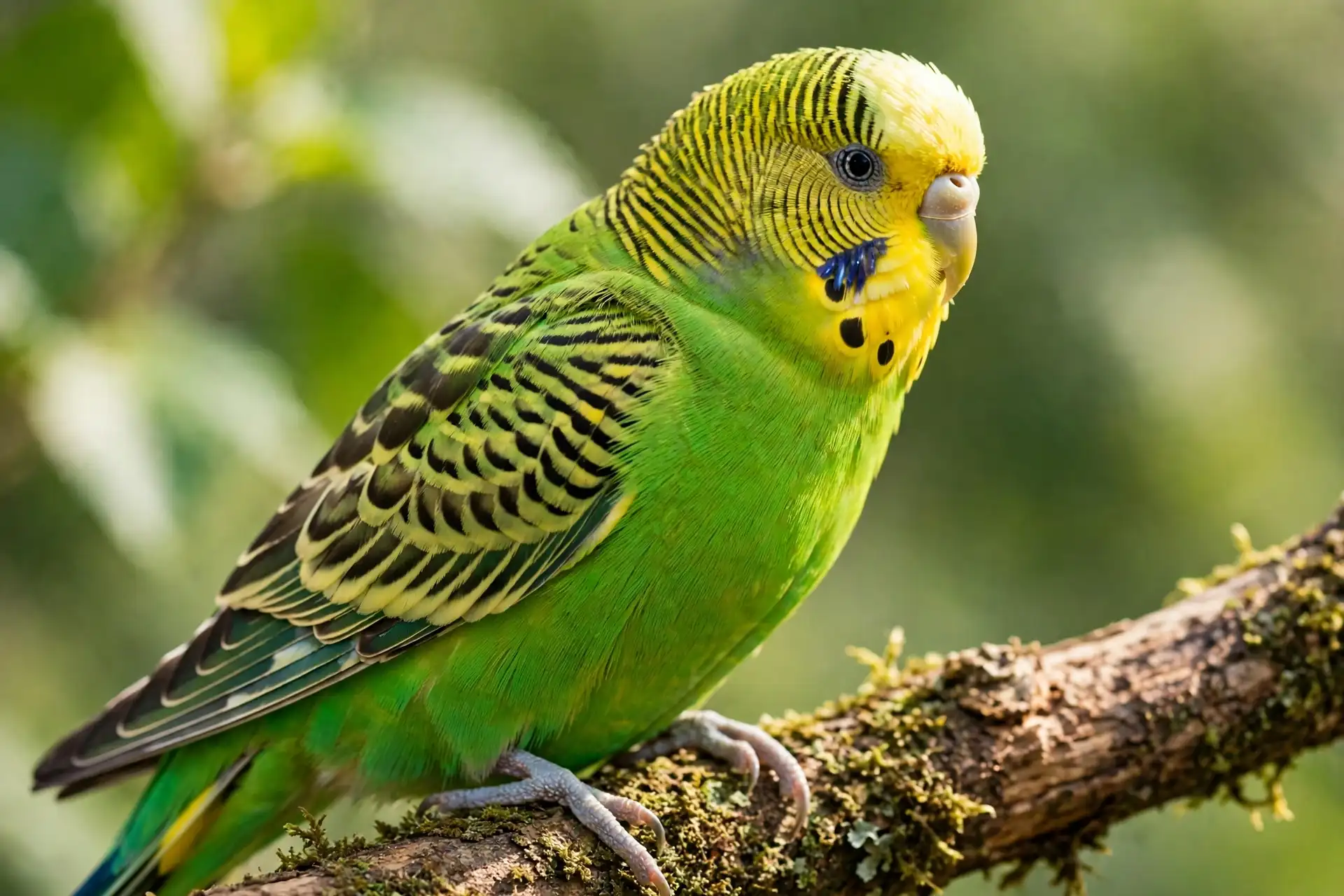
The budgerigar, or budgie, is the smallest common talking bird and the holder of the biggest record. Do not let the size fool you: budgies can build remarkable vocabularies.
The bird with the biggest vocabulary ever was a budgerigar called Puck, owned by Camille Jordan of Petaluma, California. He knew an estimated 1,728 words and died in 1994. (Guinness World Records).
Puck was not the first famous budgie. Sparkie Williams held the record in the 1950s. When he died he knew 531 words and 383 sentences.
Budgie speech is fast and high pitched, so it takes a practiced ear to catch the words. Owners often understand far more of it than visitors do.
Amazon Parrots
Amazon parrots are the extroverts of the talking bird world. Species such as the yellow-naped, yellow-headed, and blue-fronted Amazon are known for loud, clear, enthusiastic speech.
Amazons are usually able to link sounds with relationships and situations, so they often excel in lively situations. They may also learn phrases such as a greeting to be said when someone opens the door and remember them for life.
The trade off is volume. An Amazon greeting the sunrise can be heard through walls, which matters in apartments and neighborhoods.
Indian Ringneck Parrot
The Indian ringneck, a subspecies of the rose-ringed parakeet, is a well known talker with unusually clear speech for its size. Good talkers can develop large vocabularies and speak in sentences.
Ringnecks have a unique voice that many people find very cute. They are quite independent and the best way to train them to talk is with regular handling.
Eclectus Parrot
The eclectus is a very vocal bird with a clear, sweet voice. The male is green and the female is red and purple. They have one of the most dramatic sex differences in plumage of any parrot.
Their talking ability depends heavily on training from an early age. A well socialized eclectus can learn many words and phrases and deliver them with clarity.
Quaker Parrot
The quaker parrot, also called the monk parakeet, is a skilled talker in a small, sturdy body. Quakers often start picking up words early and can build a useful everyday vocabulary.
These are social and very active birds who quickly learn to say the phrases used in the home, particularly those associated with eating and greeting. Before purchasing a Quaker parrot, check your local regulations as they are restricted in some areas due to their success at escaping from the wild.
Cockatiel
The cockatiel is the gentlest bird on the list. They are the weakest pure talking parrot. They can only speak a few words and their voices are very soft and whistling.
What they do brilliantly is whistle. Cockatiels learn tunes, ringtones, and household sounds with ease, and a hand raised bird will often whistle a melody back at you.
For many owners that is the better deal: a friendly, musical bird with modest speech, lower volume, and simpler care than the big parrots.
Talking Birds Beyond Parrots
Hill Myna
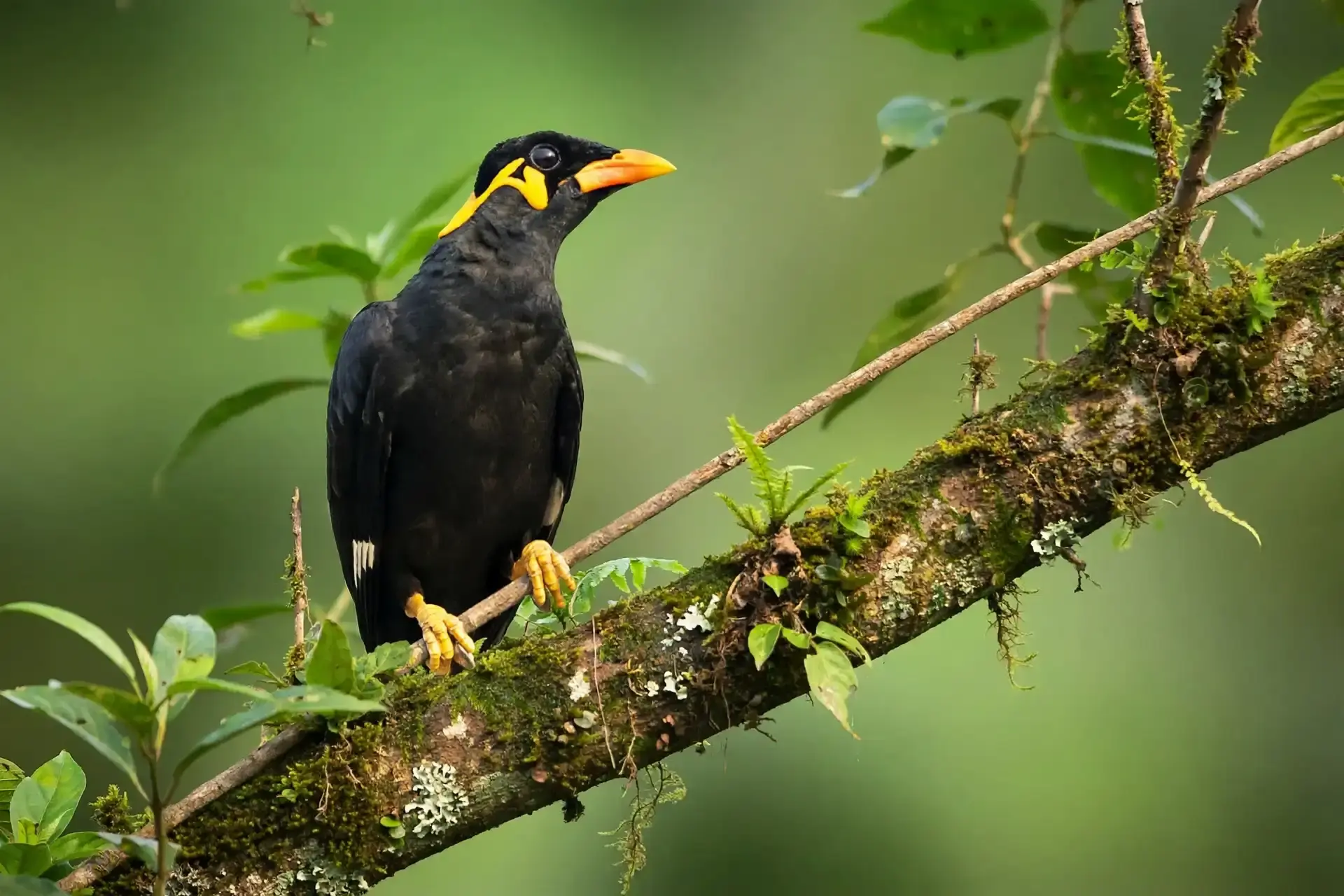
Possibly the best pure mimic on this page is the common hill myna. This glossy black starling relative from Asia is famed for its ability to imitate human speech with great clarity and tone.
Some claim it is one of the best mimics in the world. Unlike most parrots, mynas mimic the tone and character of the voice they are copying meaning they can sound very human when speaking.
Mynas need space, a fruit rich diet, and frequent bathing, and they are messy, active birds. Their speech talent is real, but so is the workload.
Ravens and Crows
Corvids are also highly intelligent birds that can imitate human speech. They do however, not have such a wide range as Parrots, usually talking Ravens and Crows can only say a few words and short phrases.
The best talking corvids are generally kept in captivity at zoos and wildlife centers where they can hear human voices all day. They have a deep, raspy voice, so even a simple ‘hello’ will stick in your mind.
Wild ravens use their vocal gifts on each other instead, with a large natural repertoire of croaks, knocks, and bells.
Lyrebird
The Australian superb lyrebird may be the best mimic in the world. But it isn’t a speech mimic. Audubon wrote that lyrebirds can imitate accurately the songs of dozens of different birds, as well as chainsaws.
These sounds are used by male lyrebirds to create long courtship songs. If they live near humans, human speech may be included but it is a song and not an attempt at communication.
A male European starling can weave imitations of more than 60 other bird species into its song, and mockingbirds are named for exactly this habit.
Do Talking Birds Understand Words?
Most talking birds would say no. If your pet parrot says hello when you enter the room it is likely they are not saying hello to you, they have just learned that by making that noise they will get attention, food or company.
The bird has learned which sound earns attention, food, or company, and it deploys that sound on purpose. It is communication, just not language as linguists define it.
The bird who went furthest was an African grey named Alex. He spent 30 years in the lab doing research with animal psychologist Irene Pepperberg changing our understanding of birds’ cognitive abilities.
Pepperberg trained Alex using the model/rival technique, whereby two trainers demonstrate a conversation. By 1999, Alex was able to identify 50 different objects, understand numbers up to six, and identify seven colors and five shapes.
He also understood concepts such as larger, smaller, same and different. In 2005 he understood the concept of zero. When shown two identical items and asked what was different, he would reply none (Pepperberg).
Alex had a vocabulary of more than 100 words, which was not much compared to Puck, but he used his words correctly to label objects. When he looked into the mirror, he asked what color it was, showing that he realized that the word was a property of the object.
However Pepperberg was careful not to say that Alex was using language but was using a ‘two-way code of communication’. Some scientists are still skeptical and argue that the answers he was giving were just a form of conditioned learning.
Birds talking to us is only half the picture. Birds also run rich communication systems of their own, with calls and songs that carry meaning we are only partly able to decode. Our guide to do birds talk to each other looks at that side of the story.
How to Teach a Bird to Talk
The best way to teach is by mirroring how birds learn. Short and social with lots of repetition. Choose a short word such as hello and say it at the same time every day.
Keep sessions short (5-10 mins) and do every day. The bird will learn the most common word they hear in a clear context. Greetings and food names are usually the first words to be learned.
Say the word the same way each time, with energy and eye contact. Birds read excitement, and a flat, bored delivery teaches slowly.
Reward attempts, not just successes. Any sound that moves toward the target word earns attention or a favorite treat, which tells the bird it is on the right track.
Add a second word only when the first is solid. Piling on phrases early produces a bird that mumbles everything and masters nothing.
Expect the timeline to vary. Some budgies and quakers speak within weeks, while a grey may stay silent for months and then produce a full phrase. Our step by step guide to teach a parakeet to talk walks through the process in detail.
Before You Choose a Talking Bird
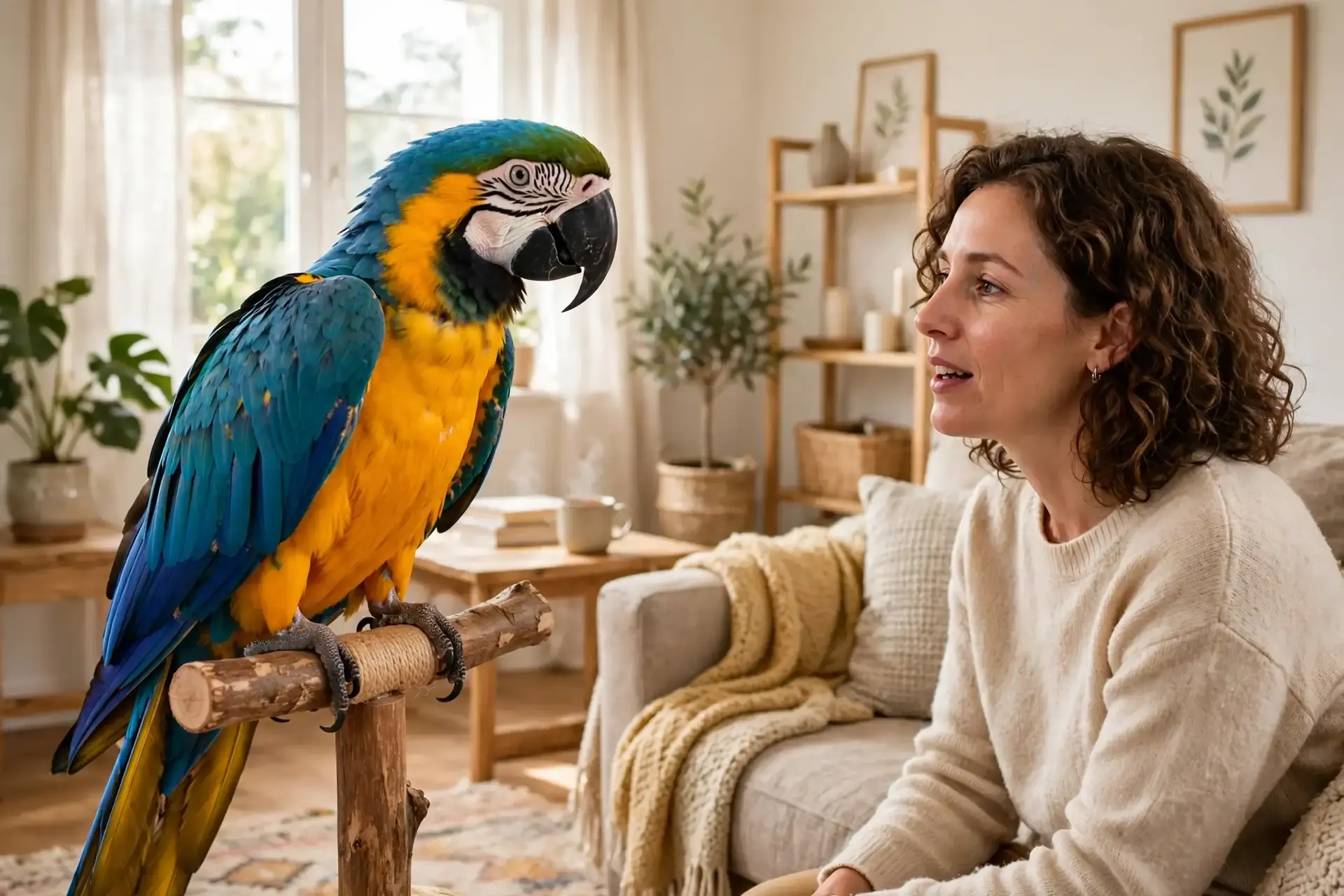
The worst reason for buying a bird is their talking ability. The best talking birds are some of the most demanding. Many are also sold by owners who didn’t realize how loud, messy and long term they would be.
First of all, there is noise. You can hear Amazons, macaws, and cockatoos from behind closed doors. The budgie will talk most of the day. If you need a quiet home, a talking breed will not be ideal.
Lifespan is second. Budgies can live for a decade whereas African greys and macaws can live for several decades. Alex lived to be 31 years old and greys will often live much longer in captivity than most people expect them to.
These are flock animals built for constant company. A talking bird left alone and bored for long hours can become loud, stressed, and destructive.
There is no guarantee that your bird will ever speak. Choose a bird to enjoy as a bird and if it can speak then great. Our pet birds guide has information on the variety of birds, cages and care you can expect.
Talking Birds Comparison Table
| Bird | Talking ability | Clarity | What to know |
|---|---|---|---|
| African grey parrot | Excellent, large vocabularies | Excellent | Best all round talker, needs heavy daily attention |
| Budgerigar | Excellent for its size, record vocabularies | Fair, fast and high pitched | Small, affordable, shorter lived than big parrots |
| Amazon parrot | Very good, learns phrases fast | Very good | Loud and social, thrives on excitement and routine |
| Indian ringneck parrot | Very good, can speak in sentences | Very good | Independent streak, training tied to daily handling |
| Eclectus parrot | Good, depends on early training | Very good | Clear, sweet voice, sensitive to routine and diet |
| Quaker parrot | Good, picks up household words early | Good | Small and busy, restricted in some areas |
| Cockatiel | Limited, a few words at most | Fair, whistled speech | Superb whistler, gentler and quieter choice |
| Hill myna | Excellent mimic of the human voice | Excellent | Not a parrot, needs space and a fruit rich diet |
Frequently Asked Questions
Which bird talks the best?
The African grey parrot is typically placed at the top of the list as it has very clear articulation, large vocabularies and an understanding of context. The hill myna is the next best mimic with the ability to imitate the human voice with unusual accuracy of pitch and tone.
Can every parrot learn to talk?
No. They vary from species to species and individual to individual. Some species just don’t talk very often. Even within a highly talking species each individual bird may not talk at all and just whistle. It depends on the species, age, socialization and training. No bird can be guaranteed to talk.
Do talking birds understand what they are saying?
Mostly, they are mimicking sounds and linking them to situations, not using language. The African grey Alex was a famous exception in research settings: he labeled objects by color, shape, and material and grasped concepts such as same, different, and zero, though scientists still debate how far that goes.
How do birds talk without vocal cords?
Birds have a special organ called the syrinx which is used to create sound. It is located at the splitting of the windpipe. The syrinx uses muscles and membranes to create different tones. Birds have no vocal cords or lips but can create sounds like speech by controlling the air flow, tongue and beak very precisely.
What bird holds the record for the largest vocabulary?
Puck the Budgerigar. Puck was owned by Camille Jordan of Petaluma, California, and had a vocabulary of around 1,728 words prior to his death in 1994. This is the largest vocabulary of any bird and is listed in the Guinness World Records.
Can crows and ravens learn to talk?
Yes, but only to some extent. Ravens and crows can imitate human speech, although they can only say a few words and phrases. The best speakers are captive birds in zoos and wildlife centers so they can hear people talking all day. Their deep raspy voices mean they produce some amazing results.
How long does it take to teach a bird to talk?
It varies widely. Some budgies and quaker parrots say a first word within a few weeks of short daily sessions, while an African grey may take many months. One word at a time, repeated in context for five to ten minutes a day, is the method that works across species.
Can wild birds learn human speech?
Yes, this has been reported. Wild cockatoos in Australia have learned to mimic human speech from escaped pet birds which have joined their flock. Wild parrots in the Sydney area have been heard mimicking phrases such as ‘hello darling’. This is a social behavior, just like in your living room.
Conclusion
Talking birds are not feathered tape recorders. They are social learners whose wild lives run on copied calls and local dialects, and human speech is the strangest flock call they ever meet. Choose the African grey for clarity, the budgie for vocabulary in a small package, the Amazon for enthusiasm, or the hill myna for the most human voice of all. Then be ready for the real contract: noise, years of company, and daily attention. A bird that talks back is a bird that expects you to listen.
Sources
- https://www.guinnessworldrecords.com/world-records/70967-largest-vocabulary-for-a-bird-ever.html
- https://www.scientificamerican.com/article/experts-parrots-mimic/
- https://www.audubon.org/magazine/ask-kenn-kaufman-are-yellow-northern-cardinals-becoming-more-common
- https://en.wikipedia.org/wiki/Alex_(parrot)
- https://en.wikipedia.org/wiki/Talking_bird
Sources and Further Reading
The facts in this guide were checked against these authoritative sources: