Skip to content

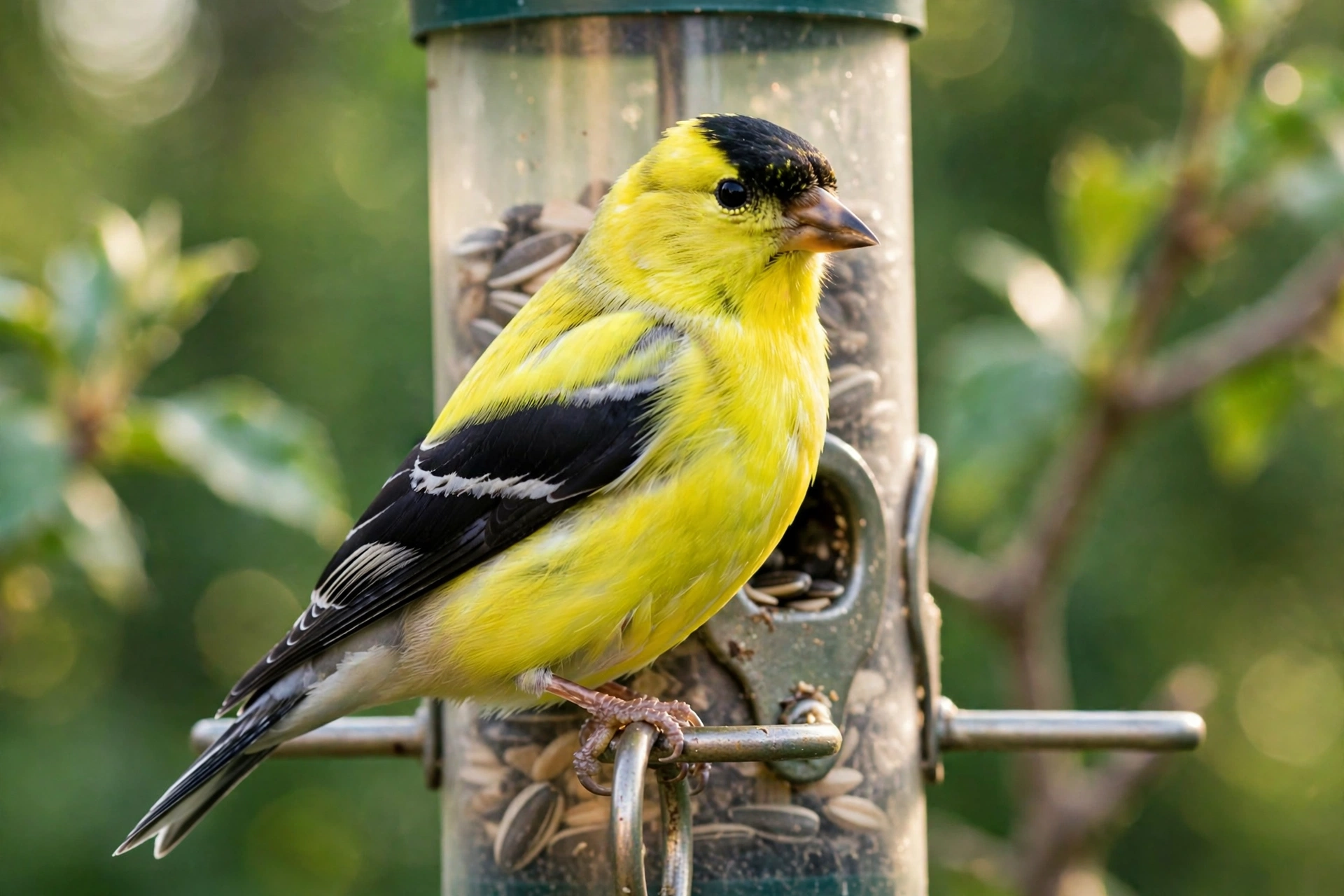
A small yellow bird lands at your feeder or flits through the bushes, and you think you have it pegged. Then you look again. The yellow looks different than you remember. The wings have bars, or maybe they do not. It was supposed to be bright, but this one is dull and greenish. Welcome to one of backyard birding’s most classic puzzles.
In most of the United States, a small yellow bird in your backyard is one of three species: the American goldfinch, the yellow warbler, or the pine warbler. All three are small, all three are yellow, and all three change their look through the year, which is why even experienced birders get fooled in fall. This guide walks you through each bird, compares them side by side, and explains the seasonal plumage changes that cause the confusion, so you can name that yellow visitor with confidence.
Why That Small Yellow Bird Is So Hard to Identify
Three things conspire to make small yellow birds tricky. First, size gives you almost nothing. A goldfinch, a yellow warbler, and a pine warbler are all about 4 to 5.5 inches long, roughly the size of a chickadee, so “small” narrows nothing down. Second, color is seasonal. The brilliant yellow you see on a spring male goldfinch fades into a dull olive-brown by October, and warblers arriving in fall look nothing like the glowing birds in field guide paintings. Third, behavior overlaps. All three can show up at feeders or in backyard shrubs, depending on the season.
The good news is that each of these birds carries a set of clues that survive every molt. Bill shape, wing pattern, streaking, and feeding behavior barely change through the year. Learn those, and the fall molt stops being a mystery and starts being just another part of the story.
Meet the 3 Usual Suspects
American Goldfinch
The American goldfinch is the most likely answer, especially in the northern and central United States. In summer, the breeding male is unmistakable: bright lemon yellow with a black cap, black wings, and a white tail band, like a tiny sunflower on wings. Females and winter birds are far duller, which is where the confusion starts.
Goldfinches are seed specialists. Watch for these telltale behaviors:
- Feeding style: clings to thistle socks and tube feeders, often upside down, and eats hanging from flower heads like coneflowers and sunflowers.
- Flight call: a bouncy, roller-coaster flight paired with a “per-chick-o-ree” or “potato-chip” call note, one chip per wingbeat.
- Bill: short, stout, conical, and pinkish, built for cracking seeds, unlike the thin bills of warblers.
- Timing: goldfinches are year-round residents in much of the US, so they can appear in any month.
They also nest unusually late. Goldfinches breed in July and August when thistle down and seeds are abundant, so by fall their molt is fresh news. If you want more of these bright visitors in summer, learn how to attract goldfinches to your yard with nyjer and native seed heads. For reference photos, range maps, and call recordings, see the Cornell Lab’s American Goldfinch guide.
Yellow Warbler
The yellow warbler is the yellowest of the three, a bird that looks like it was dipped in butter. Breeding males are almost entirely bright yellow, including their wings and tail, with fine reddish-brown streaks down the chest. Females are a softer yellow-green without the streaks. There are no white wing bars, and that single detail separates a yellow warbler from a goldfinch in any season.
Unlike goldfinches, yellow warblers are insect eaters with thin, sharp, needle-like bills. They rarely visit feeders. Instead, they glean caterpillars and flies from leafy shrubs and small trees, often near water. Most yellow warblers breed in the northern US and Canada and spend the winter in Central and South America, so in most backyards they are spring and fall migrants, passing through from April to May and again from August to September.
If one shows up in your shrubs, enjoy it. Yellow warblers move fast, traveling with mixed flocks during migration, and they are gone in a day or two. Their song is a bright, whistled “sweet-sweet-sweet, I am so sweet.” The Cornell Lab’s Yellow Warbler guide shows photos of every plumage, including the tricky fall birds.
Pine Warbler
The pine warbler is the underdog of the trio and the one most backyard birders underestimate. It is chunkier than other warblers, with an olive-yellow body, two clear white wing bars, a blurry olive wash across the chest, and a thicker bill than a typical warbler. In fall, it often looks dull olive with just a yellowish tint on the throat.
Here is what makes the pine warbler stand out:
- Feeder habit: it is one of the only warblers that regularly visits feeders, especially suet, peanut butter mixes, and seed in winter.
- Habitat: true to its name, it loves pines. Check the tops of pine and conifer trees for a bird methodically picking bark crevices.
- Song: a slow, soft musical trill, delivered from high in a pine, usually from March through summer.
- Range: resident year-round across the Southeast, and a winter visitor northward along the East Coast.
A drab fall pine warbler at a suet feeder is one of the most misidentified birds in the East. People call it a “sick goldfinch” or a “weird finch.” It is neither. Those white wing bars and that warbler walk, creeping along branches rather than hopping, give it away. Audubon’s Pine Warbler field guide has range maps and song clips that make the ID easy.

Goldfinch vs Yellow Warbler vs Pine Warbler: Side-by-Side Comparison
When you only get a three-second look, run through the features that matter most. This table compares the three birds at a glance, including how they look in fall when everything is confusing.
| Feature | American Goldfinch | Yellow Warbler | Pine Warbler |
|---|---|---|---|
| Size | About 5 inches | About 5 inches | About 5.5 inches, chunkier |
| Bill | Short, stout, conical seed bill | Thin, needle-like insect bill | Fairly thick, pointed bill |
| Wing bars | Bold white bars in all plumages | No wing bars, wings plain yellow | Two clear white wing bars |
| Summer male | Bright yellow, black cap, black wings | All-over yellow, red chest streaks | Olive-yellow, blurry streaks, wing bars |
| Fall plumage | Dull olive-brown, yellow face, wing bars remain | Duller olive-yellow, no streaks, no wing bars | Dull olive, pale throat, wing bars remain |
| Feeder behavior | Loves thistle socks and tube feeders | Rarely visits feeders | Visits suet and seed, especially winter |
| Typical season | Year-round | Spring and fall migration | Year-round in Southeast, winter elsewhere in East |
Notice the pattern: if the bird is hanging on a thistle feeder, it is a goldfinch. If it is gleaning insects in a leafy bush in May and has no wing bars, it is a yellow warbler. If it is creeping through pine branches in January with white wing bars, it is a pine warbler. Behavior and location do half the identifying for you.

Fall Plumage Changes: Why the Same Bird Looks Different
Fall is when small yellow birds cause the most headaches, and molting is the reason. Birds replace their feathers on a schedule, and for these three species, that schedule turns summer showstoppers into autumn wallflowers.
American goldfinches molt twice a year, which is unusual among songbirds. The spring molt produces the famous bright breeding plumage. The fall molt, completed between August and October, swaps it for drab olive-brown winter feathers. The black cap disappears entirely. Males look remarkably like females, and both sexes keep only a wash of yellow on the face and the crisp white wing bars. A flock of winter goldfinches can look like a different species altogether, but the wing bars and the conical bill never change.
Yellow warblers molt once a year on the breeding grounds before migrating south, plus a partial molt on the wintering grounds. Fall migrants are noticeably duller than spring birds: the males lose most of their red streaking and take on an olive-yellow tone, while females and young birds are plain greenish-yellow. Since yellow warblers have no wing bars to begin with, fall birds can look almost featureless, a small yellowish blur in the shrubs. If you are puzzled by fall warblers in general, our fall warbler identification guide covers the whole confusing crew.
Pine warblers also molt in late summer, and their fall plumage is the dullest of the three. The olive tones dominate, the yellow shrinks to the throat and breast, and the blurry streaking fades. But those white wing bars stay put through every season, which makes them the most reliable field mark on the bird.
One important note: heavy feather loss with bare patches, especially around the head, is not normal molting. If your yellow visitor looks ragged rather than simply drab, read our guide to molting vs feather plucking to tell the difference.

ID Clues That Never Lie
When plumage fails you, these four features hold steady through every season and every molt.
- Bill shape: Seed eaters have thick, conical bills. Insect eaters have thin, sharp bills. A goldfinch bill can crack a sunflower seed; a yellow warbler bill picks a caterpillar off a leaf. Bill shape instantly sorts finches from warblers.
- Wing bars: Present on goldfinches and pine warblers in every plumage, absent on yellow warblers. White bars flashing in the wings is a yes-or-no question that eliminates a whole species.
- Streaking: Red-brown chest streaks mean yellow warbler (spring males), blurry olive streaks on a chunky bird mean pine warbler. Goldfinches never show chest streaking.
- Behavior and place: Upside-down seed acrobat equals goldfinch. Leaf-gleaning insect hunter equals yellow warbler. Pine-creeping feeder visitor in winter equals pine warbler.
Apply them in order: bill, wings, streaks, behavior. Most backyard IDs resolve in the first two steps.
Seasonal Quick-Reference: Which Yellow Bird, When
Timing is a powerful clue. Use this month-by-month sense of who is around:
- Spring (April to May): All three are possible. Bright male goldfinches are finishing their molt into breeding plumage, yellow warblers are pouring through on migration, and pine warblers are singing in the pines.
- Summer (June to August): Goldfinches rule the feeders, pine warblers sing from the treetops, and yellow warblers have mostly headed to northern breeding grounds.
- Fall (September to November): Peak confusion. Drab goldfinches molt into winter dress, yellow warblers pass through again looking dull, and pine warblers drift to feeders.
- Winter (December to February): Goldfinches and pine warblers remain. A small yellow bird in a northern backyard in January is almost certainly a goldfinch or, in the Southeast, a pine warbler. Yellow warblers are gone to the tropics.
Frequently Asked Questions
What is the small yellow bird at my feeder in winter?
In most of the US, a small yellow bird at a winter feeder is an American goldfinch in its drab olive winter plumage. In the Southeast, it could also be a pine warbler, which visits suet feeders in winter. Yellow warblers migrate to the tropics and are not winter feeder birds.
Why did my bright yellow bird turn brown in fall?
It molted. American goldfinches replace their feathers twice a year, trading bright breeding plumage for camouflaged olive-brown winter feathers in fall. This is normal and healthy. The wing bars and bill shape stay the same, so you can still identify it.
How do I tell a goldfinch from a yellow warbler?
Check the wings and the bill. Goldfinches have bold white wing bars and a thick conical seed bill. Yellow warblers have plain yellow wings with no bars and a thin pointed insect bill. Goldfinches also hang on feeders; yellow warblers rarely visit them.
Do yellow warblers come to bird feeders?
Rarely. Yellow warblers eat insects, so standard seed feeders do not interest them. They may visit a birdbath for water or be drawn to a yard full of native plants that host caterpillars. If a small yellow bird is eating seed from your feeder, think goldfinch or pine warbler instead.
What is the difference between a pine warbler and a goldfinch in fall?
Both are drab with white wing bars in fall, which is why they confuse people. Look at the bill and the body: goldfinches have short conical bills and compact bodies with brighter yellow faces, while pine warblers have longer pointed bills, chunkier bodies, and blurrier streaking. Goldfinches cling to thistle socks; pine warblers creep along branches and pines.
Conclusion
That small yellow bird in your backyard is a puzzle with a reliable solution. Start with the bill: thick and conical means finch, thin and sharp means warbler. Check the wings: bold white bars point to goldfinch or pine warbler, plain yellow wings point to yellow warbler. Watch what it eats and where it feeds, and factor in the season, because fall molts rewrite the plumage while leaving the structure untouched.
Most of the time, the answer is an American goldfinch, North America’s cheerful seed-eating specialist, wearing its winter camouflage. Sometimes it is a yellow warbler hurrying through on migration, or a pine warbler working the pines and the suet feeder. Learn these three, and no small yellow bird will stump you again, not in spring’s bright parade and not in fall’s great disguise. Keep a field guide handy, note the details, and enjoy the detective work. That is half the fun of backyard birding.