 Skip to content

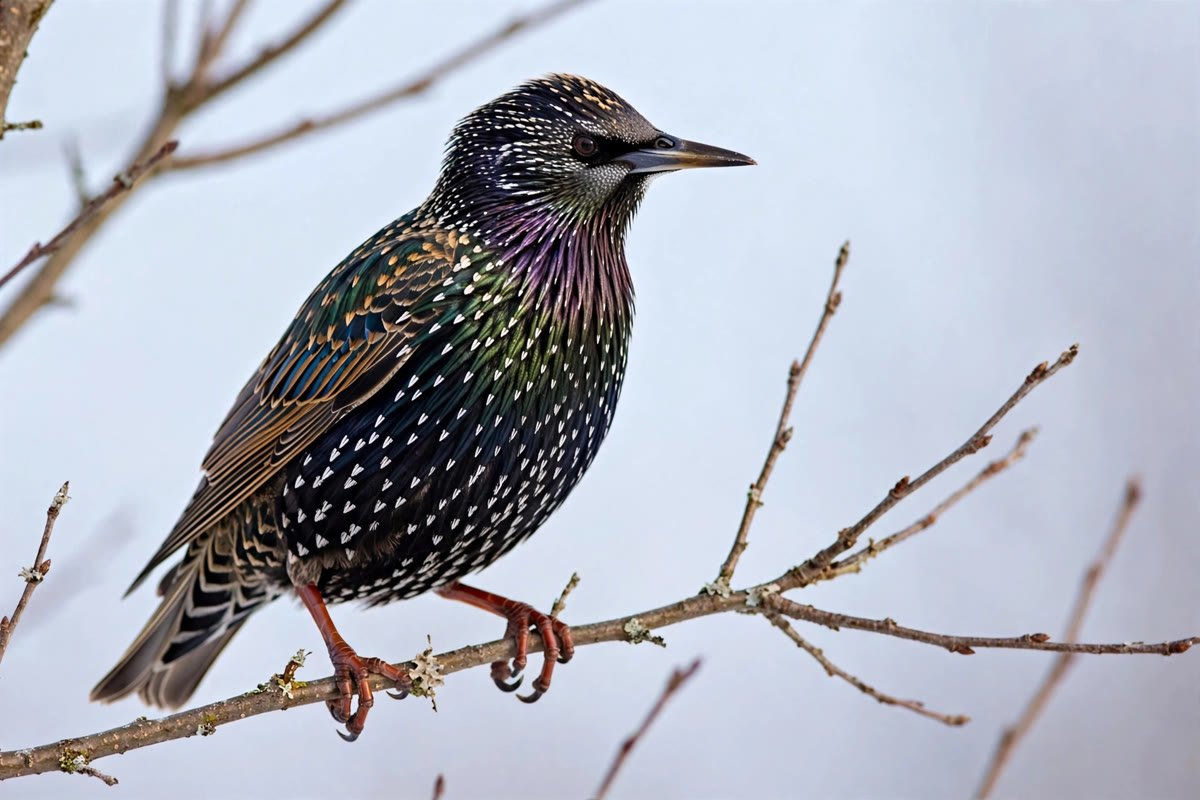
A dark bird lands on your lawn, and you squint. It is black, or is it? There is a flash of purple in the sun, maybe some spots, a long tail or a short one. By the time you decide, it has flown off with the flock. Starlings and grackles cause this exact confusion every day across North America.
Starling vs grackle: how do you tell them apart? Size and shape give you the fastest answer. The common grackle is a large, lanky blackbird, 11 to 13 inches long, with a long keel-shaped tail and bright yellow eyes. The European starling is a compact, stocky bird, 8 to 9 inches long, with a short square tail, dark eyes, and white spots in winter plumage. Once you know these marks, the two are hard to confuse.
In this identification guide, you will learn the key differences in size, shape, plumage, bill, eyes, voice, and behavior, plus a side-by-side comparison table, the other black birds people mix them up with, and field tips for identifying them in mixed fall flocks.

Starling vs Grackle: The Short Answer
If the bird looks stretched out, with a long tail trailing behind it like a rudder, piercing yellow eyes, and a thick dark bill, you are looking at a common grackle. If it looks compact and chunky, with a short tail, dark eyes, a slender pointed bill, and speckled plumage in winter, it is a European starling.
The two belong to different families. Grackles are native American blackbirds in the icterid family, related to red-winged blackbirds and orioles. Starlings are members of the starling family, Sturnidae, and are not native to North America at all. They were introduced to New York’s Central Park in 1890 and 1891, when about 100 birds were released, and their descendants now number in the hundreds of millions across the continent.
Both species are common, both gather in large flocks, and both often feed together in the same fields and parking lots, which is why the confusion persists. Learn the handful of marks below and you will separate them in seconds.
Size and Shape: The Fastest Field Mark
When a mixed flock lands, size is your quickest sorting tool. Grackles are noticeably larger than starlings, and the difference is obvious when the two stand near each other.
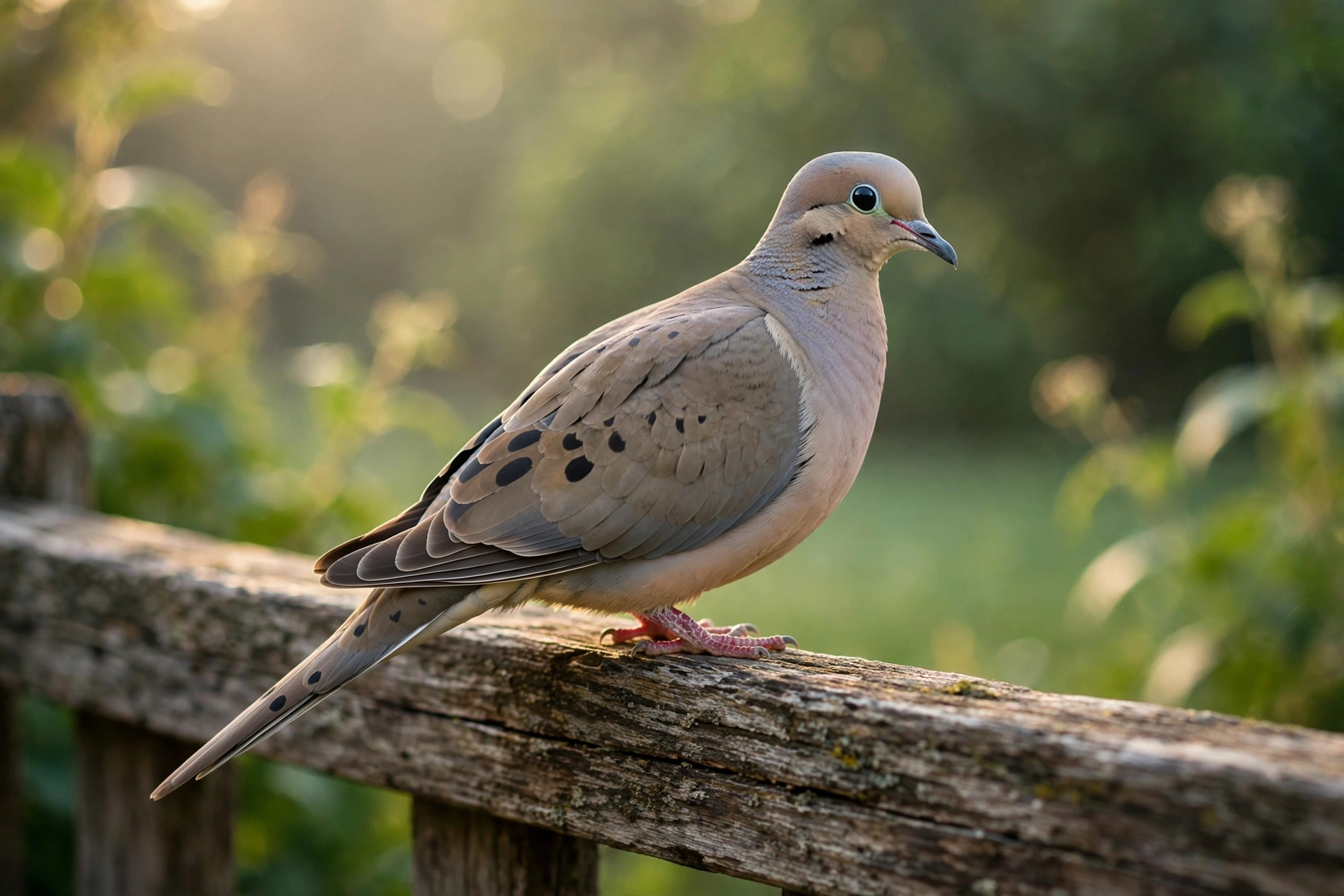
The common grackle measures 11 to 13 inches long, roughly the size of a mourning dove, with a long body and an exceptionally long, keel-shaped tail. In flight the tail often folds into a shallow V, giving the bird a distinctive trailing rudder. The overall impression is lanky and stretched out.
The European starling measures just 8 to 9 inches, smaller than an American robin, with a stocky build and a short, square-tipped tail. In flight its wings look short and pointed, and the Cornell Lab notes the silhouette resembles a small four-pointed star, which is where the name comes from. The overall impression is compact, like a flying cigar.
Posture helps too. Grackles strut with their long tails often held at an angle, looking deliberate and almost swaggering. Starlings walk briskly and peck at the ground in a zigzag pattern, stabbing their bills into the turf every few steps as they hunt for grubs.
Plumage: Spots, Sheen, and Seasonal Changes
Both birds look black at a distance and reveal iridescence up close, but their plumage behaves very differently through the year.
The Grackle: Glossy and Unspotted
Common grackles keep a consistent look year-round. Their plumage is a glossy bronze, purple, or green, depending on the region, with a contrasting iridescent head that can flash blue or purple in sunlight. Crucially, grackle plumage is always solid and unspotted. If you see white spots, it is not a grackle.
The Starling: A Seasonal Transformation
European starlings change dramatically with the seasons. In fall, after molting, they emerge covered in brilliant white spots over brownish-black plumage, their winter dress. As winter turns to spring, the pale tips of the feathers gradually wear away, revealing the glossy, unspotted, purplish-green breeding plumage beneath.
The bill changes too. A starling’s slender bill is dark in winter and turns bright yellow as breeding season approaches. No native blackbird shares that yellow-billed summer look, which makes breeding starlings easy to confirm.
This seasonal shift is the single most useful plumage clue. A spotted black bird in December is a starling, full stop. An unspotted glossy bird could be either, so check the tail, eyes, and bill.

The Eyes and Bill: Two Dead Giveaways
If plumage leaves you unsure, look at the face. Two features separate these birds instantly.
- Eyes: adult common grackles have bright, piercing yellow eyes that stand out even at a distance. European starlings have dark brown eyes that blend into the dark face. Yellow eyes mean grackle.
- Bill: grackles have a thick, dark, slightly downcurved bill built for an omnivore’s varied diet. Starlings have a long, slender, straight, sharply pointed bill, yellow in summer and dark in winter, built for probing soil.
Leg color is a backup mark. Starlings show pinkish-red legs in summer that darken to brown in winter. Grackles have dark blackish-brown legs year-round. It is a subtle clue, but useful when the light is good and the bird is close.
Calls and Behavior: Listen and Watch
These birds sound nothing alike, which makes voice one of the most reliable separators when you can hear the flock.
Grackles produce harsh, squeaky, unmusical sounds often described as a rusty gate swinging. Their songs are a series of grating squeaks, clicks, and whistles with no real melody. When a grackle sings, it often puffs up and spreads its tail, making the performance as visual as it is audible.
Starlings are the mimics. They produce an astonishing variety of rattles, whirs, whistles, and clicks, and they imitate other birds, including red-tailed hawks and robins, as well as mechanical sounds. A single starling on a wire can sound like a whole aviary. If the “blackbird” is doing impressions, it is a starling.
Flock behavior differs too. Starlings form the famous dense, wheeling flocks that pulse and shape-shift in the sky. For the full story of those aerial displays, read about what a starling murmuration actually is. Grackles gather in large, noisy flocks as well, especially at fall roosts, but their flight is more direct and less synchronized.
Range, Habitat, and Where You Will See Them Together
Both species thrive around people. Starlings favor cities, suburbs, farms, lawns, and parking lots, probing grass and perching on wires and rooftops. Grackles prefer more open country: fields, marshes, lawns, and farmland, though they happily visit suburban feeders too.
Their ranges overlap broadly across eastern and central North America. In fall and winter, they frequently feed together in mixed flocks with red-winged blackbirds and brown-headed cowbirds, which is when most identification confusion happens. Finding a grackle towering over starlings in the same field is the best possible study opportunity: direct comparison makes every difference obvious.
At feeders, grackles can be pushy customers that empty trays quickly. If they are overwhelming your setup, our guide to keeping grackles away from bird feeders offers practical strategies that do not harm the birds.
A 60-Second Field Drill for Mixed Flocks
Fall is the perfect season to practice, because mixed blackbird flocks are everywhere. Find a field or parking lot where dark birds are feeding, and give yourself one minute per bird. Start with size: is it dove-sized and lanky, or robin-sized and compact? That single judgment correctly sorts most birds immediately.
Next, check the tail as the bird moves. A long tail streaming behind in flight or held angled on the ground says grackle. A short, square tail says starling. If the bird turns its head, look for the eye: a flash of yellow confirms grackle, while a dark eye keeps starling in play.
Finally, listen for ten seconds. Rusty-gate squeaks lock in grackle, while whistles and mimicry lock in starling. Run this drill on a dozen birds and the distinctions become automatic. Few identification skills pay off faster, because these two species show up in almost every fall birding outing.
Starling vs Grackle: Side-by-Side Comparison
| Feature | Common Grackle | European Starling |
|---|---|---|
| Size | 11-13 in, dove-sized | 8-9 in, smaller than a robin |
| Shape | Long, lanky, stretched out | Compact, stocky, short-tailed |
| Tail | Long, keel-shaped, V in flight | Short, square-tipped |
| Plumage | Glossy bronze/purple/green, never spotted | Iridescent with white spots in winter, glossy in summer |
| Eyes | Bright yellow in adults | Dark brown |
| Bill | Thick, dark, slightly downcurved | Slender, straight, pointed; yellow in summer |
| Legs | Dark blackish-brown | Pinkish-red in summer, dark in winter |
| Voice | Harsh squeaks, like a rusty gate | Whistles, rattles, clicks, mimicry |
| Origin | Native to North America | Introduced from Europe in the 1890s |
| Family | Icteridae (blackbirds) | Sturnidae (starlings) |
Other Black Birds You Might Confuse Them With
Starlings and grackles are not the only dark birds in the neighborhood. Here are the other usual suspects.
- American crow: much larger than a grackle, with a heavy bill, fan-shaped tail, and a familiar caw. Our crow vs raven identification guide sorts out the big black birds.
- Red-winged blackbird: males are unmistakable with red and yellow shoulder patches; females are streaky brown and often confused with sparrows.
- Brown-headed cowbird: smaller than a grackle, with a short thick bill and, in males, a brown head contrasting with a glossy black body.
- Common raven: larger than a crow with a wedge-shaped tail and deep croaking voice; a different league from both starlings and grackles.
When in doubt, run the checklist in order: size first, then tail shape, then eyes, then bill. One of those four will almost always settle it.
Building these comparison skills pays off across the board. If you enjoy side-by-side ID challenges, try our house finch vs purple finch identification guide next.

Frequently Asked Questions
Are grackles and starlings related?
No. Common grackles are native American blackbirds in the icterid family, related to orioles and meadowlarks. European starlings belong to the starling family, Sturnidae, and were introduced to North America from Europe in the 1890s. Their similar dark plumage is convergent, not family resemblance.
Which is bigger, a grackle or a starling?
The grackle is clearly bigger: 11 to 13 inches long versus the starling’s 8 to 9 inches. In a mixed flock the grackles are noticeably larger, longer-tailed birds towering over the compact starlings. Size alone separates them reliably at any distance.
Do starlings and grackles flock together?
Yes, frequently, especially in fall and winter. Mixed foraging flocks of starlings, grackles, red-winged blackbirds, and cowbirds are common in fields and farmland. These mixed flocks are the best place to study the differences side by side.
Why do starlings have spots in winter but not summer?
The spots are the pale tips of fresh winter feathers. Starlings molt once a year in late summer, and the new feathers have white tips that create the speckled look. Over the winter these tips gradually wear off through abrasion, revealing the glossy iridescent feather below by spring. The bird never changes color; it just wears its feathers down.
Are grackles aggressive birds?
Grackles are bold and opportunistic rather than truly aggressive. They dominate feeders by size and numbers, and they will eat eggs and nestlings on occasion, like many omnivorous birds. At feeders they can be discouraged with selective feeding strategies rather than treated as enemies.
Should I report starlings since they are invasive?
European starlings are not native and are not protected under the Migratory Bird Treaty Act, but there is no general reporting requirement for seeing them. They are one of the continent’s most abundant birds. Management focuses on specific problem situations, such as agricultural damage or competition at nest boxes, not on individual sightings.
Conclusion
Starling vs grackle comes down to a short checklist that works in almost any conditions. Big and lanky with a long keel-shaped tail and yellow eyes means grackle. Compact and short-tailed with dark eyes, a slender bill, and winter spots means starling. Harsh rusty-gate squeaks point to grackle; a stream of whistles, rattles, and mimicry points to starling.
The confusion is understandable. Both are dark, social, successful birds that share our fields and parking lots, and they often feed shoulder to shoulder in mixed flocks. But they come from different families, different continents, and different evolutionary stories, and their field marks reflect that.
Next time a dark flock drops onto a lawn, take the extra ten seconds. Check the tails, check the eyes, and listen for a minute. You will rarely need more than that, and each successful call makes the next one faster. That is how bird identification works: one confident distinction at a time.


[…] you act, make sure you are dealing with starlings and not a similar flocking bird: learn how to tell starlings apart from grackles if you are […]