Skip to content

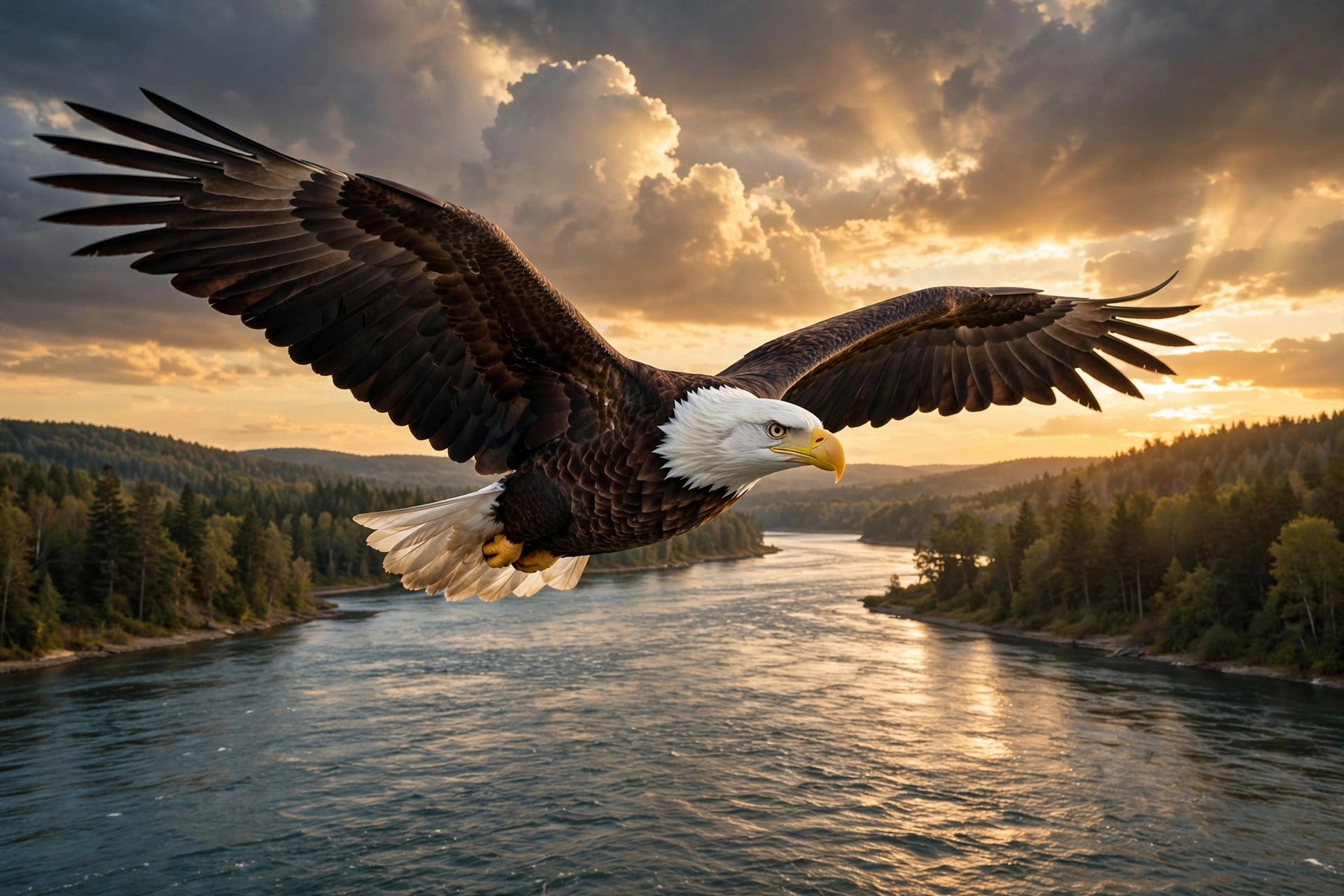
Here is the short answer. No, bald eagles are no longer endangered. The United States removed them from the federal Endangered Species Act list in 2007, after one of the most dramatic wildlife recoveries ever recorded. But that short answer hides an important detail. They are still protected by law, and they still face real threats today.
How did America’s national bird go from the brink of extinction to soaring over rivers in nearly every state? It is a story of a poisoned food chain, a landmark pesticide ban, decades of patient conservation work, and a warning about the dangers that remain.
In this article, we walk through the whole journey: how close the species came to disappearing, what brought it back, what “delisted” actually means, and why the comeback is not the end of the story.
How Close They Came to Extinction
To understand the comeback, you have to grasp how bad things got. By 1963, the U.S. Fish and Wildlife Service counted only 417 nesting pairs of bald eagles in the lower 48 states. For a bird that symbolizes an entire nation, the number was shockingly small. A species that once nested in nearly every river valley from Florida to Alaska had nearly vanished from most of the continent.
Several forces had pushed the eagles to the edge, and they all hit at roughly the same time.
- Hunting and bounties: In the early 1900s, eagles were shot as pests, trophies, and competitors for fish and livestock. Alaska even paid bounties on bald eagles from 1917 to 1953, with more than 128,000 birds killed under the program.
- Habitat loss: Logging, development, and the draining of wetlands destroyed the tall trees near water that eagles need for nesting.
- DDT: The biggest killer was invisible. After World War II, the pesticide DDT was sprayed widely across American farmland. It washed into rivers, concentrated in fish, and moved up the food chain into the eagles that ate the fish. The chemical interfered with calcium metabolism, and female eagles began laying eggs with shells so thin that they broke under the parents’ own weight during incubation. Whole generations of eaglets never hatched.
The heartbreaking part was that many breeding pairs were still alive and nesting. They simply could not raise young. Nests that had held eaglets for decades sat empty or held broken eggs year after year. The species was sliding toward extinction not from a lack of birds, but from a broken reproductive system.
If you want to make sure the big bird overhead is actually a bald eagle and not a similar raptor, our guide on bald eagle vs golden eagle identification walks through the field marks.
The Recovery: How America Brought Them Back
The turnaround began with a book. Rachel Carson’s 1962 bestseller Silent Spring drew public attention to the damage DDT was doing to birds, and it sparked a wave of environmental awareness. In 1972, the newly formed Environmental Protection Agency banned most agricultural uses of DDT in the United States. That single decision removed the chemical that had been quietly sterilizing the eagle population.
The legal protections came in waves alongside the ban:
- Bald and Golden Eagle Protection Act (1940): This law already made it illegal to kill, harm, or disturb bald eagles, their nests, and their eggs. It remains the backbone of eagle protection today.
- 1967 listing: Bald eagles south of the 40th parallel were listed under the Endangered Species Preservation Act, an early federal conservation law.
- Endangered Species Act (1973): When the ESA passed, the bald eagle was one of the original species it protected. In 1978, the listing expanded to cover eagles across all 48 contiguous states (Alaska’s population stayed healthy and was never listed).
But laws alone did not rebuild the population. Biologists got to work with one of the largest wildlife restoration efforts in history. Captive breeding programs raised eaglets in controlled conditions. A technique called “hacking” placed young eagles in artificial nests on tall towers, where they were fed until they could fly and hunt on their own. These released birds repopulated regions where eagles had been gone for decades, including much of the Northeast and the Great Lakes.
Habitat protection ran in parallel. Nest sites were guarded during breeding season, wetlands were preserved, and law enforcement cracked down on shooting and egg collecting. The eagle responded faster than almost anyone expected. Population models show the numbers doubling roughly every seven to eight years through the 1970s, 80s, and 90s.
In 1995, the recovery reached a major milestone: the bald eagle was reclassified from endangered to threatened, a formal recognition that extinction was no longer the looming outcome. The climb continued.

The 2007 Delisting: What It Actually Meant
On June 28, 2007, the U.S. Fish and Wildlife Service announced that the bald eagle was being removed from the list of threatened and endangered species. By that point, survey crews counted at least 9,789 nesting pairs across the contiguous United States, a stunning rise from 417 pairs in 1963.
Delisting is a conservation graduation ceremony. It means the species has recovered to the point that the emergency protections of the Endangered Species Act are no longer needed. It does not mean the bird lost all protection. This is the part many people misunderstand.
When the bald eagle left the endangered list, it landed squarely under two other federal laws that never went away:
- Bald and Golden Eagle Protection Act: It is still a federal offense to kill, injure, sell, or disturb a bald eagle, its nest, or its eggs. Violations carry fines and possible prison time.
- Migratory Bird Treaty Act: This law protects more than 1,100 bird species, including the bald eagle, and makes harming them a state and federal offense.
The U.S. Fish and Wildlife Service also issued detailed guidelines for living and building near eagle nests, along with a permit system for activities that might disturb eagles, such as construction near active nest sites. Federal agencies continue to monitor the population with regular surveys, and post-delisting monitoring plans track the species for years after removal from the list. Several states also maintain their own eagle protections on top of the federal rules.
So the legal picture today is clear. Not endangered, but far from unprotected. Think of it like a patient leaving the intensive care unit: stable, but still under a doctor’s care.
Current Threats: The Dangers Did Not Disappear
Delisting was never a promise that eagles are safe forever. The population is strong, but wildlife officials and conservation groups continue to flag serious pressures. Here are the main ones.
Lead Poisoning
Lead is now widely considered the biggest unresolved threat to bald eagles. The problem comes from ammunition. When hunters leave behind gut piles or carcasses shot with lead bullets, the fragments break into tiny pieces that eagles swallow when they scavenge. Lead also enters the environment through fishing tackle and legacy pollution from paint and gasoline.
Research published in the journal Science found that nearly half of bald and golden eagles tested showed signs of chronic lead exposure, and modeling by Cornell scientists estimated that lead exposure slowed the bald eagle population’s growth rate by several percent. Poisoned birds suffer weakness, anemia, and neurological damage. Many are grounded, unable to fly or hunt, and die slowly.
Audubon rehabilitation centers regularly treat eagles for lead poisoning. There is an encouraging twist here: non-lead ammunition made of steel, copper, or tungsten works just as well for hunting, and many conservation groups encourage hunters to make the switch. You can read more about the research in Audubon’s reporting on how lead bullets are stunting the bald eagle’s recovery.
Collisions and Electrocution
Power lines, wind turbines, and vehicles kill and injure eagles every year. Eagles hunting along roadsides are struck by cars. Birds that perch or nest on power poles can be electrocuted, and collisions with turbines are a growing concern as wind farms expand. Utility companies have responded by building newer lines to “raptor-safe” standards, but millions of older poles remain risky. Our explainer on why birds don’t get electrocuted on power lines covers the physics and the exceptions in more detail.
Habitat Loss and Disturbance
Eagles need tall trees or structures near clean, fish-filled water. Coastal development, shoreline construction, and the loss of wetlands keep squeezing that habitat. In Florida, where the population has rebounded to roughly 2,500 nesting pairs, conservationists warn that development pressure is now the limiting factor.
Disturbance matters too. Eagles are sensitive to repeated human activity near active nests, especially during breeding season. A nest that is disturbed too often can fail, even with both parents present. As eagles recolonize urban and suburban areas, conflicts with construction, recreation, and noise are rising.
Disease and Climate Change
Avian influenza and West Nile virus have both caused eagle deaths in recent years. Looking ahead, climate change threatens prey availability, nesting habitat stability, and disease patterns in ways scientists are still working to understand. A warming climate may also shift fish populations, changing where eagles can feed successfully.

The Numbers Today: How Many Bald Eagles Are There?
The most authoritative recent estimate comes from the U.S. Fish and Wildlife Service. Using aerial surveys combined with population modeling built on eBird data from the Cornell Lab of Ornithology, the agency estimated the lower 48 population at about 316,700 individual bald eagles, including more than 71,400 nesting pairs. That figure comes from data collected in 2018 and 2019 and summarized in the 2020 report.
Put that next to the history, and the scale of the comeback is hard to overstate:
- 1963: 417 nesting pairs in the lower 48, the all-time low.
- 1974: Around 791 nesting pairs, early signs of recovery after the DDT ban.
- 1995: Reclassified from endangered to threatened as the population kept climbing.
- 2007: At least 9,789 nesting pairs, delisted from the Endangered Species Act.
- 2009: An estimated 72,434 individual eagles and 30,548 breeding pairs.
- 2018-2019: An estimated 316,700 individuals and 71,467 breeding pairs, more than four times the 2009 count.
Alaska, which never needed ESA protection, hosts an estimated 50,000 to 70,000 bald eagles of its own. Nesting pairs are now documented in all 48 contiguous states, including urban areas where eagles once seemed unthinkable, such as Philadelphia, Washington D.C., and Minneapolis. The highest concentrations are found in Minnesota, Florida, and Wisconsin.
Globally, the IUCN Red List classifies the bald eagle as Least Concern, meaning the species faces no imminent extinction risk at the global level. That is a remarkable label for a bird that was staring extinction in the face within living memory.
Eagles also gather in large winter concentrations along open water, since they depend on fish and waterfowl through the cold months. If you are curious where all the birds go when winter arrives, see our article on where birds go in winter.
The Timeline: Key Moments in the Bald Eagle Comeback
| Year | Event |
|---|---|
| 1782 | The bald eagle is adopted as the national bird of the United States. |
| 1917-1953 | Alaska pays bounties on bald eagles; over 128,000 birds are killed under the program. |
| 1940 | The Bald Eagle Protection Act (later the Bald and Golden Eagle Protection Act) makes it illegal to harm eagles, nests, or eggs. |
| 1962 | Rachel Carson publishes Silent Spring, exposing the damage DDT is doing to birds. |
| 1963 | USFWS counts only 417 nesting pairs in the lower 48 states, the all-time low. |
| 1967 | Bald eagles south of the 40th parallel are listed under the Endangered Species Preservation Act. |
| 1972 | The EPA bans most agricultural uses of DDT in the United States. |
| 1973 | The Endangered Species Act passes; the bald eagle is one of the original protected species. |
| 1978 | The eagle is listed as endangered across all 48 contiguous states (Alaska excepted). |
| 1991 | Federal rules phase out lead shot for waterfowl hunting, reducing one source of lead exposure. |
| 1995 | The bald eagle is reclassified from endangered to threatened. |
| 2007 | The bald eagle is delisted from the Endangered Species Act; at least 9,789 nesting pairs counted. |
| 2020 | USFWS reports an estimated 316,700 eagles and 71,467 nesting pairs in the lower 48. |
| Today | IUCN lists the species as Least Concern; eagles nest in all 48 contiguous states. |
What the Comeback Teaches Conservation
The bald eagle story is often called the greatest conservation success in American history, and it holds real lessons that go beyond one species.
First, the cause of the decline was correctly identified and removed. The DDT ban addressed the actual mechanism of collapse, not just its symptoms. Many conservation problems fail because the real cause goes untouched. Here it did not.
Second, laws and science worked together. Legal protection stopped the killing and disturbance, while captive breeding and reintroduction programs rebuilt populations in empty landscapes. Neither approach alone would have succeeded as fast.
Third, recovery took decades of boring, unglamorous work: nest monitoring, habitat purchase, law enforcement, public education. The eagle did not bounce back because of one heroic moment. It bounced back because thousands of people did the same careful work for forty years.
Fourth, and most important for today, delisting is not the finish line. Lead poisoning, habitat loss, and collisions show that a recovered species can slide backward if attention fades. The bald eagle is safe now because people stayed watchful after the celebration. The lesson for conservation everywhere is simple: recovery is a commitment, not a one-time rescue.

Frequently Asked Questions
Are bald eagles still endangered?
No. Bald eagles were removed from the U.S. Endangered Species Act list in 2007 after the population recovered from 417 nesting pairs in 1963 to nearly 10,000 nesting pairs. The IUCN classifies them as Least Concern globally.
When were bald eagles taken off the endangered list?
June 28, 2007. The U.S. Fish and Wildlife Service announced the delisting after determining the population had recovered enough to survive without ESA protection. They had been reclassified from endangered to threatened in 1995.
Why were bald eagles endangered in the first place?
The main cause was the pesticide DDT, which moved up the food chain and caused eagles to lay eggs with shells too thin to survive incubation. Hunting, bounties, and habitat loss added to the decline, which bottomed out at 417 nesting pairs in the lower 48 states in 1963.
How many bald eagles are there today?
The most recent nationwide estimate from the U.S. Fish and Wildlife Service, based on 2018-2019 data, put the lower 48 population at about 316,700 individual eagles, including more than 71,400 nesting pairs. Alaska hosts an estimated 50,000 to 70,000 more.
Are bald eagles still protected by law?
Yes. They remain protected under the Bald and Golden Eagle Protection Act and the Migratory Bird Treaty Act. It is a federal offense to kill, injure, sell, or disturb a bald eagle, its nest, or its eggs. Some states add their own protections as well.
What is the biggest threat to bald eagles now?
Lead poisoning is the leading unresolved threat. Eagles ingest lead fragments when they scavenge carcasses and gut piles left by hunters using lead ammunition. Collisions with vehicles and power lines, habitat loss, and diseases like avian influenza are also significant concerns.
Can I get in trouble for disturbing a bald eagle nest?
Yes. Federal law prohibits disturbing eagles or their nests, and the U.S. Fish and Wildlife Service publishes guidelines on safe distances for construction and other activities near active nests. In some cases, a federal permit is required before work can proceed near a nest.
Conclusion
So, are bald eagles still endangered? No, and that “no” is one of the proudest sentences in American conservation. From 417 nesting pairs to more than 300,000 birds, the bald eagle went from a symbol on the verge of disappearing to a bird you can spot along rivers, lakes, and even city skylines.
But the comeback came with a condition the law understood well. The eagle is protected, not invulnerable. Lead in the food chain, disappearing habitat, and a changing climate are the new tests, and they will be passed or failed the same way the old ones were: by noticing the problem early and refusing to look away.
Next time you see a bald eagle lift off a riverbank, white head gleaming, you are watching proof that conservation works. The real question now is not whether eagles survived. It is whether we keep the promise that saved them.
Further reading: the U.S. Fish and Wildlife Service’s original delisting announcement (USFWS press release, 2007), Audubon’s reporting on lead bullets and eagle recovery, and an overview of the full recovery story at BirdLife.