
Introduction
Feeding birds in your garden can be very simple, but it can also be very easy to get it wrong. If you feed the wrong foods, birds may not get enough, or may even get unwell. If you feed the right foods at the right time of year, you may be able to support an entire family of chickadees through the cold, give hummingbirds energy for migration, and attract orioles to return to the same branch each spring. This guide gives all the information you need. It explains the different types of foods, which species eat which, which foods to feed, which are dangerous, when to feed during the year, how to keep feeders clean, and the common mistakes that waste money and harm birds. Once you have read this guide you can confidently feed birds in any season without worrying!
What Birds Actually Eat
Knowing what type of food to put in your feeders will make attracting birds much easier. There are 5 main types of food. If you put millet in a feeder, woodpeckers will not be attracted to it. If you put nectar in a feeder, finches may not be interested. Choosing the right food for the right bird will make your garden very busy!
Seed Eaters
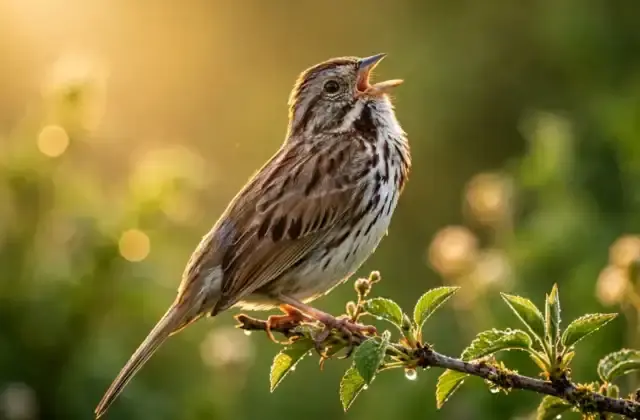
Strong pointed bills allow seed-eaters to crack open shells. Cardinals, finches, sparrows, chickadees, grosbeaks and juncos all fit into this category. These are the most common feeder birds. Sunflower seeds, millet, safflower and cracked corn are great choices for these types of birds.
Insect Eaters
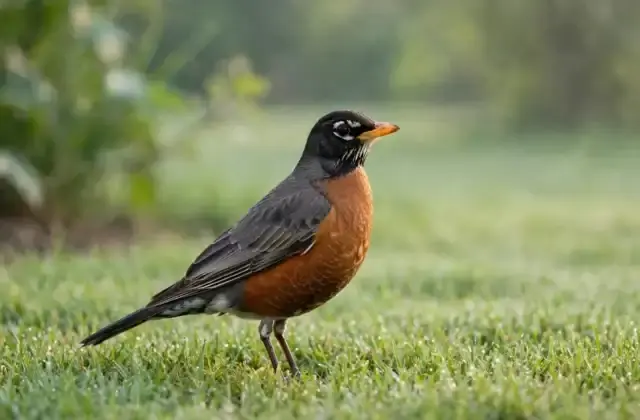
Insect eaters hunt caterpillars, beetles, spiders, and other small creatures. Woodpeckers, wrens, warblers, bluebirds, robins, and chickadees all take insects, especially in spring when they feed protein to nestlings.
Fruit Eaters
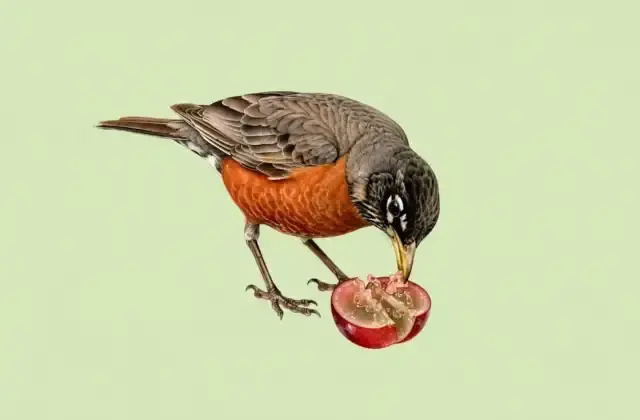
Provide some fruit. Birds such as orioles, tanagers, waxwings, robins, mockingbirds and catbirds will all enjoy some fruit. Offer them halves of oranges, grapes, and slices of apple and berries. Sliced oranges will attract orioles and tanagers in spring as they return from migration and require a quick source of energy.
Nectar Feeders
Nectar feeders are the specialists. Hummingbirds are the main ones in North America, and they live on flower nectar and tiny insects. Their wings beat dozens of times per second, so they need sugar water constantly during the day.
Omnivores
Omnivores eat a bit of everything, and they change with the season. Jays, crows, starlings, grackles, and mockingbirds take seed, fruit, insects, nuts, and scraps. They are adaptable, which helps them survive winter, but they can also crowd out smaller birds. If jays empty your feeder, offer their peanuts at a separate spot.
Seeds: The Foundation of Bird Food
Seeds are the backbone of backyard feeding. They store well, they are cheap, and they attract the widest range of birds. Black oil sunflower seed is the best all-round choice, with a thin shell and a high fat kernel that over 50 species can crack. Striped sunflower seeds are larger and harder to crack meaning cardinals and grosbeaks are more likely to be attracted to them, rather than small finches. White millet is very popular with ground feeding birds like juncos, sparrows and doves. It is best offered on the ground or on a platform feeder. Safflower seed is popular with cardinals and grosbeaks, and is usually avoided by squirrels and starlings. Nyjer (thistle) seed is very small and popular with goldfinches and siskins. A special feeder with very fine mesh is required to offer this seed. Cracked corn is popular with doves, jays and quail, but tends to go bad quickly in wet weather. Only offer in small amounts.
Use fresh seeds. Seal the seeds in a dry, sealed container. Do not use any seed with a musty or damp smell. See our guide to the best bird seeds for different birds in the USA for which seed suits which species.
Goldfinches are the most famous seed eaters of all; our guide to what goldfinches eat explains how their diet shifts from breeding season to winter flocks.
Suet: High Energy for Winter Birds
Suet is rendered animal fat, usually beef fat, pressed into cakes and hung in a wire cage feeder. It is pure energy, and it is the best winter food for birds that do not eat much seed. Woodpeckers, nuthatches, wrens, flickers, chickadees, and titmice all take suet, and in a cold snap it can be the difference between survival and starvation. A woodpecker burning calories to stay warm overnight needs dense fat, and suet delivers it.
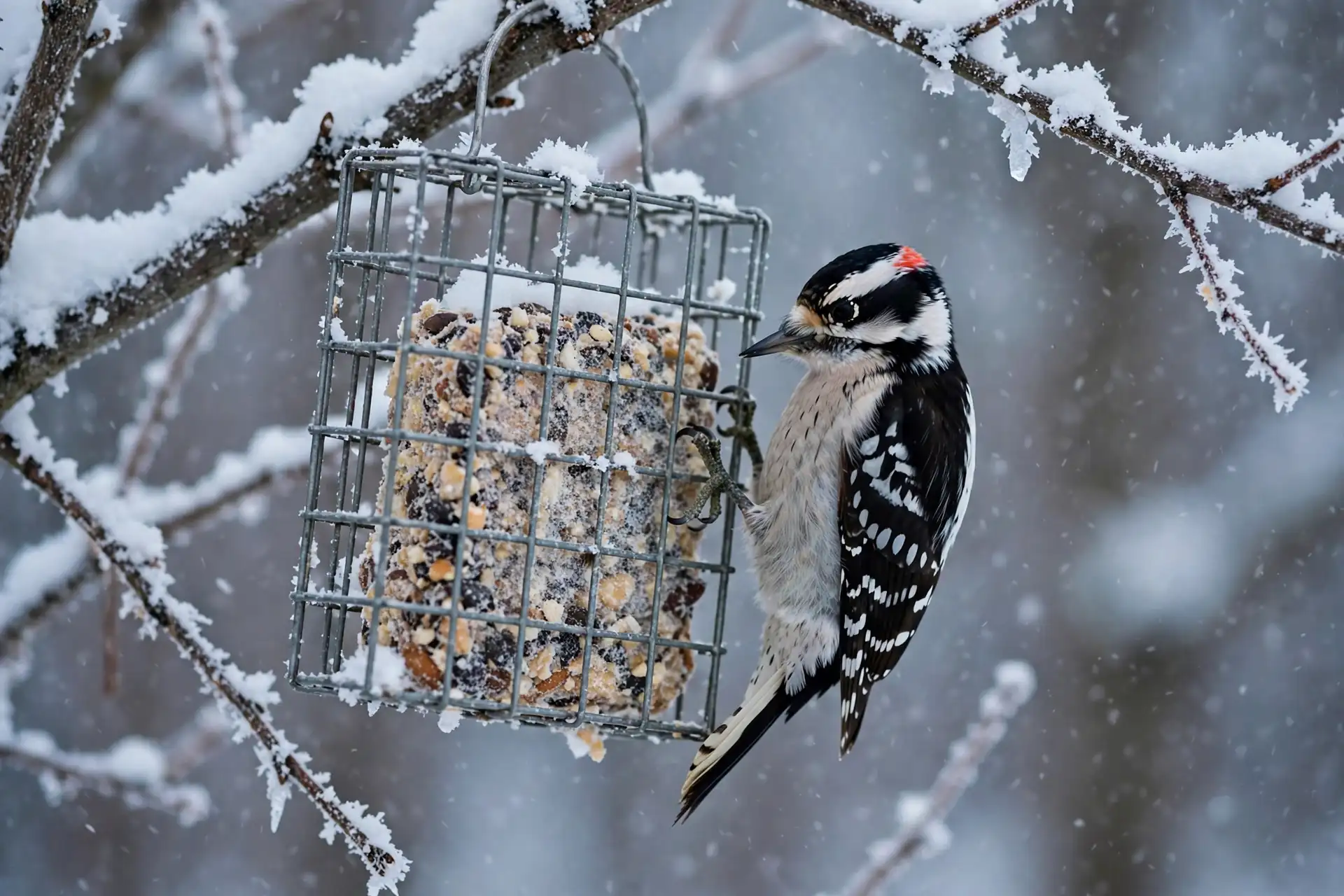
Suet has one weakness: heat. Suet tends to melt and turn rancid if the temperature rises above around 21 degrees (70F), so suet is mainly a cold weather food. You may wish to change to a non-melting type of suet or alternatively offer mealworms and fruit during the summer. If using suet ensure feeders are placed in shade. If suet cakes have gone smelly or greasy, they should be changed.
You can make your own suet at home; our recipe is in how to make suet for birds.
Fruit: Fresh, Sweet, and Seasonal
Fruit is a natural food for many birds, and a feeder with fruit can attract species that never touch seed. Apples, oranges, grapes, and berries are the safest choices, cut into small pieces or halves. Orioles and tanagers come for orange halves in spring. Robins, waxwings, and mockingbirds take berries and apple slices. Catbirds and thrashers will try grapes cut in half.
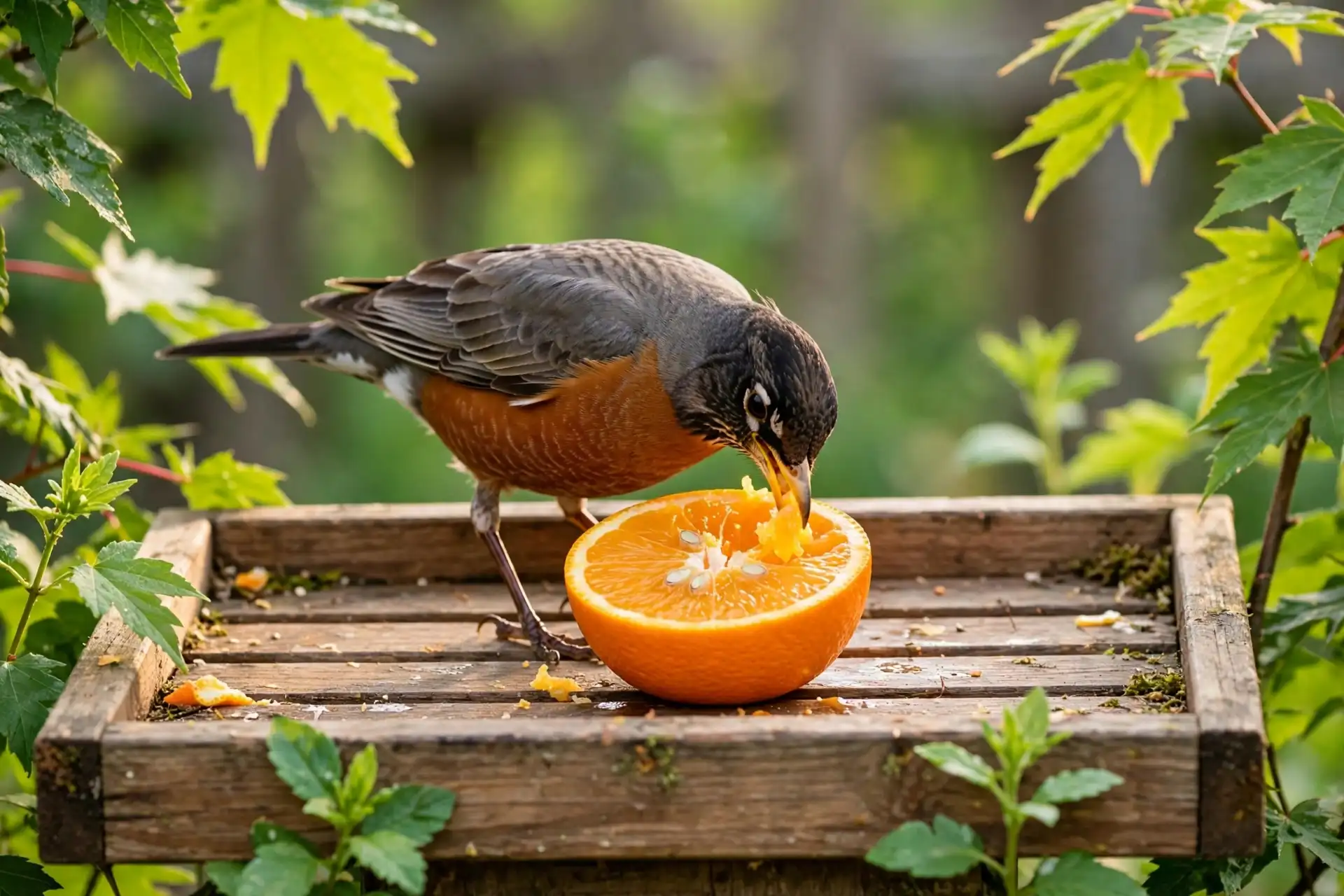
Only put a little fruit in at one time, only what birds will eat in a day or two. In warm weather fruit ferments fast, and rotten fruit can make birds sick. If there is any left after one or two days remove it and clean the dish before adding more.
Persimmons raise questions every fall; our guide to can birds eat persimmons explains why only fully ripe fruit should go out.
Nectar: The Hummingbird Fuel
Nectar is the food of hummingbirds. Mix 1 part white sugar to 4 parts water. Boil the water, then add the sugar and stir until dissolved. Once cooled, put into the feeder. Do NOT use honey, brown sugar, artificial sweeteners or red dye. Honey can cause growth of a fungus in the feeder which can be lethal to the hummingbirds. Artificial sweeteners contain no calories, so they starve a bird that burns energy every second. The red dye is not necessary. It may be harmful to the birds. The red parts on the feeder will be enough to attract the hummingbirds.
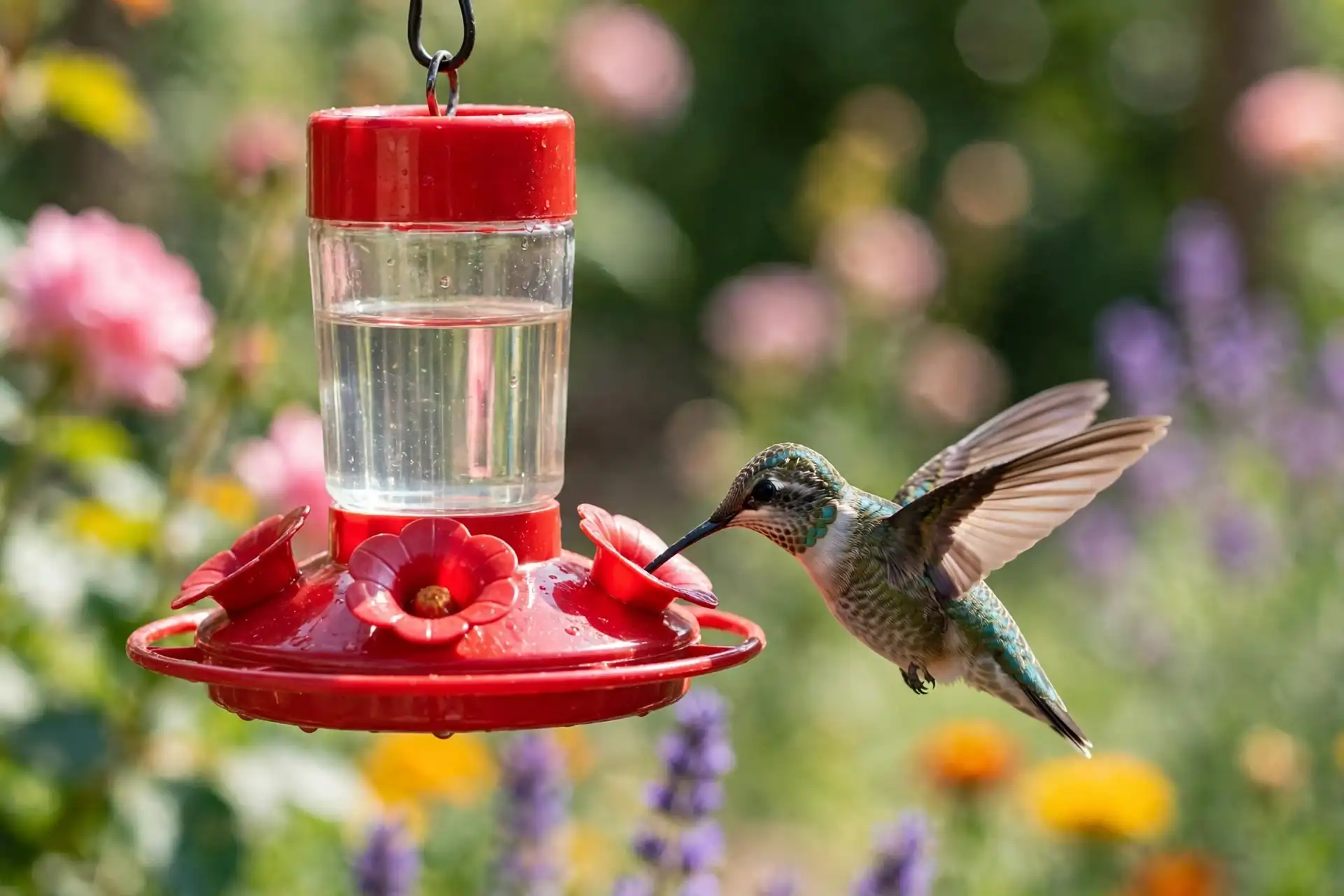
Nectar spoils fast. In hot weather, replace it every 2 to 3 days, and clean the feeder each time with hot water and a bottle brush. A dirty nectar feeder is worse than no feeder at all, because mold and bacteria grow in old sugar water.
Mealworms and Insects: Protein for Nesting Season
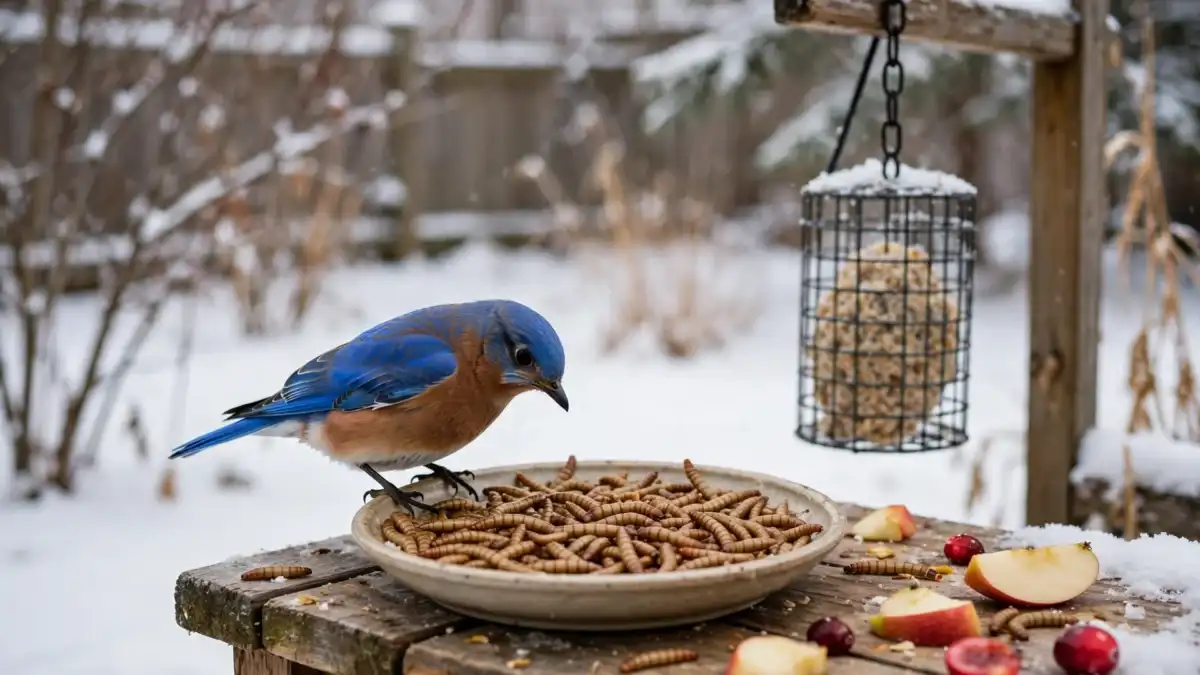
Mealworms (live or dried) are excellent protein and very popular with bluebirds, robins, wrens and chickadees. They are particularly valuable to feed during the spring and summer months, to provide parents with extra protein to feed their growing young. They can be offered in a shallow dish, on a platform feeder or in specially designed covered mealworm feeders. Dried mealworms are easy to store and less messy. However, if you soak them in warm water for a few minutes, they will be softer and more attractive.
Live mealworms are even better, and they move, which catches a bird’s eye. If you offer live mealworms, put them in a smooth-sided dish they cannot climb out of. Start with a small handful and see how fast it disappears.
Peanuts and Nuts: Big Energy in Small Packages
Peanuts are a high fat, high protein food that many birds love. Jays, woodpeckers, nuthatches, titmice, and chickadees all take peanuts, whole in the shell or shelled. Whole peanuts in the shell are fun to watch, because jays will carry them off and hide them. Shelled peanuts are easier for small birds, but they spoil faster, so offer only what will be eaten in a day.
Use only unsalted peanuts, and never use salted, roasted, or flavored nuts. Salt is harmful to birds in even small amounts. Tree nuts such as walnuts, pecans, and almonds are also safe when unsalted and offered in small pieces.
Kitchen Scraps: What Is Safe and What Is Not
Some kitchen foods are fine for birds in small amounts, and some are dangerous. Plain cooked rice, plain oats, and plain pasta are safe in small amounts, though they should never replace proper seed. Peas, corn, and cooked vegetables are fine too.
The rule for scraps is simple: avoid salty, sweet, spicy and fried foods. Avoid offering chips, crackers, cake, cookies and breakfast cereals. These foods provide very few nutrients and have too much salt and sugar. Bread is the classic mistake. It fills a bird up with almost no nutrition, it can go moldy quickly and in ducklings can lead to malnutrition. It can also cause angel wing (a deformed wing).
Safe Foods at a Glance
Here is a quick list of foods you can offer with confidence.
- Black oil sunflower seeds, the best all-round seed
- Unsalted peanuts, shelled or in the shell
- Suet cakes, especially in cold weather
- Apples, oranges, grapes, and berries, cut into small pieces
- Mealworms, live or dried, in a shallow dish
- Plain cooked rice and plain oats, in small amounts
- Nyjer seed for goldfinches and siskins
- White millet for ground feeders such as juncos and doves
Toxic and Harmful Foods
Some foods that are fine for people are dangerous for birds. Keep these away from feeders.
- Avocado contains persin, a compound toxic to many birds that can cause heart and breathing problems.
- Chocolate and caffeine contain theobromine, which affects the heart and nervous system and can be fatal even in small amounts.
- Alcohol is toxic to birds in tiny doses and can cause organ failure.
- Salt and salty snacks damage a bird’s kidneys, and birds cannot handle salt the way mammals do.
- Onions and garlic damage red blood cells and can cause anemia.
- Bread and baked goods are low in nutrition, mold quickly, and can cause malnutrition, especially in ducklings.
- Moldy or spoiled food can carry aspergillosis, a fungal infection that is often fatal in birds. If food smells off or looks moldy, throw it away.
The Oatmeal Question
Oatmeal is a food that causes confusion, because different sources say different things, and both sides have a point. The site’s own winter feeding guide says plain cooked oatmeal cooled completely is safe for birds. Outside sources warn that cooked oats can be sticky and unsafe, because sticky food can cling to a bird’s beak and feathers. Both are honest.
Plain dry oats are safe. Cooked plain oatmeal can be given in small amounts once it is completely cold. Never give hot oatmeal and never add milk, sugar or flavorings. Do not leave a large sticky lump out.
The Full Food Map
| Food type | Birds it attracts | Best feeder | Best season |
|---|---|---|---|
| Black oil sunflower seed | Cardinals, finches, chickadees, grosbeaks | Tube or hopper feeder | All year |
| Suet cakes | Woodpeckers, nuthatches, wrens, flickers | Wire suet cage | Winter |
| Fruit halves | Orioles, tanagers, robins, waxwings | Platform feeder | Spring and summer |
| Nectar | Hummingbirds | Nectar feeder | Spring and summer |
| Mealworms | Bluebirds, robins, wrens, chickadees | Shallow dish | Spring and summer |
| Peanuts | Jays, woodpeckers, nuthatches, titmice | Platform or peanut feeder | All year |
| Nyjer seed | Goldfinches, siskins, redpolls | Fine mesh feeder | Winter and spring |
| Millet | Juncos, sparrows, doves | Ground or platform feeder | Winter |
Seasonal Feeding
Birds need different food at different times of year, because their lives change with the seasons. Even a small change in diet provides greater benefit than providing the same throughout the year.
Winter: High Fat and Steady Supply
Winter is the hardest season for birds. Natural food is scarce, nights are long and cold, and a small bird can lose a dangerous amount of body weight overnight. In winter, offer high fat foods: suet, black oil sunflower seed, and unsalted peanuts. Keep feeders full and reliable, because birds learn where food is and plan their day around it.
Spring: Protein for Nesting
Spring is nesting season, and parent birds need protein. Offer mealworms, suet, and peanuts alongside seed, because nestlings grow on insects, not seed. Fruit is useful too, because returning migrants such as orioles and tanagers need quick sugar after a long flight.
Summer: Fresh Fruit and Nectar
As natural foods are plentiful in summer, birds may not visit your feeders as much. Ensure you change nectar regularly, and only provide small amounts of fruit. Place suet feeders out of the sun, or change to no-melting suet. Do not overfill seed feeders as seeds may go moldy quickly in the warm/humid weather.
Fall: Fuel for Migration
Fall is fueling season. Migrants need to build fat for long flights, and resident birds need to build fat for winter. Offer sunflower seed, peanuts, suet, and fruit, and keep feeders full. This is also the time to clean and repair feeders and stock up on seed before winter.
Feeder Hygiene
Clean feeders are as important as good food. A dirty feeder spreads disease, and a sick bird at a feeder can infect the whole flock. Follow these rules every week.
- Clean feeders weekly with a 10 percent bleach solution, one part bleach to nine parts water, then rinse well and let the feeder dry completely before refilling.
- Replace wet or clumped seed at once. Wet seed grows mold, and moldy seed can cause aspergillosis.
- Replace nectar every 2 to 3 days, and scrub the feeder with hot water each time.
- Remove uneaten fruit within a day or two, and wash the dish before refilling.
- Clean up spilled seed under feeders, because old seed on the ground attracts rats and grows mold.
- Wear gloves when cleaning feeders, and wash your hands afterwards.
Common Mistakes
Even careful feeders make these mistakes. Avoid them, and your birds will be healthier.
- Offering bread as a main food. Bread fills birds up with almost no nutrition.
- Using red dye in nectar. It is unnecessary and may be harmful, and the feeder’s red parts attract hummingbirds on their own.
- Leaving old seed in the feeder. Wet, moldy seed causes disease.
- Putting feeders in the open with no cover nearby. Birds need bushes or trees close by to escape hawks.
- Forgetting water. Birds also need clean water for drinking and bathing, and a bird bath attracts more species than a feeder.
- Using the wrong seed for the wrong bird. Millet in a tube feeder wastes seed, and nyjer in a hopper feeder is useless.
- Feeding only in winter. Birds benefit all year, and summer feeding helps nesting parents.
- Ignoring squirrels. If squirrels empty your feeders, use a baffle or a squirrel proof feeder.
- Offering too much at once. Fill feeders halfway in warm weather, so food stays fresh.
- Forgetting to clean. A dirty feeder is worse than an empty one.
Frequently Asked Questions
What is the best bird food for beginners?
Black oil sunflower seeds are very attractive to more than 50 different bird species. They are easy to find and can be used in tube feeders, hopper feeders and platform feeders. Put out a suet cage in winter and a shallow dish of mealworms in spring.
Can birds eat bread?
Bread is not suitable for birds, although a little will not cause harm to adult birds. Bread contains very little nutritional value, will go moldy quickly and can lead to malnutrition in ducklings. Seed, suet or fruit are better options.
Is it safe to feed birds all year?
Yes. Feeding doesn’t make birds dependent on the feeders, and providing food throughout the year will help nesting parents during the spring and summer. Ensure that you keep feeders clean, provide seasonal food and water.
What food attracts the most birds?
Black oil sunflower seed attracts the widest range. For variety, add suet for woodpeckers, mealworms for bluebirds, orange halves for orioles, and nectar for hummingbirds.
How often should I clean my bird feeders?
Clean feeders with a 10% bleach solution once a week. Rinse thoroughly and allow to dry before refilling. Nectar feeders should be cleaned every time you change the nectar, every 2 to 3 days in hot weather.
Can I feed birds kitchen scraps?
Some scraps can be fed in small quantities such as plain cooked rice, plain oats, peas and corn. Never feed salty, sweet, spicy or fried foods. Do not feed avocado, chocolate, caffeine, alcohol, onions or garlic.
Why are birds not coming to my feeder?
It may take a few weeks for birds to get used to the new feeder. Make sure that the feeder is in a sheltered area, has fresh seed and is suitable for local species. Place a water source nearby.
What should I do if I find a sick bird at my feeder?
Take the feeders down for two weeks, clean them with a 10 percent bleach solution, and scatter seed on the ground instead. Keep the sick bird warm, dark, and quiet, and contact a licensed wildlife rehabilitator.
Conclusion
Bird food is simple when you match the food to the bird and the season. Sunflower seed and peanuts carry birds through winter, suet keeps woodpeckers and nuthatches fed in the cold, mealworms fuel nesting season, fruit and nectar bring in spring migrants, and clean feeders keep the whole flock healthy. Avoid the toxic foods, skip the bread, keep the nectar fresh, and clean feeders weekly. Do that, and your yard will fill with birds in every season, from the first goldfinch at the nyjer feeder to the last hummingbird at the nectar feeder in fall. Start with one good seed, add one more food each week, and watch which birds arrive at your feeders.