

If birds are causing problems by roosting on your roof, gathering in your gutters, or stripping your fruit trees, or leaving droppings on patios and cars, or blocking vents and gutters, it may be necessary to deter them. However, care should be taken not to cause harm to the birds. By making the area uncomfortable or inaccessible, birds will move elsewhere. Here we discuss humane deterrents, and how quickly they will become ineffective. We also consider the law you must respect before you touch a nest.
Whether it is pigeons on a ledge, starlings in a vent, or a flock stripping a cherry tree, the fix is the same. Make the spot difficult to land on, unattractive to visit, and devoid of food, and the birds will move elsewhere. The methods below are all humane, and they work best when used together, not alone.
Why Birds Keep Coming Back
If a suitable feeding, watering or sheltering resource is available, birds will come to feed. Whether it be on a sheltered ledge, in a leafy gutter, in spilled seed below a feeder or in a fruit tree in season, the location is valuable and worth defending. As there is no change to the reward, and only one deterrent is in place, birds will simply wait, investigate the threat and return.
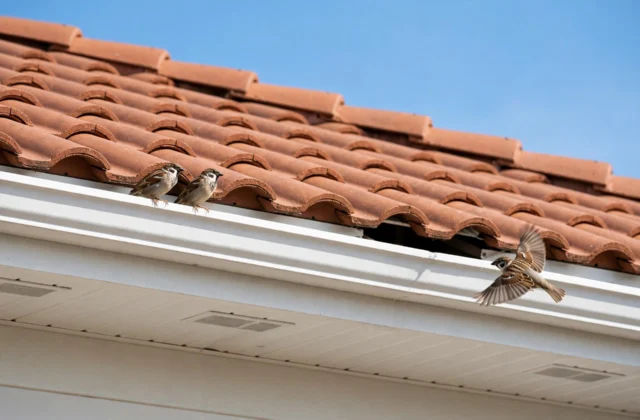
Pigeons gain warmth, good visibility, and protection from cats on flat ledges. Starlings and house sparrows squeeze into narrow gaps in eaves and vents. Each bird is seeking a particular benefit, so the method that works is the one that removes that specific reward.
The Law First: What You Must Not Do
Before you buy anything, know the law. As there are over 1,000 native bird species protected under the Migratory Bird Treaty Act in the United States, it is illegal to harm, capture, or destroy the active nests, eggs, or young of protected birds without a federal permit. That covers almost every native bird you will meet, from robins and blue jays to gulls and woodpeckers. If a nest contains eggs or young, do not disturb it. Once the young have fledged, you can remove the old nest and block the spot so it is not reused.
Two common birds are not protected by this act: European starlings and house sparrows. As they are introduced species, they are excluded from protection by the federal act. However, it is still recommended to treat these birds humanely. Check your local city or state rules to see what applies in your area. In all areas, however, it is important not to kill, trap, or poison birds to solve a nuisance problem. It is against the law to poison protected birds, and it can be dangerous to your pets, children, and other wildlife. The methods outlined in this guide move birds on without causing harm.
How to Pick the Right Method
Start with the bird and the place. A pigeon on a ledge needs a different answer from a flock of starlings in a cherry tree. Small birds can squeeze through gaps that are too small for pigeons, and large birds ignore spikes that stop small ones. A narrow ledge takes spikes, a wide flat roof needs netting or wires, and a garden needs netting or sprinklers.
The best solutions use a combination of two or three deterrents. A physical barrier stops the bird from landing, a scare device makes the spot feel unsafe, and a habitat fix removes the food or shelter that brought the bird in the first place. If only one deterrent is used, it will typically stop working in a few weeks as birds become accustomed to them. However, if two or three are used, they will be more effective, as the bird must overcome all of them at once. Spikes and netting have a higher initial cost, but will last for years. Tape and balloons have a very low initial cost, however will only last for weeks. Tape should be used for a single pigeon on a balcony. A colony under solar panels should be discouraged using netting, professionally fitted. For more ideas on getting rid of pesky birds, see this guide to how to get rid of pesky birds and this one on how to detract birds.
Bird Spikes
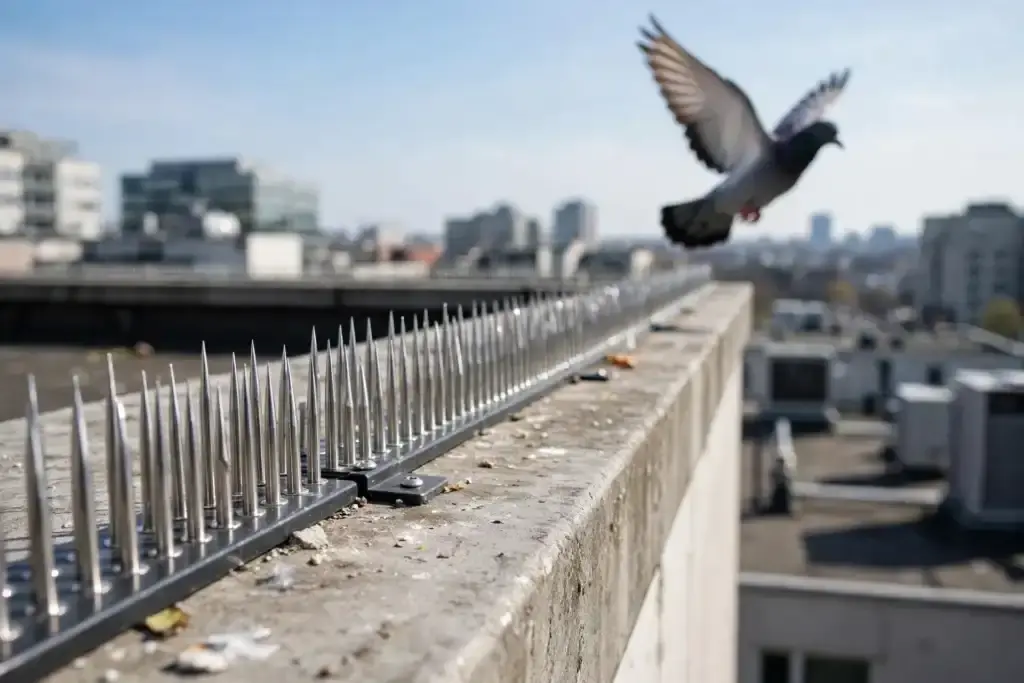
Bird spikes are a series of thin, blunt spikes that stick up from a ledge. They do not spear birds. They make it difficult for birds to land on the surface, so they move elsewhere. The stainless steel means they can last many years outside, and they suit ledges, signs, gutters, and windowsills. These are most effective against heavier birds such as pigeons and gulls, as they require a flat area to land. They are not so effective against small birds such as sparrows, as the birds may be able to sit in between the spikes.
Place spikes across the full width of the ledge, not just the middle, because birds will use any bare strip you leave. Clean the surface first, then attach the base with adhesive or screws. Check the spikes once a year and remove any leaves and debris that fall in between them, which can fill the gaps and turn the spikes into a platform.
Bird Netting
Bird netting is an effective solution for large areas. It is made from UV resistant polyethylene, and the standard mesh size is 3/4 inch, so it will prevent pigeons, starlings, and sparrows from getting in but still allows light and air to pass through. Bird netting is ideal for fruit trees, balconies, eaves, and the gap under solar panels. It is also the correct solution to stop birds entering a barn or warehouse opening and roosting on the beams.
Make sure that the net is tight. If it sags, the birds will be caught in it, which is very cruel and illegal for protected species. Attach the net to a frame or to hooks around the edge, pull it tight, and check it weekly in the first month, leaving no gaps at the corners.

Reflective Tape, Balloons, and Decoys
Reflective tape and ribbons flash in sunlight and move in the wind. Birds dislike the sudden light and motion, so they will avoid the area for a short period of time. This method is effective in vegetable gardens, patios, and balconies. The tape is cheap, easy to put up, and does not require any equipment. However, birds can get used to it in a few days or weeks. If this happens, birds will return to that area. To prevent this from happening, move the tape regularly (every few days) and combine it with another method, such as netting.
Scare balloons work the same way. They are large balloons printed with eye spots that look like a predator watching. Hang them where birds land, and move them every two or three days. Decoys such as plastic owls and hawks can be used in the same way. If you use a decoy, move it daily and pair it with sound or motion. However, on its own, a decoy is one of the weakest options in this guide.

Sound Devices
Sound devices play distress calls, predator sounds, or loud noises to push birds away. Distress calls are most effective, as they speak the bird’s own language. However, predator sounds, such as hawk calls, work for a while, then lose effect as birds learn that no hawk actually appears.
Ultrasonic devices are of limited value. Although they produce sounds that humans cannot hear, there is little evidence to suggest they effectively deter birds. As most birds can hear in a similar frequency range to humans, ultrasonic frequencies are not disturbing to them. Do not rely on an ultrasonic gadget alone. If you use sound at all, choose a device that plays real distress calls, move the speaker around, and use it with a barrier.
Taste Repellents
Taste deterrents can be applied as sprays or gels. The main active ingredient is methyl anthranilate, a compound found in grapes that birds dislike. When applied to grass, crops, or ledges, the birds that taste it will leave the area. The product is non-toxic. It will degrade in sunlight, so it needs reapplying after rain or every few weeks. Taste deterrents work best on lawns where geese graze and on crops where birds feed.
Gel repellents are a related idea. A sticky or tacky gel on a ledge makes landing unpleasant, so birds avoid it.
Motion Activated Sprinklers
A motion activated sprinkler releases a quick jet of water if a bird enters the sensor range. Birds dislike the sudden spray and the noise, and they learn to avoid the area. Sprinklers work well in gardens, on lawns, and around ponds, where geese and herons visit.
Place the sprinkler where birds land, and spray at a low height across the ground. Move the unit every week or two, as birds will learn the safe spots around a sprinkler in a fixed position. In winter, drain it and store it, or the water inside will freeze and crack the housing. A sprinkler alone will not stop pigeons on a roof, so pair it with spikes or netting for roof problems.

Habitat Fixes That Remove the Invitation
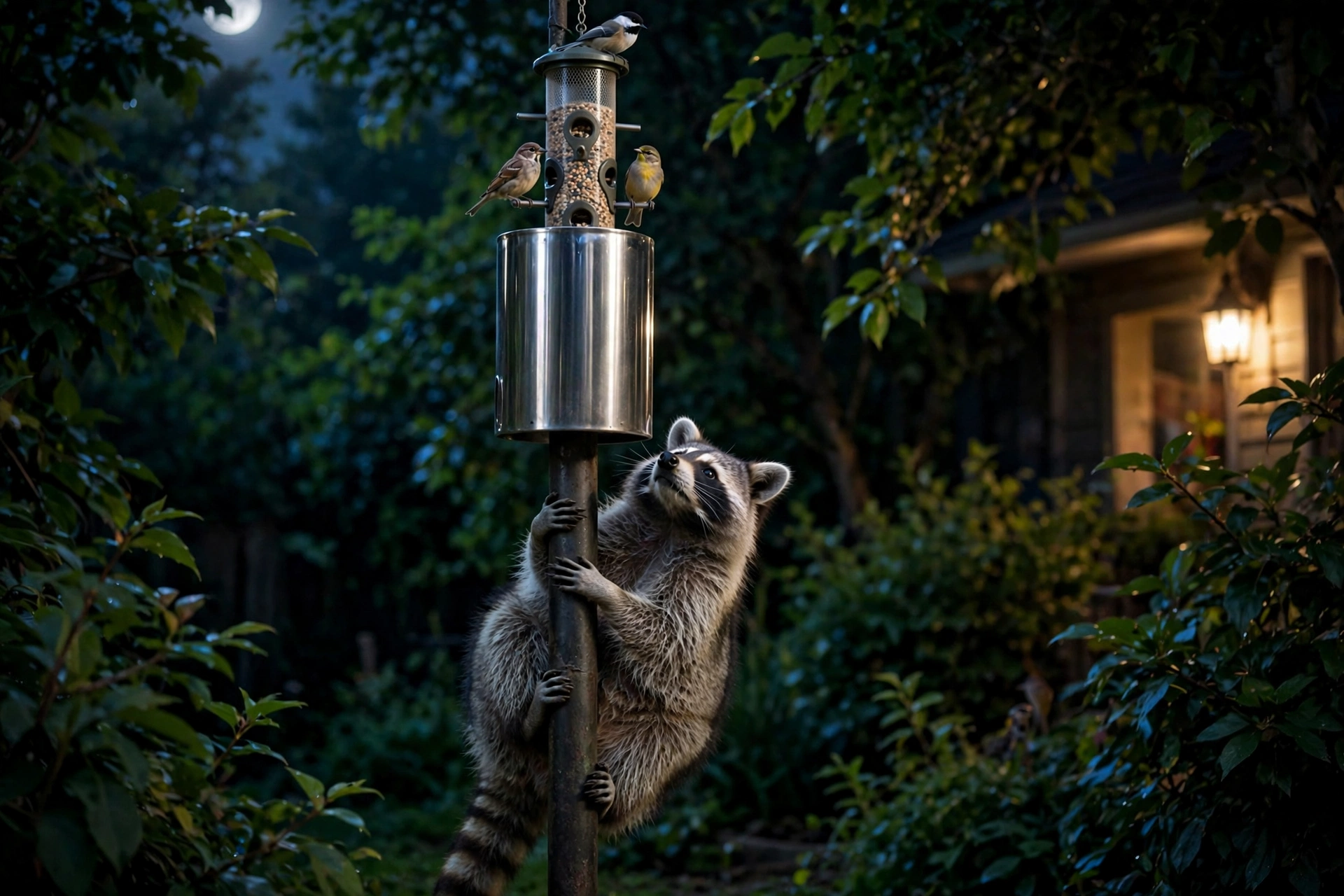
This is the cheapest option: remove what attracts the birds. Make sure to clear up any spilled seed from feeders daily, because spilled seed feeds pigeons, starlings, and rats. Store seed in sealed metal containers. Make sure that trash bin lids are firmly closed. Do not leave pet food outside. Remove any standing water from trays, buckets, and clogged gutters.
Block the shelter. Seal gaps under eaves, around vents, and behind fascia boards with wire mesh or metal flashing. Even a gap the size of a coin can allow a sparrow to get inside. Fit vent covers and chimney caps, and cut back any branches that overhang the roof. If woodpeckers are pecking at your house, read our guide on why woodpeckers peck at houses in fall to find the cause before you act. Habitat fixes take an afternoon and cost little, and they make every other method work better.
Where to Use Each Method
Roofs and Ledges
Pigeons and gulls love flat ledges. Flat areas can be protected using spikes, fitted across the full width, as the first choice. However, on wide flat roofs it is better to use tensioned wires or slope guards, as using spikes across a whole roof would be very expensive.
Gardens and Fruit Trees
Netting works well for fruit trees, kept taut and clear of the branches. Reflective tape can be used to give a quick boost while the fruit ripens. To protect your lawns and vegetable beds from ground feeding birds, motion activated sprinklers are useful. For feeders, the problem is often starlings and grackles crowding out smaller birds. Our guides on how to keep starlings away from bird feeders and how to keep grackles away from bird feeders cover feeder specific fixes in detail.
Balconies and Patios
As it is a small area, some simple measures will be sufficient. Netting across the open side is the most reliable option, with reflective tape and a decoy adding a scare layer. Remove food and water from the balcony, including pet bowls. Place spikes on the railing to stop pigeons perching.
Solar Panels
Warm, dry, and safe, the area beneath solar panels can make an ideal nesting place. Pigeons are the usual tenants. A solution to this problem is to install mesh or netting around the edge of the array to prevent birds getting underneath. It is best to have a professional installer do this.
Vents and Eaves
In order to prevent birds nesting in vents, under eaves, or in roof gaps, it is important to make sure that there are no active nests in place. If there are active nests, wait until the young have fledged. Once safe to do so, you can fit either wire mesh or a vent cover over the opening. Our guide on how to stop birds nesting in a roof walks through the timing and the repair in detail.
Barns and Warehouses
Large buildings need large answers. Netting across open doorways and under roof beams stops birds from flying in and roosting. In smaller areas, spikes can be used on beams and ledges. Sound devices playing distress calls can also be effective due to the confined nature of the area, meaning the sound will travel well.
Comparison: Which Method Fits Your Problem
| Method | Best for | Cost | How long it works |
|---|---|---|---|
| Bird spikes | Ledges, signs, gutters, pigeons and gulls | Medium | Years, with annual cleaning |
| Bird netting | Fruit trees, balconies, eaves, solar panels | Medium to high | Years, if kept taut |
| Reflective tape | Gardens, patios, balconies | Low | Days to weeks, birds habituate |
| Scare balloons and decoys | Gardens, patios | Low | Days to weeks unless moved |
| Sound devices | Barns, gardens, large open areas | Medium | Weeks, if sounds vary |
| Taste repellents | Lawns, crops, geese | Low to medium | Weeks, reapply after rain |
| Motion sprinklers | Lawns, gardens, ponds | Medium | Months, if moved regularly |
| Habitat fixes | Everywhere | Low | Permanent, if maintained |
What Does Not Work Long Term
Some fixes look good on day one and fail by week three. Knowing which ones saves you money and frustration.
- A single scare device left in one place. Birds test it, learn it is harmless, and return.
- A fake owl that never moves. Within days it is a perch, not a threat.
- Ultrasonic gadgets used alone. The evidence is weak, and most birds simply ignore them.
- Poison or traps. Poison is illegal for protected birds and dangerous to pets and other wildlife. Traps need a licence in most places and do not solve the reason birds came.
- Chasing birds away once. If the food, water, or shelter stays, new birds will replace the ones you scared off.
- Relying on one method alone. A barrier with no scare and no habitat fix leaves the bird free to test the barrier until it finds a way past.
Your Step by Step Plan
- Identify the bird. Watch for ten minutes at dawn or dusk and note the size, colour, sound, and landing spot.
- Find what attracts it. Look for food, water, and shelter, and check for an active nest before you touch anything.
- Pick two or three methods. Choose one barrier, one scare, and one habitat fix that fit the bird and the place.
- Install the barrier first. Spikes, netting, or mesh go up before any scare device, so the bird has nowhere safe to land.
- Check weekly. Move scare devices, tighten netting, clear debris from spikes, and clean up spilled seed. Adjust what is not working instead of adding more of the same.
Frequently Asked Questions
What is the best bird repellent?
There is no single best method. Netting and spikes last the longest. Tape, balloons, and sound fade fast unless you move them. The best plan is to combine a barrier, a scare device, and a habitat fix.
Is bird repellent legal?
In many places, humane methods such as spikes, netting, tape, and sprinklers are legal. However, it is illegal to harm protected birds, destroy active nests, or use poison under the Migratory Bird Treaty Act in the United States. Always check local rules before you act.
Do bird spikes hurt birds?
No. Bird spikes are blunt rods that make landing uncomfortable, not sharp points. Birds simply choose another spot. Ensure the spikes are kept clean so that leaves do not fill the gaps and turn them into a platform.
How do I keep birds off my balcony?
Fit netting across the open side, add spikes to the railing, and remove food and water, including pet bowls. Reflective tape acts as a temporary deterrent. Clean droppings with gloves and a mask.
What keeps birds away from fruit trees?
The best option is to place taut netting over the whole tree. Ensure that the net stays clear of the branches so birds cannot peck fruit through it, and attach reflective tape while the fruit ripens.
Do fake owls work?
Only for a few days. Birds will quickly learn that a decoy never moves and never attacks. To encourage birds to avoid the area, move the decoy daily and pair it with sound or motion, or skip it and use netting or spikes instead.
Can I remove a bird nest?
Only when the nest is empty. If there are eggs or chicks in the nest, wait until the young have fledged and the nest is abandoned. Remove the old nest and block the entry to prevent reuse. This is the law for protected birds.
Why do birds keep coming back after I scare them?
Because the reward is still there, food, water, and shelter bring birds back once the scare fades. If you remove the incentive, add a barrier, and keep the scare moving, the birds will move elsewhere.
Conclusion
Keeping birds away is not about one clever gadget. To deter birds from your roof, garden, or balcony, make the place less appealing than alternative places. Find out which bird is present and what draws it in. Put in a suitable barrier, and to make it more effective, add a scare device you will actually move. Remove the attractants (food, water, and shelter). Make sure that you respect the law, and never touch an active nest. To begin with, clear up any spilled seed, and cover the trash. Block any gaps under the eaves. Put in spikes or netting where birds land most frequently, and place a movable scare device you will move every few days. Check your setup weekly in the first month, and change anything that is not working. The goal is a yard that birds pass over without a second thought, and that takes a little patience, not force.