Introduction
The crow landed on your fence and looked at you inquisitively. Crows are highly intelligent and are often considered the smartest birds in North America. They can recognize faces, solve puzzles and use tools. However, most people refer to any black bird as a crow.
There are four different species of crow in North America. They can be easily identified due to their differences in size, voice and habitat. This article will give you an overview of all four species of crow: the American crow, fish crow, northwestern crow, and Tamaulipas crow.
You will also discover why crows are so interesting, including their intelligence, sounds, roosts, and diet. You will be able to identify a crow from a raven at a glance and understand why the crow is looking back at you.
What Makes a Crow a Crow
Crows are part of the Corvidae family which contains over 120 species worldwide. This family includes the jays, magpies and nutcrackers. In the genus Corvus, there are over 40 species, including ravens, rooks, jackdaws, and crows. There are 31 crow species worldwide.
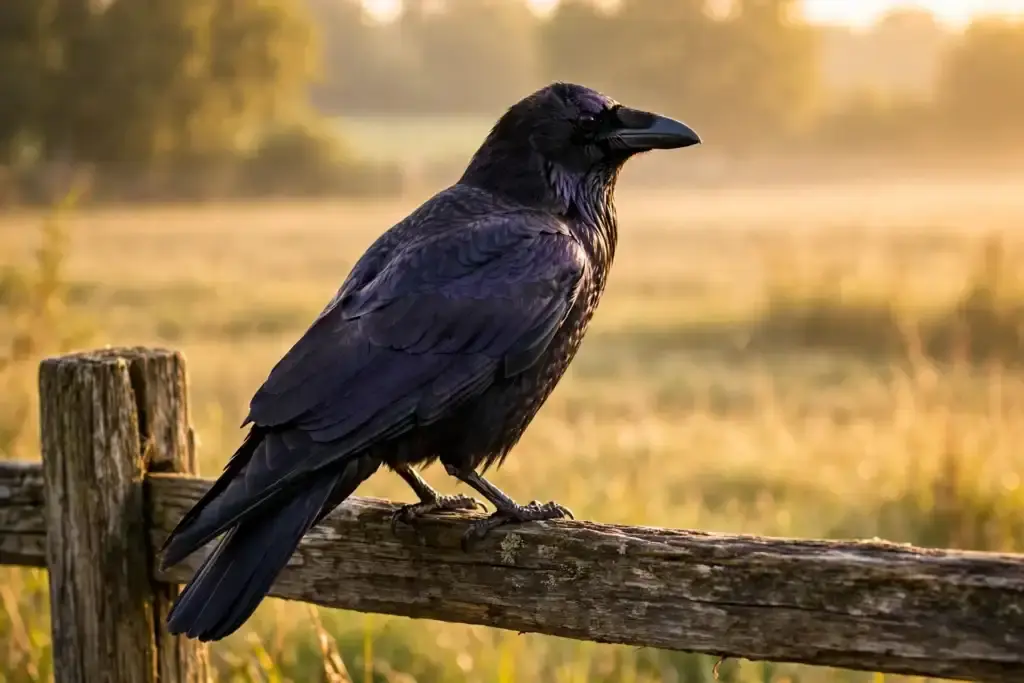
All crows have the same basic features. They have a stout, strong bill which is slightly curved, built for probing, tearing, and carrying food. Their bodies are sturdy, with broad wings and legs strong enough for walking on the ground. They are almost always black, though some species show a gray collar or a brown wash.
Crows are highly social, intelligent and loud creatures. They live in family groups and are very adaptable. They can thrive in forests, farms, suburbs and cities. No other bird in North America has the combination of black plumage, a heavy bill, and such obvious intelligence in quite the same way.
The Four Crow Species of North America
The American Ornithologists’ Union recognizes four crow species in North America. The most familiar is the American crow, which is found throughout the continent. The fish crow is found in the southeast, usually near water. The northwestern crow can be found along the Pacific coast. Lastly, the rare visitor from Mexico is the Tamaulipas crow, formerly called the Mexican crow.
These crows are all closely related, and two are extremely similar to each other. Voice is often the best clue, and habitat is the next best. The table later in this guide puts all four side by side so you can compare them in the field.
American Crow
The American crow (Corvus brachyrhynchos) is the most well known of crows in North America. The bird is between 17 and 21 inches long and has a wingspan of 33 to 39 inches. They weigh around a pound. The entire bird is black including the bill, legs and feet, however if exposed to bright light they can show off their violet iridescence.
The American crow has a fan-shaped tail and a large black curved bill. Its call is the familiar ‘caw caw’, a harsh, carrying sound that most people recognize at once. They forage on the ground with a confident stride. American crows are omnivores and will eat almost anything they can find.
They are widely distributed from Canada to Mexico. They live in woodlands, farmland, suburbs and cities. In the winter, they form large communal roosts, often containing thousands of birds. American crows can live up to 20 years in the wild, meaning they can learn a great deal about their territory and the people within it.
Habitat and Range
American crows are found in almost every habitat in North America except deep desert and high mountains. They nest in trees in woodlands, parks, and suburbs. They forage in fields, lawns, parking lots, and along roadsides. They are very common in cities, where food is plentiful and predators are few.
Their range stretches from Canada to Mexico, and they are present year round in most of it. In the extreme north, some birds move south in winter, but many stay put, gathering in roosts and feeding together through the cold months.
Family Life
American crows are family birds. The young often stay with their parents for up to a year to help raise the next brood. The whole family will defend a territory. The young learn where to find food and how to avoid danger by observing the adults.
Usually they will stay together for life. Both parents will feed the chicks. The young learn quickly, as it is vital to their survival to have good memory and learning skills. If a crow can remember where a safe feeding spot is, where a dangerous dog is, and who their kind neighbor is, then they will have an advantage.
Fish Crow
The fish crow, Corvus ossifragus, is a little smaller than the American crow and has an entirely glossy black plumage. It has a shorter and more rounded bill than the American crow, but that difference is hard to see unless the two birds stand side by side.
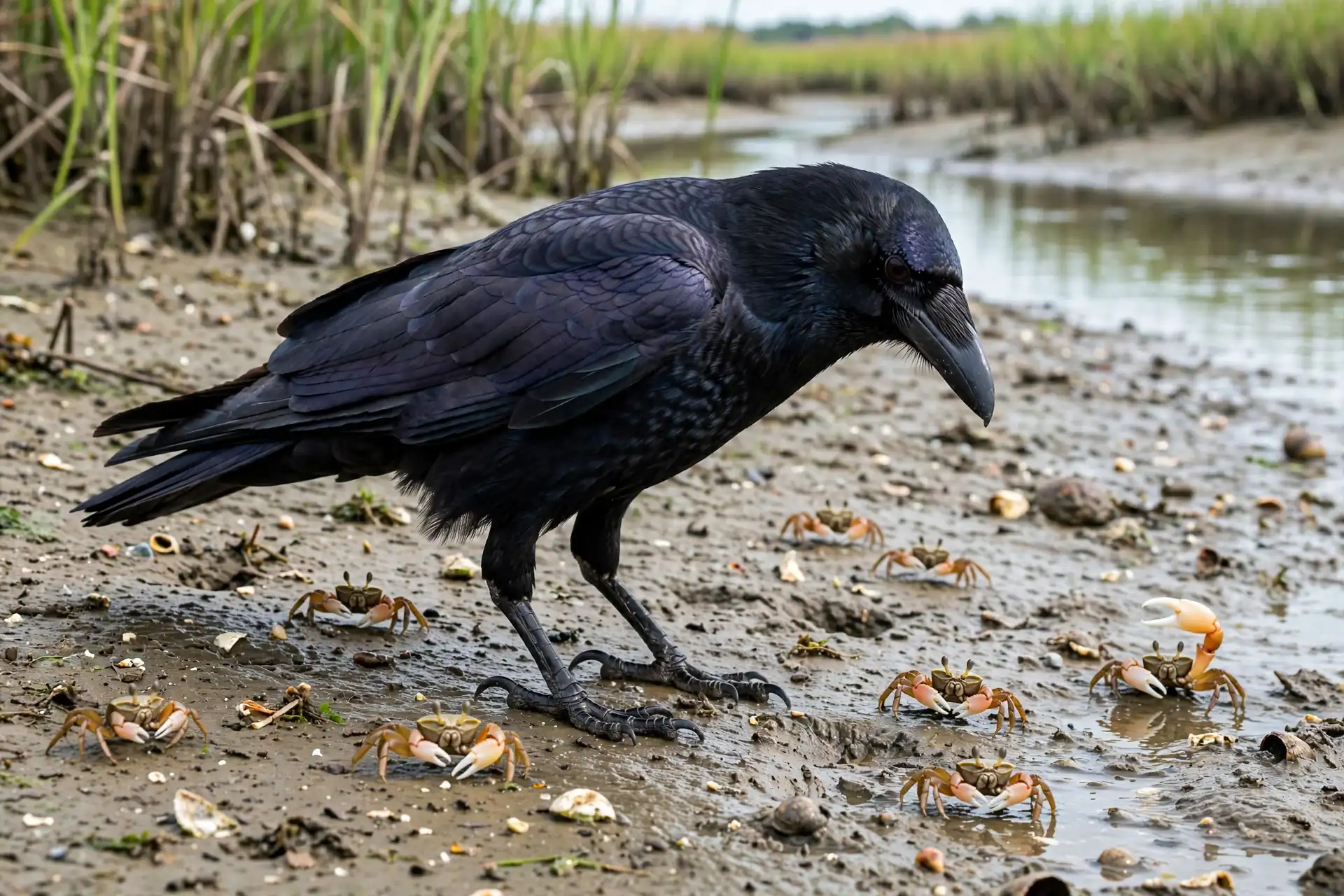
The fish crow is found along coastlines and water throughout the southeastern United States. They can be commonly found around marshes, riversides, beaches and coastal towns. They rarely stray far from water. These crows have a diet of fish, crabs, mollusks and other aquatic prey, which they pick from mudflats and shallow water.
The best way to identify them is by their call. They have a nasal call that sounds like ‘uh-uh’ or ‘car-car’. This is higher pitched than the American crow’s call. If you hear a crow that sounds like it has a cold and you’re near the coast in the southeast then it’s likely to be a fish crow.
Northwestern Crow
The northwestern crow (Corvus caurinus) lives along the Pacific coast of North America. Previously it was thought to be the same species as the American crow. However, it is now recognized as a distinct species. Nevertheless, these two species are very similar and can be very difficult to tell apart.
Northwestern crows are found along rocky shores, beaches and coastal forests. Their diet consists of shellfish, crabs and other food from the tide line. They are a bird of the coast, and they rarely wander far inland.
Tamaulipas Crow
The Tamaulipas crow (Corvus imparatus), also known as the Mexican crow, is the rarest crow in North America. This species is mainly found in the northeast of Mexico but can occasionally be found in southern Texas, where lucky birders may find it.
The Tamaulipas crow is smaller than the American crow, with a shorter bill, and has a higher, more nasal call. This species lives in open country, thorn scrub and farmland. It is far less common than its northern cousins.
Crow Species Comparison Table
| Species | Size | Field marks | Call | Habitat |
|---|---|---|---|---|
| American crow | 17 to 21 inches, wingspan 33 to 39 inches | All black, violet iridescence, fan-shaped tail, large curved bill | Familiar “caw caw” | Canada to Mexico, woodlands, farms, suburbs, cities |
| Fish crow | Slightly smaller than American crow | Glossy black, shorter more rounded bill | Nasal “uh-uh” or “car-car”, higher pitched | Southeastern United States, coastlines and near water |
| Northwestern crow | Similar to American crow | Almost identical to American crow | Similar to American crow | Pacific coast, rocky shores and beaches |
| Tamaulipas crow | Smaller than American crow | Shorter bill, smaller size | Higher, more nasal call | Northeastern Mexico, rare in southern Texas |
Crow Intelligence
Crows are some of the smartest birds in the world. They can use tools, for example they will pick up sticks and use them to probe for insects or drop nuts onto roads so cars can crack them open. They can also solve multi-step problems that stump many mammals.
They can recognize human faces. If a crow has been threatened by a person they will remember their face for years to come and warn other crows about that person. However, they can also learn to trust humans that feed them and will visit those people again and again.
Crows can plan for the future. They will hide food in caches and remember where they have hidden it so they can go back days later and dig it up. They will also observe other crows and steal their food if they go away. This is not random behavior. It is planning, memory, and deception.
Crows teach their young a range of learned skills. The young will learn what foods are safe, who to stay away from and how to use tools by observing their parents. This passing of knowledge from one generation to the next is rare in birds, and it is one reason crows are so successful.
Crows have good memories and can count up to three or four. In tests they have shown they can differentiate between small numbers of objects and can remember the outcome of previous encounters. Their brains are large for their body size, and the part of the brain used for learning and problem solving is especially well developed.
Calls and Communication
Crows are very vocal, and their calls carry a lot of information. They make a variety of noises, including the common ‘caw caw’. They have calls for alarm, for food, for gathering, and for mobbing a predator.
An alarm call sends every crow in the area into the air, calling loudly and circling the danger. A food call brings family members to a good feeding spot. A soft, rattling call is used between mates and family members at close range. Young crows beg with a high, whining call that is easy to recognize.
Crows can also imitate. They can imitate other birds, and captive crows have been known to imitate human words. Wild crows can sometimes imitate hawk calls, which may scare other birds away from a feeding spot. Their communication is flexible, and it changes with the situation.
Crow Flight
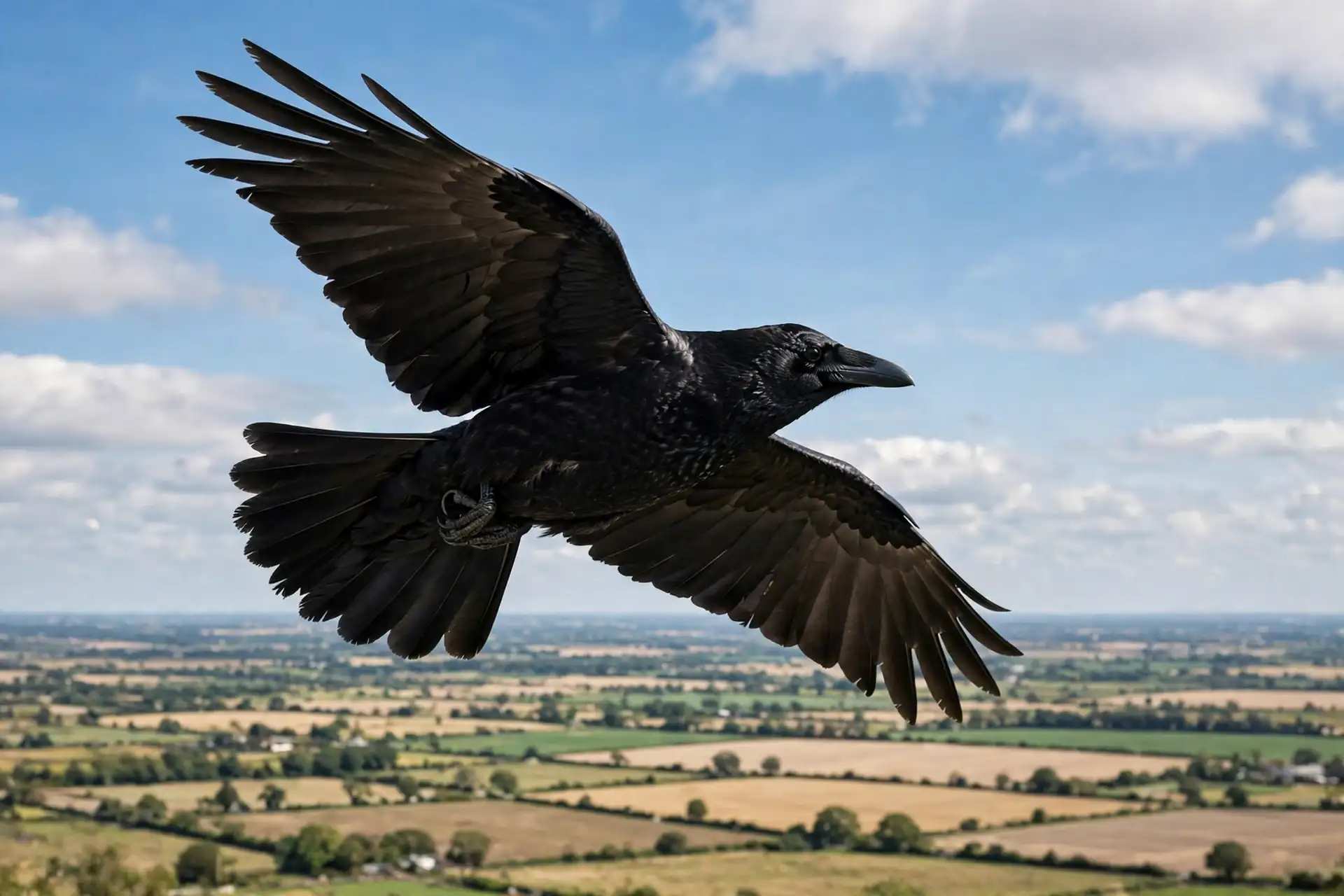
Crows have steady, deliberate wingbeats and rarely glide for long. Their wings are broad and rounded, and their tails are fan-shaped, which makes them very controllable at low speeds. They have regular wingbeats followed by short glides.
When flying, a crow appears quite heavy and purposeful. They do not soar like a raven or dart and twist the way a smaller bird does. When crossing a field, they will fly in a straight line with regular wingbeats and often call as they go.
They are strong fliers and can cover large distances in one day. A crow may fly several miles from its roost to a field, feed all day, and fly back at dusk. Their flight is built for commuting, not for show.
Communal Winter Roosts
During the winter months, American crows will congregate in big roosts, sometimes with thousands of birds. As the sun begins to go down, crows will fly in from all over and make a lot of noise while settling in the bare trees. A roost can hold so many birds that the branches look black.
By roosting in groups they can keep warm and are protected. With so many eyes they can easily spot any owls or other predators. If a crow finds food, the rest can follow the next morning. Roosts are also social. This gives young crows a chance to find mates, lets families come together, and passes on information about food.
They can be quite loud and messy. Sometimes towns will try to relocate them but they will usually return or go to a nearby grove and start again. A winter roost is one of the great bird spectacles in North America and is well worth seeing at least once.

What Crows Eat
Crows are omnivorous, opportunistic feeders, and will eat just about anything. They eat a wide variety of foods, including insects, worms, small mammals, eggs, nestlings, carrion, fruit, nuts, seeds, and grain. They forage on the ground, picking through leaf litter, lawns, and fields, and they visit garbage, compost, and roadkill.
Fish crows will eat fish, crabs, and mollusks. Northwestern crows eat shellfish and crabs from the tide line. American crows will eat acorns and other nuts in fall, and they cache nuts for winter, hiding them in soil and leaf litter.
Crows are also opportunistic feeders. They will raid other birds’ nests and steal food from gulls. They will also follow predators to scavenge leftovers. Their flexible diet is a big reason they thrive in cities, where they eat discarded food, pet food, and anything else they can carry off.
Crow vs Raven
Despite their close relation, many birdwatchers struggle to tell these two birds apart. Ravens are larger with deeper croaks and wedge-shaped tails. They also often glide and soar using thermals. Crows are smaller, with fan-shaped tails, higher-pitched caws, and steady wingbeats with little gliding.
Ravens have a heavier bill and messy throat feathers. Crows have a cleaner look with a slimmer bill and smoother throat. Ravens soar and tumble in flight, whereas crows flap steadily in a straight line. For the full side-by-side guide, see our crow vs raven identification guide.
Do Crows Migrate
Most American crows do not migrate far. They can be seen throughout their range (from Canada to Mexico) year-round. In the far north, some birds move south in winter, but many stay, gathering in roosts and feeding together through the cold.
Fish crows and northwestern crows are also mostly resident, staying in their coastal ranges year-round. Tamaulipas crow will also stay in Mexico and southern Texas. For the full timing and routes, see our guide on do crows migrate.
Why Crows Gather and Caw
If you hear a group of crows cawing loudly in a tree, they are likely mobbing a predator. Crows will gather around owls, hawks and other threats and caw and dive at them until they leave. This is called mobbing and one of the loudest things crows do.
Crows will also gather and caw at their roosts, food and funerals. When a crow dies, other crows will gather around the body, calling loudly. Scientists think this is how crows learn about danger, as they can see a dead crow and remember where it was. For the full story, read our guide on why do crows caw.
Crows are some of the smartest birds, and their social behavior contributes to this. To learn how smart they really are, see our guide on how smart are crows.
How to Watch Crows
Crows can be easy to observe as they are so common. They are also very noisy and can be seen during the day. They can often be seen in parks, fields, parking lots, and roadsides, walking on the ground or perched on wires and fences.
Take binoculars to look at their tail shape and bill. They have a distinctive call, so listen out for it. The best way to tell a fish crow from an American crow is by their call. In the winter, visit a roost at dusk to see thousands of birds flying in from all directions.
If you are patient with crows, they will reward you. A crow that sees you often may start to recognize you, and it may even leave you a small gift. This could be a shiny button or piece of glass, left where you will find it.
Frequently Asked Questions
How many crow species are in North America?
The American Ornithologists’ Union recognizes four crow species in North America: the American crow, the fish crow, the northwestern crow, and the Tamaulipas crow.
What is the difference between a crow and a raven?
Ravens are larger, with deeper croaks, wedge-shaped tails, and a habit of gliding and soaring. Crows are smaller, with fan-shaped tails, higher-pitched caws, and steady wingbeats with little gliding.
Are crows really that smart?
Yes. They can use tools, recognize human faces, remember faces for years, plan for the future, teach learned behaviors to their offspring, solve puzzles, and can count up to three or four.
How long do American crows live?
American crows can live up to 20 years in the wild. They often live a long life once they survive their first year. This means they have plenty of time to learn about their territory and the people in it.
Do crows migrate?
Most American crows do not migrate far. They stay year round across most of their range, and only birds in the far north move south in winter.
Why do crows gather in large roosts?
Crows gather in communal winter roosts for warmth, safety, and social contact. A large group has many eyes watching for predators, and information about food spreads through the flock.
What do crows eat?
Crows are omnivorous. They eat insects, worms, small mammals, eggs, nestlings, carrion, fruit, nuts, seeds, and grain, plus fish, crabs, and mollusks for coastal species.
How can I tell a fish crow from an American crow?
Listen to the call. The fish crow makes a nasal ‘uh-uh’ or ‘car-car’ sound, higher pitched than the American crow’s familiar ‘caw caw’. They are extremely difficult to identify visually, so the best way to tell them apart is by their voice.
Conclusion
There are four crow species that live in North America, but the most common one you will encounter is the American crow. This bird is 17 to 21 inches long, with all-black feathers that have a violet sheen, a fan-shaped tail, and a familiar caw.
The fish crow is smaller, with a higher pitch, the northwestern crow lives along the Pacific coast, and the Tamaulipas crow is a rare visitor from Mexico. All four of these birds are part of a family that includes over 120 species. They are all intelligent, which is what crows are known for.
They use tools, have excellent memories for faces, can plan, and teach their young. Learn their calls, observe their roosts at dusk, and take a second look. The bird on the fence is not just a black bird. It is watching you back, and it will remember you.
Sources and Further Reading
The facts in this guide were checked against these authoritative sources: