
Introduction
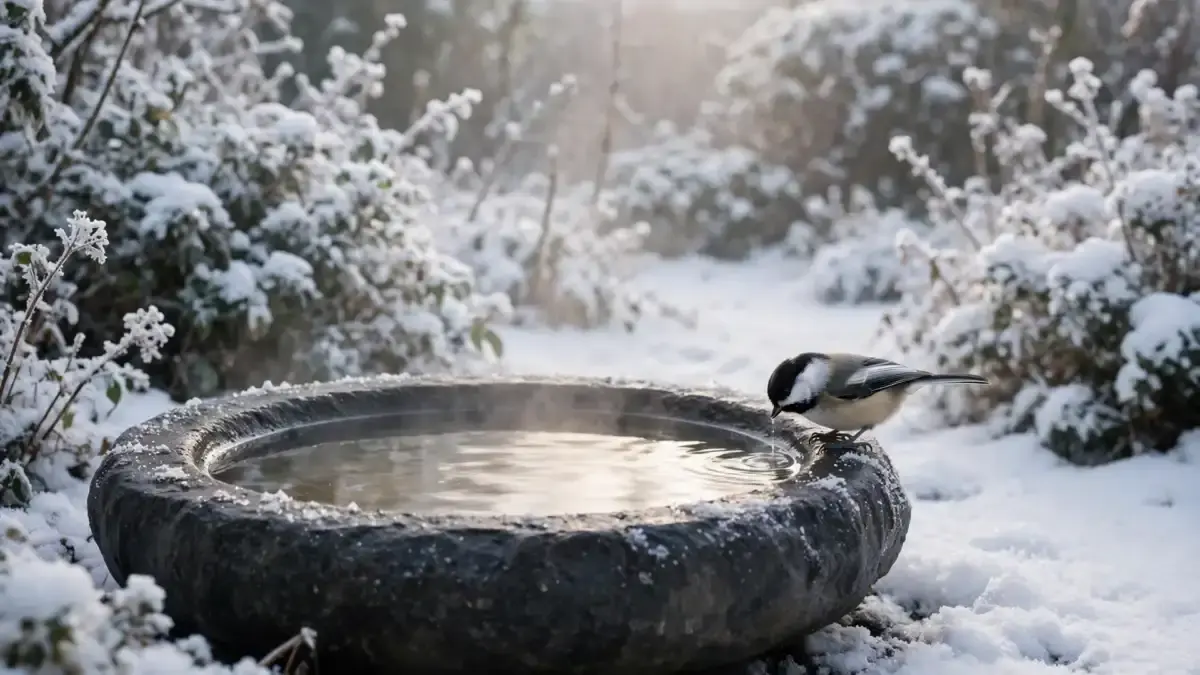
A heated bird bath means that there will still be liquid water to provide the birds with during a cold morning when all of the other basins have frozen over. They will still need water to drink and to keep their feathers in good condition. A thin layer of ice will not help them and can leave an unused bird bath frozen solid for weeks.
The answer is using heat. The bird bath will not be hot. It will simply keep the water at just above freezing point so that your birds can have a drink and bath. This guide will show you how it works, what type you should choose for your garden, how to safely install one, and when it is the only solution that will work overnight.
Quick Answer
A heated bird bath is a bird bath with built-in thermostatic heating, or a plain bath with a drop-in de-icer made for bird baths. The heater comes on when the water starts to freeze and then turns off again when the water has warmed up a little. The goal is liquid water, not warm water.
Below about 25F (approx -4C), there’s no alternative to heating. While there are other methods that may slow down freezing for an hour or two, they will not keep it from freezing overnight. If you have regular sub-zero temperatures during winter, then the only reliable option is to heat the bird bath.
What Is a Heated Bird Bath
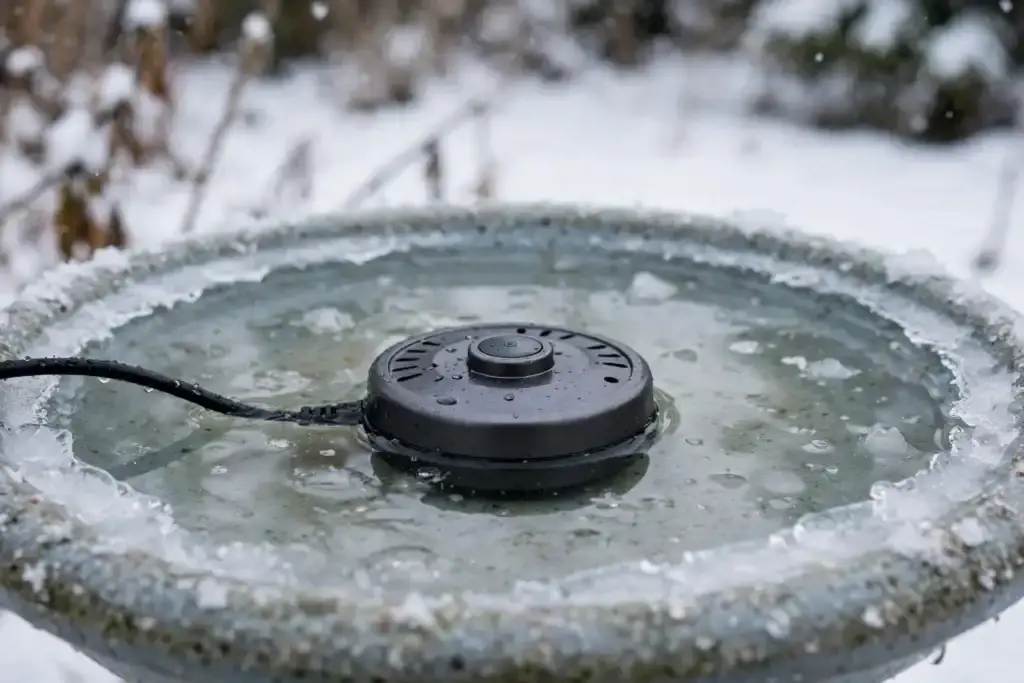
A heated bird bath is a shallow basin that stays ice free because a small electric heater warms the water just enough to stop it freezing. There are two options of heated bird baths: either the heater can be built into the basin or pedestal of the bath, or you can use a de-icer that can be added to an existing bird bath. Both will hold a small patch of open water through a frost. Only use a heater that is specifically for bird baths, or that has been recommended by the manufacturer.
How a Heated Bird Bath Works
A heated bird bath provides a little warmth to the water, only when the water is close to freezing. This is done by having a heater inside or underneath the basin. A thermostat is also included, so the heater will only turn on when the water is starting to freeze. Once the water has warmed up slightly above freezing point, the heater will turn off.
This on and off cycle is the key point: the heater does not always run and will not heat the water up to a warm temperature. This will keep the water at the edge of freezing, but still liquid so the birds can use it. Most good heaters use 50 to 150 watts, and because they are thermostatic, they will only run when the water is near freezing, so they use very little energy.
The Thermostat Does the Work
The thermostat senses water temperature. The thermostat will switch the heater on when the water is about to freeze. It will also switch the heater off when the water warms slightly. When you shop, look for three things: a thermostat, a safety listing from a recognized testing laboratory, and a cord rated for outdoor use.
The Goal Is Liquid Water, Not Warm Water
Birds do not need warm water. They need liquid water. Warm water will cool down quickly in the cold air and can make the little bird cold when they take a bath. Liquid water just above freezing is the right target. If the water feels warm to your hand on a cold day, then either the heater is too hot or there is no thermostat.
Heated Bath Types Compared
There are three main options available. Either fit a bath with a built-in heater, fit a drop-in de-icer into your existing bath, or go for a no-power option. The table below compares these options on the key factors for real winter use.
| Feature | Built-in heated bath | Drop-in de-icer | No-power methods |
|---|---|---|---|
| How it works | Heater built in, thermostat included | Small heater in your own basin | Sun, dark basin, or water changes |
| Open overnight below 25F | Yes | Yes, if sized for the basin | No |
| Cost to buy | Higher, one complete unit | Lower, heater only | Very low or free |
| Ease of setup | Place, fill, plug in | Place in basin, plug in | Easy, but needs daily work |
| Energy use | Low, runs near freezing only | Low, runs near freezing only | None |
| Best for | A new bath | A bath you already like | Mild frosts only |
The easiest system for a complete new bath is the built-in type. If you already have a good basin, then the easiest one to install is the drop-in type. The no-power methods have a role to play, but on a sunny day a dark basin may hold water open for an hour. If it is a cold night below about 25F, then neither the sunlight nor a floating ball will hold water open.
Do Birds Really Need Water in Winter
Yes, birds require water every day in winter to drink and to keep their feathers clean. This means that the feathers can function well, as they are clean and dry. Birds may become less insulated if they cannot clean their feathers. Drinking water is just as important. If they don’t have enough water, they will have to use more energy to keep warm.
Melting snow uses up body heat. If a bird is eating snow, then it will need to heat it up inside its body first. This can be a bit of a struggle for small birds during cold nights. It can be difficult to find water, because feeders stay full while ponds, puddles, and basins freeze solid. If you are unsure how cold is too cold in your garden, read How Cold Is Too Cold for Birds? Limits, Warning Signs, and How to Help to see what the limits are, the signs to look out for, and how you can help, before you decide when to switch the heater on.
When You Need Heat, and When You Do Not
You need a heat source when night temperatures stay below freezing for days at a time. The bath will freeze solid by morning. You will need it most during the coldest part of winter, when ponds and puddles are frozen and there is no open water for the birds to drink from.
You will need heat sooner if the garden is open and breezy, or if there is shade around the bath. Wind and shade cool water fast. If it is a mild winter, or where frosts are short and rare, you may not need to heat. Below about 25F, heating is the only option that works through the night. Observe your bath for a week to see when it freezes.
How to Choose a Heated Bird Bath
Choose the basin, then heater and cord. The basin needs to be shallow, safe for small birds and have gently sloping sides, like a puddle in the rain. The water should be 1 to 2 inches deep at the edges, and the maximum depth should be no more than 2 inches.
Check the heater. If it’s a built-in heater, then it should have a thermostat and a safety listing. The de-icer should be a drop-in one designed for bird baths, not for ponds or aquariums. Don’t use an aquarium heater in your outside bird bath unless the manufacturer explicitly rates that model for outdoor, shallow-water use. A good place to see the variety of models available is this list of the best heated bird baths.
Checklist Before You Buy
- Safety first: Thermostat, safety listing, and outdoor-rated cord.
- Basin depth: Water 1 to 2 inches deep at the edges, no more than 2 inches at the deepest point.
- Basin size: Wide enough for two or three small birds at once.
- Heater size: Most good heaters use 50 to 150 watts.
- Cord length: Long enough to reach a GFCI-protected outdoor outlet.
- Cleaning: Basin lifts off or tips easily for scrubbing.
How to Set Up a Heated Bird Bath Safely
Set the bath up in daylight. Do the electrical checks first, before you fill the basin.
- Step 1: Choose a spot in sun, near shrubs for cover and preening, about 3 feet off the ground where practical, and away from ground predators. Keep it close to an outdoor outlet to keep the cord short.
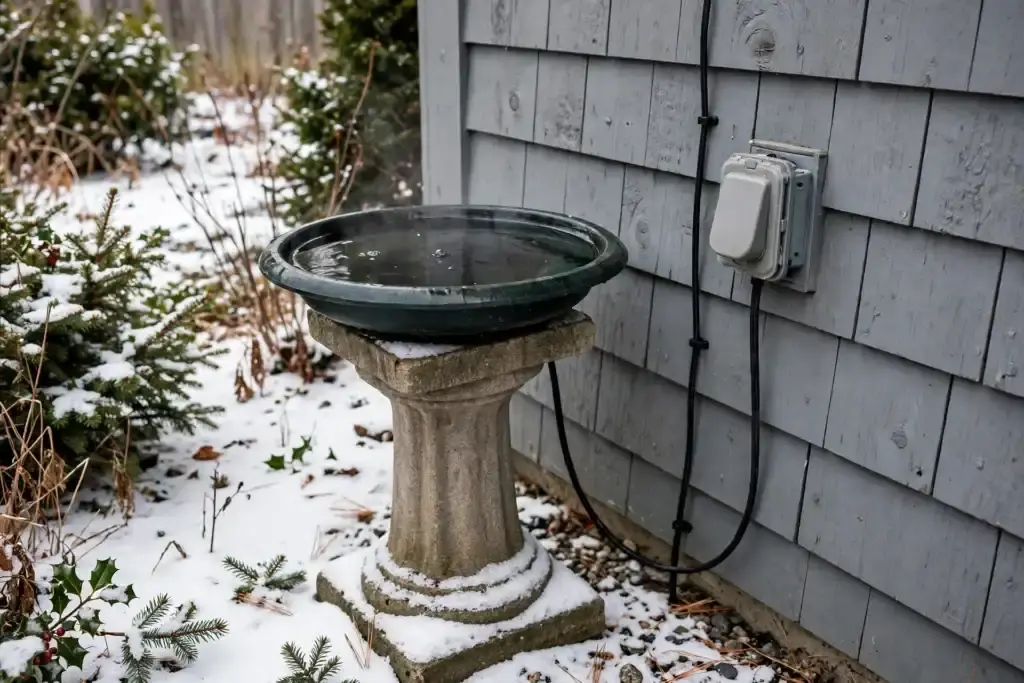
- Step 2: Check the outlet. Use a GFCI-protected outdoor outlet. If your outlet is not GFCI protected, do not use it for a heated bath until it is upgraded.
- Step 3: Set the bath level, so water stays even across the basin.
- Step 4: Place the heater. For a drop-in de-icer, place it flat in the basin, with the cord over the rim and away from where birds land.
- Step 5: Route the cord. Use an outdoor-rated extension cord only if you must, as short as possible. Keep the connection off the ground and out of puddles, and route the cord so birds cannot perch on the plug.
- Step 6: Fill the basin with clean water, 1 to 2 inches deep at the edges, and no more than 2 inches at the deepest point. Plug in the heater.
- Step 7: Watch the bath for the first cold night. Check in the morning that the water is liquid, not frozen and not warm. If the water is frozen, the heater may be too small, or the cord may not be live. If the water is warm, unplug the heater and check it.
Cornell Lab recommends thermostatically controlled heated bird baths or immersion heaters intended for bird baths, with electrical equipment through GFCI protection.
GFCI Safety in Plain Words
A GFCI outlet will shut off the power in a fraction of a second if it detects any faults, such as water getting into the wiring. Look for a test button and reset button on the outlet to confirm that it is GFCI protected. If you’re unsure, ask an electrician to confirm it is GFCI protected before plugging your heated bath into it.
Do not use an indoor outlet with a cord through a window, and do not use a damaged cord. If your cord is damaged, for example has a cut, a crack, or exposed wire, replace it. Do not tape it and use it. Ensure your connection is kept dry and off the ground. Route your cord down the back of the pedestal, away from the basin edge.
Best Depth and Shape
The depth of the basin is more important than the size. Small birds need a shallow basin to drink from and a gently sloping basin to walk in and out. If you have a basin with a deep center and steep edges, it can easily trap a small bird. The basin should be 1 to 2 inches deep at the edges with a maximum depth of 2 inches. The basin should have gentle sloping sides like a puddle of rain water.
Place a flat stone at the edge of the basin if it is smooth. This will give birds something to stand on without slipping. Keep the stone clean. Do not use a stone that causes the water to be more than 2 inches deep.
Where to Place a Heated Bird Bath
Put your bath in sun so the birds can sun themselves after a bath. Put it among some shrubs so they have somewhere to hide and preen, and can fly to a nearby branch after drinking. Don’t put it too far in a thicket, as a cat may hide and wait there.
If possible, place the bath around 3 feet off the ground to prevent access by ground-based predators. Make sure it is not placed near any feeders. If seed gets into the water, it can get damp and quickly go moldy, causing the water to become dirty. If there is damp or moldy seed near the feeder, it is a separate feeder issue, so do not confuse it with bath cleaning.
Cleaning a Heated Bird Bath in Winter
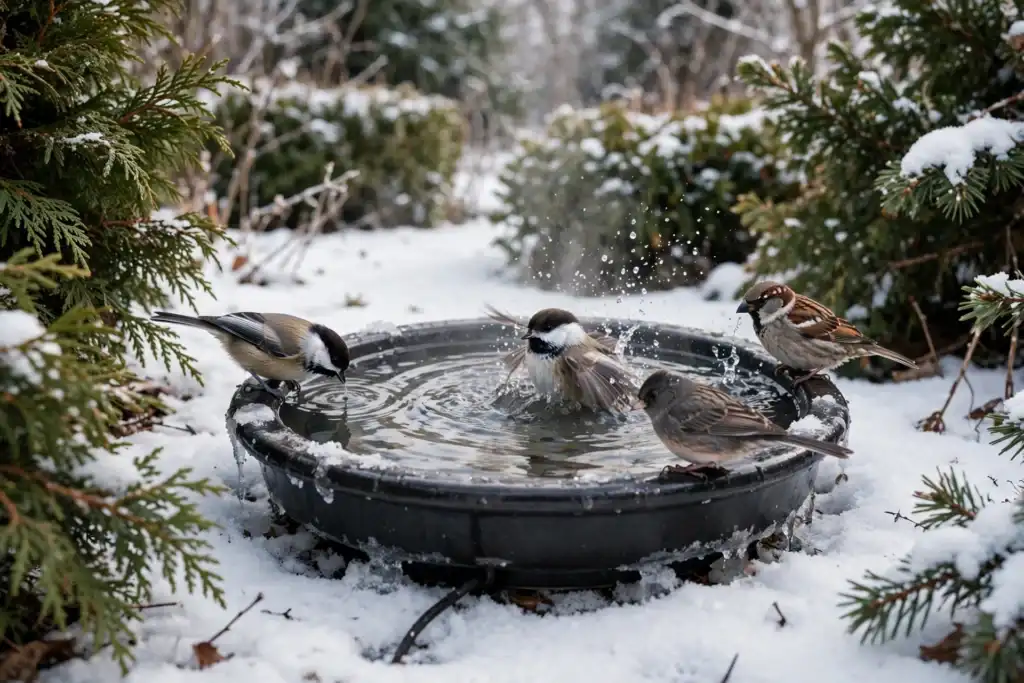
Clean the bath frequently in winter, even when the water looks clear. In winter, birds will flock to your bath, which can cause a buildup of mess and germs fast if there are lots of birds in the bath. Empty the basin and give it a good scrub with a stiff brush. Rinse thoroughly before you refill it. Do not use soap unless it is specified as safe to do so by the manufacturer, and rinse well if you do.
Always unplug the heater before cleaning. If the heater has been on, then leave it to cool down first. Do not pull a hot heater out of cold water, or use a harsh brush to scrub. Simply wipe it down gently, and check for any damage to the cord. For a full walkthrough of winter water care, see this guide to keeping a bird bath ice free in winter.
Refilling and Daily Care
A heated bath will still need topping up. The heater does not replace water lost to evaporation and splashing. Top up the bath each morning with clean, fresh water. Do not let the water level get too low so that you expose the heater. A heater that runs dry can fail. Make sure the water is deep enough to cover the heater but not too deep for the birds.
Running Costs and Energy Use
Most of these baths are very economical to run. The heater only runs near freezing. Most good heaters use 50 to 150 watts. A thermostatically controlled heater will only run when the water is getting close to freezing. On a mild day, the heater may not run at all. To keep costs down, put your bath in the sun, out of the wind, and use a basin of a reasonable size.
What Never to Put in the Water
Do not add any chemicals to a bird bath, such as antifreeze, salt, glycerin, alcohol, sugar, or any other additive. Birds may drink treated water, and even a small amount of a chemical can harm them. Antifreeze is poisonous, salt can cause dehydration, and sugar can cause germs to grow in the water. The only safe way to make sure the water does not freeze is to use a bird bath heater.
Don’t oil the basin to stop ice, or add oil to the water. Oil can cause feathers to become greasy and lose their insulating properties. For more on safe winter water, see this guide to giving birds water, not ice, in winter.
Common Mistakes to Avoid
- Mistake 1: Using a deep basin. Keep water 1 to 2 inches deep at the edges, no more than 2 inches at the deepest point.
- Mistake 2: Using a heater without a thermostat. A thermostat saves power and stops the water getting warm.
- Mistake 3: Using an aquarium heater outdoors. Do not use one unless the maker explicitly rates it for outdoor, shallow-water use.
- Mistake 4: Plugging into an outlet without GFCI protection. Use a GFCI-protected outdoor outlet.
- Mistake 5: Using a long indoor extension cord. Use an outdoor-rated cord only if you must, as short as possible.
- Mistake 6: Adding salt or antifreeze to the water. Never add anything, because birds may drink treated water.
- Mistake 7: Letting the bath run dry. Top up the water each day.
- Mistake 8: Placing the bath in deep shade or far from cover. Place it in sun, near shrubs, about 3 feet off the ground where practical.
- Mistake 9: Cleaning too rarely. Clean the bath often in winter.
- Mistake 10: Buying a heater that is too small for the basin. Watch the bath on the first cold night.
Heated Baths and Other Winter Food
Water and food are both important in winter. A bird that has eaten well will still need water to help digest its food. However, if it has drunk well, it will still need high-fat food to keep warm overnight. Suet is a great winter food source, as it is high in fat and will remain solid in cold temperatures. For recipes that will work well in cold temperatures, see How Do You Make Suet for Birds at Home? Recipes and Tips.
The type of seed is important. Goldfinches will eat throughout winter and will use feeders well. Read What Do Goldfinches Eat? Seeds, Feeders, and Seasonal Diet Explained for the seeds they prefer and for feeder tips that work in winter.
Frequently Asked Questions
Do heated bird baths use a lot of electricity: No, most good heaters use 50 to 150 watts, and thermostatic models only run near freezing.
Can I use a heated bird bath all winter: Yes, leave it plugged in all winter, with the thermostat controlling when it runs. Check the water daily, top it up, and clean the basin often.
Is a heated bird bath safe for birds: Yes, when it is made for bird baths, has a thermostat and a safety listing, and is plugged into a GFCI-protected outdoor outlet.
Do birds bathe in winter: Yes, many birds bathe in winter, because clean feathers insulate better. They bathe quickly, then fly to cover to preen and dry.
What temperature does a heated bird bath keep the water at: Just above freezing. The thermostat switches the heater on when water approaches freezing and off again once it warms slightly.
Can I use a pond de-icer in a bird bath: Only if the maker rates it for bird baths and for shallow water.
Conclusion
A heated bird bath provides an easy solution to a problem many people overlook in their gardens during the winter. Water is essential for birds every day throughout the winter, and can be harder to come by than food in freezing conditions. Using a small amount of heat in a controlled way will keep a shallow basin open throughout the coldest of nights.
Select a shallow basin, 1 to 2 inches deep at the edges. The sides should slope gradually. Use a thermostatic heater that is safety listed and has an outdoor-rated cord. Plug it into a GFCI-protected outdoor outlet. Keep the cord short and dry. Clean the bath frequently. Do not add anything to the water.
If you do those things, your bath will hold liquid water when other basins freeze, and birds will have a safe place to drink and bathe all winter.
Sources
Perch and Glass, keeping a bird bath ice free in winter, and best heated bird baths. Garden Experiments, giving birds water, not ice, in winter. Cornell Lab of Ornithology, winter bird feeding and heated bird bath guidance.